Your April Homestead Guide: What to Do This Month
Key Takeaways
- April is the heaviest planting month for most zones — transplant hardened-off seedlings and direct sow dozens of crops.
- Know your last frost date and watch the forecast daily. Have row cover on hand for late cold snaps.
- Inspect beehives on a warm day and assess colony strength after winter.
- Baby animal season is in full swing — be prepared for birthing, feeding, and fencing adjustments.
- Repair and reinforce fencing, trellises, and garden infrastructure before plants need support.
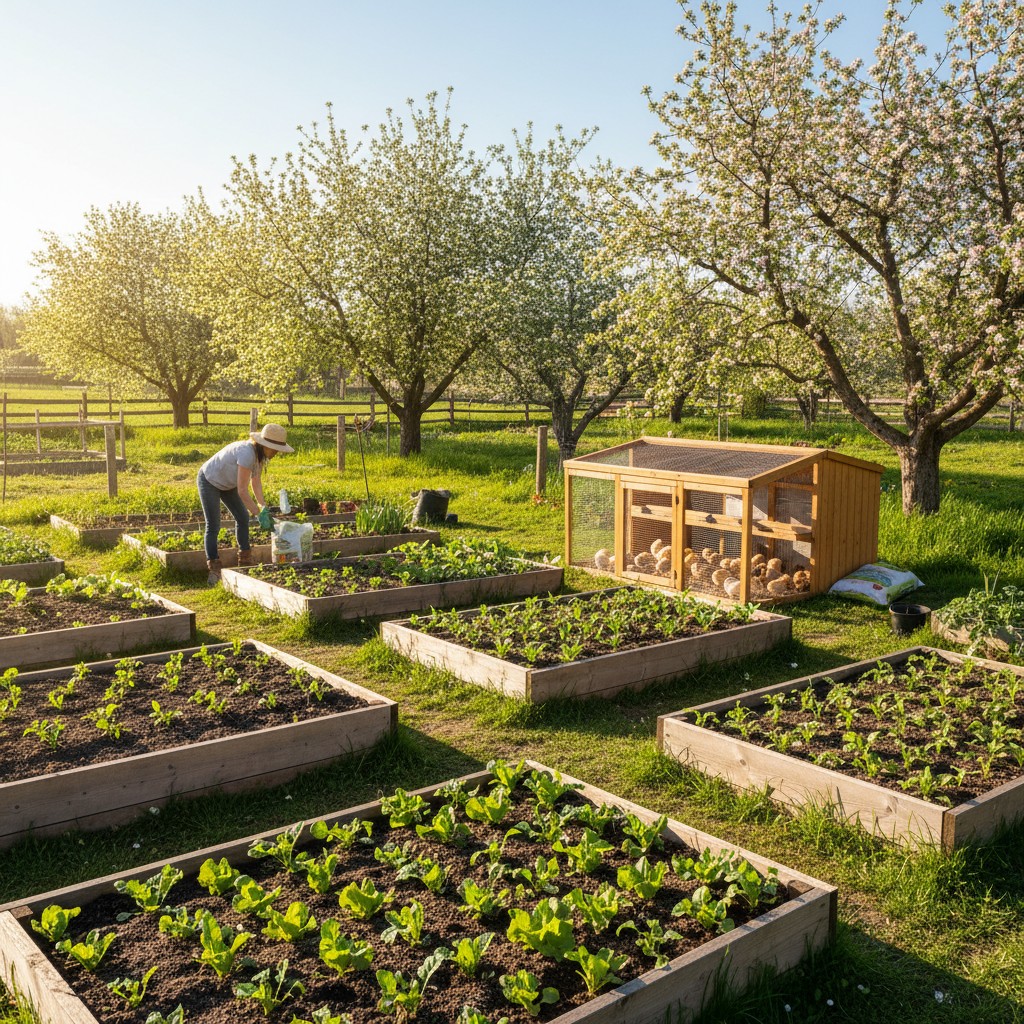
April is when the homestead explodes into life. The garden goes from bare soil to rows of green seemingly overnight. Seedlings you’ve been babying for weeks are finally ready to move outside. The chickens are laying again, baby animals are arriving, and every single day there’s more to do than the day before.
This is the month that tests your preparation. If you planned well in January, started seeds on schedule, and prepped your beds in March, April feels like a joyful sprint. If you didn’t, it feels like chaos. Either way, here’s how to handle everything April throws at you.
Garden Tasks for April
Transplanting Outdoors
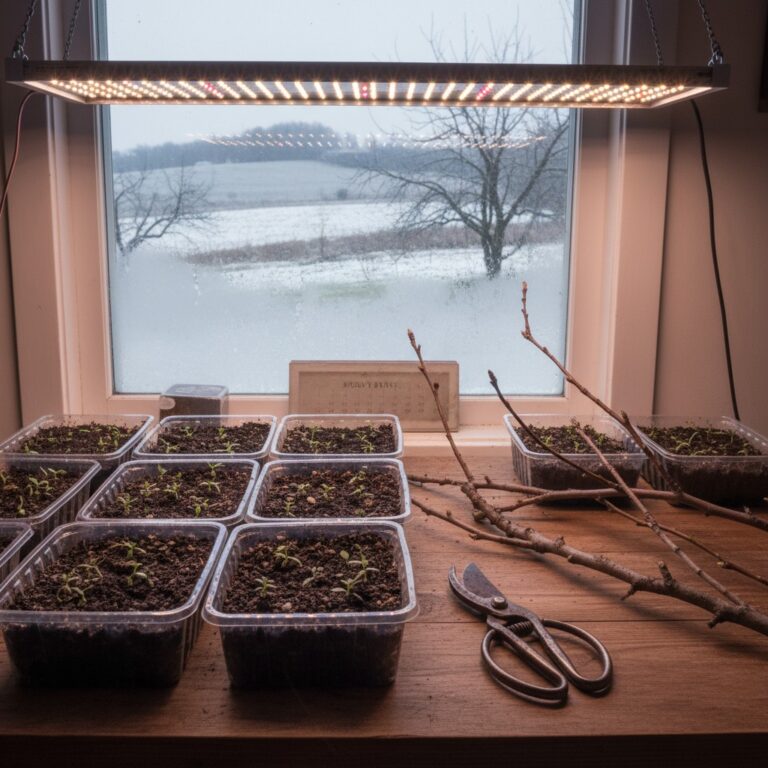
After proper hardening off (seven to ten days of gradually increasing outdoor exposure), your indoor-started transplants are ready for the garden. Timing depends on your last frost date and the cold tolerance of each crop.
Before last frost (cold-tolerant crops):
- Broccoli, cauliflower, cabbage, and Brussels sprouts
- Lettuce, kale, and Swiss chard transplants
- Onion sets and transplants
- Herbs like parsley, cilantro, and dill
After last frost (frost-tender crops):
- Tomatoes — wait until nighttime temperatures consistently stay above 50 degrees Fahrenheit
- Peppers and eggplant — these need warm soil, so don’t rush them
- Squash, cucumbers, and melons
- Basil and other tender herbs
Here’s what most people miss about transplanting: the soil temperature matters more than the air temperature. A tomato planted in 55-degree soil will sit and sulk for weeks, while one planted in 65-degree soil takes off immediately. Use a soil thermometer — it’s a small investment that makes a big difference in transplant success.
Direct Sowing
April is prime time for direct sowing many crops that don’t transplant well or don’t need an indoor head start:
- Beans: Direct sow after last frost when soil is above 60 degrees. Bush beans and pole beans alike.
- Corn: Direct sow in blocks (not single rows) for proper pollination. Soil needs to be at least 60 degrees.
- Beets: Direct sow now. Soak seeds overnight and thin to three to four inches apart after germination.
- Carrots: Continue succession planting every three weeks.
- Potatoes: Plant seed potatoes two to three weeks before last frost. Cut large seed potatoes so each piece has at least two eyes. Let cut surfaces dry for a day before planting.
- Succession crops: Plant another round of lettuce, spinach, radishes, and peas to extend your harvest window.
Zone-specific notes:
Zones 3-4: April is your March. Focus on cool-season crops: peas, lettuce, spinach, radishes, and kale. Don’t rush warm-season planting — your last frost may not be until late May or June.
Zones 5-7: The full planting schedule above applies. Watch your local forecast carefully around last frost dates.
Zones 8-10: Warm-season crops are going strong. You may already be harvesting spring peas and lettuce. Watch for bolting in cool-season crops as temperatures rise.
Last Frost Vigilance
April’s greatest threat is a late frost after you’ve planted tender crops. Always keep row cover fabric, old sheets, or floating row cover on hand. Check the forecast every evening during April. Covering plants for one night is a minor inconvenience; losing your tomato transplants to an unexpected frost is a major setback.
Pro tip: water the soil around vulnerable plants before a frost event. Moist soil holds and radiates heat better than dry soil, providing a few degrees of protection.
Weed Management
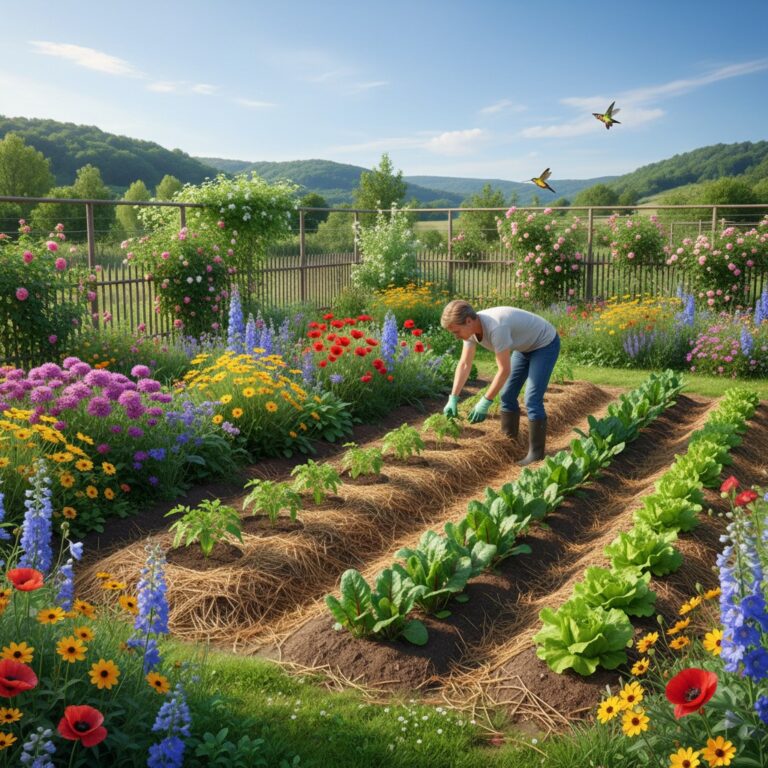
Weeds are waking up right alongside your garden crops, and April is when weed pressure starts building. Stay on top of it now — ten minutes of weeding in April prevents hours of weeding in June. Cultivate between rows with a stirrup hoe or hand cultivate close to plants. Mulch suppresses weeds beautifully once plants are established, but wait until the soil has warmed before applying heavy mulch around warm-season crops.
Kitchen and Preserving
First Fresh Harvests
April brings the first real harvests of the new season, and they taste extraordinary after months of stored food:
- Asparagus: If you have established beds (three or more years old), asparagus harvest begins when spears reach six to eight inches tall. Harvest for four to six weeks, then let the remaining spears grow into ferns to feed the roots for next year.
- Rhubarb: Harvest stalks when they’re 12-18 inches long. Never eat the leaves — they’re toxic. Rhubarb makes exceptional pies, crisps, jams, and sauces.
- Spring greens: Lettuce, spinach, arugula, and radishes from early plantings are ready.
- Herbs: Chives, mint, and oregano are among the first perennial herbs to emerge.
Seasonal Cooking
April meals should celebrate these fresh flavors. After a winter of heavy stews and preserved foods, the lightness of spring eating feels like a revelation:
- Asparagus simply roasted with olive oil and salt
- Rhubarb compote over yogurt or pancakes
- Garden-fresh salads with homemade vinaigrette
- Chive blossom vinegar (stunning pink color, mild onion flavor)
- Spring herb butter with fresh chives, parsley, and a touch of garlic
Preserving Notes
It’s early for heavy preserving, but you can start small. Dehydrate spring herbs for year-round use. Make and freeze rhubarb puree for pies later in the year. Start a batch of herb-infused vinegar. These small projects ease you back into the preserving rhythm before summer’s avalanche of produce hits.
Livestock and Animals
Baby Animal Season
April is the height of baby animal season on many homesteads. Chicks are arriving from hatcheries, lambs and kids are being born, and the whole property feels electric with new life.
For chicks in the brooder:
- Check water multiple times daily — chicks are messy and will foul their water constantly
- Ensure the heat source maintains proper temperature (starting at 95 degrees, dropping five degrees each week)
- Watch for pasty butt (dried droppings blocking the vent) in the first week — gently clean with warm water
- Introduce grit once chicks start receiving treats beyond starter feed
For lambs and kids:
- Ensure newborns nurse within the first hour — colostrum is critical
- Dip navels in iodine solution to prevent infection
- Watch for signs of hypothermia in cold April weather — warm, dry shelter is essential
- Record birth dates, weights, and parentage for breeding records
Beehive Inspection
When temperatures consistently reach the mid-50s, it’s time for your first real hive inspection of the year. On a warm, sunny afternoon (bees are calmer when foraging is good), open each hive and check for:
- A laying queen: Look for eggs (tiny white grains standing upright in cells) and young larvae. You don’t need to find the queen herself — evidence of recent laying is enough.
- Population strength: How many frames are covered with bees? A strong colony should cover six or more frames in April.
- Food stores: Do they have enough honey and pollen to sustain the colony as it grows? If stores are low, feed sugar syrup (1:1 ratio).
- Disease signs: Look for spotty brood patterns, sunken cappings, or foul odors that could indicate brood disease.
If a hive didn’t survive winter, clean it out, scorch the frames with a torch to sanitize, and prepare it for a new package or nuc.
Spring Fencing for Livestock
As animals become more active and pastures green up, inspect all livestock fencing. Electric fence batteries and solar chargers need testing. Woven wire fences need checking for gaps. Baby animals are escape artists — they’ll find holes in fencing that adults never noticed. Reinforce the bottom of fences with additional wire or boards where young animals are contained.
DIY and Home Projects
Trellis and Support Structures
Before your climbing plants need them, install:
- Tomato cages or stake-and-string systems
- Bean and pea trellises
- Cucumber and melon trellises (if growing vertically)
- Raspberry and blackberry trellis wires
In my experience, the biggest mistake with trellises is building them too small. A vigorous indeterminate tomato will overwhelm a standard cage by July. Build everything twenty percent bigger than you think you need.
Irrigation System Setup
Get your watering system installed and tested before the heat arrives. Drip irrigation is the most efficient option for most gardens — it delivers water directly to roots, reduces disease pressure from wet foliage, and can be automated with a timer.
A basic drip system for a garden bed requires:
- A pressure regulator and filter at the spigot
- Half-inch mainline tubing along the bed
- Quarter-inch drip emitter lines running along each row
- End caps and connectors
Set it up now and test it thoroughly. Fix leaks and adjust emitter placement before plants are depending on the system.
Compost Maintenance
Turn your compost pile and assess its progress. Spring warmth accelerates decomposition dramatically. If you need finished compost for mulching or side-dressing, turn the pile weekly and keep it moist. You can also start a new pile specifically for this year’s garden waste — by fall, it’ll be partially composted and ready to top-dress beds for winter.
Planning Ahead
May Preparation
- Warm-season seeds: If you haven’t started squash, cucumbers, and melons indoors yet, do it in early April for May transplanting.
- Mulch supply: Order or source enough mulch to cover your garden beds. Straw, shredded leaves, and wood chips all work well.
- Pest monitoring: Start scouting for early pests — aphids, flea beetles, and cabbage worms are among the first to appear. Early detection prevents infestations.
- Succession planting calendar: Review your schedule for May sowings. Keep sowing lettuce, radishes, and other quick crops every two to three weeks.
- Farmers market schedule: If you sell at local markets, confirm your dates and prepare signage and packaging.
Season Extension Planning
It might seem early, but think about fall gardening now. Some fall crops — like Brussels sprouts and storage cabbage — need to be started in June or July. Knowing this now helps you plan nursery space and seed inventory. Also consider what you’ll plant in summer-harvested beds: a succession of beans followed by fall brassicas is a classic rotation that maximizes production from each square foot.
April is glorious chaos on the homestead, and that’s exactly how it should be. Dirt under your fingernails, seedlings on every windowsill, baby chicks cheeping in the brooder, and rows of freshly planted seeds full of promise. Embrace it. This is what you planned for all winter.
Frequently Asked Questions
What if I get a late frost after planting tomatoes?
Cover them immediately with row cover fabric, old sheets, buckets, or even cardboard boxes. The goal is to trap ground heat around the plants and prevent frost from settling on the foliage. Water the soil around plants before the frost — moist soil radiates more heat. Remove covers in the morning once temperatures rise above freezing. If plants do suffer frost damage, don’t pull them immediately — often they’ll recover from the roots if the damage isn’t too severe.
How deep should I plant tomato transplants?
Deeper than you think. Bury tomato stems up to the lowest set of true leaves, or even deeper. Tomatoes form roots along any buried stem, creating a much stronger root system. This is one of the few plants where deep planting is actually beneficial. Pinch off any leaves that would be buried below the soil line. In my experience, deeply planted tomatoes outperform shallowly planted ones every single time.
When should I start feeding my bees in spring?
Feed sugar syrup (one part sugar to one part water by weight) if your spring inspection reveals low honey stores — less than two or three frames of capped honey. Also feed new packages and nucs until they’ve drawn out sufficient comb. Stop feeding once natural nectar flow begins (you’ll see bees bringing in fresh nectar and pollen heavily). Feeding during a nectar flow can lead to syrup being stored as “honey,” which isn’t ideal.
Is it too late to start a garden in April?
Not at all — April is actually the perfect time to start for most zones. If you haven’t started seeds indoors, buy transplants from a good garden center. You can direct sow most crops throughout April and May. Focus on easy wins: beans, squash, lettuce, radishes, and herbs are all forgiving crops for beginners. Start small, learn as you go, and expand next year. Every experienced gardener started somewhere.