Your August Homestead Guide: What to Do This Month
Key Takeaways
- August is the heaviest preserving month — prioritize canning tomatoes, salsa, pickles, and sauces now.
- Start your fall garden immediately; timing is everything for cool-season crops.
- Harvest garlic when the lower third of leaves have browned and cure it properly for long storage.
- Save seeds from your best open-pollinated plants for next year’s garden.
- Dehydrate herbs at their peak — this is the last month for many varieties before they decline.
Garden Tasks for August
August is the month that separates casual gardeners from committed homesteaders. The harvest is relentless, the canning kitchen is running full tilt, and somehow you’re also supposed to be planting your fall garden. It’s a lot. But in my experience, this is also the most satisfying month on the homestead — the month when your pantry shelves start filling with the food that will carry your family through winter.
The Harvest Keeps Coming
Everything is ripe in August. Your daily harvest basket should be overflowing with tomatoes, peppers, eggplant, corn, melons, beans, cucumbers, and more summer squash than seems physically possible from the number of plants you grew.
Key August harvests:
- Tomatoes: The main crop is hitting hard now. Process daily or they’ll pile up.
- Sweet corn: Test by piercing a kernel — milky juice means it’s ready. Watery means wait.
- Peppers: Both sweet and hot varieties are at peak production.
- Melons: Cantaloupes slip from the vine when ripe. Watermelons are ready when the ground spot turns yellow and the tendril nearest the fruit turns brown.
- Garlic: If you haven’t dug it yet, now is the time (more on this below).
- Onions: Harvest when tops fall over and begin to dry.
- Potatoes: Early varieties are ready when plants die back.
Garlic Harvest and Curing
Garlic harvest timing matters more than most people realize. Dig when the bottom third of the leaves have turned brown but the upper leaves are still green. Too early and the bulbs will be small. Too late and the cloves begin to separate in the soil, reducing storage life dramatically.
To cure garlic properly:
- Dig bulbs carefully with a garden fork — don’t pull by the stalk.
- Brush off loose soil but don’t wash the bulbs.
- Hang in bundles of 8-10 or lay on screens in a warm, dry, well-ventilated area out of direct sunlight.
- Cure for 3-4 weeks until the wrappers are papery and the neck is completely dry.
- Trim roots and stalks, then store in a cool, dark place with good air circulation.
Properly cured hardneck garlic stores for 4-6 months; softneck varieties can last 8-12 months.
Fall Garden Planting
Here’s what most people miss: August is a critical planting month. Your fall garden needs to go in now, and every day you delay costs you harvest time on the other end.
Zones 3-4: You’re running out of time. Direct sow quick crops — lettuce, spinach, radishes, turnips, and kale — immediately. Use row cover to protect from early frosts that could arrive in just 6-8 weeks.
Zones 5-7: This is prime fall planting time. Direct sow beets, carrots, turnips, radishes, lettuce, spinach, kale, and Asian greens. Transplant broccoli, cauliflower, cabbage, and Brussels sprouts that you started indoors in June or July.
Zones 8-10: Your fall planting season is just beginning. Start tomatoes, peppers, and squash for a second harvest. Direct sow beans, cucumbers, and all the cool-season crops.
Seed Saving
August is prime seed-saving month. If you grew any open-pollinated (non-hybrid) varieties, save seeds from your best-performing plants. This is how homesteaders have built resilient, locally adapted gardens for generations.
- Tomato seeds: Scoop seeds into a jar with a little water, let ferment for 3-4 days until a mold layer forms, rinse clean, and dry on a plate.
- Pepper seeds: Simply scrape seeds from fully ripe peppers and dry on a paper plate for a week.
- Bean and pea seeds: Let pods dry completely on the plant, then shell and store.
- Herb seeds: Let dill, cilantro, and basil flower heads dry on the plant, then cut and shake into a paper bag.
Label everything with variety name, date, and any notes about the parent plant’s performance. Store dried seeds in envelopes inside a sealed jar in a cool, dark place.
Kitchen and Preserving
This Is Your Month — The Big Canning Push
August is the Super Bowl of preserving season. If you only can one month of the year, this is it. The volume of produce coming in demands organized, efficient processing.
Top August preserving priorities:
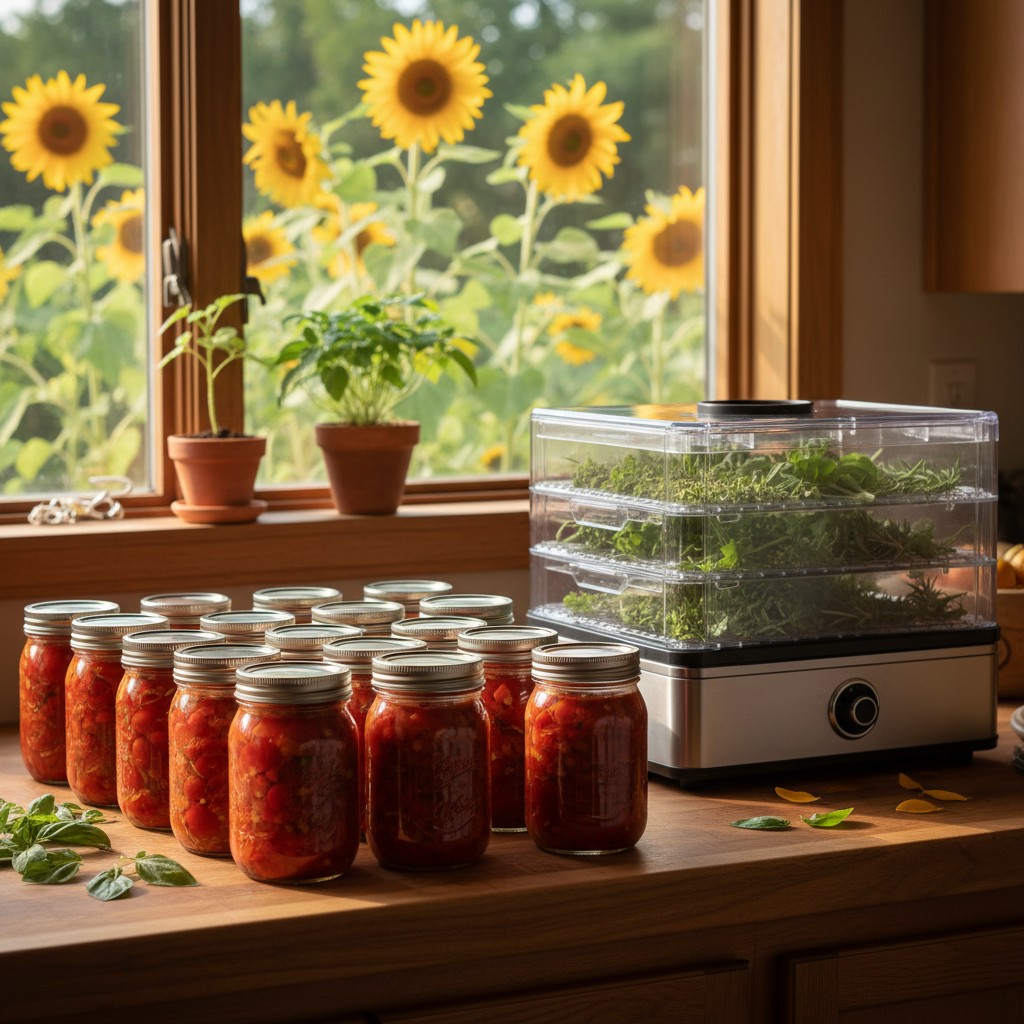
- Canned whole and crushed tomatoes: The backbone of your winter pantry. Aim for at least 20-30 quarts if your family eats tomato-based meals regularly.
- Salsa: Use a tested recipe (Ball Blue Book or NCHFP approved) for safe water bath canning.
- Dill pickles: Both fermented and vinegar-based. August cucumbers are perfect for pickles.
- Tomato sauce and paste: Cook down large batches on the stovetop or in a roaster oven. Pressure can or freeze.
- Peaches and pears: Water bath can in light syrup, or freeze for smoothies and pies.
- Corn: Pressure can whole kernel corn, or freeze cut corn for easy winter meals.
- Relishes and chutneys: Great for using up odds and ends of various vegetables.
Dehydrating Herbs
This is your last best window for harvesting herbs at peak potency. Cut herbs in the morning after dew has dried but before the heat of the day breaks down the essential oils. Use a dehydrator at 95-105 degrees F, or bundle and hang in a warm, dry room.
Herbs to dry now: basil, oregano, thyme, rosemary, sage, dill, parsley, and mint. Store in glass jars away from light and heat. Properly dried herbs maintain good flavor for about a year.
Seasonal Cooking
When the kitchen is already hot from canning, lean into no-cook and minimal-cook meals. Gazpacho, bruschetta loaded with fresh tomatoes and basil, corn salad, and grilled everything. Make big batches of pasta sauce and freeze the surplus. Roast trays of peppers and tomatoes for freezer bags of ready-to-use sauce base.
Livestock and Animals
Continued Heat Management
August heat can be even more intense than July, and your animals are feeling the cumulative effects. Continue all the heat management strategies from last month. Watch for reduced egg production in chickens — this is normal in extreme heat and will recover as temperatures moderate.
Parasite Management
Late summer is peak parasite season for most livestock. For chickens, watch for signs of mites and lice — pale combs, feather loss around the vent, and restless nighttime behavior. Dust bathing areas should be available and can be supplemented with food-grade diatomaceous earth.
For goats, sheep, and cattle, late summer often requires deworming. Use the FAMACHA scoring system for small ruminants to target treatment to animals that actually need it, rather than blanket-treating the entire herd.
County Fair Season
If you show livestock or enter produce at your county fair, August is typically when it happens. Even if you don’t compete, attending the county fair is a wonderful way to connect with your local agricultural community, learn from other growers, and let your kids experience the broader homesteading culture.
DIY and Home Projects
- Build a root cellar or cold storage: Even a simple buried trash can root cellar works. Get it set up now before you need it in October.
- Assess your firewood supply: You should have at least half your winter supply split and stacked by now. Wood needs adequate time to season.
- Organize your canning kitchen: Mid-season is a good time to reassess your setup. Are jars accessible? Is your workflow efficient? Small improvements now save hours over the next two months.
- Start chicken coop winterization planning: Assess what needs repair, what ventilation changes are needed, and order supplies. Don’t wait until it’s cold.
- Preserve equipment maintenance: Clean and check your pressure canner gauge. Replace old jar rings. Sharpen garden tools that have been working hard all summer.
Planning Ahead
- Order seed garlic: If you didn’t order in July, do it now. Popular varieties sell out by September.
- Plan fall cover crops: As summer beds empty, you should be ready to plant cover crops immediately. Have seed on hand.
- Schedule any livestock processing: If you’re processing meat birds, turkeys, or pigs this fall, book your butcher now. Slots fill up months in advance.
- Inventory your canning supplies: You’re burning through lids and jars right now. Restock before the September push.
- Start thinking about holiday gifts: Jams, jellies, pickles, and dried herb blends make wonderful gifts. Set aside your prettiest jars as you can.
August demands everything you’ve got, but it also gives back generously. Every jar you seal, every bag you freeze, every tray you dehydrate is a deposit in your family’s food security. When January arrives and you crack open a jar of August tomatoes, you’ll taste summer sunshine. That’s the magic of this month.
Frequently Asked Questions
How many tomatoes do I need for canning a year’s supply of sauce?
A general rule of thumb is 20 pounds of fresh tomatoes yields about 7 quarts of canned tomatoes or 3-4 quarts of thick sauce. For a family of four eating tomato-based meals twice a week, plan on roughly 100-150 pounds of tomatoes for the year. That sounds like a lot, but 15-20 productive tomato plants can easily produce that amount. Start with however many tomatoes you have and build up each year — any amount you put up is better than none.
Is it too late to start a fall garden in August?
Absolutely not — for most zones, August is actually the ideal time to start your fall garden. The key is knowing your first frost date and counting backward. Quick-maturing crops like lettuce (45 days), radishes (25 days), spinach (40 days), and kale (55 days) can all be sown in August for fall harvest in Zones 3-7. In Zones 8-10, you essentially have a whole second growing season ahead of you. The trick is getting seeds in the ground promptly and keeping the soil moist during hot weather germination — shade cloth and consistent watering help enormously.
How do I know if my garlic is ready to harvest?
Watch the leaves. When the bottom third of the leaves have turned brown and dried while the top leaves are still green, it’s time to dig. For most growers, this happens in late July to mid-August. Don’t wait until all leaves are brown — by then, the bulb wrappers may have deteriorated in the soil. When in doubt, dig one test bulb. You should see well-formed, plump cloves wrapped in tight papery skin. If the cloves are starting to separate from each other, you’ve waited a bit too long.
What’s the best way to deal with the overwhelming amount of produce in August?
Prioritize ruthlessly. Process high-value, time-sensitive items first — tomatoes, peaches, and corn that won’t wait. Robust items like onions, garlic, and potatoes can be cured and stored without immediate processing. Freeze anything you can’t can right away — most vegetables can be blanched and frozen as a stopgap until you have time to can. Don’t be afraid to share surplus with neighbors, donate to food banks, or feed imperfect produce to your chickens and compost pile. The goal is zero waste, not zero sanity.