
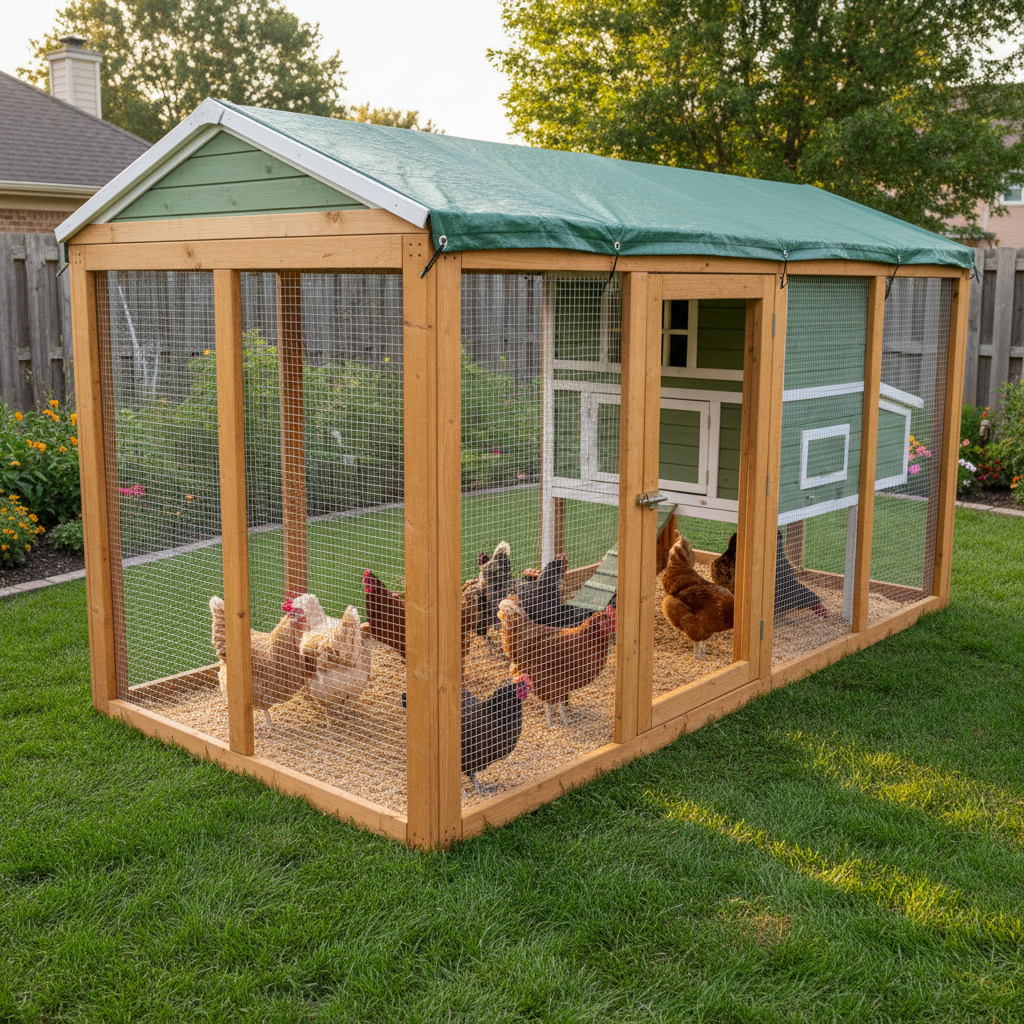
Building a Predator-Proof Chicken Run: Keep Your Flock Safe
Building a Predator-Proof Chicken Run: Keep Your Flock Safe
Key Takeaways
- Use 1/2-inch hardware cloth instead of chicken wire — chicken wire keeps chickens in but won’t keep predators out
- Install a buried apron of hardware cloth extending 12-18 inches outward from the base to prevent digging predators
- Cover the top of the run with hardware cloth, welded wire, or netting to protect against aerial predators
- Common chicken predators include raccoons, foxes, hawks, owls, weasels, snakes, and neighborhood dogs
- A well-built run is a one-time investment that saves you from the heartbreak (and cost) of losing birds to predation
Nothing in homesteading is quite as devastating as walking out to your coop in the morning and finding feathers scattered across the yard. I’ve been there. We lost four hens to a raccoon in a single night during our first year because our run was built with the wrong materials and had gaps I didn’t even know existed. That experience taught me that a predator-proof chicken run isn’t optional — it’s essential.
Whether you’re building a new run from scratch or upgrading an existing one, this guide covers everything you need to know to keep your backyard flock safe from the impressive variety of creatures that would love to eat them.
Know Your Predators
Before you can build an effective defense, you need to understand the threats. Different predators attack in different ways, and your run needs to address all of them.
| Predator | Attack Method | Time of Day | Defense Needed |
|---|---|---|---|
| Raccoon | Reaches through wire, opens latches, pulls birds through gaps | Night | Small-gauge mesh, secure latches |
| Fox | Digs under fences, squeezes through small openings | Dawn/dusk, night | Buried apron, solid walls |
| Hawk/Owl | Swoops from above | Day (hawk) / Night (owl) | Overhead cover |
| Weasel/Mink | Squeezes through gaps as small as 1 inch | Any time | 1/2″ hardware cloth with no gaps |
| Dog | Tears through weak fencing, digs | Any time | Sturdy frame, buried apron |
| Snake | Enters through small gaps, eats eggs and chicks | Any time | 1/2″ hardware cloth, sealed gaps |
| Opossum | Slow but persistent; enters through gaps, eats eggs and birds | Night | Secure mesh, locked doors |
Hardware Cloth vs. Chicken Wire: A Critical Distinction
This is the single most important thing to understand about predator-proofing, and it surprises many new chicken keepers.
Chicken Wire Is Not Predator-Proof
Despite its name, chicken wire (also called poultry netting) is designed to keep chickens contained — not to keep predators out. It’s thin, flexible hex-mesh wire that a raccoon can tear apart with its hands, a dog can rip through, and a determined fox can bite through. I’ve seen raccoons peel it back like opening a can. For daytime containment in a low-predator area, chicken wire is fine. For actual protection, it’s inadequate.
Hardware Cloth Is the Standard
Hardware cloth is the backbone of any predator-proof run. It’s a rigid welded wire mesh, and for chicken runs, 1/2-inch hardware cloth (also called 1/2″ welded wire) is the standard. The 1/2-inch openings are small enough to keep out weasels, snakes, and raccoon paws, while being strong enough to resist dogs and foxes.
Yes, hardware cloth costs significantly more than chicken wire — roughly 3-4 times the price per square foot. But replacing birds, dealing with the emotional toll of predator attacks, and rebuilding inadequate fencing costs far more in the long run.
After our raccoon incident, I ripped out every inch of chicken wire on our run and replaced it with 1/2-inch hardware cloth. It took a full weekend and cost about $200 in materials. We haven’t lost a single bird to predation in the three years since. That’s a trade I’d make every single time.
Designing Your Run: Size and Layout
Before you start building, plan the size and location of your run carefully.
How Much Space?
The minimum recommendation is 10 square feet of run space per standard-size chicken. More is always better — chickens with adequate space are healthier, less prone to pecking and bullying, and generally happier. If your birds won’t free-range at all, aim for 15-20 square feet per bird. For a flock of 6 hens, that’s a run of at least 60 square feet (for example, 6’x10′ or 8’x8′).
Location
Build the run attached to or surrounding your chicken coop, with a pop door connecting the two. Choose a location with good drainage — a run that floods or stays muddy is a health hazard. Partial shade is ideal; full sun bakes birds in summer, while full shade stays damp and cold. If natural shade isn’t available, plan to add a roof or tarp over part of the run.
Access
Include a human-sized door so you can enter the run for cleaning, maintenance, and catching birds when needed. Crawling through a tiny chicken-sized opening gets old very fast. A door at least 5 feet tall and 2.5 feet wide is practical.
Building the Frame
A strong frame is the skeleton of your run. It supports the hardware cloth and stands up to weather, leaning chickens, and the occasional curious dog.
Materials
Pressure-treated lumber (4×4 posts for corners and supports, 2×4 rails for horizontal framing) is the standard choice. Cedar or redwood are naturally rot-resistant alternatives but cost more. Metal T-posts or chain-link fence posts work for simpler designs. Whatever you choose, the frame needs to be solid — a wobbly frame creates gaps that predators will exploit.
Setting Posts
Set corner posts at least 18-24 inches deep, ideally in concrete. This prevents predators from pushing the run over and ensures the structure holds up in wind and weather. Space additional posts every 6-8 feet around the perimeter.
Framing Tips
- Keep the frame as flush and gap-free as possible — any opening larger than 1/2 inch is a potential entry point
- Add a horizontal rail at the bottom, mid-height, and top of the walls to support the hardware cloth
- Build the frame slightly taller than you are (at least 6 feet) so you can work inside comfortably
- Consider a slight roof slope (even on flat-topped runs) to shed rain and snow
Installing Hardware Cloth: Walls
With the frame up, it’s time to install the hardware cloth. This is the most time-consuming part of the build but also the most important.
Attachment Method
Attach hardware cloth to the frame using galvanized staples (driven with a staple gun or by hand with a hammer) every 2-3 inches along framing members. For extra security, add screws with fender washers — the large flat washers hold the wire much more securely than staples alone. A determined raccoon can pry out staples; it’s much harder to defeat washers and screws.
Overlapping Seams
Where two pieces of hardware cloth meet, overlap them by at least 2-3 inches and secure the overlap with hog rings, J-clips, or zip ties every 3-4 inches. Gaps at seams are the most common weak point in run construction. I use hog rings — they’re the most permanent solution and take just seconds to crimp with pliers.
Bottom Edge
The hardware cloth should extend all the way to the ground with no gap. Even a 2-inch gap at the base is enough for a weasel or snake to enter. Secure the bottom edge to a ground-level rail or bury it into the digging apron (discussed below).
The Digging Apron: Defeating Underground Attacks
Foxes, dogs, and raccoons will all dig under a fence to reach chickens. The digging apron is your defense, and it’s non-negotiable in any area with digging predators.
How It Works
Instead of burying the hardware cloth straight down (which predators can simply dig beside), an apron extends outward from the base of the run horizontally, lying flat on the ground. When a predator approaches the fence and starts digging, it immediately hits wire. Since animals instinctively dig right at the fence line, the outward apron defeats them.
Installation
Attach a 12-18 inch wide strip of hardware cloth (or 2×4 welded wire) to the bottom of your run walls, extending outward along the ground. Secure it to the bottom rail with screws and washers or hog rings. Then cover it with a few inches of soil, gravel, or mulch. Within a month, grass will grow through it and it becomes invisible.
Alternatively, you can dig a trench 6-12 inches deep and bury the apron vertically — both methods work, but the horizontal apron is easier to install and equally effective.
Overhead Protection
If you’re in an area with hawks, owls, or eagles — and most people are — the top of your run needs covering too.
Full Hardware Cloth Top
The gold standard is covering the entire top with 1/2-inch hardware cloth. This stops aerial predators, climbing predators (raccoons are excellent climbers), and keeps wild birds from entering and spreading disease. The downside is cost and weight — you’ll need a sturdy frame to support it, especially in snow-load areas.
Welded Wire Top
A more affordable option is 2×4 inch welded wire over the top. This stops hawks and climbing predators while costing less and weighing less than hardware cloth. Small birds can still enter through 2×4 mesh, but hawks and owls cannot.
Netting
Bird netting or deer netting is the budget option for overhead protection. It stops hawks effectively but won’t deter climbing predators like raccoons, and it deteriorates in UV and weather within a few years. If raccoons aren’t a concern in your area and you want a quick, affordable solution, netting works.
Partial Roof
Adding a solid roof (metal roofing panels, polycarbonate sheets) over part of the run provides rain shelter, shade, and predator protection in one. Many chicken keepers roof the section closest to the coop and use wire or netting over the rest.
We covered half our run with a corrugated metal roof and the other half with hardware cloth. The roofed section stays dry even in heavy rain — the chickens love it. They dust-bathe in the dry dirt under the roof and sunbathe in the open section. It was the best design decision we made, and I’d recommend it to anyone.
Doors, Latches, and Access Points
Every door and access point is a potential weak spot. Pay as much attention to these as you do to the walls.
Latch Security
Raccoons can open simple latches, hooks, and even some spring-loaded closures. Use latches that require two simultaneous actions to open — a carabiner on a hasp, a padlock, or a barrel bolt with a secondary clip. If a toddler could open it, a raccoon definitely can.
Pop Door Security
The pop door connecting the coop to the run should close securely at night. An automatic chicken door that operates on a timer or light sensor is a wonderful investment — it closes at dusk and opens at dawn, even when you’re away. Make sure the door itself is solid (wood or metal, not just a flap) and fits snugly in its frame.
Human Door
Frame your access door with hardware cloth on both sides of the frame, overlapping the edges. Use self-closing hinges and a secure latch. The worst predator attacks I’ve heard about happened because someone forgot to latch the run door before bed.
Additional Security Measures
Motion-Activated Lights
A solar-powered motion light near the run startles nocturnal predators and alerts you to nighttime activity. It’s not foolproof (persistent predators will get used to it), but it’s a cheap deterrent that helps.
Electric Fence
For areas with serious predator pressure — bears, persistent foxes, or roaming dogs — adding a strand of electric fence around the outside of the run is highly effective. A single strand at nose height (about 6-8 inches off the ground) teaches most mammals to stay away after one encounter.
Secure Coop Construction
Remember that the run works in concert with your coop. The coop itself should be solid-walled with a secure door and hardware cloth over any ventilation openings. Birds locked in a well-built coop at night, with a predator-proof run available during the day, is the gold-standard security setup. Our chicken coop building guide covers coop construction in detail.
Clear the Perimeter
Keep vegetation trimmed around the run. Tall grass and brush provide cover for predators stalking your flock. A clear zone of 3-5 feet around the run eliminates hiding spots. Remove brush piles, woodpiles, and other hiding spots within 10-15 feet of the coop area.
Materials List and Cost Estimate
Here’s a rough materials list for a 8’x12′ predator-proof run, 6 feet tall:
| Material | Quantity | Estimated Cost |
|---|---|---|
| 4×4 pressure-treated posts (8′) | 6 | $60–$90 |
| 2×4 pressure-treated lumber (8′) | 12–15 | $50–$75 |
| 1/2″ hardware cloth (36″ wide rolls) | 100–120 linear feet | $150–$250 |
| Hardware cloth for top (or alternative) | 96 sq ft | $80–$150 |
| Galvanized screws, washers, staples | Assorted | $30–$50 |
| Hinges, latches, door hardware | 1 set | $20–$30 |
| Concrete for posts | 3–4 bags | $15–$25 |
| Total Estimate | $400–$670 |
For comparison, replacing a single heritage breed hen costs $15-$50, and the emotional cost of losing birds is immeasurable. A well-built run pays for itself and lasts for years.
Maintaining Your Run
A predator-proof run needs periodic maintenance to stay effective:
- Monthly: Walk the perimeter looking for rust, loose attachments, gaps, or signs of digging
- Seasonally: Check the overhead cover for damage or sagging; tighten any loose hardware; replace degraded zip ties or netting
- After storms: Inspect for damage from fallen branches, wind damage, or shifted posts
- Annually: Replace any rusted hardware cloth sections; re-secure the digging apron if exposed
Keep an eye on chicken health as a secondary indicator — birds that seem stressed or reluctant to enter the run may be reacting to predator activity you haven’t noticed yet. Understanding your chickens’ normal behavior helps you spot problems early.
If you’re also keeping ducks alongside your chickens, the same run design works — just make sure there’s access to water for the ducks and that the run drains well.
Frequently Asked Questions
Can I use chicken wire for part of the run and hardware cloth for the rest?
You can, but only if you understand the tradeoff. Some people use hardware cloth on the bottom 3-4 feet (where raccoons can reach and small predators can enter) and chicken wire above that line. This saves money while addressing the most common threats. However, climbing predators can still tear through the chicken wire section. For full protection, hardware cloth everywhere is the only answer.
Do I really need a buried apron if I have a concrete floor?
A concrete or paver floor eliminates the need for a buried apron since there’s no soil to dig through. However, concrete runs require more frequent cleaning since droppings sit on the surface rather than absorbing into soil. Many chicken keepers use a thick layer of sand over gravel for a natural floor that drains well and is easy to rake clean.
How do I predator-proof a chicken run in a rental property?
Build a freestanding run that doesn’t require digging post holes or pouring concrete. Use weighted base plates or heavy timber runners instead of buried posts, and lay the digging apron on the surface weighted with pavers or gravel. The entire structure can be disassembled when you move.
Will electric fence alone protect my chickens?
Electric netting (like Premiere or similar brands) is effective for daytime free-ranging protection and works well against ground predators. However, it doesn’t stop aerial predators, it requires a reliable power source, and tall grass or snow can ground out the fence. Electric fencing works best as a supplement to a solid run, not a replacement.
What about predator guard animals like dogs or guineas?
Livestock guardian dogs are genuinely effective against ground predators but require training and commitment. Guinea fowl are excellent alarm systems and will mob small predators, but they’re loud and not always good with chickens. Neither replaces a well-built run, but both are valuable additions to your overall predator management strategy.