
Your January Homestead Guide: What to Do This Month
Key Takeaways
- January is prime time for ordering seed catalogs, planning your garden layout, and starting a garden journal.
- Begin indoor seed starting for slow-growing crops like onions, leeks, and certain herbs.
- Focus on livestock winter care: fresh water, adequate shelter, and supplemental nutrition.
- Use the quiet season for tool maintenance, pantry inventory, and DIY repair projects.
- Planning now sets the tone for your entire growing season — don’t skip it.
January might look quiet on the homestead, but seasoned homesteaders know the truth: this is one of the most important months of the year. What you plan, organize, and prepare right now will ripple through every harvest, every canning session, and every project for the next twelve months. While the ground sleeps under frost (or mud, depending on your zone), your mind should be wide awake and busy.
In my experience, the homesteaders who have the most productive summers are the ones who spent January with a cup of coffee, a stack of seed catalogs, and a sharp pencil. Here’s your complete guide to making the most of this month.
Garden Tasks for January
Seed Catalog Planning
If you haven’t already, request seed catalogs from reputable companies. There’s something irreplaceable about flipping through physical pages, dog-earing the ones that catch your eye, and scribbling notes in the margins. Order from multiple companies — each has strengths in different varieties.
As you plan, consider these questions:
- What grew well last year, and what flopped?
- Are there new varieties you want to trial this season?
- How much freezer and canning space do you realistically have?
- What does your family actually eat? (Don’t grow ten types of eggplant if nobody likes eggplant.)
Place seed orders early in January. Popular varieties sell out fast, and you want seeds in hand well before starting dates.
Start Your Garden Journal
A garden journal is the single most underrated tool on a homestead. It doesn’t need to be fancy — a spiral notebook works. Record your garden layout plan, seed varieties and sources, planting dates, and any observations from last year. In three years, this journal will be worth more than any gardening book on your shelf because it will be tailored to your specific soil, climate, and growing conditions.
Indoor Seed Starting
Even in January, certain crops benefit from an early indoor start:
- Onions and leeks: These need 10-12 weeks of indoor growing before transplant. January is the time in most zones.
- Celery: Another slow grower that appreciates an early start.
- Certain herbs: Rosemary and lavender germinate slowly and can be started now.
- Zones 8-10: You may already be starting tomatoes and peppers indoors for early spring transplanting.
Check your seed-starting setup. Do your grow lights work? Do you have enough trays and cells? Fresh seed-starting mix? Get everything organized now so you’re not scrambling in February.
Winter Garden Care
Zones 3-4: Your garden is under snow. Focus entirely on planning and indoor tasks. Check on any garlic mulch to make sure it hasn’t blown away.
Zones 5-7: Inspect cold frames and hoop houses. Harvest any overwintering greens like kale, spinach, or mache. Add fresh mulch to perennial beds if needed.
Zones 8-10: You may still be harvesting cool-season crops. Plant peas, lettuce, and radishes for late winter harvests. Watch for frost warnings and protect tender plants.
Kitchen and Preserving
Pantry Inventory
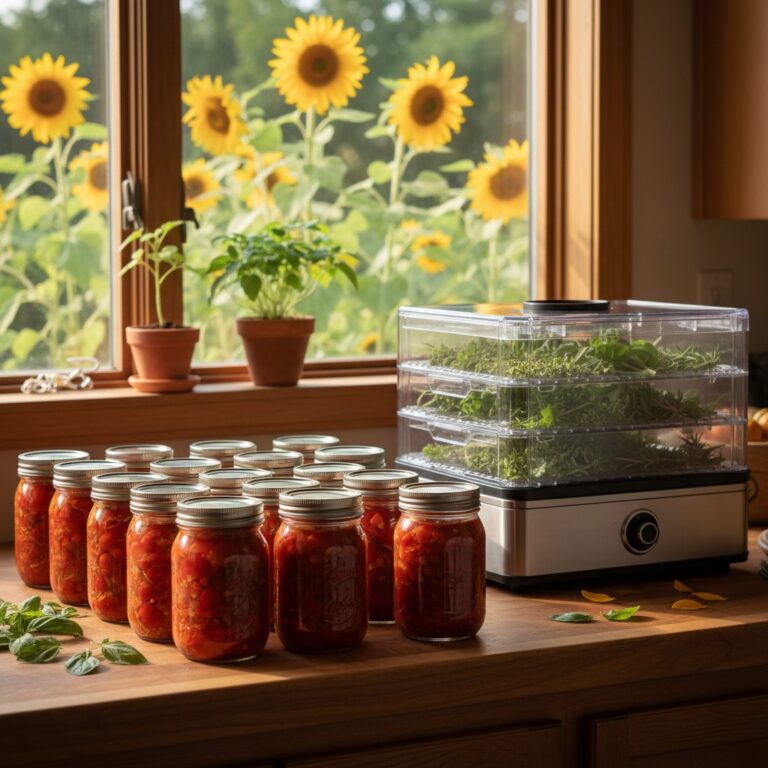
January is the perfect time to take a thorough inventory of your pantry, freezer, and root cellar. Here’s what most people miss: this inventory isn’t just about knowing what you have. It’s about understanding what you need to grow more of next season.
Ask yourself:
- Did we run out of canned tomatoes by December? Plant more Roma tomatoes.
- Is the freezer still full of zucchini nobody wants? Grow fewer this year.
- How are the root vegetables holding up in storage? Are potatoes sprouting too early?
Rotate stock — use older preserved goods first. Check for any jars with broken seals or signs of spoilage.
Seasonal Cooking
January meals lean heavily on stored and preserved foods. This is the month for:
- Hearty soups and stews using canned broth, frozen vegetables, and root cellar potatoes
- Baked goods using dried herbs and frozen berries
- Slow-cooker meals that warm the house and stretch stored meat
- Bread baking — the kitchen heat is welcome this time of year
Last of the Winter Preserves
If you have citrus (purchased or from warm-zone trees), January is excellent for making marmalade, candied citrus peel, and preserved lemons. Dehydrate citrus slices for tea and cocktail garnishes. These small projects keep your preserving skills sharp during the off-season.
Livestock and Animals
Winter Water Management
Fresh, unfrozen water is the number-one priority for livestock in January. Heated water buckets and tank de-icers are worth every penny. Check them daily — electrical failures happen, and animals can become dangerously dehydrated in just a day or two without water, even in cold weather.
Chicken Care
Egg production naturally drops in winter due to shorter daylight hours. You have two choices: supplement with artificial light (14-16 hours total) to maintain production, or let your hens rest naturally. In my experience, allowing a natural rest period leads to healthier, longer-producing hens, but it means buying eggs for a few months.
Other January chicken tasks:
- Check for frostbite on combs and wattles — apply petroleum jelly to large combs in extreme cold
- Ensure adequate ventilation without drafts (moisture buildup causes more frostbite than cold air)
- Provide scratch grains in the evening — digesting whole grains generates body heat overnight
- Deep litter method works beautifully in winter, generating warmth as it composts
General Livestock Notes
Increase hay rations for goats, sheep, and cattle — animals need more calories to maintain body temperature. Check hooves monthly; wet winter conditions can promote hoof rot. Ensure shelters are dry and bedding is fresh. If you’re expecting spring babies (lambs, kids), January is the time to assemble your birthing kit and review your supplies.
DIY and Home Projects
Tool Maintenance
This is the job every homesteader puts off, and January is the month to stop putting it off. Sharpen every blade on your property: pruners, loppers, hoes, shovels, mower blades, axes, and chainsaws. Clean and oil hand tools. Replace broken handles. A sharp, well-maintained tool makes every job faster and easier.
Here’s a simple maintenance checklist:
- Clean off dirt and rust with a wire brush and steel wool
- Sharpen cutting edges with a mill file or whetstone
- Sand wooden handles smooth and apply linseed oil
- Oil all metal parts and pivot points
- Replace any cracked or splintered handles
- Inventory and replace missing tools
Indoor Projects
Use bad-weather days for projects you’ll need come spring:
- Build seed-starting shelves and light stands
- Construct or repair cold frames
- Build new raised bed frames (assemble in the garage, install when ground thaws)
- Organize the garden shed or barn
- Repair fencing materials — cut posts, sort hardware, mend wire
Firewood Management
If you heat with wood, January is typically your heaviest usage month. Keep the woodpile accessible and covered. Start thinking about next winter’s supply — any trees you fell this month will have months to season before next heating season. The old adage holds: you should always be one year ahead on firewood.
Planning Ahead
Orders to Place Now
- Seeds: Place your primary seed order in early January.
- Seed potatoes and onion sets: These sell out quickly. Order now for spring delivery.
- Fruit trees and berry bushes: Bare-root stock ships in late winter/early spring. Order now to reserve your varieties.
- Chicks: If you want specific breeds from hatcheries, January is when you should place orders for spring delivery.
- Bee packages or nucs: Local beekeeping suppliers take orders in January. Wait too long and you’ll miss the season.
Prep for February
February hits fast, and in many zones, it’s when seed starting kicks into high gear. Make sure you have:
- Seed-starting mix (buy or make your own blend)
- Working grow lights with fresh bulbs or tubes
- Heat mats for warm-germinating seeds
- Pruning tools sharpened and ready for late-winter fruit tree pruning
- A soil test kit or lab submission ready — early results let you amend beds before planting
Budget and Goals
Sit down and set your homestead goals for the year. Be specific. Instead of “grow more food,” try “preserve 50 quarts of tomatoes and 30 pints of salsa.” Instead of “get chickens,” try “build a coop by March 15 and order 8 dual-purpose pullets for April delivery.” Written goals with timelines are the difference between dreaming and doing.
“The best time to plan your garden was last January. The second best time is right now.” Set aside a full afternoon this month — no distractions — and map out your year.
Frequently Asked Questions
Is it too early to start seeds indoors in January?
For most crops, yes — starting too early leads to leggy, weak transplants. However, certain slow-growing plants like onions, leeks, celery, and some herbs benefit from a January start. In warmer zones (8-10), you can begin tomatoes and peppers indoors in late January. Always count backward from your last frost date to determine the right start time for each crop.
How do I keep my chickens healthy in extreme cold?
The three essentials are unfrozen water, adequate ventilation (not drafts — there’s a difference), and extra calories through whole grains or scratch. Avoid heating the coop with heat lamps, which are a serious fire hazard. Most cold-hardy breeds handle winter well as long as they stay dry and out of the wind. Watch for frostbite on combs and wattles during extreme cold snaps.
What should I do if I didn’t plan ahead and it’s already mid-January?
You’re not behind — you’re right on time. Most seed companies still have full stock through January. You can start your garden journal today. Order catalogs online and browse digital versions while physical copies ship. The most important thing is to start. An imperfect plan executed now beats a perfect plan you never make.
How do I decide what to grow this year?
Start with what your family eats most. Look at your grocery receipts from last summer and fall. If you buy tomatoes, peppers, and lettuce every week, those should be your priority crops. Add in crops that are expensive to buy but easy to grow (herbs, garlic, salad greens). Finally, leave a small space for experimenting with something new — that’s where the fun lives.