Your July Homestead Guide: What to Do This Month
Key Takeaways
- July marks the start of peak harvest season — stay on top of daily picking to keep plants productive.
- Consistent deep watering early in the morning is more effective than frequent shallow watering.
- Begin your canning season now with berries, beans, and early tomatoes.
- Chickens need extra attention in extreme heat — watch for signs of heat stress.
- Succession plant quick-maturing crops like beans, lettuce, and radishes for continuous harvests.
Garden Tasks for July
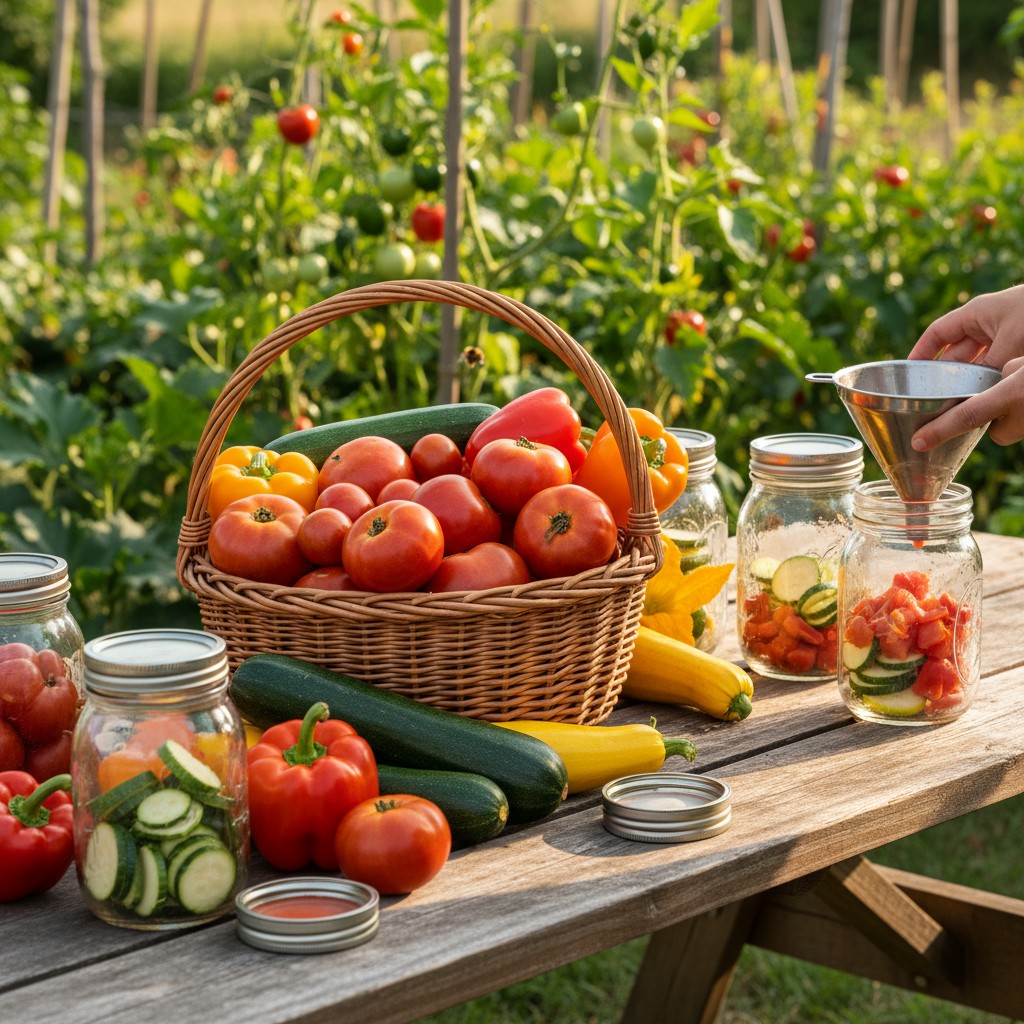
July is when the homestead garden shifts from planting mode to harvest mode, and the pace picks up dramatically. If you’ve been tending your beds since spring, this is the month you start to see real rewards — and real work. There’s nothing quite like walking out to a garden bursting with ripe tomatoes, towering sunflowers, and more zucchini than any one family could possibly eat.
Harvesting: Stay Ahead of the Flood
Here’s what most people miss about July harvesting: picking frequently actually increases your yields. When you leave ripe vegetables on the plant, it signals the plant to slow down production. Check your garden every single day — twice a day for things like zucchini, cucumbers, and beans.
July harvests typically include:
- Zucchini and summer squash (pick when 6-8 inches for best flavor)
- Cucumbers (harvest before they turn yellow)
- Green beans — bush varieties first, pole beans coming on strong
- Early tomatoes (cherry varieties lead the way)
- Peppers — green peppers are ready; leave some to ripen to red
- Herbs at their peak: basil, dill, cilantro (before it bolts), oregano, thyme
- Berries: blueberries, blackberries, raspberries depending on your zone
- Onions and shallots as tops begin to fall over
In my experience, the zucchini flood is no joke. One day you have cute little squash, and the next you’ve got baseball bats hiding under the leaves. Check under every leaf. That hidden zucchini will be the size of your forearm by Thursday.
Tomato Care: Your Most Important July Task
Your tomatoes need serious attention this month. Indeterminate varieties are growing fast and need consistent support. Prune suckers on indeterminate tomatoes by pinching off the shoots that grow in the “V” between the main stem and branches. This directs energy toward fruit production rather than foliage.
Watch for blossom end rot — those ugly black spots on the bottom of your tomatoes. This is a calcium uptake issue caused by inconsistent watering, not a lack of calcium in your soil. The fix is simple: water deeply and consistently, and mulch heavily to maintain even soil moisture.
Zones 3-4: Your tomatoes are just starting to set fruit. Be patient and keep them well-fed with compost tea every two weeks.
Zones 5-7: Peak tomato season is ramping up. Start thinking about succession canning as varieties ripen.
Zones 8-10: Tomatoes may struggle in extreme heat. Shade cloth can help when temperatures exceed 95 degrees F, as pollination drops off above this threshold.
Watering Strategy
July heat means watering becomes your most critical daily task. Water deeply in the early morning — before 9 AM is ideal. Deep watering encourages roots to grow downward, making plants more drought-resistant. Shallow, frequent watering does the opposite and creates weak, surface-level root systems.
A few rules that have served me well:
- Drip irrigation or soaker hoses beat overhead watering every time
- Mulch everything with 3-4 inches of straw, wood chips, or grass clippings
- Container plants may need watering twice daily in extreme heat
- Wilting in the afternoon heat is normal — only worry if plants haven’t recovered by morning
What to Plant in July
July isn’t just about harvesting. Smart succession planting keeps your garden productive well into fall.
Zones 3-4: Plant quick-maturing varieties — radishes (25 days), lettuce, spinach, and bush beans.
Zones 5-7: Direct sow bush beans, cucumbers for fall harvest, and start fall brassica transplants indoors (broccoli, cauliflower, cabbage).
Zones 8-10: Start planning your fall garden in earnest. Sow pumpkins, winter squash, and a second round of corn. Start tomato and pepper seeds indoors for fall transplanting.
The Weeding Battle
July weeds grow with terrifying speed. The best strategy is 15-20 minutes of weeding every morning before it gets hot. Weeds pulled when small take seconds; weeds left to establish take real effort. Keep pathways mulched heavily, and hand-pull weeds in beds before they go to seed. One weed that sets seed creates thousands of future problems.
Kitchen and Preserving
Canning Season Begins
July kicks off what will be the busiest preserving season of the year. If you’re new to canning, start with something simple and high-acid — berry jams and pickled beans are perfect beginner projects.
Priority preserving projects for July:
- Berry jam and jelly: Blueberry, blackberry, and raspberry preserves are the gateway to canning confidence.
- Dilly beans: Pickled green beans are easy, delicious, and a crowd favorite.
- Bread and butter pickles: Get ahead of the cucumber surplus now.
- Pesto: Freeze basil pesto in ice cube trays for year-round flavor. Basil is at its peak right now.
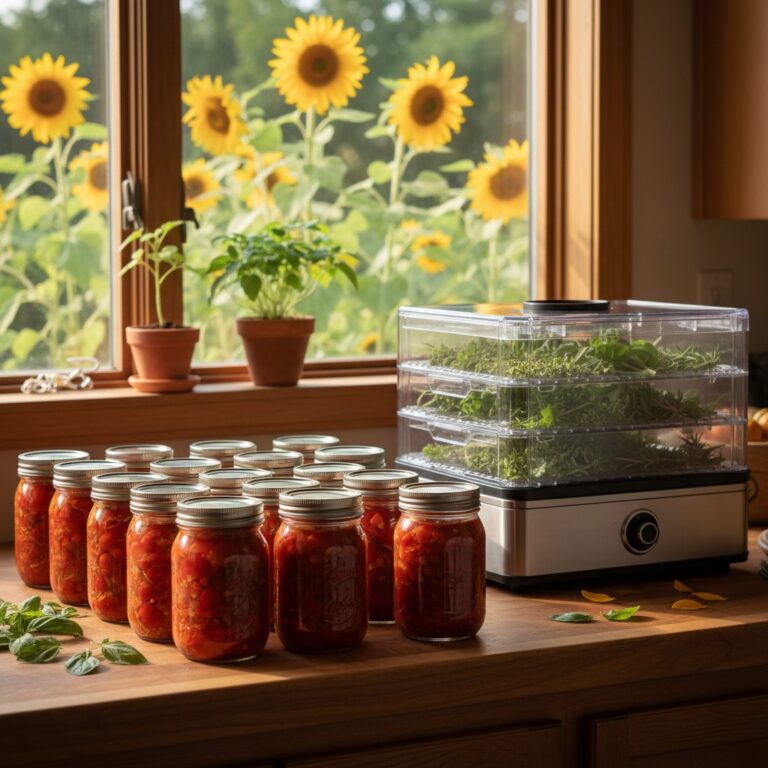
- Herb drying: Harvest herbs in the morning after dew dries for the best oil concentration.
Seasonal Cooking
Cook with the abundance. July meals should be simple, fresh, and garden-driven. Ratatouille, caprese salads, grilled vegetables, zucchini bread (you’ll make a lot of it), fresh salsa, and cold cucumber soups all shine this month. Freeze shredded zucchini in 2-cup portions for baking all winter long.
Pro tip: When your neighbors start locking their car doors so you can’t leave zucchini on their seats, it’s time to get creative. Zucchini brownies, zucchini fritters, and stuffed zucchini boats are all excellent options.
Livestock and Animals
Chicken Heat Management
Heat stress is the number one chicken health concern in July, and it can be fatal. Chickens don’t sweat — they pant and hold their wings away from their bodies to cool down. Watch for these warning signs:
- Panting with open beaks
- Wings held away from the body
- Lethargy and reduced activity
- Decreased egg production (normal in heat but watch for sudden drops)
- Pale combs and wattles
Keep your flock cool with these strategies:
- Provide multiple water stations with cool, fresh water — add ice on extreme heat days
- Ensure adequate shade in the run area
- Freeze watermelon and offer it as a cooling treat
- Provide good ventilation in the coop — open windows and consider adding a fan
- Offer electrolytes in water during heat waves
General Livestock Notes
All livestock need extra water access in July. Check automatic waterers daily — they fail more often than you’d think. Fly control becomes critical now. Use fly traps, diatomaceous earth in bedding areas, and keep manure composting areas away from animal living spaces. If you keep goats or cattle, pasture rotation helps manage parasites that thrive in summer heat.
DIY and Home Projects
July’s long days give you extra evening hours for projects. Focus on things that serve your harvest season:
- Build or repair drying racks: You’ll need them for herbs, hot peppers, and flowers through fall.
- Set up your canning station: Organize your jars, lids, tools, and workspace before the August onslaught.
- Repair fencing: Summer growth can damage fencing. Walk your fence lines and fix issues before animals find the gaps.
- Build a shade structure: A simple shade cloth frame over part of the garden or chicken run pays dividends in heat.
- Compost management: Turn your compost piles regularly. Summer heat accelerates decomposition — you should have finished compost ready for fall garden beds.
Planning Ahead
July is when organized homesteaders pull ahead. Here’s what to order and prep now:
- Order garlic: Seed garlic for fall planting sells out fast. Order from reputable suppliers now for September/October planting.
- Buy canning supplies: Lids, jars, and pectin go on sale in July. Stock up before the August rush cleans out store shelves.
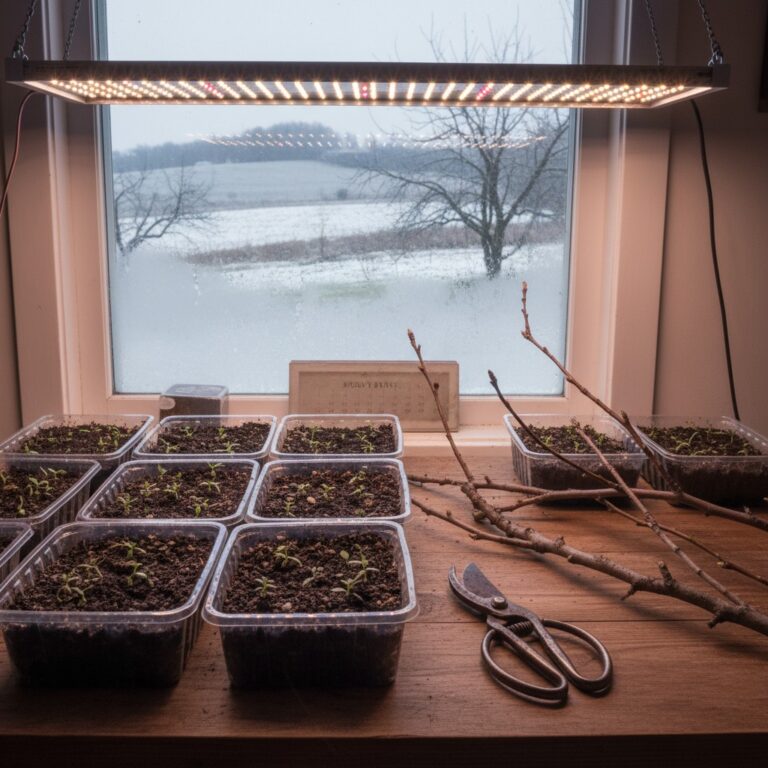
- Start fall garden seeds indoors: Broccoli, cauliflower, cabbage, and Brussels sprouts need 6-8 weeks indoors before fall transplanting.
- Plan cover crops: Research and order cover crop seed (crimson clover, winter rye, field peas) for planting after summer crops are done.
- Firewood: If you heat with wood, July is when you should be splitting and stacking. Wood needs months to season properly before winter.
July on the homestead is exhilarating, exhausting, and deeply rewarding. The work is real, but so is the satisfaction of a kitchen counter overflowing with garden produce and a pantry shelf filling up with jewel-toned jars. Pace yourself, drink plenty of water, and enjoy this abundant season.
Frequently Asked Questions
How do I keep up with the July harvest without wasting food?
The key is having a plan before the harvest hits full swing. Set up a priority system: eat fresh first, share with neighbors and food banks second, preserve (can, freeze, dehydrate) third, and compost anything that’s past its prime. Keep a running list on your fridge of what’s ready to pick and what needs to be processed. Spending 30 minutes each evening prepping the day’s harvest prevents overwhelming backlog.
My tomato plants look healthy but aren’t setting fruit in the heat. What’s wrong?
Tomato blossoms drop when daytime temperatures consistently exceed 90-95 degrees F or nighttime temperatures stay above 75 degrees F. The pollen becomes nonviable in extreme heat. This is temporary — once temperatures moderate, fruit set will resume. In the meantime, keep plants well-watered, mulched, and consider shade cloth during the hottest afternoon hours. Varieties like ‘Solar Fire’ and ‘Phoenix’ are bred for better heat-set if this is a recurring problem in your zone.
When should I start seeds for my fall garden?
Count backward from your first expected fall frost date. Most fall brassicas (broccoli, cauliflower, cabbage) need to be started indoors 10-12 weeks before first frost, which puts seed-starting in early to mid-July for most zones. Quick crops like lettuce, spinach, and radishes can be direct-sown 6-8 weeks before first frost. In Zones 8-10, you have more flexibility and can wait until August for many fall crops.
How often should I be watering my garden in July?
Most established garden beds need about 1-1.5 inches of water per week, delivered in 2-3 deep watering sessions rather than daily light sprinkles. Use the finger test — stick your finger 2-3 inches into the soil. If it’s dry at that depth, it’s time to water. Newly planted seeds and seedlings need more frequent, lighter watering until established. Raised beds and containers dry out faster than in-ground beds and may need daily attention in extreme heat.