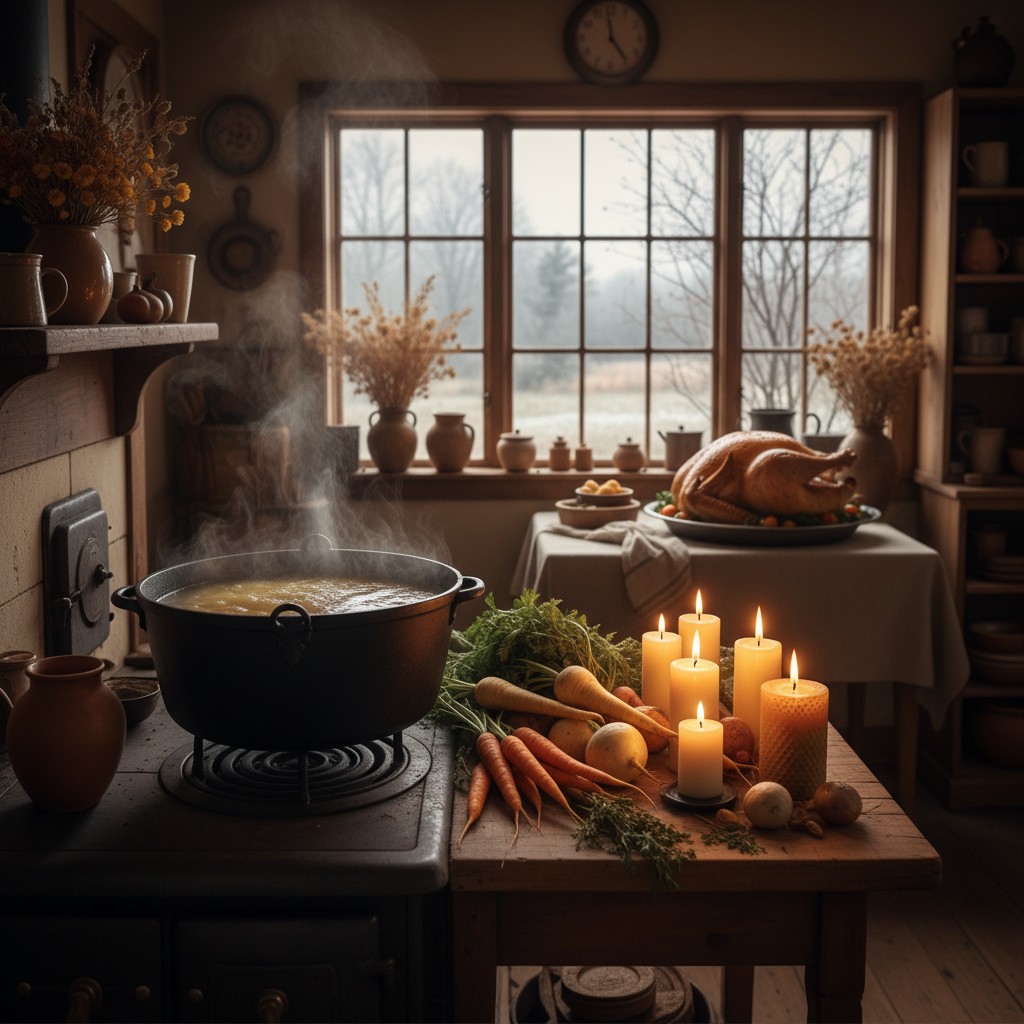
Your November Homestead Guide: What to Do This Month
Key Takeaways
- November is the traditional month for turkey processing — plan ahead, and the process goes smoothly.
- Complete all livestock winter preparations before the first serious cold snap arrives.
- Render tallow and lard from fall processing for cooking, soap making, and candles.
- Make a big batch of bone broth and can or freeze it for your winter pantry staple.
- Start making homestead-crafted holiday gifts now — you need more lead time than you think.
Garden Tasks for November
November is the month when the garden is mostly quiet, and that’s perfectly fine. After months of relentless planting, harvesting, and preserving, the homestead pace shifts inward — toward the kitchen, the workshop, and the warmth of the home. The outdoor work isn’t over, but it changes character. This month is about finishing what you started in October and preparing to hunker down for winter.
Late Fall Garden Tasks
Zones 3-4: The garden is done. Focus on making sure beds are properly mulched, tools are stored, and any remaining cold-hardy crops (if under cover) are insulated. If you haven’t finished putting beds to sleep, do it during the first November warm spell.
Zones 5-7: Harvest the last of your cold-hardy crops — kale, Brussels sprouts, carrots, parsnips, and leeks. In my experience, leaving carrots and parsnips in the ground under heavy mulch (12+ inches of straw) allows you to dig them fresh all winter in Zones 5-6, as long as you can get through the mulch and frozen top inch of soil. Plant garlic if you haven’t already — you still have time in Zones 6-7.
Zones 8-10: You’re in peak cool-season gardening mode. Plant lettuce, peas, spinach, broccoli, cauliflower, radishes, and carrots. Your November garden can be lush and productive. Watch for occasional frost and protect tender transplants.
Garden Cleanup Continued
If you didn’t finish garden cleanup in October (and honestly, who ever does?), November’s mild days are your last chance:
- Pull or cut remaining dead annual plants
- Rake and shred the last of the fallen leaves onto beds
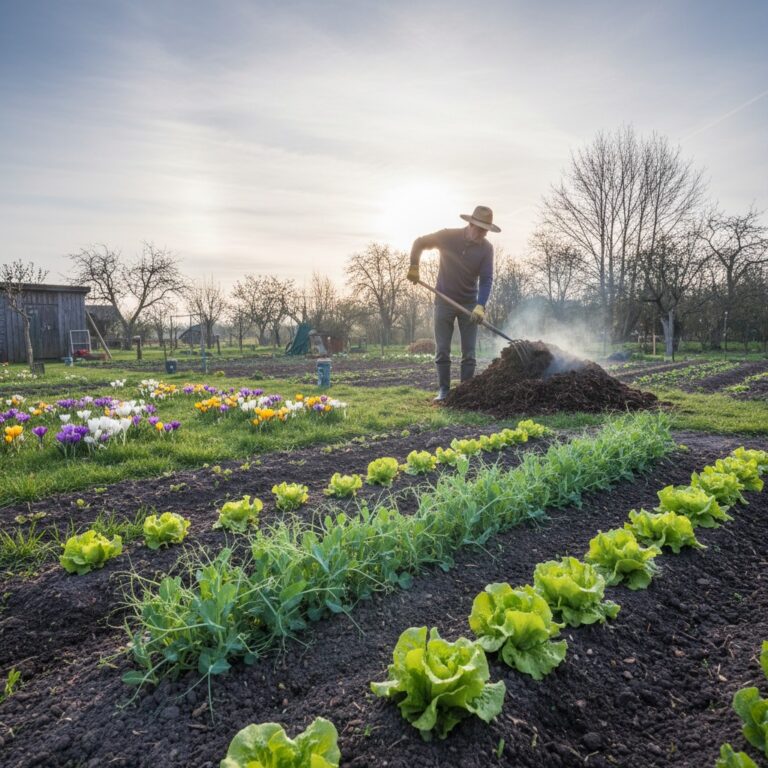
- Turn your compost pile one final time before it goes dormant for winter
- Drain and store rain barrels to prevent freeze damage
- Final check that cold frames and hoop houses are secure and sealed
Kitchen and Preserving
Turkey Processing
If you raised turkeys for Thanksgiving, November is processing month. Whether you process at home or take birds to a custom butcher, planning and preparation make all the difference.
For home processing:
- Stop feeding 12-24 hours before processing but keep water available
- Have your setup organized before you begin: sharp knives, killing cones, scalding pot (145-150 degrees F water), plucking area, eviscerating station, and ice-water chilling tubs
- Process in the morning when temperatures are cool and birds are calm
- Allow fresh-processed turkeys to rest in the refrigerator for 24-48 hours before freezing or cooking — this allows rigor mortis to pass and results in more tender meat
- A 20-25 pound live turkey typically yields 14-18 pounds of dressed weight
If this is your first time, consider helping an experienced homesteader with their processing before attempting it alone. The skill is straightforward but benefits enormously from hands-on guidance.
Rendering Fats
Fall livestock processing yields valuable fats that shouldn’t be wasted. Rendering lard (from pigs) and tallow (from cattle) is a simple process that produces incredibly versatile homestead products.
To render:
- Cut fat into small cubes or grind it
- Place in a heavy pot or slow cooker on low heat
- Stir occasionally as it melts — this takes several hours
- Strain through cheesecloth into clean jars
- Store in the refrigerator for months or freeze for even longer
Uses for rendered fats:
- Cooking and frying (lard makes the flakiest pie crusts you’ve ever tasted)
- Soap making — tallow produces a hard, long-lasting bar
- Candle making — tallow candles have been used for centuries
- Skin salves and balms
- Seasoning cast iron cookware
Bone Broth
November is bone broth season. Save every bone from your fall processing — turkey carcasses, chicken frames, beef bones, pork bones. Roast the bones first for deeper flavor, then simmer with onions, carrots, celery, garlic, peppercorns, and a splash of apple cider vinegar (which helps extract minerals).
Simmer for 12-24 hours for poultry broth, 24-48 hours for beef broth. Strain, cool, and skim the fat. Pressure can in quarts for shelf-stable storage, or freeze in various sizes for easy use. Bone broth is the foundation for winter soups, gravies, sauces, and braised dishes. Having a freezer full of it is like having liquid gold on hand.
Holiday Gifts from the Homestead
Here’s what most people miss about homemade holiday gifts: they require more lead time than you expect. Start now and you’ll enjoy the process. Wait until December and you’ll be stressed.
Gift ideas that showcase your homestead:
- Herb-infused vinegars: Beautiful in glass bottles, ready in 2-3 weeks
- Jam and jelly gift baskets: Use your prettiest canning from the summer season
- Herbal tea blends: Mix dried herbs (chamomile, mint, lemon balm, lavender) in decorative tins
- Spice blends: Custom chili powder, Italian seasoning, or taco seasoning in small jars
- Beeswax candles: Rolled beeswax candles are easy and elegant
- Handmade soap: Cold-process soap needs 4-6 weeks to cure, so make it now for December giving
- Infused honey: Garlic honey, hot pepper honey, or lavender honey
- Fire starters: Fill egg cartons with dryer lint and pour melted wax over them
Winter Pantry Check
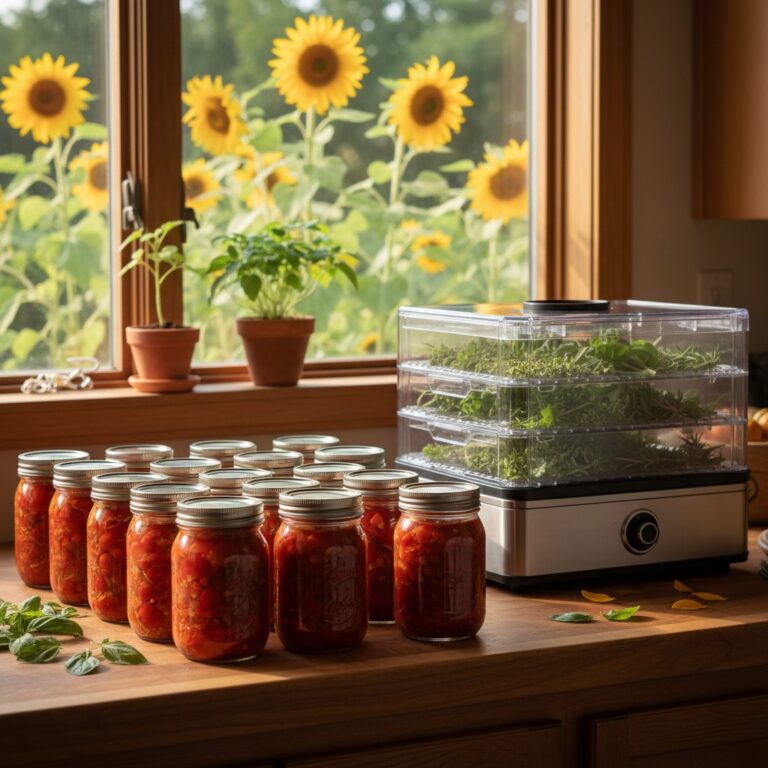
Take a thorough inventory of everything you’ve preserved this year. Walk through your pantry shelves, freezer, root cellar, and dried goods storage. Write down what you have and estimate how many months it will last. Identify gaps — if you’re low on canned tomatoes, there’s still time to buy in bulk from a farmers’ market and put up a final batch. Check for any jars with broken seals and use those first.
Livestock and Animals
Winter Prep Completion
Everything should be winterized by mid-November. No exceptions, no procrastination. A sudden cold snap can catch you off-guard and put your animals at risk.
Final winter livestock checklist:
- Water systems tested: Heated waterers plugged in and working. Backup water plan if power goes out.
- Feed storage secure: All feed in rodent-proof containers. Stock up — buying in bulk now saves money and emergency trips in bad weather.
- Bedding supplies stocked: You’ll need shavings, straw, or other bedding material for months. Buy a season’s worth while roads are clear.
- Wind breaks in place: Tarps, straw bales, or solid panels to block prevailing winds in open run areas.
- Lighting set up: If supplementing light for egg production, verify timers are set correctly.
Egg Production Changes
Don’t be alarmed if egg production drops significantly in November. Shorter days, cooler temperatures, and the stress of molting (which often happens in fall) all reduce laying. This is natural. You can supplement with artificial light to maintain production, or accept the seasonal ebb and plan meals accordingly. Many homesteaders preserve eggs in late summer and fall — water-glassed or frozen — to bridge the winter gap.
DIY and Home Projects
- Tool storage and maintenance: Final cleaning and oiling of all garden tools. Drain fuel from gas-powered equipment or add stabilizer. Service the lawn mower and tiller before storing for winter.
- Holiday crafting: Spend rainy November evenings making wreaths from dried herbs, beeswax ornaments, or knitted dishcloths from homestead wool.
- Organize the root cellar and pantry: Rotate stock. Bring older items to the front. Label everything clearly.
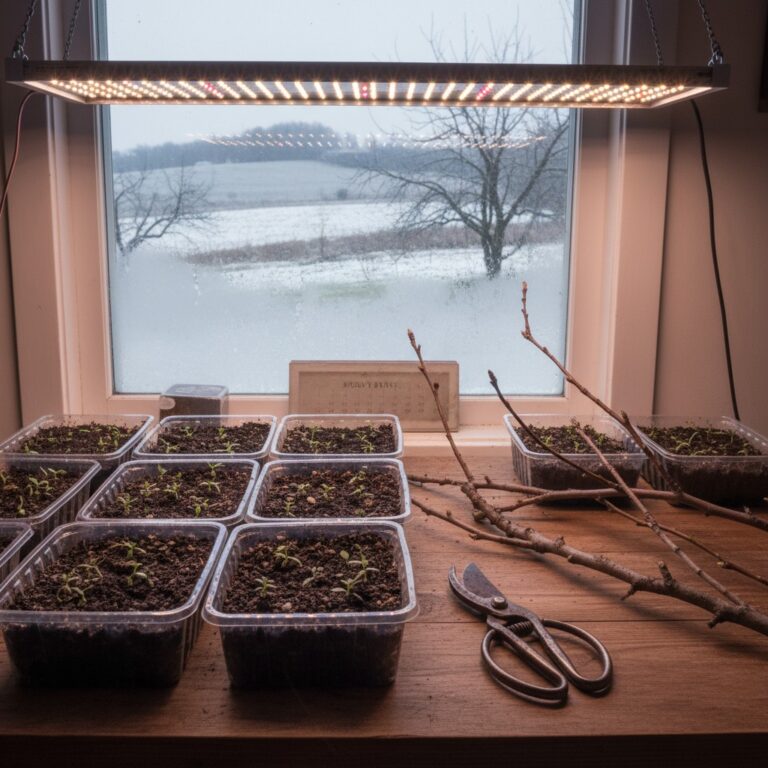
- Build a seed starting station: If you want to start seeds indoors this winter (for next spring), now is a great time to build or buy a shelving unit with grow lights.
- Insulate water pipes: Wrap exposed water lines in barns, coops, and outdoor buildings with heat tape and insulation before hard freezes arrive.
Planning Ahead
- Seed catalog browsing: The new catalogs are arriving. Circle varieties that caught your eye, dog-ear the pages, and start dreaming about next year’s garden.
- Order holiday gifts: If you need supplies for handmade gifts (soap molds, candle wicks, gift jars), order now to avoid shipping delays.
- Schedule winter projects: Make a list of indoor projects for December through February: organizing seed collections, building cold frames, repairing tools, reading gardening books.
- Plan holiday meals: Thanksgiving is the homesteader’s holiday. Plan a menu that showcases what you’ve grown, raised, and preserved this year. There’s nothing quite like a Thanksgiving table where nearly everything came from your own land.
- Review your budget: How did this year’s homestead expenses compare to your goals? What investments paid off? What do you want to budget for next year?
November is the exhale after the long, productive breath of growing season. The frantic pace of summer preserving gives way to the slower rhythms of simmering broth, rendering lard, and crafting gifts by lamplight. Your pantry is full, your animals are settled, and the garden is sleeping. Take a moment to appreciate what you’ve accomplished this year — then pour yourself a cup of tea and start planning next year. That’s the homestead cycle, and it never gets old.
Frequently Asked Questions
How do I know if my turkey is the right size for processing?
Heritage breed turkeys are typically ready for processing at 24-30 weeks of age, while Broad Breasted varieties (White or Bronze) grow faster and may be ready at 16-20 weeks. A good rule of thumb is that the bird should feel heavy and full-breasted when you pick it up. Live weight for a Thanksgiving turkey is usually 20-30 pounds for broad-breasted types and 12-20 pounds for heritage breeds. Remember that dressed weight is roughly 70-80% of live weight. If in doubt, your local extension office or experienced poultry-raising neighbors can help you assess readiness.
Is it safe to render fat at home? How do I know when it’s done?
Rendering fat at home is perfectly safe and has been done for centuries. The process is complete when the solid fat pieces (called cracklings) have turned golden brown and crispy, and the liquid fat is clear and golden. Strain carefully through cheesecloth and let cool. Properly rendered lard or tallow should be white to cream-colored when solidified, with a clean, mild smell. If your rendered fat has a strong or “off” smell, it was likely overheated. Use low, patient heat and stir occasionally. Store in sealed jars in the refrigerator for up to a year or in the freezer indefinitely.
How can I keep my chickens laying through the winter without artificial light?
The honest answer is that most heritage breeds will significantly reduce or stop laying during the shortest days of winter without supplemental light, and that’s biologically normal. However, you can encourage more consistent laying by ensuring excellent nutrition (increase protein with mealworms or black oil sunflower seeds), providing warm water so hens stay hydrated, minimizing stress, and choosing breeds known for winter laying (like Australorps, Orpingtons, or Plymouth Rocks). Some homesteaders simply accept reduced winter production and preserve surplus eggs from spring and summer using water-glassing or freezing.
What’s the best way to store homemade bone broth long-term?
You have three good options. Pressure canning produces shelf-stable broth that lasts 1-2 years at room temperature — process quarts for 25 minutes at 10 pounds pressure (adjust for altitude). Freezing is the easiest method: pour cooled broth into freezer-safe containers or silicone molds, leaving headspace for expansion. Frozen broth keeps for 6-12 months. For small quantities, freeze in ice cube trays and transfer cubes to freezer bags for easy portioning. Never water-bath can broth — it’s a low-acid food that requires pressure canning for safe shelf storage.