Your October Homestead Guide: What to Do This Month
Key Takeaways
- Watch your frost forecast closely — know your first frost date and have a plan to protect or harvest tender crops.
- Store winter squash and pumpkins properly after curing for months of shelf-stable food.
- Collect fallen leaves for free mulch, compost material, and garden bed insulation.
- Finish chicken coop winterization before the first hard freeze arrives.
- Put garden beds to sleep with compost, mulch, or cover crops for healthier soil next spring.
Garden Tasks for October
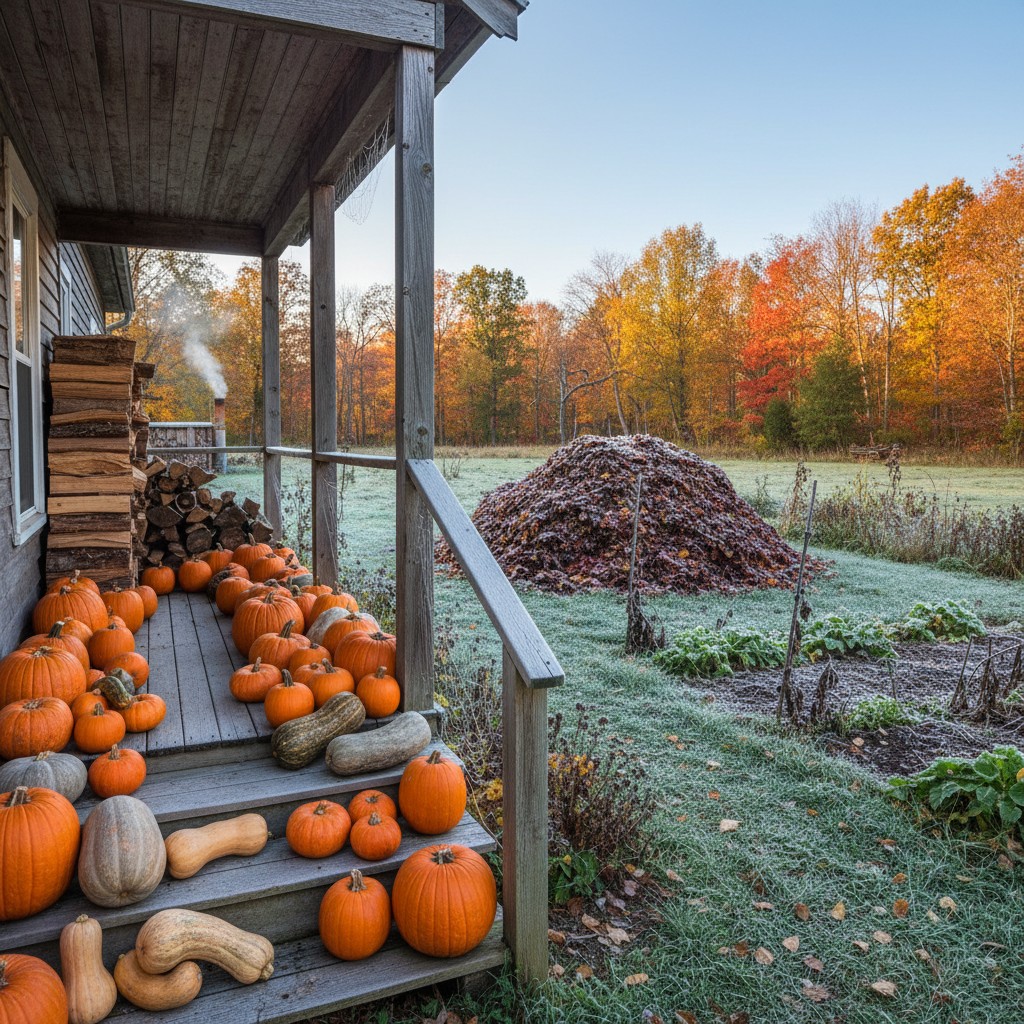
October is the month of endings and beginnings. Summer’s garden is winding down, the first frost is either coming or already here, and there’s an unmistakable urgency to get things buttoned up before winter. But October is also achingly beautiful on the homestead — golden light slanting across the garden, the crunch of leaves underfoot, pumpkins glowing on the porch. In my experience, leaning into both the work and the beauty makes this month one of the best.
First Frost Prep
If you haven’t already had your first frost, it’s coming. The average first frost date varies enormously by zone, but October brings frost to a huge swath of the country.
When frost is forecast:
- Harvest all tender crops: Tomatoes, peppers, eggplant, basil, summer squash, beans, and cucumbers will not survive a frost. Pick everything.
- Cover or don’t bother: Row covers and old sheets can buy you a few more weeks for semi-hardy crops, but don’t stress about protecting things that are nearly done producing anyway.
- Leave the cold-hardy crops: Kale, collards, Brussels sprouts, carrots, turnips, leeks, and parsnips actually improve in flavor after a light frost. The cold converts starches to sugars.
- Bring in herbs: Pot up rosemary, a favorite basil plant, or other tender herbs for a sunny windowsill indoors.
Zones 3-4: Your first frost likely arrived in September. October is about final harvests of cold-hardy crops and serious garden shutdown.
Zones 5-7: First frost typically hits in October. Be ready with your harvest plan and row covers.
Zones 8-10: You’re still actively gardening. Continue planting cool-season crops and enjoy the moderate temperatures that make fall your best growing season.
Green Tomato Solutions
Unless you live in the deep South, you’ll end October with green tomatoes. Lots of them. Here’s what to do:
- Ripen indoors: Tomatoes that have started to show any color change (even a slight blush) will ripen on a windowsill or counter. Place in a single layer, not touching. A banana nearby speeds ripening with ethylene gas.
- Fried green tomatoes: The classic. Slice thick, dredge in cornmeal, and fry in cast iron. Perfection.
- Green tomato relish: A tangy condiment that cans beautifully and tastes amazing on sandwiches and burgers.
- Green tomato chutney: Sweet, spicy, and complex. Excellent with cheese boards.
- Wrap individually in newspaper: Store in a single layer in a cool (55-65 degree F) dark place. Check weekly. They’ll ripen slowly over several weeks.
Putting Garden Beds to Sleep
This is one of the most important garden tasks of the entire year, and here’s what most people miss: what you do to your soil in October directly determines your soil health next spring.
- Remove spent plants: Pull all finished crops and add healthy plant material to compost. Diseased material goes in the trash, not the compost pile.
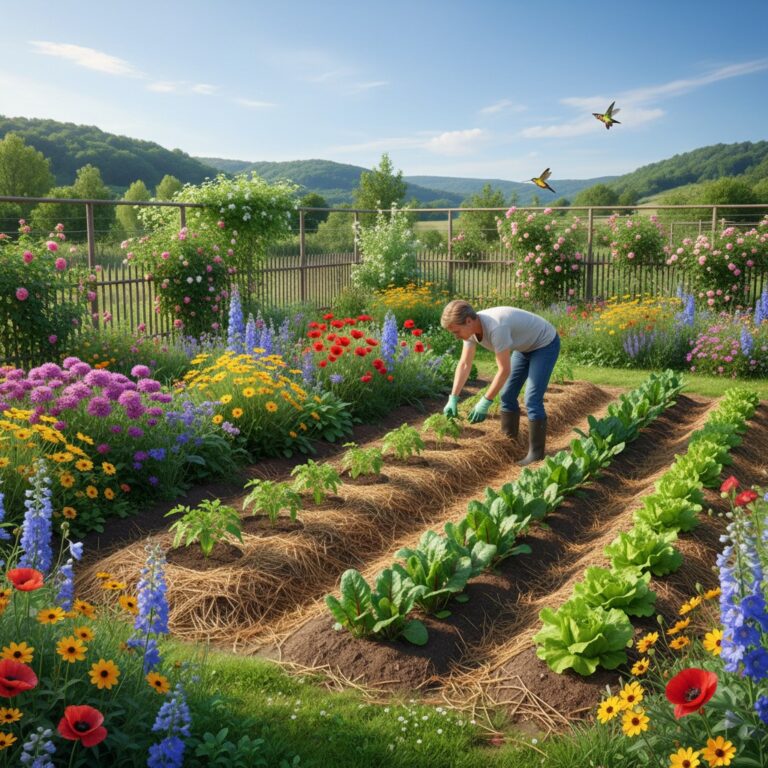
- Add compost: Spread 2-3 inches of finished compost over beds. Fall-applied compost has all winter to integrate into the soil.
- Mulch heavily: Top compost with 4-6 inches of shredded leaves, straw, or other organic mulch. This insulates the soil, suppresses early spring weeds, and feeds soil organisms.
- Plant cover crops: If you haven’t already, winter rye can still be planted in October for Zones 5 and warmer.
- Leave root systems: When you pull crops, consider cutting at the soil line and leaving roots to decompose in place. They create channels for water and air and feed soil biology as they break down.
Leaf Mulch Collection
Free mulch is falling from the sky. Collect as many leaves as you possibly can — they are garden gold.
Run your lawn mower over leaves to shred them (whole leaves mat together and repel water). Store shredded leaves in wire bins, garbage bags with holes punched for airflow, or simply pile them directly onto garden beds. Shredded leaves make excellent mulch, compost browns, and pathway covering. You cannot have too many leaves. Your neighbors are bagging them for trash — ask if you can take them.
Kitchen and Preserving
Pumpkin and Winter Squash
October’s signature crops are pumpkins and winter squash, and they’re some of the easiest foods to store long-term without any processing at all.
Curing and storage tips:
- Harvest with 2-3 inches of stem attached. Never carry by the stem — it can break and create an entry point for rot.
- Cure in a warm (80-85 degree F), dry place for 10-14 days. This toughens the skin and heals small nicks.
- Store cured squash in a cool (50-55 degree F), dry area with good air circulation. Don’t let them touch each other.
- Butternut squash stores longest (up to 6 months). Acorn squash has the shortest shelf life (about 2 months). Pie pumpkins last 2-3 months.
Roast extra pumpkin and squash, puree, and freeze in 2-cup portions for soups, pies, and baking all winter.
Root Cellaring
October is when the root cellar really starts to earn its keep. Begin loading in your storage crops:
- Potatoes: Cure for 1-2 weeks in a dark, 45-60 degree F space, then move to root cellar storage (38-40 degrees F, high humidity).
- Carrots and beets: Layer in boxes of damp sand or sawdust. Trim tops to half an inch.
- Turnips and rutabagas: Store like carrots, in damp sand.
- Onions and garlic: These need dry storage with good airflow — mesh bags or braids hung in a cool, dry space.
- Apples: Store separately from vegetables (they release ethylene gas). Wrap individually in newspaper for longest storage.
Late-Season Preserving
The canning season is winding down, but October still has opportunities:
- Apple butter and apple cider (the last of the apple harvest)
- Pumpkin butter (note: pumpkin puree itself is not safe for home canning due to density — freeze it instead)
- Fermented sauerkraut from late-season cabbage
- Hot sauce from the final pepper harvest
- Bone broth from fall livestock processing — pressure can or freeze
Livestock and Animals
Finishing Chicken Coop Winterization
Everything you started in September should be completed now. Your chickens need to be set up for winter before the first hard freeze.
- Deep litter method: Start building your deep litter base now if you use this system. Lay 4-6 inches of pine shavings or chopped straw. Add more on top throughout winter rather than cleaning out. The decomposing bedding generates gentle heat.
- Water plan: Decide how you’ll keep water from freezing. Heated waterer bases, heated poultry fountains, or simply refreshing water twice daily if you don’t have electricity in the coop.
- Predator check: Hungry predators become more aggressive as their food sources dwindle in winter. Inspect all hardware cloth, latches, and potential entry points.
- Supplemental lighting: If using lights, set timers to add morning light (extending the beginning of the day, not the end) to reach 14-16 hours total.
Fall Livestock Processing
October and November are traditional processing months. If you’re harvesting meat birds, turkeys, or larger livestock, having everything organized and scheduled makes the process go smoothly. Ensure freezer space is available and your processing equipment is clean, sharp, and ready.
DIY and Home Projects
- Drain and store garden hoses: Before freezing temperatures arrive, disconnect, drain, and coil all garden hoses. Shut off exterior water faucets if you have indoor shutoffs.
- Clean and store tools: Wash, sharpen, oil metal parts, and sand wooden handles. Rub linseed oil into wooden handles to prevent cracking. Hang tools in a dry shed or garage.
- Clean out the greenhouse or cold frame: Wash glazing for maximum winter light. Organize pots and trays.
- Prepare snow removal equipment: Service the snow blower, repair snow shovels, and stock ice melt.
- Preserve your harvest data: Take photos of the garden, note what grew where (for rotation planning), and record yields while it’s all fresh in your mind.
Planning Ahead
- Thanksgiving planning: If you’re hosting, start planning your menu now. Thaw your turkey well in advance (allow 24 hours per 4-5 pounds in the refrigerator).
- Holiday gift making: Start homemade gift projects now. Herbal salves, infused vinegars, candles, and beeswax wraps all make lovely gifts and need lead time.
- Seed catalogs: Many companies release their new catalogs in October and November. Sign up for your favorites now.
- Assess your year: What worked this season? What didn’t? What do you want to add or change next year? Write it down while you remember.
- Winter reading list: Stock up on homesteading books, seed catalogs, and preservation guides for long winter evenings.
October on the homestead is about gratitude and grit. You’re grateful for the harvest, for the full pantry, for the golden afternoons. And you’re gritty enough to keep working through the garden shutdown, the coop winterization, and the endless leaf-raking because you know that taking care of your land now is how you take care of your family later. Embrace this hardworking, beautiful month.
Frequently Asked Questions
What should I do with all my fallen leaves?
Everything. Shred them with a lawn mower and use them as garden bed mulch, pathway covering, compost material (they’re an excellent “brown” carbon source), or chicken run bedding. Store extras in wire bins or bags for adding to compost throughout the year. Leaves are one of the best free soil amendments available. A thick layer of shredded leaves on garden beds suppresses weeds, retains moisture, and builds beautiful soil as they decompose. Never send them to the landfill — they’re far too valuable.
How do I protect my garden from the first frost without losing everything?
Focus your efforts strategically. Harvest all truly frost-tender crops (tomatoes, peppers, basil, summer squash, beans) before frost hits — these can’t be protected economically on a large scale. For semi-hardy crops you want to extend, use row covers, old bed sheets, or frost blankets draped over supports (not directly on foliage). Remove covers during the day. Don’t bother covering cold-hardy crops like kale, collards, carrots, parsnips, and Brussels sprouts — they handle frost just fine and often taste better after exposure to cold.
How long can I store winter squash without a root cellar?
You don’t need a root cellar for winter squash — in fact, squash prefers drier, slightly warmer conditions than root cellars provide. A cool bedroom, unheated spare room, or closet that stays around 50-55 degrees F works perfectly. Butternut squash can last 4-6 months under good conditions. Hubbard types store 3-5 months. Acorn squash is shorter-lived at about 2 months. Check stored squash weekly for soft spots and use any that show signs of deterioration promptly.
Should I remove all old plant material from the garden in fall?
Remove plants that were diseased (to prevent pathogens from overwintering in the soil), but healthy plant residue can be managed differently. You can compost healthy stalks and leaves, or chop and drop them directly onto beds as mulch. Some gardeners leave standing stems of certain plants to provide winter habitat for beneficial insects. The key principle is: remove disease, retain and recycle healthy organic matter. Always follow up with a layer of compost and mulch to protect and feed the soil over winter.