Raising Rabbits for Beginners: The Quietest Homestead Livestock
Rabbits don’t crow at 5 a.m. They don’t escape through a gap and sprint to a neighbor’s garden. They don’t require a pasture. For a homestead on a quarter-acre suburban lot, or for a family easing into livestock before committing to chickens or goats, rabbits are often the right first animal. A trio of does and one buck can produce over 150 pounds of meat per year in a 4×8-foot footprint, and their manure goes straight to the garden without hot-composting first.
That said, rabbits in 2026 face a genuine biosecurity threat that did not exist a decade ago. Rabbit Hemorrhagic Disease Virus 2 (RHDV2) has spread across the United States and parts of Canada, killing wild and domestic rabbits alike with almost no warning. This guide covers that risk head-on, then walks you through every practical step of starting a healthy rabbit operation.
If you’re already raising chickens, the husbandry mindset transfers well, read our complete beginner’s guide to backyard chickens for a side-by-side look at what livestock keeping really demands.
Is RHDV2 Active in Your Area? Check Before You Buy
Rabbit Hemorrhagic Disease Virus 2 is a calicivirus that causes rapid hemorrhagic disease in domestic and wild lagomorphs. Mortality rates in unvaccinated populations exceed 70 percent in many outbreaks. The virus was first confirmed in the continental United States in New Mexico in March 2020. By 2024 it had been detected in wild populations across the Southwest, Pacific Coast states, parts of the Mountain West, and isolated pockets in the Midwest and Southeast. The geographic picture changes month to month.
Before you purchase your first rabbit, spend ten minutes on two federal resources. The USDA Animal and Plant Health Inspection Service (APHIS) maintains a state-by-state RHDV2 situation report updated as new confirmations come in. The second resource is your state animal health official, every state has one, and APHIS lists contact information on the same page. A confirmed case in wild cottontails 50 miles from your property changes your biosecurity calculus entirely.
Why does this matter before purchase? Because RHDV2 survives on fomites, clothing, shoes, equipment, hay, and feed, for weeks at room temperature, and for months in cool or frozen conditions. A rabbit purchased at a swap meet from a seller whose region has active wild-rabbit die-offs is a meaningful exposure pathway. Knowing the regional status lets you make an informed sourcing decision.
Why Does a Rabbit Need a Vet Before It Gets Sick?
Most general-practice veterinarians are comfortable with dogs and cats. Rabbits are exotic small mammals, and many vets have limited training in lagomorph medicine. Finding a rabbit-savvy vet, ideally one who has treated GI stasis, dental malocclusion, and uterine cancer, before you have an emergency is not optional. It’s the same principle as having a farm vet on file before kidding season: by the time you need one, it’s too late to shop around calmly.
Ask specifically whether the vet has experience with rabbit GI stasis (the most common emergency), dental floats in rabbits (different anatomy from rodents), and whether they stock fluids and pain medication appropriate for lagomorphs. The House Rabbit Society maintains a searchable database of rabbit-savvy vets by ZIP code.
In areas with confirmed or suspected RHDV2 activity, some vets can advise on the imported RHDV2 vaccines (Filavac VHD K C+V and Medgene Labs’ killed vaccine). As of 2025, these vaccines are available through licensed veterinarians via USDA-authorized protocols. Your vet is the right person to assess whether vaccination is appropriate given your region’s status and your herd size.
What Biosecurity Practices Protect a Backyard Rabbit Herd?
Biosecurity for rabbits is not complicated, but it requires consistency. The core principle is controlling what enters your rabbitry and limiting contact between your animals and potential sources of pathogen introduction. RHDV2 makes this especially important because the virus has no treatment, prevention is the only tool available.
Dedicated footwear and clothing. Keep a pair of boots or shoe covers at the rabbitry entrance. Change clothes or put on a coverall before handling rabbits if you’ve been at a location with other animals. The virus travels on the soles of shoes.
Quarantine new animals. Any rabbit coming into your herd, purchased, borrowed, or returned from a show, should spend 30 days in a separate space with no air, equipment, or bedding shared with your existing animals. This catches both RHDV2 and more common issues like ear mites, pasteurellosis, and coccidia.
Source hay carefully. RHDV2 has been detected in hay in outbreak regions. Buying from a supplier who stores hay indoors and has no contact with wild rabbits reduces (but does not eliminate) the risk. Some producers in active-outbreak areas are heat-treating hay as an added precaution.
Control wild rabbit contact. Wild cottontails and jackrabbits are reservoir hosts for RHDV2 in the United States. Fence the rabbitry perimeter to prevent nose-to-nose contact. Do not allow dogs that roam fields where dead wild rabbits might be found to have contact with your domestic rabbits before washing.
Disinfect correctly. RHDV2 is resistant to many common disinfectants. Effective options include 10% bleach solution (sodium hypochlorite at 1:10 dilution), potassium peroxymonosulfate products (Virkon-S, Trifectant), and commercial oxidizing agents. Quaternary ammonia compounds and alcohol-based sanitizers have weak or no efficacy against RHDV2. Allow contact time of at least 10 minutes.
What Should You Do If Rabbits Die Without an Obvious Cause?
RHDV2 kills quickly. A rabbit that appeared healthy in the morning may be found dead by evening, sometimes with blood from the nose or mouth, sometimes with no external signs at all. Sudden death in multiple rabbits within days of each other is a pattern that warrants immediate reporting, not a wait-and-see approach.
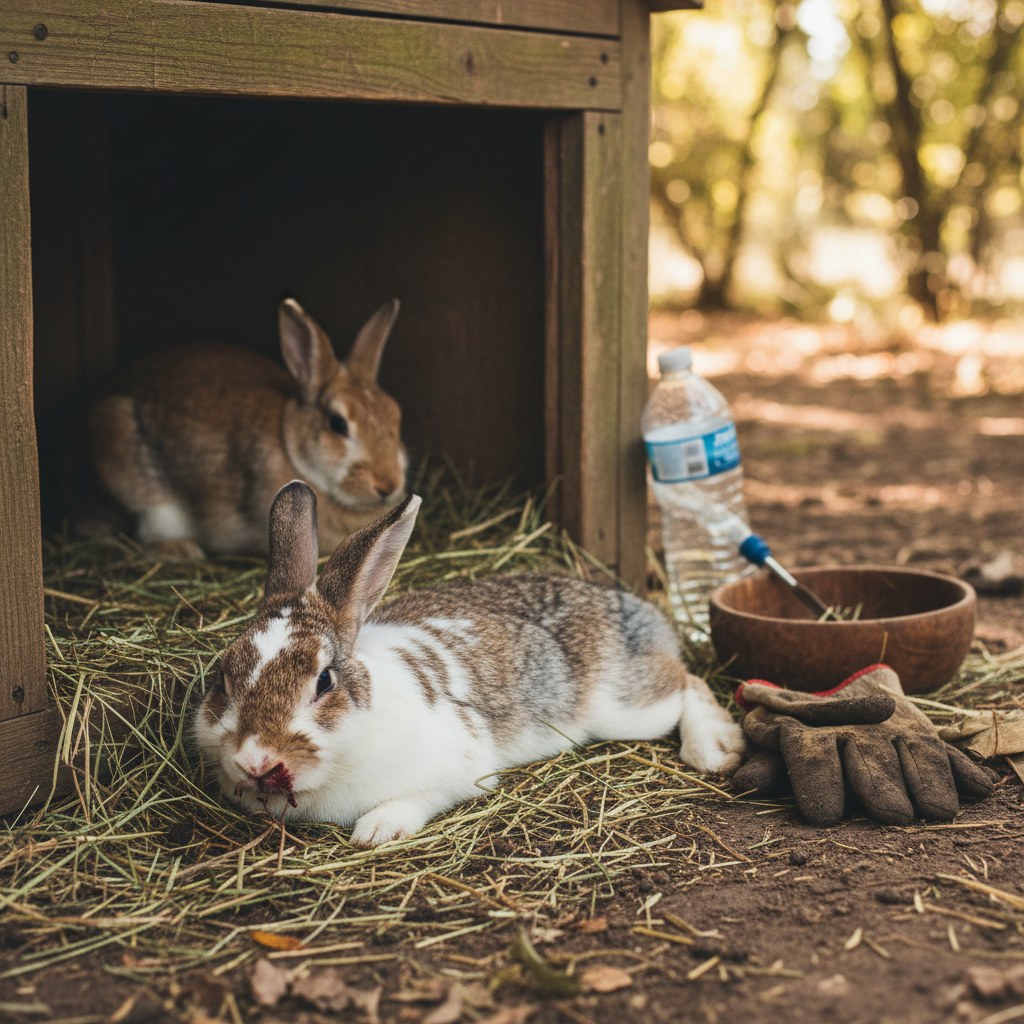
Contact your state veterinarian or state animal health official the same day. USDA APHIS also has a Veterinary Services emergency line. Do not dispose of carcasses or clean the area before a state official advises you, dead animals may be needed for diagnostic testing. Carcasses should be double-bagged in heavy plastic and kept cool (not frozen, which can complicate some tests) until instructions are given.
If RHDV2 is confirmed, your state may request a voluntary herd inventory and advise on depopulation protocols for remaining animals. This is exactly as serious as it sounds, which is why prevention and early vet relationships matter so much. Rabbit owners who have reported cases quickly have helped state and federal officials track spread and protect neighboring herds.
Which Rabbit Breed Is Right for a Beginner Homestead?
Breed choice should follow your primary goal: meat production, fiber, dual-purpose, or pet-quality stock. The wrong breed for your purpose makes every subsequent step harder, a fiber breed raised for meat requires significantly more processing effort per pound, and a giant breed in a small hutch is a welfare problem. Here are the five breeds that dominate beginner homestead setups, with honest notes on each.
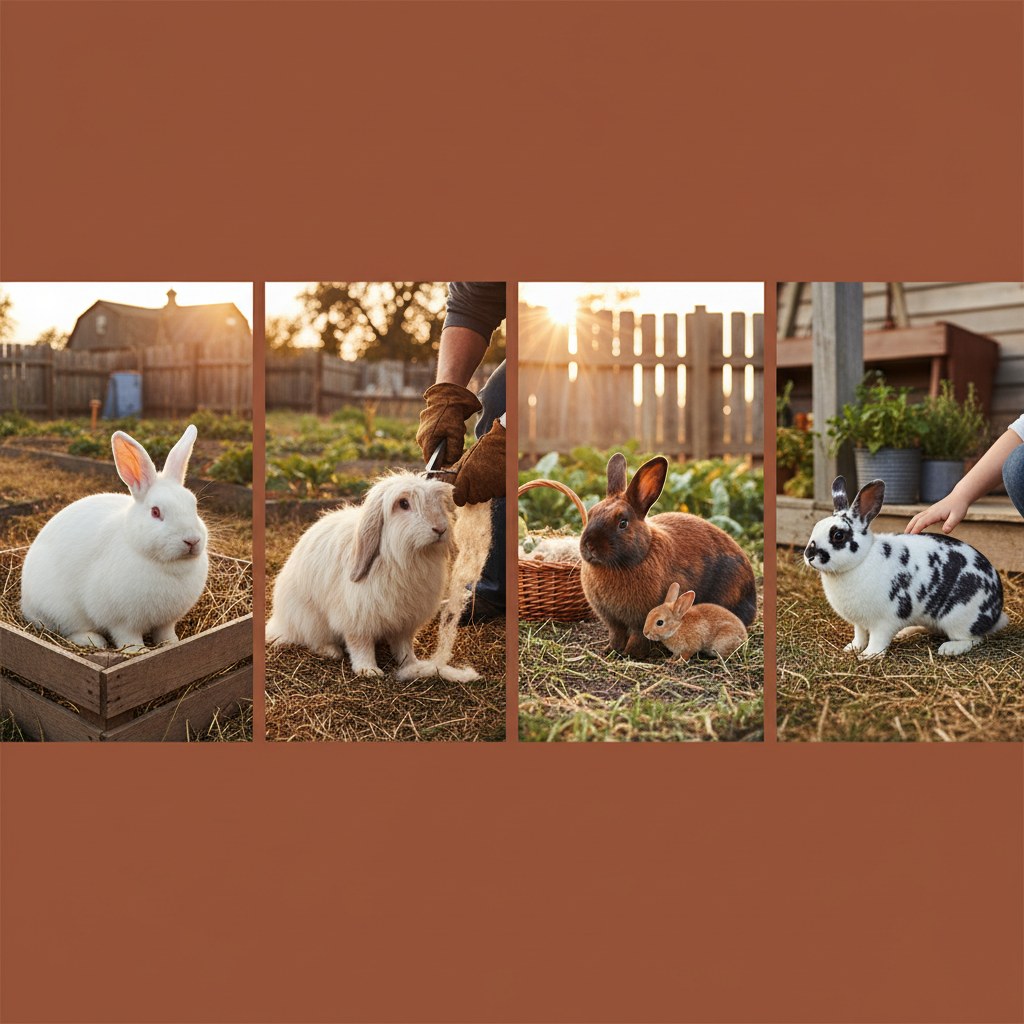
New Zealand White (meat). The industry standard for rabbit meat production. Does reach 9–12 lbs, dress out well, and kindle large litters (8–12 kits is common). Temperament ranges from calm to twitchy depending on the line, buy from a breeder who handles animals regularly. Fur is white and not particularly valuable.
Californian (meat). Similar production performance to New Zealand White with a distinctive black-tipped coat. Slightly smaller frame, well-suited to smaller hutch configurations. Often described as calmer than New Zealands in a backyard setting.
Rex (dual-purpose). Medium-sized (7–9 lbs), known for a velvet-like plush coat that has commercial value for craft and fur markets. Decent meat-to-bone ratio. Rex does are considered attentive mothers. The fur alone justifies the breed for homesteaders who sell value-added products.
Holland Lop (pet/fiber crossover). Small (under 4 lbs), lop-eared, and highly social. Not a meat breed. Good choice if children are a primary audience or if you plan to sell animals as pets. Require the same biosecurity precautions as any rabbit.
Angora (fiber: French or Giant). French Angoras produce 16–18 oz of harvested fiber per year per rabbit. Giant Angoras produce more but require more space. Fiber from Angoras commands $6–$16 per oz raw, significantly more when spun. Grooming is non-negotiable, fiber rabbits that aren’t groomed every 1–2 weeks develop wool block, a fatal condition.
How Should You Set Up Housing and a Hutch?
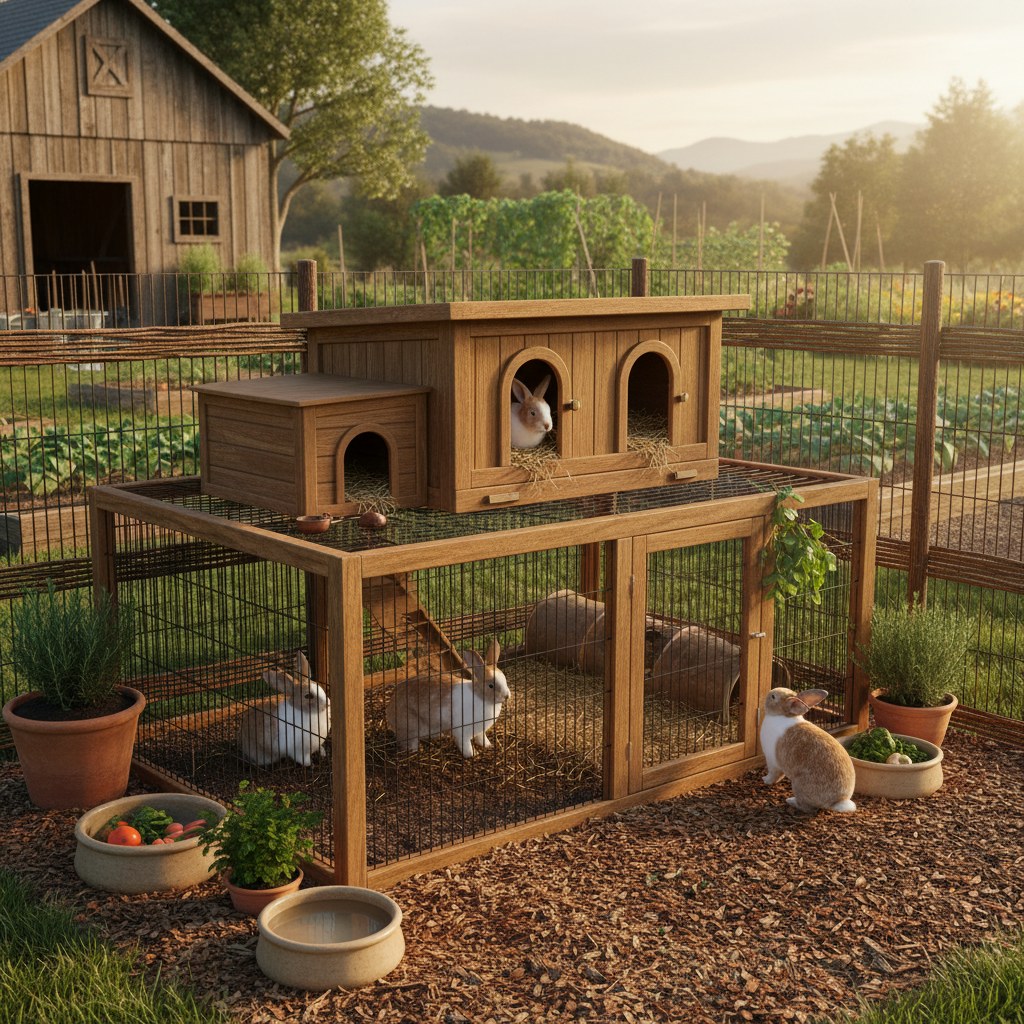
Rabbits need shelter from temperature extremes, protection from predators, and enough space to move. They do not need elaborate structures, but they cannot tolerate overheating, sustained temperatures above 85°F cause heat stress, and above 95°F can be fatal. In cold climates down to about 20°F, healthy adult rabbits manage well with draft protection and dry bedding, no supplemental heat required.
Hutch sizing. The baseline rule is 1 square foot of floor space per pound of rabbit body weight, with a minimum of 8 square feet for a medium breed doe. A 2×4-foot hutch marketed at pet stores is too small for any production breed. For a meat trio (one buck, two does), plan on three separate enclosures: bucks and does are housed separately except for intentional breeding. Does with litters need a nest box added approximately 28 days after breeding.
Wire vs. Solid flooring. Wire-bottom hutches allow waste to fall through, reducing ammonia buildup and the risk of coccidia. The trade-off is sore hocks, pressure sores on the hind feet that develop when rabbits stand continuously on wire. Provide a solid resting board (a flat piece of untreated pine works) in every wire-bottom hutch.
Predator proofing. Raccoons can reach through standard welded wire and remove a rabbit’s foot or head without opening the hutch. Use 14-gauge or heavier welded wire with openings no larger than 1×2 inches. Raccoons can also undo simple hook-and-eye latches, use locking carabiners or double-latch systems. Hardware cloth (19-gauge, ½-inch grid) is more secure than chicken wire for any panel a predator might contact directly.
Ventilation vs. Draft. Rabbits need fresh air but not wind blowing directly on them. Siting the hutch inside a barn or under a three-sided structure with the open face away from prevailing wind handles both requirements. In hot climates, shade cloth and frozen water bottle “air conditioning” (place frozen 2-liter bottles in the hutch on hot days) are practical tools.
Manure management. Rabbit pellets are cold manure, they can go directly onto vegetable garden beds or into a compost pile without burning plants. One doe produces roughly 200 lb of manure per year. A tray under the hutch that slides out for collection keeps the space manageable. If you already compost kitchen scraps, rabbit manure is a high-nitrogen addition that speeds the process, see our guide on composting kitchen scraps into garden gold.
What Do Rabbits Actually Need to Eat?
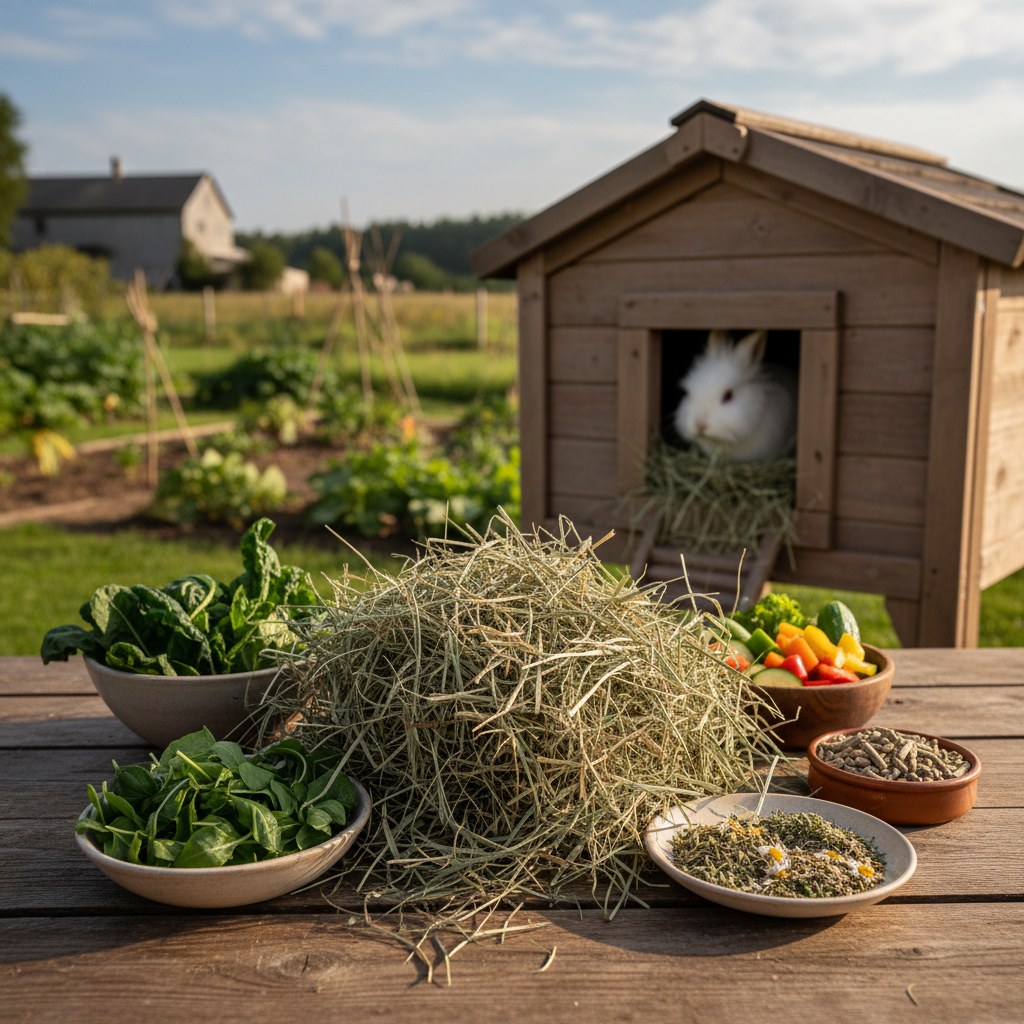
The single most important nutritional fact about rabbits is that their digestive system is dependent on continuous fiber movement. A rabbit that stops eating hay for more than a few hours is at risk of GI stasis, a slowdown or cessation of gut motility that becomes fatal within 24–48 hours without veterinary intervention. Hay is not optional and it is not supplemental. It is the base of the diet, available continuously.
Hay. Timothy, orchard grass, or meadow hay for adults. Alfalfa hay is too high in calcium and protein for adult rabbits (it’s appropriate for growing kits under 6 months and pregnant or lactating does). Hay should smell fresh, not musty. A rabbit should consume a bundle of hay roughly the size of its own body every day. If you’re seeing normal cecotropes (the soft, grape-cluster droppings rabbits eat directly from their hindquarters) and formed fecal pellets, gut motility is good.
Pellets. High-quality plain pellets without seeds, nuts, or colorful dried fruit added. For adult rabbits, about ¼ cup per 6 lbs of body weight per day is a starting point, adjust based on body condition, not appetite. Pellets should be timothy-based for adults, not alfalfa-based. Overfeeding pellets at the expense of hay is the most common diet error in pet rabbits and production rabbits alike.
Fresh greens. Leafy greens provide water, nutrients, and enrichment. Introduce new greens gradually to avoid soft stools. Reliable staples: romaine lettuce, cilantro, parsley, kale (small amounts), dandelion greens, and fresh herbs. Avoid iceberg lettuce (no nutritional value, excess water), spinach and beet greens in large quantities (high oxalic acid), and any part of the rhubarb plant (toxic). One to two cups per 6 lbs body weight daily is reasonable for adults.
Water. Continuous access to clean water is non-negotiable. Rabbits in warm weather or lactating does can drink surprisingly large volumes. A doe nursing a large litter may drink half a liter or more per day. Sipper-bottle systems are common in hutch setups, but bowls work well and allow easier monitoring of intake. Check and refill water at least twice daily in summer.
What to avoid. Bread, crackers, pasta, and starchy treats cause cecal dysbiosis. Sugary fruits should be given in small amounts only (a teaspoon-sized piece of apple or berry occasionally, not daily). Corn, peas, and beans are poorly digested by rabbits. Avocado, chocolate, and onion are toxic. Any plant in the nightshade family (raw potato, tomato leaves) should be excluded.
Frequently Asked Questions
How much does it cost to start with rabbits?
Startup costs for a basic meat trio (one buck, two does) typically run $150–$350 for quality breeding stock from a reputable breeder. Hutch materials for three separate enclosures built from scratch cost $100–$250 in lumber and hardware cloth. Monthly feed costs for three adults average $20–$40 depending on hay prices in your region. First-year veterinary costs are unpredictable but budgeting $100–$200 for a wellness check and any parasite management is prudent.
Do rabbits need vaccinations?
In the United States, no rabbit vaccines are currently approved by the USDA for routine commercial use as of 2025, but two vaccines (Filavac VHD K C+V, imported from Europe, and a Medgene Labs product) are available through licensed veterinarians under USDA-authorized conditional use in areas with confirmed RHDV2 risk. Whether vaccination is appropriate depends on your region’s RHDV2 status and your herd size. Consult a rabbit-savvy vet familiar with your state’s current outbreak situation.
Can rabbits live outdoors year-round?
Yes, in most U.S. Climates, with appropriate housing. Healthy adult rabbits tolerate cold far better than heat. The critical requirements are: draft-free shelter, dry bedding, no standing water freezing in their enclosure, and protection from predators that become bolder in winter. In climates with sustained temperatures above 90°F, active cooling measures (shade, ventilation, frozen bottles) are necessary. Temperatures above 95°F for extended periods require moving animals indoors.
How many rabbits do I need for a family meat supply?
A trio (one buck, two does) producing four litters per doe per year, with 7–8 kits per litter, can yield 50–70 fryers annually. A fryer dressed at 10–12 weeks weighs roughly 3–4 lbs. That trio produces approximately 200–280 lbs of live weight, or 120–168 lbs of dressed meat per year, enough to provide 2–3 rabbit meals per week for a family of four, depending on portion sizes and how you use the whole animal.
What is GI stasis and how do I recognize it?
GI stasis is a slowdown or complete stop of intestinal movement. Early signs: the rabbit stops eating hay or pellets, produces fewer or no fecal pellets, sits hunched with a tucked abdomen, and becomes lethargic. The gut may feel hard or gassy. This is an emergency. Do not wait to see if the rabbit “perks up.” Call your rabbit-savvy vet immediately. Stasis progresses rapidly and a rabbit that is not eating and producing droppings for 12+ hours needs veterinary attention the same day.