
The Homestead Year: A Month-by-Month Guide
This is the calendar I actually work from, pulled together into one
page so it can be read in the doorway on the first of the month rather than hunted
for. It replaces the twelve separate monthly guides that used to live here, which
said much the same things at much greater length.
One caveat before the list. Everything below is written from a zone 6b/7a
homestead in Exeter, Rhode Island, where the last frost lands in the first half of
May and the first one somewhere in early October. If you garden two zones south of
me, read each month as the month before. The sequence holds everywhere. The dates
do not.
Winter: Planning and Repair
January
The quietest month, and the one that quietly decides how the rest of the year goes. Nothing you do in January shows up until May, which is exactly why it gets skipped. Seed stock for the varieties worth having sells out in February, and a tool sharpened now is a tool you are not fighting in April mud.
- Order seed catalogues and sketch the layout while there is time to think about it
- Sharpen, clean and oil every tool before spring mud arrives
- Work through the root cellar and pantry, rotating what is ageing to the front
- Plan crop rotation, so that nothing in the nightshade family lands where it sat last year
February
Order things now that will not exist later, and prune while the trees are still asleep. Hatcheries take chick orders months ahead and the good breeds go first. Pruning before the buds swell means the tree spends its spring energy on the branches you kept rather than healing cuts.
- Order chicks and ducklings before spring stock is gone
- Start onions, leeks, peppers and celery indoors under lights
- Prune dormant fruit trees before the buds swell
- Deep-clean the coop while the flock is spending most of its time outdoors
December
Daily animal care, and the indoor work that keeps a kitchen interesting through the dark half of the year. Water is the thing that will catch you out. A flock can go a surprising while on cold feed and no time at all on ice.
- Check water, feed and shelter every day without exception, twice in a hard freeze
- Grow sprouts and microgreens on a windowsill for something fresh
- Render tallow and lard from autumn processing
- Read back through the year’s notes before the catalogues arrive
Spring: Everything at Once
March
Cool-season planting begins the moment the soil can be worked, and the temptation is to start before it can. The test is simple: squeeze a handful. If it holds together in a wet ball rather than crumbling, wait. Working clay wet builds clods that take a full season to break down again.
- Direct sow peas, lettuce, spinach and radishes as soon as the ground is workable
- Turn compost into beds and break up anything compacted over winter
- Keep the indoor seed starting going for tomatoes, peppers and squash
- Do not work wet clay. It sets into clods that take a season to undo
April
The heaviest planting month, and the one most likely to catch you out. Last frost is an average, not a promise, and a single unforecast night in the low thirties will take everything tender you put out the week before. Keep row cover where you can reach it in the dark.
- Transplant hardened-off seedlings and direct sow widely
- Know your last frost date and watch the forecast every evening
- Keep row cover within reach for a late cold snap
- Inspect hives on a warm day and judge how the colony came through winter
May
Warm-season planting, and the month mulch earns its keep. Wait for the soil to warm before mulching rather than mulching on schedule. Mulch laid over cold ground insulates the cold in and holds the tomatoes back for weeks.
- Plant tomatoes, peppers, squash, cucumbers and melons once frost has passed
- Start succession sowing beans, lettuce and radishes every two to three weeks
- Mulch everything once the soil has warmed, which saves more watering than anything else you will do
- Move chicks out to the coop once they are fully feathered and nights stay above 50°F
Summer: Harvest and Heat
June
First real harvests, and the weeds growing just as fast as the crops. June is the month where being a week behind becomes being a month behind, because everything you did not do compounds while the plants keep growing.
- Pick strawberries, peas, early beans, greens and herbs as they come
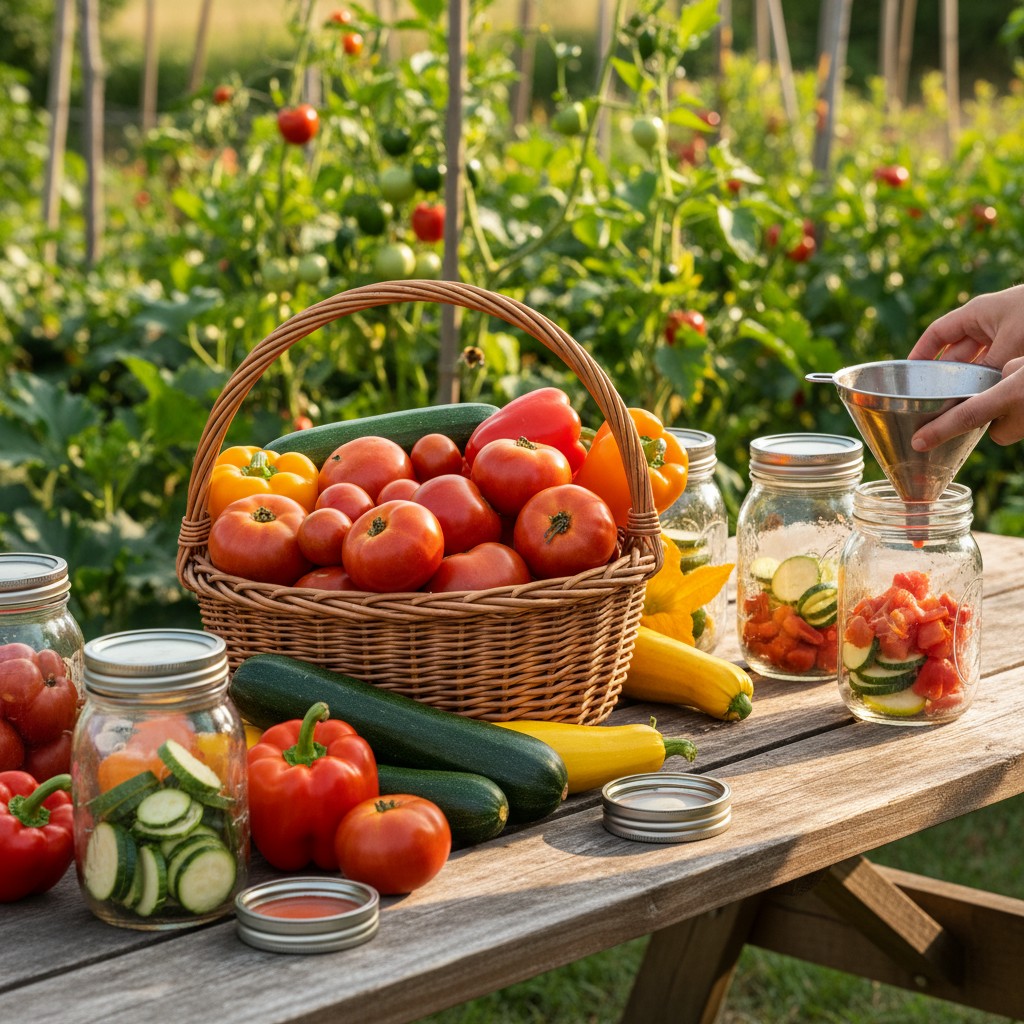
- Open the preserving season with jam, dried herbs and frozen early crops
- Stay ahead of watering, weeding and pests. A week behind in June is a month behind in July
July
Peak harvest. The single highest-return habit of the year is picking daily, because most summer crops stop setting fruit once any of it matures on the plant. One forgotten courgette shuts down production on that plant for a fortnight.
- Pick daily. A single missed courgette stops a plant setting more
- Water deeply in the early morning rather than often and shallowly
- Start canning with berries, beans and the first tomatoes
- Watch the flock closely in extreme heat, and read the signs before a bird is in trouble
August
The most demanding month of the year, and the one that repays planning most. Fall seeds started after mid-month rarely size up before the light goes, so the August sowing window is genuinely narrow rather than nominally so.
- Harvest and preserve daily, before the heat takes what you picked
- Start fall seeds by mid-month. Every week of delay costs yield
- Keep water infrastructure running for plants and animals both
- Order garlic now for October planting
Autumn: Putting the Year Away
September
Garlic, apples, and the first winterising. Garlic is the crop that most rewards ordering early and punishes ordering late, because the varieties worth growing are the ones that sell out. Start coop work now while doing it is still pleasant.
- Choose garlic varieties and get them in before the ground hardens
- Work through the apples: cider, sauce, butter, dried rings
- Sow cover crops in beds as soon as summer crops come out
- Begin winterising the coop while the weather is still pleasant enough to enjoy it
October
Frost prep, and free mulch falling out of the trees. Curing matters more than most people expect: winter squash that goes straight from the vine into storage rots by December, while the same squash cured warm for a fortnight keeps until spring.
- Know your first frost date and have a plan for tender crops
- Cure winter squash and pumpkins properly before storing
- Collect fallen leaves for mulch, compost and bed insulation
- Finish coop winterisation before the first hard freeze, not after
November
Processing, rendering, and the long slow cooking. Winter preparation done before the first serious cold is half the work it becomes afterwards, when everything is frozen and your hands do not function.
- Complete livestock winter preparation before the first serious cold
- Render tallow and lard from autumn processing for cooking, soap and candles
- Make bone broth in quantity and can or freeze it
- Get the last mulch and cover crop down
Using This Without Getting Behind
The single most useful habit I have found is to read the month ahead rather than
the month you are in. Garlic ordered in September is planted in October. Chicks
ordered in February arrive in April and go out to the coop in May. Almost everything
that goes wrong on a small homestead goes wrong because the ordering happened after
the window rather than before it.
The other thing worth saying plainly: no one does all of this. In any given month
I do perhaps half the list, and the half I skip is usually the half that did not
matter. Treat it as a menu, not an inspection.
