Best Fruit Trees for Beginners: Easy-to-Grow Varieties That Produce Fast
- Fig, citrus, and strawberry produce fruit in just 1–2 years — the fastest options for impatient beginners
- A single dwarf apple tree yields 1–4 bushels per year and fits in a 10×10 ft space (Stark Bro’s)
- 55% of Americans plan to grow fruit in 2026 — the trend is booming (Today’s Homeowner)
- Most fruit tree saplings cost $17–$60, making them one of the best long-term food investments
- Choose trees rated for your USDA hardiness zone — the single most important factor for success
If you’ve ever bitten into a perfectly ripe peach still warm from the sun and thought, “I wish I could grow these,” you absolutely can. Growing fruit at home is one of the most rewarding things you can do in your yard — and it’s far easier than most people think.
According to a 2025 Frontdoor survey, 71% of Americans plan to grow a food garden this year, and gardeners reported saving an average of $875 on groceries in 2024. Fruit trees are a big part of that equation — they’re a one-time planting that keeps producing for decades.
The trick is picking the right trees for your skill level and climate. This guide covers the 10 best fruit trees (and berries) for beginners, ranked by how quickly they’ll put food on your table.
How to Choose Your First Fruit Tree
Before you browse the nursery catalog, consider three things:
1. Your USDA Hardiness Zone. This is non-negotiable. A peach tree won’t survive a Zone 3 winter, and a blueberry bush needs more chill hours than Zone 10 provides. Check your zone at planthardiness.ars.usda.gov.
2. How long you’re willing to wait. Some trees fruit in year one. Others take 4–6 years. If you want fruit fast, start with figs, citrus, or strawberries while your apple trees mature.
3. Your space. Dwarf varieties produce the same fruit in a fraction of the space — many thrive in containers on a patio. You don’t need an orchard.
From our homestead: I started with three dwarf apple trees and a fig. The fig gave us fruit that same summer — bowls and bowls of it. The apples took three years, but that first harvest of 60+ apples from a tree I planted with my own hands? Nothing at the grocery store will ever compare.
The 10 Best Fruit Trees for Beginners
Here’s the complete comparison — every beginner-friendly fruit ranked by speed, ease, and yield:
| Fruit | Years to Fruit | USDA Zones | Yield (Mature) | Sapling Cost |
|---|---|---|---|---|
| 🍓 Strawberry | Same year | 3–10 | 1–2 lbs/plant | $2–$5 |
| 🫐 Fig | 1–2 years | 7–11 | Up to 50 lbs/tree | $20–$40 |
| 🍋 Citrus (Meyer Lemon) | 1–2 years | 9–11* | 100–200 fruits/tree | $30–$60 |
| 🍑 Peach | 2–4 years | 5–9 | 1–6 bushels/tree | $25–$55 |
| 🍎 Apple (Dwarf) | 2–3 years | 3–8 | 1–4 bushels/tree | $30–$60 |
| 🍒 Sour Cherry | 3–5 years | 4–7 | 15–60 quarts/tree | $30–$55 |
| 🫐 Blueberry | 3–5 years | 3–9 | 5–15 lbs/bush | $15–$30 |
| 🍑 Plum | 3–6 years | 4–9 | 1–6 bushels/tree | $25–$50 |
| 🍐 Pear | 4–6 years | 4–8 | 2–5 bushels/tree | $30–$55 |
| 🍒 Sweet Cherry | 4–7 years | 5–8 | 15–75 quarts/tree | $35–$60 |
*Citrus can be container-grown in colder zones and brought indoors for winter. Source: Stark Bro’s Growing Guide
Quick-Win Fruits: Harvest in Year One or Two
Strawberries (Zones 3–10)
Strawberries are the ultimate beginner fruit. Day-neutral varieties like Albion and Seascape produce fruit in their first growing season — you can plant in April and pick berries by July. They grow in raised beds, hanging baskets, even containers on a patio. Plant 25 plants for a steady supply of fresh berries all summer.
Fig Trees (Zones 7–11)
Figs are absurdly easy. Brown Turkey and Chicago Hardy are the go-to beginner varieties. They’re self-pollinating (no partner tree needed), pest-resistant, and an established tree can produce up to 50 lbs of fruit per year. In Zone 6, grow them in large containers and bring them into the garage for winter.
Citrus — Meyer Lemon (Zones 9–11 or Containers)
Meyer lemons are the most forgiving citrus for beginners. They’re compact enough for a large pot, fruit within 1–2 years of planting, and a single tree can produce 100+ lemons per year. Even if you’re in Zone 5, you can grow one on a sunny patio all summer and overwinter it by a bright window.
Mid-Range Fruits: Worth the 2–4 Year Wait
Peach Trees (Zones 5–9)
Few things beat a homegrown peach. Redhaven and Elberta are classic beginner varieties — both self-pollinating and widely available. Dwarf peach trees produce 1–3 bushels (48–144 lbs) and fit in a 10-foot space. The main challenge is late spring frost — if you’re in Zone 5, choose a spot with good air drainage.
Apple Trees — Dwarf Varieties (Zones 3–8)
Apples are the backbone of a home orchard. Dwarf varieties fruit in just 2–3 years and yield 1–4 bushels (42–168 lbs) per tree. Honeycrisp, Fuji, and Gala are great starters. Important: most apples need a pollination partner — plant at least two different varieties within 50 feet of each other.
From our homestead: My best tip for apple trees: pick a disease-resistant variety like Liberty or Freedom. I’ve seen too many beginners get discouraged by apple scab and fire blight on susceptible varieties. Disease-resistant cultivars practically take care of themselves.
Long-Game Fruits: Big Rewards for Patient Growers
Sour Cherry (Zones 4–7)
Sour cherries like Montmorency are self-pollinating and incredibly cold-hardy — perfect for northern gardeners. They’re the best pie cherry you’ll ever taste, and a mature standard tree yields 60 quarts per year. That’s enough for pies, jams, and canning all winter.
Blueberries (Zones 3–9)
Blueberries need acidic soil (pH 4.5–5.5), which is the main challenge. If your soil isn’t naturally acidic, grow them in containers with an ericaceous mix. Plant at least two varieties for cross-pollination. Bluecrop (Zones 4–7) and Rabbiteye (Zones 7–9) are reliable starters. Small crops start in year 3, with full production by year 5.
Plum Trees (Zones 4–9)
European plums like Stanley are self-pollinating and cold-hardy. Japanese plums (Santa Rosa) are better for warmer climates but need a partner. A mature plum tree produces 2–6 bushels per year — more than enough for fresh eating, drying into prunes, and making preserves.
Pear Trees (Zones 4–8)
Pears take the longest to fruit (4–6 years) but reward your patience with decades of production. Bartlett and Anjou are beginner classics. Pears have fewer pest problems than apples and store well for months — just pick them before fully ripe and let them ripen on the counter.
Sweet Cherry (Zones 5–8)
Sweet cherries are the trickiest on this list — they need a pollination partner, specific chill hours, and protection from birds. But a mature tree yields up to 75 quarts of cherries. If you’re set on growing them, Stella is one of the few self-pollinating sweet cherry varieties.
How to Plant a Fruit Tree the Right Way
Most fruit trees fail because of how they’re planted, not what variety they are. Follow these steps:
1. Dig the right hole. Twice as wide as the root ball, but no deeper. The graft union (the bulge near the base) must stay above the soil line.
2. Don’t amend the backfill soil. Use the same soil you dug out. Amended soil creates a “bathtub effect” where roots never grow beyond the cushy hole.
3. Water deeply at planting. Soak the entire root zone — a slow trickle from a hose for 20–30 minutes. Then water deeply once a week for the first growing season.
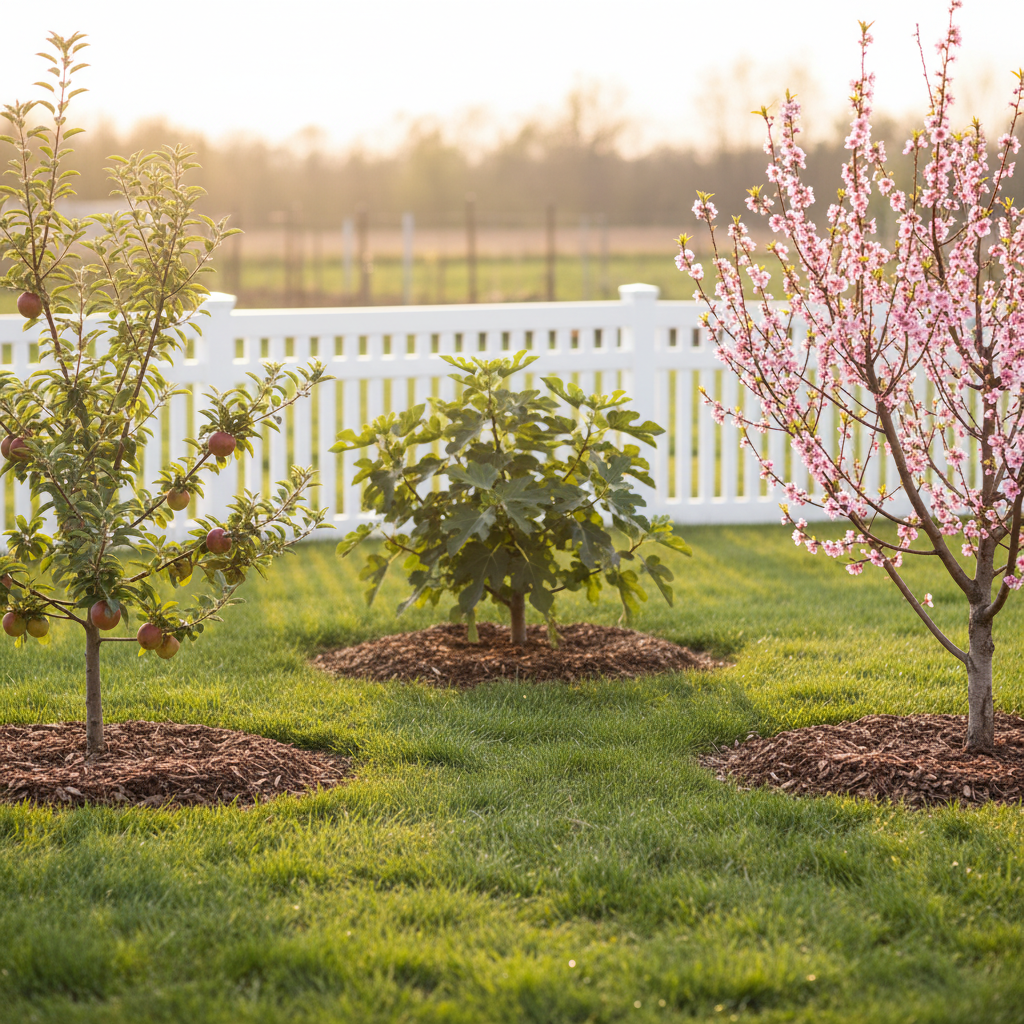
4. Mulch generously. Apply 3–4 inches of wood chips in a circle around the tree, but keep mulch 6 inches away from the trunk to prevent rot.
5. Don’t fertilize at planting. Wait until the second growing season. Over-fertilizing young trees pushes leaf growth at the expense of root development.
Best Fruit Trees by Zone
Not sure which trees will work in your area? Here’s a quick-reference guide:
| Your Zone | Best Bets | Avoid |
|---|---|---|
| Zones 3–4 | Apple, sour cherry, blueberry (lowbush), strawberry, plum (European) | Citrus, fig, peach |
| Zones 5–6 | Apple, peach, sour cherry, blueberry, plum, pear, strawberry | Citrus (unless container-grown) |
| Zones 7–8 | Fig, peach, apple, blueberry (rabbiteye), plum, pear, sweet cherry, strawberry | Some apple varieties (need more chill hours) |
| Zones 9–11 | Citrus, fig, strawberry, blueberry (Southern highbush) | Apple, sour cherry, most pears (not enough chill hours) |
Container Fruit Growing: No Yard Required
If you’re gardening on a balcony or patio, these fruits thrive in pots:
- Meyer lemon — 15-gallon pot minimum, full sun
- Fig (Chicago Hardy) — 15–20 gallon pot, move indoors in winter
- Strawberries — hanging baskets or window boxes
- Blueberries — 5-gallon pot with acidic potting mix
- Dwarf peach (Bonanza) — 15-gallon pot, full sun
The key to container fruit: use high-quality potting mix, fertilize regularly during the growing season, and don’t let the soil dry out completely.
Common Beginner Mistakes to Avoid
| Mistake | Why It Happens | What to Do Instead |
|---|---|---|
| Planting too deep | Assuming deeper = more stable | Keep graft union 2–3″ above soil |
| Wrong zone | Buying on impulse at the nursery | Check the tag for hardiness zone |
| No pollination partner | Didn’t know apples need two varieties | Research pollination needs first |
| Overwatering | Watering daily like vegetables | Deep soak once weekly |
| Skipping pruning | Afraid of cutting the tree | Prune in late winter — it stimulates growth |
Frequently Asked Questions
What is the easiest fruit tree to grow?
Fig trees are widely considered the easiest fruit tree for beginners. They’re self-pollinating, pest-resistant, drought-tolerant once established, and produce fruit in 1–2 years. Brown Turkey and Chicago Hardy are the most beginner-friendly varieties.
Can I grow fruit trees in containers?
Yes — Meyer lemons, figs, dwarf peaches, blueberries, and strawberries all grow well in containers. Use at least a 15-gallon pot for trees and ensure your potting mix drains well. Container-grown trees let you grow citrus even in cold climates by bringing them indoors for winter.
How long before a fruit tree produces fruit?
It depends on the type. Strawberries produce in their first year, figs and citrus in 1–2 years, dwarf apples in 2–3 years, and pears take the longest at 4–6 years. Dwarf varieties generally fruit sooner than standard-size trees.
Do I need two fruit trees for pollination?
Some fruit trees are self-pollinating (figs, sour cherries, most peaches, Meyer lemons), meaning a single tree will produce fruit. Others, especially apples, sweet cherries, and some plums, need a second variety nearby for cross-pollination. Always check before you buy.
What’s the best fruit tree for cold climates (Zones 3–4)?
Apple trees (especially cold-hardy varieties like Honeycrisp and Haralson), sour cherries (Montmorency), and European plums (Stanley) are your best options. Strawberries and lowbush blueberries also thrive in cold climates. Avoid figs, citrus, and peaches unless you can container-grow them.