How to Grow Pumpkins and Winter Squash: From Seed to Storage
How to Grow Pumpkins and Winter Squash: From Seed to Storage
- Pumpkins and winter squash are long-season crops that need 80-120 days of warm weather, rich soil, and plenty of space
- Unlike summer squash, winter squash are harvested when fully mature with hard rinds — this is what allows them to store for months
- Proper curing (1-2 weeks in warm, dry conditions) is essential for long-term storage of 3-6 months or more
- Hand pollination is a simple trick that dramatically improves fruit set, especially in small gardens
- Popular varieties include butternut, acorn, spaghetti, delicata, and pie pumpkins — each with unique flavors and storage qualities
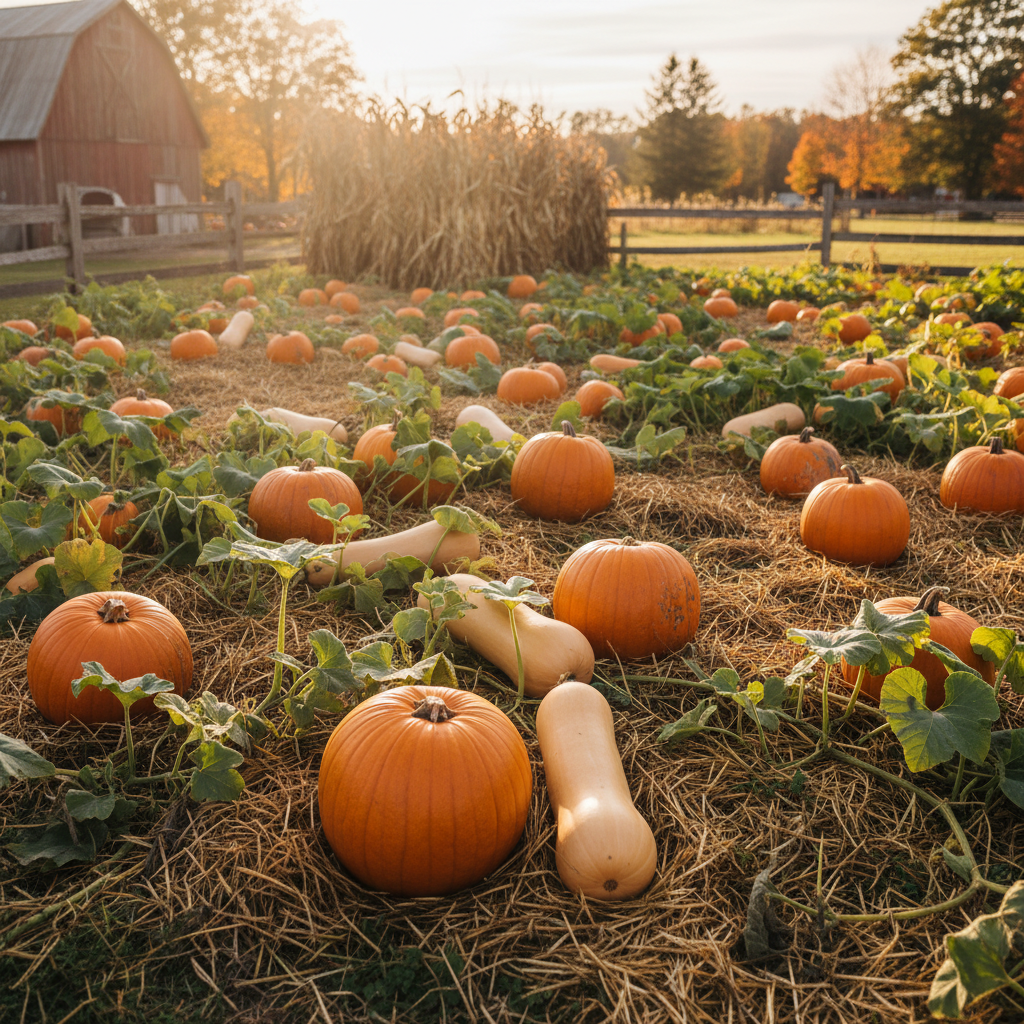
There’s something deeply satisfying about walking into your garden on a crisp October morning and finding a dozen pumpkins and winter squash sprawled across the patch, their hard rinds gleaming in the fall light. These are the crops that feel like real abundance — food that was grown in summer, harvested in autumn, and will feed your family well into winter.
Pumpkins and winter squash are some of the most rewarding crops you can grow on a homestead. They’re prolific, relatively forgiving, and they store for months without any special equipment — no freezing, no canning, no dehydrating required. Just cure them, stack them on a shelf, and enjoy home-grown food all winter long.
Understanding the Winter Squash Family
All pumpkins are technically winter squash, and all winter squash belong to the genus Cucurbita. The main species you’ll encounter in seed catalogs are:
Cucurbita pepo — includes acorn squash, delicata, spaghetti squash, small pie pumpkins, and most decorative gourds. These are generally the shortest season varieties (80-100 days) and the shortest storing (2-3 months).
Cucurbita moschata — includes butternut squash, cheese pumpkins, and Tromboncino. These love heat, resist squash vine borers better than other species, and store exceptionally well (4-6 months). Butternut is the storage champion.
Cucurbita maxima — includes Hubbard squash, kabocha, buttercup, and giant pumpkins. These produce some of the largest fruit and have rich, dense flesh. Storage ranges from 3-5 months depending on the variety.
Best Varieties for Home Gardens
| Variety | Days to Maturity | Average Weight | Storage Life |
|---|---|---|---|
| Butternut (Waltham) | 100-110 days | 3-5 lbs | 5-6 months |
| Acorn (Table Queen) | 80-90 days | 1-2 lbs | 2-3 months |
| Spaghetti Squash | 90-100 days | 3-5 lbs | 3-4 months |
| Delicata | 80-100 days | 1-2 lbs | 2-3 months |
| Sugar Pie Pumpkin | 100-110 days | 4-6 lbs | 3-4 months |
| Blue Hubbard | 110-120 days | 12-20 lbs | 4-6 months |
| Kabocha (Red Kuri) | 90-105 days | 3-5 lbs | 3-4 months |
| Buttercup | 100-110 days | 3-5 lbs | 3-5 months |
If I had to pick just three varieties for a home garden, I’d choose Waltham Butternut for its unbeatable storage life, Delicata for its quick maturity and incredible flavor (the skin is edible — no peeling needed), and Sugar Pie Pumpkin for pies, soups, and pure autumn joy.
Starting Seeds and Planting
Pumpkins and winter squash are warm-season crops that cannot tolerate frost. Plant seeds directly in the garden 1-2 weeks after your last frost date, when soil temperatures reach at least 60°F (70°F is ideal).
Direct sowing is the preferred method for most winter squash. Their large root systems don’t love being transplanted, and the seeds germinate quickly in warm soil — often within 5-7 days.
Plant seeds 1 inch deep. The traditional method is to create “hills” — mounded areas of rich soil about 3 feet in diameter — and plant 3-4 seeds per hill. Once seedlings are established, thin to the 2 strongest plants. Hills warm up faster in spring and improve drainage.
Indoor starting makes sense in short-season climates where you need a head start. Start seeds in large pots (3-4 inches) just 2-3 weeks before transplanting. Use care when transplanting — disturb the roots as little as possible. Squash seedlings are more delicate than they look.
Spacing: Winter squash are sprawling plants. Bush varieties need 3-4 feet between plants, and vining varieties need 6-8 feet. Yes, really. A single pumpkin vine can easily cover 200 square feet by midsummer. If space is limited, train vines along a fence or trellis — smaller varieties like Delicata and small pie pumpkins can be grown vertically with support for the fruit.
My first year growing pumpkins, I planted six hills in what I thought was a generous amount of space. By August, the vines had completely swallowed a third of the garden, climbed two fences, and were making their way into the neighbor’s yard. Now I give them their own designated patch at the edge of the property, and everyone’s happier — including the neighbors.
Soil Preparation and Feeding
Winter squash are heavy feeders. They produce massive amounts of vine, leaf, and fruit, and all of that takes nutrition. Prepare your planting area by working in generous amounts of compost — 3-4 inches mixed into the top 8 inches of soil is not too much.
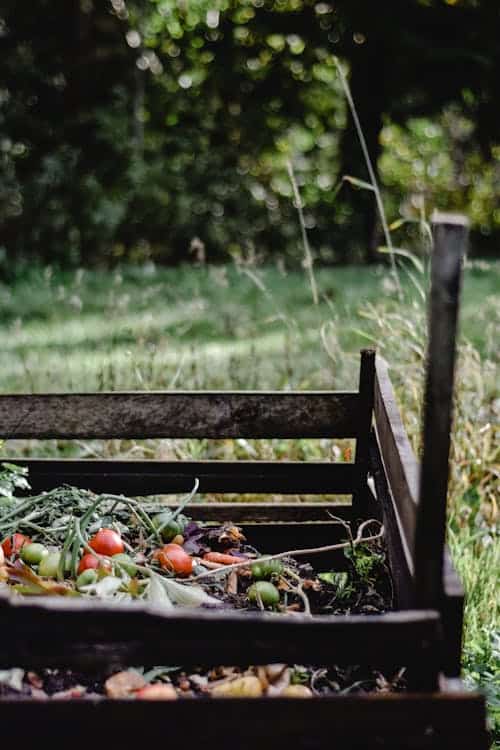
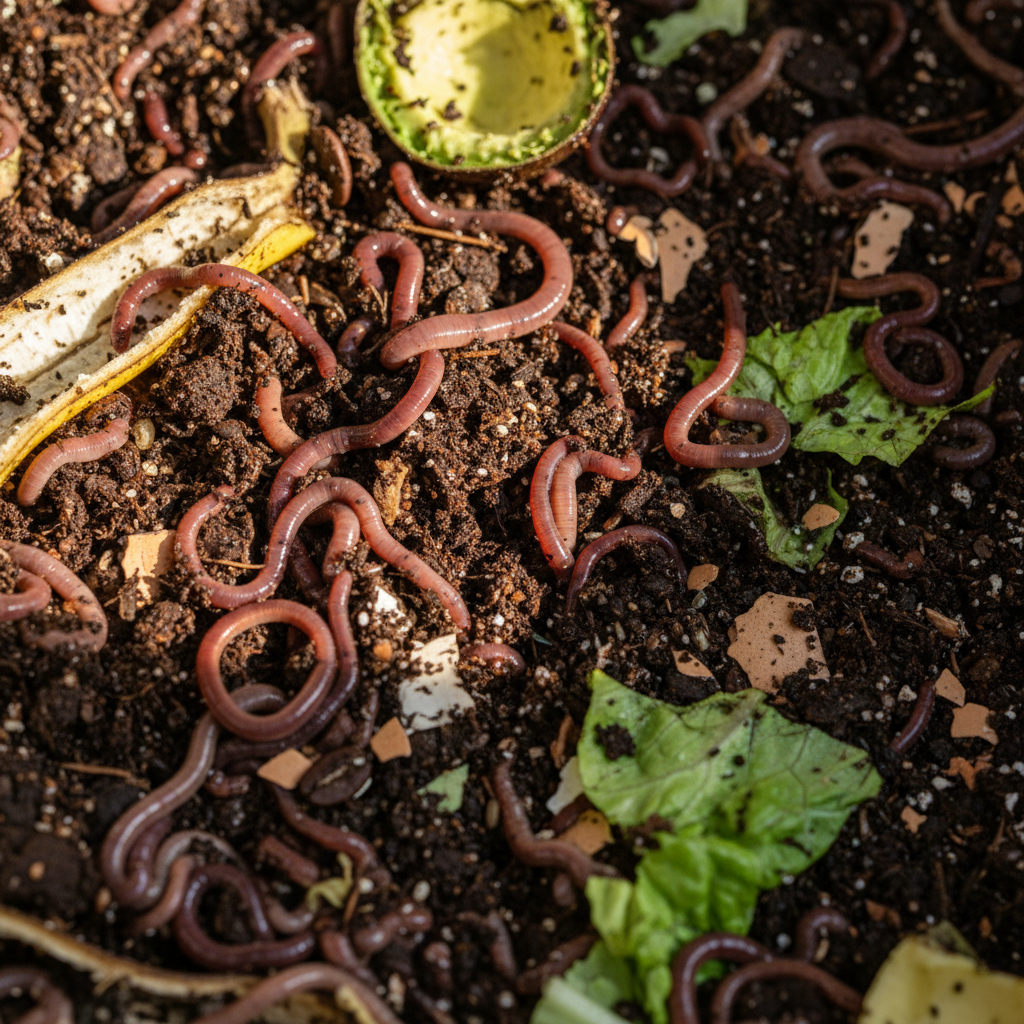
Many old-time gardeners plant squash directly on old compost piles, and for good reason. The rich, warm, moisture-retentive environment is exactly what these plants love. If you have a spot where you composted last year, it’s an ideal pumpkin patch.
Side-dress with compost or balanced organic fertilizer when vines begin to run, and again when the first fruit sets. Avoid heavy nitrogen feeding once fruit is forming — you want the plant’s energy going into the squash, not more leaf growth.
Pollination: Why It Matters and How to Help
Winter squash produce separate male and female flowers on the same plant. Male flowers appear first (sometimes a week or more before females) and grow on straight stems. Female flowers have a tiny swelling at the base — the immature fruit — and sit closer to the vine.
Pollination happens when bees and other pollinators transfer pollen from male flowers to female flowers. If pollination is incomplete, fruit will start to develop but then shrivel and drop — a frustrating problem known as poor fruit set.
In small gardens or areas with low pollinator activity, hand pollination is a reliable solution. Here’s how:
- In the early morning, pick a freshly opened male flower and peel back the petals to expose the pollen-covered stamen
- Find an open female flower (the one with the baby squash at the base)
- Gently dab the pollen onto the stigma inside the female flower — touch every surface
- One male flower can pollinate 2-3 female flowers
Growing good companion plants for pollinators nearby — especially bee-attracting flowers like borage, zinnias, and sunflowers — also helps improve pollination rates naturally.
Managing Pests and Disease
Squash vine borers are the number one enemy of winter squash in many regions. The adult moth lays eggs at the base of stems in early summer, and the larvae bore inside the vine, causing sudden wilting. Prevention is key: wrap the base of stems with aluminum foil or row cover fabric, plant Cucurbita moschata varieties (which resist borers), and inspect stems regularly for the telltale sawdust-like frass.
Squash bugs are flat, gray-brown insects that suck sap from leaves and can transmit bacterial wilt. Check the undersides of leaves regularly for clusters of bronze-colored eggs and crush them. Adult squash bugs are harder to kill — hand-picking in the morning when they’re sluggish is the most effective organic control.
Powdery mildew is almost inevitable on squash by late summer. The white, powdery coating on leaves reduces photosynthesis and weakens plants. Good air circulation helps prevent it — don’t crowd plants. Spray with a solution of 1 tablespoon baking soda and a few drops of dish soap in a gallon of water at the first sign of mildew. Some gardeners find milk spray (40% milk to 60% water) surprisingly effective.
Harvesting Winter Squash
Unlike summer squash, which you harvest young and tender, winter squash must be fully mature before picking. Here are the signs to look for:
- Hard rind: Press your thumbnail into the skin. If you can’t dent it, the squash is ready
- Dull skin: Mature squash lose their glossy sheen and develop a matte finish
- Dried stem: The stem connecting the fruit to the vine turns brown and starts to dry
- Color change: The ground spot (where the squash rests on the soil) turns from white to cream or yellow
Cut squash from the vine with pruning shears, leaving 3-4 inches of stem attached. Never carry squash by the stem — if it breaks off, the squash won’t store as long. Handle them gently; bruised squash is the first to rot in storage.
Harvest all squash before the first hard frost (below 28°F). A light frost won’t damage the fruit, but a hard freeze will damage the rind and drastically shorten storage life.
Curing: The Key to Long-Term Storage
Curing hardens the skin, heals minor scratches, and concentrates sugars — making the squash both tastier and longer-lasting. Skip this step and you’ll lose squash to rot within weeks.
How to cure: Place harvested squash in a warm (80-85°F), dry, well-ventilated area for 10-14 days. A sunny spot on a covered porch, a greenhouse, or near a warm window works well. Turn them once or twice during curing so all sides dry evenly.
Exception: Acorn squash and Delicata do not need curing and can actually lose quality if cured too long. Move these to cool storage shortly after harvest.
Long-Term Storage
After curing, store winter squash in a cool (50-55°F), dry location with good air circulation. A basement, root cellar, unheated spare room, or insulated garage works well. Avoid cold, damp conditions — that’s a recipe for rot.
Don’t stack squash directly on top of each other. Use shelving or spread them on straw so air circulates around each fruit. Check stored squash every couple of weeks and use any that show soft spots before they spoil.
With proper curing and storage, expect these approximate storage times:
- Butternut: 5-6 months (I’ve had them last 8 months in ideal conditions)
- Hubbard: 4-6 months
- Sugar Pie Pumpkin: 3-4 months
- Spaghetti Squash: 3-4 months
- Kabocha/Buttercup: 3-5 months
- Acorn: 2-3 months
- Delicata: 2-3 months
Last winter, we were still eating butternut squash from our garden in late February — nearly six months after harvest. There’s nothing quite like making butternut soup in February from squash you grew yourself the previous summer. That’s what winter squash is all about: extending your garden’s bounty deep into the cold months without any special preservation equipment.
Cooking with Winter Squash
Part of the joy of growing winter squash is the incredible range of things you can do in the kitchen. The ability to cook from scratch with home-grown squash is one of the true pleasures of homesteading.
Butternut makes the silkiest soups and purees. It’s also excellent roasted, in risotto, or as ravioli filling.
Spaghetti squash is the healthy alternative to pasta — roast it, scrape out the strands with a fork, and top with your favorite sauce.
Delicata is the easiest to prepare — just slice into rings, remove seeds, and roast. The skin is thin enough to eat.
Sugar Pie Pumpkins make the best pies, hands down. Roast, puree, and use in place of canned pumpkin in any recipe.
Acorn squash is perfect for stuffing — halve it, scoop out seeds, and fill with grain salads, sausage, or rice and beans.
Any excess squash can be roasted, pureed, and frozen in measured portions for future use. One medium butternut yields about 3 cups of puree, roughly equivalent to one can of commercial pumpkin puree.
Saving Seeds for Next Year
Winter squash cross-pollinate freely within the same species — a butternut will cross with a Tromboncino (both C. moschata), but not with an acorn squash (C. pepo). To save pure seed, grow only one variety per species, or hand-pollinate and tape flowers shut.
Let seed-saving fruits fully mature on the vine — even past the eating stage. Scoop out seeds, rinse clean, and dry on a screen or plate for 1-2 weeks. Store in a labeled envelope in a cool, dry place. Squash seeds remain viable for 4-6 years.
Frequently Asked Questions
Can I grow pumpkins in a small garden?
Yes, with the right variety selection and some creativity. Bush varieties like Sugar Treat pumpkin and Bush Delicata take up much less room. You can also train vines vertically on a sturdy trellis, using slings made from old t-shirts or pantyhose to support heavy fruit. Compact vining varieties need about 20-30 square feet per plant, while bush types can manage in 12-16 square feet.
Why do my squash keep rotting on the vine before they’re ripe?
This is usually caused by poor pollination (fruit starts developing but aborts), blossom end rot from inconsistent watering, or direct contact with wet soil. Place a piece of wood, straw, or a small piece of cardboard under each developing fruit to keep it off damp ground. Improving pollination through hand pollination or planting pollinator-friendly flowers often solves the problem.
Do pumpkins and winter squash need a lot of water?
They need consistent moisture — about 1-2 inches per week — especially during flowering and fruit development. Water deeply at the base of the plant rather than overhead to reduce disease. Drip irrigation or soaker hoses are ideal. Reduce watering as fruit nears maturity to concentrate flavors and toughen the rind for storage.
What’s the difference between a pumpkin and a winter squash?
There’s no strict botanical distinction. “Pumpkin” is more of a culinary and cultural term than a scientific one. Generally, round, orange squash are called pumpkins. Butternut, acorn, and spaghetti squash are called winter squash. But they’re all members of the same genus (Cucurbita), and growing methods are essentially identical.
Can I eat the seeds from my pumpkins and winter squash?
Absolutely. Pumpkin seeds (pepitas) are nutritious and delicious. Scoop out seeds, separate them from the stringy pulp, rinse clean, toss with oil and salt, and roast at 300°F for 20-30 minutes until golden. Seeds from all winter squash varieties are edible, though the large, flat seeds from pumpkins and Hubbards are the most popular for roasting. Styrian pumpkins are specifically bred for their hull-less, easy-to-eat seeds.