Best Cover Crops for Home Gardens: Build Soil While You Sleep
Your garden doesn’t have to rest in winter, it can work. Cover crops are low-cost, high-return plants that grow during gaps in your planting schedule, adding organic matter, breaking up compaction, and handing you free nitrogen when you terminate them in spring. Once you understand which species fits your season and goal, cover cropping becomes one of the simplest soil-building habits in a homesteader’s toolkit.
This guide walks through the five-step process for planting, managing, and terminating cover crops, with a full comparison table of the best options for home gardens.
Which Cover Crop Should You Choose?
Before you seed anything, match the crop to your season, your soil problem, and your termination method. Nitrogen-fixing legumes (clover, vetch, peas) feed the following cash crop. Grasses (rye, oats) build biomass and suppress weeds. Brassicas (daikon radish) break hardpan with deep taproots. Many gardeners mix a legume with a grass for both benefits.

| Crop | Season | N-Fixer? | Kill Method | Best For |
|---|---|---|---|---|
| Crimson Clover | Fall / Spring | Yes (up to 200 lb N/ac) | Mow or till before flowering | Nitrogen boost, pollinator habitat |
| Winter Rye | Fall / Winter | No | Crimp, mow, or tarp | Weed suppression, erosion control |
| Hairy Vetch | Fall / Winter | Yes (up to 270 lb N/ac) | Mow at 50% bloom; can reseed | Heavy nitrogen load before corn/squash |
| Field Peas | Spring / Fall | Yes | Mow or till before pod set | Quick nitrogen, cool-season gaps |
| Buckwheat | Summer | No | Mow at first bloom (before seed set) | Smothering weeds in hot gaps |
| Daikon Radish | Late Summer / Fall | No | Winter-kill or pull; roots decompose | Breaking hardpan, deep aeration |
| Oats | Spring / Fall | No | Winter-kill or mow | Fast biomass, pairs well with peas |
| Austrian Winter Peas | Fall / Winter | Yes | Mow before flowering | Cold-hardy nitrogen in zone 5–8 |
Pro tip: Mixing a grass with a legume (e.g., winter rye + hairy vetch, or oats + field peas) gives you both weed-smothering biomass and nitrogen fixation in the same pass. Seed at roughly 60% of each crop’s solo rate.
Pros and Cons of the Most Common Cover Crops
Cover crop choice depends on your goal: nitrogen fixing, weed suppression, soil building, or winter ground cover. Here is the practical comparison for home gardens.
Winter Rye (Secale cereale)
Pros: Hardiest cover crop available, germinates in cold soil, tolerates poor soil, exceptional weed suppression through allelopathic compounds, builds significant biomass even in northern zones.
Cons: Difficult to terminate without tilling, allelopathic effects can suppress small-seeded follow-up crops for 2 to 4 weeks, can become a weed itself if allowed to set seed.
Crimson Clover (Trifolium incarnatum)
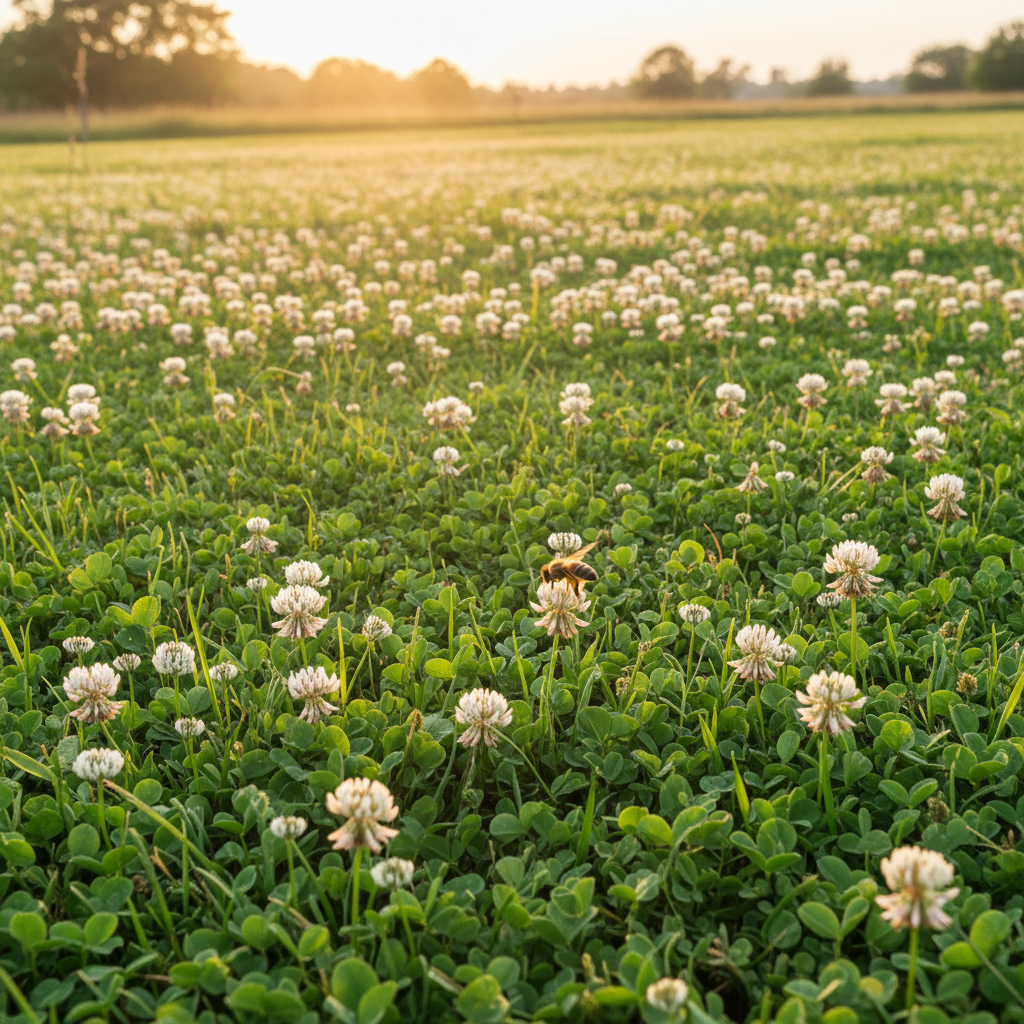
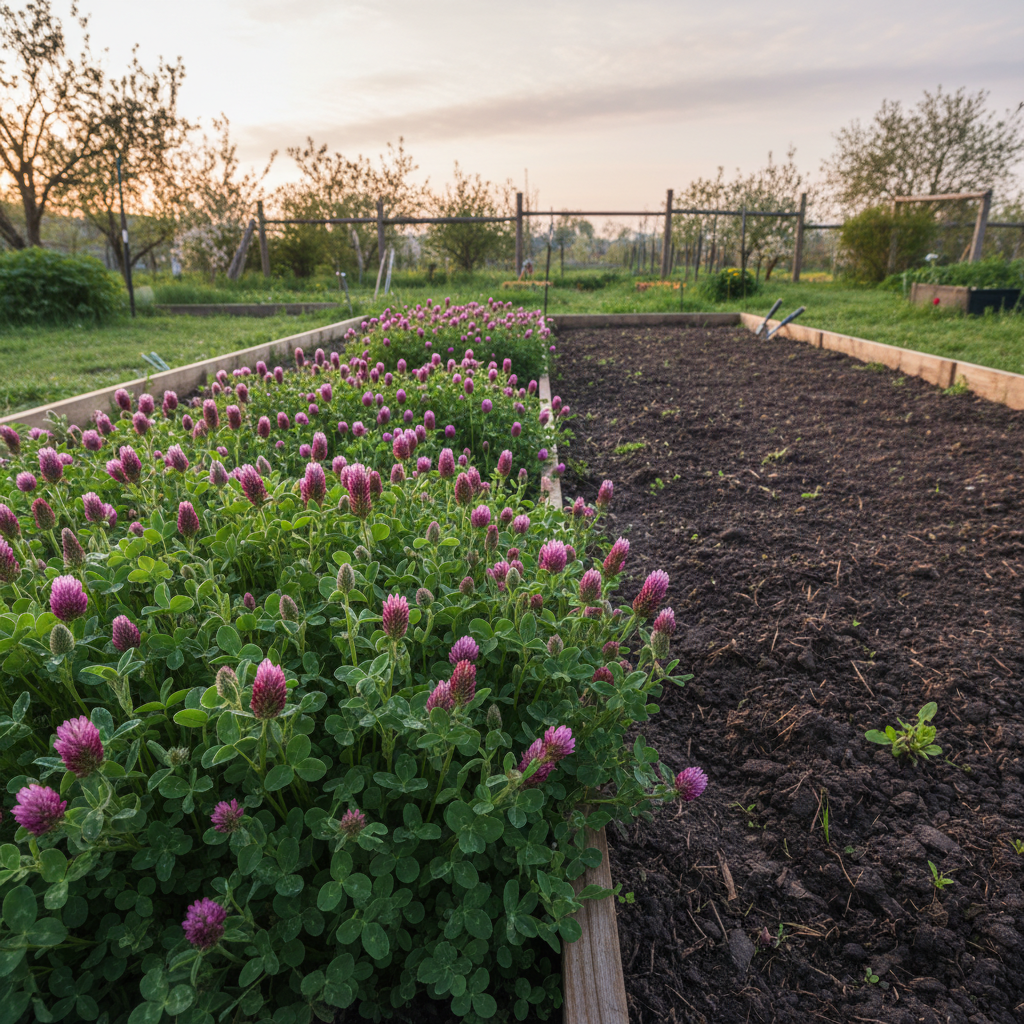
Pros: Fixes 70 to 130 lbs of nitrogen per acre, attractive red blooms, easy to terminate by mowing, good for pollinators, breaks down quickly into the soil.
Cons: Less cold-hardy than winter rye (zones 6 and warmer for reliable winter survival), needs adequate seed-soil contact to establish, does not suppress weeds as aggressively as rye.
Buckwheat (Fagopyrum esculentum)
Pros: Fastest cover crop available (35 to 45 days from seed to flower), excellent weed smother, attracts beneficial insects heavily, breaks down quickly, scavenges phosphorus better than most crops.
Cons: Frost-killed (warm-season only), shallow root system limits soil-building, must be terminated before seed set or it self-sows aggressively the following year.
Hairy Vetch (Vicia villosa)
Pros: Highest nitrogen contribution of common cover crops (90 to 200 lbs per acre), winter-hardy to zone 4, excellent partner with winter rye for biomass plus nitrogen.
Cons: Slow fall establishment, vines can tangle and complicate spring termination, hard seed coat means some seed survives termination and emerges as a weed.
Step 1: How Do You Prepare a Bed for Cover Crops?
Clear the existing vegetation and create enough soil contact for seeds to germinate, that’s the entire goal of bed prep. You don’t need a perfect seedbed. Cover crops are forgiving. Remove large debris and spent crop residue so seeds land on soil rather than a mat of old plant material. If you’re following a no-till approach, skip tilling and simply rake the surface to expose bare soil for contact.
For compacted or clay-heavy beds, a single pass with a broadfork loosens the top six inches without inverting soil layers or destroying fungal networks. This is especially worthwhile before seeding daikon radish, which needs loose ground to push its taproot down and do its decompacting work.
If weeds are present, mow or cut them short. Taller weeds block light from germinating cover crop seedlings and compete during establishment. You don’t need to remove weed roots, the cover crop canopy will shade them out within two to three weeks of full germination.
Check soil moisture before you seed. Cover crops need moisture to germinate but not waterlogged conditions. The soil should hold together when squeezed but crumble when pressure is released. If the bed has been dry for more than a week, water it the day before seeding so the seedbed is moist at planting depth.
Source: USDA Sustainable Agriculture Research & Education (SARE), “Managing Cover Crops Profitably,” 4th edition.
Step 2: What’s the Best Way to Broadcast Cover Crop Seed?
Broadcasting: scattering seed by hand or with a hand-crank spreader, is the standard method for home gardens and small beds. It’s fast, requires no equipment, and works well for the small-seeded crops on this list. Aim for even coverage rather than precision rows. Walk the bed in two passes: one lengthwise and one across the width, splitting your seed between passes. This cross-pattern method reduces bare patches and hot spots.
Seeding rates for home gardens (per 100 square feet):
- Crimson clover: 0.5–1 oz
- Winter rye: 3–4 oz
- Hairy vetch: 1–2 oz
- Field peas: 3–4 oz
- Buckwheat: 2–3 oz
- Daikon radish: 0.5–1 oz
- Oats: 3–4 oz
- Austrian winter peas: 2–3 oz
For small beds under 50 square feet, use your palm as a spreader. Cup a small handful and sweep your arm in a pendulum motion, releasing seed at the lowest point of the swing. You’ll develop a feel for coverage density within a few minutes. Legume seeds (clover, vetch, peas) may benefit from inoculant, a powder coating of beneficial rhizobium bacteria available at most garden centers. Inoculated seed fixes significantly more nitrogen, particularly in beds that haven’t grown legumes before.
Avoid seeding in wind above about 10 mph. Lightweight seeds like clover will drift unevenly and pile up at bed edges. Calm mornings are ideal seeding conditions.
Source: Rodale Institute, “Cover Cropping for Home and Market Gardeners,” 2021.
Step 3: Why Should You Rake After Seeding, and How Much?
Seeds need soil contact to germinate. Raking lightly after broadcasting accomplishes two things: it presses small seeds into the soil surface and covers them with a thin layer of fine soil, reducing the chance of birds eating them or wind moving them before germination. The key word is lightly. You’re not burying seed, you’re tucking it in.

Use the back of a garden rake. Drag it gently across the seeded area once or twice, applying just enough pressure to disturb the top quarter-inch of soil. For large-seeded crops like field peas or Austrian winter peas, press them in with your foot or the flat of the rake to get better seed-to-soil contact. Pea-sized seeds sitting on the surface dry out quickly and are vulnerable to bird damage.
Cover crop seed planting depth by type:
- Fine seeds (clover, vetch, daikon): surface to ¼ inch
- Medium seeds (oats, buckwheat): ¼ to ½ inch
- Large seeds (field peas, Austrian winter peas): ½ to 1 inch
After raking, tamp the surface with a flat board or the back of your rake to firm the seedbed. This simple step improves germination rates by maintaining consistent moisture around seeds. On clay soils, skip heavy tamping, it can crust the surface in wet conditions and impede emergence.
Source: Cornell Cooperative Extension, “Cover Crops for Home Vegetable Gardens,” 2020.
Step 4: When Does a Cover Crop Need Watering?
Water your newly seeded cover crop if the soil surface is dry and no rain is expected within 48 hours. Most cover crops germinate in 5–14 days given adequate moisture. The first inch of soil should stay consistently moist, not waterlogged, until seedlings reach two inches tall. After that, most cover crops are drought-tolerant and don’t need supplemental irrigation.
Use a gentle spray setting to avoid displacing seeds. A watering can with a rose head works well for small beds. Drip irrigation is ideal if you have it set up, it delivers moisture at soil level without disturbing seed placement or causing surface crust from impact.
Fall-seeded cover crops often rely on natural rainfall and rarely need watering after the first week. In dry falls, water twice a week until germination is visible across the bed. Summer cover crops like buckwheat need more attention, they germinate fast (3–5 days) but can stress in high heat without consistent moisture during establishment. Once buckwheat reaches four to six inches, it largely takes care of itself.
Signs of under-watering: slow or patchy germination, yellowing seedlings. Signs of over-watering: damping off (seedlings collapsing at the soil line), standing water, soil surface algae. Aim for even moisture and you’ll hit the right balance with minimal fuss.
Source: UC Davis Extension, “Water Requirements for Cover Crops in Home Gardens,” 2019.
Step 5: How Do You Terminate a Cover Crop Without Tilling?
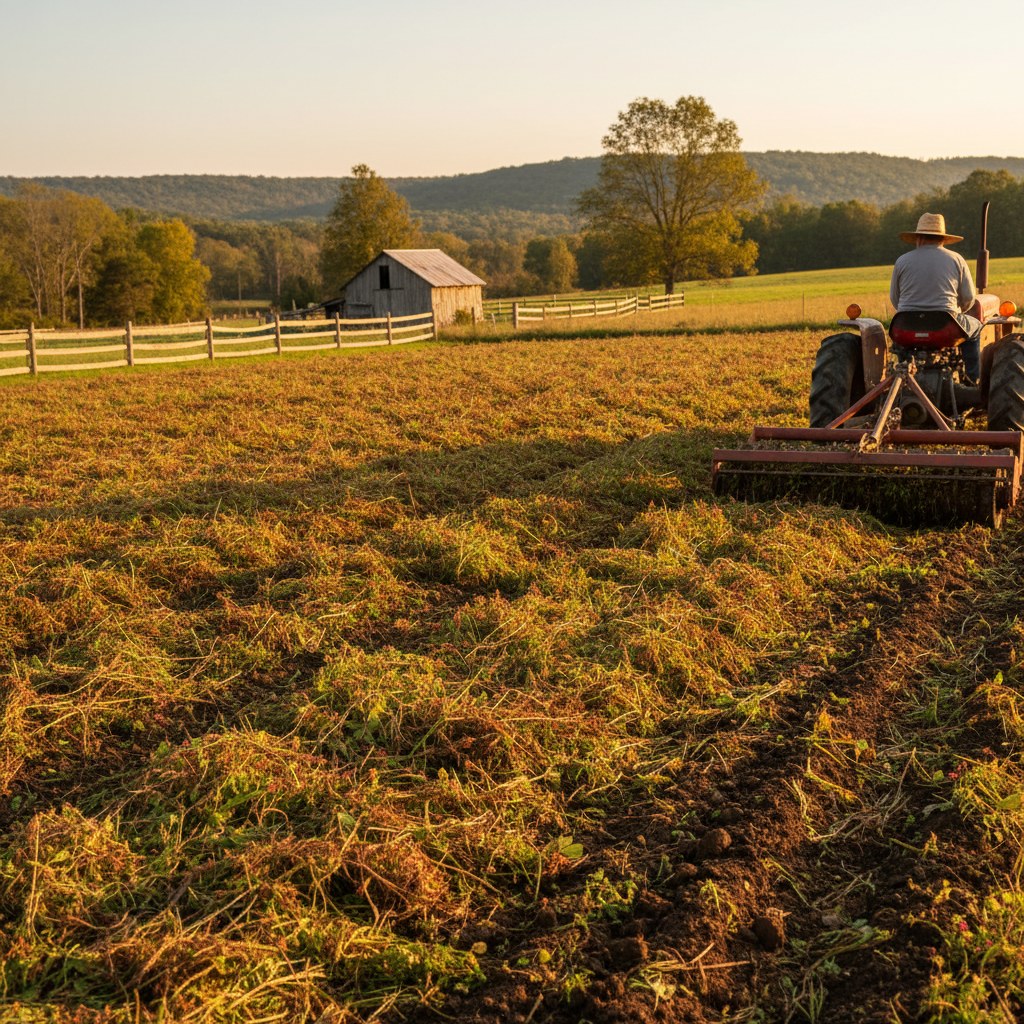
Termination: killing the cover crop before it sets seed, releases the nutrients it has captured and creates a mulch layer for your next crop. Timing matters: terminate too early and you lose biomass; too late and the crop goes to seed, potentially becoming a weed. For most legumes, the window is just before or at early flower. For grasses, mow when they reach 12–18 inches.
The most practical termination methods for home gardeners:
- Mowing: Cut to 2–4 inches and leave the residue in place as mulch. Best for grasses and fast-terminating legumes like field peas.
- Tarping: Lay black silage tarp or black plastic over the cover crop for 2–4 weeks. The heat and darkness kills everything and leaves a ready-to-plant surface. Excellent for woody or persistent cover crops like hairy vetch.
- Crimping: Roll a lawn roller or walk over mature rye to flatten and crack stems. The crimped plants die in place and form a thick, weed-suppressing mat. This is the no-till gardener’s preferred method and works best on humus-rich soil with active microbial life to break down the residue quickly.
- Hand-pulling: Practical for small beds and tender cover crops. Pull when soil is moist, lay residue on the surface, and plant through it.
After termination, wait 2–3 weeks before transplanting into the residue. This allows initial decomposition to begin and prevents allelopathic compounds (natural growth inhibitors present in rye, in particular) from suppressing your transplants. Direct seeding can wait 3–4 weeks for best results in rye-terminated beds.
If you’re terminating hairy vetch or crimson clover that has flowered, check carefully for seed pods before mowing, mature pods will still disperse seed even after the plant is cut. Mow at 50% bloom to stay safely ahead of seed set.
Source: Penn State Extension, “Cover Crop Termination Strategies for Small Farms and Home Gardens,” 2022.
What Are the Biggest Mistakes Home Gardeners Make With Cover Crops?
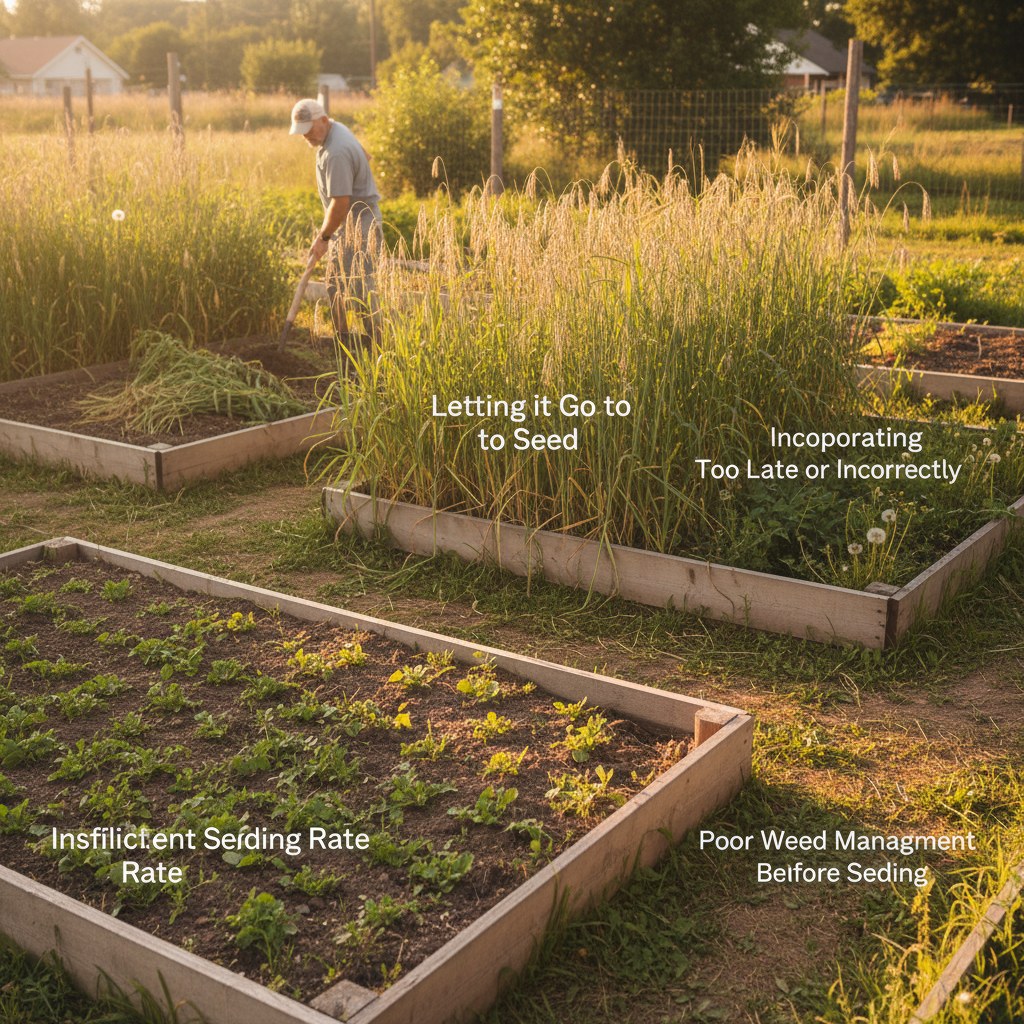
Cover cropping has a short learning curve, but a few common missteps can undercut your results in the first season. The most frequent mistake is seeding too late, particularly with winter cover crops. Winter rye and hairy vetch need four to six weeks of growth before a hard frost to establish a root system that can overwinter reliably. Seed them by mid-October in zone 5–6, earlier in colder regions.
The second major error is terminating too late. Hairy vetch and crimson clover that go to full seed become weeds. They’re tenacious reseeders that will show up uninvited in your beds for years. Mark your termination window on the calendar when you seed, based on your expected last frost date and your first planting date.
Third: skipping inoculant on legumes in beds that haven’t grown them before. Native rhizobium populations in garden soil are often low, especially in new beds or raised beds with imported soil. Without inoculant, legumes may fix very little nitrogen. Inoculant packets cost under $5 and are worth every cent for crops like hairy vetch or Austrian winter peas.
Finally, don’t let perfect be the enemy of good. Patchy germination, a few weeds mixed in, an imperfect kill, none of these ruin the value of a cover crop season. Even a partially successful stand adds organic matter, protects the soil surface from compaction during winter rains, and hands the next season’s crops a better bed than bare soil would have.
Source: Extension.org, “Common Cover Crop Mistakes in Home Gardens,” 2023.
Sources and Further Reading
- SARE (Sustainable Agriculture Research and Education), Managing Cover Crops Profitably, USDA-funded handbook
- USDA Natural Resources Conservation Service, Cover Crop Plant Guide
- Penn State Extension, Cover Crops for Home Gardens
- Cornell Cooperative Extension, Cover Crops for Vegetable Production, Department of Horticulture
- University of Minnesota Extension, Cover Crops in the Home Garden
Frequently Asked Questions
Can I use cover crops in raised beds?
Yes. Raised beds benefit especially from cover crops because they’re prone to nutrient depletion and compaction from repeated planting. Use smaller-seeded, lower-biomass options like crimson clover, field peas, or buckwheat in raised beds. Avoid winter rye in small raised beds, the volume of biomass it produces can be hard to manage in a tight space.
Do cover crops attract pests?
Cover crops can harbor beneficial insects and pollinators, which is a net positive. Hairy vetch and crimson clover in flower attract large numbers of native bees. The risk of pest buildup is low if you terminate before seed set. Slug pressure can increase under dense cover crop canopies in wet conditions, monitor and apply iron phosphate bait if needed.
How long before cover crop residue breaks down after termination?
Residue breakdown depends on soil temperature, moisture, and the carbon-to-nitrogen ratio of the crop. Tender legume residue (clover, vetch) breaks down in 2–4 weeks in warm soil. Coarser grass residue (rye, oats) takes 4–8 weeks. In cold spring conditions, breakdown slows significantly. If residue is still thick at planting time, rake it to the side for a season or compost it.
What cover crop works best in partial shade?
Crimson clover tolerates light shade better than most cover crops. Field peas and Austrian winter peas also perform reasonably well in 4–6 hours of direct sun. Buckwheat and winter rye need full sun for best growth. If your bed gets less than 4 hours, the cover crop will establish weakly but will still provide surface protection and some organic matter.
Can I seed a cover crop into an existing mulch layer?
It depends on the mulch depth. A thin layer (under 1 inch) of straw or shredded leaf mulch is fine, rake it back, seed the soil, and rake the mulch lightly back over the seed. Thicker mulch (2+ inches) blocks seed-to-soil contact and leads to poor germination. Pull it back entirely, seed the bed, then replace a thin layer after seeding if desired.