Seed Starting Indoors: A Beginner’s Step-by-Step Guide
- Start warm-season crops 6–8 weeks before last frost, cool-season 4–6 weeks
- Use seed starting mix (not potting soil) and keep lights 2–3 inches above seedlings
- Bottom watering prevents damping off and builds stronger roots
- Harden off seedlings for 7 days before transplanting outdoors
- Starting from seed saves 50–75% compared to buying transplants
My first attempt at seed starting, back in 2016, was a textbook lesson in what not to do with timing. I started tomatoes in late January for a zone 6b last frost of around May 15, which meant I had leggy, root-bound seedlings desperate to go outside by early March. I ended up hardening off in a garage with a space heater and still lost three of the eight plants to a late cold snap. Starting six to eight weeks out, not twelve, made every season after that dramatically smoother.
Starting seeds indoors gives you a head start on the growing season, saves money compared to buying transplants, and opens up a world of varieties you will never find at a garden center. It is also among the most satisfying rituals of early spring, watching tiny seeds crack open and push toward the light while snow is still on the ground outside.
I start hundreds of seeds every February, and even after years of doing it, the thrill of seeing those first cotyledons emerge never gets old. It is a simple process once you understand the basics, and it can easily save you $200 or more per season on transplants.
🌱 From Our Homestead
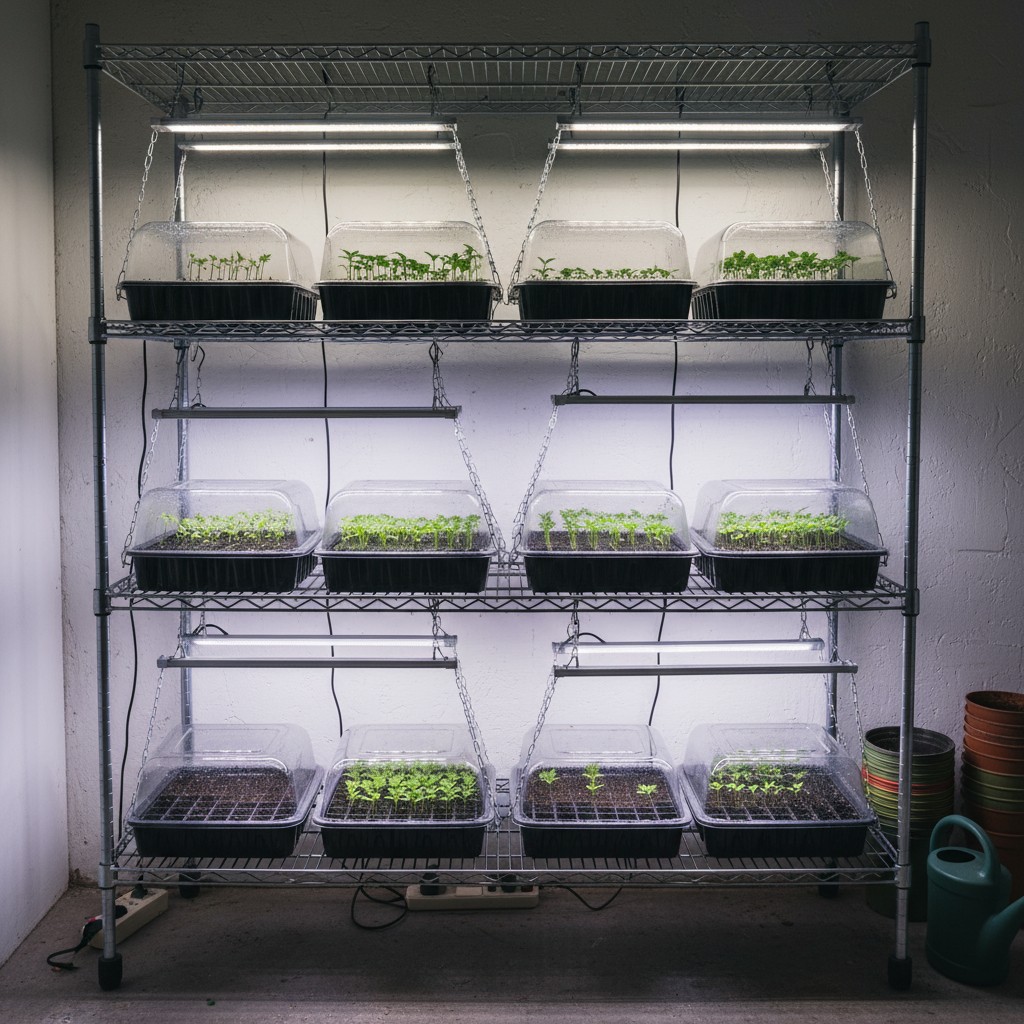
My first seed-starting setup was a secondhand baking rack and a cheap shop light in our spare bedroom. It looked ridiculous, but those scraggly little tomato seedlings turned into the most productive plants we had all summer.
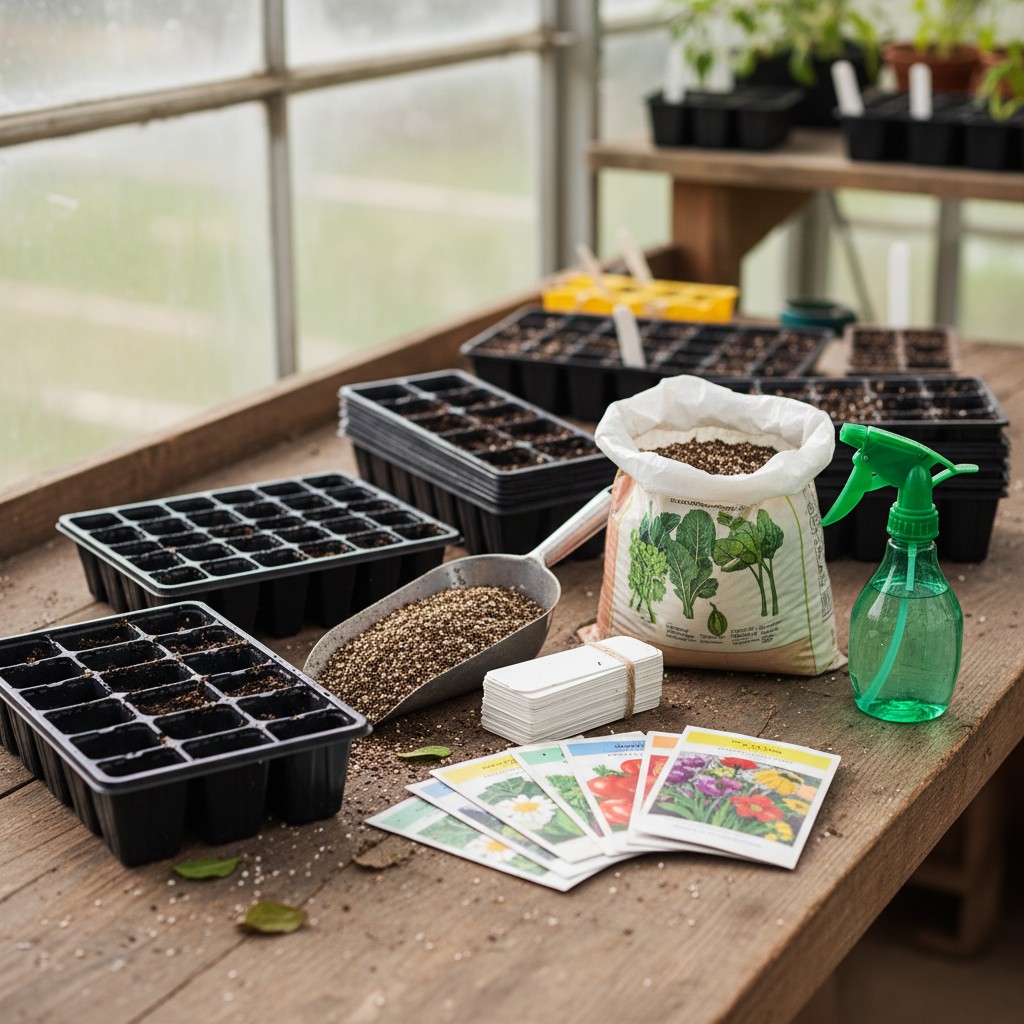
What Supplies Do You Need for Seed Starting?
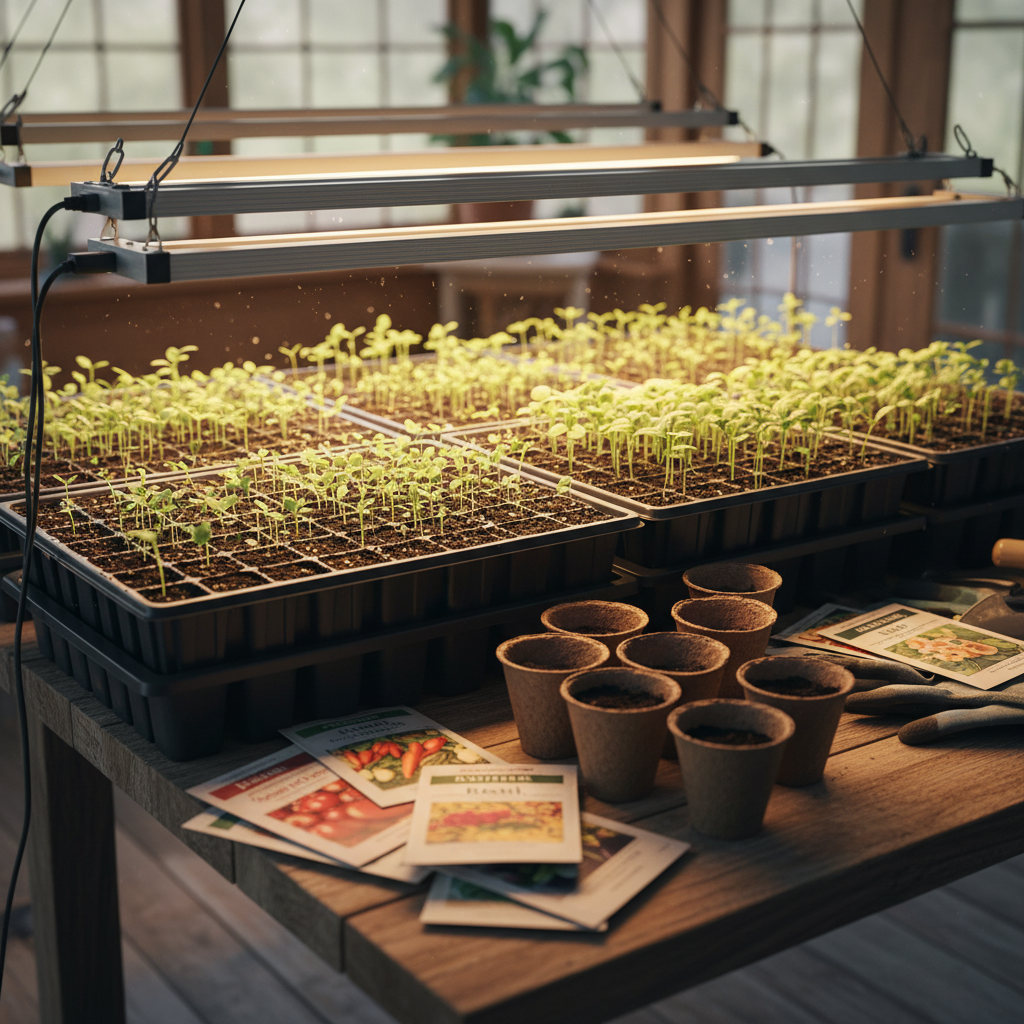
You need seed starting mix, containers with drainage, a light source (grow light recommended), and a spray bottle, plus labels for everything.
- Seed starting mix. Not potting soil. Seed starting mix is finer, lighter, and sterile, which prevents damping off disease.
- Containers: Cell trays, peat pots, egg cartons, or any small container with drainage holes.
- Light: A sunny south-facing window works for some things, but a basic shop light or grow light produces much stronger seedlings. Keep lights 2 to 3 inches above seedlings, 14 to 16 hours per day.
- Heat mat (optional). Speeds germination for warm-season crops like tomatoes and peppers.
- Spray bottle: For gentle watering without disturbing tiny seeds.
- Labels: You will forget what you planted where. Trust me. Label everything.
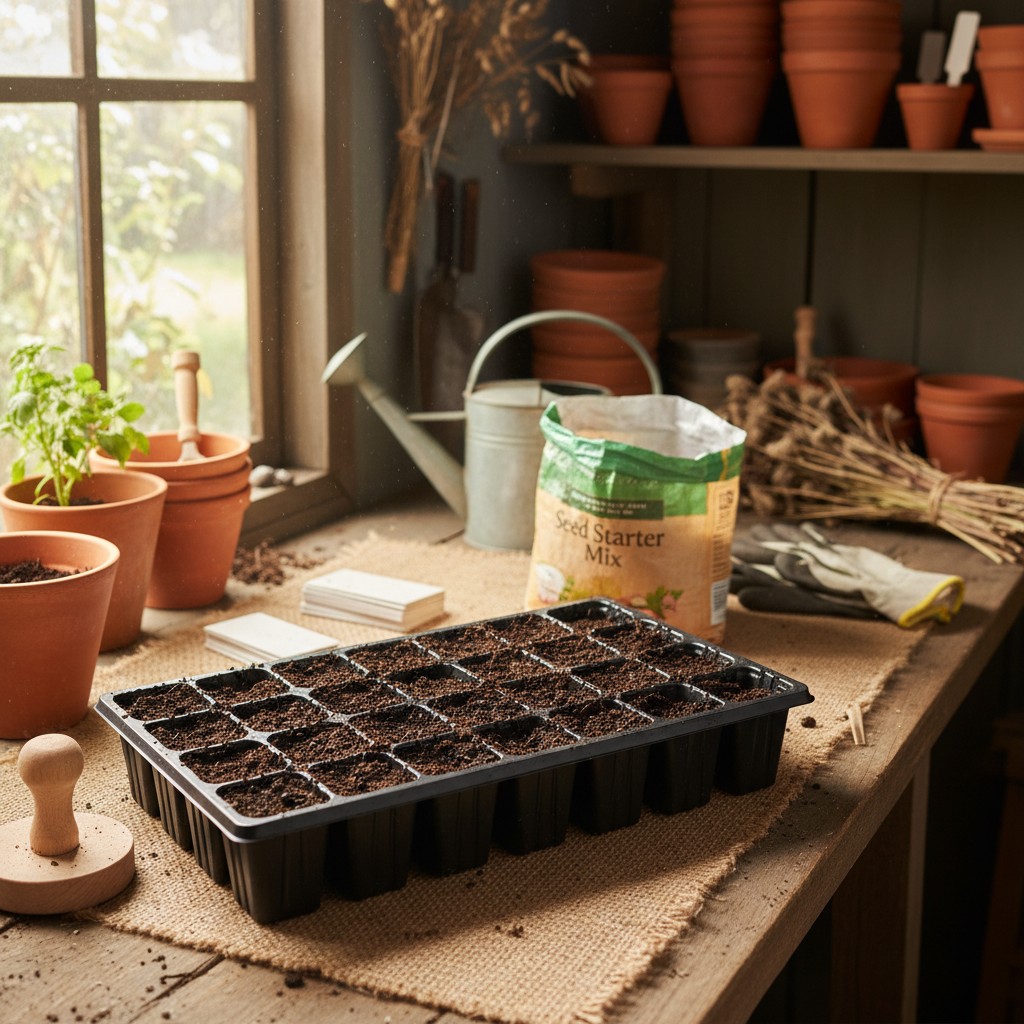
When Should You Start Seeds Indoors?
Count backward from your last frost date: warm-season crops need 6–8 weeks indoors, cool-season crops need 4–6 weeks. Your seed packet will tell you the exact timing.
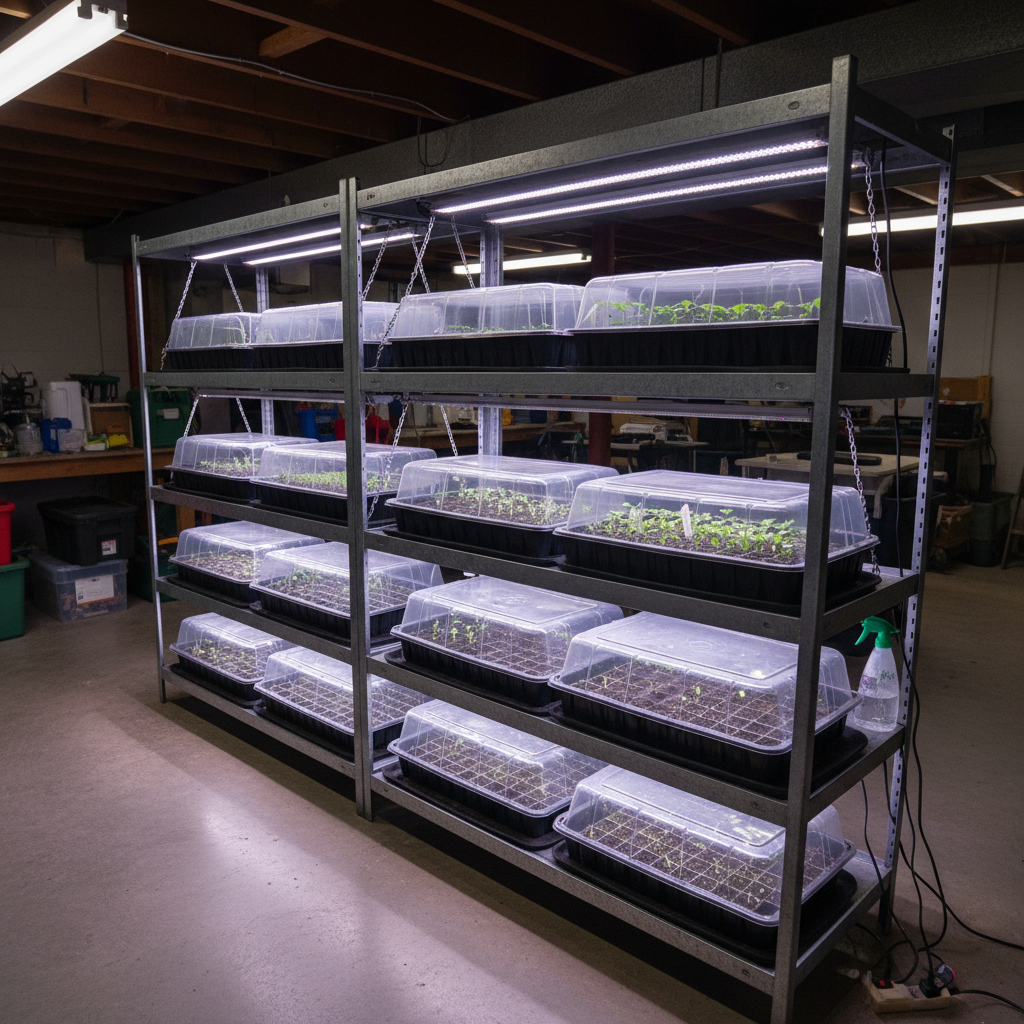
8 weeks before last frost: Tomatoes, peppers, eggplant. 6 weeks: Broccoli, cabbage, cauliflower, kale. 4 weeks: Lettuce, herbs, cucumbers, squash, melons.
| Crop | Weeks Before Last Frost | Germination Temp | Days to Germinate |
|---|---|---|---|
| Tomatoes | 6–8 weeks | 70–80°F | 5–10 days |
| Peppers | 8–10 weeks | 75–85°F | 10–21 days |
| Broccoli / Kale | 6 weeks | 65–75°F | 5–10 days |
| Lettuce | 4 weeks | 60–70°F | 3–7 days |
| Cucumbers / Squash | 3–4 weeks | 70–85°F | 3–7 days |
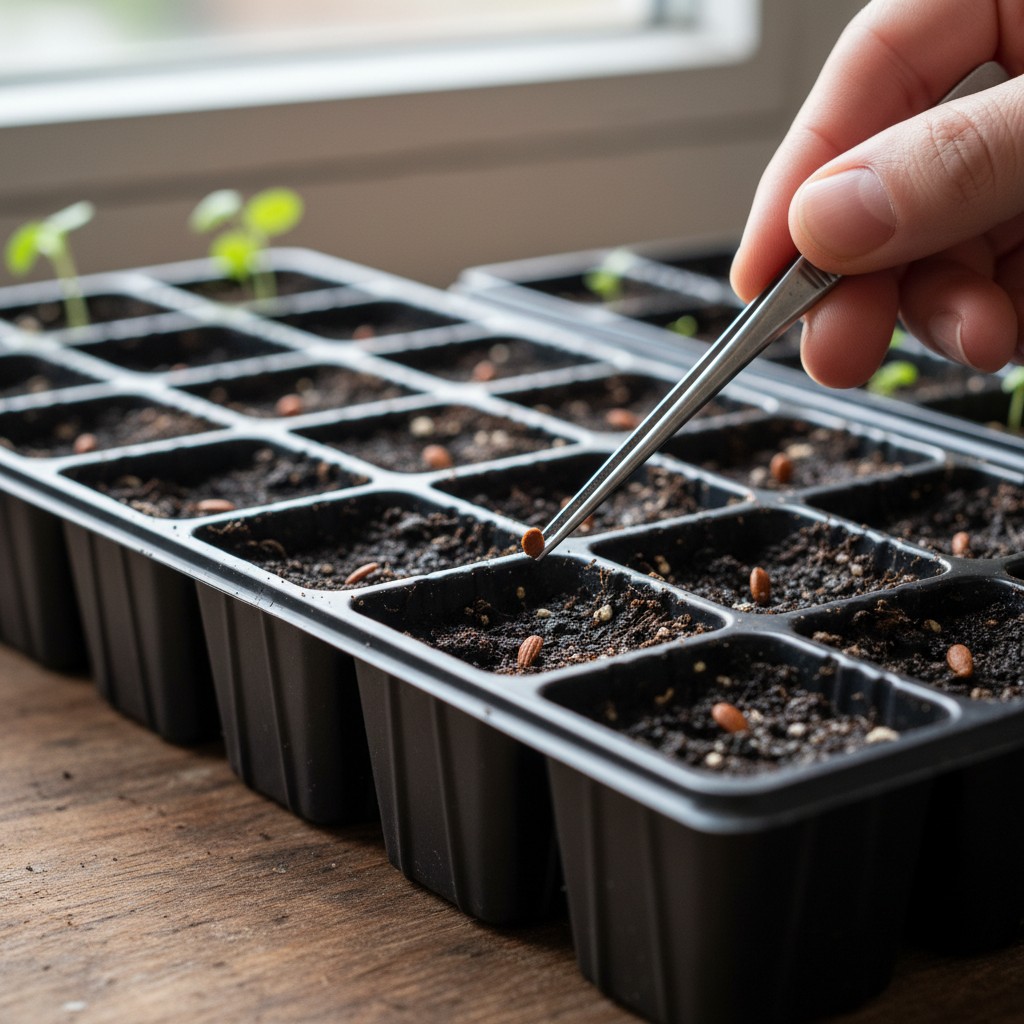
How Do You Plant Seeds Step by Step?
Fill containers with moist mix, plant at the depth on the packet, mist, cover for humidity, and move under lights as soon as they sprout.
- Fill containers with moist seed starting mix. It should be damp like a wrung-out sponge.
- Plant seeds at the depth recommended on the packet. A general rule: plant seeds twice as deep as they are wide.
- Cover lightly with mix and gently press down.
- Mist with water and cover with a clear dome or plastic wrap to hold in humidity.
- Place in a warm spot (70 to 75 degrees is ideal for most seeds). For peppers and tomatoes specifically, a seedling heat mat under the tray speeds germination 3–5x, peppers especially stall in soil below 70°F and thrive with bottom heat around 80–85°F. Remove the mat once seeds have sprouted.
- Remove the cover as soon as seeds sprout and move immediately under lights.
- Water from the bottom when possible, set trays in a shallow dish of water and let the soil wick it up.
Sow 2–3 seeds per cell, then thin to the strongest single seedling once they have their first true leaves, snip extras at soil level with scissors rather than pulling, to avoid disturbing the keeper’s roots. Begin feeding with a liquid fertilizer at quarter-strength as soon as the first true leaves appear (seed starting mix contains no nutrients). Full-strength fertilizer at this stage can burn seedlings; work up gradually over several weeks.
Why Is Hardening Off So Important?
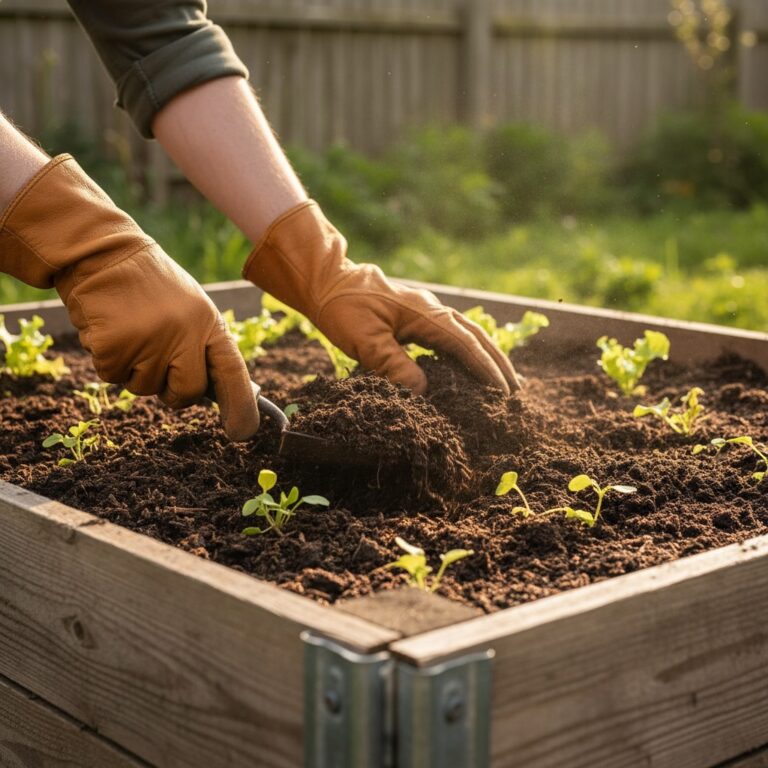
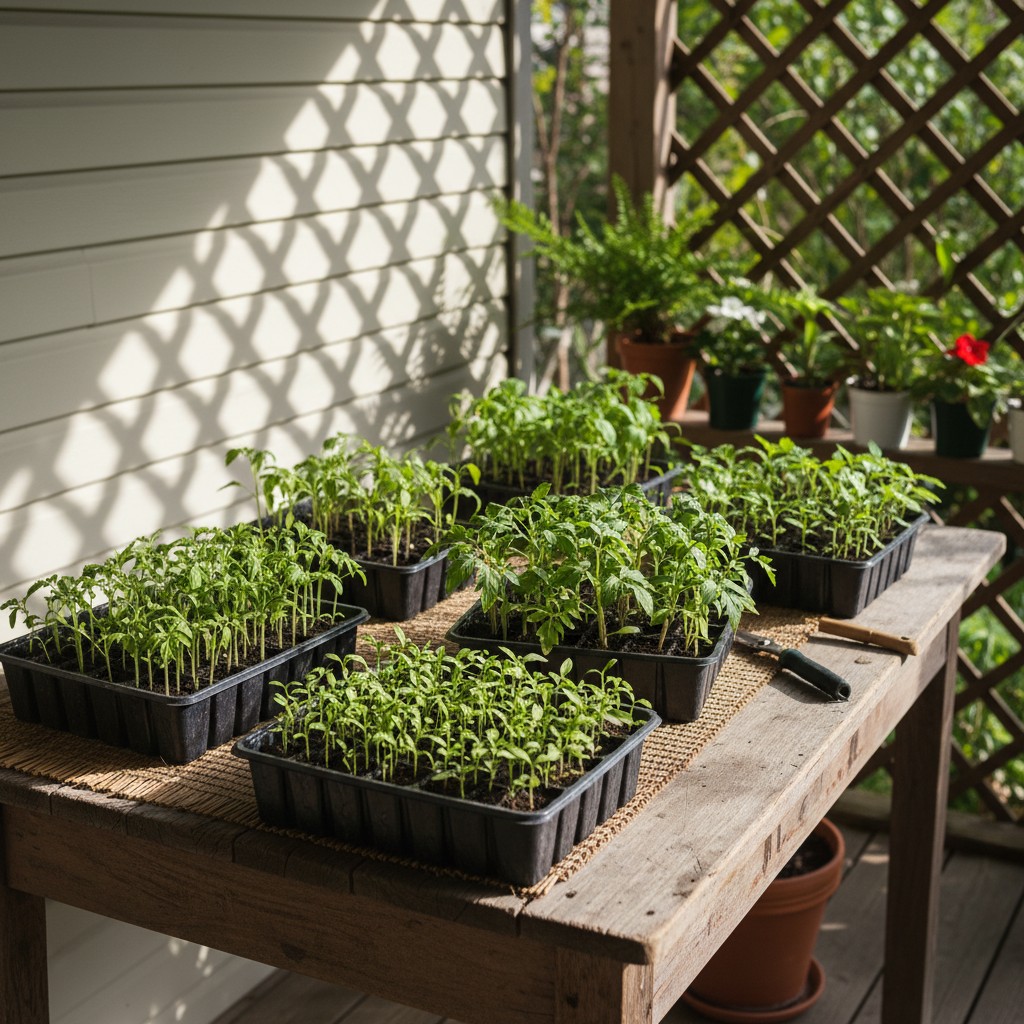
Hardening off gradually exposes indoor seedlings to outdoor conditions over 7 days, preventing transplant shock and sunburn. Start with a couple of hours in a shady, sheltered spot and increase daily. By day 7, they should be spending the full day outside. I use my container garden area as a sheltered staging zone. A raised bed near the house makes the perfect first transplant home.
Seed starting is a skill that gets easier every year. Your first round might be a little leggy or a little late, and that is completely fine. The seeds want to grow. Your job is just to give them the right conditions and get out of the way. Save your best performers with our seed saving guide and check out microgreens in mason jars for an even faster indoor growing project.
Frequently Asked Questions
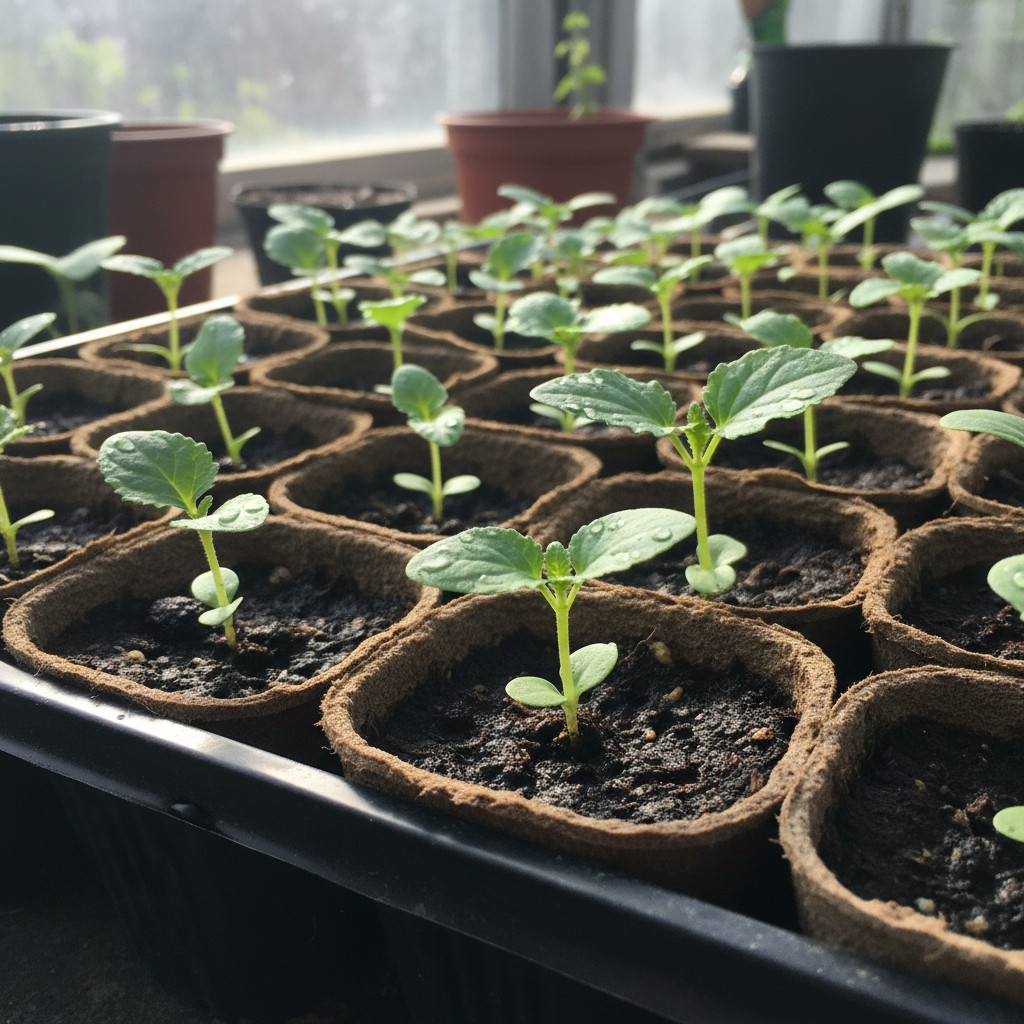
A: Insufficient light is the number one cause. Move your grow light closer (2–3 inches above the tops) and make sure they are getting 14–16 hours of light per day. A small fan to provide gentle air movement also strengthens stems.
A: Damping off is a fungal disease that causes seedlings to collapse at the soil line. Prevent it by using sterile seed starting mix, not overwatering, and providing good air circulation.
A: It is not recommended. Potting soil is too heavy and may contain pathogens that kill seedlings. Seed starting mix is specifically designed for germination, it is lighter and sterile.
A: Not always, but heat mats significantly speed germination for warm-season crops like peppers and tomatoes. If your house is below 70°F, a heat mat is a worthwhile investment.
A: Start with a diluted (quarter-strength) liquid fertilizer after the first true leaves appear. Seed starting mix has no nutrients, so seedlings will need feeding within 2–3 weeks of sprouting.