How to Start Seeds Indoors: A Complete Guide for First-Time Gardeners
- Start seeds 6–10 weeks before your last frost date (check USDA zone map).
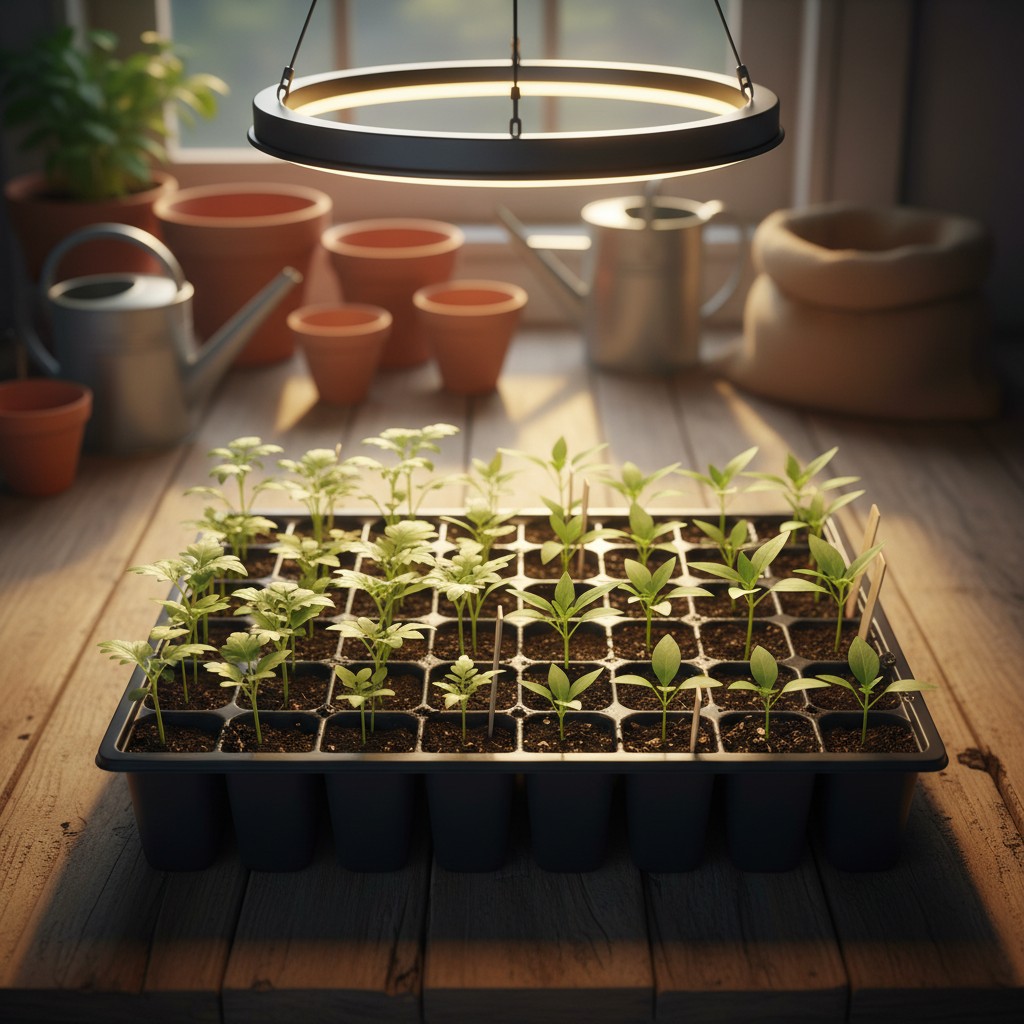
- You need: seed-starting mix, trays with drainage, grow lights 14–16 hours/day, and a heat mat for germination.
- Water from below, thin ruthlessly, fertilize at half-strength once true leaves appear.
- Harden off for 7–14 days before transplanting outdoors.
- Leggy seedlings = not enough light. Damping off = too much moisture. Both are fixable.
Damping off wiped out my first two trays of pepper seedlings in the spring of 2019, and I could not figure out why until I realized I was misting the soil surface twice a day from above. Switching to bottom watering, setting the tray in about a half inch of water until the mix darkened, fixed the problem completely. Not a single loss from damping off since.
Starting seeds indoors is the move that separates gardeners who harvest in June from those still waiting on the nursery to restock in May. For first-timers, though, the process can feel like a minefield of conflicting advice, mysterious failures, and wilting seedlings. This guide walks you through every stage, from timing by zone to hardening off, with the kind of step-by-step detail that actually prevents those failures. By the end you’ll know exactly what to buy, when to sow, and what to do when things go sideways.
Why Starting Seeds Indoors Is Worth the Effort
The core reason to start indoors is simple: you extend your season. In USDA Hardiness Zones 3–5, outdoor frost-free windows run only 90–120 days, which isn’t enough for warm-season crops like tomatoes, peppers, and eggplant to reach full production if you direct-sow. Starting 6–10 weeks ahead of your last frost date gives those plants a running start, dramatically boosting yield.
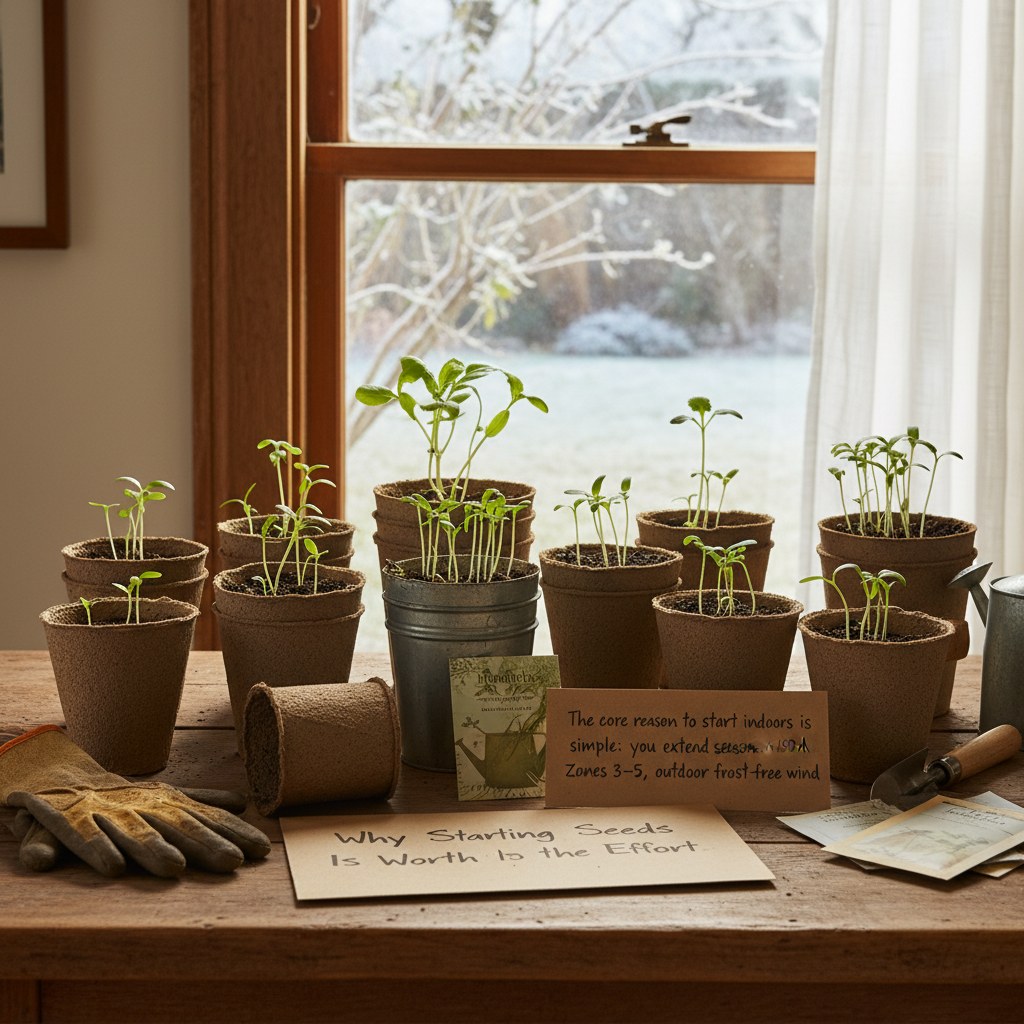
Beyond season extension, indoor starting lets you grow varieties that simply aren’t available as transplants at local nurseries. Heirloom tomatoes, specialty peppers, unusual basil cultivars, these are exclusively seed-catalog territory. You also control every input: soil quality, watering, light intensity, and temperature, which means stronger, healthier plants from day one compared to nursery transplants that may have been stressed in transit.
Cost is another factor. A $3 seed packet typically yields 20–50 plants. The equivalent in transplants could run $30–$80. Across a full garden, the savings are real.
Indoor Starting vs. Other Methods: Pros and Cons
Before deciding on indoor seed starting, it helps to understand how it compares with the alternatives.
Indoor Seed Starting (with Lights)
Pros: Full control over temperature and moisture, head start of 6 to 10 weeks on warm-season crops, ability to grow varieties not available locally as transplants, far cheaper per plant than buying nursery transplants.
Cons: Requires upfront investment in lights, trays, and seed-starting mix. Takes physical space (a basement shelf or spare room). Hardening off adds a week of careful management before transplant.
Winter Sowing (Outdoor in Jugs)
Pros: No grow lights, no indoor space, no hardening off needed. Plants are weather-conditioned from day one. Free containers (recycled milk jugs).
Cons: Slower germination than indoor starting. Works best for cold-stratification-loving plants (perennials, brassicas, hardy annuals). Heat-loving crops like tomatoes and peppers do not perform well this way.
Direct Sowing in the Garden
Pros: Zero equipment, zero transplanting stress, the simplest possible method. Best for crops that hate root disturbance like carrots, beans, and squash.
Cons: Limited to the outdoor growing window. No head start on slow-maturing warm-season crops. Higher seed loss to birds, slugs, and weather. Not suitable for tomatoes, peppers, or eggplants in zones 6 and colder.
When Should You Start Seeds Indoors? Timing by Zone
Timing is the single most common mistake beginners make, usually starting too early, which produces overgrown, root-bound seedlings by planting day. The calculation is straightforward: find your average last frost date, count back the number of weeks each crop needs, and that’s your sow date. But last frost dates vary dramatically by USDA zone.
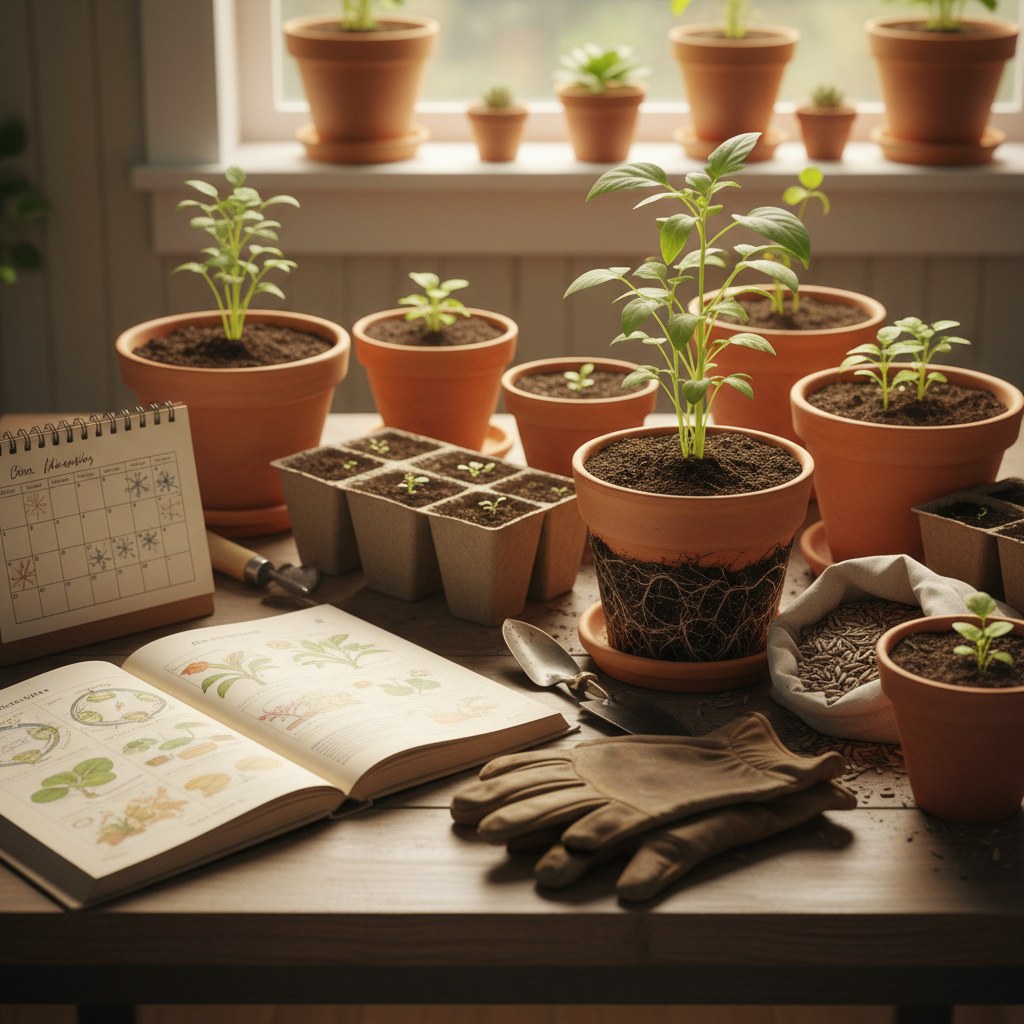
Below is a reference table covering the main zones. Use it to cross-reference with the crop-specific weeks in the next section. If you don’t know your zone, the USDA Plant Hardiness Zone Map at planthardiness.ars.usda.gov lets you look up by zip code.
| USDA Zone | Approx. Last Frost | Start Tomatoes/Peppers | Start Brassicas | Start Herbs |
|---|---|---|---|---|
| Zone 3 | May 15–31 | Mar 5–20 | Mar 15–Apr 1 | Apr 1–15 |
| Zone 4 | May 1–15 | Feb 20–Mar 5 | Mar 1–15 | Mar 15–Apr 1 |
| Zone 5 | Apr 15–30 | Feb 15–Mar 1 | Feb 15–Mar 1 | Mar 1–15 |
| Zone 6 | Apr 1–15 | Feb 1–15 | Feb 1–20 | Feb 15–Mar 1 |
| Zone 7 | Mar 15–Apr 1 | Jan 15–Feb 1 | Jan 15–Feb 1 | Feb 1–15 |
| Zone 8 | Mar 1–15 | Jan 1–15 | Jan 1–15 | Jan 15–Feb 1 |
| Zone 9–10 | Feb 1–Mar 1 | Nov–Dec (fall crop) | Oct–Nov (fall crop) | Sep–Oct (fall crop) |
What Supplies Do You Actually Need? A Seed-Starting Checklist
You don’t need a greenhouse or expensive equipment. What you do need is the right basics, and knowing what to skip. The biggest waste in seed-starting setups is buying gear that creates problems (like sealed trays that cause damping off) or skipping gear that solves them (like grow lights, which are non-negotiable if you don’t have a south-facing window with 6+ hours of direct winter sun).
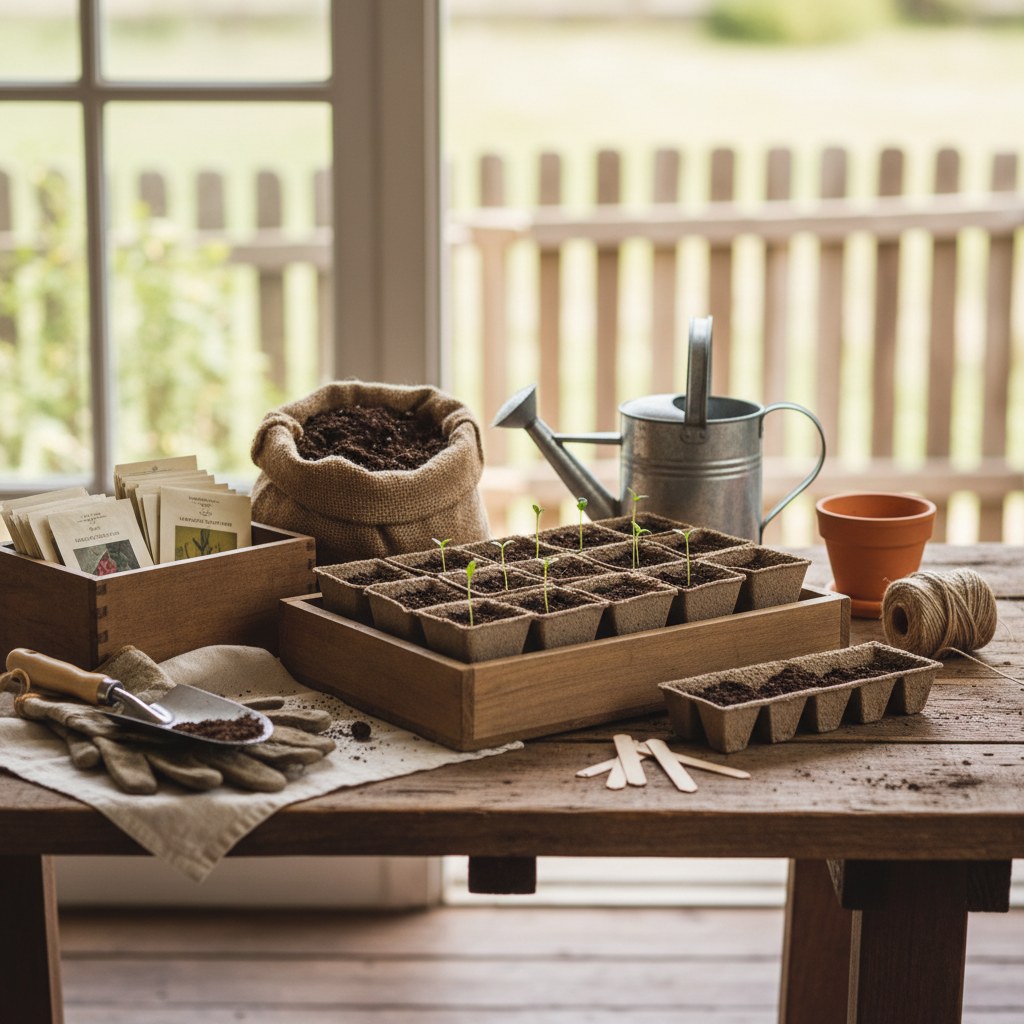
Here’s a practical checklist organized by priority:
- Seed-starting mix. NOT potting soil. Seed mix is sterile, fine-textured, and drains well. Potting soil compacts, holds too much moisture, and often carries fungal pathogens.
- Cell trays with drainage holes, 72-cell or 128-cell for small seeds; 50-cell for tomatoes and peppers. Flat trays underneath catch overflow.
- Grow lights: Full-spectrum LED shop lights work fine. Position 2–4 inches above seedlings; 14–16 hours on, 8–10 hours off.
- Heat mat: Germination requires soil temp of 65–85°F depending on crop. Heat mats maintain 10–20°F above ambient. Critical for peppers and eggplant.
- Watering can with a fine rose head, or water from below by filling the bottom tray.
- Labels and permanent marker. You will forget what you planted. Label every cell or row immediately.
Helpful (worth having):
- Humidity dome for the first few days post-sowing (remove once seedlings emerge)
- Seedling heat mat thermometer
- Diluted liquid fertilizer, fish emulsion or balanced liquid at half-strength
- Small fan for air circulation (prevents damping off, strengthens stems)
Skip it:
- Peat pellets, they dry out unevenly and create pH problems
- Fancy seed-starting kits with enclosed plastic lids meant to stay on, they trap moisture and breed fungal problems
Step-by-Step: Sowing Seeds Correctly
Sowing is where most beginners either plant too deep or too shallow, both kill germination rates. The standard rule is to plant seeds at a depth of 2–3 times their diameter. Tiny seeds like lettuce, oregano, and snapdragons go on the surface with just a light press or a dusting of vermiculite over the top. Large seeds like squash, cucumbers, and melons go in a half-inch deep.
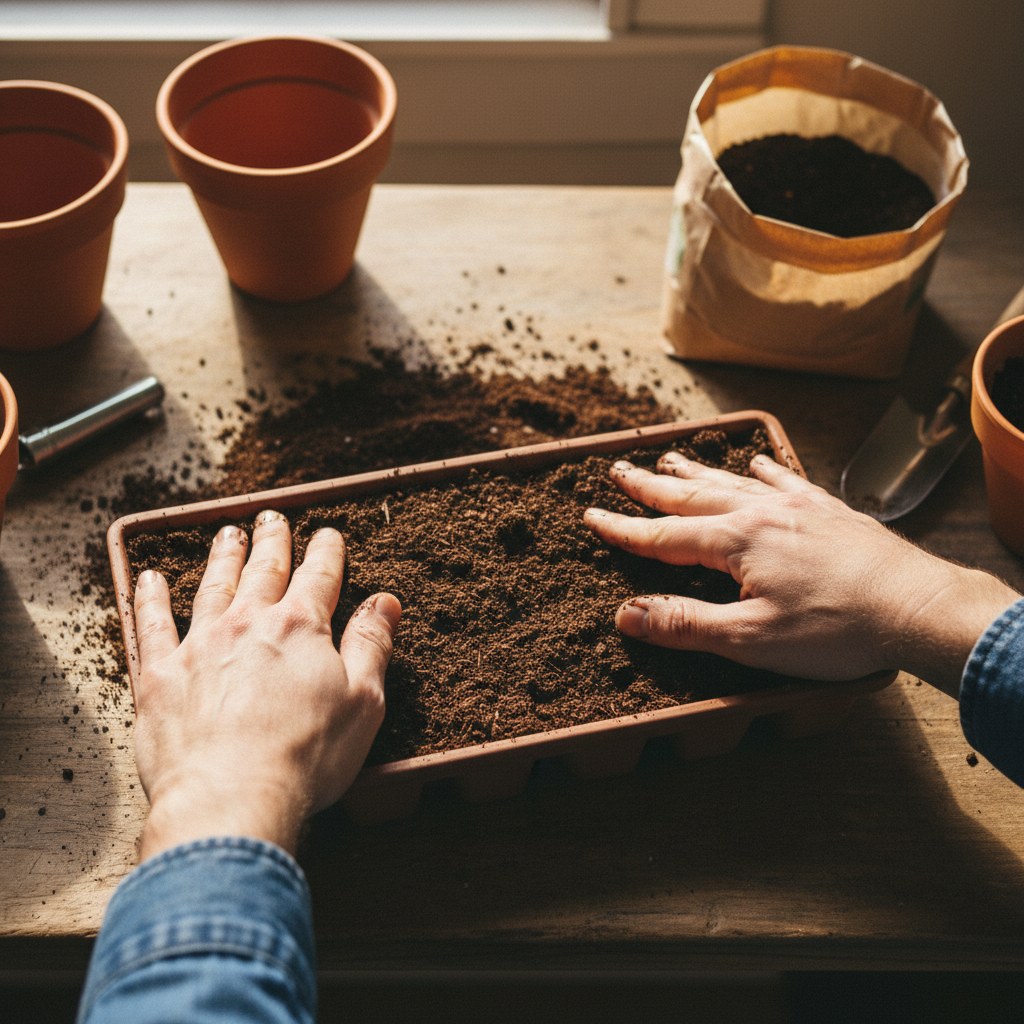
Fill cells with pre-moistened seed-starting mix, it should feel like a wrung-out sponge. Dry soil won’t give seeds the consistent moisture they need to trigger germination. Use a pencil tip or chopstick to make small indentations, drop 1–2 seeds per cell, and cover to the appropriate depth. Firm gently: you’re not compacting, just eliminating air pockets.
Mist the surface lightly after sowing, then place the tray on your heat mat and cover loosely with a humidity dome or plastic wrap. Check daily. Once you see the first green sprouts, typically 3–10 days for most vegetables, up to 21 days for peppers, remove the cover immediately and move the tray under lights. This is the moment that determines whether your seedlings grow straight and strong or become leggy and weak: lights must be on within hours of emergence, not days.
Germination Stage: What to Watch For
During germination, your only jobs are maintaining consistent warmth, consistent moisture, and darkness (seeds don’t need light until they sprout). Check the trays twice daily. The surface of the seed-starting mix should never fully dry out, but it also shouldn’t be waterlogged, standing water is the fastest route to rotting seeds and damping off. Bottom watering: fill the tray beneath the cell tray with about half an inch of water and let it wick up for 20–30 minutes, then dump the excess.
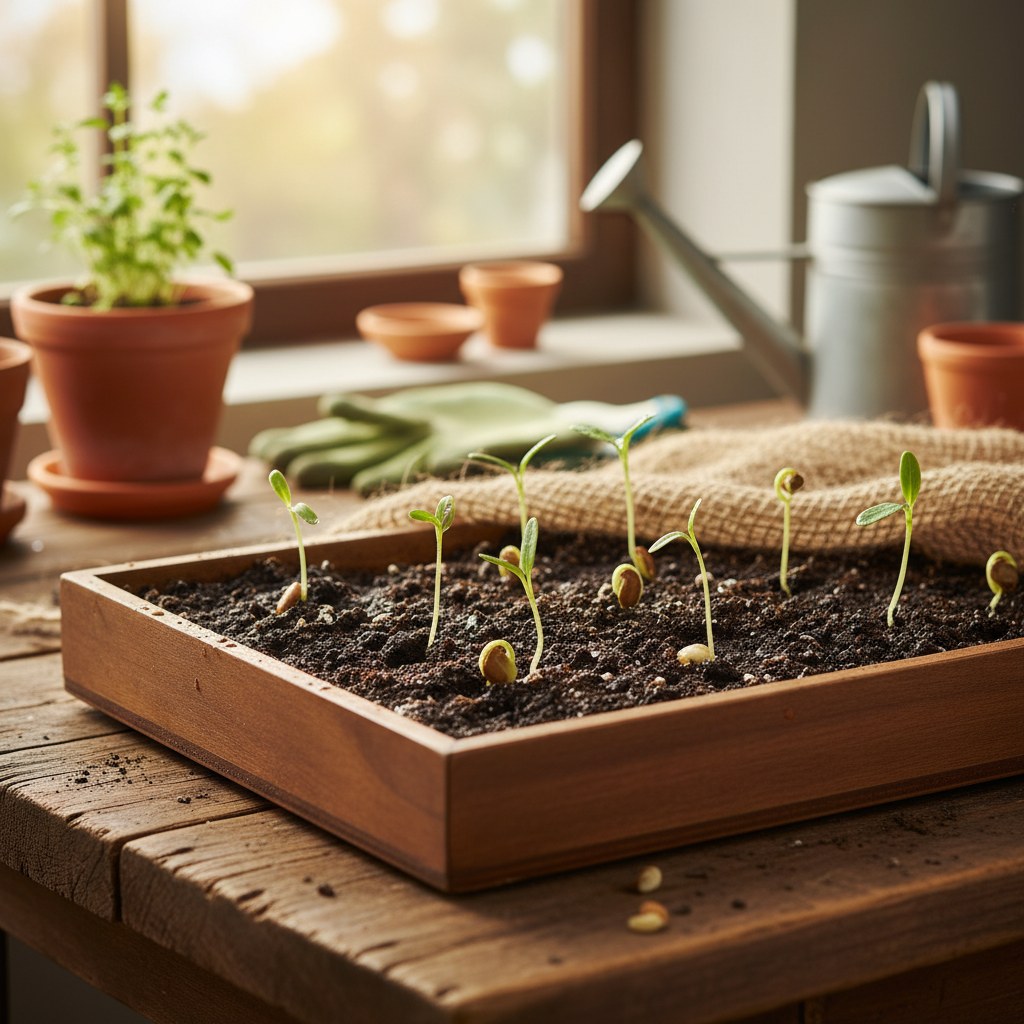
Germination rates vary by crop, age of seed, and temperature. Fresh tomato seed at 75°F typically germinates in 5–7 days. Peppers at 80°F take 10–14 days, anything under 70°F and they may take 3+ weeks or fail entirely. Parsley is notoriously slow at 14–21 days. If nothing has emerged by twice the expected germination window, it’s safe to resow in fresh cells rather than waiting indefinitely.
The first leaves you see, called cotyledons, are embryonic leaves already formed inside the seed. They’re not true leaves, and their appearance isn’t a signal to fertilize yet. True leaves (the second set, which look like the actual plant) are your fertilization trigger.
Thinning: The Step Everyone Skips (Don’t)
If you planted 2 seeds per cell and both germinated, you need to thin to one. This feels brutal, but it’s non-negotiable. Crowded seedlings compete for light, water, and nutrients, the result is two weak plants instead of one strong one. Use small scissors to snip the weaker seedling at soil level rather than pulling, which disturbs the roots of the keeper.
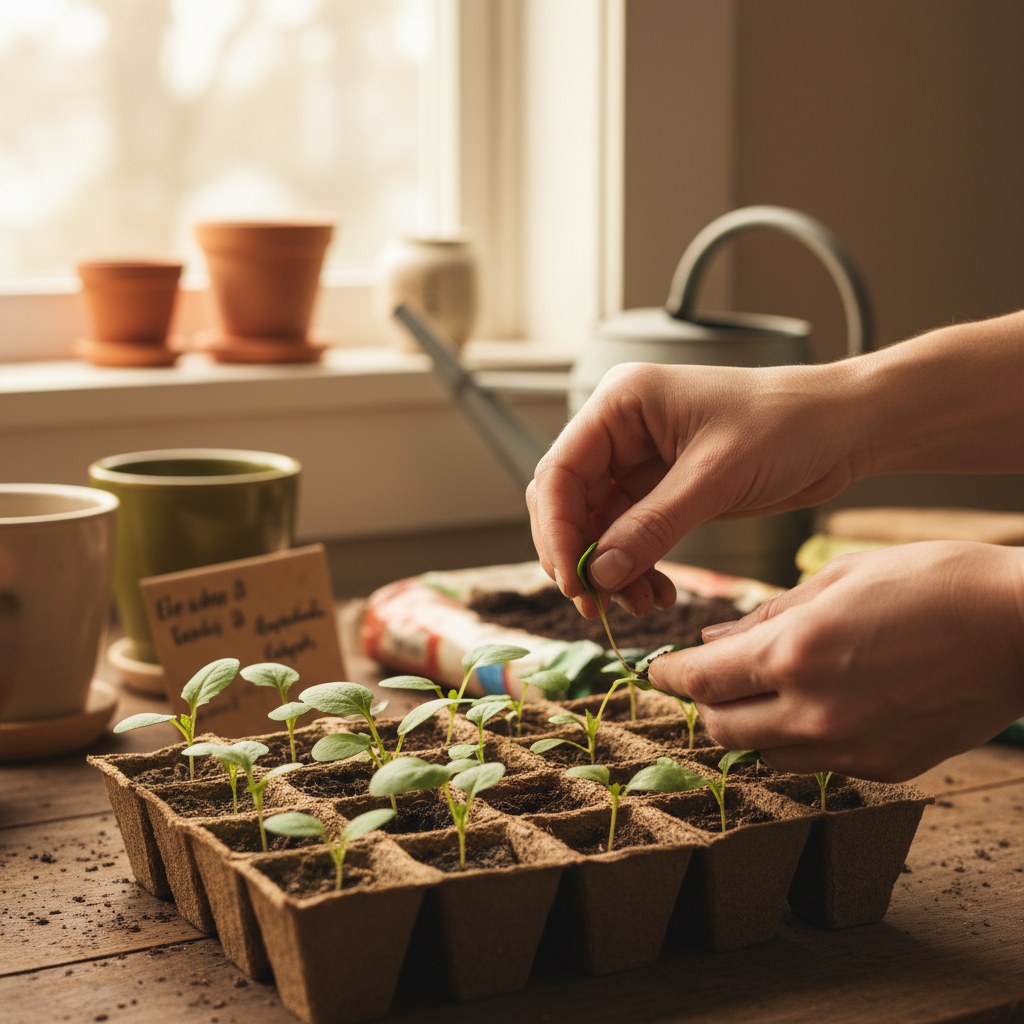
The right time to thin is when seedlings have their first set of true leaves and you can clearly see which is the stronger, stockier plant. Generally that means keeping the one with the thicker stem. If both look equal, keep the one positioned more centrally in the cell.
For crops like lettuce or herbs where you started multiple seeds in a row (flat or plug tray), thin to 1 inch spacing minimum. You can transplant the thinnings into empty cells if they’re intact, lettuce and brassica seedlings handle that well. Tomatoes and peppers: thin firmly and compost the extras.
Fertilizing Seedlings: When and How Much
Seed-starting mix contains little to no fertilizer by design, seeds carry their own nutrients for germination and the cotyledon stage. Once true leaves appear, the plant is actively growing and needs nutrients from outside the seed. This is when fertilization begins.
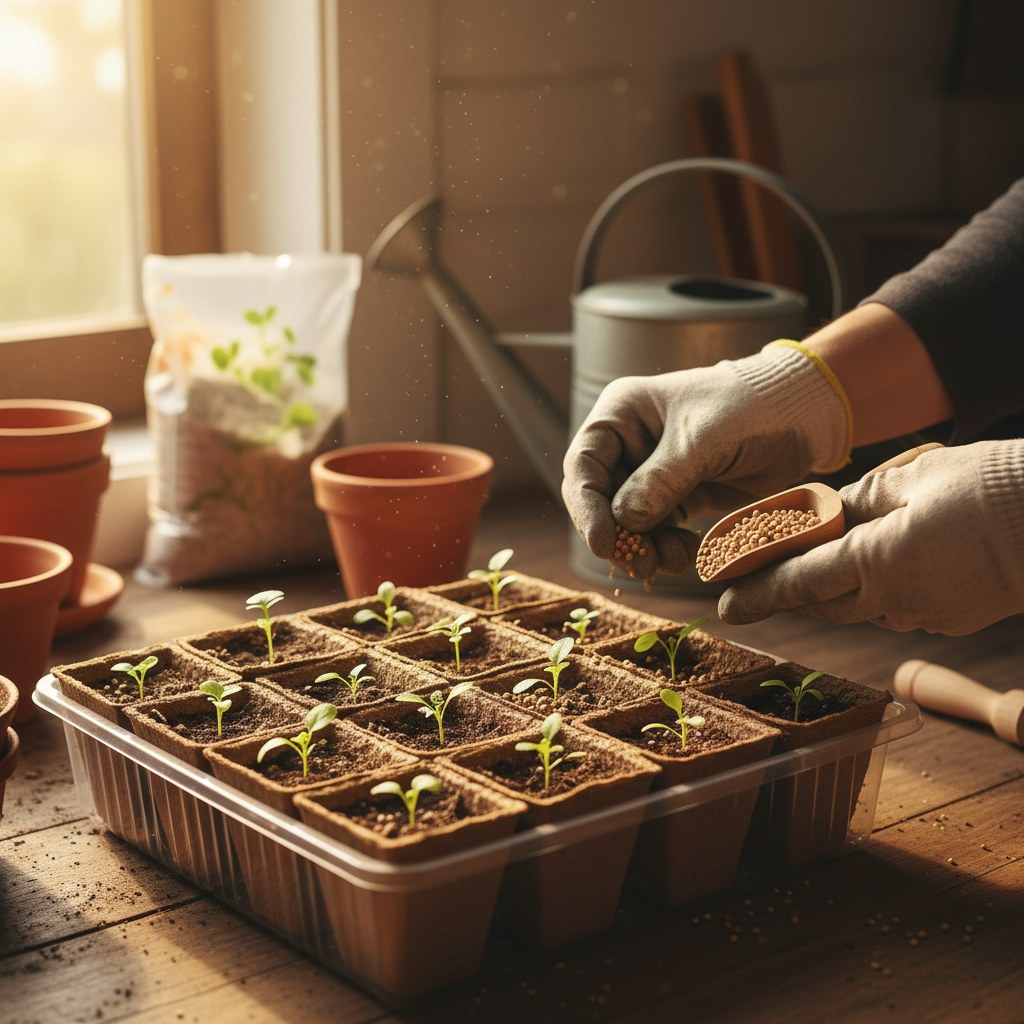
Use a balanced liquid fertilizer (10-10-10 or similar) at half the recommended strength. Full-strength fertilizer on young seedlings causes fertilizer burn, leaf edges turn brown and crispy. Half-strength, every 7–10 days, is the right cadence from first true leaf to transplant day.
Fish emulsion (5-1-1) is a popular organic option and works well for leafy growth. For fruiting crops like tomatoes, switch to a slightly higher phosphorus formula (like 5-10-10) about 3–4 weeks before transplanting to encourage root development over leafy growth. Always water with plain water between feedings to flush any salt buildup from the mix.
Hardening Off: The Stage That Makes or Breaks Transplants
Hardening off is the process of gradually acclimating indoor-grown seedlings to outdoor conditions, direct sun, wind, temperature swings, and humidity variations. Skipping it, or rushing it, causes transplant shock: leaves turn pale, growth stalls, plants may die. Done correctly over 7–14 days, your plants step into the garden already adapted and ready to grow aggressively.
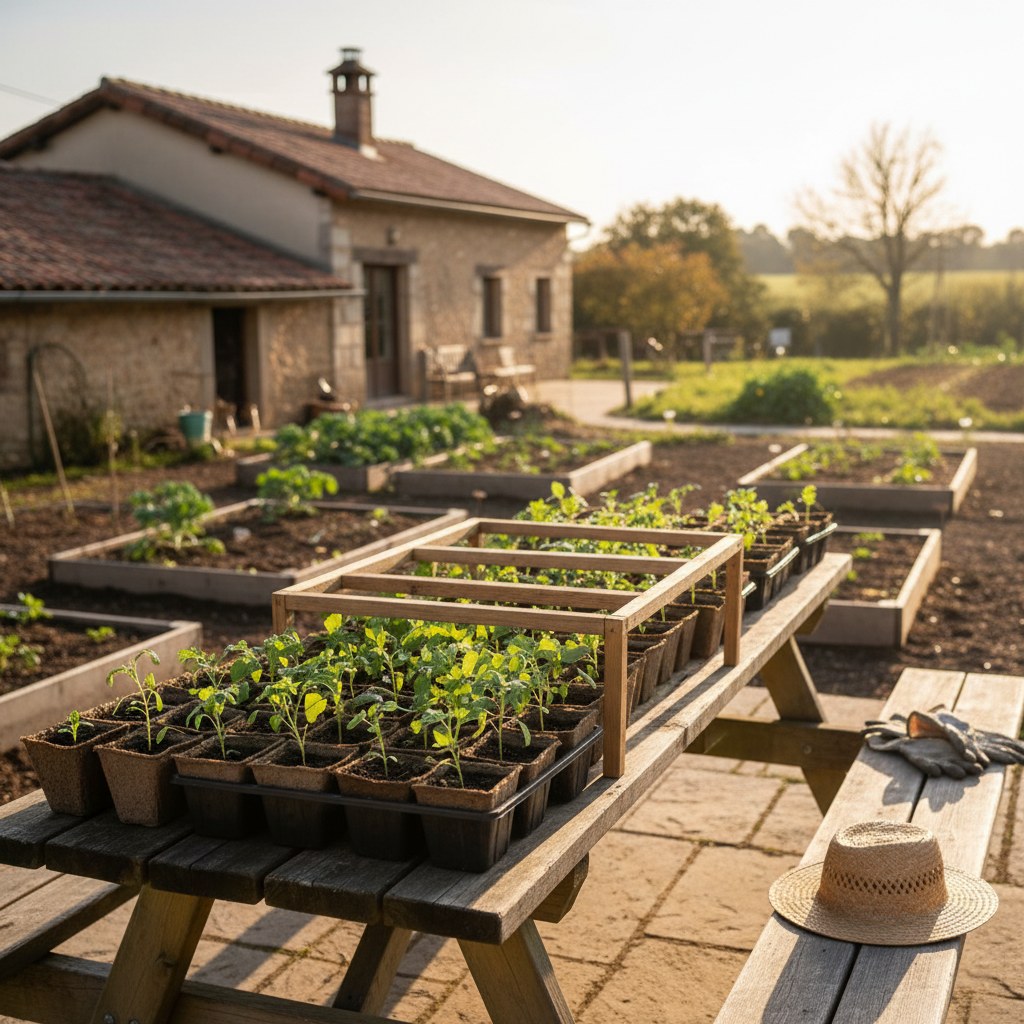
The protocol: start with 1–2 hours of outdoor exposure in dappled shade (not direct sun) on a calm, mild day. Bring plants back inside before temperatures drop. Each day, increase exposure time by 1–2 hours and gradually introduce direct morning sun. By day 7–10, plants should be outside for most of the day including a few hours of full sun. By day 14, they can handle full outdoor conditions including overnight temperatures down to a few degrees above their transplant threshold.
Watch for wilting: a little mild wilting in afternoon heat is normal in the first few days. Severe wilting, especially in the morning, means back off. Never harden off during a heat wave, cold snap, or high-wind day for the first week. A cold frame or cloche makes this process much more manageable by buffering temperature extremes.
Once your transplants are in the ground, make sure your garden plan is set. An article like our companion planting guide can help you figure out exactly which plants should go side by side, and which combinations to avoid, before you put a single seedling in the soil.
Troubleshooting: Leggy Seedlings, Damping Off, and Slow Germination
Even with the right setup, problems happen. Here’s how to diagnose and fix the three most common seed-starting failures before they wipe out your trays.
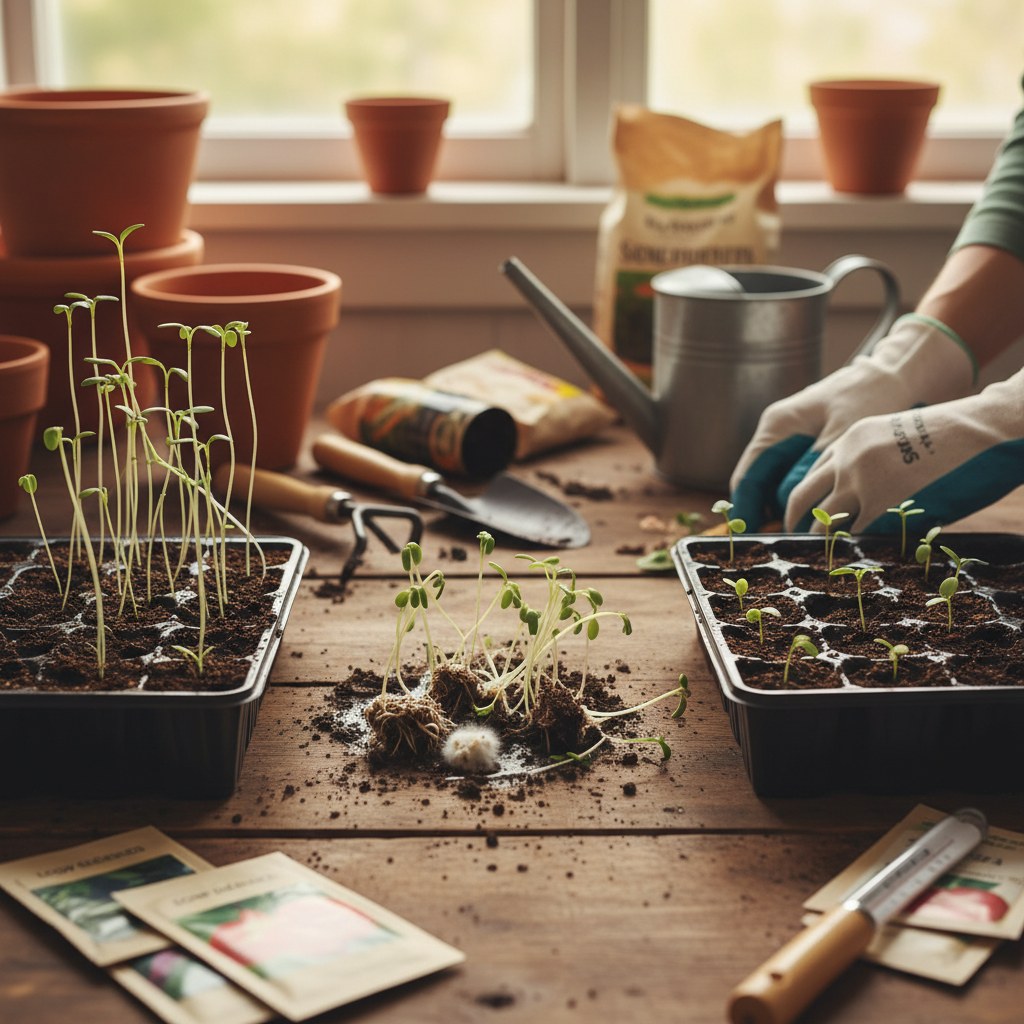
Why Are My Seedlings Leggy and Falling Over?
Leggy seedlings: tall, thin, floppy stems with lots of space between leaves, are almost always caused by insufficient light. The plant is stretching toward the nearest light source because what it has isn’t bright enough or close enough. Fix: lower your grow lights to 2–3 inches above the seedling tops (adjusting upward as they grow). If you’re relying on a window, add supplemental LED lighting. You can also run a small fan pointed gently at seedlings to create mild stem resistance, which causes them to develop thicker, stronger stems through a process called thigmomorphogenesis, the same reason outdoor plants grow sturdier than indoor ones.
Partially leggy seedlings can sometimes be corrected by burying them deeper when transplanting, tomatoes in particular can be buried up to their first true leaves, growing roots along the buried stem.
What Is Damping Off and How Do I Stop It?
Damping off is a fungal disease caused by Pythium, Rhizoctonia, or Fusarium pathogens that live in non-sterile soil and thrive in wet, poorly ventilated conditions. Affected seedlings simply collapse at the soil line, the stem pinches and rots at the base. There’s no saving seedlings that have damped off, but prevention is straightforward: use sterile seed-starting mix (never garden soil), water from below, run a small fan for air circulation, never let trays sit in standing water for more than 30 minutes, and remove humidity domes as soon as sprouts appear. A light dusting of ground cinnamon on the soil surface has mild antifungal properties and can help prevent outbreak spread.
Why Haven’t My Seeds Germinated Yet?
Slow or failed germination usually traces to one of four causes: soil temperature too low (heat mat required, especially for peppers and eggplant), seeds planted too deep (re-check depth against seed packet), seeds too old (test viability with a damp paper towel germination test before committing to a full tray), or seeds that need stratification or scarification that wasn’t provided (this applies mainly to wildflowers and some perennial herbs, not standard vegetables). If your tomatoes haven’t sprouted in 14 days, the soil is likely too cold, a heat mat usually resolves it within 3–5 more days.
Seed Starting Schedule: What to Sow and When
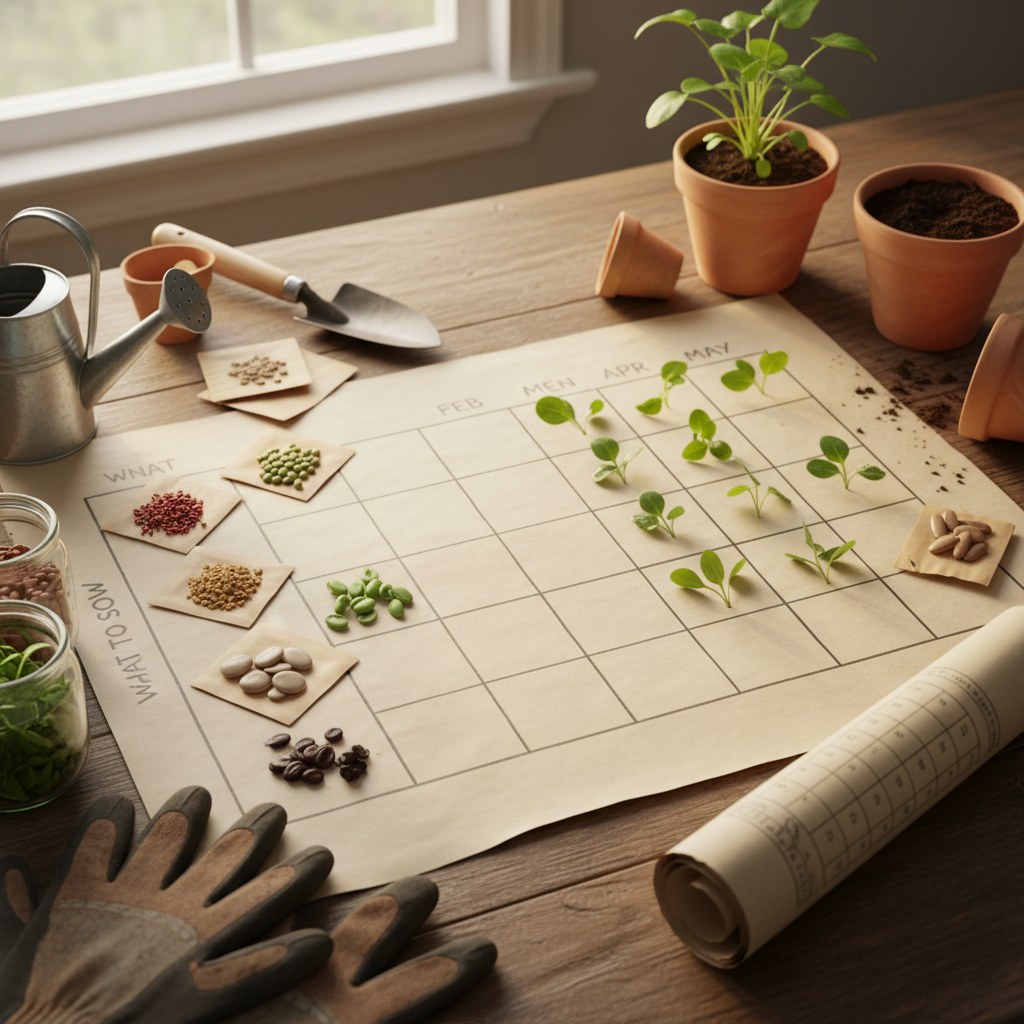
Planning your sow dates in advance prevents the common mistake of starting everything at once, which creates a bottleneck of seedlings all needing to go out on the same day. Stagger sowings based on each crop’s transplant date and lead time. The table below uses a Zone 6 last frost date of April 15 as the reference, but you can shift all dates forward or backward based on your zone’s frost date using the zone table above. For more on what to direct-sow and transplant in spring, see our spring garden checklist.
| Crop | Weeks Before Last Frost | Zone 6 Sow Date | Germ Temp (°F) | Days to Germ |
|---|---|---|---|---|
| Onions | 10–12 weeks | Late Jan | 65–75 | 7–14 |
| Peppers | 8–10 weeks | Early Feb | 80–85 | 10–21 |
| Eggplant | 8–10 weeks | Early Feb | 75–85 | 7–14 |
| Tomatoes | 6–8 weeks | Late Feb | 70–80 | 5–10 |
| Basil | 6–8 weeks | Late Feb | 65–75 | 5–10 |
| Broccoli / Cabbage | 6–8 weeks | Late Feb | 65–75 | 4–7 |
| Flowers (annual) | 6–8 weeks | Late Feb | 65–75 | 5–14 |
| Lettuce / Greens | 4–6 weeks | Early–Mid Mar | 60–70 | 3–7 |
| Cucumbers / Squash | 3–4 weeks | Late Mar | 70–85 | 3–7 |
Sources and Further Reading
- University of Minnesota Extension, Starting Seeds Indoors, planting and growing guides
- Cornell Cooperative Extension, Starting Seeds Indoors at Home, Department of Horticulture
- Michigan State University Extension, Successful Seed Starting Indoors
- USDA Plant Hardiness Zone Map, US Department of Agriculture
- Penn State Extension, Indoor Seed Starting for the Home Gardener
Frequently Asked Questions
Can I use regular potting soil instead of seed-starting mix?
No: not for germination. Potting soil is too coarse, too nutrient-dense for seedlings, and often not sterile. It compacts when wet and can smother tiny seedlings before they fully emerge. Seed-starting mix is specifically formulated to be fine-textured, lightweight, and sterile. Once seedlings have 2–3 sets of true leaves and you’re potting up to larger containers, a blend of half seed-starting mix and half quality potting soil is fine.
How close should grow lights be to seedlings?
For most LED grow lights and LED shop lights, 2–4 inches above the seedling tops is the target distance. Fluorescent T5 and T8 tubes: 1–2 inches. As plants grow, raise lights to maintain distance. If you can’t raise the light, pot up the seedlings into deeper containers to lower the root ball and keep the leaf tops in the right range. Measure light intensity with a lux meter app on your phone if you want precision, vegetable seedlings need 2,000–4,000 lux minimum, with 8,000+ lux being ideal for fruiting crops.
What’s the ideal temperature for growing seedlings after germination?
After germination, most vegetable seedlings grow best at 65–70°F daytime and 60–65°F nighttime. This is slightly cooler than germination temperature, which is normal, once sprouted, heat mats can often be removed unless ambient temperatures are below 60°F. Cool-season crops like lettuce, brassicas, and onions actually prefer the lower end of that range. Tropical crops like basil prefer 70°F+ consistently and will be stunted or damaged by temps below 55°F.
When is the right time to transplant seedlings outdoors?
After a full 7–14 day hardening-off period and once outdoor temperatures are consistently above the crop’s cold tolerance threshold. For tomatoes and peppers, that means nighttime temps reliably above 50°F and ideally above 55°F. Brassicas like broccoli and cabbage can go out when nighttime temps are above 35–40°F and are actually sweetened by light frost. Cucumbers, squash, and basil are the most cold-sensitive, wait until all frost risk is past and soil temperature is above 60°F.
Do I need to water seedlings every day?
Not necessarily: overwatering kills more seedlings than underwatering. The correct approach is to check daily and water when the top half-inch of mix feels dry, or when pots feel noticeably lighter when lifted. Bottom watering (filling the undertray) is preferred because it encourages roots to grow downward and prevents surface moisture that promotes fungal problems. In a 72-cell tray under grow lights at room temperature, most gardeners water every 1–3 days. Larger cells and cooler conditions = less frequent watering needed.
Starting your own transplants indoors is a skill that compounds year over year, each season you’ll refine your timing, troubleshoot faster, and expand what you’re willing to try from seed. The gardeners who get the most out of their growing season are almost universally the ones who start seeds indoors. This year, start with just two or three crops you’re excited about, get the basics right, and let the confidence build from there.