Livestock Guardian Dogs: Breeds and Training Guide
Key Takeaways
- Livestock guardian dogs (LGDs) are working dogs, not pets — they bond with their livestock and live full-time with the animals they protect.
- Great Pyrenees are the most popular LGD breed in North America due to their gentle temperament, availability, and effectiveness against common predators.
- Starting with a puppy means an 18-24 month investment before you have a reliable guardian — adult dogs from working farms can be effective much sooner.
- LGDs need secure perimeter fencing (minimum 5 feet, no-climb style) not just to keep predators out, but to define your dog’s patrol territory.
- Annual costs for a working LGD run $1,000-2,000 including food, veterinary care, and supplies — far less than the livestock losses they prevent.
What Is a Livestock Guardian Dog?
A livestock guardian dog is exactly what the name says — a dog bred and trained to live with livestock and protect them from predators. But if your only experience is with house dogs or herding breeds like border collies, you need to set aside everything you think you know about dog behavior.
LGDs don’t herd. They don’t chase. They don’t take commands in the field and come running when you whistle. Instead, they bond deeply with the animals in their care, consider those animals their pack, and position themselves as the first line of defense against anything that threatens them. A good LGD will deter coyotes, stray dogs, foxes, raccoons, hawks, and in some cases even bears and mountain lions — not usually by fighting, but by their sheer presence and willingness to confront threats.
For small homesteaders losing chickens to coyotes or lambs to neighborhood dogs, a well-trained LGD can feel like a miracle. But they’re not plug-and-play. Understanding these dogs — their instincts, their needs, and their limitations — is essential before you bring one home.
Top Livestock Guardian Dog Breeds
Great Pyrenees
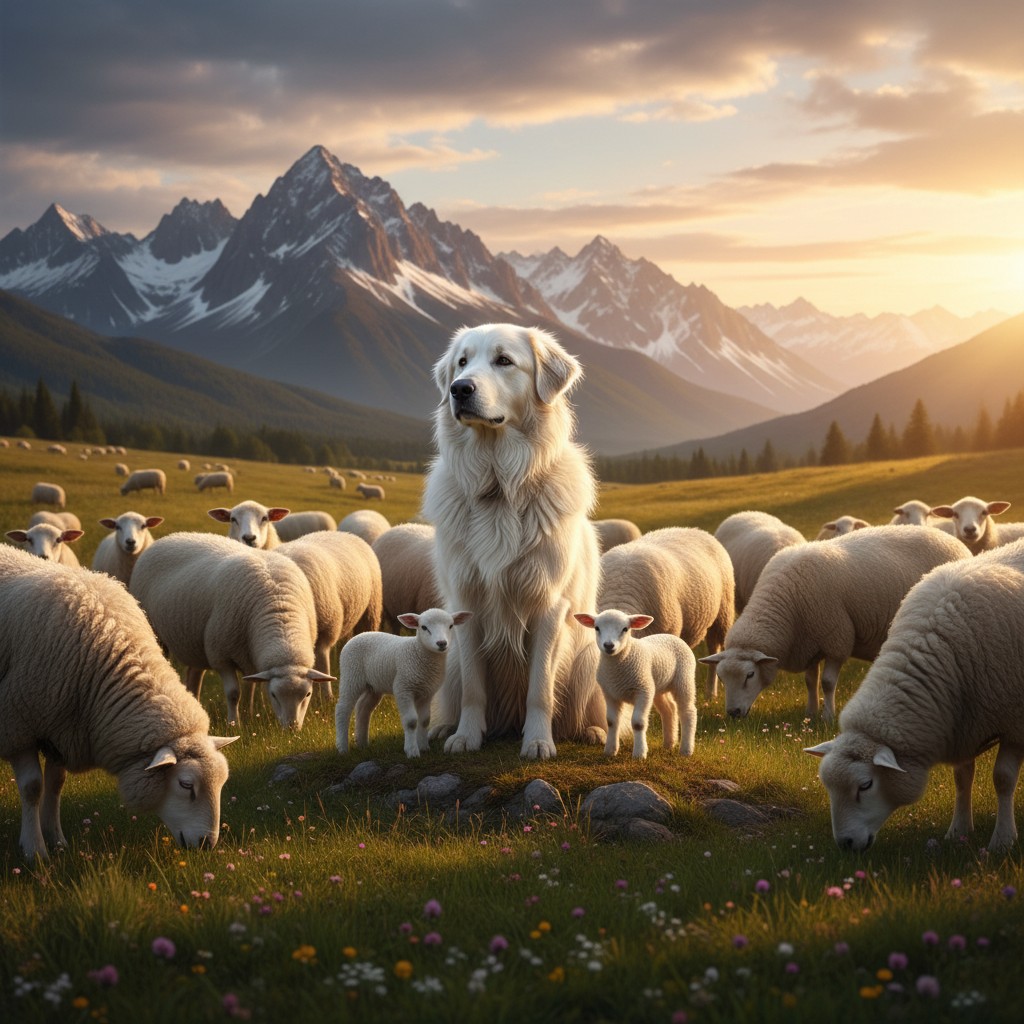
The most common LGD in the United States, and for good reason. Great Pyrenees are gentle with livestock and children, relatively calm, widely available, and effective against the predators most homesteaders face. They typically weigh 85-115 pounds, have a thick double coat (be prepared for shedding), and are known for their nighttime barking — which is how they warn predators to stay away.
Pyrenees are a good first-time LGD breed. They’re forgiving of handler mistakes and tend to have strong natural guarding instincts even without extensive training. The downside? They’re independent thinkers and notorious for testing fences. A bored or under-stimulated Pyrenees will go walkabout.
Anatolian Shepherd
Originally from Turkey, Anatolians are larger (110-150 pounds), more athletic, and more aggressive toward perceived threats than Pyrenees. They’re excellent guardians but require a more experienced handler. An Anatolian is more likely to actively confront and pursue a predator rather than simply warning it off.
These dogs are territorial and can be aloof with strangers. They’re a strong choice for properties with serious predator pressure (wolves, large cats) but may be too much dog for a small homestead with occasional coyote trouble.
Maremma Sheepdog
An Italian breed that’s popular in Australia and increasingly common in North America. Maremmas are slightly smaller than Pyrenees (70-100 pounds) and tend to stay closer to their flock rather than patrolling wide perimeters. They’re affectionate with their livestock and generally good with poultry, which makes them a solid choice for homesteaders who need a chicken guardian specifically.
Akbash
Another Turkish breed, the Akbash is tall, lean, and more speed-oriented than other LGDs. They’re effective runners who can actually chase down coyotes — most other LGD breeds rely on intimidation rather than pursuit. Akbash dogs are typically white, weigh 80-130 pounds, and are known for being calm and quiet until a threat appears. They’re less common than Pyrenees or Anatolians, so finding a working-bred Akbash may take some searching.
Other Breeds Worth Knowing
The Kangal (sometimes classified separately from Anatolians), Spanish Mastiff, Tibetan Mastiff, Karakachan, and Polish Tatra Sheepdog all have strong LGD histories. For most North American homesteaders, though, Great Pyrenees and Anatolian Shepherds (or crosses of the two) are the most available and well-suited to typical predator pressures.
Puppy vs. Adult: Where to Start
Starting With a Puppy
The traditional approach is to place a puppy (8-12 weeks old) directly with the livestock it will guard. The puppy grows up thinking goats or sheep or chickens are its family, and that bond becomes the foundation of its guarding behavior.
This works. But it takes time — a lot of time. Most LGD puppies aren’t reliably trustworthy until 18-24 months of age. During that adolescent period, you’ll deal with playful chasing (which can injure or kill small livestock), fence testing, chewing, and all the normal puppy behaviors amplified by a 90-pound teenager with a mind of its own.
If you go the puppy route, buy from working parents. Not show lines, not pet lines — working parents that actively guard livestock. The instinct is genetic. A puppy from two proven working parents has a dramatically higher success rate than a puppy from show-bred or pet-bred lines, regardless of the breed’s reputation.
Expect to pay $300-800 for a working-bred LGD puppy from a farm.
Starting With an Adult
An adult dog from a working farm can be guarding your livestock within days rather than months. Many farmers sell or rehome young adults (1-3 years old) when they have more dogs than they need, when a dog doesn’t fit their particular situation, or when they’re downsizing.
The advantages are obvious: you skip the puppy phase entirely and get a dog with proven instincts and at least some training. The risk is that you may inherit someone else’s problem dog. Ask detailed questions about why the dog is available, how it behaves around different types of livestock, its fencing history, and whether it’s been around poultry.
Adult working dogs typically cost $500-1,500, sometimes more for a fully trained, proven guardian.
Bonding Your LGD With Livestock
The bonding process is the foundation of everything. A dog that isn’t bonded to its livestock is just a large dog living in a pasture.
For Puppies
Place the puppy in a secure pen within or adjacent to the livestock area, where the animals can see and smell each other through a fence. After a few days, allow supervised contact. Correct any chasing, mouthing, or rough play immediately — a firm “no” and removal from the situation.
Gentle, calm livestock are ideal for puppy training. Older ewes or does that won’t panic and will stand their ground (or even push back) help teach a puppy boundaries. Avoid putting puppies with baby animals until the puppy has demonstrated reliable gentle behavior.
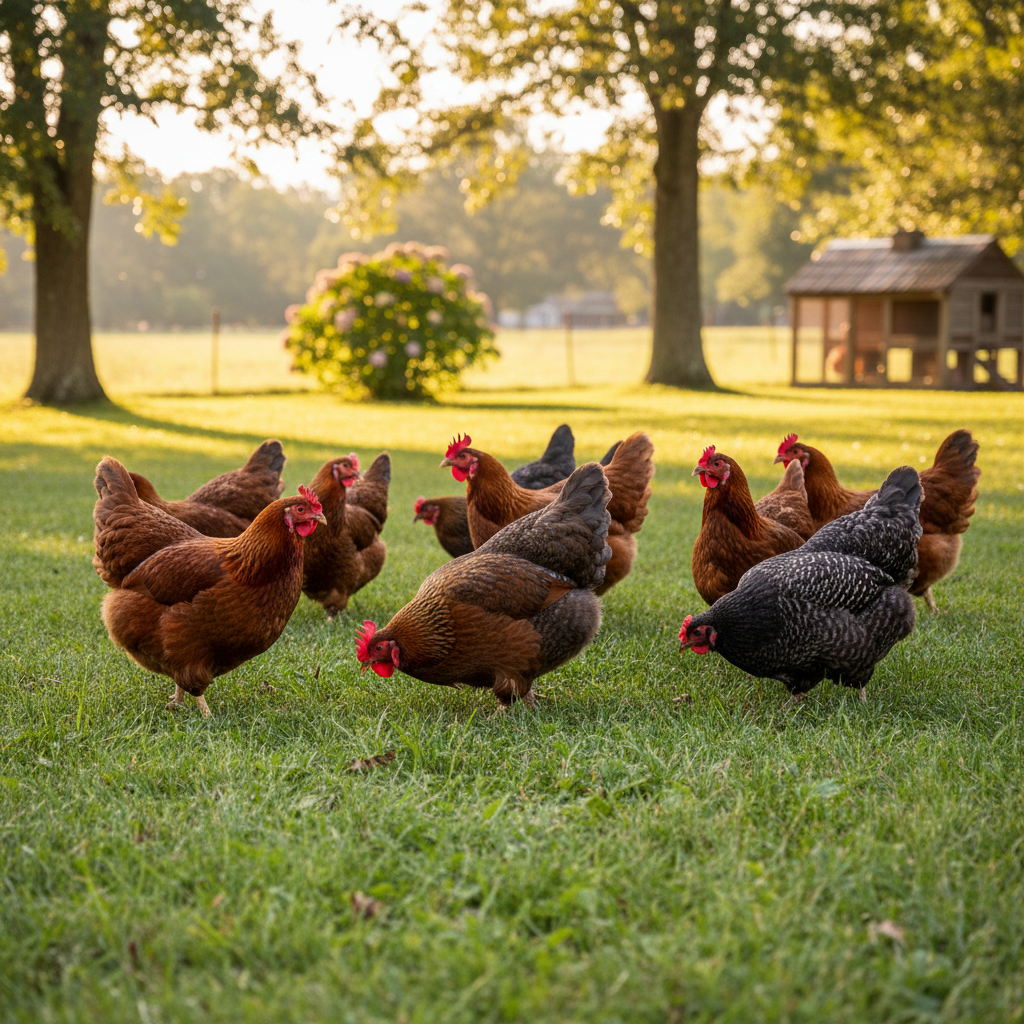
For poultry, start with the puppy in a crate or on a leash inside the chicken area. Let the birds approach on their terms. Many LGDs take to poultry naturally, but some need weeks of supervised exposure before they can be trusted. A puppy that “plays” with a chicken will kill it — there’s no margin for error with birds.
For Adults
Same principle, compressed timeline. Keep the new dog in a adjacent pen for 3-7 days, then introduce with supervision. Most working adults settle into a new flock quickly, but watch for any predatory behavior during the first few weeks. An adult that chases or grabs livestock is a serious red flag and may not be correctable.
Training and Management
LGD training is less about obedience commands and more about setting boundaries and reinforcing correct behavior.
What to Reinforce
- Staying with the livestock: Praise and reward the dog when it’s calm and present with its animals.
- Gentle behavior: Any interaction with livestock that’s calm and non-aggressive deserves encouragement.
- Alerting to threats: Barking at unfamiliar sounds or animals approaching the perimeter is exactly what you want. Don’t punish it.
What to Correct
- Chasing livestock: This must be stopped immediately, every time. No exceptions.
- Rough play: Puppies especially will try to play with goats or sheep the way they’d play with other dogs. Redirect firmly.
- Roaming: If your dog is leaving the property, your fencing needs work — not your training approach. An LGD that wanders is almost always a fencing problem.
The Barking Question
LGDs bark. A lot. Mostly at night, because that’s when predators are most active. This is their primary tool for deterring threats, and suppressing it undermines the entire purpose of having a guardian dog.
If you have close neighbors, this is a real consideration. Talk to your neighbors before getting an LGD, and be honest about what to expect. Some breeds (like Akbash) are quieter than others (like Great Pyrenees), but no LGD is going to be silent at 2 AM when coyotes are howling nearby.
Fencing: The Non-Negotiable
Good fencing is the single most important infrastructure investment for successful LGD ownership. It serves two purposes: keeping predators out and keeping your dog in.
Minimum recommendation: 5-foot no-climb horse fence or welded wire with a strand of hot wire along the top and bottom. The hot wire at the bottom prevents digging under (both predators and dogs), and the top strand discourages climbing.
Great Pyrenees are especially notorious fence climbers. A 4-foot fence is a suggestion to a Pyrenees, not a barrier. If your dog is getting over your fence, add height, add hot wire, or both.
For the perimeter, woven wire or field fence works. Avoid chain link — it’s expensive and dogs can climb it easily. T-posts with no-climb mesh and a single electric offset wire is one of the most cost-effective setups.
Real-World Costs
Here’s what to budget for your first year with a livestock guardian dog:
- Dog purchase: $300-1,500 depending on puppy vs. adult, breed, and lineage
- Spay/neuter: $200-500 for a large breed
- Annual food: $600-1,000 (a large LGD eats 4-6 cups of quality kibble daily)
- Veterinary care: $200-400 for annual exams, vaccinations, and heartworm prevention
- Fencing upgrades: $500-3,000+ depending on your current setup
- Supplies (collar, bedding, bowls): $50-100
First-year total: $1,850-6,500. After that, annual costs drop to roughly $1,000-1,500 for food and veterinary care.
Is it worth it? Consider what you’re protecting. A single coyote attack can kill multiple goats or an entire flock of chickens in one night. One ram or buck represents $300-1,000 in value. The math works out quickly when you’ve experienced predator losses.
The Hard Truth: LGDs Are Not Pets
This deserves its own section because it’s the most common source of LGD failure.
A livestock guardian dog lives with livestock. Full time. In all weather. It sleeps in the barn or the pasture, not on your couch. It eats its meals near its flock, not in your kitchen. It bonds with goats and sheep and chickens, not with your kids (though it will likely be gentle with them).
When people bring an LGD puppy inside, let it bond with the family, and then try to put it out with the livestock at 6 months old, the result is a dog that wants desperately to be in the house. It won’t guard effectively because its pack — in its mind — is inside.
This doesn’t mean you can’t interact with your LGD. You absolutely should. Handle it regularly, check it for injuries, build a relationship based on trust and mutual respect. But its home is with its livestock, and that boundary needs to be clear from day one.
Frequently Asked Questions
Can one LGD protect my whole property?
It depends on acreage and predator pressure. One dog can reasonably cover 5-20 acres with moderate predator activity. For larger properties or areas with serious predators (wolves, bears, mountain lions), most experienced ranchers recommend at least two dogs — they work as a team, spelling each other and presenting a more formidable deterrent. Two dogs also provide backup if one is injured or sick.
Will an LGD protect chickens?
Many LGDs guard poultry effectively, but it’s not universal. Poultry triggers prey drive more readily than sheep or goats because of their erratic movement and flapping. Success depends on the individual dog, proper introduction, and training. Maremma Sheepdogs and Great Pyrenees have the best track record with poultry. Always supervise initial introductions closely, and never leave a new or young dog unsupervised with birds until you’re absolutely confident in its behavior.
How do LGDs handle other dogs and visitors?
Most LGDs will be wary of unfamiliar dogs and may confront them aggressively — they view strange dogs as potential predators. This is correct behavior for a guardian. For human visitors, well-socialized LGDs are typically calm but may bark warnings and position themselves between the visitor and their livestock. Always introduce visitors properly and don’t allow strangers to approach livestock without the handler present until you know how your dog responds.
Do I need to train my LGD to attack predators?
No, and you shouldn’t try. LGDs don’t need aggression training — their instincts handle the predator response. Most LGD deterrence works through barking, posturing, scent-marking territory, and simply being large and present. Physical confrontation is a last resort that most predators avoid. A dog trained to be aggressive is more likely to become a liability (attacking neighbors’ dogs, delivery drivers, or even livestock) than a better guardian.