
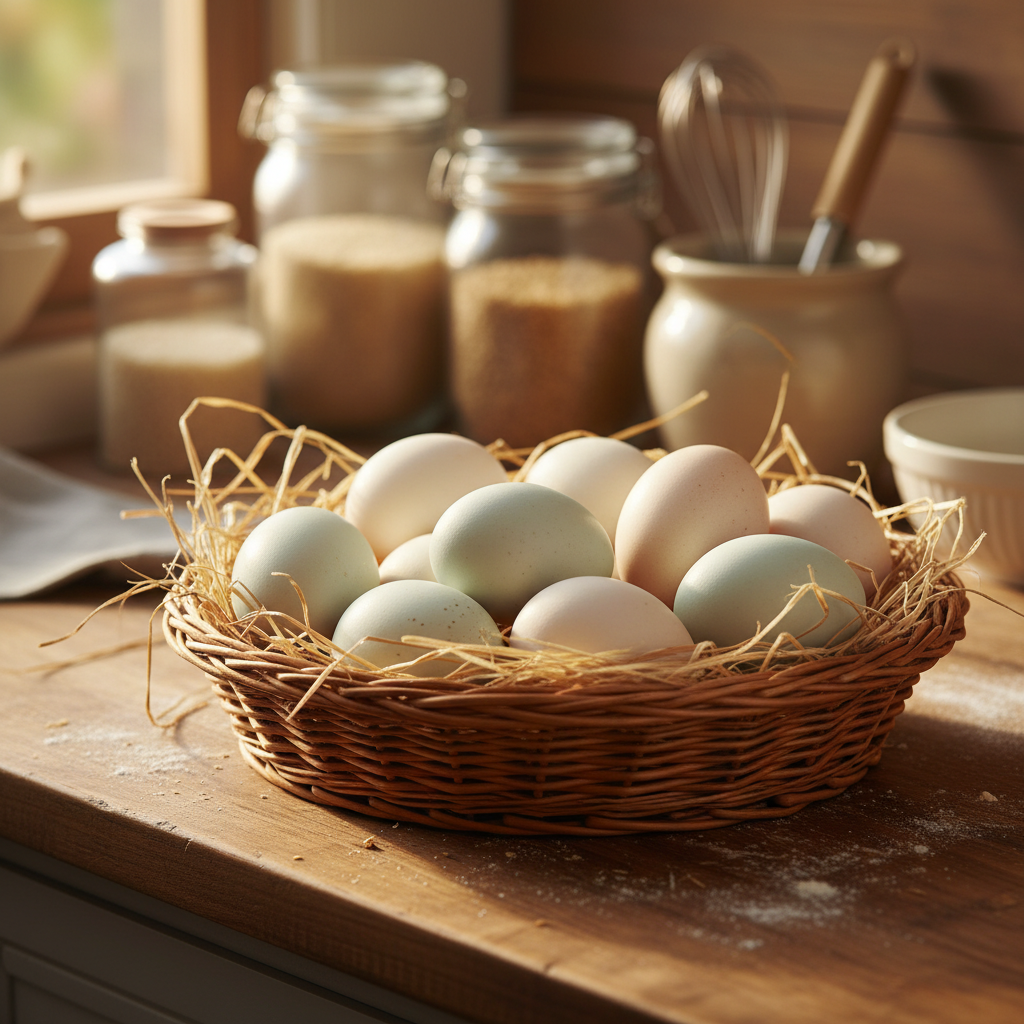
Duck Eggs: Why They Are Superior for Baking and How to Use Them
- Duck eggs are 30–50% larger than chicken eggs and contain more fat, protein, and lecithin, key for richer baked goods.
- The higher albumin content creates fluffier, taller cakes, pastries, and breads with better structure.
- Duck eggs have a richer, creamier flavor that enhances custards, quiches, and pasta doughs.
- Duck eggs are not a safe substitute for people with diagnosed chicken egg allergy, chicken and duck egg proteins share 60–80% cross-reactivity. Always consult an allergist first.
- One duck egg roughly equals 1.5 chicken eggs in baking volume, adjust recipes accordingly.
🌱 From Our Homestead
The first time I baked a batch of brownies using only duck eggs, the difference was unmistakable, richer, fluffier, and with a deeper color. Now our duck eggs go straight to the kitchen while the chicken eggs get sold at the farm stand.
Duck eggs carry a higher Salmonella risk than chicken eggs. The Food Safety Authority of Ireland (FSAI) has specifically warned that duck eggs must only be eaten after thorough cooking, and a September 2024 FDA Class I recall included duck eggs. Follow these rules every time:
- Cook until both the white and yolk are firm, the FDA recommends an internal temperature of 160°F (71°C) for egg dishes. Most baked goods (cakes, quick breads, brioche) easily exceed this; soft-set custards, curds, and mousses may not.
- Avoid raw or undercooked duck eggs entirely if you are pregnant, immunocompromised, 65 or older, or feeding children under 5. For raw applications (homemade mayonnaise, mousse, tiramisu, aioli, eggnog, Caesar dressing), use pasteurized shell eggs or a pasteurized egg product.
- Refrigerate duck eggs at or below 40°F (4°C) within two hours of collection or purchase. Wash hands, utensils, and surfaces after handling raw eggs or shells.
- Source eggs from clean, well-managed flocks. Discard any egg that is cracked, leaking, or visibly soiled.
Sources: CDC. Salmonella and Eggs; FDA. Egg Safety; Food Safety Authority of Ireland.

Why Are Duck Eggs Better for Baking Than Chicken Eggs?
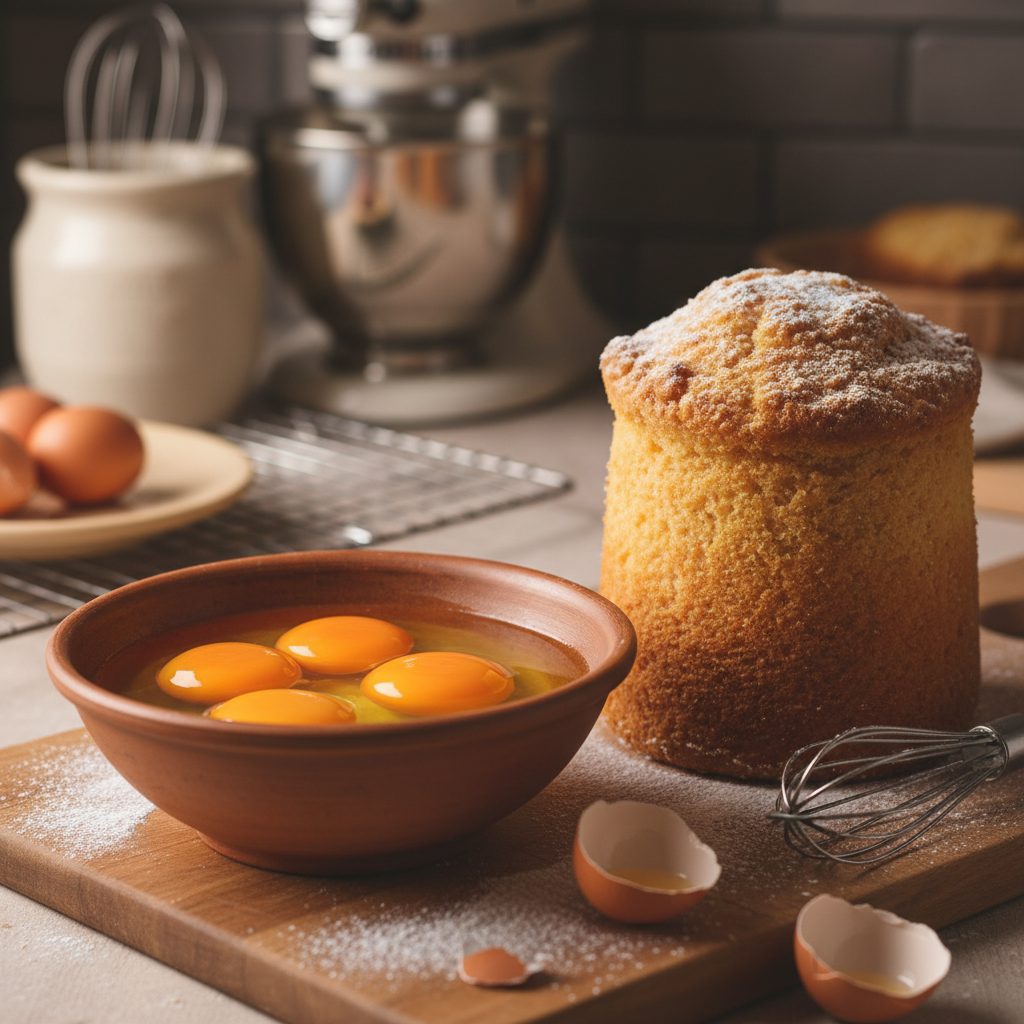
Duck eggs produce fluffier, richer, and more structurally sound baked goods because they contain significantly more fat, protein, and lecithin than chicken eggs. When I first started baking with duck eggs, the difference in my cakes was so dramatic that I never went back for special baked goods.
According to research from Michigan State University, duck eggs can transform everyday baking. If you are interested in raising ducks, our ducks vs. Chickens comparison guide breaks down the differences.

How Do Duck Eggs Compare to Chicken Eggs Nutritionally?
A single duck egg has roughly 130 calories, 9.6g of fat, and 9g of protein compared to a chicken egg’s 72 calories, 4.8g of fat, and 6.3g of protein.
| Nutrient | Duck Egg (1 large) | Chicken Egg (1 large) |
|---|---|---|
| Weight | 70g (2.5 oz) | 50g (1.75 oz) |
| Calories | 130 | 72 |
| Protein | 9g | 6.3g |
| Fat | 9.6g | 4.8g |
| Cholesterol | 619mg | 186mg |
| Vitamin B12 | 3.8 mcg (158% DV) | 0.6 mcg (25% DV) |
| Iron | 2.7mg (15% DV) | 0.9mg (5% DV) |
The USDA FoodData Central database confirms duck eggs are nutritional powerhouses. In my experience, the extra richness translates directly into flavor.

How Do You Substitute Duck Eggs in Baking Recipes?
Use 2 duck eggs for every 3 chicken eggs, or substitute one-for-one and reduce other liquids by 1–2 tablespoons per duck egg. After trying both methods, I prefer the one-for-one swap with a small liquid reduction. Size matters: the 2:3 rule assumes Large chicken eggs (~50 g each, per USDA FoodData Central) and average duck eggs (~70 g). If your duck eggs are noticeably smaller or larger, weigh them and match by total grams of egg for consistent results.
Cookie tip: Duck eggs’ higher fat content can cause cookies to spread more than expected. If your cookies are coming out thinner or greasier than you like, try reducing the butter or shortening in the recipe by 1–2 tablespoons per duck egg used. This small adjustment usually brings them right back into line.
Duck eggs shine in custards, quiches, sourdough bread, brioche, and fresh pasta. For homemade yogurt and custard-style desserts, the richer yolk creates an unbelievably silky texture. The South Dakota State Extension highlights duck eggs as a premium value-add for small farms.(See the food-safety note at the top of this article for full handling rules.)
What Are the Best Baked Goods to Make with Duck Eggs?
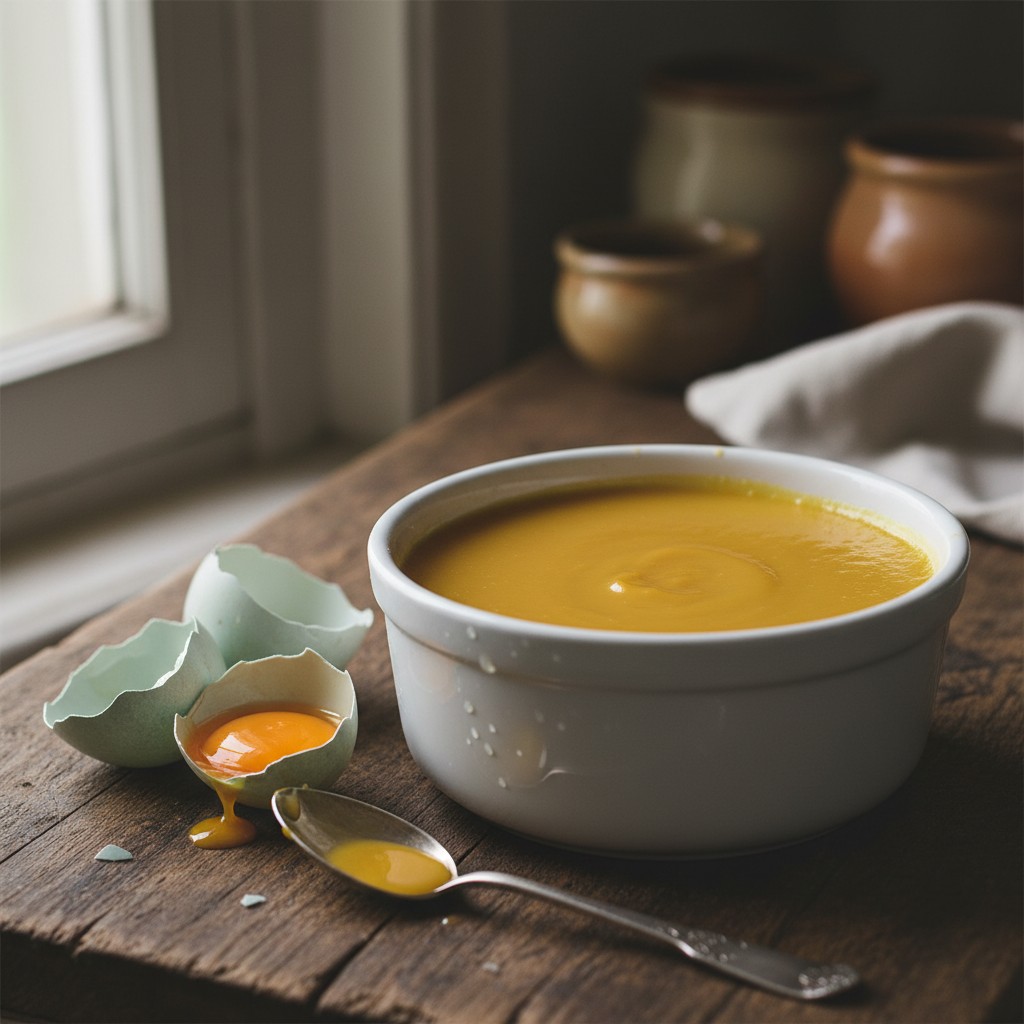
Custards, quiches, pound cakes, brioche, fresh pasta, and sourdough bread are the standout recipes where duck eggs make the most dramatic improvement. The first time I made a quiche with duck eggs, my family asked what I did differently, it was that noticeable.

Frequently Asked Questions About Duck Eggs for Baking
Slightly: duck eggs have a richer, creamier flavor. Bakers who make rich goods like pound cake, custards, and brioche often prize that stronger, more pronounced “eggy” depth. In lighter applications most people notice the result rather than the egg itself, things simply taste better. Duck egg whites also whip to a slightly greater volume than chicken egg whites due to their higher protein content, which can give cakes and soufflés extra lift and structure.
Usually no, and never without an allergist. Chicken and duck egg proteins share 60–80% cross-reactivity, so most people with a true IgE-mediated chicken egg allergy will also react to duck eggs, sometimes more severely because duck eggs contain higher concentrations of some allergenic proteins. A small subset of people with mild chicken-egg sensitivity may tolerate duck eggs, but this must be confirmed by a board-certified allergist with skin-prick or specific-IgE testing (and, where appropriate, a supervised oral food challenge) before any home trial. If you carry an epinephrine auto-injector for egg allergy, do not experiment with duck eggs on your own. Source: American Academy of Allergy, Asthma & Immunology. Egg Allergy.
Duck eggs have thicker shells and a more protective cuticle, so they typically keep 4–6 weeks refrigerated at 40°F (4°C) or below, compared with 3–5 weeks for chicken eggs (per FDA egg-safety guidance). An important distinction: unwashed eggs retain their natural bloom (cuticle), which seals the pores and allows brief room-temperature storage, a common practice in Europe. However, US food-safety guidance recommends refrigerating all eggs promptly, and once an egg is washed the cuticle is removed, making immediate refrigeration non-negotiable. Backyard duck eggs that have been washed or are visibly soiled should go straight into the fridge. When in doubt, discard.
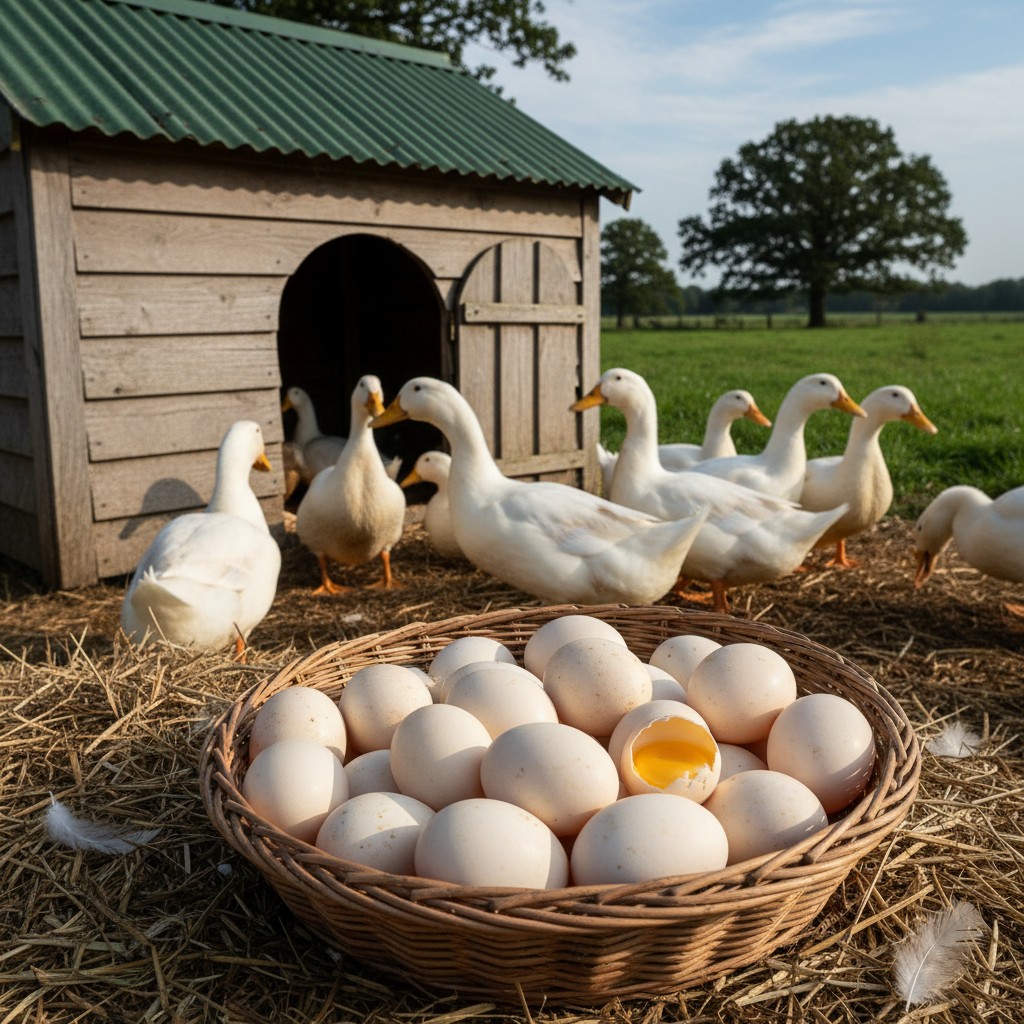
Check local farmers’ markets, Asian grocery stores, and farm stands. Expect to pay $6–$12 per dozen depending on your area.
Generally no, but baked goods may brown slightly faster due to higher fat content. Try reducing temperature by 25 degrees F if you notice over-browning.