Homemade Pasta from Scratch: A Simple 2-Ingredient Recipe
- Homemade pasta requires just 2 ingredients: flour and eggs (plus a pinch of salt)
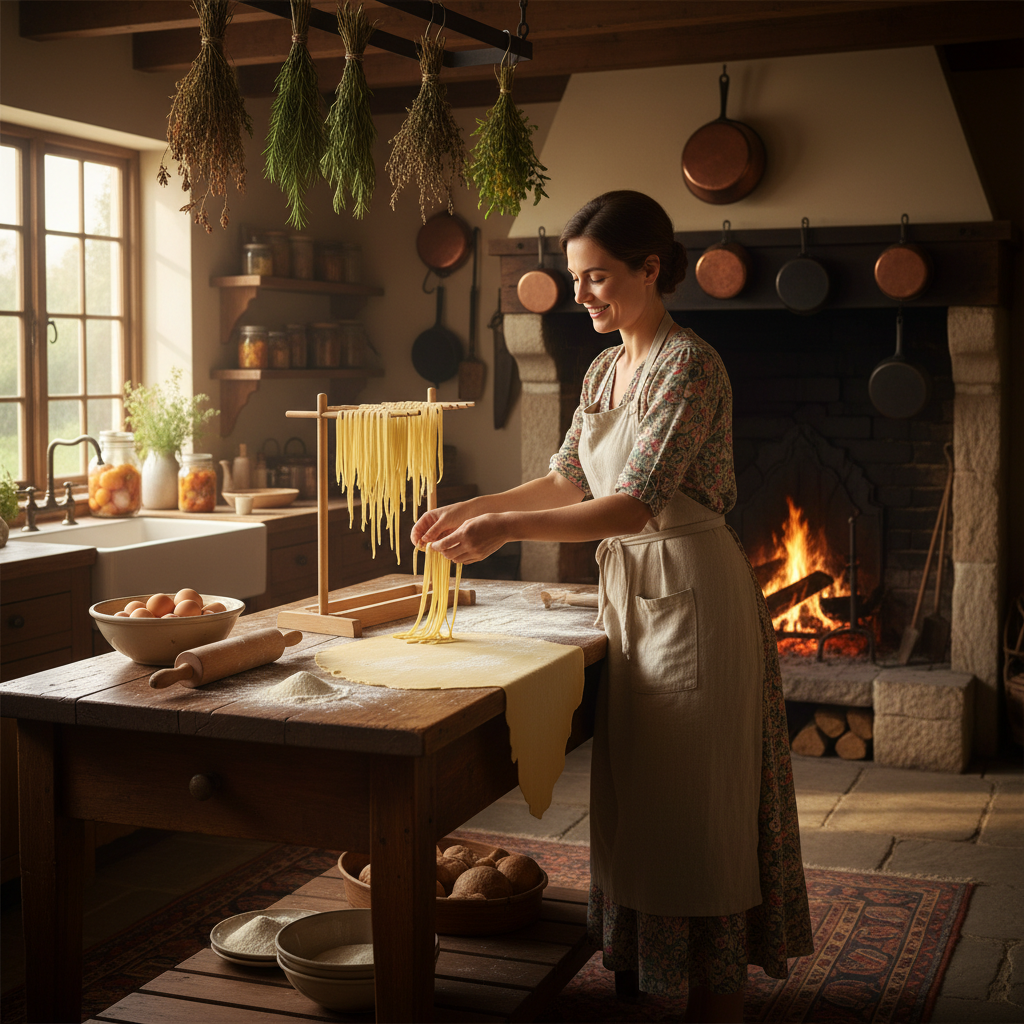
- From mixing to eating takes 45 minutes to 1 hour, no pasta machine required
- One batch makes 4 servings for about $1.50 in ingredients vs. $4–$6 for fresh store-bought pasta
- The texture and flavor of fresh pasta is incomparably better than anything dried or store-bought
- Master the basic dough and you can make fettuccine, ravioli, lasagna, and more
The Basic Pasta Dough (Pasta Fresca)
Ingredients
| Ingredient | Amount | Notes |
|---|---|---|
| All-purpose flour (or “00” flour) | 2 cups (250g) | AP flour works great; “00” gives silkier texture. See flour note below. |
| Eggs | 3 large | Room temperature. Duck eggs make even richer pasta |
| Salt | 1/2 tsp | Fine salt, mixed into the flour |
| Olive oil (optional) | 1 tsp | Makes dough slightly more pliable |
Flour note: “00” (doppio zero) flour produces delicately silky pasta because its fine grind creates a very smooth, tender dough, but used alone, the finished pasta can be almost too soft and fragile, especially for thicker shapes. Many traditional Italian recipes blend “00” flour with semolina (coarsely ground durum wheat), typically in a 50/50 or 70/30 ratio. Semolina adds bite, texture, and structure that stands up better to hearty sauces. All-purpose flour (roughly 10–12% protein) is the most forgiving choice for beginners. Bread flour (12–13% protein) produces a slightly chewier, more elastic pasta with a stronger gluten network, great for ravioli or pasta that needs to hold a filling without tearing.
Yield: 4 servings (~1 lb of fresh pasta)
Step-by-Step Instructions
Step 1: Make the Dough (10 minutes)
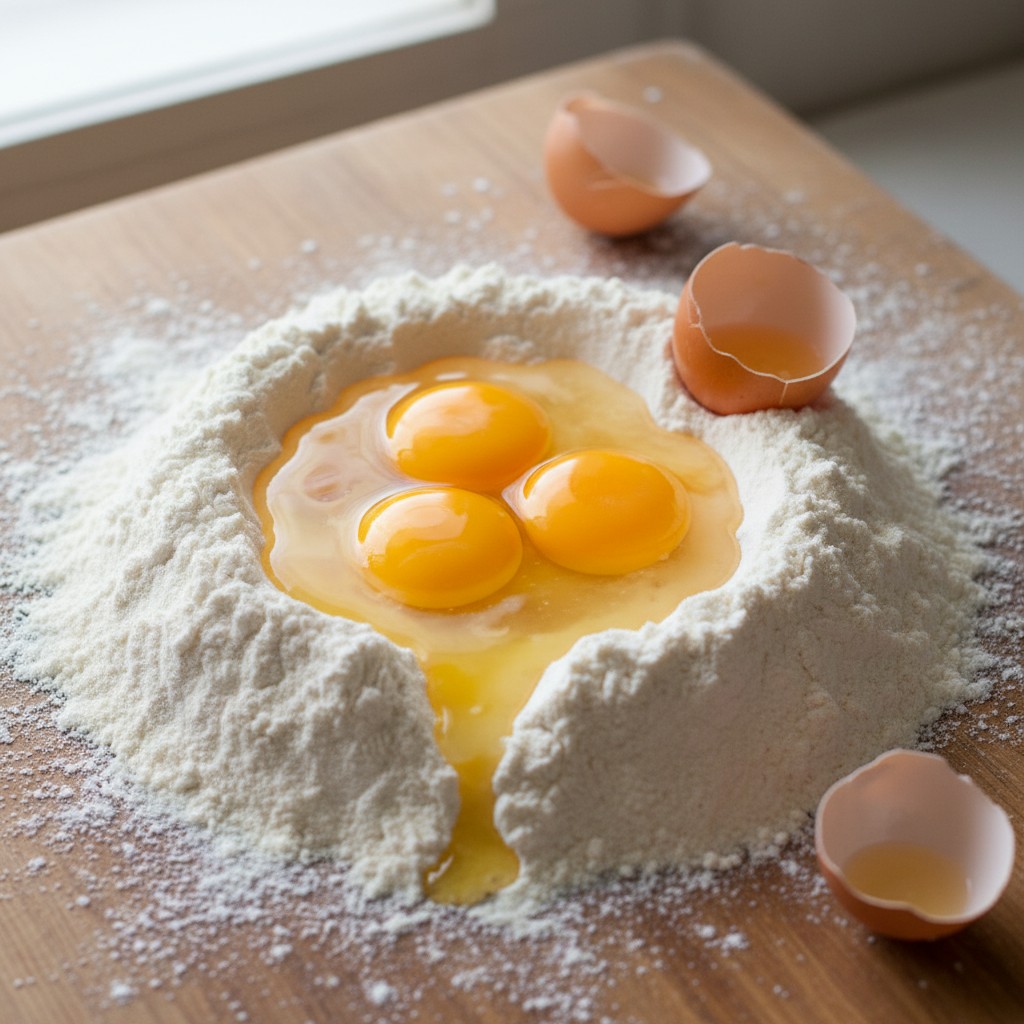
- Mound the flour on a clean counter or in a large bowl. Make a well in the center.
- Crack eggs into the well. Add salt and olive oil if using.
- Using a fork, beat the eggs and gradually pull flour in from the edges until it forms a shaggy mass.
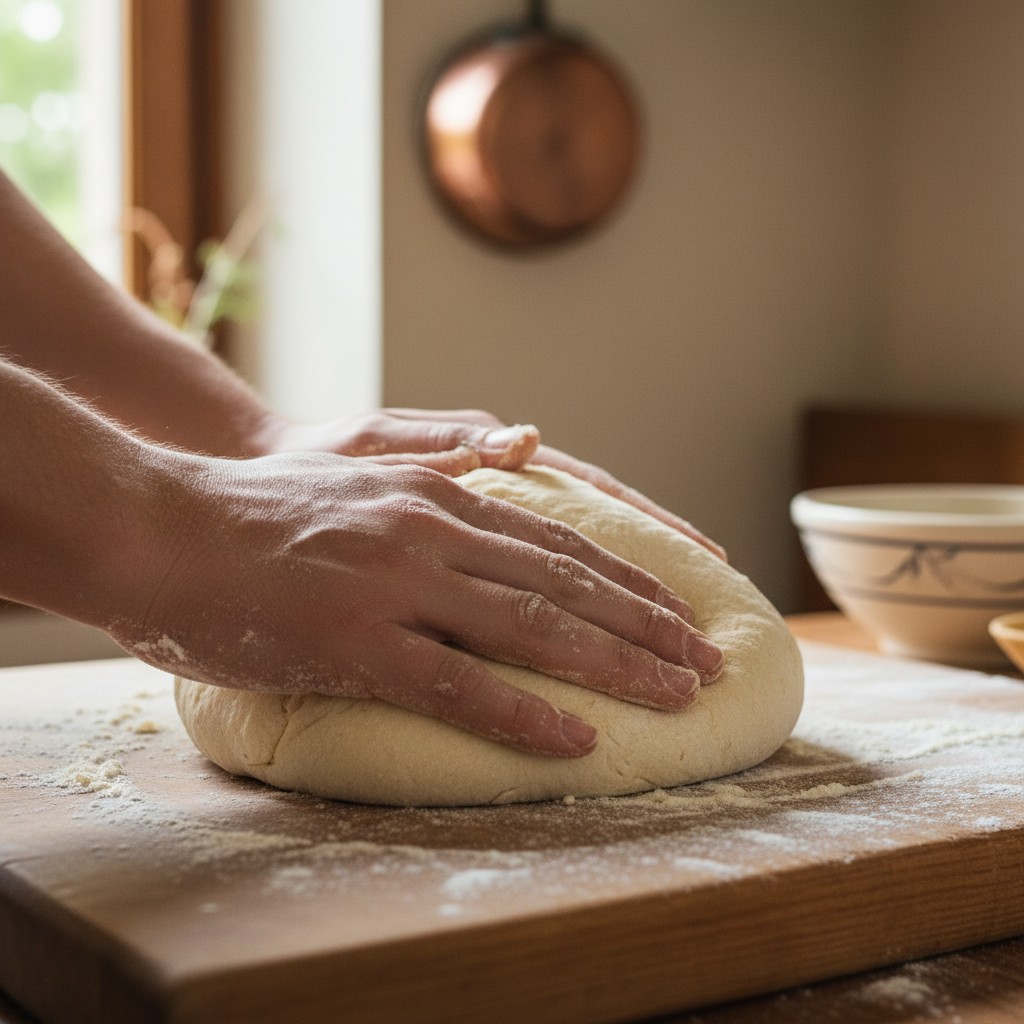
- Switch to your hands. Knead for 8–10 minutes until the dough is smooth, elastic, and springs back when poked. It should feel like Play-Doh, firm but pliable.
- If too sticky, add flour a tablespoon at a time. If too dry, wet your hands and keep kneading.
Step 2: Rest the Dough (30 minutes)
Wrap the dough ball tightly in plastic wrap or cover with an inverted bowl. Let it rest at room temperature for 30 minutes. This relaxes the gluten and makes the dough much easier to roll.
From our homestead: Don’t skip the rest. I made that mistake my first time, tried to roll the dough immediately and it kept springing back like a rubber band. After 30 minutes of resting, it rolled out like butter. The difference is night and day.
Step 3: Roll It Out (10 minutes)
By hand: Divide dough into 4 pieces. Work with one at a time (keep the rest covered). Flour your surface generously and roll each piece into a thin sheet, aim for about 1/16 inch thick. You should almost be able to see your hand through it.
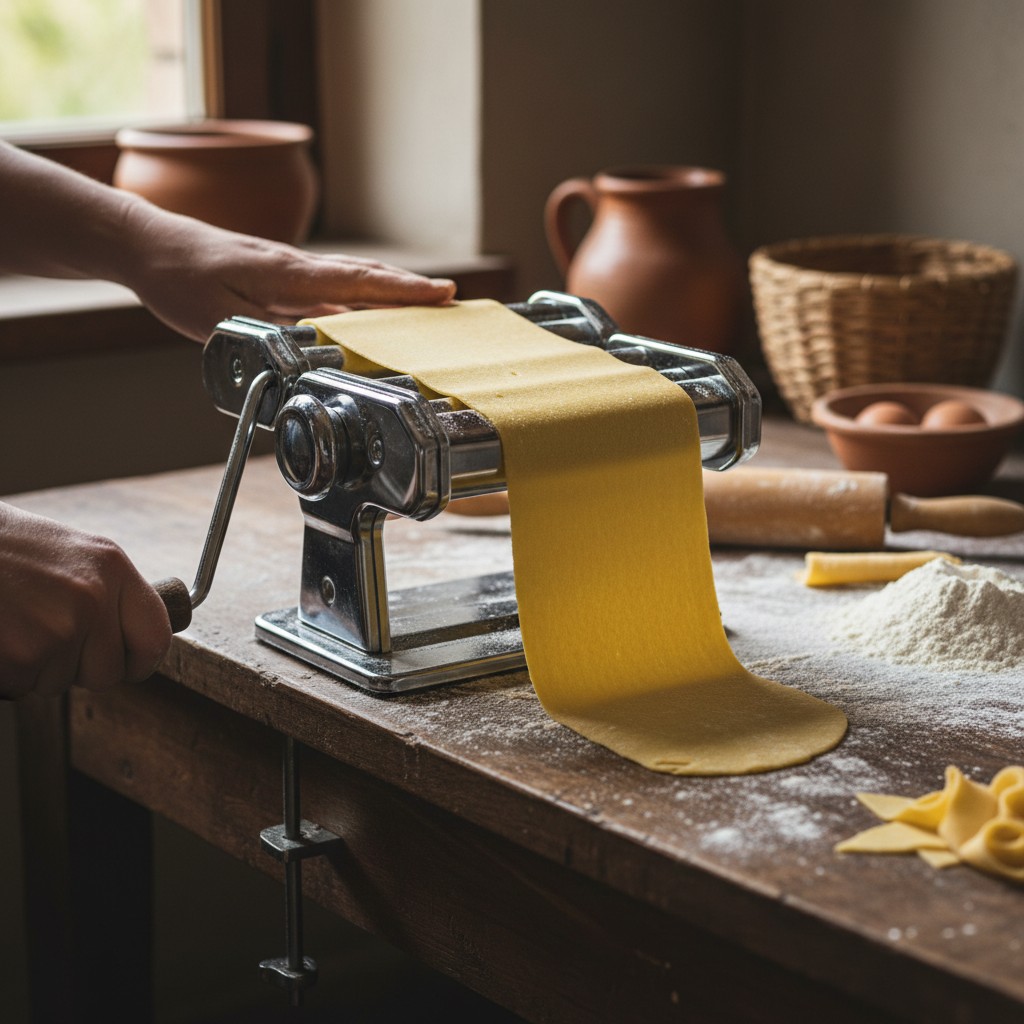
With a pasta machine: Start at the widest setting, pass dough through twice, then decrease one setting at a time until you reach your desired thickness (usually setting 5–6 for fettuccine, 7 for ravioli).
Step 4: Cut and Shape
| Shape | How to Cut | Best Sauces |
|---|---|---|
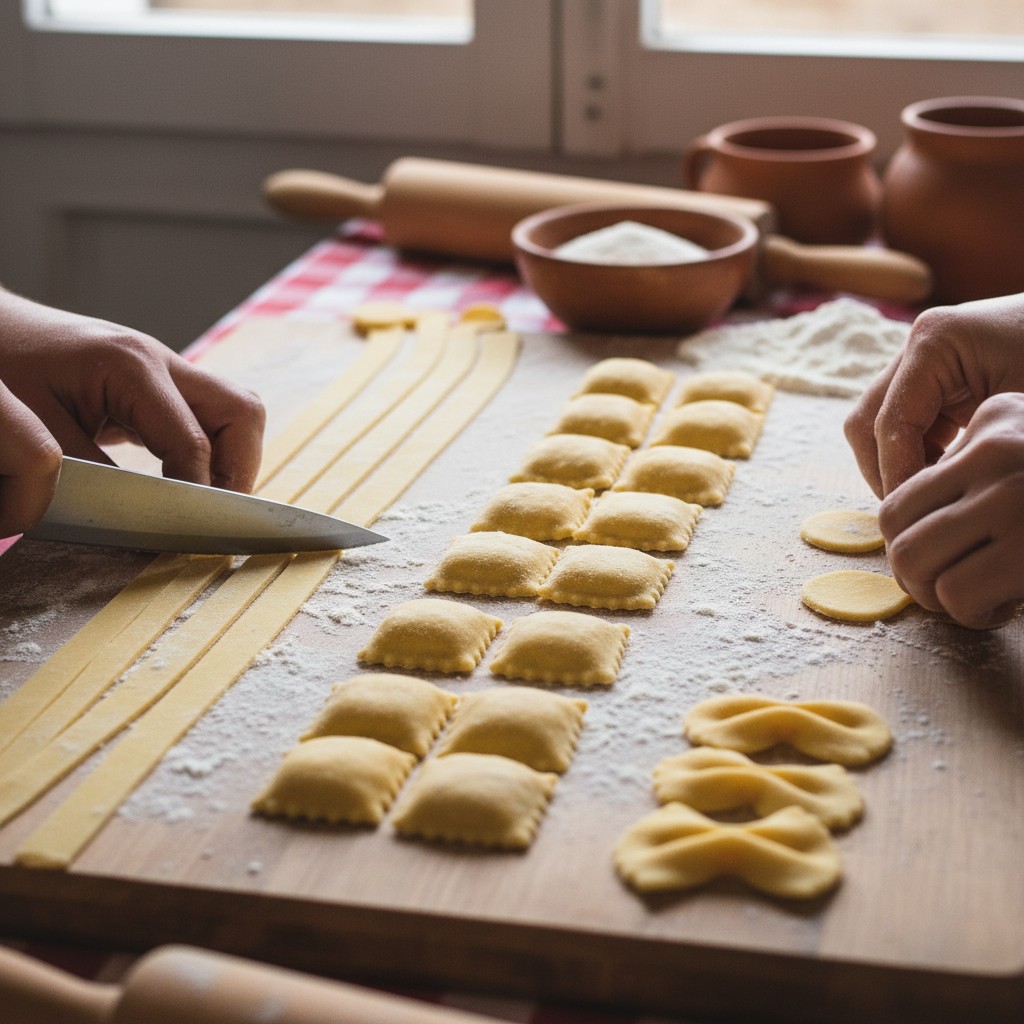
| Fettuccine | Roll sheet loosely, cut 1/4″ strips with knife | Cream, butter, Alfredo |
| Tagliatelle | Same as fettuccine but slightly wider (~3/8″) | Bolognese, ragù |
| Pappardelle | Cut into wide 3/4″–1″ ribbons | Braised meat, mushroom |
| Lasagna sheets | Cut into rectangles to fit your pan | Layered with ricotta and sauce |
| Ravioli | Place filling on sheet, fold over, press and cut | Brown butter + sage |
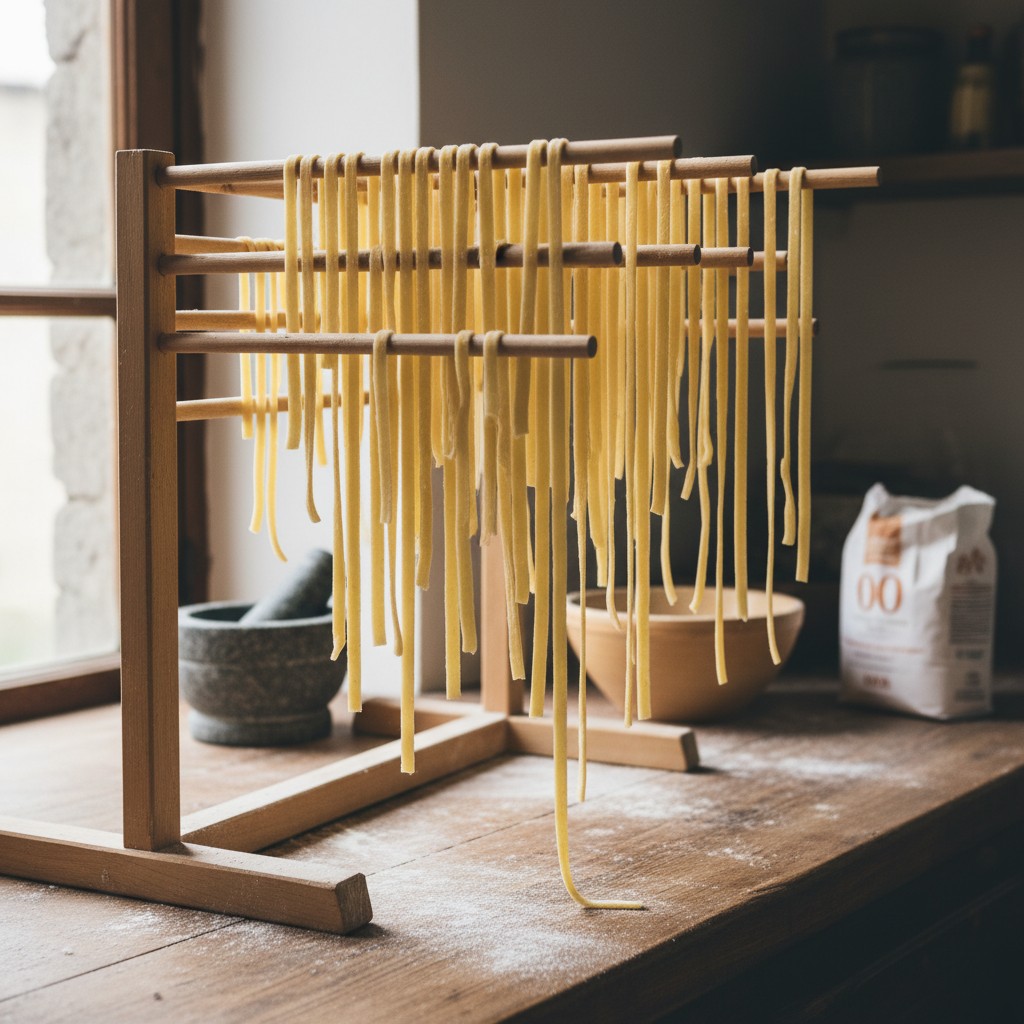
After cutting, toss the pasta with a little flour to prevent sticking. You can cook immediately or dry on a rack/hanger for 30 minutes.
Cooking Fresh Pasta
Fresh pasta cooks much faster than dried, 2–4 minutes in boiling salted water. Taste at 2 minutes. It should be tender but with a slight bite. Drain, toss immediately with your sauce, and serve.
Key tip: Save a cup of the starchy pasta water before draining. Adding a splash to your sauce helps it cling to the noodles, this is the secret restaurants use.
3 Quick Sauces for Fresh Pasta
1. Brown Butter and Sage (5 minutes)
Melt 4 tbsp butter in a skillet over medium heat. Once it foams and turns golden-brown (smells nutty), add 10 fresh sage leaves. Sizzle 30 seconds. Toss with drained pasta, salt, pepper, and parmesan. This is the perfect sauce to showcase homemade pasta.
2. Simple Tomato and Garlic (15 minutes)
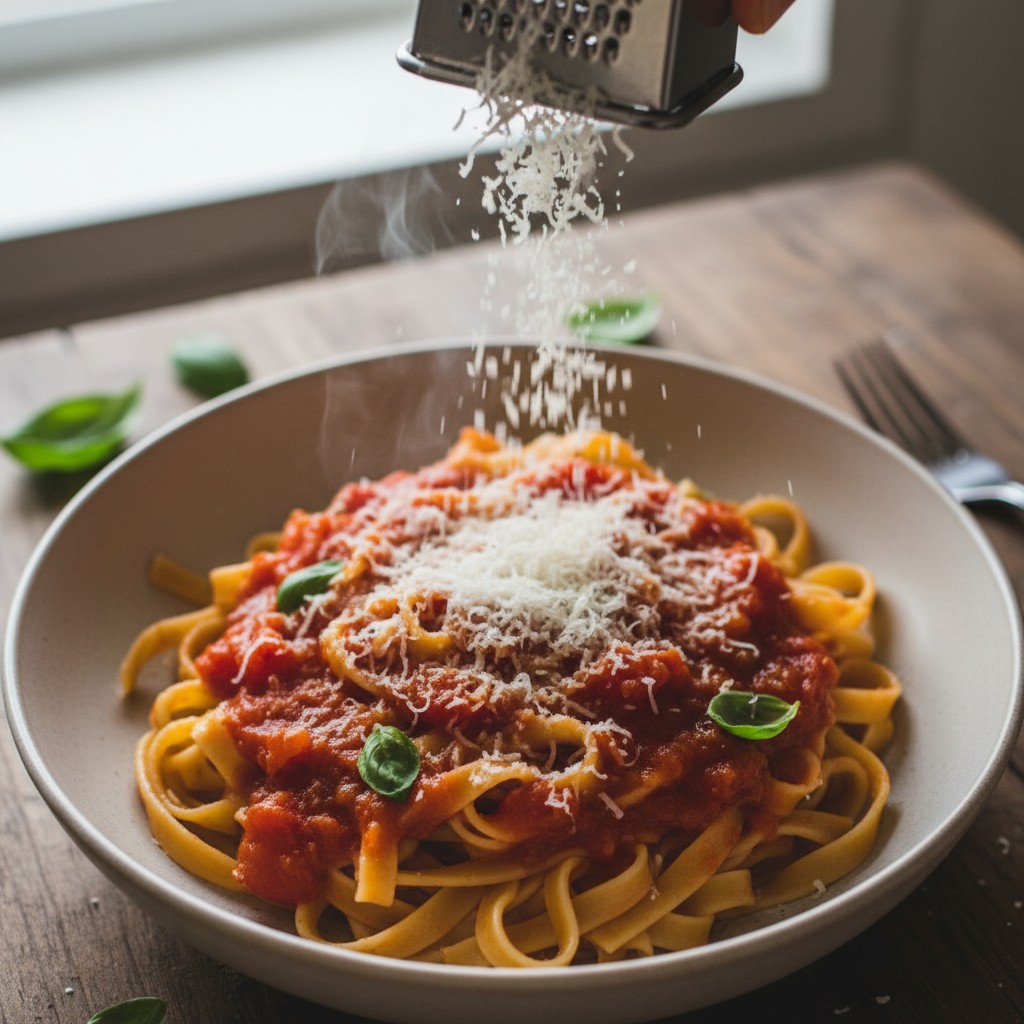
Sauté 3 cloves minced garlic in olive oil for 1 minute. Add a can of crushed tomatoes, salt, red pepper flakes, and a pinch of sugar. Simmer 10 minutes. Toss with pasta and fresh basil. Use your own garden tomatoes when in season.
3. Creamy Lemon Herb (10 minutes)
Cook pasta. In the same pot, melt 2 tbsp butter with 1/2 cup cream. Add zest and juice of 1 lemon, salt, pepper, and fresh herbs (parsley, chives, or thyme from your herb garden). Toss pasta in the sauce with a splash of pasta water and parmesan.
Variations and Add-Ins
- Spinach pasta: Blend 2 oz cooked spinach (squeezed dry) into the eggs before mixing. Beautiful green color.
- Herb pasta: Knead in 2 tbsp finely chopped fresh herbs (basil, parsley, or rosemary from your herb harvest)
- Beet pasta: Add 2 tbsp beet purée for stunning pink pasta
- Sourdough pasta: Replace 1 egg with 1/4 cup sourdough discard for a subtle tang
- Whole wheat: Substitute half the flour with whole wheat for a nuttier, heartier pasta
From our homestead: Friday nights are pasta night at our house. The kids help roll and cut, it’s messy, flour gets everywhere, and the shapes are never perfect. But sitting down to eat pasta you made together as a family, with sauce from your garden tomatoes and herbs from the windowsill? That’s what homesteading is really about.
Storing Fresh Pasta
| Method | How Long | How To |
|---|---|---|
| Counter (fresh) | 2–3 hours | Toss with flour, lay flat or hang on a rack |
| Refrigerator | 2–3 days | Toss with flour, store in airtight container |
| Freezer | 2–3 months | Freeze in nests on a tray, then bag. Cook from frozen (add 1 min) |
| Dried | Several months | Dry completely on a rack (24 hrs), store in jars like boxed pasta |
Frequently Asked Questions
Do I need a pasta machine?
No. A rolling pin and a knife make excellent pasta. A pasta machine makes the process faster and gives more uniform thickness, but it’s not necessary, people made pasta by hand for centuries before machines existed. If you enjoy making pasta regularly, a hand-crank machine ($25–$40) is a worthwhile investment.
Can I make pasta without eggs?
Yes: semolina pasta uses just semolina flour and water (no eggs). Mix 2 cups semolina with 3/4 cup warm water and a pinch of salt. Knead, rest, and roll as usual. The texture is firmer and chewier, great for shapes like orecchiette and cavatelli that hold chunky sauces.
Why is my pasta tough or chewy?
Usually not enough resting time (the gluten needs to relax) or too much flour worked into the dough. Rest for a full 30 minutes, use only as much flour as needed to prevent sticking, and don’t overwork the dough when rolling. Fresh pasta should be tender, not rubbery.
Can I use fresh pasta for lasagna?
Absolutely: fresh lasagna sheets are a huge time-saver. Roll the dough thin, cut to fit your pan, and you don’t even need to pre-boil them. Layer directly with sauce and homemade ricotta. The noodles cook in the oven from the moisture in the sauce.
How does homemade pasta compare in cost?
One batch (4 servings) costs about $1.50 in ingredients, 2 cups flour (~$0.40) and 3 eggs (~$1.00). Fresh pasta at the store costs $4–$6 for the same amount. If you use eggs from your backyard chickens, the cost drops to about $0.50 per batch.