How to Start a Kitchen Herb Garden (Indoor or Outdoor)
- Start with 5 herbs, basil, parsley, rosemary, thyme, and mint cover 90% of cooking needs.
- Indoor gardens need 6+ hours of direct sunlight (south-facing window) or a small grow light.
- Outdoor herbs prefer full sun, lean soil, and a spot near your kitchen door.
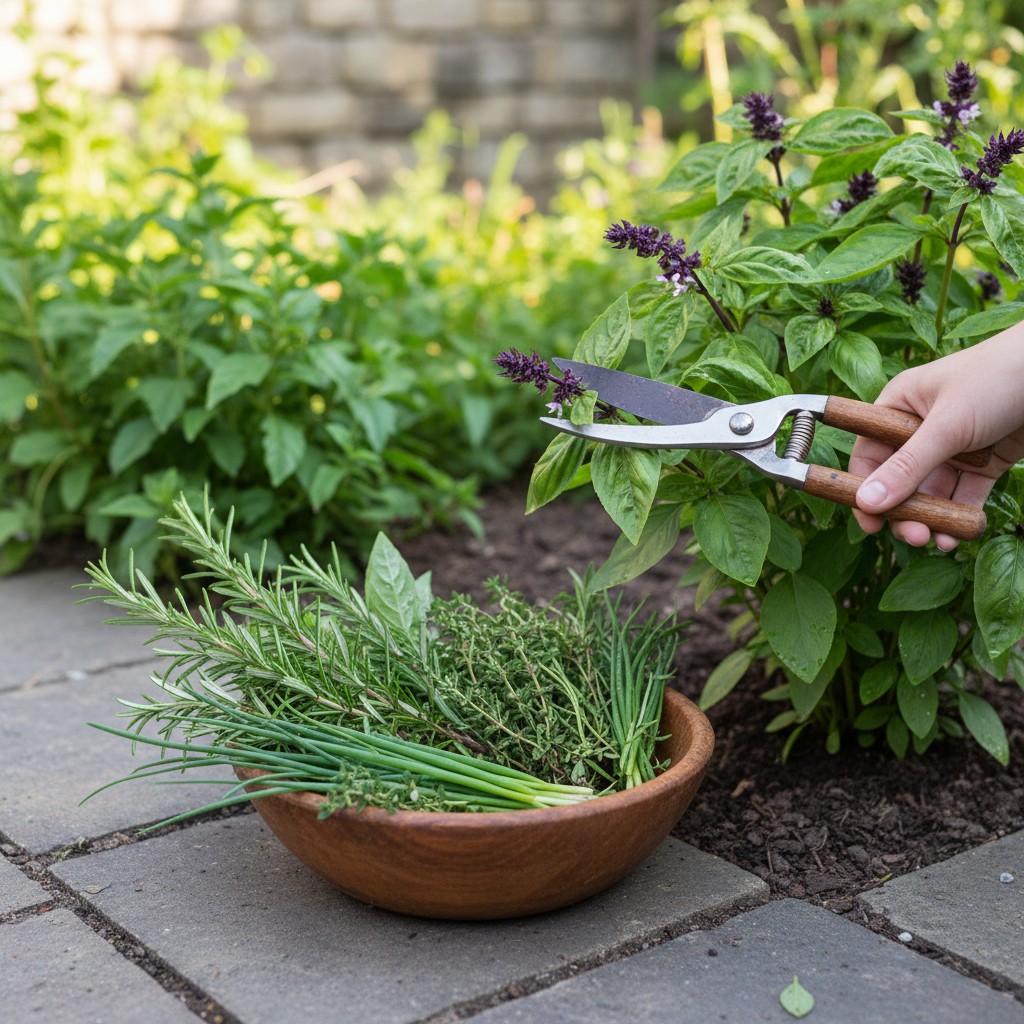
- Harvest often: cutting stems (never more than 1/3 of the plant) encourages bushier growth.
- Temperature matters, indoor herbs thrive at 65-70°F daytime / 55-60°F nighttime, per Penn State Extension.
- Cost savings: a $3 basil plant replaces $50+ in store-bought herbs per season.
My herb garden started on the back porch in 2016 with four small containers: basil, parsley, thyme, and rosemary. Rosemary and thyme came back from year to year once I moved them into the ground; basil I replant every spring after last frost, which in Exeter means waiting until well into May. That porch setup is still where I start new cuttings before moving them to the outdoor beds.
A kitchen herb garden is the single best return on investment in gardening, and I say that from years of experience tending mine. For a few dollars in seeds or starter plants, you get months of fresh flavor that would cost ten times as much at the grocery store. Snipping fresh basil for pasta, rosemary for roasted chicken, or mint for your tea is one of those small daily pleasures that makes the homestead life worth living. And unlike most garden crops, herbs thrive in small spaces, a windowsill or a single pot is often enough to keep a kitchen stocked.
Which Herbs Should Beginners Grow First?
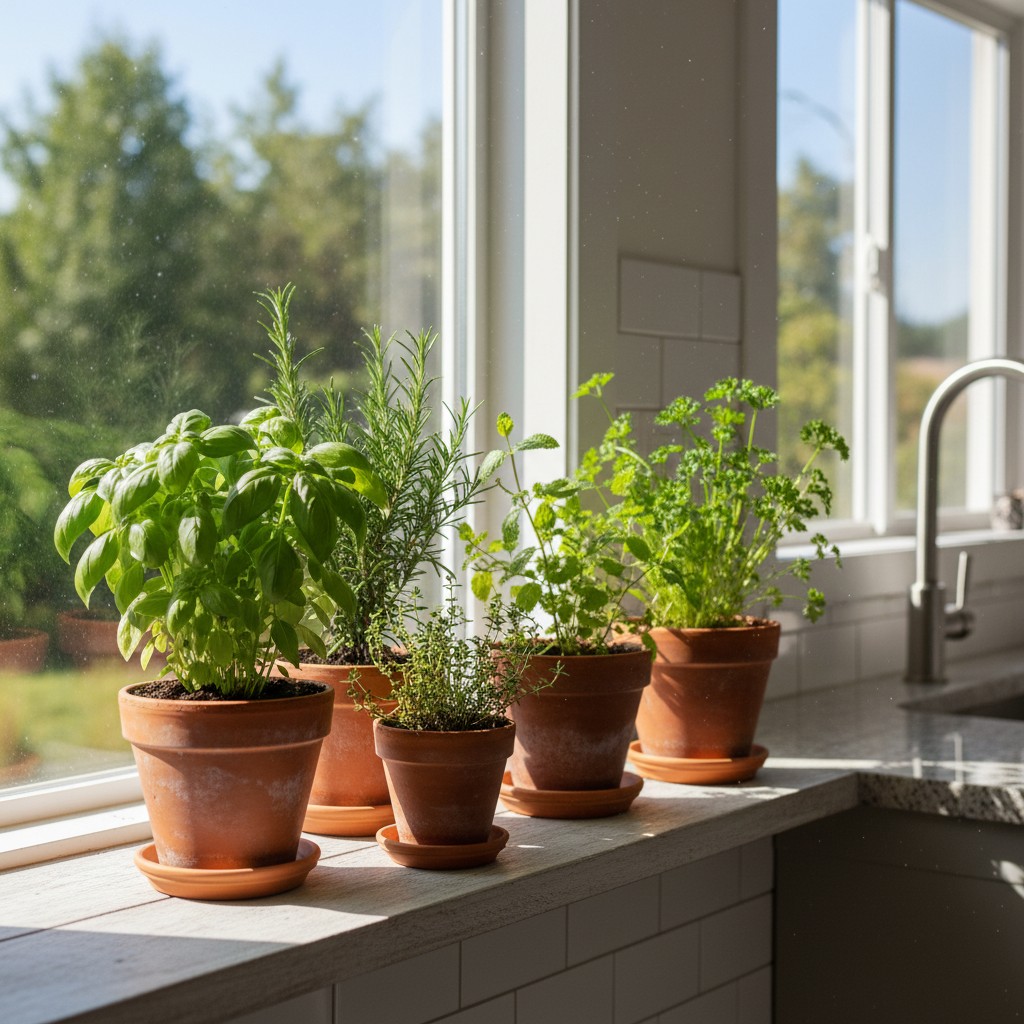
Start with these five herbs and you’ll cover 90 percent of your cooking needs, they’re the exact ones I recommend to every beginner I mentor:
- Basil, the king of summer herbs. Grows fast, loves heat, and is essential for Italian cooking. One caveat: basil cannot survive below 50°F, so bring it indoors well before frost.
- Parsley: flat-leaf Italian parsley has the best flavor. Use it in everything from chimichurri to tabbouleh; it’s a biennial, so expect two growing seasons from one plant.
- Rosemary: a woody perennial that thrives on neglect. One plant lasts for years in zones 7-10 (bring indoors in colder zones).
- Thyme: another perennial. Pairs beautifully with roasted meats, soups, and vegetables. Very drought-tolerant once established.
- Mint: grows aggressively. Always plant it in a container or it will take over your entire garden. Incredible for teas, salads, and cocktails.
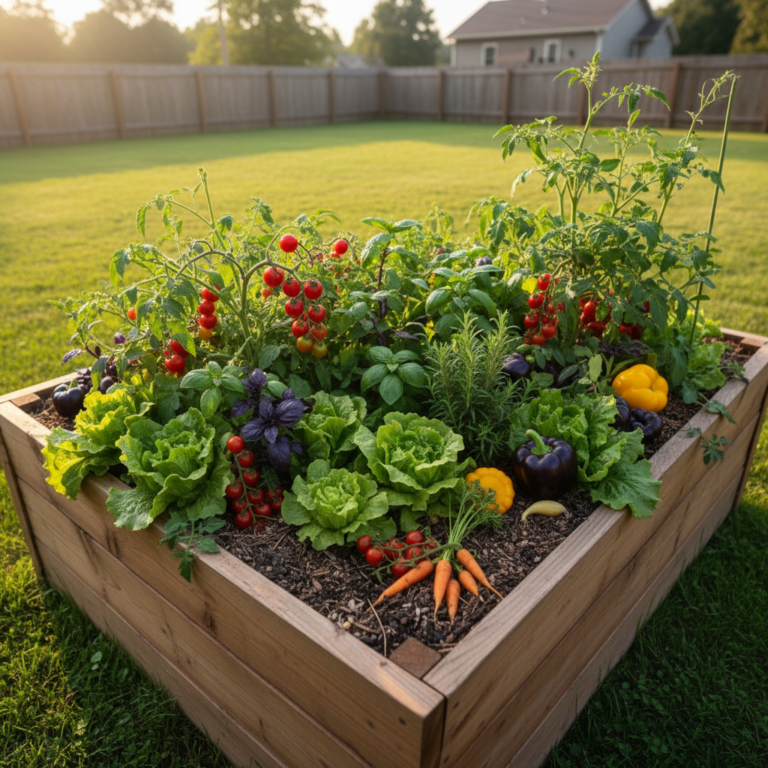
If you’re also interested in growing food alongside your herbs, check out our guide on raised bed gardening for beginners, many of these herbs are excellent companion plants for vegetables.
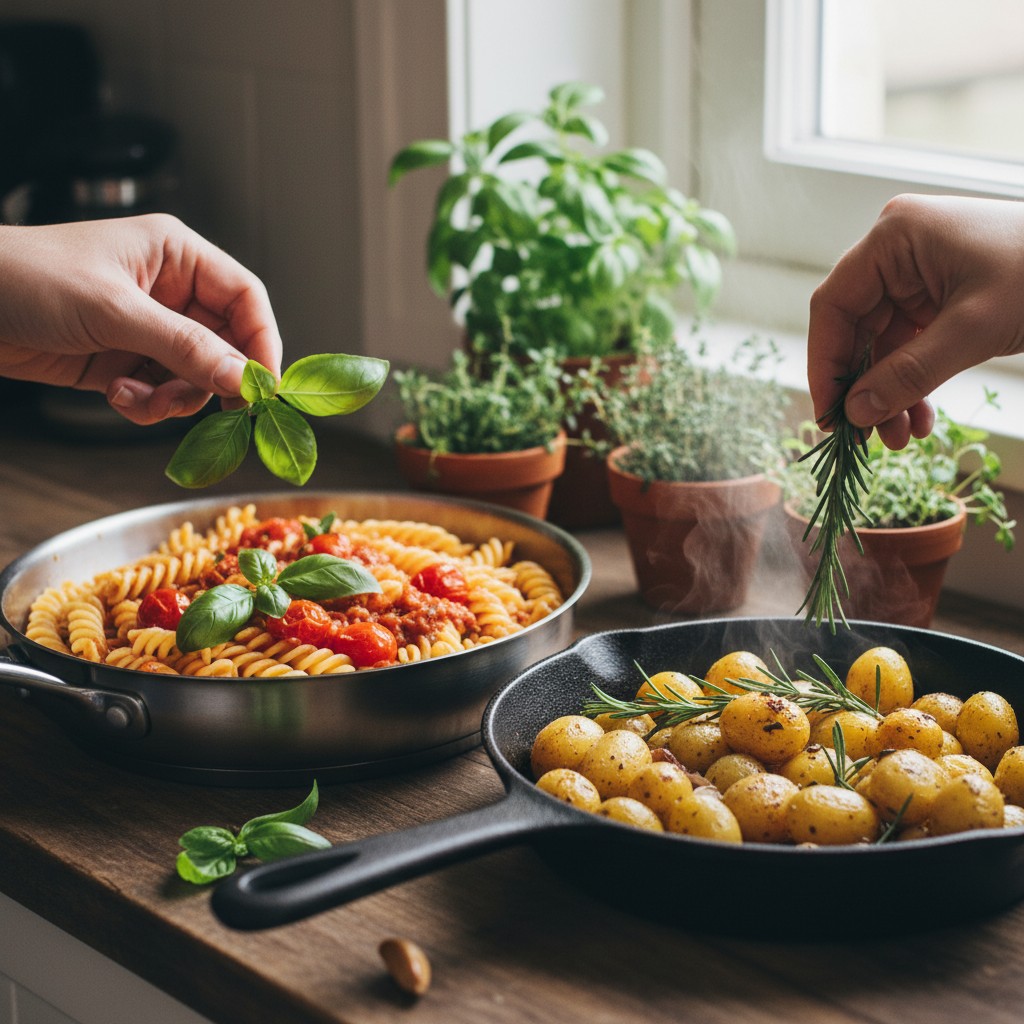
Should You Grow Herbs Indoors or Outdoors?
Both work beautifully, your choice comes down to available light and space. I’ve grown herbs on a tiny apartment windowsill and in sprawling outdoor beds, and honestly, both produced enough to keep my kitchen stocked.
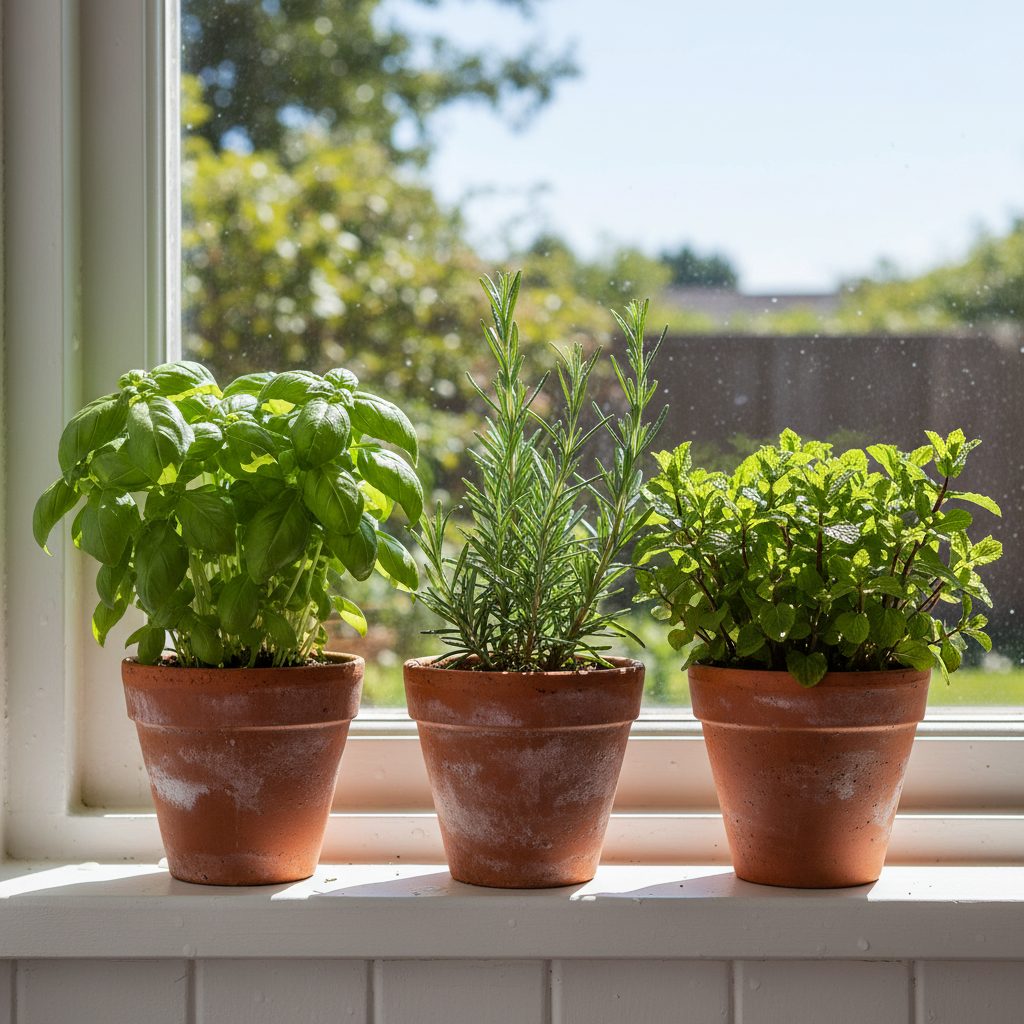
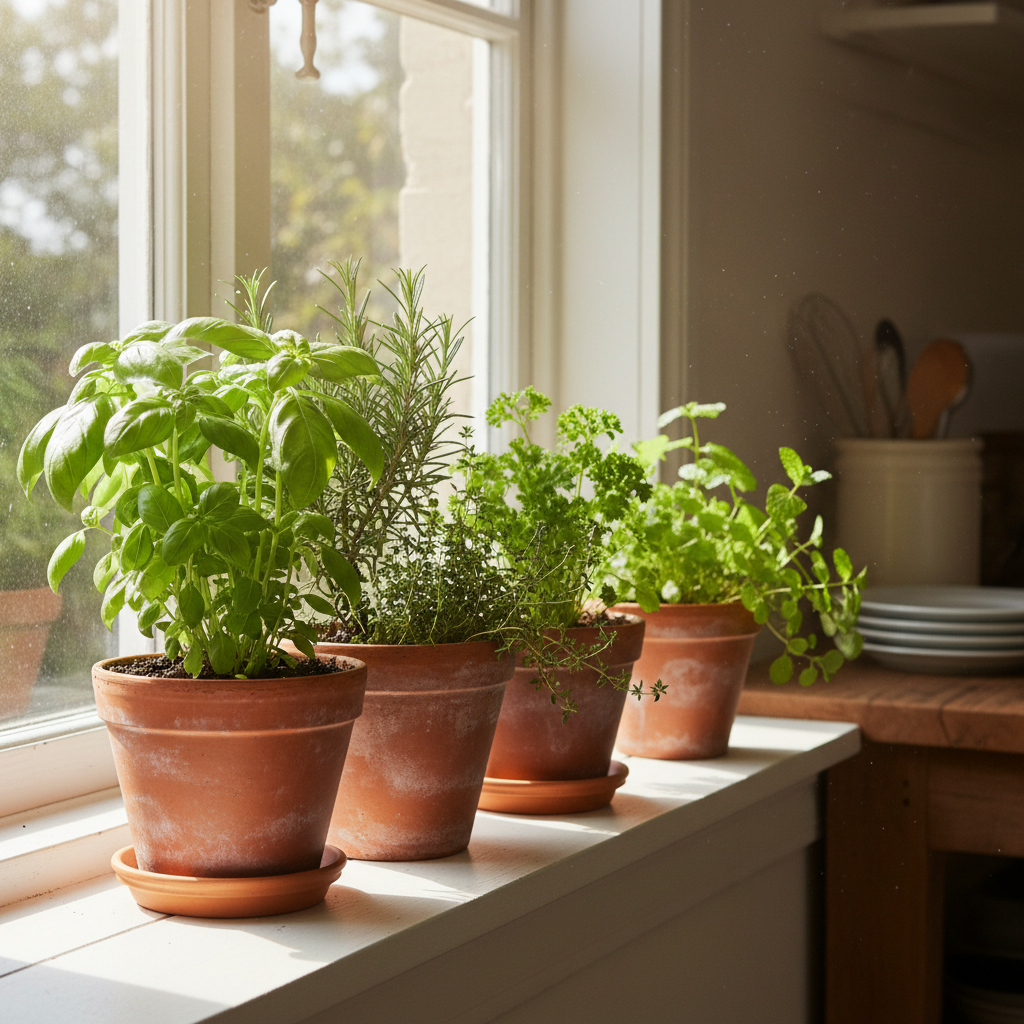
Indoor: A sunny windowsill with at least 6 hours of light works for most herbs. South-facing windows are best. Use pots with drainage holes and well-draining potting mix. According to Penn State Extension, “most herbs need 6 hours of direct sunlight,” and they recommend keeping rooms “at least 65 to 70°F during the day and 55 to 60°F at night.” A small grow light makes a huge difference in winter.
Watering needs split into two groups indoors. Mediterranean herbs (rosemary, thyme, sage, marjoram, bay) prefer to dry out slightly between waterings, these are the ones that rot if you overwater. Basil is the opposite: it “should never allow the potting mix to dry out completely,” per Penn State Extension. Get that one distinction right and you’ve solved most indoor herb problems. For more small-space ideas, try container gardening or even growing microgreens in mason jars.
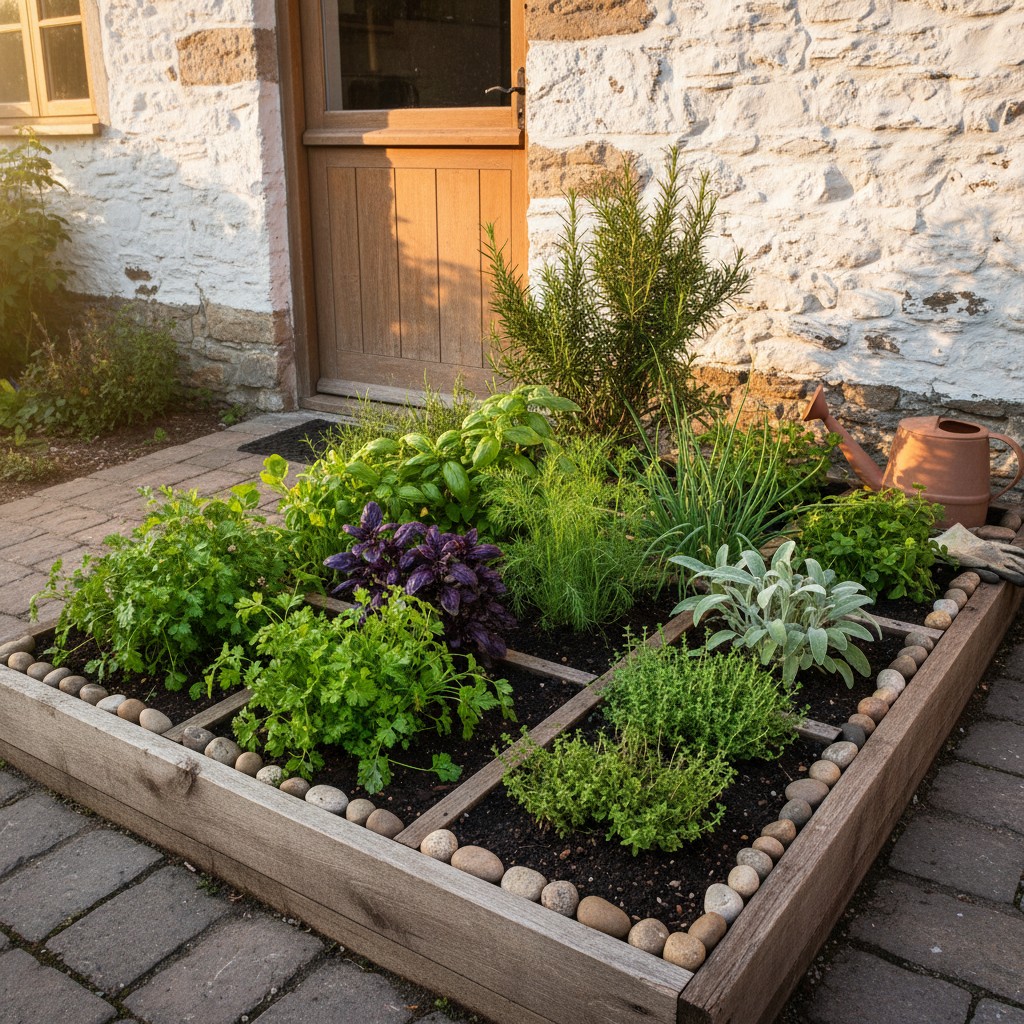
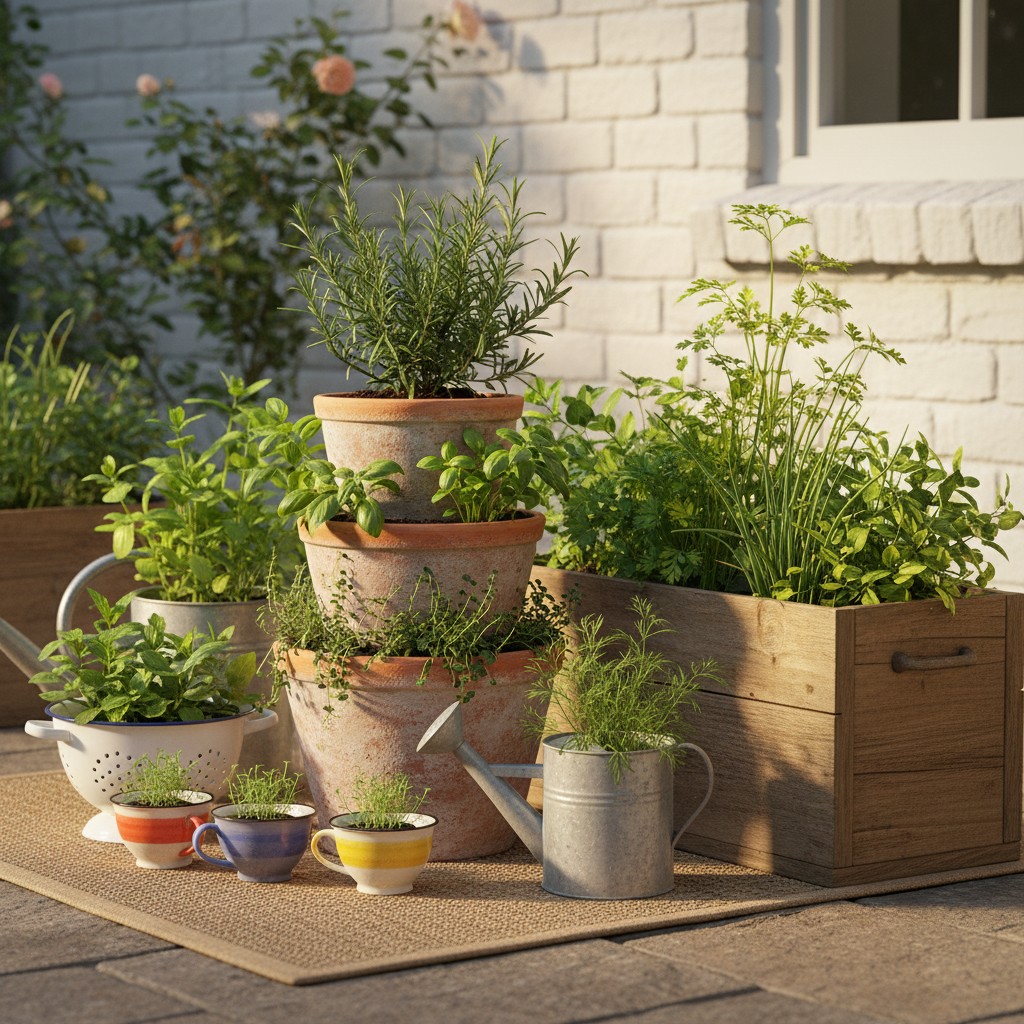
Outdoor: Most herbs thrive in full sun with well-drained soil. They actually prefer lean soil, too much fertilizer produces lush leaves with weak flavor. A dedicated herb bed near your kitchen door is the classic setup. Raised beds, containers, or even a window box all work well. The Royal Horticultural Society recommends grouping herbs by water needs for best results, put the thirsty ones (basil, parsley, chives) in one group and the Mediterranean ones (rosemary, thyme, sage, oregano) in another.
| Factor | Indoor Herbs | Outdoor Herbs |
|---|---|---|
| Light Needed | 6+ hrs or grow light | Full sun (8+ hrs ideal) |
| Best Herbs | Basil, parsley, chives, mint | Rosemary, thyme, oregano, sage |
| Space Needed | A sunny windowsill or shelf | A small bed, raised bed, or pots |
| Year-Round? | Yes, with a grow light | Seasonal (perennials return) |
| Maintenance | Watch for overwatering | Mostly hands-off |
What Are the Most Common Beginner Mistakes?
Almost every herb garden that dies does so for the same five reasons, and all of them are preventable.
- Overwatering. The number one killer of indoor herbs. If the top inch of soil still feels moist, wait another day. Rosemary especially hates wet feet.
- Not enough light. A north-facing window isn’t enough for basil. If your window gives less than 6 hours of direct sun, add a $15-30 LED grow light and you’ll change your results overnight.
- Over-fertilizing. Rich soil sounds helpful but actually dilutes the essential oils that make herbs flavorful. Lean soil produces stronger-tasting leaves.
- Letting plants flower. Once herbs bolt and flower, leaf production slows and the flavor turns bitter. Pinch off flower buds as they appear.
- Harvesting too timidly. Gentle snipping of individual leaves doesn’t trigger new growth. Cut whole stems just above a leaf node and the plant will branch out in response.
How Should You Harvest Herbs for Maximum Growth?
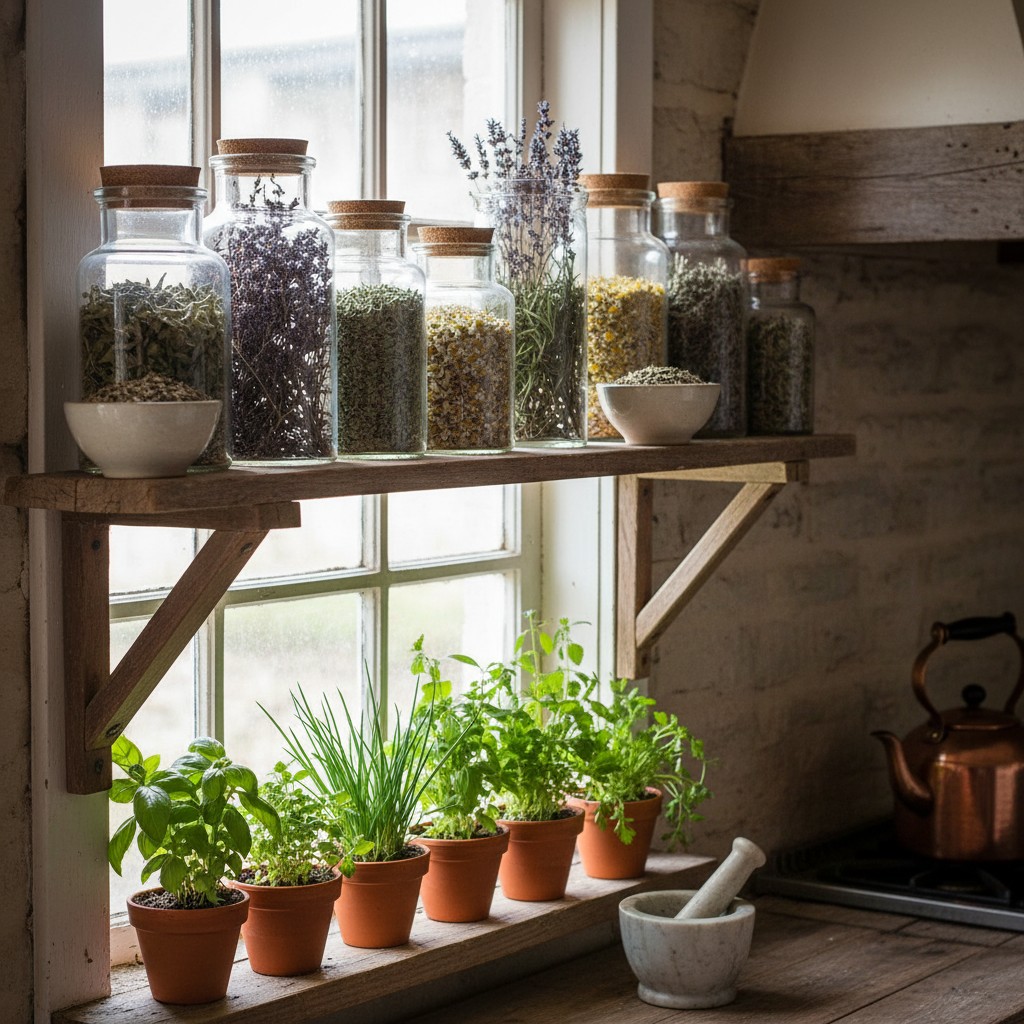
The more you harvest, the more herbs produce, so don’t be shy about snipping. Cut stems rather than individual leaves. Never harvest more than one-third of the plant at once. Pinch off flower buds as they appear to keep plants producing leaves longer.
Harvest in the morning after the dew has dried but before the midday heat, the Penn State Extension notes that morning harvesting yields the highest essential oil concentration. When the season ends, dry or freeze your herbs for year-round use, our guide to dehydrating food at home covers the technique. You can also make homemade herb butter to preserve that fresh flavor right through winter.
From our homestead: I keep my herb pots right next to the back door. If I had to walk across the yard to grab basil, I’d never use it. Convenience is the secret to actually cooking with fresh herbs.
Regional and Seasonal Notes
Your climate changes which herbs are easy perennials and which are one-season annuals. Here’s a quick breakdown based on USDA hardiness zones.
- Zones 3-5 (cold winter climates): Most Mediterranean herbs (rosemary, some thymes, bay) must overwinter indoors or be replanted annually. Chives, mint, and oregano survive outdoors.
- Zones 6-7 (cool-temperate): Rosemary survives most winters outdoors with mulch. Sage, thyme, oregano, chives, and mint are reliable perennials. Basil still dies at first frost.
- Zones 8-10 (mild-winter): Rosemary becomes a shrub. Year-round outdoor herb gardening is possible with irrigation through summer heat.
- Hot, humid regions: Rosemary often struggles with fungal disease. Thai basil and Cuban oregano handle heat better than their European cousins.
For year-round indoor gardening anywhere, see our dedicated guide on growing herbs indoors all winter.
Frequently Asked Questions
Yes! Grocery store herb pots are a great way to start. Repot them into a slightly larger container with quality potting mix and give them good light. Basil, rosemary, and mint from the grocery store transplant well. I’ve done it many times and they usually thrive within a week or two.
Water when the top inch of soil feels dry, typically every 3-5 days depending on your home’s humidity. Overwatering is the number one killer of indoor herbs. Good drainage holes are essential. Basil is the exception: it likes consistent moisture.
Rosemary, thyme, oregano, chives, sage, and mint are perennials that return year after year (in zones 5-9). Basil, cilantro, and dill are annuals that need replanting each season. Parsley is a biennial, it gives you two seasons before bolting.
Most herbs prefer lean soil and minimal fertilizer. Over-fertilizing produces lots of leaves with weak flavor. A light application of homemade compost once or twice per season is all they need.
Some herbs like basil, mint, and rosemary root easily in water and can grow for weeks in a glass on your windowsill. Change the water every few days. However, soil-grown herbs produce stronger flavor and larger harvests long-term.
Most culinary herbs need at least 6 hours of direct sunlight per day, per Penn State Extension. Less-demanding options like chives, lemon balm, and cilantro tolerate 2-6 hours. If your window doesn’t deliver that, a basic LED grow light on a timer (14-16 hours) will solve the problem.