Dehydrating Food at Home: A Complete Beginner’s Guide
- Equipment: A basic dehydrator costs $40-$60 and handles most home needs.
- Shelf life: Properly dried food lasts 6-12 months at room temperature.
- Temps: 125–135 degrees F for veggies (NCHFP recommends the higher end), 135 for fruits. Jerky requires a pathogen kill step, see safety note below.
- Slice thin: 1/4″ uniform slices, single layer, no overlapping.
- Test for doneness: Leathery or crisp with no moisture when torn.
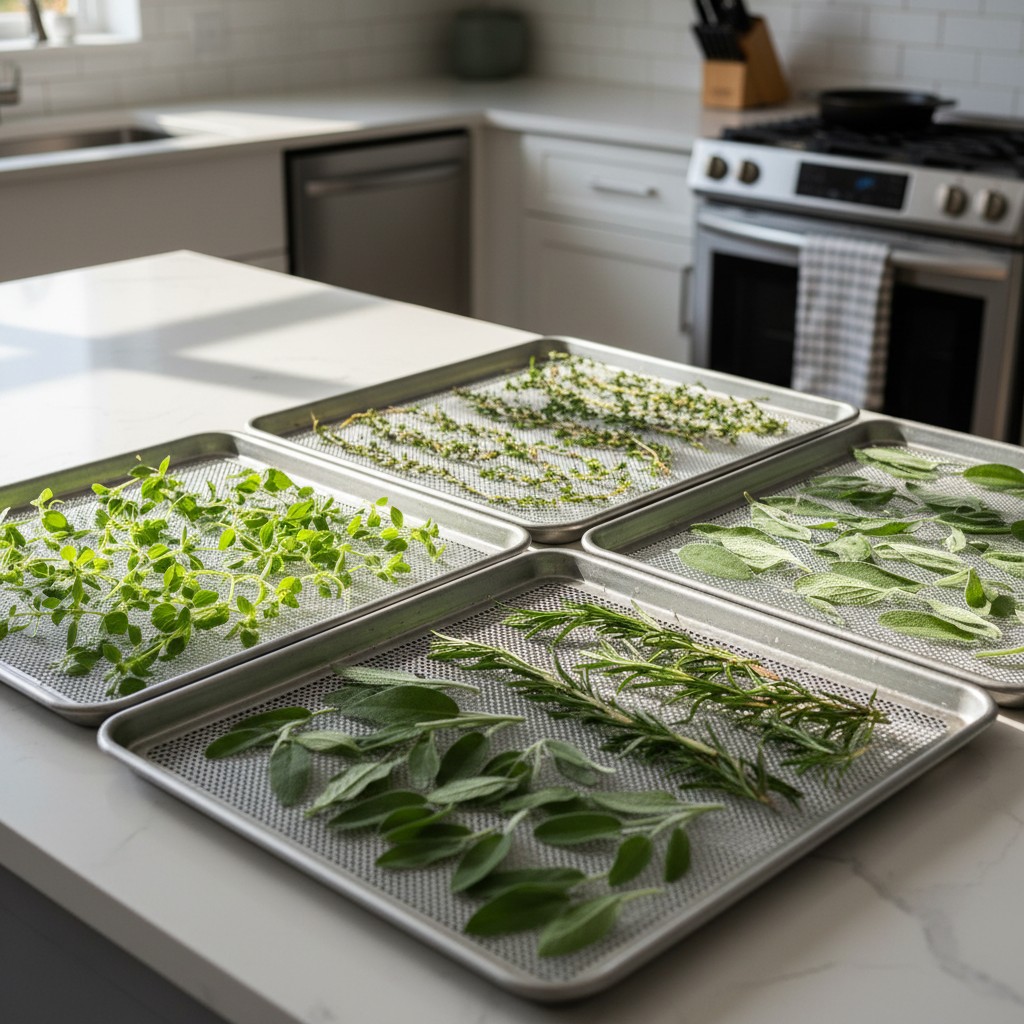
Herbs from the back-porch garden were what got me started with dehydrating, long before I touched a piece of fruit or meat. That first tray of basil came out beautifully; the second tray I left in too long and it turned to dust you could barely smell. That gap taught me to check every hour once the trays are close to done, because the difference between perfect and over-dried can be thirty minutes.
Dehydrating is one of the simplest, most affordable food preservation methods, and a basic dehydrator plus fresh produce is all you need to get started.</strong> By removing moisture, you create lightweight, shelf-stable food that lasts months or even years, without canning equipment, freezer space, or special skills. I started dehydrating herbs from my garden and quickly moved on to fruits, vegetables, and jerky. It’s now one of my favorite ways to preserve the harvest. According to the National Center for Home Food Preservation, dehydrating is one of the oldest preservation methods known to humanity.
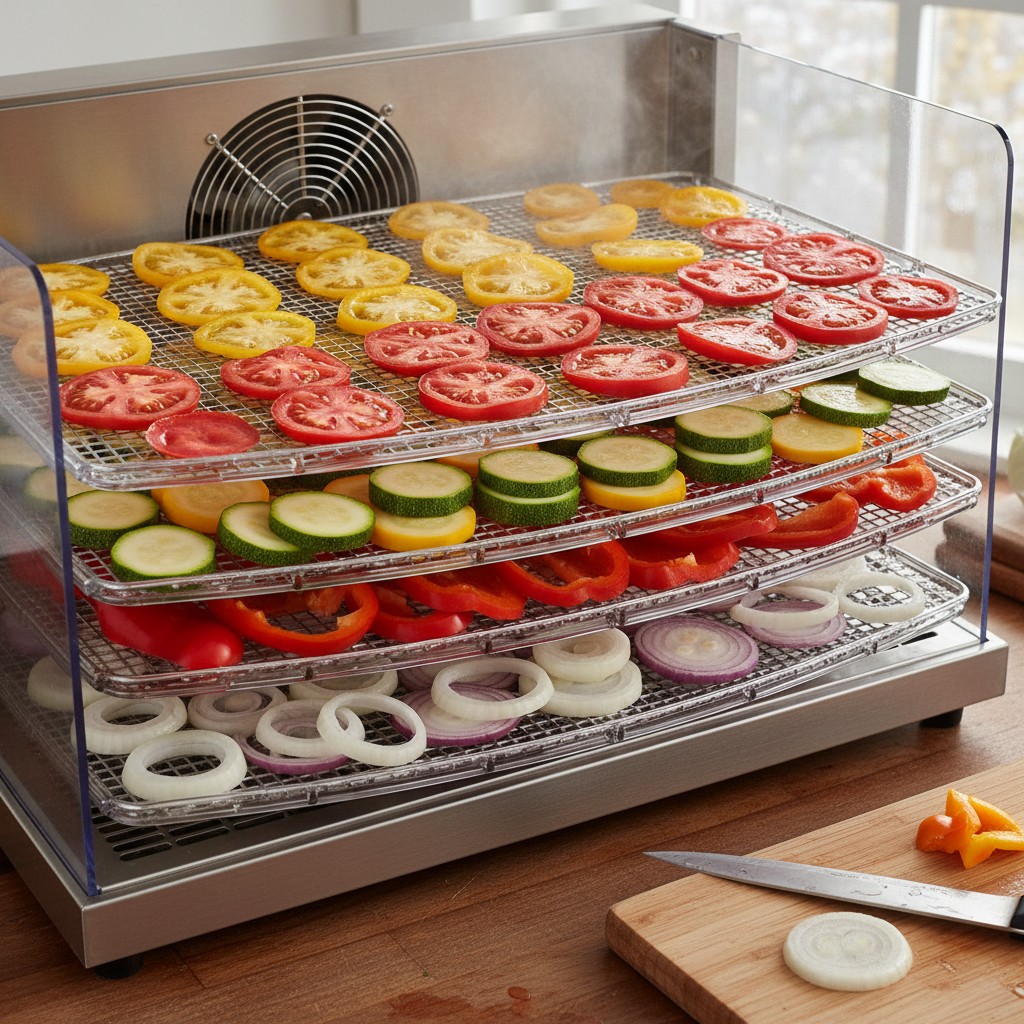
What Foods Can You Dehydrate?
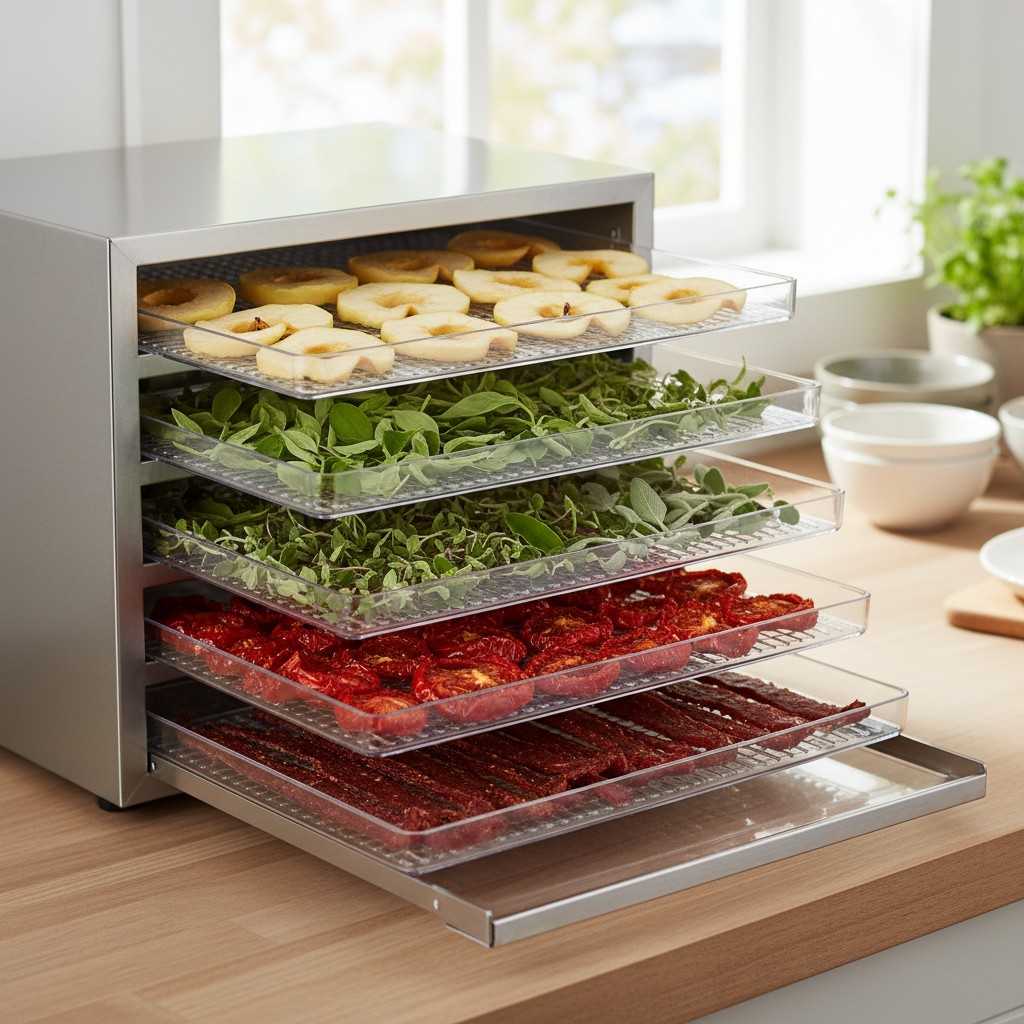
Almost anything: fruits, vegetables, herbs, meat, and even fruit leather are all excellent candidates for dehydrating.
| Category | Best Options | Temperature | Time |
|---|---|---|---|
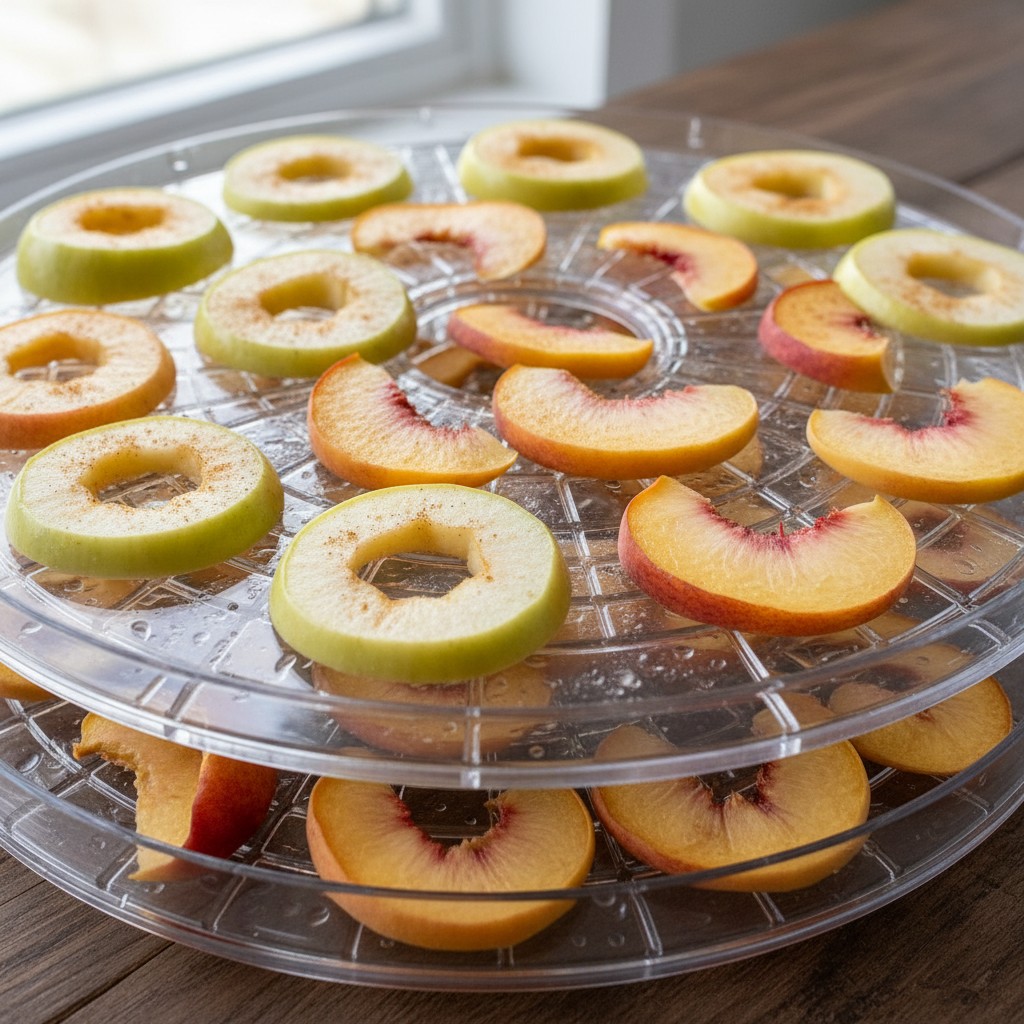
| Fruits | Apples, bananas, strawberries, mangoes | 135 degrees F | 8-12 hours |
| Vegetables | Tomatoes, peppers, mushrooms, zucchini | 125–135 degrees F | 6-12 hours |
| Herbs | Basil, oregano, thyme, rosemary, dill | 95-105 degrees F | 2-4 hours |
| Meat (jerky)* | Beef, venison, turkey | 140 degrees F (after pre-cook) | 4-6 hours |
| Fruit Leather | Any blended fruit spread thin | 135 degrees F | 8-12 hours |
⚠️ Jerky Safety: Drying Alone Does Not Kill Pathogens
Do not make jerky by simply drying raw marinated meat at 160°F. The National Center for Home Food Preservation (NCHFP) and USDA FSIS warn that home dehydrators often do not actually reach their labeled temperature, and that drying alone will not reliably kill E. Coli O157:H7 or Salmonella. Home-made jerky has been linked to documented E. Coli O157:H7 outbreaks.
Use one of these two NCHFP-approved protocols:
- Pre-cook, then dry: Boil marinated strips in the marinade for 5 minutes (to an internal temperature of 160°F, 165°F for poultry) before loading the dehydrator. Then dry at 140°F for 4-6 hours. (NCHFP jerky recipe)
- Dry, then post-heat: Dry at 140°F until leathery, then bake the finished jerky in a preheated 275°F oven for at least 10 minutes to finish the kill step.
Also worth doing: verify your dehydrator's actual temperature with an oven thermometer, many units run 10-20°F below their dial setting, per NCHFP.
Growing your own herbs to dehydrate? Our kitchen herb garden guide and growing tomatoes guide will give you a bumper crop to preserve.
How Do You Get Started with Dehydrating?
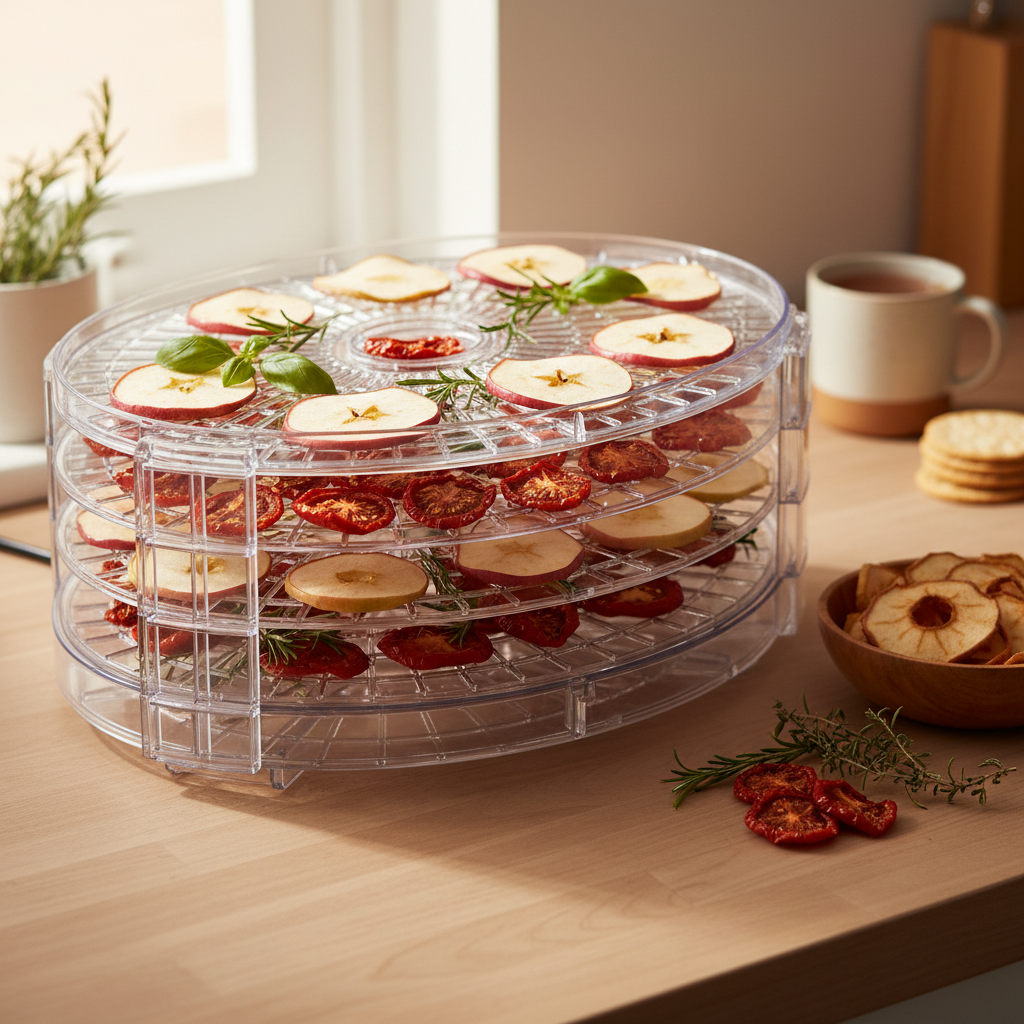
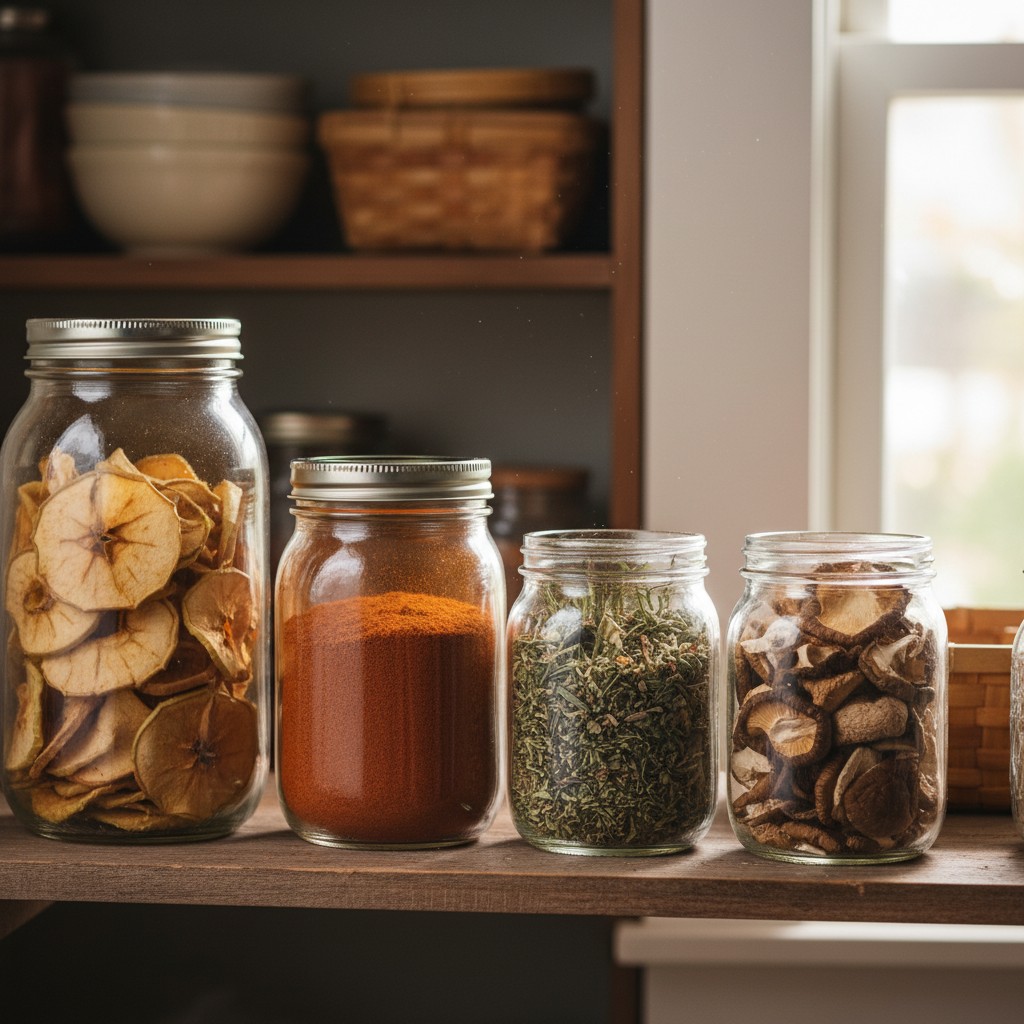
Get a basic round dehydrator ($40-$60), slice food thin and uniform, arrange in single layers, and set the right temperature, that's it.</strong> Cut food into uniform, thin slices (1/4 inch is ideal for most items), arrange in a single layer on trays without overlapping. Most items take 6 to 12 hours. I usually load mine up before bed and everything's done by morning. The <a href="https://extension.usu.edu/preserve-the-harvest/research/drying" target="_blank" rel="noopener">Utah State University Extension</a> recommends conditioning dried fruit for a week in sealed jars before long-term storage to equalize moisture content.
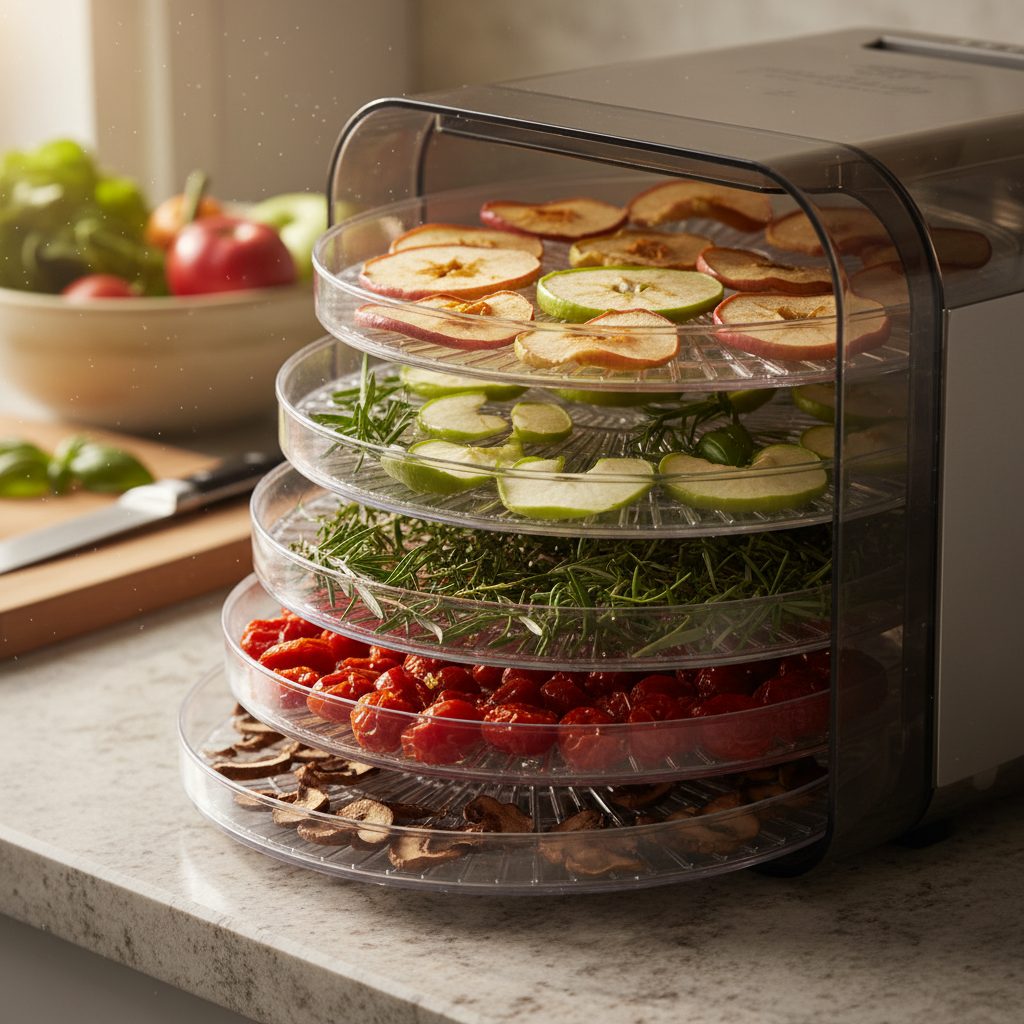
Food is done when it is leathery or crisp with no moisture when you tear a piece in half. Before long-term storage, condition dried fruit by loosely filling jars to two-thirds, sealing them, and shaking once daily for 7–10 days. Condensation on the jar walls or clumping indicates the fruit needs more drying time. Conditioning equalizes residual moisture across all the pieces and prevents mold from developing in storage, a critical step the Utah State University Extension and NCHFP both recommend. Vegetables do not require conditioning; only fruit (which retains more water). Store conditioned fruit in airtight mason jars or vacuum-sealed bags in a cool, dark place. Properly dried food keeps 6 to 12 months at room temperature. For longer storage, combine dehydrating with our tips on root cellaring and building an emergency food pantry.
Dehydrating is the easiest entry point into food preservation. Start with herbs from your garden or apple slices from the farmers market. Once you taste homemade dried mango or your own herb blends, there’s no going back to store-bought. If you enjoy preserving food, explore our guides to water bath canning and fermentation for beginners for even more ways to stock your pantry.
🌱 From Our Homestead
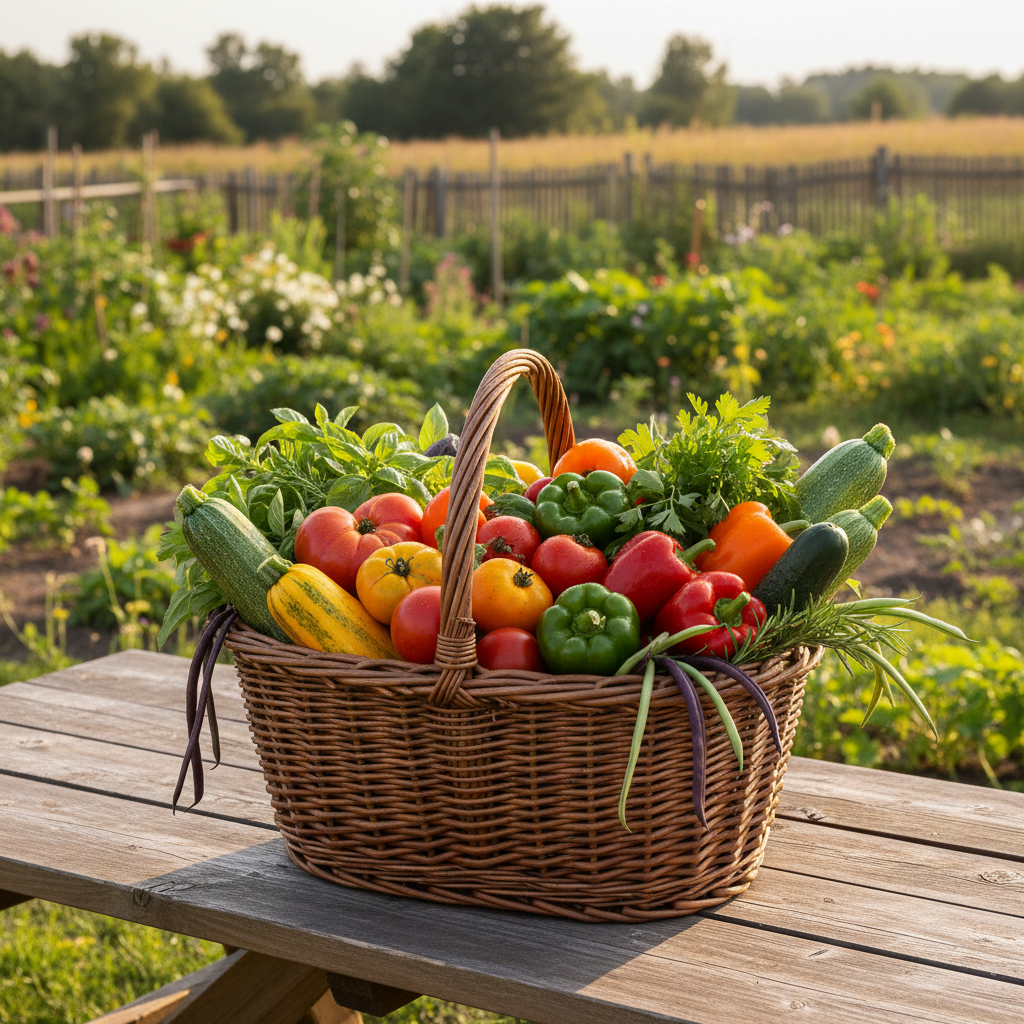
Our dehydrator runs almost nonstop from July through October. The moment I realized I could turn a mountain of surplus garden tomatoes into shelf-stable sun-dried tomatoes in a single afternoon, it changed how I think about preserving entirely.
Frequently Asked Questions
Yes, if your oven goes as low as 170 degrees F. Prop the door open slightly for airflow, and use the lowest setting. It’s less energy-efficient than a dehydrator, but it works for occasional batches. An oven with a convection setting works best.
Tear a piece in half, there should be no visible moisture or soft spots. Fruits should be leathery and pliable. Vegetables should be brittle and snap. Jerky should bend and crack but not break completely. When in doubt, dry a little longer.
Fruits that brown (apples, pears, bananas) benefit from a quick dip in lemon juice or ascorbic acid solution before drying. It prevents browning and helps preserve vitamin C. It’s optional but recommended for the best-looking results.
A basic round dehydrator with stackable trays ($40-$60) like the Nesco Snackmaster handles most home needs perfectly. If you plan to dehydrate large quantities, upgrade to a square model with a rear-mounted fan for more even drying (like the Excalibur).
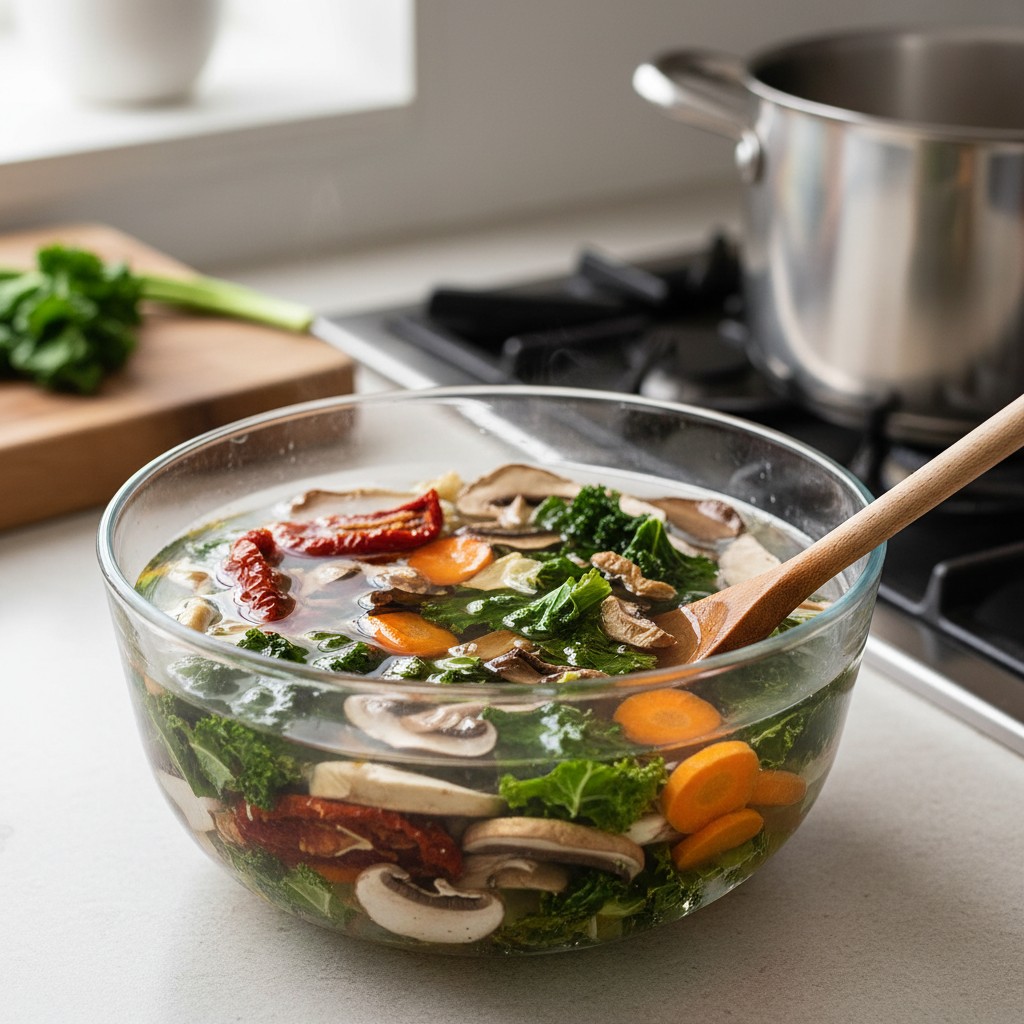
Absolutely. Soak dried vegetables in warm water for 20-30 minutes and they’re ready for soups, stews, and casseroles. Dried fruits rehydrate well in juice or water. Jerky is typically eaten dry, but can be rehydrated for recipes.