Sourdough Starter from Scratch: The Complete 7-Day Guide
- Mix 50g flour + 50g water daily, discard half before each feeding
- By day 5–7, starter should double in 4–8 hours after feeding
- Store on counter (feed daily) or fridge (feed weekly)
- Use discard for pancakes, crackers, pizza dough, never waste it
- A healthy starter can last decades with regular feeding
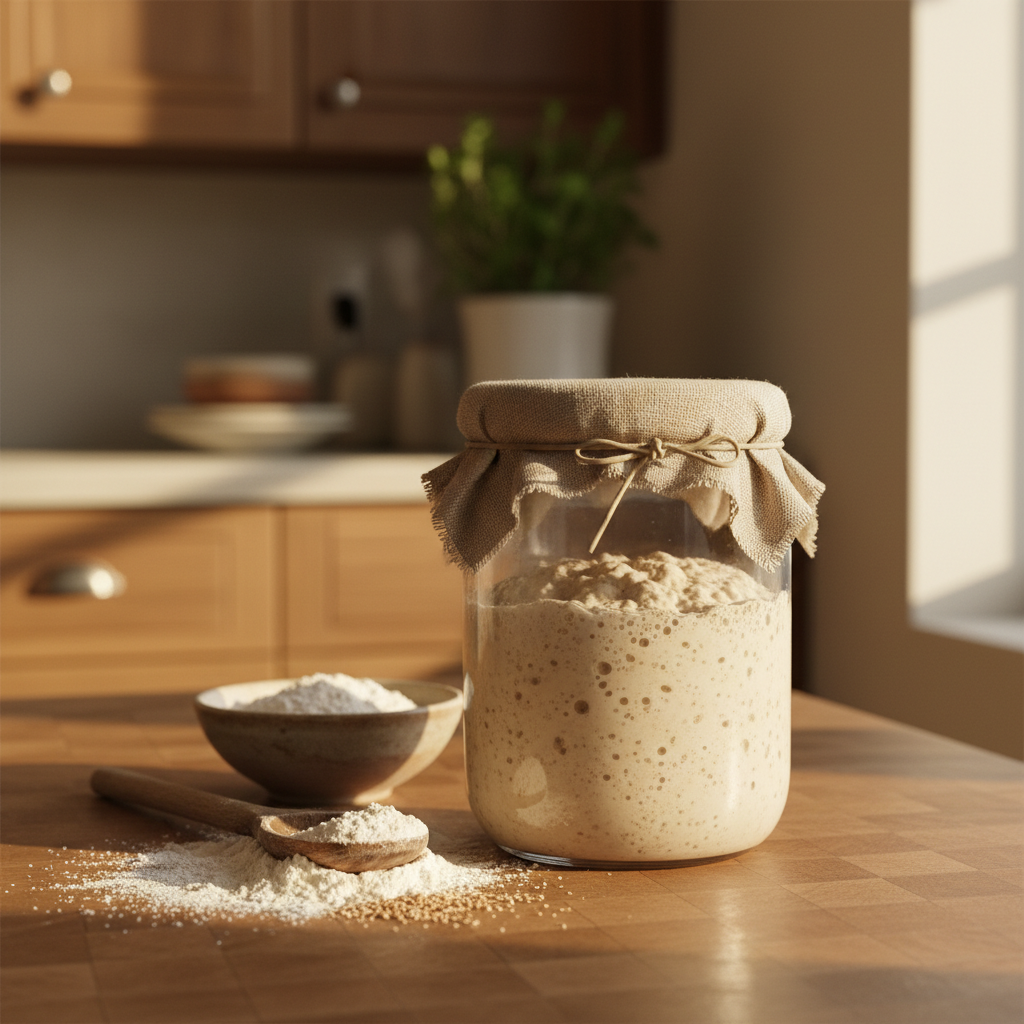
Making a sourdough starter from scratch is among the most rewarding kitchen projects you can take on. With just flour, water, time, and a little patience, you create a living culture of wild yeast and beneficial bacteria that can leaven bread for years, even decades. No store-bought yeast required. Just you, flour, water, and the invisible magic already in your kitchen.
I have been maintaining my starter for over three years now, and it has produced hundreds of loaves, countless pizza nights, and more sourdough pancakes than I can count. Starting it from scratch felt like a science experiment, and honestly, that is part of the fun.
What’s Actually Happening Inside the Jar?
A sourdough starter is a living symbiotic culture of wild yeast and lactic acid bacteria that feed on flour. Colorado State University Extension describes the process: “Wild yeast consumes the carbohydrates in the flour and produces alcohol and carbon dioxide gas (CO2) as the primary by-products.” The CO2 is what makes your bread rise.
The tang comes from the bacteria. CSU Extension notes that “the naturally occurring bacteria in a sourdough starter are species of Lactobacillus”, they turn sugars from flour into lactic acid and convert the yeast-produced alcohol into acetic acid. Lactic acid gives a yogurty mellow sourness; acetic acid gives a sharp vinegary tang. Together they create that signature sourdough flavor.
What Do You Need to Start a Sourdough Starter?
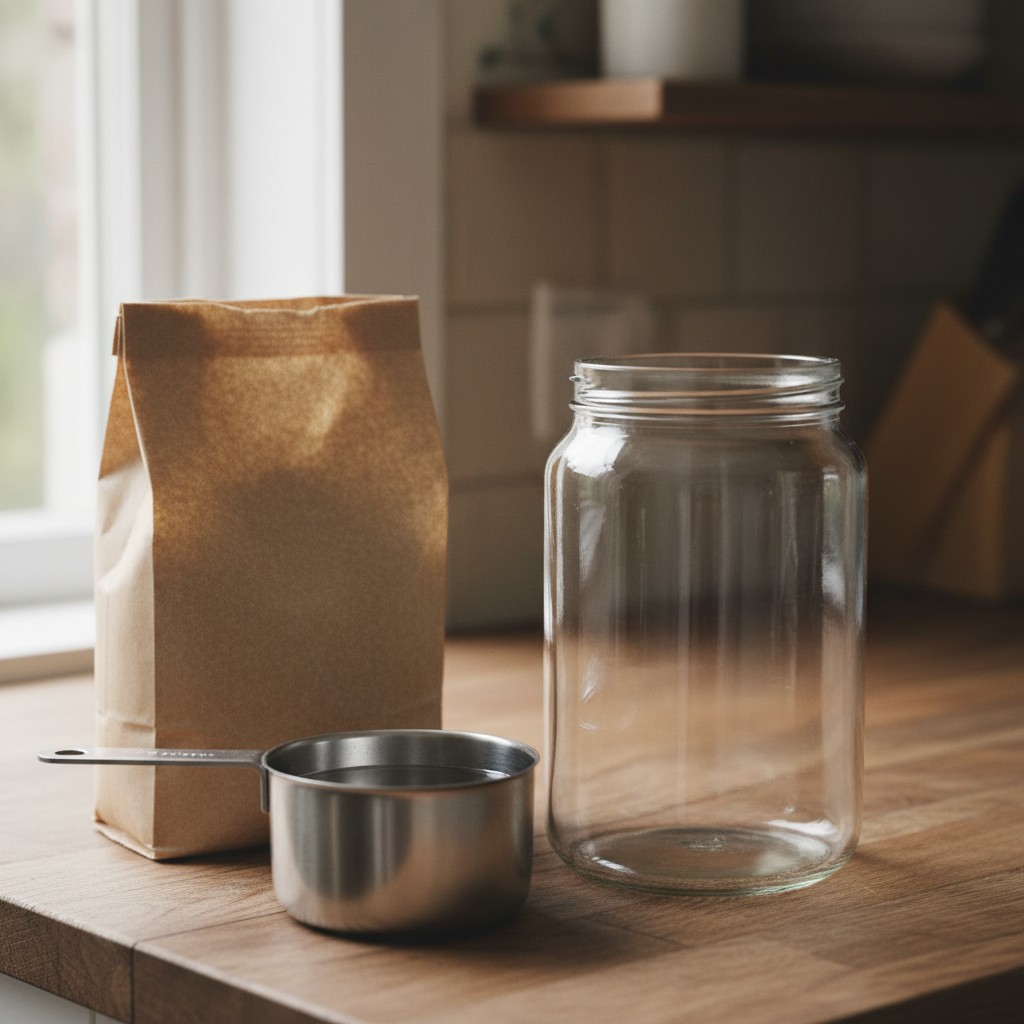
You need just three things: unbleached flour, unchlorinated water, and a clean glass jar. Whole wheat flour gets things going faster because it contains more wild yeast and bacteria. A kitchen scale is highly recommended since measuring by weight is much more consistent than by volume.
Jar hygiene matters. USDA NIFA guidance on safely fermenting food at home recommends washing all surfaces and containers with hot sudsy water and rinsing thoroughly before any home fermentation, sourdough bread is listed among commonly fermented foods at home. A clean start prevents unwanted mold or off-cultures from competing with your wild yeast.
- Unbleached all-purpose flour or whole wheat flour (whole wheat gets things going faster)
- Unchlorinated water (filtered or left out overnight to dechlorinate), chlorine in standard municipal tap water can inhibit the wild yeast and bacteria you are trying to cultivate. If your only option is tap water, fill a glass or pitcher and let it sit uncovered at room temperature for several hours; most chlorine off-gasses within 30–60 minutes. Heavily chloraminated municipal water (chloramine does not off-gas) requires a carbon-filter pitcher to remove.
- A clean glass jar (quart size works perfectly)
- A kitchen scale (measuring by weight is much more consistent than by volume)
- A rubber band or piece of tape to mark the level
What Does the Day-by-Day Process Look Like?
Each day you discard half and feed with equal parts flour and water. By day 5–7, your starter should reliably double in size within 4–8 hours.
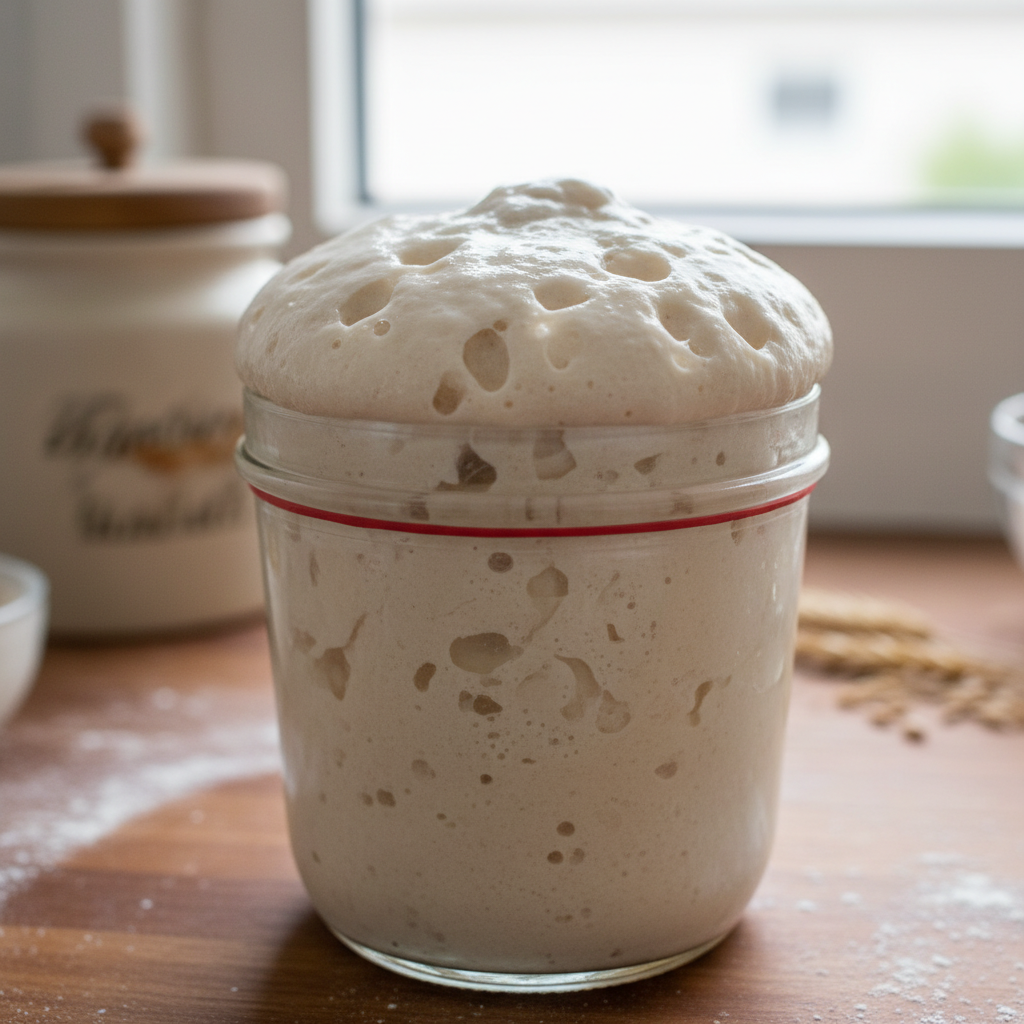
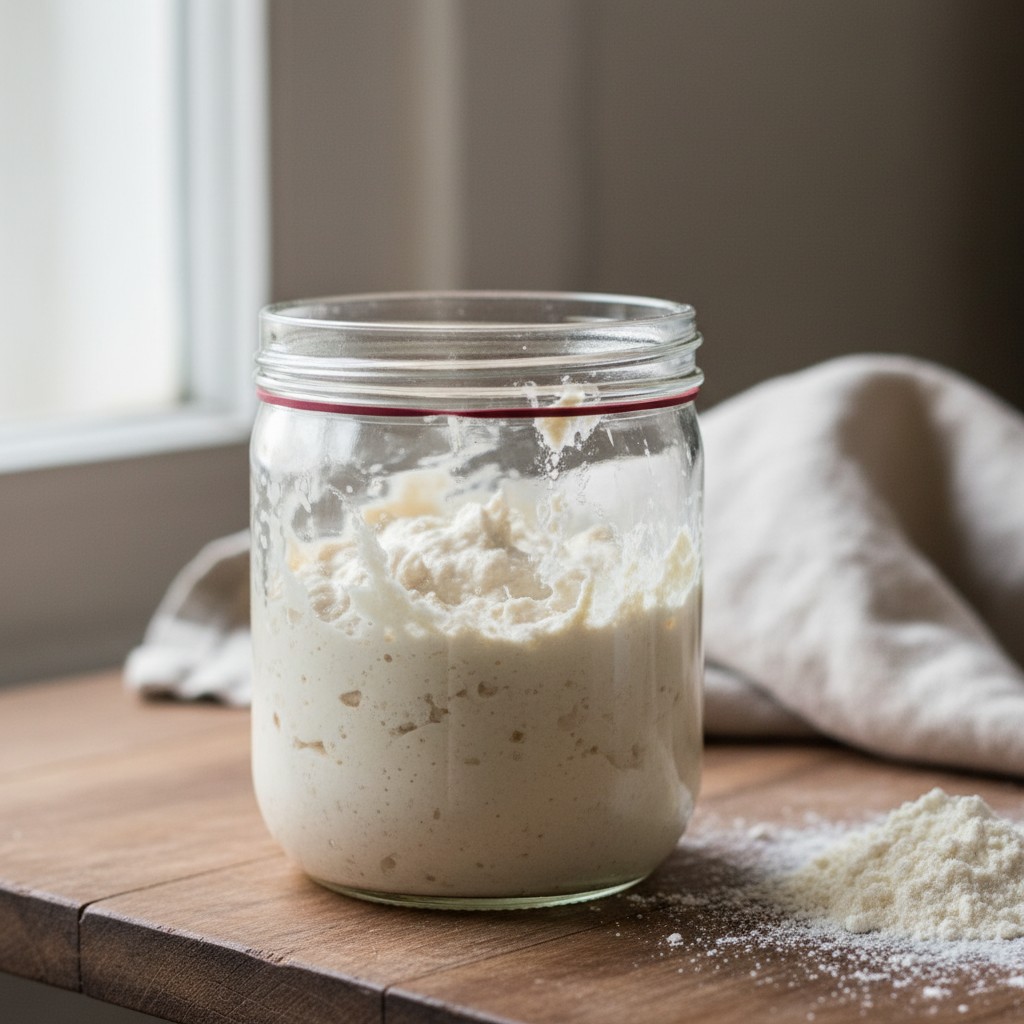
Day 1: Mix 50 grams whole wheat flour and 50 grams water in your jar. Stir well, cover loosely (the culture needs to breathe), and leave at room temperature. Mark the level with a rubber band.
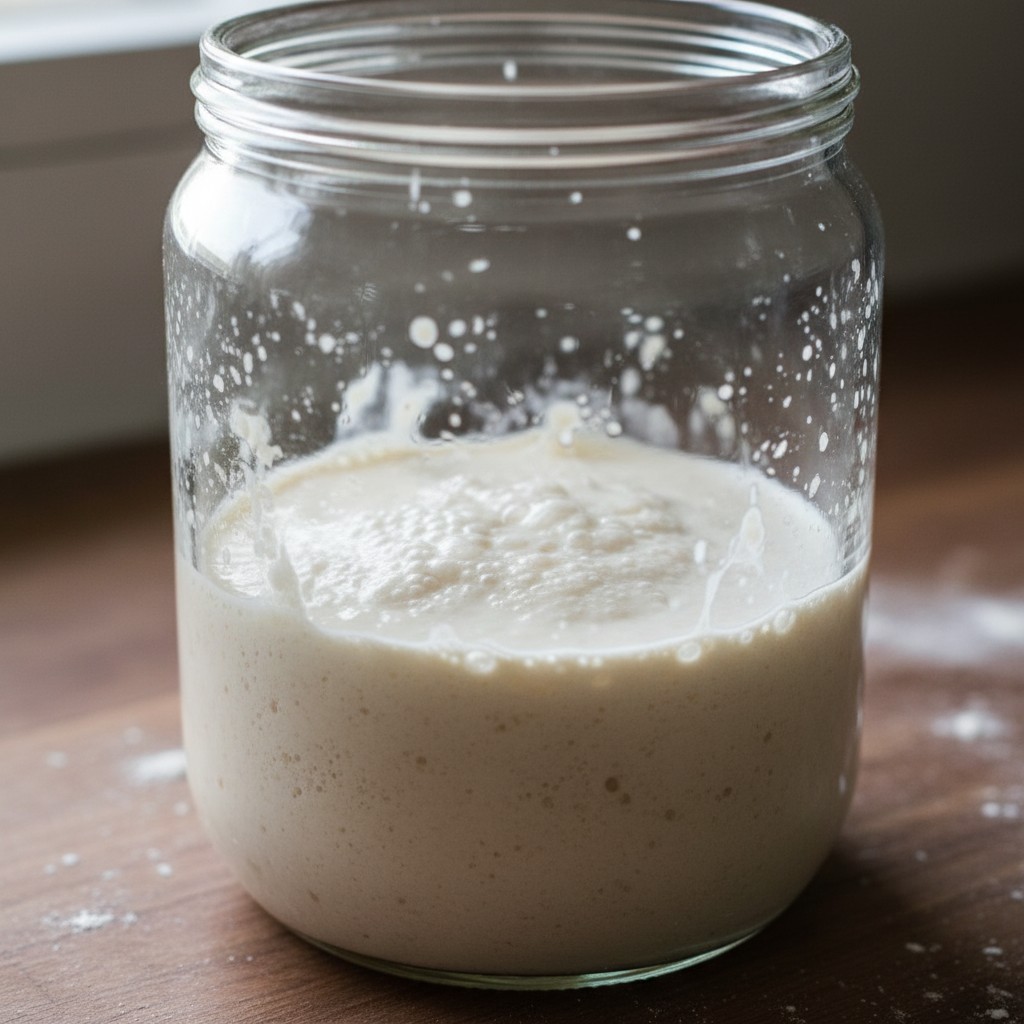
Day 2: You probably will not see much activity yet. That is normal. Discard about half the mixture and feed with 50 grams flour and 50 grams water. Stir well.
Days 3–4: You may start to see bubbles and notice a slightly tangy or fruity smell. The culture is waking up. Continue discarding half and feeding once daily. According to fermentation experts, the early bubbles are often from leuconostoc bacteria, not yeast, so be patient.
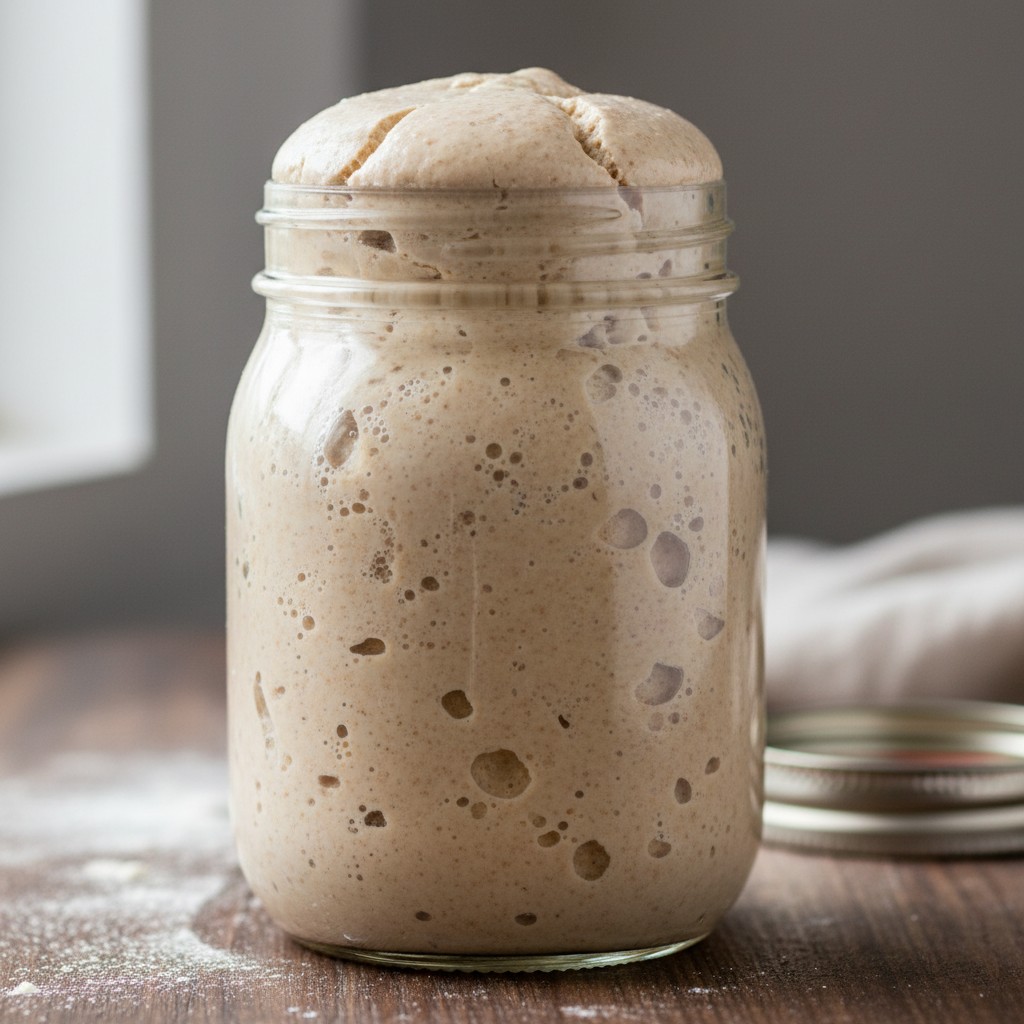
Days 5–7: By now, your starter should be rising predictably, doubling in size within 4 to 8 hours after feeding, then falling back. It should smell pleasantly tangy, like yogurt or green apples. When it reliably doubles after feeding, it is ready to bake with.
| Day | Action | What to Expect |
|---|---|---|
| 1 | Mix 50g flour + 50g water | Nothing yet, just patience |
| 2 | Discard half, feed 50g + 50g | Minimal activity, maybe a few bubbles |
| 3–4 | Discard half, feed 50g + 50g | Bubbles, slightly tangy smell |
| 5–7 | Discard half, feed 50g + 50g | Doubles in 4–8 hrs, pleasant tang |
How Do You Maintain a Sourdough Starter Long-Term?
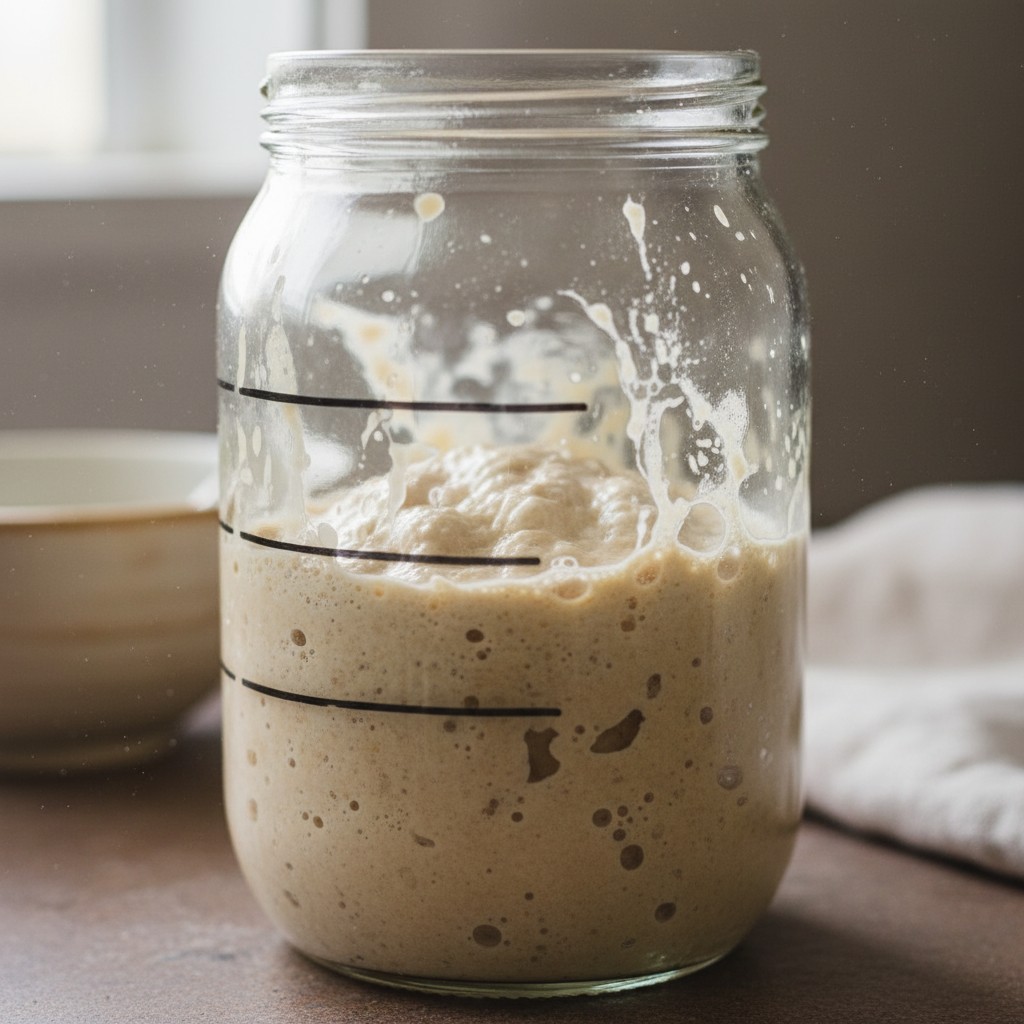
If you bake frequently, feed daily on the counter. If you bake less often, store in the fridge and feed once a week. To use it after refrigerating, pull it out, feed it, and let it come to room temperature and become active again before baking, usually 2 to 3 feedings over 24 hours. This is exactly what I do, and my starter bounces back reliably every single time.
From our homestead: My sourdough starter is named Bubbles, and she’s been alive for two years. She’s survived neglect, a move across town, and one accidental freezing. Starters are tougher than you think.
Why Does Sourdough Bread Feel Easier to Digest?
The long, slow fermentation partially breaks down gluten and FODMAPs before the loaf ever hits the oven. Colorado State University Extension reports that “sourdough fermentation also reduces levels of certain FODMAPs, which are a type of carbohydrate that cause bowel irritation in some people.” That’s why people with mild wheat sensitivity often tolerate a properly fermented sourdough far better than a fast-rise commercial loaf.
Discard is full of flavor and can be used in pancakes, waffles, crackers, pizza dough, muffins, and more. Do not throw it away. Check out our sourdough discard recipes for delicious ideas. You can even feed it to your backyard chickens, they love it. If you are into fermentation, you will appreciate how sourdough starter is the same wild culture at work.
Your sourdough starter is a living thing, a colony of billions of organisms that you are keeping alive with flour and water. Treat it well and it will give you the best bread you have ever tasted. Pair it with homemade yogurt and herb butter for a truly homegrown breakfast. Some starters have been passed down through families for generations. Yours starts today.
Frequently Asked Questions
A: No! That acetone smell means it is very hungry. Give it a couple of back-to-back feedings and it should recover. Consistent feeding is the cure.
A: Yes, but whole wheat gets things started faster because it contains more wild yeast. Many bakers start with whole wheat and switch to all-purpose after the first week.
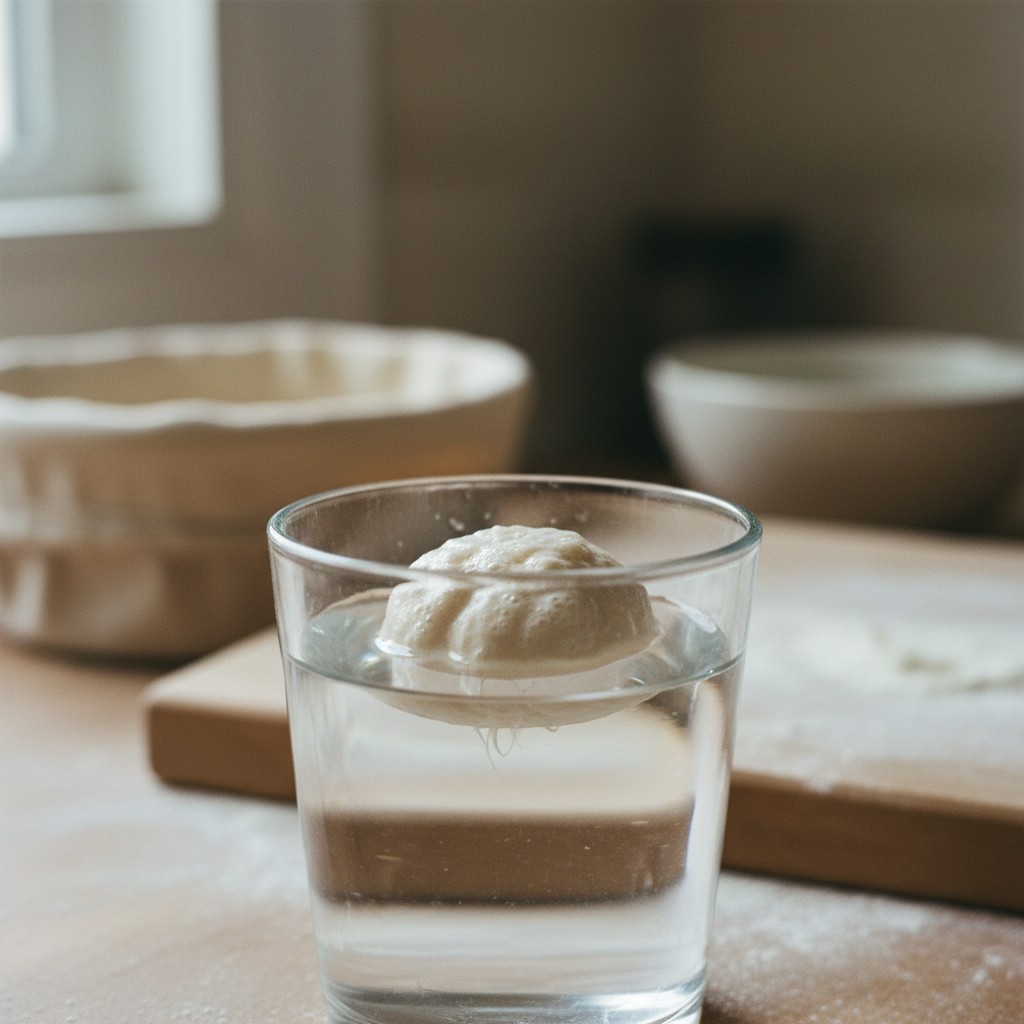
A: The float test, drop a spoonful into water. If it floats, it is active enough to leaven bread. It should also reliably double within 4–8 hours of feeding.
A: Yes. Feed it well, then refrigerate it. A healthy starter can go 2–3 weeks in the fridge without feeding. Give it a few feedings when you return to revive it.
A: Your starter may need a few more weeks to develop strong leavening power. Young starters are great for flavor but may not have enough lifting strength yet. Keep feeding and be patient.
A: Sourdough fermentation reduces (but does not eliminate) gluten and FODMAPs, which is why some people with mild wheat sensitivity tolerate it better. It is not safe for people with celiac disease or a diagnosed wheat allergy, enough gluten remains to cause an immune reaction.