Off-Grid Solar for Beginners: An Honest Guide to Powering Your Homestead
- A basic off-grid solar starter system costs $500–$1,500 and can power lights, phone charging, a small fridge, and basic tools
- The core components: solar panels + charge controller + battery bank + inverter
- A single 400W panel with a 100Ah lithium battery handles most small homestead electrical needs
- Start small — you can expand your system modularly as your needs and budget grow
- Solar works best as a supplement to grid power for most homesteaders, not a full replacement
Off-grid solar has a reputation for being expensive and complicated. And it can be — if you’re trying to run central air, an electric dryer, and a hot tub. But for a homestead? A modest solar setup that powers your essentials is surprisingly affordable and genuinely straightforward.
This guide is the honest, non-affiliate-driven introduction to solar that most homesteaders need. No upselling, no $20,000 whole-house systems — just practical information about sizing a system for real homestead use.
How Solar Power Works (The Simple Version)
- Solar panels convert sunlight into DC (direct current) electricity
- A charge controller regulates the power flowing from panels to batteries (prevents overcharging)
- Batteries store the electricity for use when the sun isn’t shining
- An inverter converts DC battery power to AC (alternating current) — the same type your house outlets use
That’s it. Four components. Everything else is cables, fuses, and mounting hardware.
How to Size Your System
Before buying anything, calculate what you actually need to power. Here’s what common homestead items draw:
| Device | Watts | Hours/Day | Watt-Hours/Day |
|---|---|---|---|
| LED lights (5 bulbs) | 50W | 5 | 250 |
| Phone/laptop charging | 30W | 3 | 90 |
| Small chest freezer | 50W | 8 | 400 |
| Water pump | 150W | 1 | 150 |
| Chicken coop heater (winter) | 100W | 8 | 800 |
| Fan | 30W | 6 | 180 |
| Basic homestead total | ~1,000–1,900 Wh |
Rule of thumb: Most homesteads need 1,000–2,000 watt-hours per day for basic electrical needs. That’s a very manageable solar system.
Three System Tiers: From Starter to Full Power
| Tier | Panels | Battery | Powers | Cost |
|---|---|---|---|---|
| Starter | 1× 200W | 1× 100Ah lithium | Lights, charging, radio | $500–$800 |
| Essential | 2× 400W | 2× 100Ah lithium | + fridge, pump, fans | $1,500–$2,500 |
| Full homestead | 4× 400W+ | 4× 100Ah+ lithium | + power tools, washer, workshop | $4,000–$8,000 |
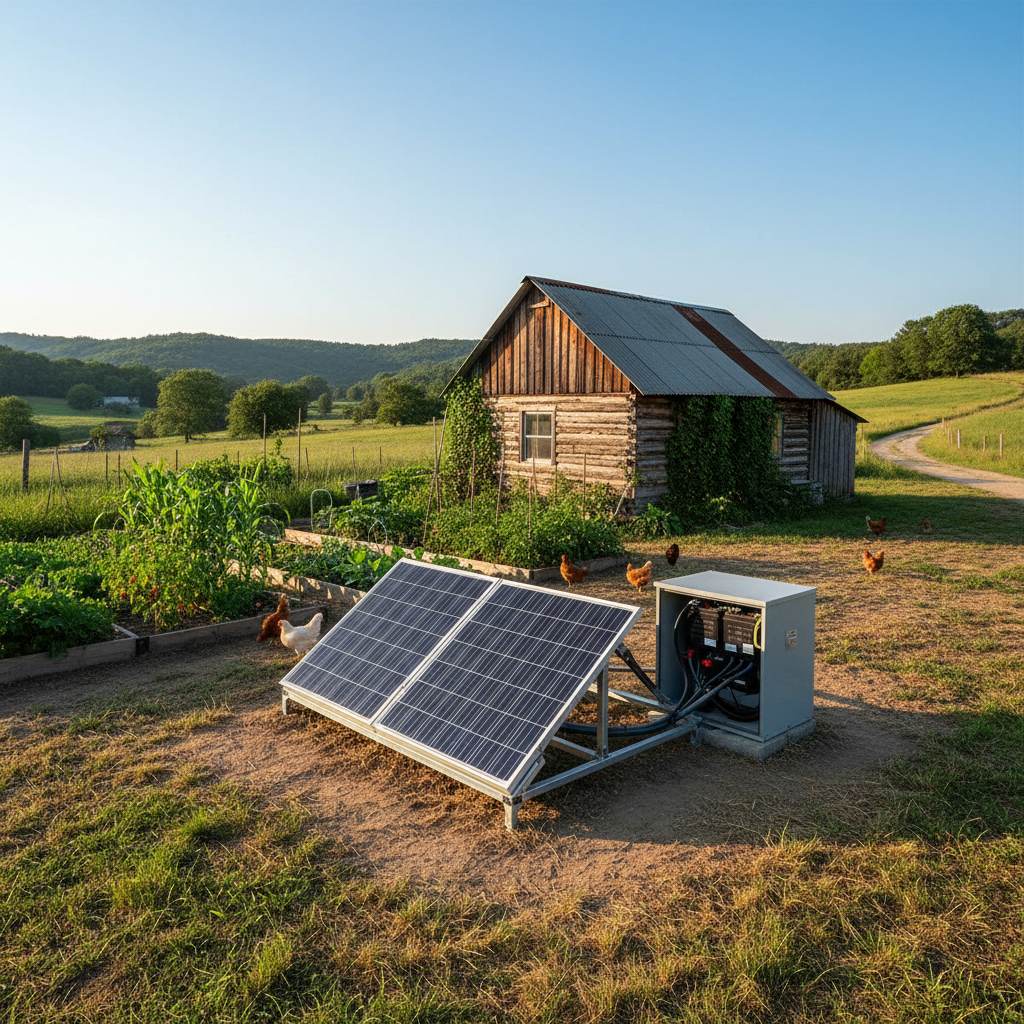
From our homestead: I started with a $600 portable power station and a single 200W panel to run the chicken coop lights and charge tools in the barn. It’s not glamorous, but it works perfectly and saves us from running extension cords 200 feet from the house. You don’t need to go all-in on day one.
Component Guide: What to Buy
Solar Panels
Modern panels are efficient and affordable. A 400W monocrystalline panel costs $150–$250 and produces about 1,600–2,000 Wh per day in good sun (4–5 peak sun hours). Mount on a ground rack, roof, or pole mount facing south at your latitude angle.
Charge Controller
Get an MPPT (Maximum Power Point Tracking) controller, not PWM. MPPT is 20–30% more efficient and worth the extra $50–$100. Size it for your panel wattage — a 30A MPPT controller handles up to 800W of panels.
Batteries
Lithium iron phosphate (LiFePO4) is the way to go for homestead solar. They cost more upfront but last 10+ years (vs. 3–5 for lead-acid), can be discharged to 80–100% (lead-acid only to 50%), and weigh half as much. A 100Ah 12V lithium battery stores 1,280 Wh and costs $300–$500.
Inverter
A pure sine wave inverter is essential — modified sine wave inverters damage electronics and make motors hum. A 2,000W pure sine wave inverter ($150–$300) handles most homestead loads. Size your inverter for the maximum watts you’ll draw at one time, not your daily total.
The $500 Starter System Shopping List
| Component | Spec | Cost |
|---|---|---|
| Solar panel | 200W monocrystalline | $100–$150 |
| Charge controller | 20A MPPT | $60–$100 |
| Battery | 100Ah 12V LiFePO4 | $250–$350 |
| Inverter | 1,000W pure sine wave | $60–$100 |
| Cables, fuses, connectors | 10 AWG solar cable, MC4 | $30–$50 |
| Total | $500–$750 |
Common Mistakes to Avoid
- Undersizing batteries. Panels are cheap; batteries are expensive. But skimping on storage means your system dies at sunset. Size your battery bank for at least 1.5 days of usage.
- Using PWM instead of MPPT. The $50 savings costs you 20–30% of your solar production. Always go MPPT.
- Ignoring wire gauge. Undersized wires cause voltage drop and fire risk. Use proper gauge for your current (10 AWG for most 12V homestead systems under 30A).
- Trying to run everything on solar. Electric heating, dryers, AC, and electric stoves draw enormous power. Use propane, wood, or grid power for high-draw appliances.
- Shade. Even partial shade on one panel dramatically reduces output. Place panels in full, unobstructed sun all day.
Frequently Asked Questions
How much does a basic off-grid solar system cost?
A starter system that powers lights, phone charging, and small devices costs $500–$800. An essential system that adds a fridge, water pump, and fans runs $1,500–$2,500. A full homestead system capable of powering a workshop and major appliances costs $4,000–$8,000. You can start small and expand modularly.
Can I install solar panels myself?
Yes — a small off-grid system (not connected to grid power) doesn’t require permits or a licensed electrician in most areas. It’s similar to wiring a 12V RV system. For grid-tied systems that feed power back to the utility, you’ll need permits and often a licensed installer. Off-grid is the DIY-friendly option.
How many solar panels do I need for a homestead?
It depends on your power usage. Most small homesteads need 1,000–2,000 Wh per day, which requires 1–2 panels (400W each) in an area with 4–5 hours of peak sun. Calculate your daily watt-hour usage first, then size panels to produce 1.25x that amount to account for cloudy days and system losses.
Lithium or lead-acid batteries?
Lithium (LiFePO4) is worth the higher upfront cost for almost everyone. They last 3–4x longer (10+ years vs. 3–5), can be discharged deeper (80–100% vs. 50%), weigh half as much, and require zero maintenance. Over their lifespan, lithium batteries actually cost less per cycle than lead-acid.
Does solar work in cloudy climates?
Yes, but output is reduced. Panels still produce 10–25% of their rated output on overcast days. In consistently cloudy areas (Pacific Northwest, Northeast winters), you’ll need more panels and more battery storage to compensate. Check your area’s average peak sun hours — 3–4 hours is workable, 5+ is ideal.