Raising Turkeys for Beginners
Key Takeaways
- Heritage turkeys take 6-7 months to reach processing weight, while broad-breasted breeds are ready in about 4 months — plan backward from your target harvest date.
- Poults are fragile during their first 6 weeks and need consistent heat starting at 95°F, decreasing by 5°F each week.
- Blackhead disease (histomoniasis) is the number one turkey killer — never raise turkeys on ground previously used by chickens without a fallow period.
- A single turkey needs about 6 square feet of indoor space and 20+ square feet of outdoor range to stay healthy and grow well.
- Budget roughly $30-50 per turkey in total feed costs for broad-breasted breeds, more for heritage breeds due to their longer grow-out time.
Why Raise Turkeys?
There’s something deeply satisfying about putting a bird you raised yourself on the Thanksgiving table. The flavor alone makes it worth the effort — pastured, home-raised turkey tastes nothing like the shrink-wrapped supermarket version. The meat is richer, the texture firmer, and the satisfaction of knowing exactly what went into that bird is hard to beat.
But turkeys aren’t just oversized chickens. They have different needs, different temperaments, and a few quirks that can catch beginners off guard. The good news? With some planning and basic knowledge, raising turkeys is absolutely doable — even if you’ve never kept poultry before.
Heritage vs. Broad-Breasted: Choosing Your Breed
This is the first big decision you’ll make, and it affects everything from your timeline to your budget.
Broad-Breasted Breeds
Broad-breasted white and broad-breasted bronze turkeys are the commercial standard. These birds grow fast — really fast. A broad-breasted white can hit 30-40 pounds in as little as 16-20 weeks. They convert feed efficiently and produce the large, full-breasted carcass most people picture when they think “Thanksgiving turkey.”
The tradeoff? They can’t reproduce naturally due to their oversized breasts, they’re prone to leg problems from rapid growth, and they won’t forage as effectively as heritage breeds. Think of them as the Cornish Cross of the turkey world — purpose-built for meat production.
Heritage Breeds
Heritage breeds like Bourbon Red, Narragansett, Standard Bronze, and Royal Palm are the old-fashioned turkeys your great-grandparents would have raised. They take longer to mature — typically 6 to 7 months — and they’ll finish at a smaller size, usually 14-22 pounds depending on the breed and sex.
What heritage birds lack in speed, they make up for in hardiness, foraging ability, and flavor. Many homesteaders swear the taste difference is dramatic. Heritage turkeys can also breed naturally, so you can maintain your own flock year after year without buying poults.
Which Should You Choose?
If this is your first year and you want turkey for the holidays, go with broad-breasted. They’re forgiving of beginner mistakes, they grow on a predictable schedule, and you’ll get a bird that looks and cooks the way your family expects. Once you’ve got a season under your belt, consider adding heritage breeds for a sustainable, self-perpetuating flock.
Getting Started: Ordering and Timing
Work backward from your target harvest date. For Thanksgiving (late November in the US), order broad-breasted poults for delivery in late June or early July. Heritage breed poults should arrive in late April or May to give them enough growing time.
Order from reputable hatcheries. Most ship day-old poults via USPS Priority Mail. Expect to pay $8-15 per poult for broad-breasted and $10-20 for heritage breeds. Many hatcheries have minimum order requirements, typically 10-15 birds. If that’s more than you need, split an order with a neighbor or check local farm stores for smaller quantities in spring.
A quick tip from experience: order a few extra. Poult mortality in the first two weeks can run 5-10% even with good care. Better to have a couple extra birds than to come up short.
Poult Care: The Critical First Six Weeks
Turkey poults are notoriously delicate compared to chicks. They need more attention, more warmth, and a bit more patience during the brooding phase.
Brooder Setup
You’ll need a draft-free enclosure with about 1.5 square feet per poult initially, expanding as they grow. A large stock tank, wooden brooder box, or even a kiddie pool with cardboard walls works fine.
Use pine shavings for bedding — never cedar (toxic) and never newspaper (too slippery for their developing legs). Start your heat lamp or brooder plate at 95°F at poult level, then decrease by 5°F each week until they’re fully feathered around 6-8 weeks.
The Biggest Danger: Starving at the Feeder
Here’s something that surprises every new turkey raiser: poults can be genuinely bad at figuring out how to eat and drink. It sounds ridiculous, but it’s the leading cause of early poult death. They’ll stand next to a full feeder and starve.
Dip each poult’s beak in the water when you place them in the brooder. Sprinkle feed on a bright surface — a paper plate or piece of cardboard — for the first few days. Some old-timers place marbles or small shiny objects in the feed to attract attention. Another trick is to brood poults alongside a few chicks. The chicks figure out eating instantly, and the poults follow their lead.
Feed Schedule
Start with a 28-30% protein game bird or turkey starter feed for the first 8 weeks. This higher protein content is critical — regular chick starter at 18-20% protein won’t support proper turkey growth. After 8 weeks, transition to a grower feed at 20-22% protein. For the final 4-6 weeks before processing, you can use a finisher feed at 16-18% protein to add some fat.
Provide feed free-choice (available at all times). A growing turkey can eat 60-80 pounds of feed over its lifetime for broad-breasted breeds, and significantly more for heritage birds due to their longer growing period.
Housing and Space Requirements
Turkeys need more space than chickens. As a rule of thumb, plan for 6-8 square feet of indoor space per bird and at least 20 square feet of outdoor space, though more is always better.
The Coop
Turkeys don’t need an elaborate coop. A three-sided shelter with a roof works well in most climates. What matters is that it’s dry, draft-free, and provides protection from predators at night. Good ventilation near the roofline is essential — turkey droppings produce significant ammonia, and respiratory issues are common in stuffy housing.
Roosts should be sturdy and low. Broad-breasted turkeys shouldn’t roost higher than 18 inches off the ground — their heavy bodies make them prone to leg injuries from jumping down. Heritage breeds can handle 2-3 foot roosts. Use 2×4 lumber laid flat so they can comfortably grip with their larger feet.
Fencing and Ranging
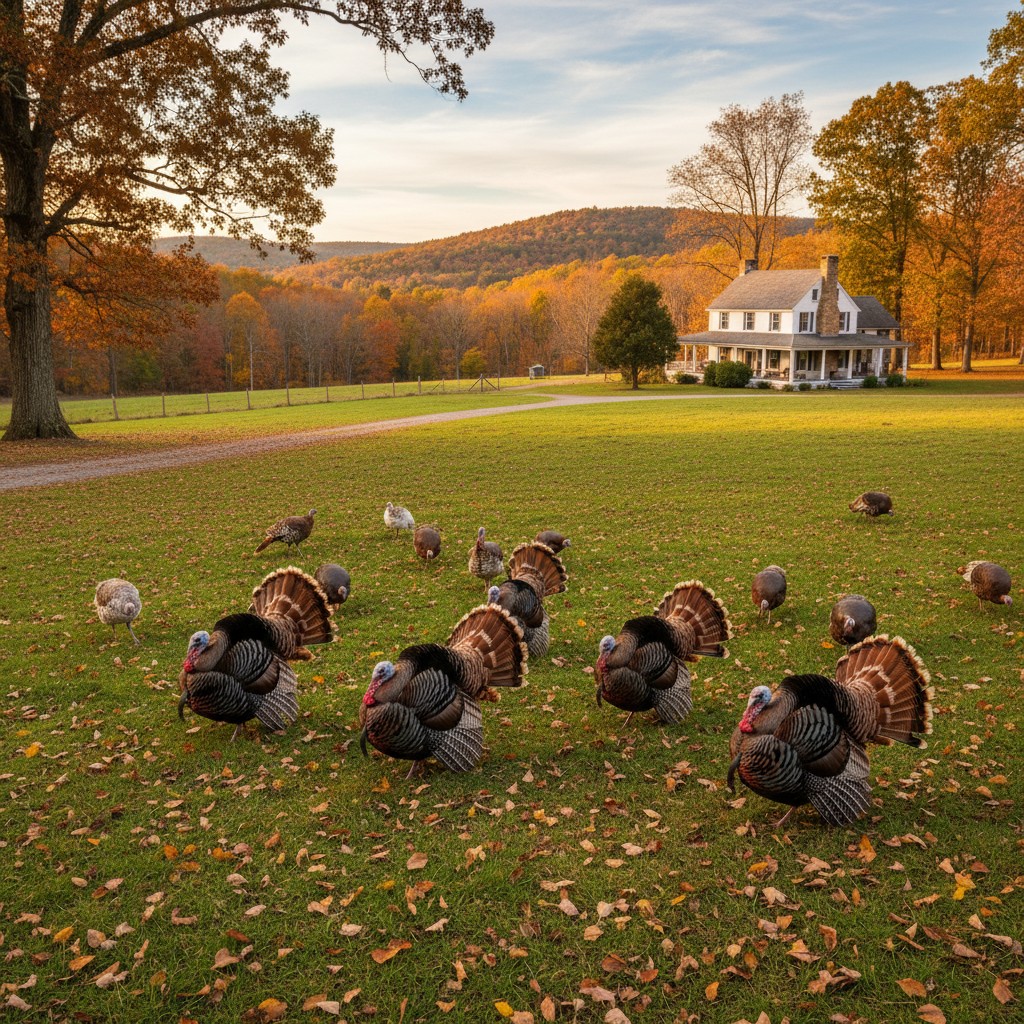
Turkeys benefit enormously from pasture access. They’ll eat bugs, grass, seeds, and all manner of forage that supplements their feed and improves the flavor of the meat. A simple electric poultry net (like Premier 1 PoultryNet) works well for containing turkeys and deterring ground predators.
Keep in mind that young heritage turkeys can fly. Clipping one wing’s flight feathers helps, but some heritage breeds are determined escape artists. Broad-breasted turkeys are generally too heavy to fly by the time they’re a few months old.
Common Health Issues
Blackhead Disease (Histomoniasis)
This is the big one. Blackhead is caused by a protozoan parasite (Histomonas meleagridis) that’s carried by cecal worms commonly found in chickens. Chickens can carry the parasite with no symptoms, but it’s often fatal in turkeys — mortality rates can reach 70-100% in untreated flocks.
Prevention is your best defense. Avoid raising turkeys on ground where chickens have been kept within the last two years. If you keep both species, house them separately and don’t share equipment between flocks. Some homesteaders successfully raise turkeys and chickens together, but it’s a risk — especially on small acreage where the birds share ground.
Respiratory Issues
Turkeys are susceptible to mycoplasma gallisepticum (MG) and other respiratory infections. Signs include nasal discharge, swollen sinuses, coughing, and decreased appetite. Good ventilation, dry bedding, and avoiding overcrowding are your main preventive measures.
Leg Problems
Broad-breasted turkeys grow so fast that their legs can struggle to keep up. Ensure adequate protein in their starter feed, keep brooder floors non-slippery, and don’t let them get obese before processing age. If a bird goes lame, it’s usually best to process it early rather than let it suffer.
Processing Timeline and Planning
For a Thanksgiving harvest, here’s a rough timeline:
- Broad-breasted (July start): Process at 16-20 weeks, mid-November. Toms will be 30-40 lbs live weight (about 75-80% dressed). Hens will be 16-22 lbs live weight.
- Heritage (May start): Process at 24-28 weeks, mid-November. Toms will be 20-28 lbs live weight. Hens will be 12-16 lbs live weight.
DIY Processing vs. Professional
Processing a turkey is the same basic procedure as processing a chicken, just scaled up. If you’ve butchered chickens, you can handle a turkey. The main challenge is the scalding and plucking — a large tom turkey has a lot of feathers and heavy plumage that can be stubborn to remove.
If you don’t want to process at home, call local USDA-inspected processors early. Many small processors book up months in advance for the Thanksgiving rush. Some charge $15-30 per bird.
After Processing
Let the bird rest in the refrigerator for 24-48 hours before freezing. This rest period allows rigor mortis to resolve, resulting in more tender meat. Wrap tightly in freezer paper or vacuum seal for storage. A properly wrapped turkey keeps well in a chest freezer for 6-12 months.
What It Actually Costs
Here’s a realistic breakdown for raising one broad-breasted turkey to Thanksgiving size:
- Poult: $8-15
- Feed (roughly 70 lbs of feed): $25-40
- Bedding: $5-10
- Processing (if not DIY): $15-30
- Total per bird: $53-95
Compare that to a pastured heritage turkey from a local farm at $7-10 per pound, and the math starts looking pretty good — especially if you’re raising multiple birds and already have basic poultry infrastructure.
Tips From the Turkey Trenches
A few things I wish someone had told me before my first flock:
- Turkeys are curious and social. They’ll follow you around, investigate everything, and genuinely seem to enjoy human company. This makes them charming to raise — and a little harder to send to the freezer.
- Toms will display constantly. That full-fan strut isn’t just for hens. They’ll puff up for you, the dog, a wheelbarrow, anything. It’s entertaining but can become aggressive during breeding season.
- Wet poults die. Keep your brooder bone dry, especially the first three weeks. A wet poult is a dead poult.
- They’re louder than you think. Hens make a pleasant chirping sound. Toms gobble. Loudly. At dawn. Your neighbors will know you have turkeys.
- Start small. Raise 3-5 birds your first year. Learn the rhythms, make your mistakes on a manageable scale, then expand.
Frequently Asked Questions
Can I raise turkeys and chickens together?
It’s possible but carries risk, primarily from blackhead disease. Chickens can carry the Histomonas parasite asymptomatically while it can be fatal to turkeys. If you do keep both species, house them in separate coops and ideally on separate pasture. Many experienced homesteaders manage both successfully by maintaining good biosecurity between flocks, but for beginners, keeping them apart is the safer call.
How many turkeys should I start with?
For a first-time raiser, 3-5 birds is a manageable number. This gives you enough to account for any early losses while keeping feed costs and space requirements reasonable. Turkeys are social animals and do better in small groups than alone, so plan for at least three. If you’re raising for Thanksgiving only, figure out how many you need for your family and friends, then add two extra.
Do I need a tom (male) turkey?
Only if you want to breed. For meat production, hens alone are perfectly fine and generally easier to manage. Hens are smaller (which is actually an advantage for many families — a 14-pound hen fits standard ovens better than a 35-pound tom). If you do want to breed heritage turkeys, one tom can service 8-10 hens.
What’s the best turkey breed for a beginner?
For your first year, broad-breasted whites are the most forgiving choice. They grow fast, convert feed efficiently, and reach a predictable size on a known timeline. If you specifically want a heritage breed, Bourbon Reds are widely considered the most beginner-friendly — they’re calm, hardy, good foragers, and produce excellent-flavored meat at a reasonable 18-25 pound size for toms.