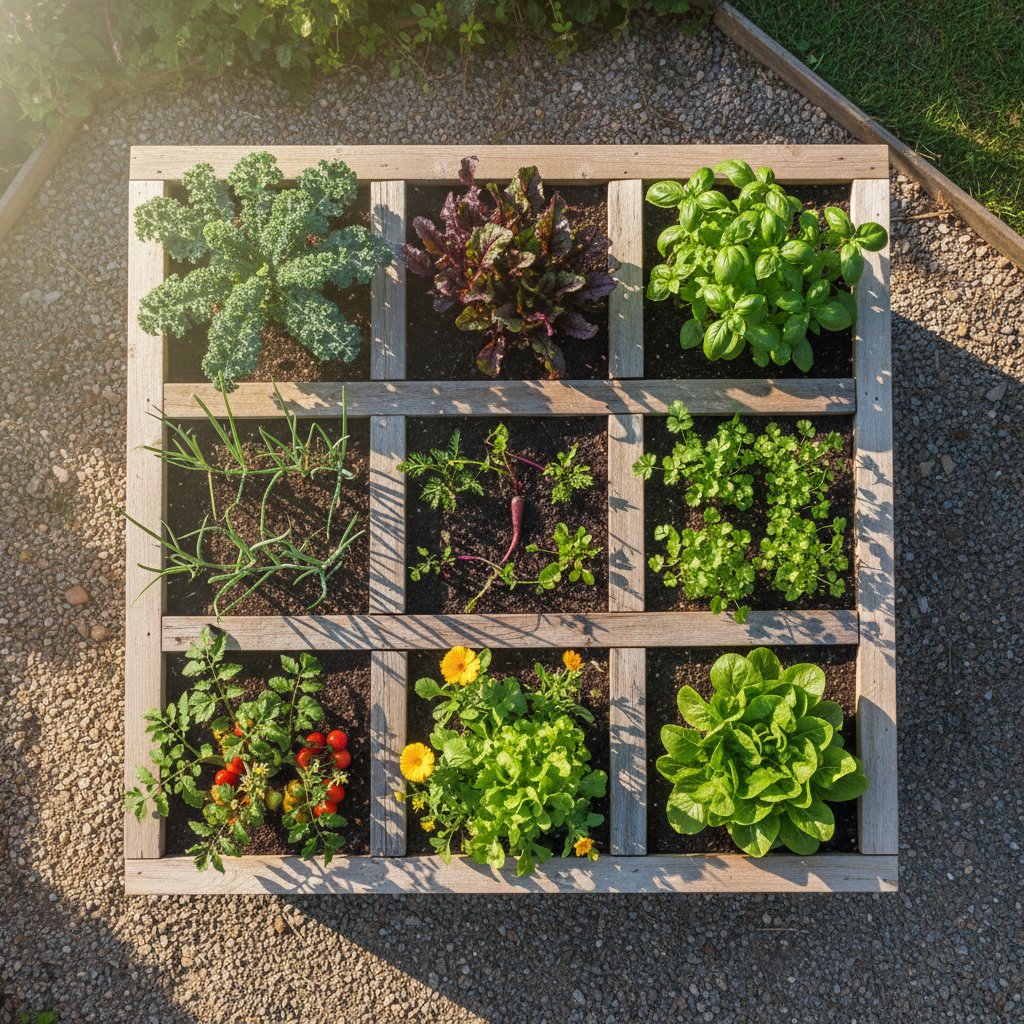
Square Foot Gardening: How to Maximize Every Inch of Your Garden
Square Foot Gardening: How to Maximize Every Inch of Your Garden
- Square foot gardening divides raised beds into 1-foot squares, each planted with a specific number of plants based on spacing needs
- A single 4×4 raised bed (16 square feet) can produce a surprising amount of food using this intensive planting method
- The method uses a special soil mix — 1/3 compost, 1/3 peat moss (or coconut coir), and 1/3 vermiculite — called “Mel’s Mix”
- Square foot gardening eliminates row spacing waste, reduces weeding, and makes garden planning straightforward
- This approach is ideal for beginners, small spaces, and anyone who wants an organized, productive garden
When I first started gardening, my vegetable plot looked like a small farm — long rows with wide paths between them, more bare soil than plants, and weeds everywhere I looked. I was doing a lot of work for relatively little harvest. Then a neighbor introduced me to square foot gardening, and it completely changed how I think about growing food in a small space.
Square foot gardening is a simple, organized system for growing more food in less space with less work. Developed by Mel Bartholomew in the 1980s, it’s become one of the most popular gardening methods worldwide — and for good reason. Whether you’re working with a tiny backyard, a single raised bed, or a larger plot, the principles of square foot gardening can help you grow more efficiently.
What Is Square Foot Gardening?
The concept is beautifully simple. Instead of planting in long rows with paths between them (the traditional approach), you divide your garden into 1-foot squares arranged in a grid. Each square gets a specific number of plants based on their spacing requirements. A 4×4 raised bed gives you 16 squares, each one a mini garden of its own.
The standard square foot garden has three key elements:
- Raised beds — typically 4 feet wide (so you can reach the center from either side) and any length, though 4×4 is the classic size
- A grid — physical dividers (wooden slats, string, or lattice) laid on top of the bed to mark individual squares
- Mel’s Mix — a special blended growing medium that replaces native soil
The beauty of this system is that it eliminates guesswork. You don’t need to wonder how far apart to space your carrots or how many lettuce plants fit in a row. The grid tells you exactly what goes where.
Building Your Square Foot Garden
Most square foot gardeners use raised beds, and a 4×4 bed is the perfect starting point. You can build one from untreated lumber, concrete blocks, or even repurposed materials. Cedar and redwood are naturally rot-resistant and last for years. Avoid pressure-treated wood if you’re concerned about chemicals leaching into your soil.
The recommended depth is 6-12 inches. Deeper beds give roots more room and are especially helpful if you’re building on top of poor soil, a patio, or gravel. If your bed sits on decent ground soil, 6 inches of Mel’s Mix on top will work fine since roots can penetrate into the native soil below.
The grid is what separates square foot gardening from regular raised bed gardening, and it matters more than you might think. Without a visible grid, you’ll inevitably crowd plants or waste space. You can make a grid from thin wooden slats, plastic blinds, string tied to nails, or even just draw lines in the soil with a stick. Just make sure each square is clearly defined.
Mel’s Mix: The Ideal Growing Medium
Mel Bartholomew’s signature soil recipe is one-third compost, one-third peat moss or coconut coir, and one-third coarse vermiculite. This blend is lightweight, holds moisture well, drains freely, and provides excellent nutrition.
| Ingredient | Purpose | Notes |
|---|---|---|
| Compost (1/3) | Nutrients and biology | Use a blend of at least 5 different compost sources for best results |
| Peat Moss or Coir (1/3) | Moisture retention | Coconut coir is a more sustainable alternative to peat |
| Coarse Vermiculite (1/3) | Drainage and aeration | Use coarse grade, not fine — fine vermiculite compacts too much |
I’ll be honest — Mel’s Mix can be expensive to fill a bed from scratch, especially the vermiculite. My compromise was to fill the bottom half of my deeper beds with a mix of native soil and compost, then top with 4-5 inches of Mel’s Mix. It works great and cuts the cost significantly. After the first season, I just add a fresh inch or two of compost each spring.
One of the big advantages of this mix is that it stays loose and weed-free. Because you’re not using native soil (which is full of weed seeds), you’ll spend far less time weeding — especially in the first year. As the garden matures and airborne seeds settle in, some weeds will appear, but nothing like a traditional row garden.
The Crop-Per-Square Planting Guide
This is the heart of square foot gardening. Each crop has a specific number of plants that fit in one square foot, based on the recommended spacing on the seed packet. Here’s the essential reference:
| Plants Per Square | Crops | Spacing |
|---|---|---|
| 1 per square | Tomato, pepper, eggplant, broccoli, cabbage, cauliflower | 12 inches |
| 2 per square | Cucumber (trellised), large basil, okra | 6 inches |
| 4 per square | Lettuce (head), Swiss chard, parsley, celery | 6 inches |
| 8 per square | Bush beans, peas, spinach, beets, leeks | 4 inches |
| 9 per square | Bush beans (tight), turnips, kohlrabi | 4 inches |
| 16 per square | Carrots, radishes, onions (green), small beets | 3 inches |
| Vertical (1 per square) | Pole beans, tomatoes (staked), cucumbers (trellised), peas | Use trellis at back of bed |
The key insight here is that you’re planting in a grid pattern within each square rather than in rows. So 16 carrots per square means a 4×4 grid of carrots, each 3 inches from its neighbors. This creates a living mulch as plants mature — leaves shade the soil, reducing evaporation and weed growth.
Planning Your First Square Foot Garden
If you’re just getting started — maybe this is your first vegetable garden — one 4×4 bed is plenty to start with. Here’s a sample layout for a 16-square-foot bed that provides a nice variety:
| Sample 4×4 Bed Layout (North Side at Top) | |||
|---|---|---|---|
| 1 Tomato (caged) | 1 Pepper | 4 Lettuce heads | 16 Radishes |
| 8 Bush beans | 16 Carrots | 4 Swiss chard | 8 Spinach |
| 1 Eggplant | 9 Beets | 1 Basil (large) | 4 Parsley |
| 16 Onions (green) | 8 Peas | 4 Marigolds | 16 Radishes |
Place taller plants (tomatoes, peppers, trellised crops) on the north side of the bed so they don’t shade smaller crops. Keep fast-maturing crops like radishes and lettuce together so you can replant those squares quickly after harvest.
Succession Planting: The Secret to Maximum Yield
One of the greatest strengths of square foot gardening is how naturally it lends itself to succession planting. When you harvest a square of radishes (which mature in about 30 days), you immediately replant that square with something else — maybe lettuce, then beans, then a fall crop of spinach.
A single square can produce three or even four harvests per season if you plan thoughtfully. This is where square foot gardening truly outperforms traditional row gardens in terms of yield per square foot.
Keep a simple chart of what you planted, when, and when you harvested. Over time, you’ll develop a rhythm of planting that keeps every square productive throughout the growing season.
Vertical Gardening in Square Foot Beds
Going vertical is how you really maximize production. By adding a trellis along the north side of your bed, you can grow vining crops like pole beans, cucumbers, peas, and even small melons without them sprawling across multiple squares.
A simple trellis made from conduit pipe and string, or a cattle panel arched between two beds, works beautifully. One square of trellised pole beans can produce as much as four or five squares of bush beans, and the vertical growth doesn’t shade other crops if positioned correctly.
This is also where good companion planting comes in. Shade-loving crops like lettuce can actually benefit from being on the south side of a trellis during the heat of summer, getting filtered light and cooler conditions.
Watering and Maintaining Your Square Foot Garden
Because Mel’s Mix holds moisture well, square foot gardens typically need less water than traditional gardens. However, the intensive planting means more plants are competing for that moisture, so consistent watering is still important.
Hand watering with a watering wand is Mel’s original recommendation — you water each square individually based on what’s growing there. But I’ve found that a simple drip irrigation system or soaker hose running through the bed saves time and ensures even coverage.
Feeding the soil: Each time you replant a square, add a trowel of fresh compost. This replaces the nutrients the previous crop used and maintains the organic matter in your mix. Once a year, in early spring, top the entire bed with an inch of compost before the season begins.
Mulching: With intensive planting, the plants themselves act as living mulch once they fill in. Early in the season when plants are small, a light layer of straw or shredded leaves helps retain moisture and suppress weeds.
Common Square Foot Gardening Mistakes
Overcrowding large plants: It’s tempting to squeeze an extra tomato or zucchini into your bed, but overcrowded plants compete for light, air, and nutrients. One tomato per square really does mean one. Better to grow one healthy, productive plant than two stunted ones.
Forgetting about sprawling crops: Winter squash, watermelons, and indeterminate tomatoes need more room than a single square. Either trellis them or grow them outside the square foot bed entirely.
Ignoring crop rotation: Even in a small bed, try not to plant the same family in the same square two seasons in a row. Rotate tomatoes, peppers, and other nightshades; move brassicas around; alternate root crops with leaf crops.
Skipping the grid: I’ve seen people try square foot gardening without actually making a grid, figuring they’ll eyeball it. It doesn’t work. The grid is essential for maintaining proper spacing and keeping your planting organized. Spend ten minutes making one — you’ll be glad you did.
The first year I tried square foot gardening, I planted two zucchini plants in a single 4×4 bed. By midsummer, those two plants had taken over the entire bed and shaded out everything else. Lesson learned — some crops are too big for square foot beds, or at minimum need a dedicated section with extra squares allocated.
Adapting Square Foot Gardening for Your Space
While the 4×4 bed is standard, you can adapt the method to any size. A 2×4 bed works great on a patio or along a fence. A 4×8 bed gives you 32 squares for serious production. Some gardeners even use the square foot approach in seed starting trays and containers.
The principles work regardless of scale: define your squares, plant the right number per square, replant as you harvest, and keep feeding the soil. Whether you have one bed or twenty, the system scales beautifully.
Why Square Foot Gardening Works
The numbers speak for themselves. A traditional garden uses about 80% of its space for paths and wasted row spacing. A square foot garden uses nearly 100% of its space for growing. You also use less water (you’re only watering planted areas), less fertilizer (targeted applications), and far less time weeding.
For anyone just starting out with vegetable gardening, the square foot method provides structure and removes the intimidation factor. You don’t need to know everything about gardening — just follow the grid and plant what the chart says. As you gain experience, you’ll naturally start experimenting and adapting the system to your own preferences.
Frequently Asked Questions
How much does it cost to set up a 4×4 square foot garden?
Building materials for the bed typically run $30-75 depending on lumber choices. Filling it with Mel’s Mix is the biggest expense — expect $50-100 for a bed that’s 6-8 inches deep. Costs drop significantly in subsequent years since you only need to add compost to replenish the mix.
Can I use regular garden soil instead of Mel’s Mix?
You can, but you’ll lose many of the benefits. Native soil is heavier, compacts more easily, contains weed seeds, and may have drainage issues. A good compromise is to blend your native soil 50/50 with compost and add some perlite or vermiculite for drainage. It won’t be as ideal as Mel’s Mix, but it’s much cheaper.
How many square foot garden beds do I need to feed a family?
As a rough guide, one 4×4 bed per person provides a meaningful amount of fresh vegetables throughout the season. For a family of four aiming at significant self-sufficiency, plan on 4-8 beds (64-128 square feet of growing space), supplemented with succession planting and vertical growing.
What crops don’t work well in square foot gardens?
Large sprawling crops like corn (needs a large block for pollination), full-size pumpkins, and watermelons are poor candidates. Potatoes can work but require deeper beds or mounding. Asparagus and other perennials are better in dedicated permanent beds.
Do I need to replace Mel’s Mix each year?
No. The mix lasts for years with annual amendments. Each spring, add 1-2 inches of fresh compost to the top of the bed. Add a small amount of compost to each square when you replant during the season. Over time, the vermiculite and peat break down, so every 3-4 years you might add a fresh batch of those ingredients as well.