
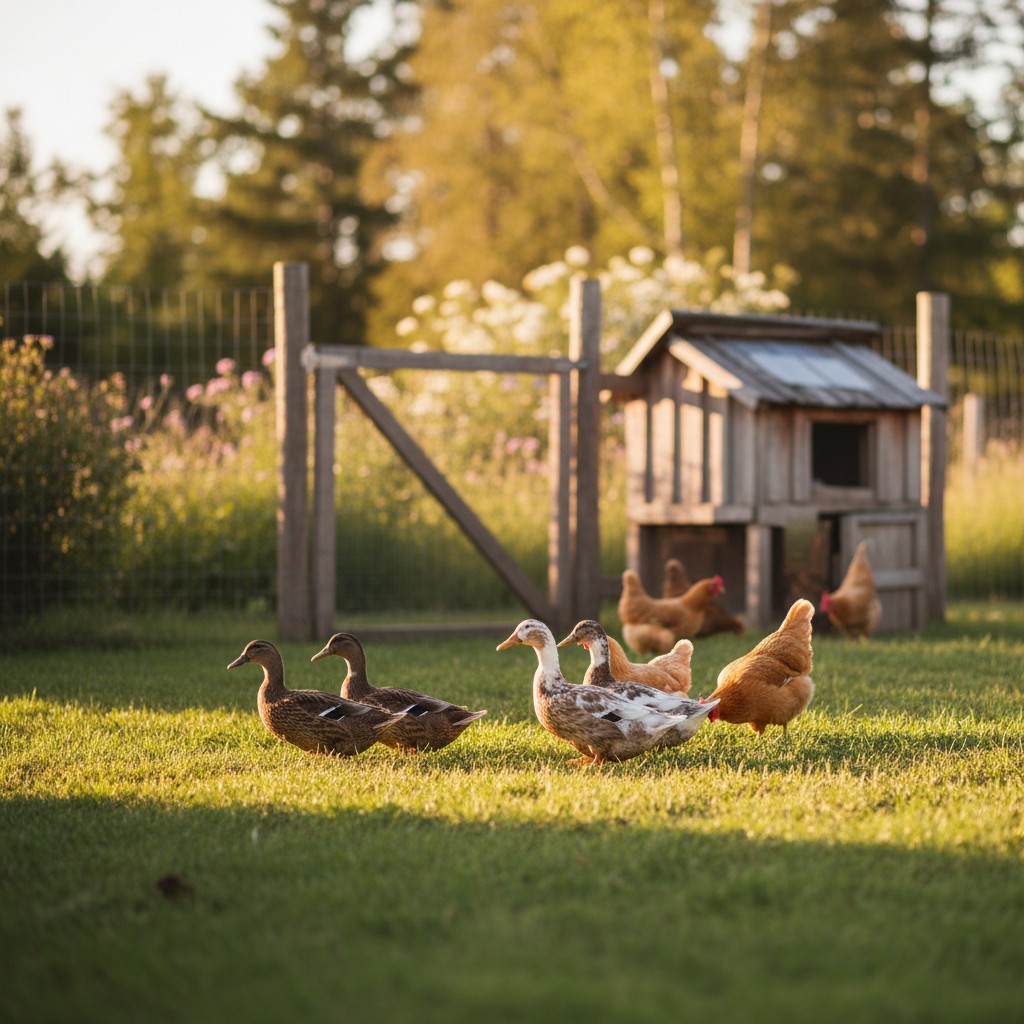
Ducks vs Chickens: Which Is Right for Your Backyard Homestead?
- Tidy backyard, beginner-friendly: chickens. Cheaper setup, friendlier handling, hundreds of breeds, no mud.
- Cold climate, slug problem, baker: ducks. Year-round laying, fewer pests, richer eggs, but a wet patch around the waterer.
- Best of both worlds: a mixed flock raised together from young. Eggs all year, garden pest control, no major space penalty.
Key Takeaways
- Ducks lay more eggs per year than most chicken breeds, and they keep laying through winter when chickens slow down.
- Duck eggs are richer, larger, and prized by bakers. They sell for premium prices at farm stands, often double what chicken eggs fetch.
- Ducks don’t need a coop the way chickens do, but they do need access to water deep enough to dunk their heads, they’ll wreck any waterer designed for chickens.
- Chickens are tidier, cheaper to set up, and easier to source locally. Ducks are messier, hardier, and far better at eating slugs.
- For most backyards, the right answer is “both”, but if you can only pick one, pick the bird whose temperament matches your patience for mud.
Walk into any feed store in April and you’ll see two stock tanks side by side. One holds fluffy yellow chicks, the other holds ducklings that look like cartoon characters. People always ask the same question: which should I get?
I’ve kept both for years now. The honest answer is that they’re not interchangeable, and the conventional wisdom, “ducks are harder, get chickens first”, is mostly wrong. Ducks are different, not harder. If you’re picking your first flock, the choice should come down to what you actually want from them, what your yard looks like, and how much you mind a wet patch around the waterer.
Here’s a side-by-side honest comparison from someone who’s done both.
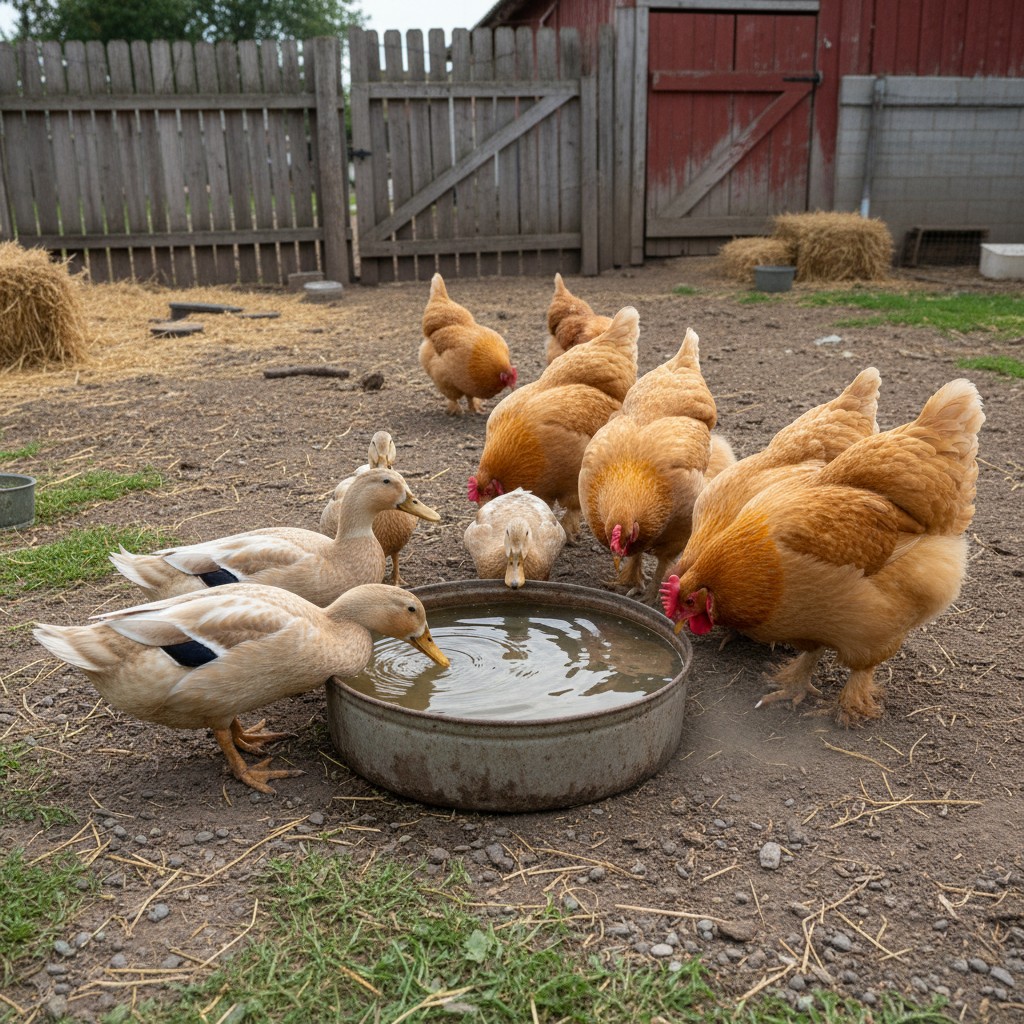
Side-by-Side Comparison at a Glance
Before the detail, here are the differences that actually matter for backyard keepers.
| Factor | Chickens | Ducks |
|---|---|---|
| Eggs per year | 200 to 300 (breed-dependent) | 280 to 340 (Khaki Campbell, Welsh Harlequin) |
| Winter laying | Slows or stops without supplemental light | Continues through winter naturally |
| Setup cost (small flock) | $300 to $800 (coop + run) | $200 to $500 (simple shelter + water) |
| Water requirement | Standard waterer, refilled daily | Deep enough to dunk head; refilled multiple times daily |
| Mess factor | Tidy, dry droppings | Wet droppings, mud around water |
| Slug and snail control | Limited interest | Excellent, will hunt them out |
| Cold tolerance | Good with proper coop; combs vulnerable to frostbite | Excellent; waterproof feathers handle below zero |
| Heat tolerance | Moderate; needs shade and ventilation | Better with access to water for cooling |
| Temperament | Often friendly, varies by breed; can become pets | More skittish; harder to handle but social as a flock |
| Local availability | Wide; every feed store stocks chicks in spring | Limited; often need to special-order or hatch |
Egg counts are typical breed averages under good management. Setup costs vary by region and DIY skill.
Eggs: The Numbers Most People Get Wrong
The biggest myth in backyard poultry is that chickens are the egg champions. They’re not. A good laying duck breed will out-produce most chicken breeds, especially over the course of a full year.
A Khaki Campbell duck reliably lays 280–320 eggs a year. A Welsh Harlequin lays around 240–330. A White Leghorn chicken, the commercial egg-laying gold standard, lays around 280–300. Most backyard chicken breeds (Buff Orpingtons, Australorps, Wyandottes) land between 180 and 250.
The bigger advantage isn’t volume. It’s seasonality. Chickens slow down or stop laying entirely from late October through February, short days trigger a hormonal pause. Ducks keep laying through winter as long as they have shelter from wind and access to unfrozen water. If you’ve ever bought eggs from the store in January because your hens stopped, you understand why this matters.
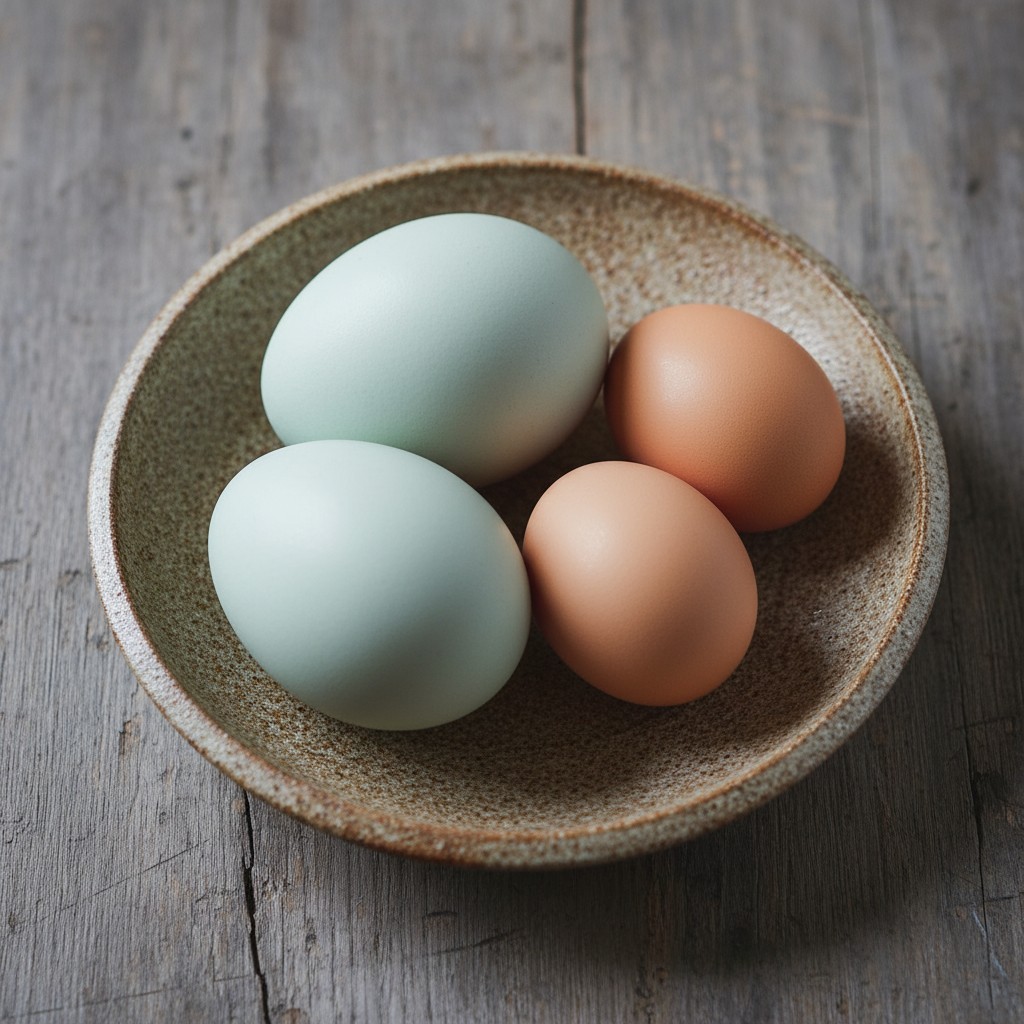
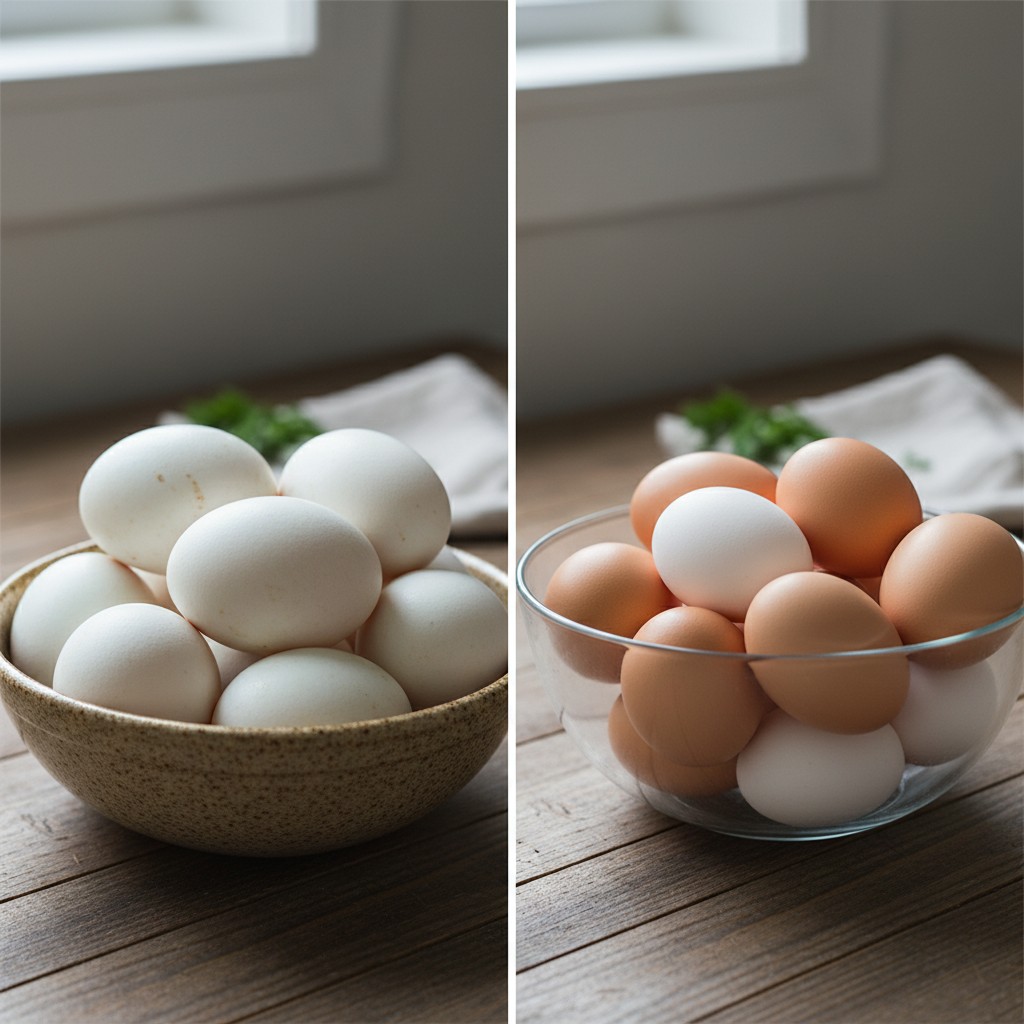
Duck eggs are larger by 30–50% and dramatically richer in fat and protein. The yolks are deep orange. Bakers love them, they make cakes rise higher and pasta dough hold together better. At our local farm stand, chicken eggs go for $5 a dozen and duck eggs for $9. They sell out first.
The taste question
You’ll hear that duck eggs taste “gamey.” They don’t, when they’re fresh and the ducks are eating a clean diet. They taste like chicken eggs with the volume turned up, slightly sweeter, much creamier. Some people who claim to dislike them have only had them once, scrambled, from a duck on a fishy diet. Try a fresh duck egg fried in butter on toast and you’ll understand the premium.
Setup Costs and Space
Chickens win the setup-cost comparison. A basic chicken coop and run for 4–6 birds runs $300–800 if you buy a kit, less if you build from pallets and scrap. Chickens need a roost (they sleep up off the ground), nest boxes (one for every 3–4 hens), and a secure run with hardware cloth to keep raccoons out.
Ducks need almost none of that. They sleep on the ground and lay on the ground, usually in the same spot they slept. A simple three-sided shelter, even a converted dog house, works as a duck “coop.” No roost. No nest boxes (they’ll ignore them). Just a dry, draft-free corner with clean straw.
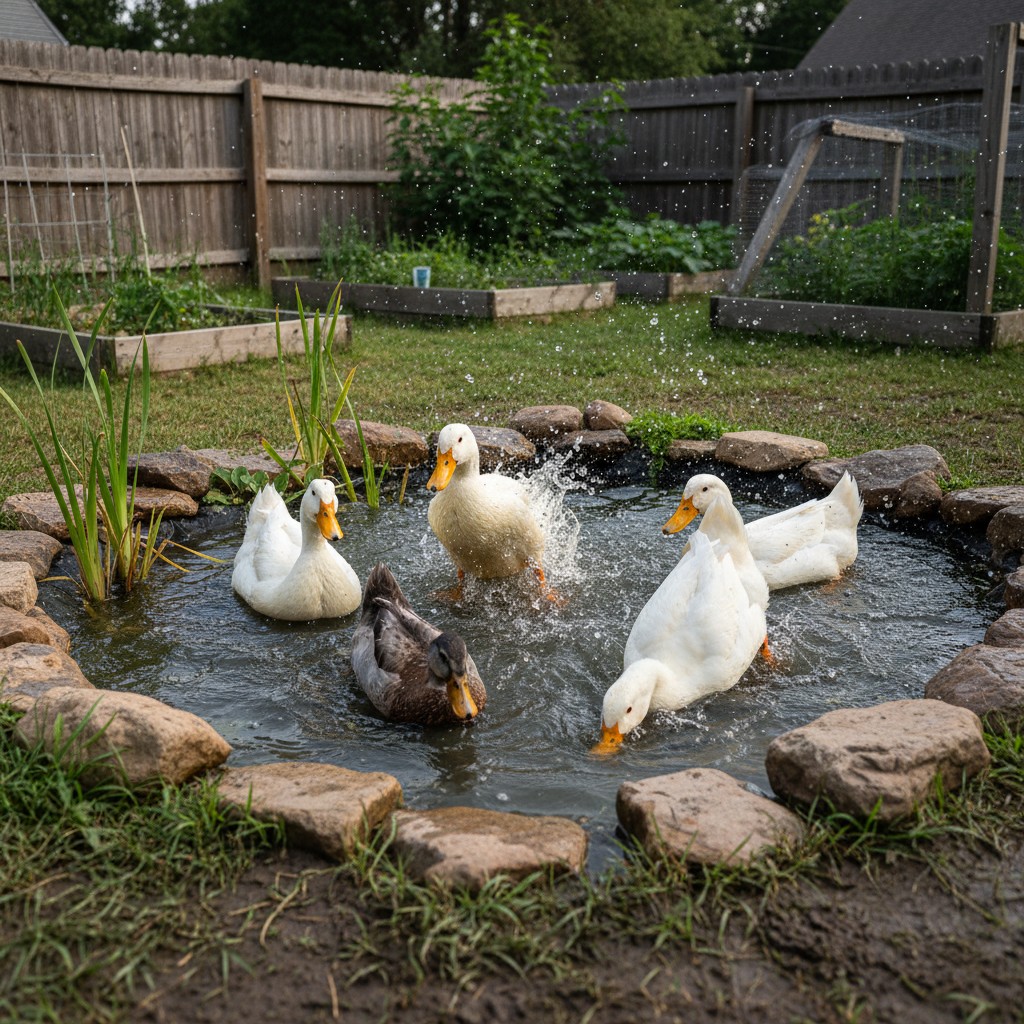
What ducks do need is water. Not a swimming pool, despite what every duck article online insists. They need water deep enough to fully submerge their head and clean their nostrils, about 4–6 inches. A cheap rubber feed pan or a kiddie pool works. They’ll foul it within a few hours and you’ll empty and refill it daily. This is the part nobody warns you about.
Space requirements are similar. The standard recommendation is 4 square feet per bird in the coop and 10 in the run for both species. Ducks tolerate tighter quarters better because they don’t establish a strict pecking order the way chickens do.
Feed consumption: A laying duck eats approximately 6–8 oz (170–225g) of feed per day, slightly more than a comparable laying hen (4–6 oz). Ducks are less efficient feed converters than chickens, they spill and play with feed, especially near water. Feed in a deep enough dish that they cannot easily toss it out. Use a waterfowl-formulated feed or a general poultry layer feed; avoid medicated chick starter, which can harm ducks. During peak laying, you can supplement with oyster shell (offered separately) to support eggshell quality.
The Mess Reality
Ducks are messier. There’s no diplomatic way to put it. They drink huge amounts of water, splash it everywhere, walk in it, and turn the area around their waterer into a mud pit within a week. In a small backyard, you have to plan for this, gravel under the waterer, frequent rotation, raised platforms.
Their poop is also wetter than chicken poop. It hoses off concrete easily but matts into grass. The flip side is that duck manure is gentler on garden plants, you can apply it fresh without burning roots, where chicken manure has to compost first.
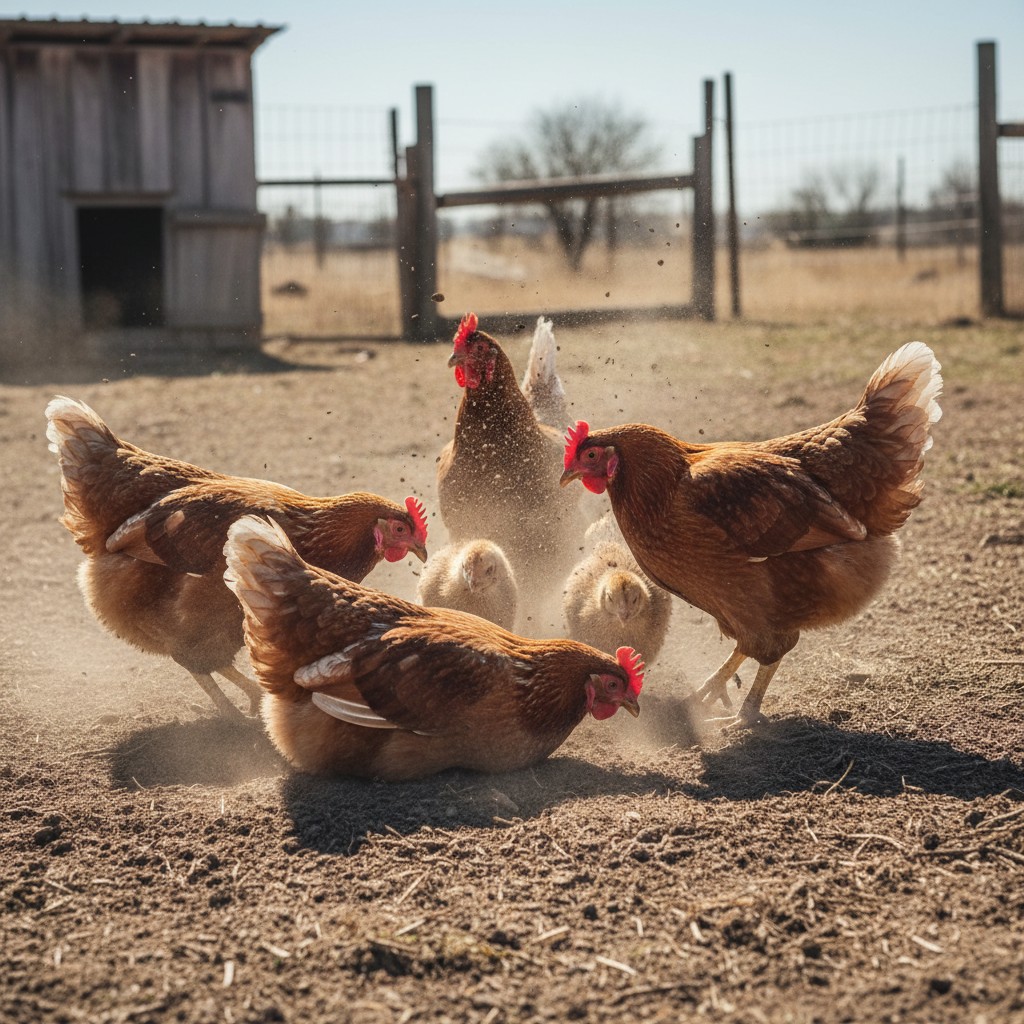
Chickens are dust-bath messy rather than mud messy. They scratch up flower beds, fling mulch out of garden paths, and dig craters wherever they like to dust. Ducks don’t scratch and don’t destroy garden beds the same way. If your garden matters to you, ducks are far gentler on it.

Pest Control: Where Ducks Win Decisively
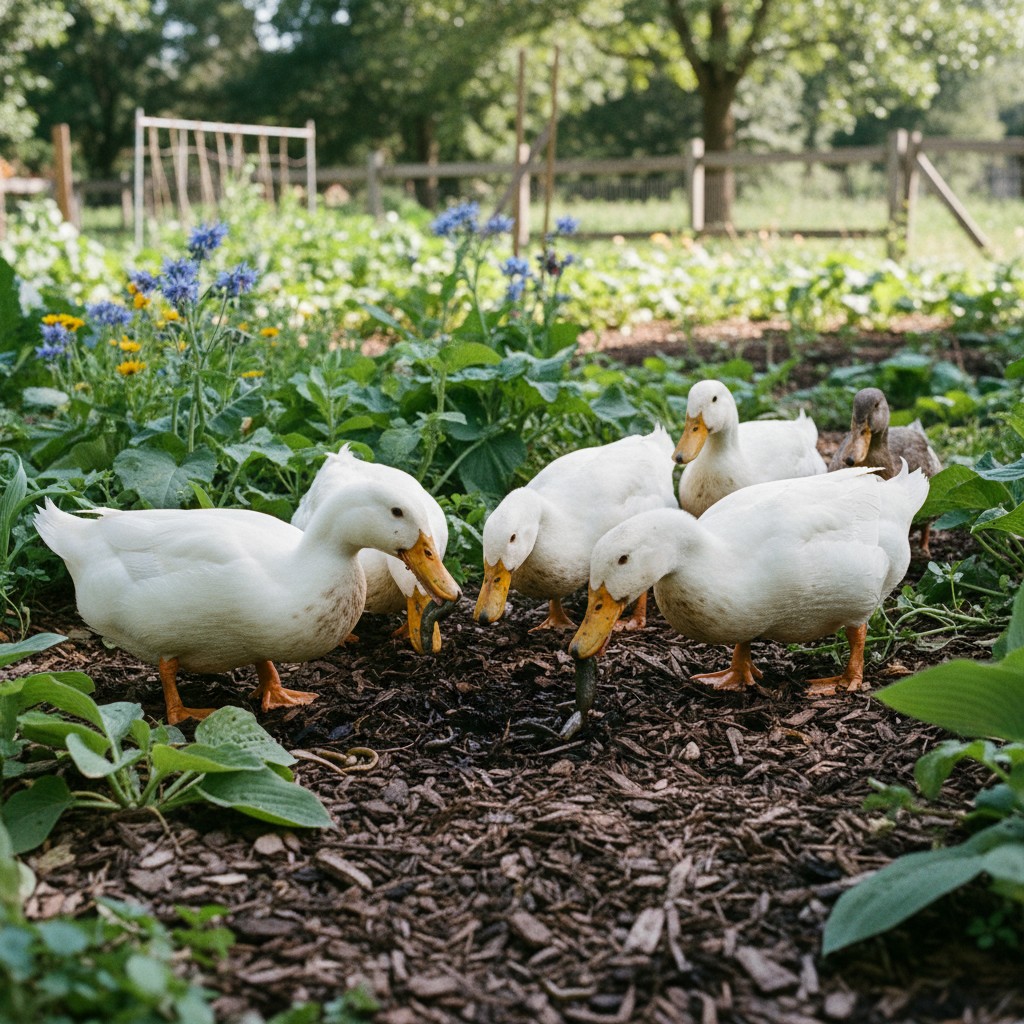
If you’ve ever lost a row of hostas to slugs, you need ducks. Ducks are slug-eating machines. Runner ducks are used commercially in vineyards and orchards to clean up snails and slugs without damaging the plants. They also eat Japanese beetle grubs, mosquito larvae, and small flies.
Chickens eat bugs too, but they also eat lettuce seedlings, ripe strawberries, and any tomato within reach. Ducks generally leave growing plants alone. A flock of ducks loose in a vegetable garden is a maintenance crew. A flock of chickens loose in a vegetable garden is a disaster.
For tick control, both birds help, but the research from the USDA and state extensions consistently rates guinea fowl and ducks higher than chickens.
Temperament and Handling
Chickens vary wildly by breed. A Silkie is a cuddle pet. A Leghorn is a flighty disaster. Most backyard breeds. Orpingtons, Wyandottes, Sussex, are calm and tolerate handling well. Children can usually carry them around.
Ducks are flock animals to a degree chickens aren’t. They panic when separated from each other and stay tightly grouped. They don’t generally enjoy being held, but they’re not aggressive either. They’re observant and curious, more like cats than dogs in personality. You won’t get a duck that follows you around the yard the way a friendly hen will, but you’ll get a flock that watches you intently from across the lawn while you garden.
Drakes (male ducks) are quiet, they make a raspy whisper instead of a quack. Hen ducks are loud. Roosters are louder than both, and many city ordinances ban them. If noise is a factor, an all-female duck flock is the quietest poultry you can keep.
Cold and Heat Tolerance
Ducks are far more cold-hardy than chickens. They have waterproof feathers and a thick down layer underneath. As long as they have a wind break and dry bedding, they’ll waddle around in single-digit temperatures perfectly happy. Chickens get frostbite on their combs and wattles in deep cold and need supplemental heat or careful ventilation in northern coops.
Heat is the opposite story. Ducks struggle in extreme heat unless they have shade and bathing water, they don’t pant efficiently. Chickens handle heat better as long as they have shade and fresh water. In the deep South, this matters more than the cold tolerance does.
In practice: once ambient temperatures exceed 85°F (29°C), ducks need reliable access to water deep enough to submerge their heads and wet their bodies. Without this, they pant with their bills open, become lethargic, and heat stress can develop quickly, more rapidly than in chickens of the same size. Shaded bathing water and good airflow are essential during heat waves in any climate. If you are in the Gulf South or inland California with summers regularly above 95°F, plan your duck setup around heat management as seriously as northern keepers plan around winter.
Sourcing and Lifespan
Chickens are everywhere in spring. Every feed store carries chicks. Every hatchery ships them. You can find Buff Orpingtons in any size town in America from March through June.
Ducklings are harder to find. Many feed stores carry them only one or two weekends a year. You’ll likely need to order from a hatchery like Metzer Farms, McMurray, or Cackle, with a minimum order of 10–15 birds. That’s a bigger commitment than picking up four chicks on a whim.
Both species can live 8–10 years, though laying productivity drops significantly after year three. Plan for a flock that you’ll add to every couple of years rather than one you’ll replace all at once.

Quick Pros and Cons Summary
Chickens
Pros: Lower setup cost, tidier yard, hundreds of breeds to choose from, easy local sourcing, friendlier on average, well-documented care information for any climate.
Cons: Egg production drops sharply in winter without supplemental lighting, less effective for slug or snail control, single combs vulnerable to frostbite in deep cold, more vulnerable to predator pressure than ducks.
Ducks
Pros: Higher year-round egg production (especially Khaki Campbell and Welsh Harlequin), keeps laying through winter, exceptional pest control for slugs and snails, richer eggs prized for baking, hardy in cold and wet conditions, fewer respiratory issues than chickens.
Cons: Wet droppings and constant mud around the water source, harder to source locally, more expensive feed for laying ducks, skittish handling, water needs are higher and never optional.
Mixed Flock
Pros: Eggs all year (chickens for spring/summer, ducks for fall/winter), garden pest control built in, friendly chickens for the kids and harder-working ducks for the yard, only one shelter and run footprint to manage.
Cons: Two sets of feed and supplements, ducks bully chickens out of food unless fed separately, mud zone migrates with whoever drinks last, slightly more daily chore time than a single-species flock.
So Which Should You Get?
Pick chickens if:
- You have a small, tidy yard and limited tolerance for mud.
- You want birds that will become friendly pets with names.
- You want maximum variety, there are hundreds of chicken breeds.
- You live somewhere with mild winters and you don’t bake much.
Pick ducks if:
- You have a slug or snail problem (or any garden pests).
- You want eggs through the winter without supplemental lighting.
- You bake seriously and want richer eggs for it.
- You live in a cold climate with brutal winters.
- You don’t mind hosing things down regularly.
If you have the space and the energy for two species, the honest best answer is both. Ducks and chickens get along fine when raised together from young, and the combined flock gives you everything: eggs all year, garden pest control, friendly birds for the kids, and a freezer full of duck eggs for holiday baking. That’s how most homesteads I know eventually end up, not because they planned it, but because they tried one, then tried the other, and never looked back.
Sources and Further Reading
- Penn State Extension, Small-Flock Poultry: Ducks, Penn State College of Agricultural Sciences
- Cornell Cooperative Extension, Raising Ducks for Eggs and Meat, Department of Animal Science
- University of Minnesota Extension, Poultry Production for Small Flocks
- Mississippi State Extension, Backyard Duck Production, MSU Cares
- USDA Agricultural Research Service, poultry production guidance for small farms
Frequently Asked Questions
Can ducks and chickens live together in the same coop?
Yes, when raised together from young. Adult ducks and chickens introduced to each other later can coexist but often establish separate territories. The biggest issue is water: ducks need open water deep enough to submerge their heads, and that water inevitably soaks the chicken bedding. The fix is to keep the duck waterer outside the coop or in a contained area with a wire-mesh floor that drains. Most mixed-flock keepers report no major fights when the birds grow up together, though ducks may bully chickens out of food bowls if fed in close quarters.
Are duck eggs really better for baking than chicken eggs?
Yes. Duck eggs have a higher yolk-to-white ratio, more fat, and more protein than chicken eggs. The result is richer cakes, fluffier souffles, and pastries with more lift. Bakers willing to pay a premium are why duck eggs sell for double or triple chicken egg prices at farm stands. The flavor in scrambled or fried preparations is more pronounced than chicken eggs, which some people love and others find too rich for daily breakfast use.
Do ducks need a pond?
No. Ducks need water deep enough to dunk their heads to clean their nostrils and eyes, but not deep enough to swim. A shallow plastic kiddie pool, a stock tank, or a deep dish refilled twice a day is enough. Ducks with access to a pond will use it constantly and look picturesque, but it is not required for healthy laying. The downside of a pond is that the water gets fouled fast and needs frequent draining, which is why most small-scale duck keepers use refillable tubs instead.
Which is louder, ducks or chickens?
Female ducks are significantly louder than female chickens. A laying duck quacks at full volume to announce eggs, predators, food, or sometimes nothing in particular. Hens cluck softly most of the time and only get loud during egg-laying. Roosters are louder than either, but most backyard keepers do not keep roosters due to local ordinances. If you have close neighbors and noise is a concern, chickens are the quieter choice. Khaki Campbells and Welsh Harlequins are quieter than Pekins or Muscovies if duck noise matters.
How long do ducks and chickens live?
Both live 6 to 10 years on average with good care, with hardy heritage breeds reaching 10 to 12 years. Egg production peaks in years 1 to 2, drops in years 3 to 4, and continues at a low rate after that. Most keepers cull or rehome older birds rather than feed non-laying hens for years, but lifelong pet birds are common in homesteads where production is not the only goal.
