Spring Foraging: 12 Wild Edibles to Find in April and May
Key Takeaways
- Spring is the richest foraging season of the year, most wild edibles peak in flavor and tenderness in April and May before plants shift energy to flowers and seeds.
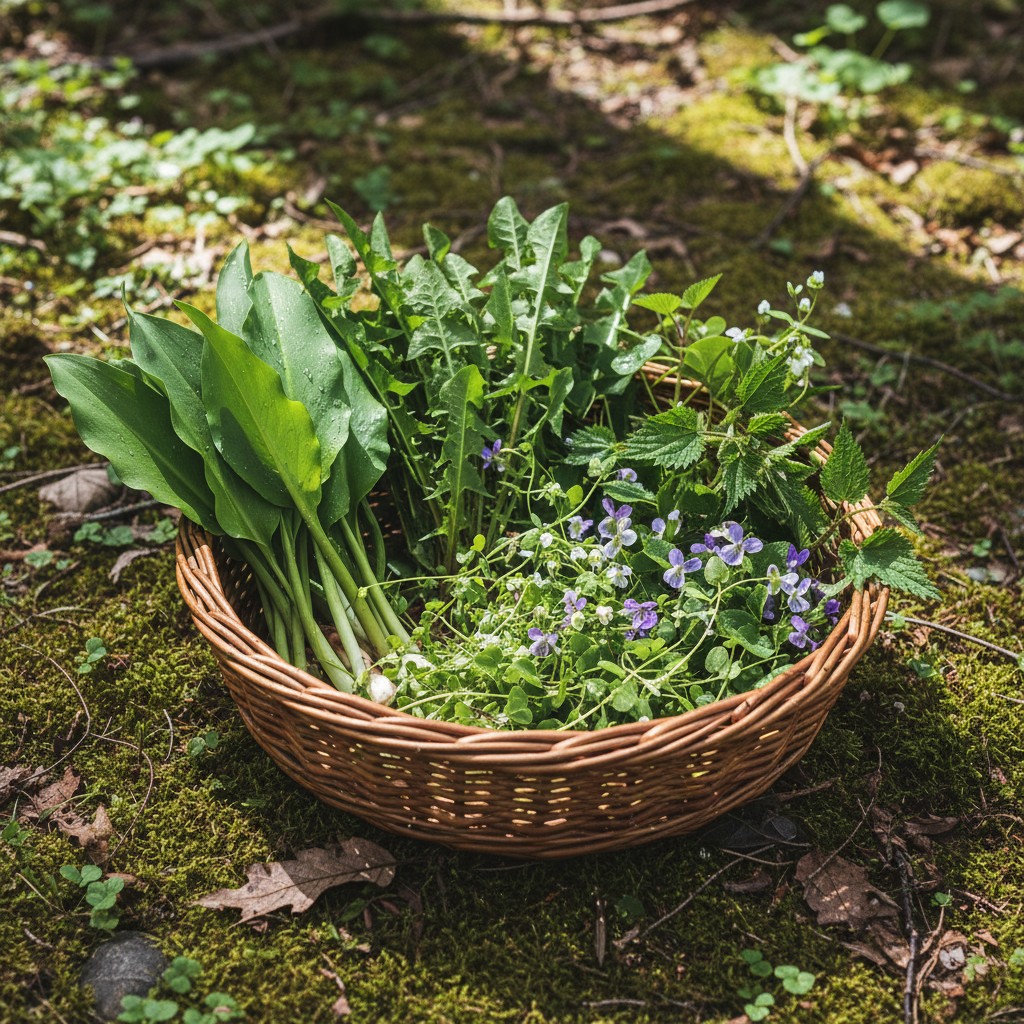
- Start with the “famous five” easy IDs: dandelion, garlic mustard, stinging nettle, wild ramps, and chickweed. None have dangerous lookalikes when identified properly.
- Always positively identify a plant from at least two reliable sources before eating any of it. A regional field guide beats a national one every time.
- Forage from clean ground only, avoid roadsides, sprayed lawns, dog-walking parks, and the edges of conventionally farmed fields.
- Take only what you’ll use, never more than a third of what you find, and never the only patch of a plant you can see.
By mid-April, the woods and field edges are quietly putting on the best free meal of the year. Most of it goes uneaten by everyone except the deer. Spring greens are at their tenderest in the few weeks between the snow melting and the first hot days, and the flavors are wilder and more interesting than anything in the produce aisle.
This isn’t a “live off the land” guide. You’re not going to feed your family from foraging. What you can do is add a half-dozen wild ingredients to your spring kitchen that cost nothing, taste better than anything farmed, and connect you to your land in a way nothing else does.
Here are twelve plants worth learning this season, in rough order of how easy they are to identify confidently. Start with the first five and work outward as your eye sharpens.
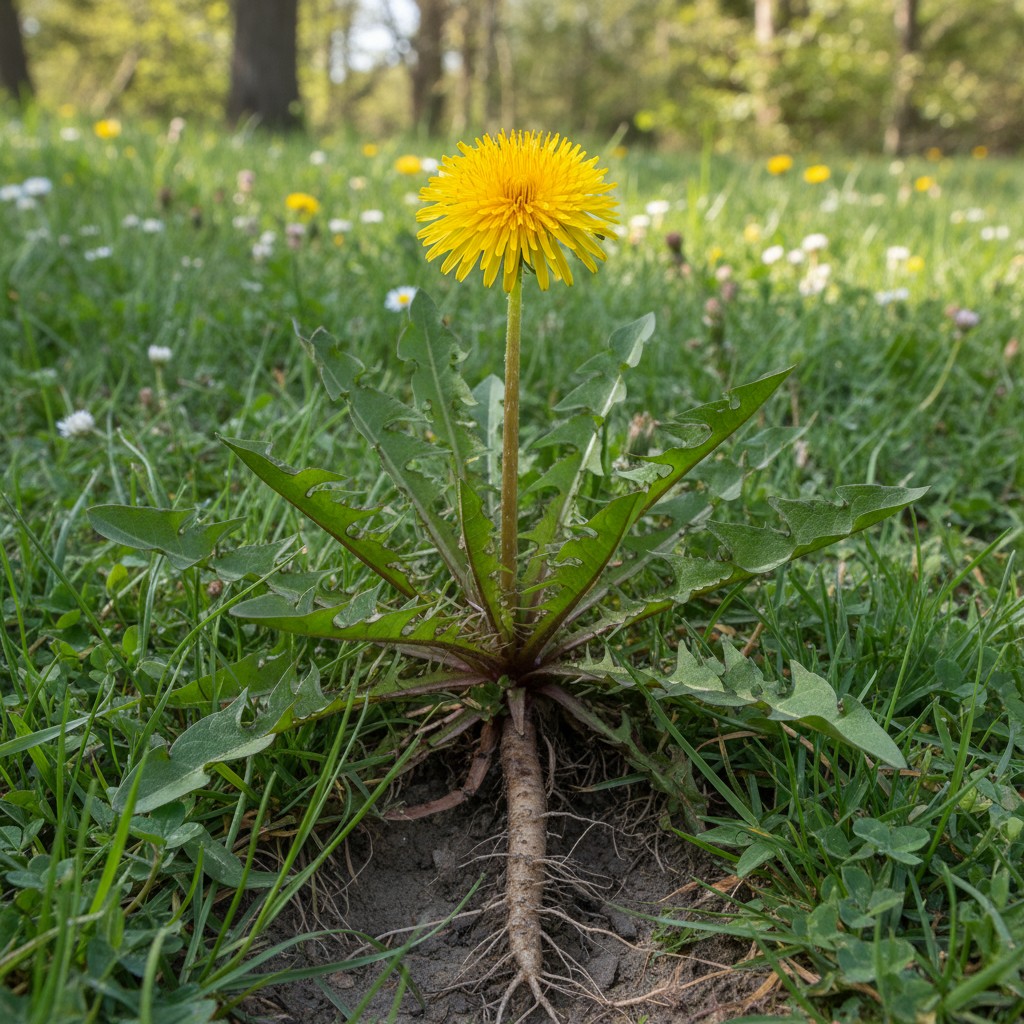
1. Dandelion (Taraxacum officinale)
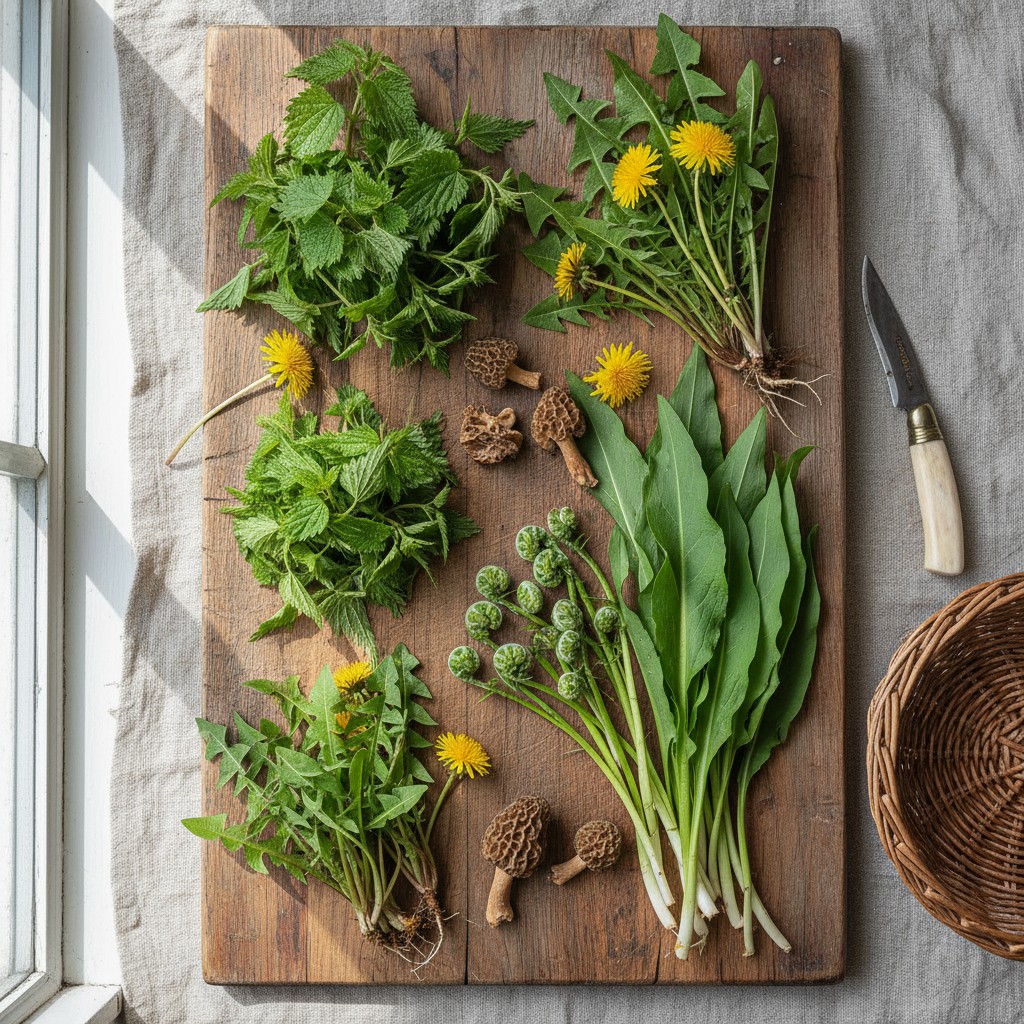
The friendliest beginner forage on the planet. You already know what it looks like. The young leaves before the plant flowers are bitter but pleasant, like a strong arugula. Sauté with garlic and olive oil, or chop into a salad. The unopened flower buds are sweet and excellent pickled. The open yellow flowers fry into fritters. The roots, dug and roasted, make a coffee substitute that tastes nothing like coffee but everything like itself.
The only catch: the leaves get unbearably bitter after the plant flowers. Harvest before the yellow blooms appear, and only from lawns you know are pesticide-free. If your neighbor sprays, the dandelions on your side of the fence are also contaminated.
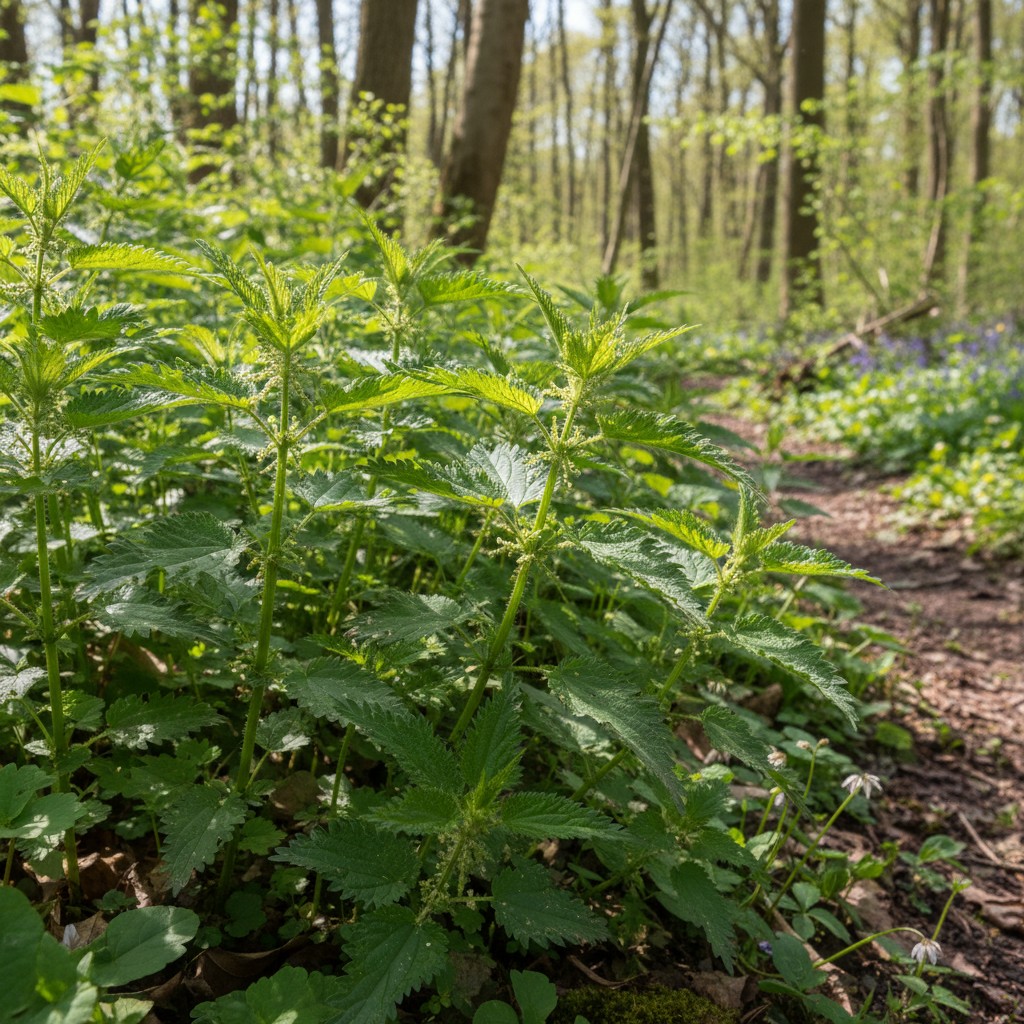
2. Stinging Nettle (Urtica dioica)
Wear gloves. The sting is real and lasts about twenty minutes. But stinging nettle is among the most nutritious wild greens in the world, pound for pound it has more iron than spinach, plus calcium, magnesium, and a startling amount of protein for a leafy green.
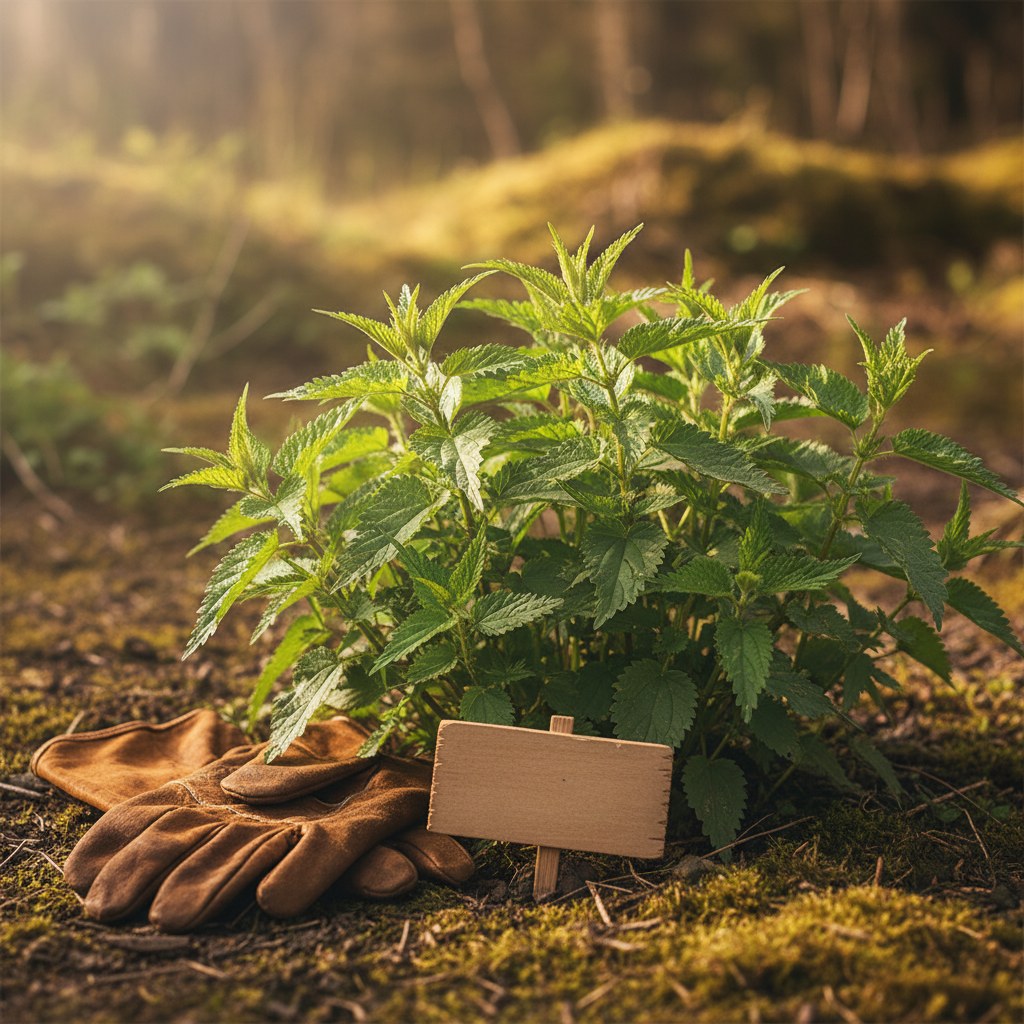
Cooking or drying completely neutralizes the sting. Use young spring tops (the first 6 inches of new growth) like spinach: blanch and freeze in cubes for soups, sauté for pasta, or steep dried for tea. Once nettles get tall and start to flower they develop gritty crystals (calcium-carbonate cystoliths) you don’t want to eat raw, they can irritate the urinary tract in quantity. Finish your harvest by late May. Pregnant women should avoid eating nettle in large or concentrated amounts (it has a long traditional use as a uterine stimulant); a garnish-sized culinary portion is fine, but skip the daily nettle tea or soup until after delivery.
Identification is straightforward: opposite leaves with sharp serrated edges, square stems, and the hairs that sting on contact. Nothing else looks quite like it.
3. Garlic Mustard (Alliaria petiolata)
An invasive species in much of North America that you should harvest aggressively and without guilt. The first-year leaves form a low rosette of kidney-shaped scalloped leaves; second-year plants shoot up a flower stalk with small white four-petaled flowers. Crush a leaf and you’ll smell garlic.
The young leaves and flower buds make the best wild pesto you’ll ever taste, substitute it directly for basil. The roots taste like horseradish. Foraging it actively helps native woodland plants recover, since garlic mustard releases chemicals that suppress competing species. There’s no ethical limit on how much you can take.
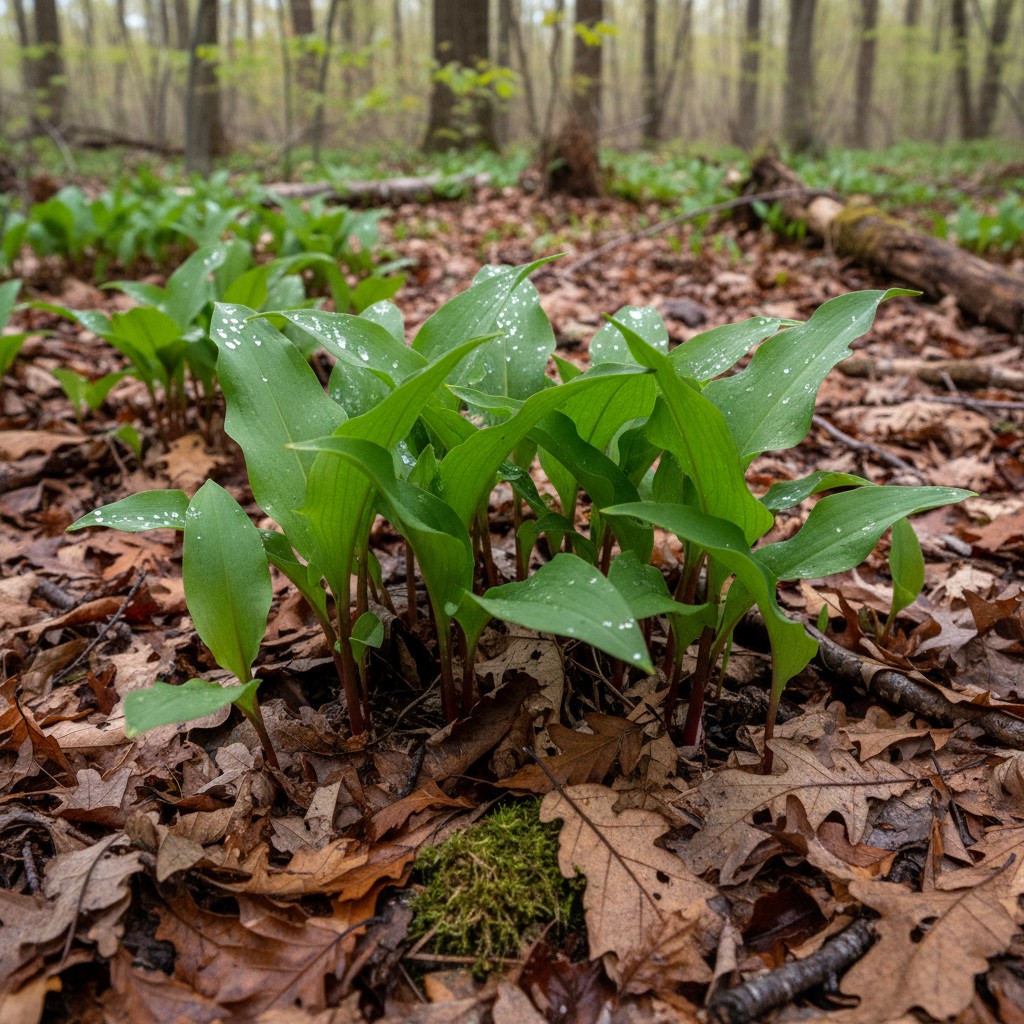
4. Wild Ramps (Allium tricoccum)
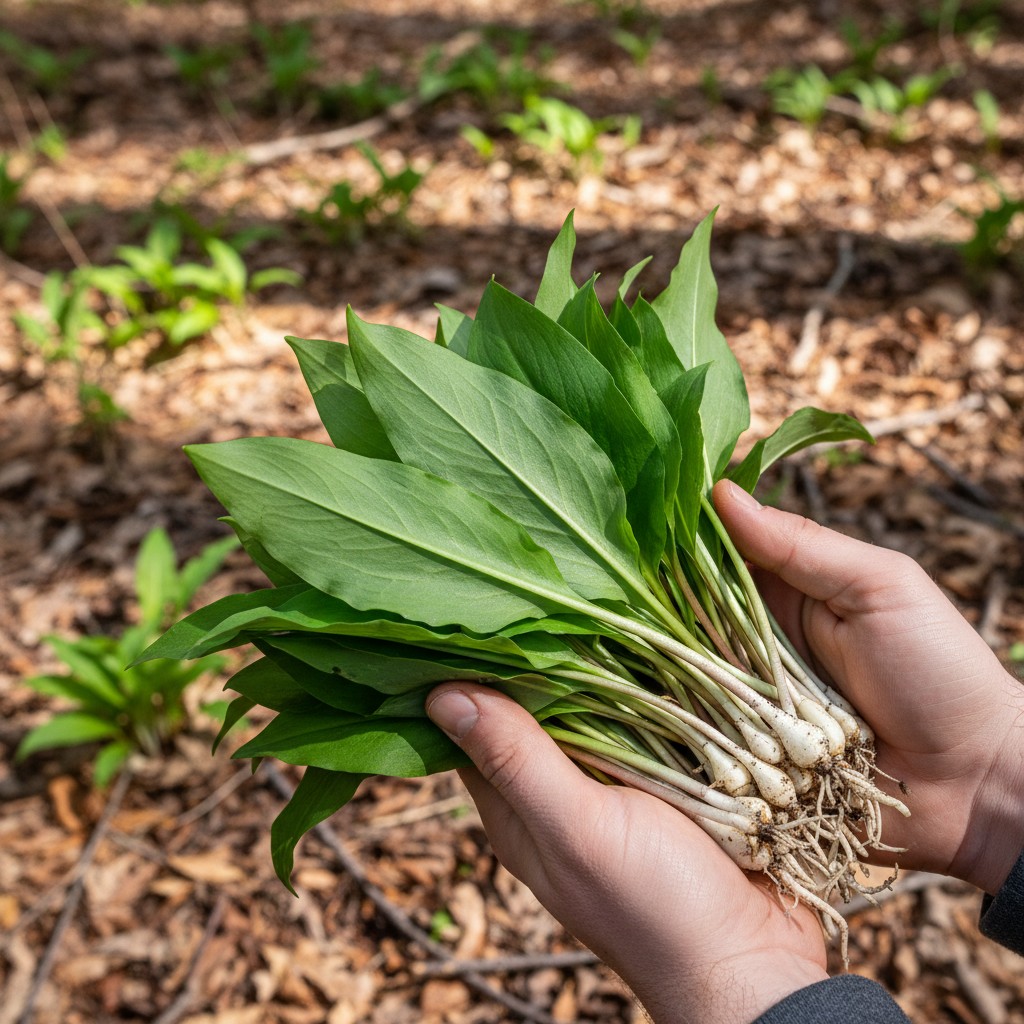
The crown jewel of spring foraging in eastern North America. Ramps are wild onions with broad green lily-of-the-valley-shaped leaves and a strong garlic-onion smell. The catch: ramps are slow-growing and now over-harvested in many regions. Take only the leaves, leaving the bulb in the ground, and never harvest more than one out of ten plants in a patch.
⚠ DEADLY LOOKALIKES, ramps have killed and hospitalized foragers. Three toxic plants share the ramps’ wet-woodland habitat and emerge at exactly the same time in early spring. Learn all three before you harvest a single leaf.
False hellebore (Veratrum viride in the east, V. Californicum in the west, V. Parviflorum in parts of Appalachia) is the most dangerous ramp lookalike and the one most often omitted from foraging articles. It grows in the same wet woods, emerges at the same time, and at a glance the broad green leaves look almost identical. It contains steroidal veratrum alkaloids that cause severe vomiting, bradycardia (dangerously slow heartbeat), hypotension, and have sent documented foragers to the ICU after mistaking it for ramps, see NIH/PMC case reports of Veratrum poisoning from foraging misidentification. Field marks that tell them apart:
- Leaf arrangement: False hellebore leaves are alternate and clasp the stem, growing up a visible central stalk. Ramp leaves arise in a basal cluster of two or three directly from the ground, each with its own reddish-purple petiole.
- Leaf texture: False hellebore leaves are deeply pleated and ribbed with strongly parallel veins, accordion-like. Ramp leaves are smooth, flat, and flexible.
- Smell: Crush a leaf. Ramps smell powerfully of garlic and onion. False hellebore has no onion smell at all. If there is no garlic smell, it is not a ramp. Walk away.
Lily of the valley (Convallaria majalis) is also toxic, it contains cardiac glycosides that can stop the heart. Its broad green leaves are similar to ramps but emerge in pairs from a single rhizome without the distinct onion smell. (Note: lily-of-the-valley flowers are famously fragrant, but the crushed leaves have no onion smell, that is the test.)
Autumn crocus (Colchicum autumnale), where present, is also deadly, it contains colchicine and has caused fatal poisonings in foragers mistaking its spring leaves for wild garlic or ramps. Same test: crush, smell, and if there is no onion smell, do not eat it.
The rule is simple: no garlic smell, no harvest. And never rely on smell alone, confirm leaf arrangement and texture too. See Poison Control and published Veratrum case reports for documented poisonings.
Always crush a leaf and sniff before harvesting. If there is no powerful garlic-onion smell, it is not a ramp, put it down and walk away.
Use ramp leaves like a hybrid of green onion and garlic, chopped raw on eggs, blended into compound butter, or wilted into pasta.
5. Chickweed (Stellaria media)
A delicate trailing plant with small oval leaves arranged in opposing pairs and tiny white five-petaled flowers that look like ten petals (each petal is so deeply split it appears doubled). It tastes like fresh corn silk, mild, green, slightly sweet.
The identifying trick is the single line of fine hairs running down one side of the stem only, switching sides at each leaf node. No toxic plant has this feature. Use chickweed raw in salads or sandwiches, or stir into soups at the very last moment so it doesn’t overcook into mush.
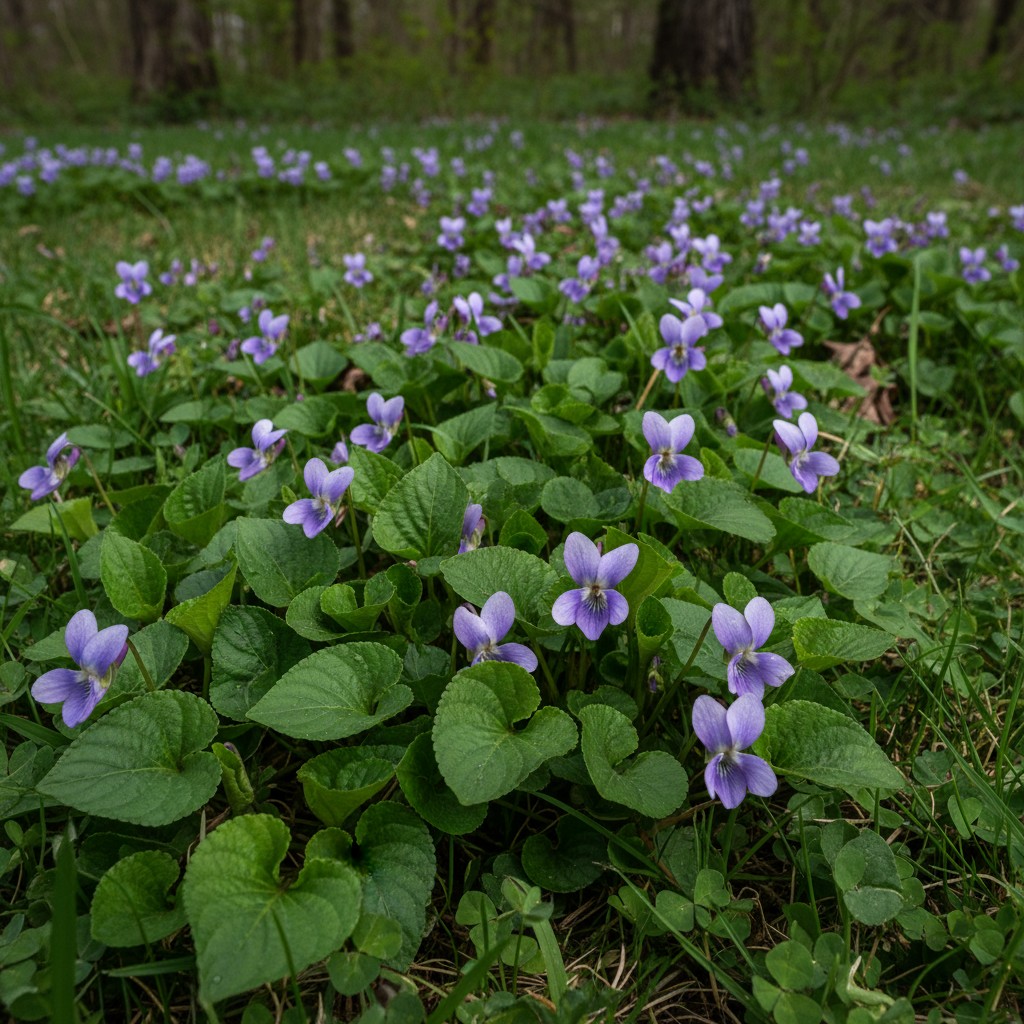
6. Violets (Viola sororia and relatives)
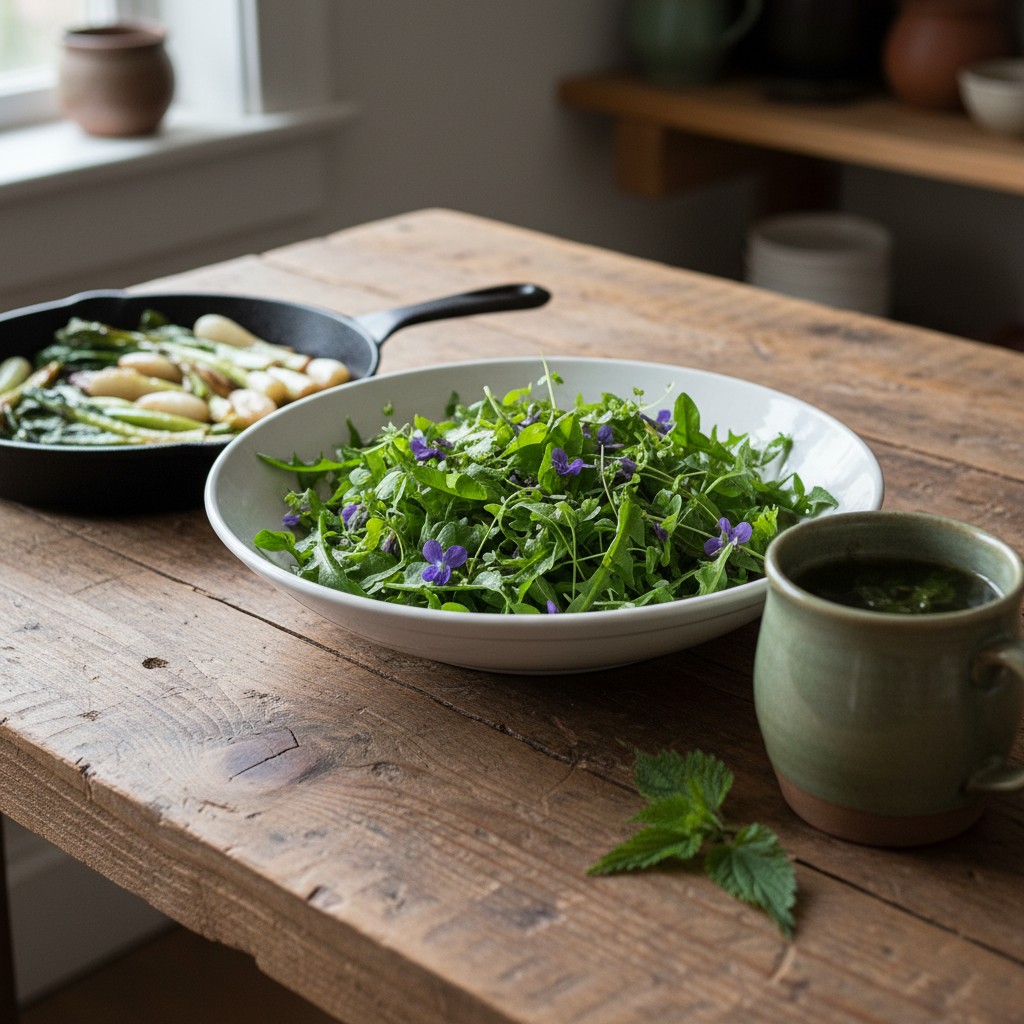
The common purple-flowered violet that takes over lawns in April is entirely edible, both the heart-shaped leaves and the flowers. Leaves are mild and slightly mucilaginous (a thickener like okra), excellent in salads and as a wild green. Flowers are sweet and make beautiful candied decorations or violet syrup that turns pink when you add lemon juice.
Stick to the common blue/purple violet. Some yellow violet species can cause stomach upset in quantity. As always, never harvest from sprayed lawns.
7. Wood Sorrel (Oxalis stricta)
Bright green clover-shaped leaves in groups of three, but the leaflets are heart-shaped rather than rounded like true clover. The flavor is sharp and lemony, children love it as a trail snack, and a handful brightens up a salad or garnishes a fish dish.
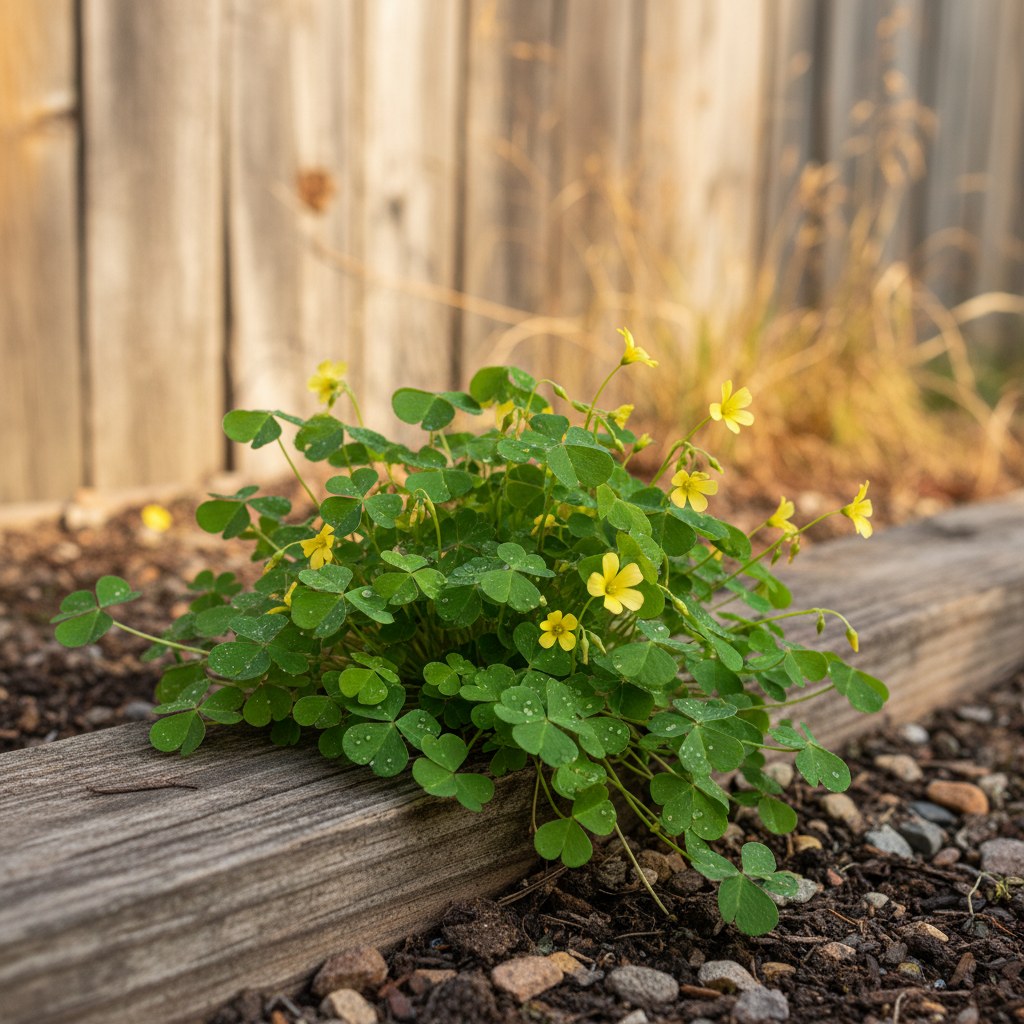
It contains oxalic acid, which is fine in normal culinary amounts but should be avoided in quantity by people with kidney stones, gout, rheumatoid arthritis, or hyperoxaluria, and by anyone on blood thinners or calcium-sensitive medications. Oxalates bind calcium and can worsen stone formation and joint symptoms. A small handful is perfectly safe and adds the brightest sour-citrus flavor of any wild green.
8. Cattail Shoots (Typha latifolia)
Already up by mid-April in most temperate regions. The young inner shoots, peel away the outer leaves until you get to the tender white core, taste like a cross between cucumber and asparagus. Eat raw or sauté.
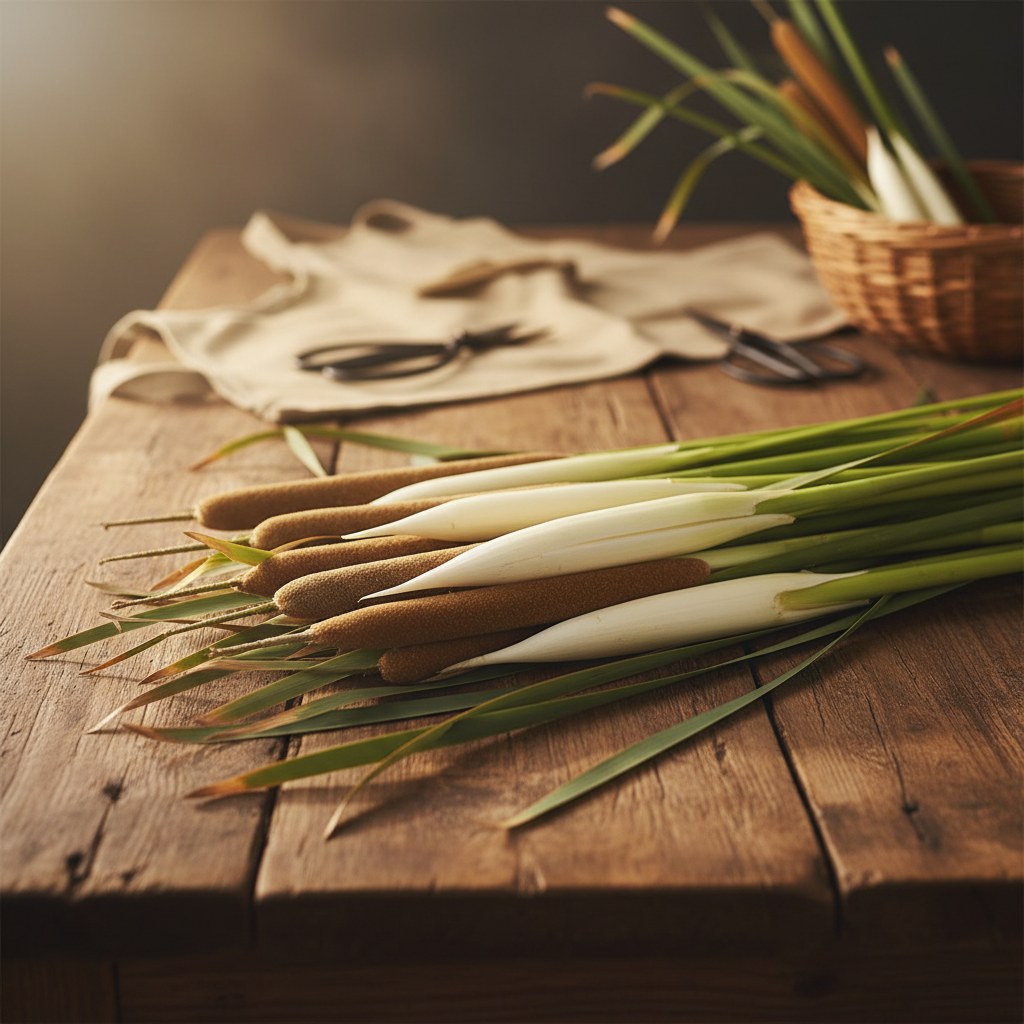
Cattails are easy to identify in summer with their iconic brown seed heads, but spring identification requires care. They grow in standing water or wet ground in dense colonies of strap-like leaves. The dangerous lookalike is wild iris, which is toxic. If you see any flowers from last year still attached or last year’s brown seed heads nearby, you can confirm cattail. Only harvest from clean water. Cattails are highly effective at filtering water, which means they bioaccumulate heavy metals, agricultural runoff, and industrial pollutants from whatever they are growing in. Never harvest downstream of farms, roads, mines, industrial sites, or stormwater outflows.
9. Fiddleheads (Matteuccia struthiopteris)
Specifically the ostrich fern, not just any fern, most other fern fiddleheads are toxic or carcinogenic. Ostrich fern fiddleheads are tightly coiled green spirals with a brown papery sheath and a deep U-shaped groove on the inside of the stem. They emerge in clumps in damp woodlands in late April and May.
You must cook fiddleheads, and the times are not negotiable: boil for 15 minutes, or steam for 10 to 12. That 15-minute boil is the benchmark CDC and Health Canada adopted after a 1994 outbreak that sickened more than 75 people across New York State and Canada, and the toxin behind it has still never been identified, so there is nothing to reason your way around. Throw the cooking water out rather than using it for stock or soup, because the toxin leaches into it. Raw or undercooked fiddleheads bring on diarrhoea, vomiting, abdominal cramps and headache within 30 minutes to 12 hours; fully cooked ones have never been linked to a case. Cooked, they taste like a hybrid of asparagus and green bean. Take only two or three fiddleheads from each clump so the fern can still grow into its mature form.
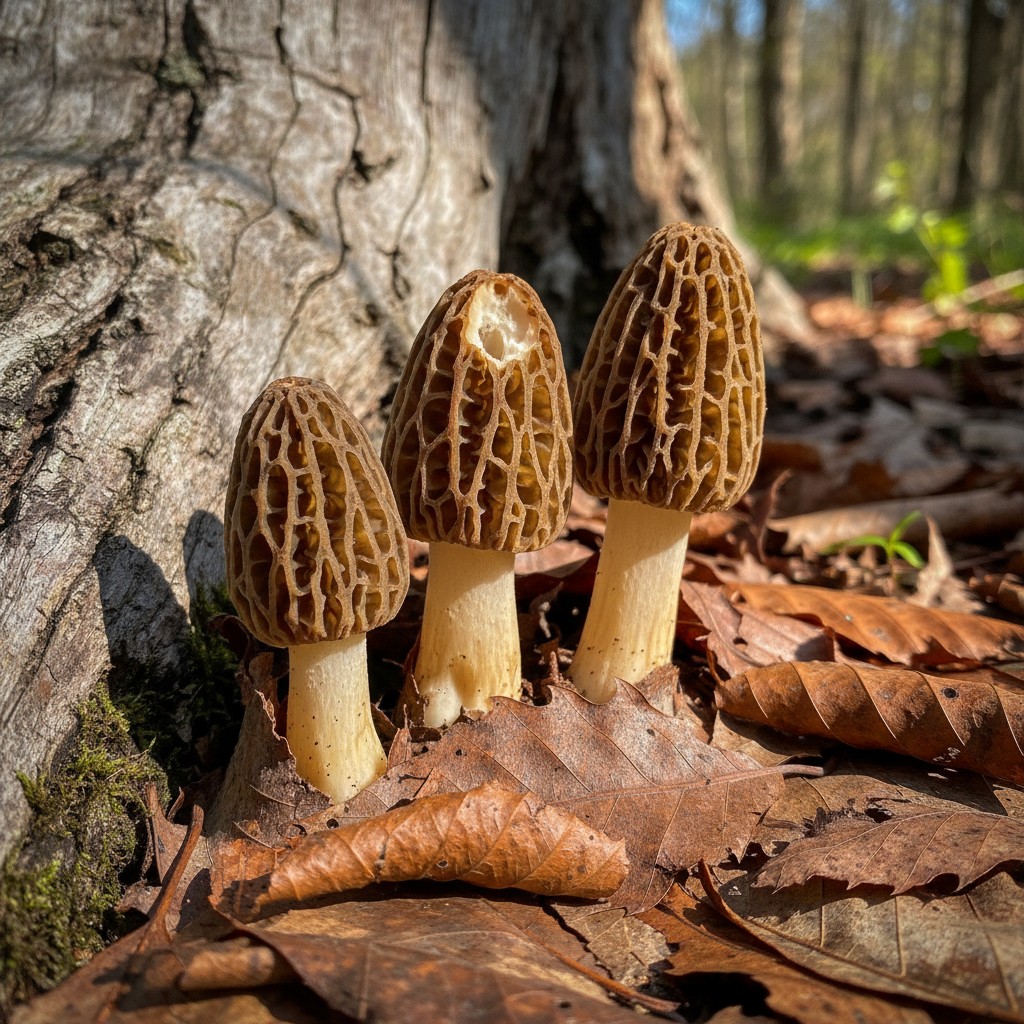
10. Morels (Morchella species)
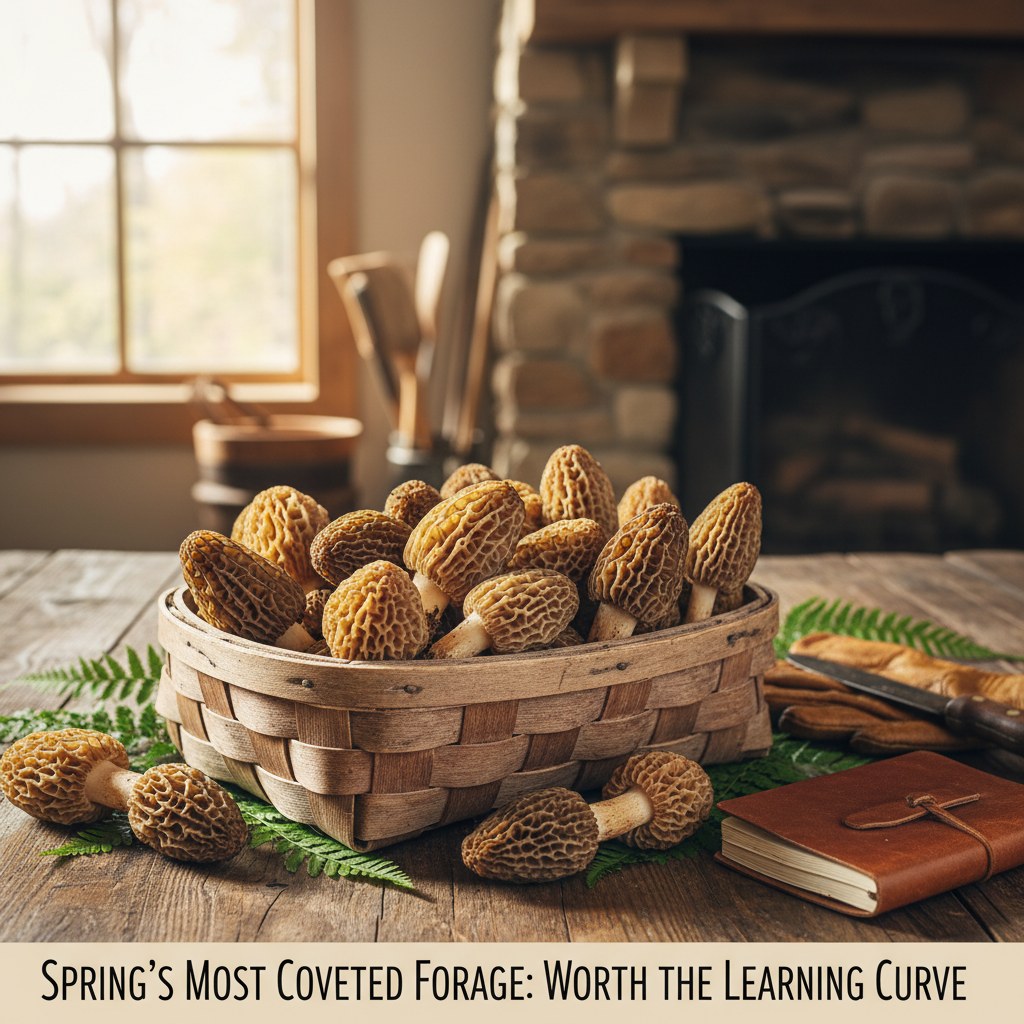
Spring’s most coveted forage and worth its own learning curve. Morels are tan to dark brown mushrooms with honeycomb-textured caps fully attached to the stem. They appear from late April through May depending on your latitude, often near dying elms, ash trees, old apple orchards, and recently burned ground.
The critical safety rule: slice every mushroom lengthwise before you keep it. A true morel is completely hollow from cap tip to stem base, one clean, empty chamber. False morels (Gyromitra species) have wrinkled, brain-like or saddle-shaped caps and a chambered, cottony, or cotton-stuffed interior, never the clean hollow of a true morel. Always cook true morels thoroughly, never eat them raw, as raw morels contain hydrazine-like compounds that cause GI illness.
⚠ FALSE MORELS CAN POISON YOU WITHOUT EATING THEM. False morels (Gyromitra esculenta and relatives) contain gyromitrin, which is metabolized in the body to monomethylhydrazine (MMH), the same compound used as rocket fuel. MMH causes severe GI illness, hemolysis, liver failure, seizures, coma, and death.
Do not cook or handle false morels in your kitchen, even if you plan to throw them out. MMH boils at 87.5°C (190°F), which means it vaporizes into the air as soon as a pot of water with false morels starts to simmer. People who correctly avoided eating them have still been poisoned by inhaling the cooking steam. Heat does not reliably remove it either, studies show that even five rounds of parboiling still leave roughly 7% of the original gyromitrin in the mushroom tissue, and the traditional “boil it out” folk method is a dangerous myth that has killed people. See the summary of gyromitrin toxicity and volatility (with primary-source citations) and report any suspected exposure to Poison Control (1-800-222-1222) immediately.
The only safe approach to a false morel is to leave it in the woods. Do not bag it, do not bring it home, do not cook it, do not try to “parboil the toxin out.” If you are new to mushroom foraging, get every morel positively identified by an experienced forager or a mycology club before you eat any.
11. Wild Asparagus (Asparagus officinalis)
The same plant as garden asparagus, escaped into ditches, fence lines, and railroad beds across most of North America. Look in May for last year’s dried fern-like stalks (golden brown and four feet tall), the new spears come up at the base. Mark the spots in fall and you’ll have a free harvest every spring for years.
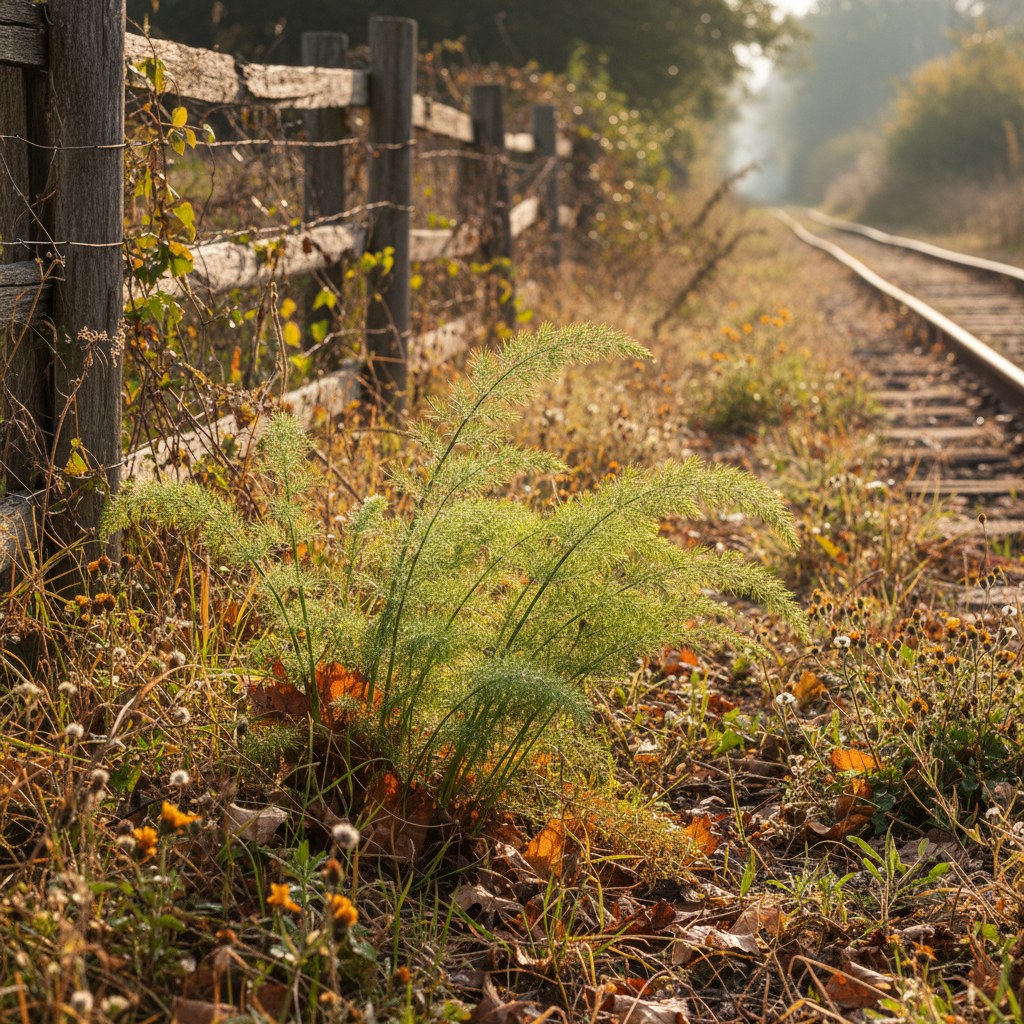
Identification of the spear itself is identical to garden asparagus. Cook it the same way. Wild asparagus tends to be thinner but more intensely flavored than store-bought.
12. Spruce Tips (Picea species)
The bright green new growth at the tips of spruce branches in late April and May. They taste like citrus and pine, bright, resinous, completely unique. Use them in baked goods, infuse into syrup, or grind with sugar for a finishing salt.
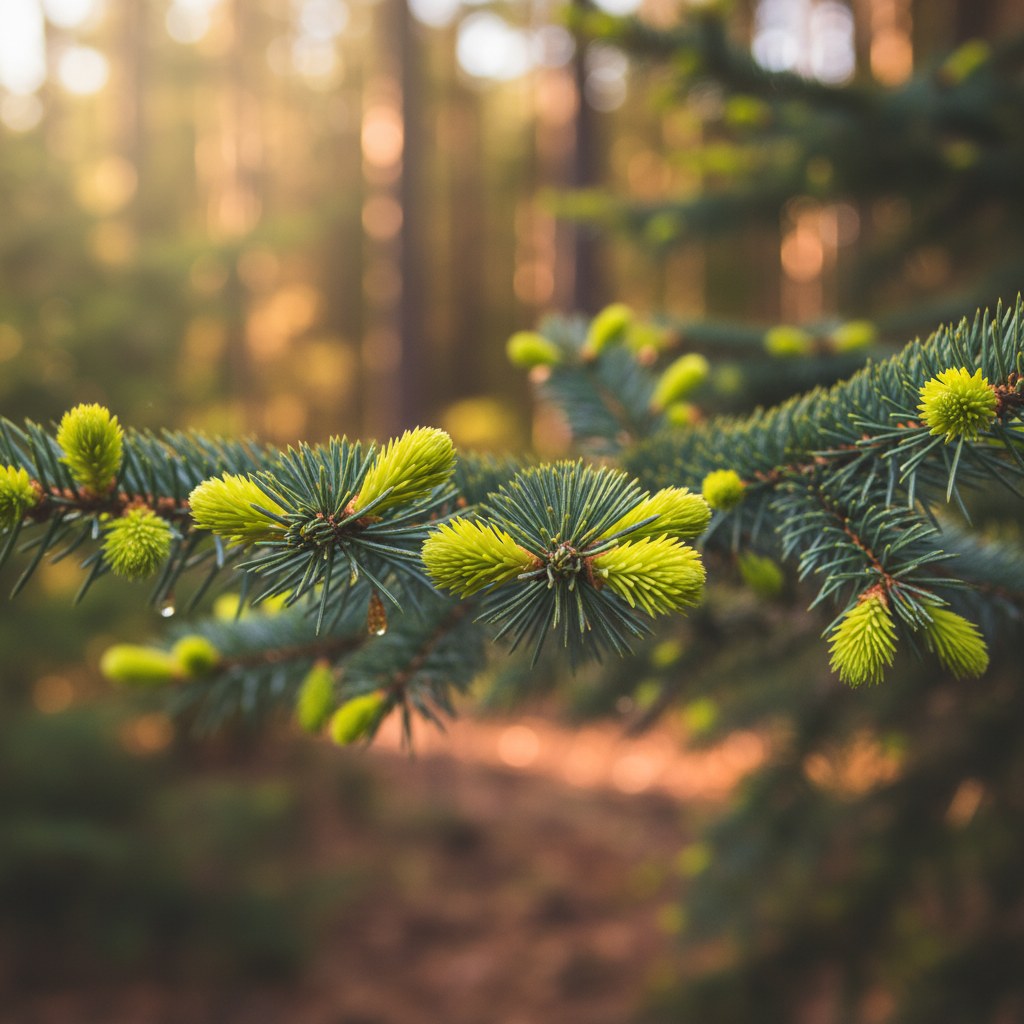
Take only a few tips per branch and never from the leader (top center) of a young tree, or you’ll stunt it. Avoid yew, which looks similar but is highly toxic, yew has flat needles in two rows and red berry-like fruits in summer; spruce has needles all around the twig and woody cones.
The Forager’s Code
Foraging done right makes ecosystems healthier, not poorer. A few rules that experienced foragers follow without thinking:
- Identify with absolute certainty. If you have any doubt, don’t eat it. There is no shame in walking past something you can’t confirm.
- Never take the only patch you can see. If there’s just one stand of ramps in this stretch of woods, leave it entirely.
- Take no more than a third of any patch, and less for slow-growing or sensitive species.
- Forage only from clean land, no roadsides, no sprayed parks, no chemical lawns, no industrial drainage.
- Get permission for private land. Know your public land rules, most national parks prohibit foraging entirely; many national forests and state parks allow personal-use harvest with limits.
- Learn one or two new plants a season. A forager who knows ten plants well is more capable than one who knows fifty halfway.
By the end of your second spring, you’ll walk into the woods and see food everywhere you used to see weeds. That’s the whole point. The land has always been generous. Most of us were just never taught how to look.