10 Beginner Garden Mistakes (and How to Fix Them)
Every gardener kills plants. That’s not a warning, it’s practically a rite of passage. The difference between gardeners who quit after one season and those who fill a chest freezer by August usually comes down to a handful of repeatable mistakes that nobody warned them about.
This guide covers the 10 beginner garden mistakes I see most often, why each one happens, and exactly how to fix it. Whether you’re starting your first raised bed or troubleshooting a disappointing second season, there’s something here for you.
1. Does Planting Too Early Actually Kill Seedlings?
Yes: cold soil stalls germination and hard frosts kill transplants outright, often setting you back weeks.
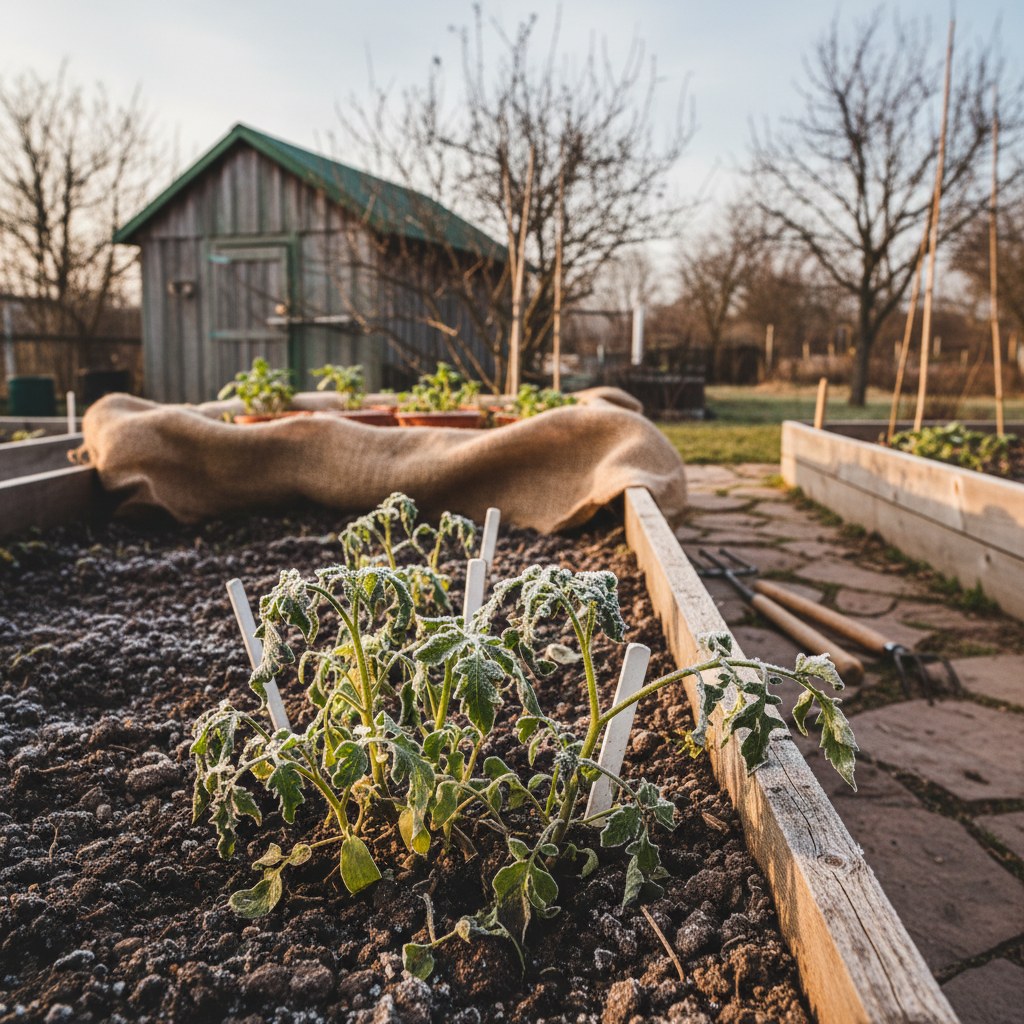
Spring enthusiasm is real. Seed catalogs arrive in January, the weather hits 55°F in late March, and it feels criminal not to put something in the ground. But soil temperature and air temperature are different things. Tomatoes planted in 45°F soil don’t grow, they sit, stress, and become magnets for disease. Cool-season crops like spinach and peas tolerate cold, but warm-season vegetables (tomatoes, peppers, squash, beans, cucumbers) need soil consistently above 60°F to thrive, and most want 65–70°F.
What goes wrong: Transplants that go in too early turn yellow, stall, and sometimes die from a surprise late frost. Even if they survive, warm-season plants started in cold soil often get outpaced by later-planted seedlings that went in under proper conditions.
How to fix it: Buy a $10 soil thermometer and check at 4-inch depth before planting warm-season crops. Use your last frost date (find it at The Old Farmer’s Almanac) as a minimum benchmark, not a guarantee. If you’re itching to start, use row cover fabric or a cold frame to extend your safe planting window by 2–4 weeks.
2. Why Is Overwatering among the most Common Garden Mistakes?
Overwatering suffocates roots, invites fungal disease, and is responsible for more seedling deaths than drought.
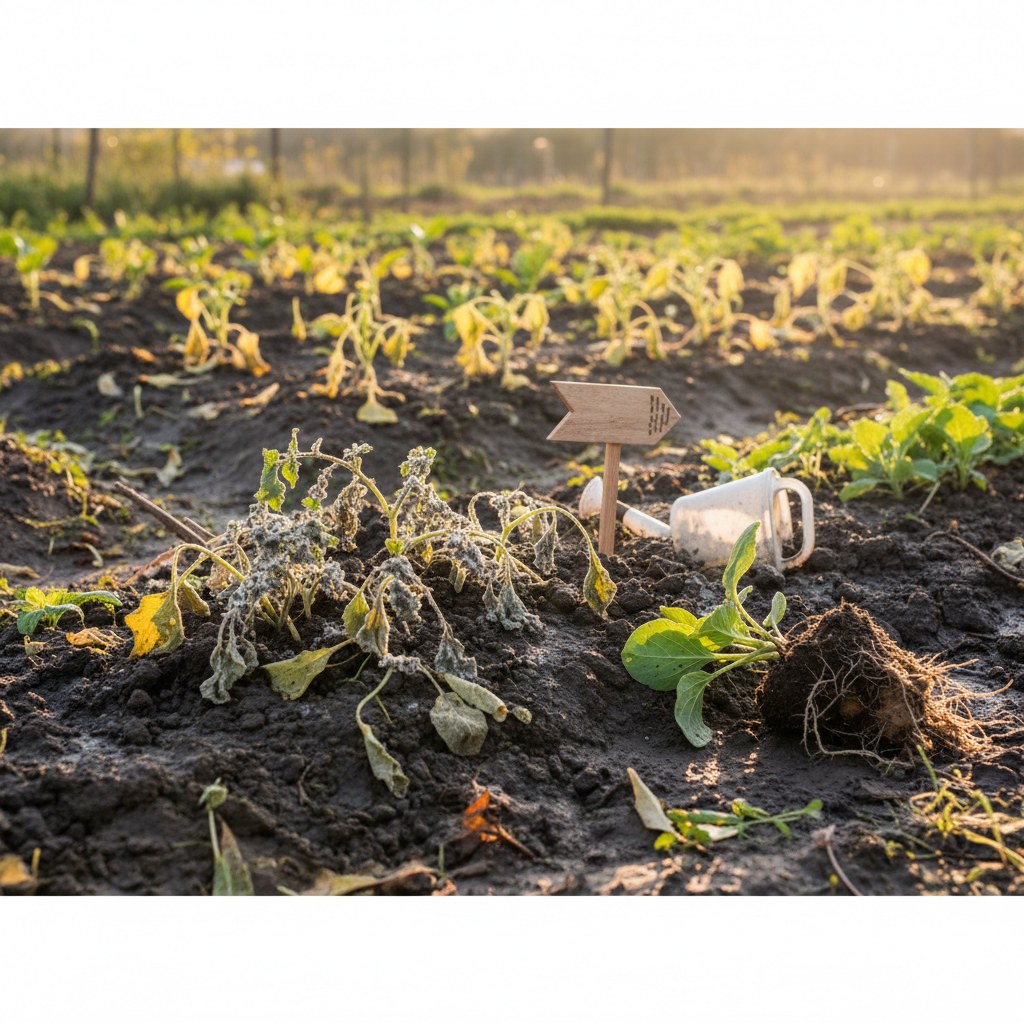
More water does not mean more love. Roots breathe. Constantly wet soil pushes oxygen out of the pore spaces, and without oxygen, roots suffocate even when moisture is plentiful. Waterlogged conditions also create ideal habitat for root rot fungi like Pythium and Phytophthora. The cruel irony: an overwatered plant wilts exactly like an underwatered one, so the natural instinct is to add more water and make it worse.
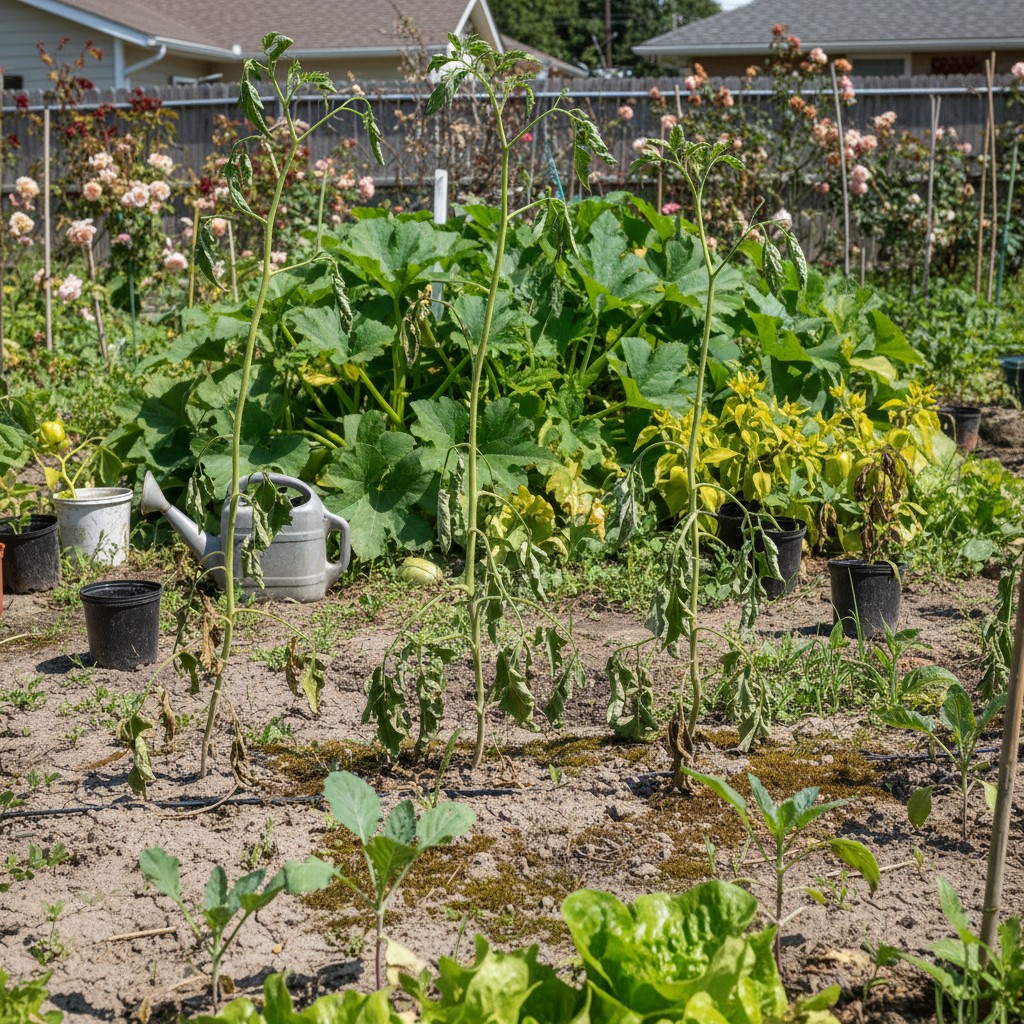
What goes wrong: Yellowing lower leaves, mushy stem bases, slow growth, and a sour smell from the soil are all signs of overwatering. Container plants are especially vulnerable because drainage is limited.
How to fix it: Check soil moisture before every watering by sticking your finger 2 inches into the soil. If it’s still moist, skip that day. For most vegetables, deep watering 2–3 times per week is far better than light daily watering, which keeps the top inch wet and the root zone dry. Drip irrigation or soaker hoses deliver water to the root zone and reduce fungal pressure dramatically.
3. What Happens When You Ignore Soil Health in the Garden?
Poor soil produces poor plants, no amount of fertilizer or extra watering compensates for depleted, compacted, or lifeless soil.
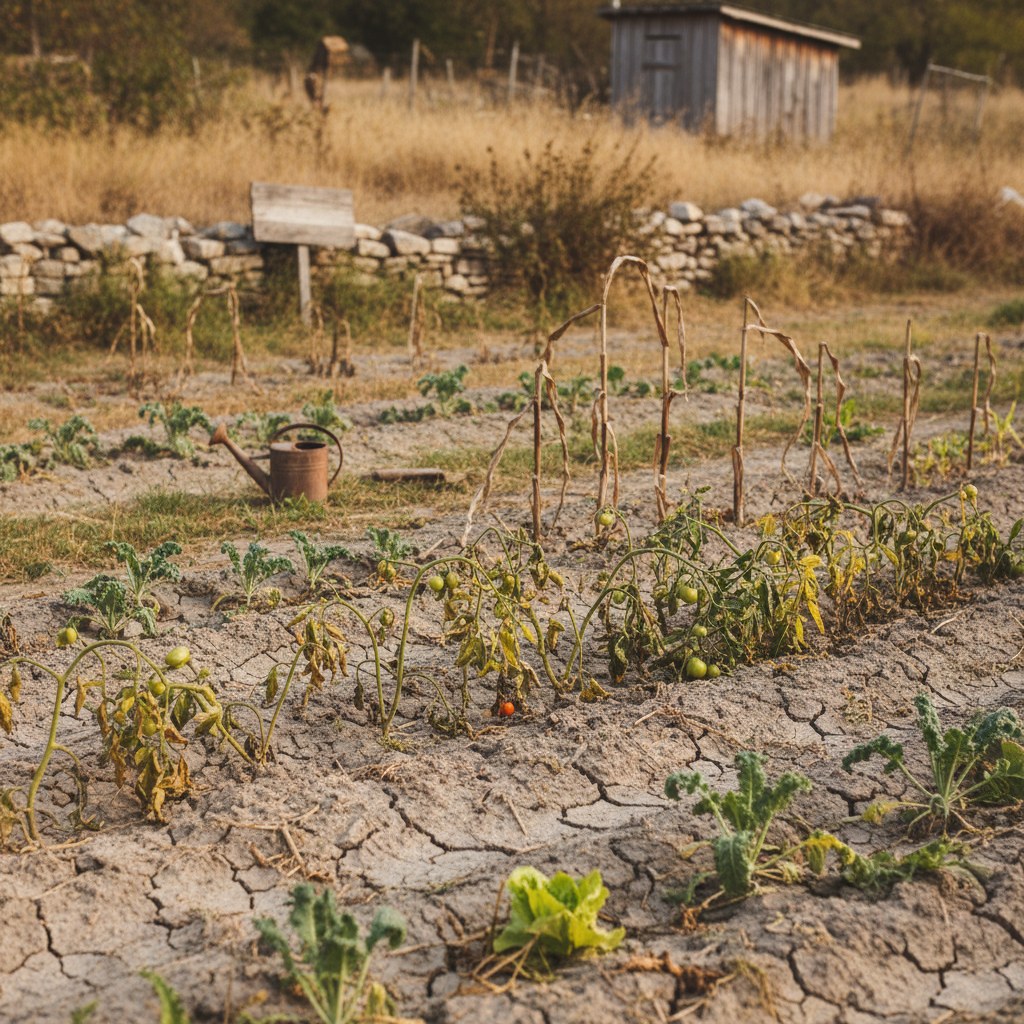
Soil isn’t just dirt. Healthy garden soil is a living ecosystem full of bacteria, fungi, earthworms, and microorganisms that break down organic matter, release nutrients, and create the loose, aerated structure plant roots need to explore. Beginners often plant into unamended clay, sand, or lifeless subsoil and wonder why nothing thrives. The plants aren’t lazy, the soil is broken.
What goes wrong: Stunted growth, pale leaves (even after fertilizing), poor water retention in sandy soils, and standing water in clay soils all point to a soil structure problem. Compacted paths driven over repeatedly crush the pore spaces roots need.
How to fix it: Start with a soil test. Most county extension offices offer them for under $20, and the results tell you exactly what you’re working with instead of guessing. From there, compost is the single most broadly useful amendment you can apply, it improves drainage in clay, boosts water retention in sand, and feeds the microbial life that unlocks nutrients already present in your soil. Aim to work 2–4 inches into the top 8–10 inches of your beds each season. See our full guide on composting 101 for turning kitchen scraps into garden gold, it’s cheaper than buying bags and infinitely better for your soil long-term.
4. How Does Planting Too Close Together Hurt Your Garden?
Crowded plants compete for light, water, and nutrients, and the humid microclimate between them is a disease incubator.
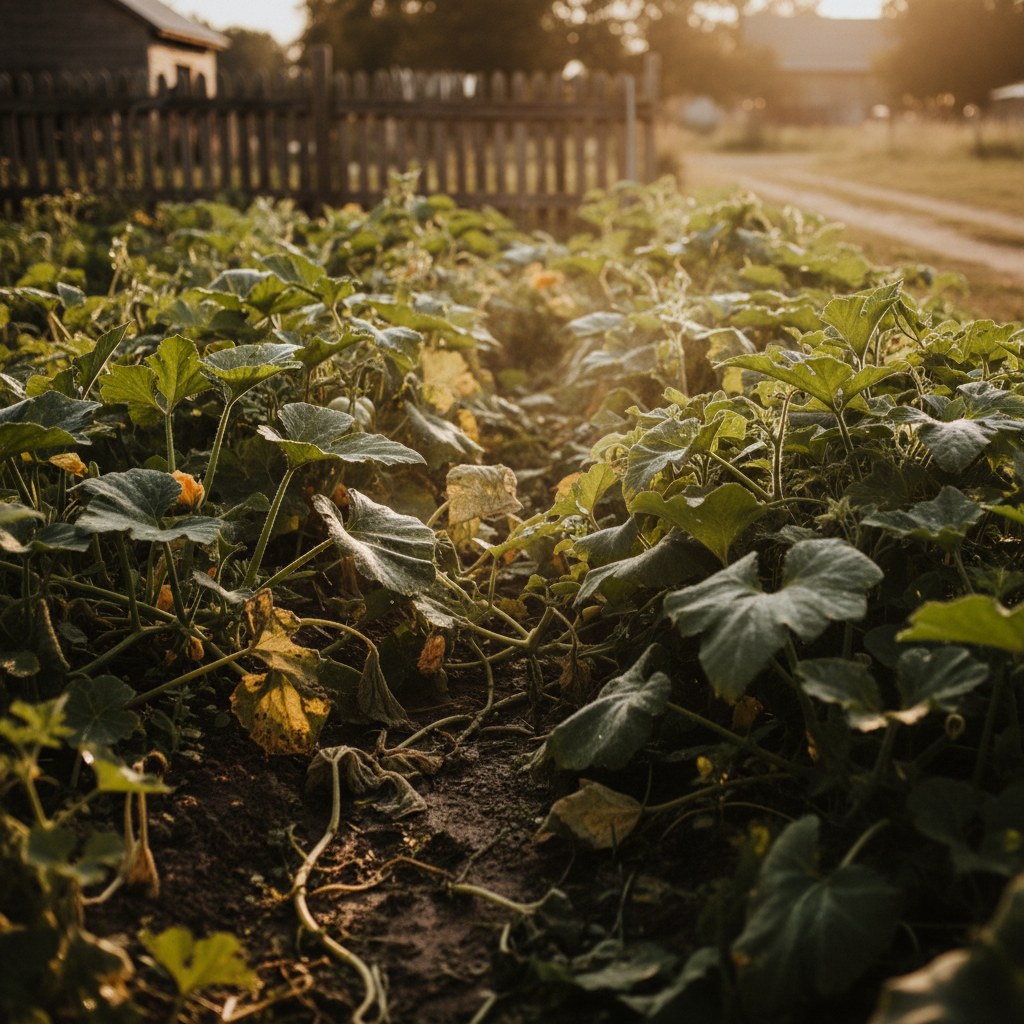
Seed packets list spacing recommendations for a reason, but beginners often ignore them. It feels wasteful to leave empty soil between plants, especially when seedlings look tiny. But those plants double and triple in size, and the spacing on the packet accounts for their mature footprint, not the seedling stage.
What goes wrong: Overcrowded plants shade each other out, causing weak, leggy growth. Poor airflow creates humid conditions that favor powdery mildew, botrytis, and other fungal diseases. Roots compete for water and nutrients, and yield per plant drops significantly. A row of tomatoes planted 12 inches apart instead of 24–36 inches will produce a fraction of what properly spaced plants would.
How to fix it: Follow packet spacing as a minimum. For vegetables in raised beds, use the square foot gardening method as a space-efficient guide (tomatoes: 1 per square foot of spacing; lettuce: 4 per square foot; carrots: 16 per square foot). Thin ruthlessly when direct-seeding, thinning feels like killing plants, but the survivors will reward you. If space is genuinely tight, vertical growing with trellises lets you fit more in by going up instead of out. Our raised bed gardening guide covers spacing strategies that maximize yields in small footprints.
5. Is Skipping Mulch Really That Big of a Deal?
Yes: unmulched beds lose moisture 2–3x faster, grow far more weeds, and suffer wider soil temperature swings that stress plant roots.
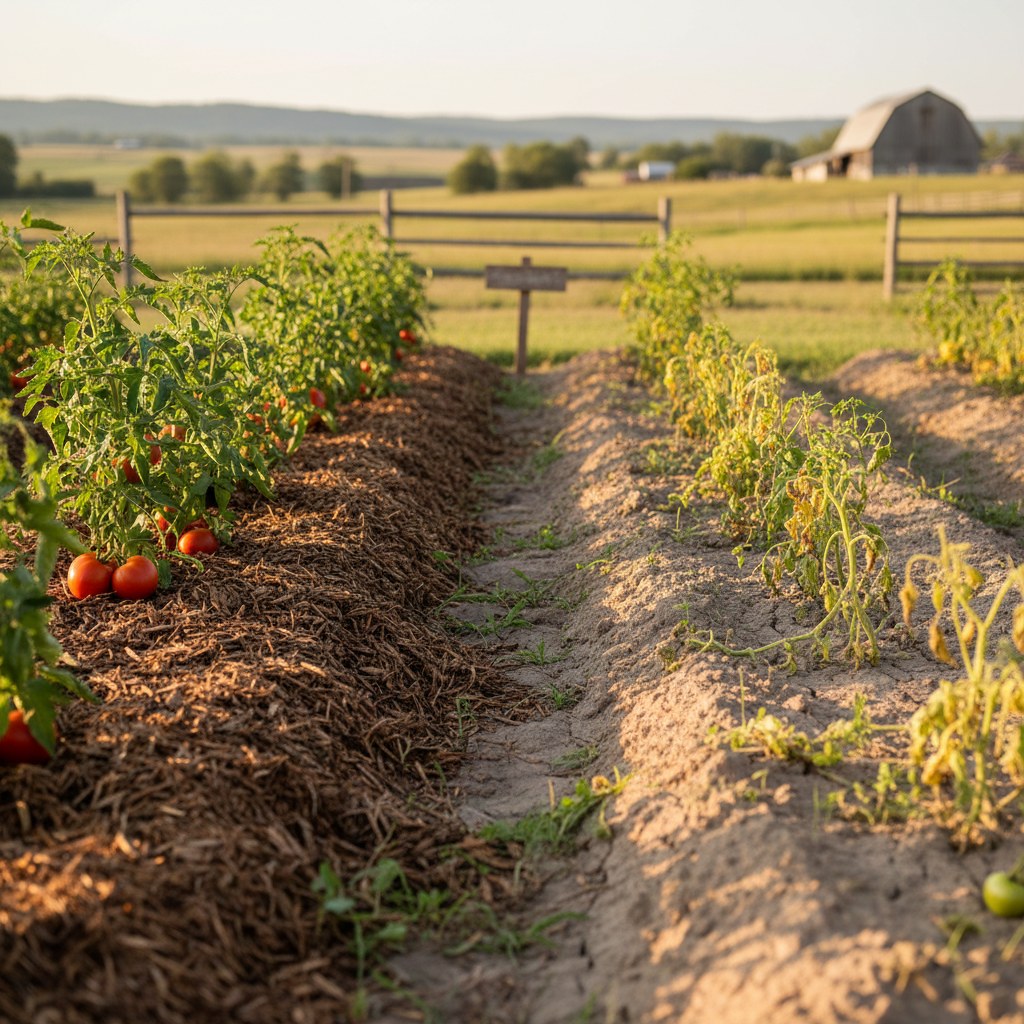
Mulch is one of the highest-return actions in the garden, and it’s frequently skipped because it feels like an optional extra. It isn’t. A 2–3 inch layer of organic mulch (straw, wood chips, shredded leaves) does three things simultaneously: it suppresses weeds by blocking light, it holds soil moisture by reducing evaporation, and it moderates soil temperature by insulating against heat and cold. As it breaks down, it also feeds the soil.
What goes wrong: Unmulched beds need watering far more frequently, grow dense weed populations that compete with vegetables, and in hot summers the exposed dark soil can reach temperatures that literally cook shallow roots. Blossom end rot in tomatoes is often partly a moisture-consistency problem that mulch helps prevent.
How to fix it: After transplanting or after seedlings have true leaves, apply 2–3 inches of straw, wood chips, or shredded leaves around (not touching) stems. Keep mulch a few inches away from the base of plants to prevent crown rot. Replenish when it breaks down. Free sources: municipal wood chip programs, neighbor leaves in fall, spoiled hay from farms.
6. What Is Succession Planting and Why Does Skipping It Leave Gaps in Your Harvest?
Without succession planting, you get a flood of one vegetable all at once and then nothing, succession planting staggers harvests across the whole season.
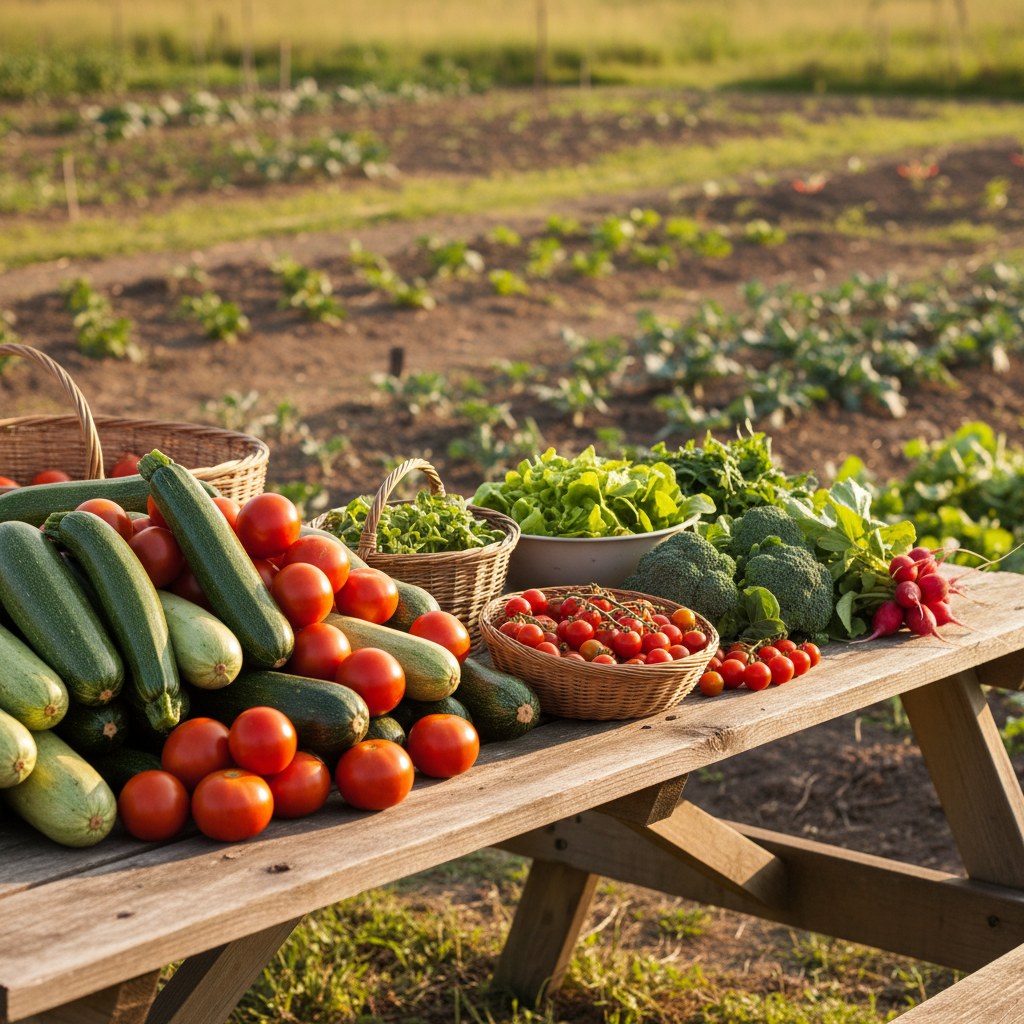
Beginners plant everything at once in spring and then wonder why they have 40 heads of lettuce in May that all bolt simultaneously and nothing to eat in July. Succession planting is the practice of sowing small batches of the same crop every 2–3 weeks so harvests are continuous rather than feast-or-famine. It’s especially important for fast-growing crops like lettuce, radishes, cilantro, and beans.
What goes wrong: A single large planting of lettuce, for example, matures all at once in 4–6 weeks. If you can’t eat or preserve it fast enough, it bolts and becomes bitter. Meanwhile, your garden has a glut in May and a gap in June.
How to fix it: Plan your beds in thirds or quarters. Every 2–3 weeks, sow a small patch of fast-growing crops in a new section. Keep a simple calendar or use plant tags with dates. For slow crops like tomatoes and peppers, succession planting isn’t practical, but you can choose varieties with different maturity windows (60-day vs. 80-day tomatoes) to spread your harvest naturally.
7. Can Growing the Wrong Crops for Your Zone Doom a Garden Before It Starts?
Absolutely: trying to grow long-season crops in a short-season climate, or heat-lovers in cool coastal areas, leads to frustration that has nothing to do with your skill level.
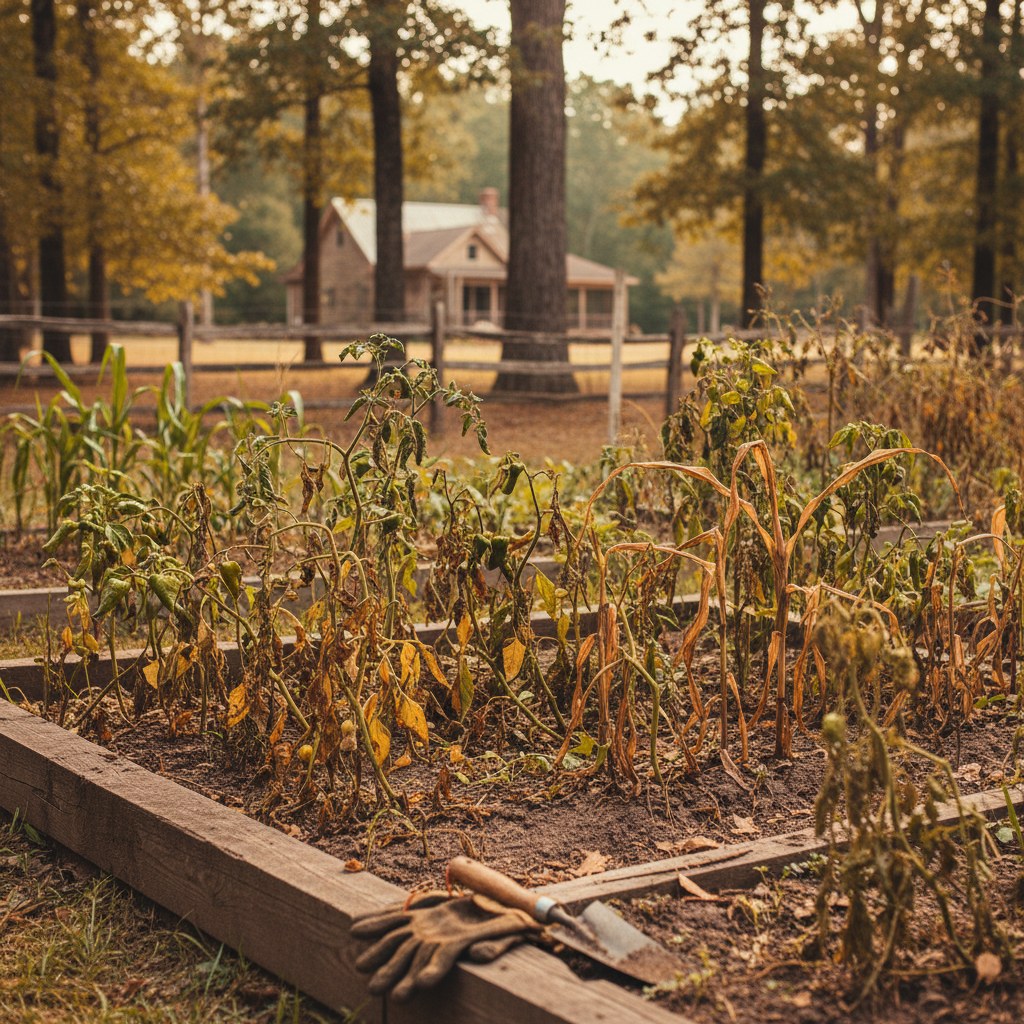
USDA hardiness zones get a lot of attention, but for vegetables, first and last frost dates and days-to-maturity are more relevant. A gardener in Vermont with a 130-day frost-free window can’t reliably grow an 85-day watermelon variety, there simply isn’t enough time. Similarly, trying to grow cool-season crops like broccoli through a Georgia summer usually ends in bolting and bitterness.
What goes wrong: Buying seeds based on what looks appealing in a catalog without checking days-to-maturity against your frost window. Growing heat-loving crops in foggy coastal climates where tomatoes never get enough warmth to ripen. Planting cool-season crops in summer instead of fall.
How to fix it: Know your frost dates, both first and last. Before buying seeds, check the “days to maturity” on the packet and confirm that number fits inside your frost-free window. If it doesn’t, the plant won’t finish before a killing frost. In cool climates, look for short-season varieties bred for northern gardens, words like “early” or “northern” in the variety name are the signal. Hot-climate gardeners have two cool-season windows (fall and early spring); lean into those instead of fighting the summer heat.
8. Why Does Neglecting Pest Prevention Make Problems Worse Later?
Pest problems caught early are minor inconveniences; pest problems ignored for two weeks become infestations that can wipe out entire crops.
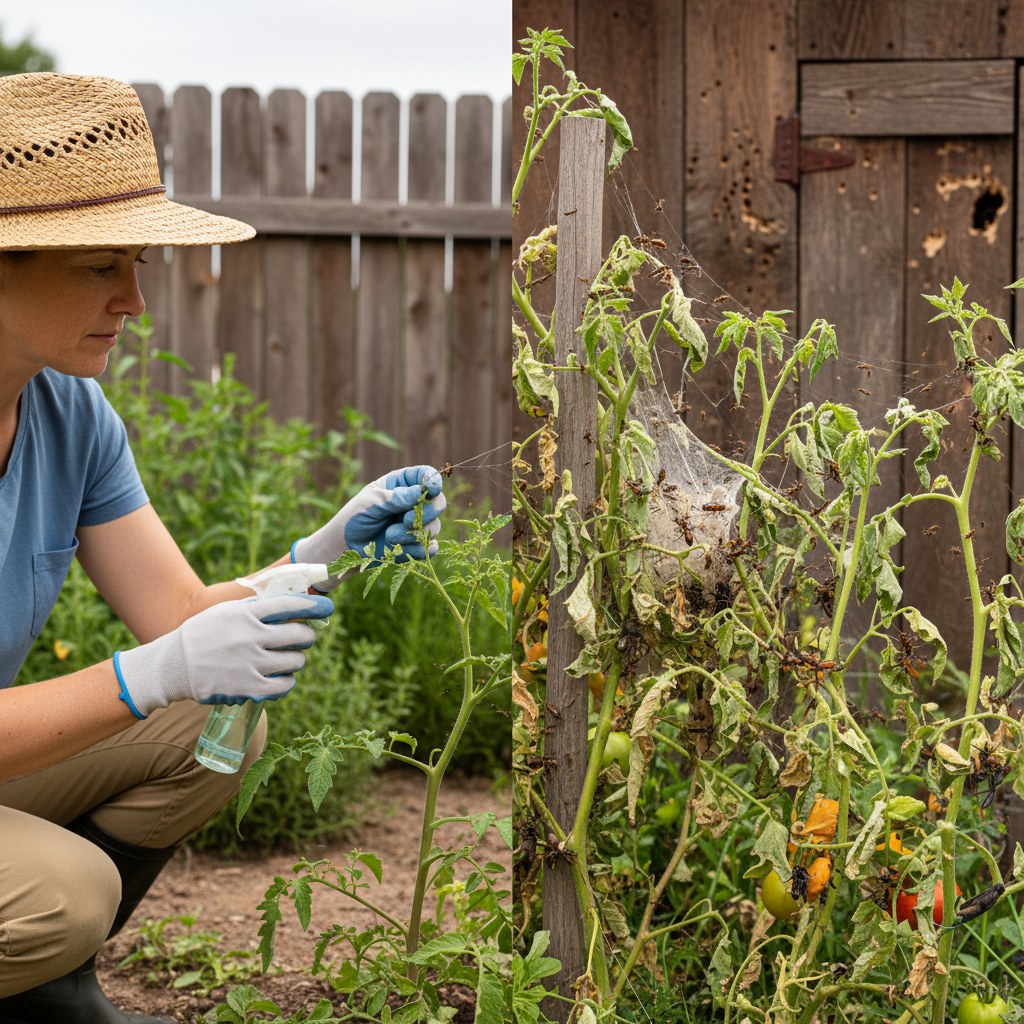
Many beginner gardeners don’t inspect their plants regularly, so by the time they notice an aphid colony, squash vine borers, or a tomato hornworm problem, the damage is severe. Integrated pest management (IPM) is built on the principle of early detection, which requires actually looking at the undersides of leaves a few times a week.
What goes wrong: Aphids under leaves go unnoticed until they number in the thousands and ants are farming them. Squash vine borers lay eggs at the base of plants and the larvae eat the interior of the stem before you know anything is wrong. Tomato hornworms are masters of camouflage and can strip a plant in days.
How to fix it: Do a 5-minute walkthrough of your garden every 2–3 days. Flip leaves and look for eggs, larvae, and feeding damage. Catch problems early and they’re usually manageable: blast aphids off with water, hand-pick hornworms, use row cover fabric to physically exclude squash vine borers before they lay eggs. Companion planting (marigolds, basil, nasturtiums) confuses and deters some pests. Avoid broad-spectrum insecticides, which kill beneficial predators like ladybugs and parasitic wasps that control pests naturally.
9. Does the Soil Really Need Feeding After You’ve Already Amended It?
Yes: plants are heavy feeders, and by midsummer they’ve consumed most of what you added at planting time. Mid-season feeding is what carries you through to fall harvest.
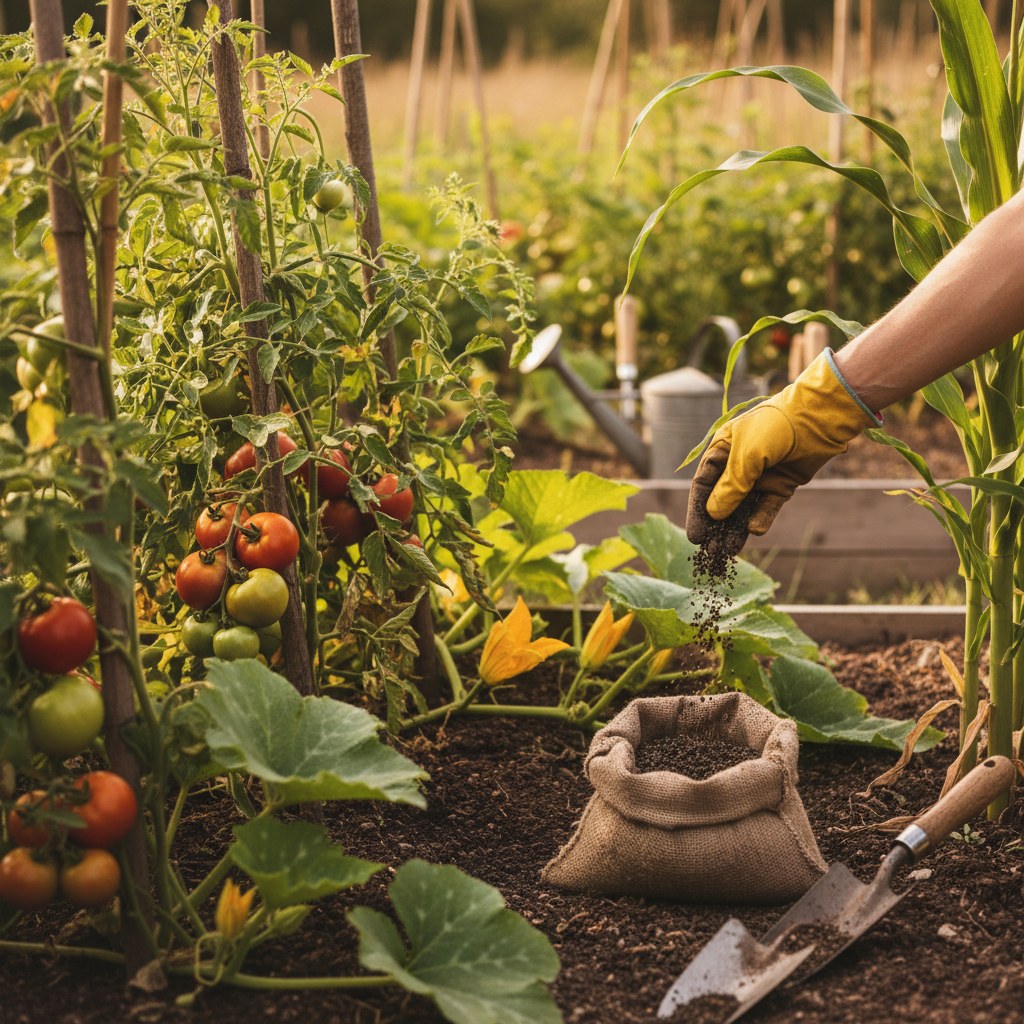
Gardeners often amend soil well in spring and then assume the plants are set. But heavy-producing crops like tomatoes, peppers, squash, and corn are voracious. They pull nitrogen, potassium, phosphorus, calcium, and dozens of trace minerals from the soil continuously. By July, a well-amended bed can become noticeably depleted, and plants signal this with yellowing leaves, poor fruit set, and slow growth.
What goes wrong: After a strong start, plants stall in midsummer. Tomatoes drop flowers. Squash produces misshapen fruit (often a calcium and irregular watering issue). Peppers go pale. These are usually feeding problems compounded by heat stress.
How to fix it: Side-dress heavy feeders with compost every 4–6 weeks. When you spot deficiency signs, yellowing leaves, poor fruit set, diluted liquid fertilizers like compost tea, fish emulsion, or a balanced organic granular fertilizer get nutrients to roots faster than dry amendments. Calcium deficiency is the specific culprit behind blossom end rot in tomatoes; crushed eggshells worked into planting holes, paired with consistent watering, help stabilize levels. Fall matters too. What you add in September feeds next year’s garden. Our composting guide covers how to build a steady supply of the best slow-release fertilizer there is.
10. Is Giving Up Too Soon the Most Underrated Beginner Garden Mistake?
Possibly: most beginner gardening failures are one or two small adjustments away from success, but quitting after one bad season means never making those adjustments.
The learning curve is real. Gardening demands knowledge you simply can’t shortcut, it arrives slowly, through seasons of watching and adjusting. By year two you know which spots get enough sun. Year three, you start reading your soil. By year four, the fundamentals feel automatic and troubleshooting is mostly fine-tuning. None of that happens if you declare gardening “not for you” after one difficult first year.
What goes wrong: A late frost kills transplants. A pest wipes out the squash. Tomatoes underperform in a cloudy summer. These feel like personal failures but are almost always environmental factors or small knowledge gaps, not a fundamental inability to grow food. The gardeners who succeed long-term treat failure as data, not verdict.
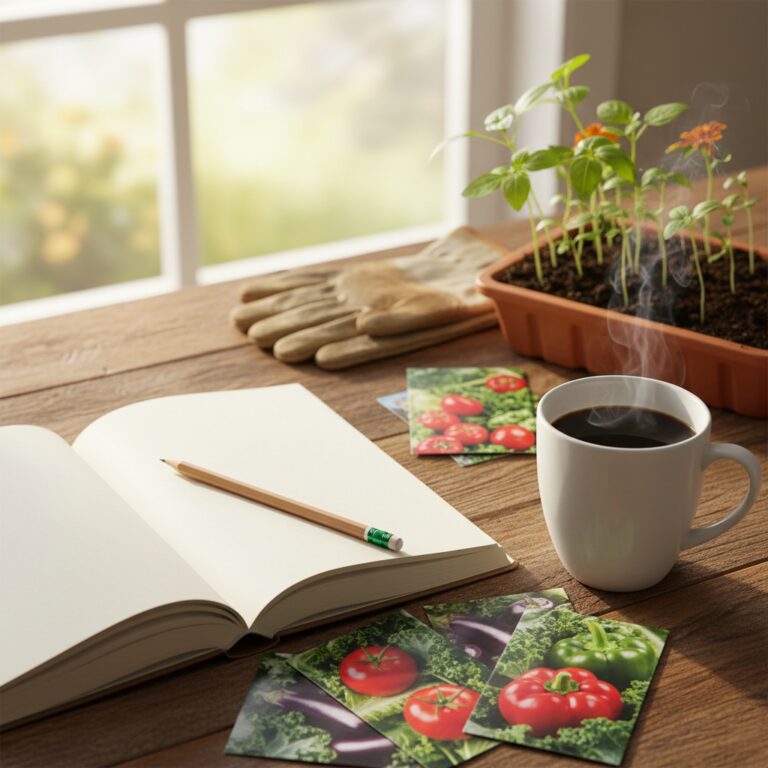
How to fix it: Keep a garden journal. Write down what you planted, when, what worked, and what didn’t. Note weather events, pest problems, and timing. Review it the following spring before you plant. Grow at least one easy crop every season (radishes, zucchini, herbs) to maintain momentum and remind yourself what success feels like. Connect with your local cooperative extension office, their free advice is localized, research-backed, and underused. And consider starting smaller than you think you should: one 4×8 raised bed done well teaches more than a sprawling plot done badly. See our guide on building your first raised bed for a manageable starting point.
Frequently Asked Questions
What is the number one mistake beginner gardeners make?
Planting too early or ignoring soil health are the two most impactful mistakes. Planting in cold soil stalls growth and risks frost damage, while poor soil undermines everything else you do. Fix these two first and the rest becomes easier.
How do I know if I’m overwatering my garden?
Check the soil 2 inches deep before watering. If it’s still moist, wait. Signs of overwatering include yellowing lower leaves, mushy stem bases near the soil line, and a sour or rotting smell from the soil. Wilting can mean either too much or too little water, so always check soil moisture before adding more.
What vegetables are easiest for beginners to grow?
Zucchini, green beans, radishes, lettuce, basil, and cherry tomatoes consistently perform well for beginners. They’re forgiving, fast-producing, and provide regular harvests that keep motivation high while you’re learning the fundamentals.
How important is composting for a vegetable garden?
Compost is the single best amendment for nearly every soil type. It improves drainage in clay, water retention in sand, feeds soil microbes, and slowly releases nutrients all season. Even a small compost pile fed with kitchen scraps and yard waste can meaningfully improve your garden within one season.
When should I start seeds indoors versus direct sowing?
Start indoors 6–8 weeks before your last frost date for slow-growing crops that need a head start: tomatoes, peppers, eggplant, and brassicas. Direct sow crops that don’t transplant well or grow fast enough to not need a head start: carrots, beets, beans, peas, radishes, zucchini, and cucumbers. Your seed packet will usually specify which method is recommended.