Can Chickens Overheat and Die? Signs, Causes, and Prevention
TL;DR: Yes, chickens can overheat and die. A chicken’s normal body temperature is 105–109°F; once core temperature crosses 113°F, organ failure becomes very likely. The biggest risk is that chickens can’t sweat, they dump heat through panting and blood flow to their combs and wattles, which stops working efficiently once humidity climbs above 50%. Once ambient temperature crosses 90°F with high humidity, every bird in your flock needs shade, cold water, and airflow.
Key Takeaways
- Normal chicken body temp is 105–109°F. Once core temperature crosses 113°F, rapid organ failure is likely.
- Chickens do not sweat. They cool by panting (evaporative) and by pushing blood through their combs and wattles.
- Ambient temperature above 85°F begins to drop egg production; above 90°F with humidity over 50% is genuine emergency territory.
- Heavy breeds (Orpington, Brahma, Cochin), dark feathers, and overweight birds are most at risk.
Can chickens actually overheat and die?
Yes: and it happens faster than most new keepers expect. A chicken’s resting body temperature runs 105–109°F because their metabolism is higher than ours (Merck Veterinary Manual). They have little margin before core temperature crosses 113°F, the upper lethal limit where muscle and organ proteins denature (UKY Animal & Food Sciences). A healthy chicken in full shade can hold its temperature at 100°F ambient; a chicken in direct sun with no water can slip into fatal heat stroke quickly.
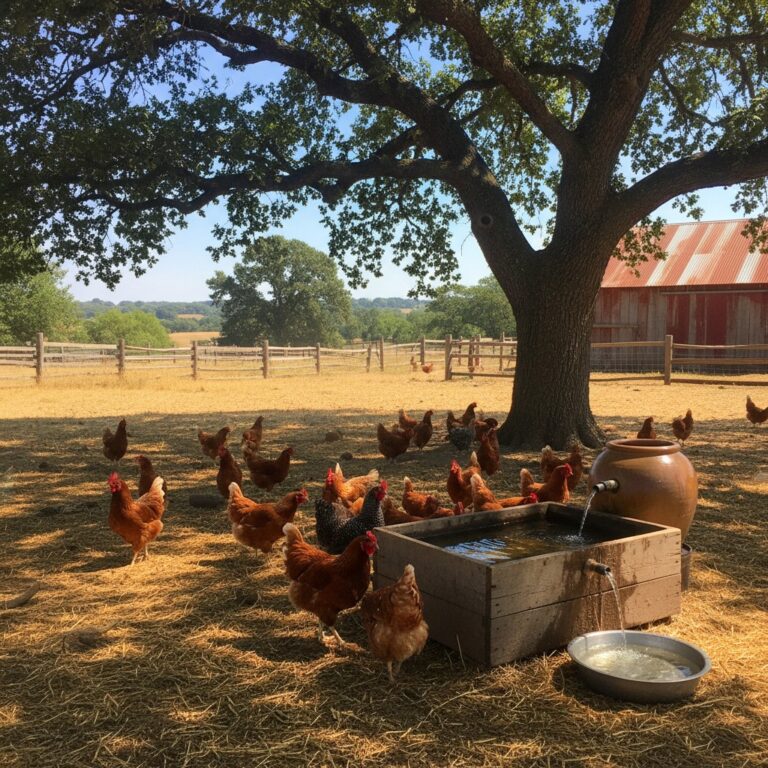
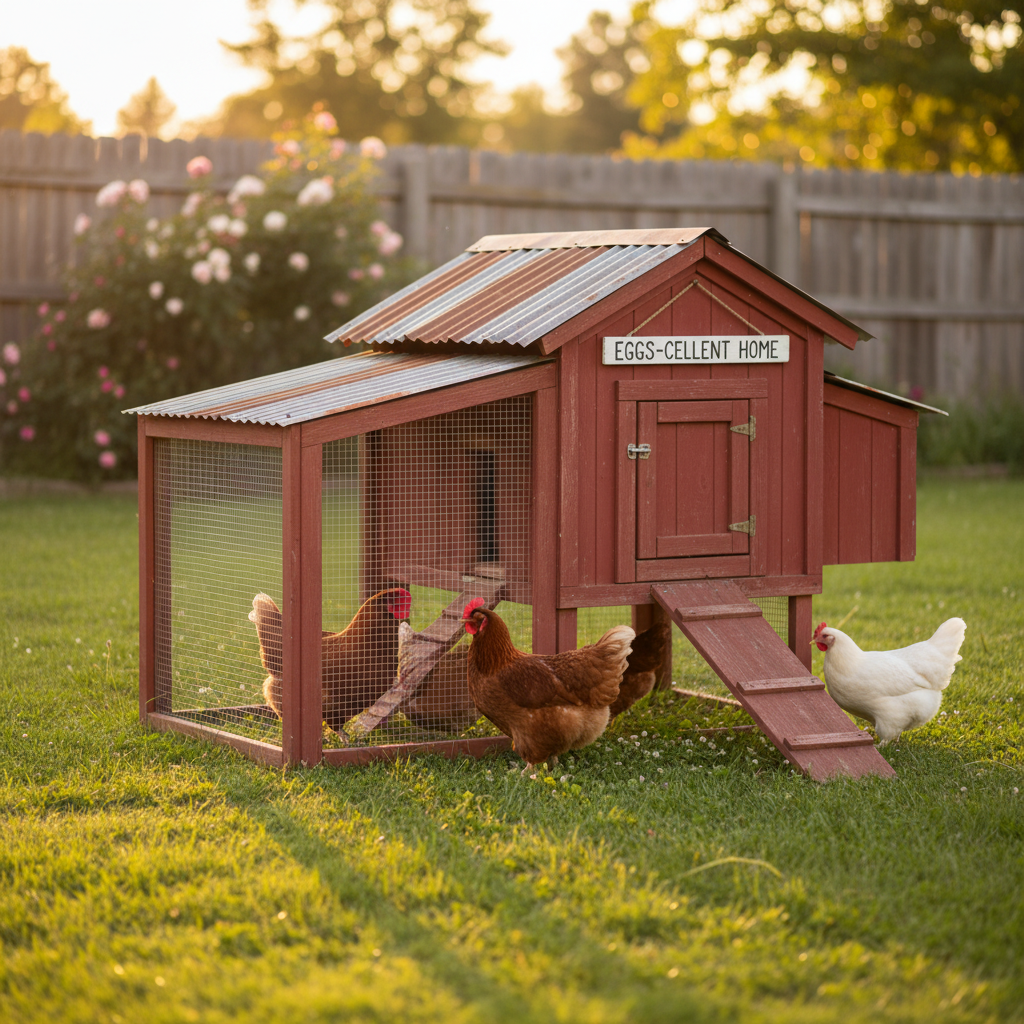
Heat stress is the leading cause of summer mortality in backyard flocks. It usually kills more than one bird, it takes out multiple at once because the coop acts as an oven and the whole flock tips over the threshold together. A single 100°F afternoon with the coop closed up and water bowls empty can wipe out an entire flock.
Do chickens sweat? (Short answer: no.)
Chickens have no sweat glands. They rely on three cooling mechanisms instead, and all three have limits:
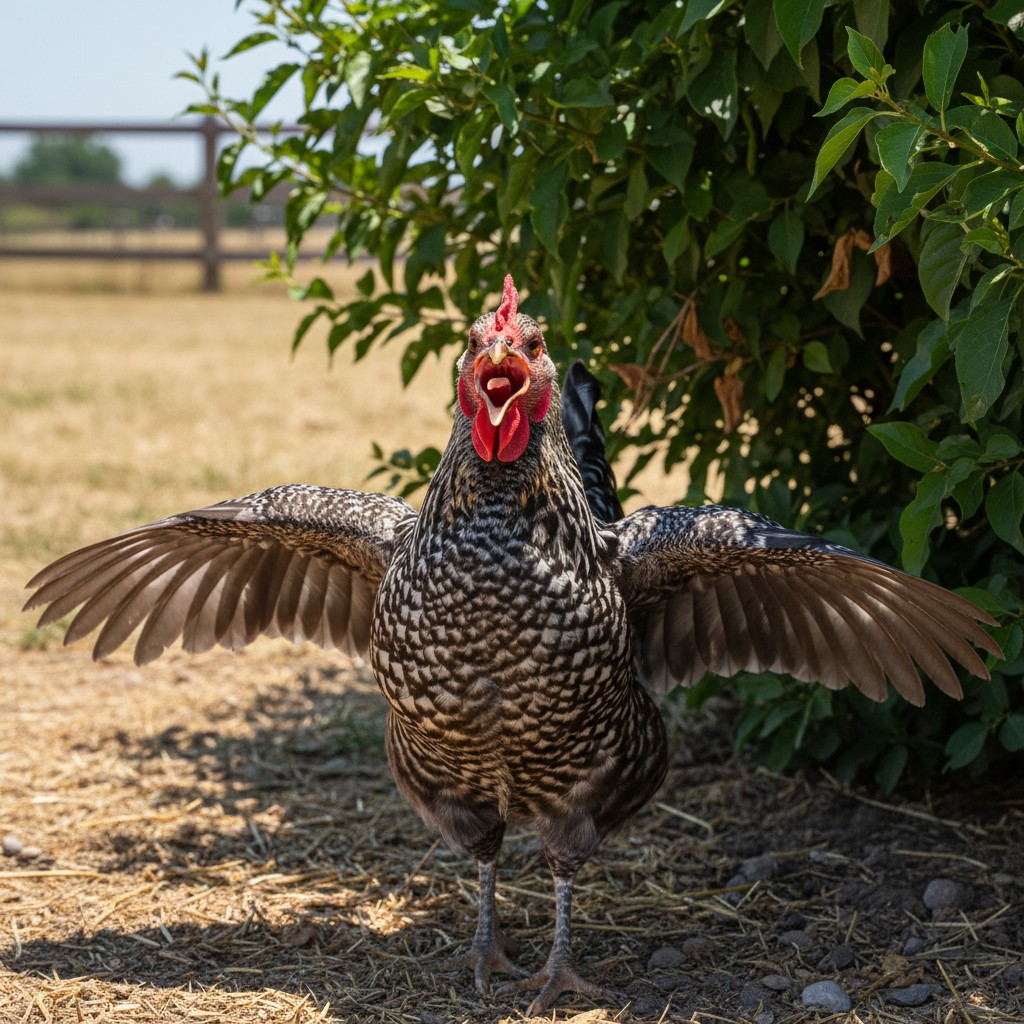
- Panting (respiratory evaporation). Chickens breathe through an open beak to evaporate water off their respiratory tract. This works well in dry heat; humidity above 50% impairs it significantly (UMN Extension).
- Comb and wattle radiation. Blood flow shifts to the combs, wattles, and unfeathered patches around the face. Cooled blood returns to the core. Breeds with larger combs (Leghorn, Minorca) have a real cooling advantage; small-comb breeds (Wyandotte, Chantecler) struggle more.
- Wing-lifting and reduced activity. Holding wings slightly away from the body exposes bare skin under the wing, a pop-up convection surface. They also stop scratching and foraging to reduce metabolic heat.
None of this produces cold, chickens can’t get ahead of heat the way a sweating mammal can. They can only keep pace with it. When the pace slips, body temperature climbs.
What are the warning signs a chicken is overheating?
Heat stress progresses through a predictable sequence. Catching it early lets you intervene with shade and water; missing the early signs means you’re treating heat stroke, which has a much lower survival rate. Watch for these in order:
- Panting with an open beak and visible throat movement, the first sign, and usually the only one you have time to act on.
- Wings held away from the body, almost shrugged up. Not the same as a broody fluff.
- Reduced or stopped foraging. Hens that are normally active stand still in the shade.
- Pale, shrunken combs and wattles. Healthy color is bright red; pale pink or dusky means blood pressure has dropped.
- Diarrhea or unusually watery droppings from drinking large volumes.
- Staggering, weaving, or wings drooping to the ground. This is late-stage, heat stroke is starting.
- Collapsed on the side, eyes closed, non-responsive. Immediate emergency. Without cooling, death can follow quickly.
At what temperature do chickens start to struggle?
The numbers matter more than "it feels hot out there." Chickens are comfortable in a thermoneutral zone of about 60°F to 75°F (UMN Extension). Performance metrics drop predictably above that:
| Ambient temp | What happens |
|---|---|
| Below 75°F | Comfortable. Normal laying and foraging. |
| 75–85°F | Mild stress. Slightly elevated water intake. |
| 85–95°F | Egg production begins to decline (peer-reviewed studies show drops around 10% under severe heat stress). Eggshells thin. Panting starts. |
| 95–100°F | Genuine risk zone. Heavy breeds struggle. Intervention required. |
| Above 100°F | Emergency. Without shade and water, birds can reach lethal core temperatures quickly. Every bird needs direct cooling. |
Humidity is the multiplier nobody warns new keepers about. Dry 100°F in Arizona is less dangerous than humid 90°F in Virginia because panting only works when the respiratory tract can evaporate moisture into dry air. Once relative humidity climbs above 50%, evaporative cooling drops off sharply and every threshold in the table above becomes less reliable. A muggy 88°F day can kill birds a dry 95°F day wouldn’t touch.
What do you do if a chicken is overheating right now?
If a chicken is showing late-stage signs (staggering, collapsed, unresponsive), you have minutes. Move in this order:
- Move to shade immediately. Any shade beats none. Indoors on a cool floor is ideal.
- Submerge the body in cool water. Not ice water, a bucket or tub of tap water. Hold the chicken up so the head stays dry and out; submerge the body from the neck down for 30–60 seconds. Cool shock from ice can stop a heat-stressed heart.
- If submersion is impossible: wet the feet and legs first (biggest surface area for heat transfer), then the underside of the wings. Skip the head.
- Offer electrolyte water. A pinch of salt + a pinch of sugar + a squeeze of lemon in a quart of cool water, or commercial chicken electrolytes. Dehydration drops blood volume, which accelerates heat stroke.
- Hold her upright, in shade, for 20–30 minutes. Combs should regain color. Breathing should slow from pant to normal.
If a bird doesn’t recover after 30 minutes of cooling, or if she’s already non-responsive on arrival, call an avian vet. Cooling prevents further damage but can’t reverse organ failure that’s already underway.
Which chickens are most at risk?
Not all birds handle heat equally. If your flock is mixed, watch these high-risk categories first on hot days:
- Heavy meat breeds. Orpingtons, Brahmas, Cochins, Jersey Giants. More body mass, more metabolic heat, fewer bare-skin cooling surfaces.
- Feather-footed breeds. Cochins, Brahmas, Silkies. Those feathered feet cover the second-best heat-transfer surface they have.
- Dark-feathered birds. Black Australorps, Sumatras, Black Jersey Giants. Black plumage absorbs measurably more solar heat.
- Overweight hens at the end of laying season.
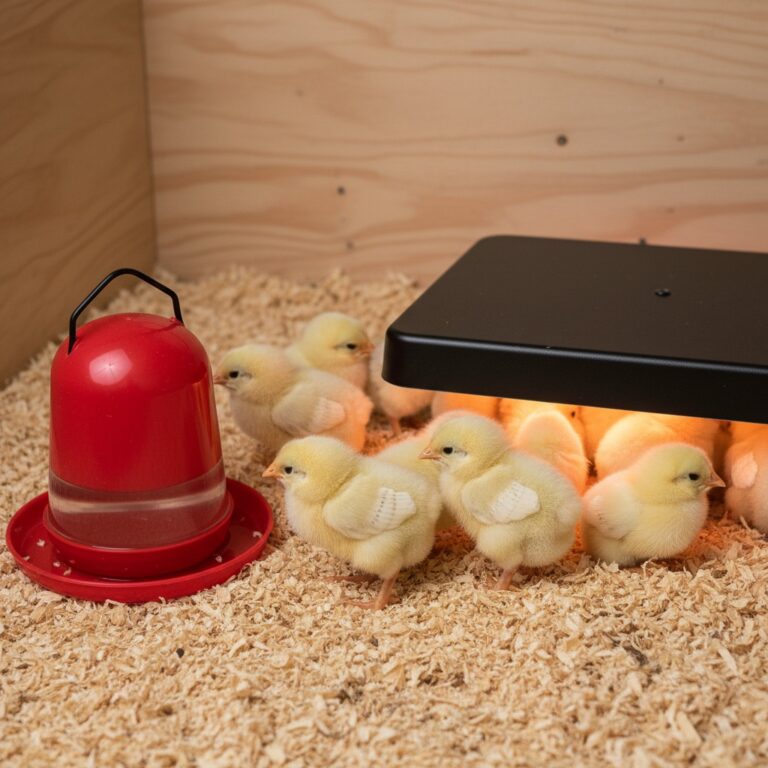
- Very young chicks in a brooder where the heat lamp is still on when it shouldn’t be.
- Broody hens stuck on a nest in a stuffy coop.
- Older layers (4+ years) with compromised respiratory or cardiac reserves.
For the deeper strategy, shade structures, misters, frozen treats, ventilation retrofits, and summer-safe coop design, see our full guide to keeping chickens cool in summer heat. This post is the emergency recognition guide; that one is the prevention playbook.
Frequently asked questions
How hot is too hot for chickens?
Above 95°F ambient, every chicken in your flock is working to stay at safe body temperature. Above 100°F, heavy meat breeds are at real risk of heat stroke, and dark-feathered birds may absorb more solar heat on top of that. Humidity above 50% impairs evaporative cooling from panting, so a muggy 88°F day can be as dangerous as a dry 100°F day.
Can chickens die from heat overnight?
Yes: and overnight coop death is among the most common summer losses. If the coop is closed tight and temperature inside stays above 85°F, humidity climbs from panting and the birds have no way to cool. Open every vent you have and consider leaving the pop door open with a secure, predator-proof apron if temps stay above 85°F overnight.
Does giving chickens ice water help?
Cool water is good; ice-cold is risky. Very cold water can shock a heat-stressed digestive tract and trigger vomiting or circulatory stress. A better approach is room-temperature water with frozen treats (watermelon cubes, frozen peas) they eat over time, plus multiple water stations in shade. This cools them gradually instead of all at once.
Are some chicken breeds heat-tolerant?
Yes. Mediterranean breeds. Leghorns, Minorcas, Anconas, Andalusians, evolved in hot, dry climates and have large combs for heat dissipation, lighter body mass, and sleek feathering. They handle heat noticeably better than heavy English breeds. If you live in a hot climate and are choosing a flock from scratch, this matters more than cold-hardiness does farther north.
Can young chicks overheat?
Easily, and this is usually a brooder-management error. A chick brooder heat lamp that’s appropriate for week 1 becomes dangerous by week 3. Raise the lamp or switch to a lower-wattage plate every week, and always give chicks a cooler zone in the brooder they can escape to. See our week-by-week brooder temperature schedule for the numbers.
The bottom line
Chickens can overheat and die, faster than most keepers think, and especially in humid heat. They can’t sweat, so once their panting capacity is overwhelmed they have no second line of defense. Watch for panting and lifted wings early, cool them with water (not ice) if you see late-stage signs, and put prevention in place before the first 90°F day: shade, ventilation, frozen treats, electrolyte water, and multiple drinkers. The flock you keep in July is the flock you’ll still have in September.
For the prevention checklist, what to build, buy, and change about your coop before summer, read our complete guide to keeping chickens cool in summer. If you’re picking breeds for a hot climate, see our chicken breed comparison.