Canning Tomatoes: Whole, Crushed, and Sauce
Key Takeaways
- Paste tomatoes (Roma, San Marzano, Amish Paste) are the best choice for canning, they have more flesh, fewer seeds, and less water.
- Acidification is non-negotiable: add 2 tablespoons of bottled lemon juice per quart jar (1 tablespoon per pint) to ensure safe acidity for water bath canning.
- Hot pack produces better results than raw pack, fewer air bubbles, better color retention, and less floating.
- Processing times vary by product and pack style: 85 minutes for whole or halved tomatoes packed in juice or with no added liquid (pints and quarts alike), 45 minutes for quarts of crushed tomatoes, 35 minutes for tomato sauce in pints (water bath method).
- One bushel of tomatoes (about 53 pounds) yields approximately 15 to 20 quarts of canned tomatoes.
The kids started helping label jars the summer we put up our biggest tomato harvest, and they got surprisingly serious about their handwriting when they realized the labels would be on the pantry shelf all winter. We processed close to 30 quarts that August, which still gets us through March if we're careful. Tomato canning day has become the one they look forward to most.
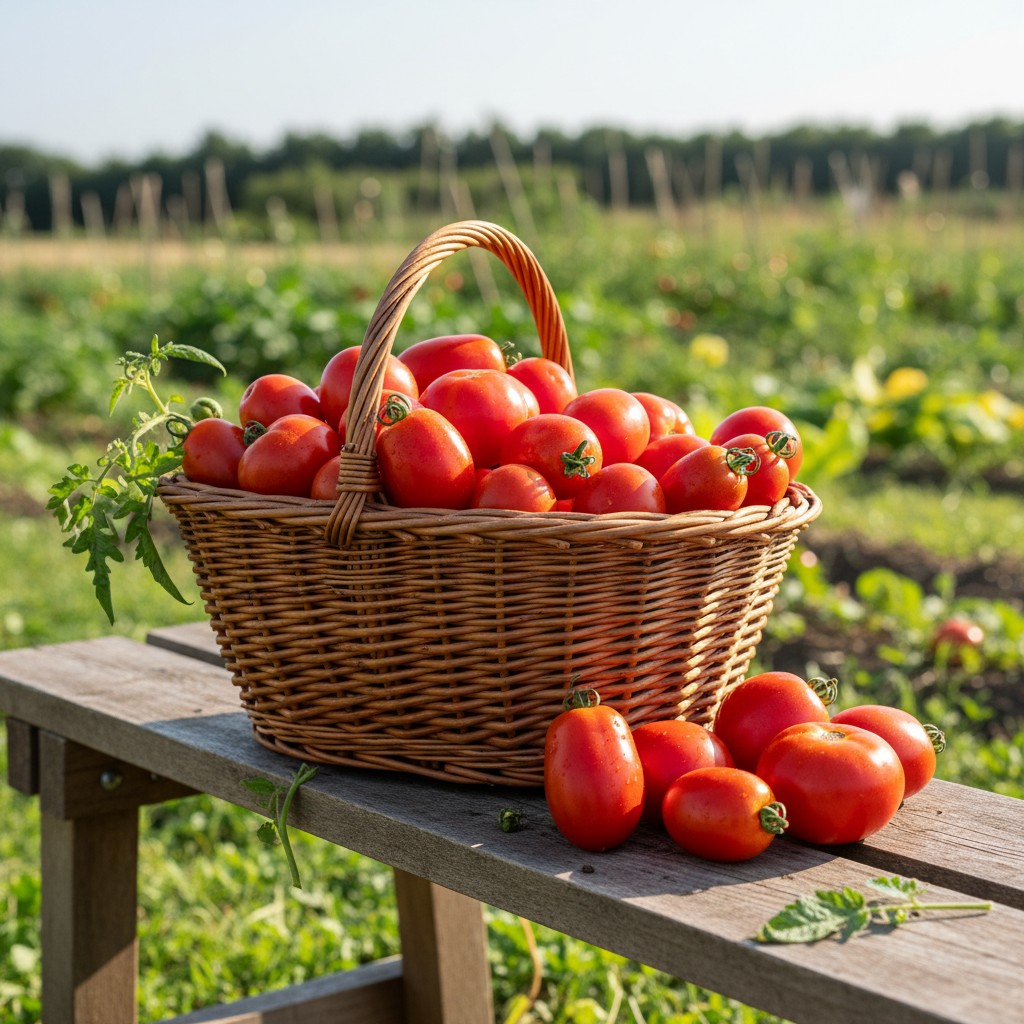
Why Canning Tomatoes Is Worth the Work
There’s a moment in late summer when the tomato harvest goes from manageable to absurd. You’ve given bags to every neighbor. You’ve made BLTs for a week straight. Salsa is running out of your ears. And still, the plants keep producing.

Canning is how you capture that peak-season flavor and stretch it across the entire year. A jar of home-canned tomatoes opened in February tastes like summer in a way that no store-bought can matches. The color is brighter, the flavor is more complex, and there’s a satisfaction in pulling a jar from the pantry shelf that money can’t buy.
Canning tomatoes is also among the most approachable entry points into home food preservation. Tomatoes are naturally acidic (though we add insurance, more on that shortly), which means they can be safely processed in a boiling water bath without a pressure canner. If you can boil water, you can can tomatoes.
Choosing the Right Tomatoes
Best Varieties for Canning
Not all tomatoes are created equal for canning. What you want is a tomato that’s meaty, not watery, high in flesh and low in seeds and juice. Paste tomatoes fit this bill perfectly.
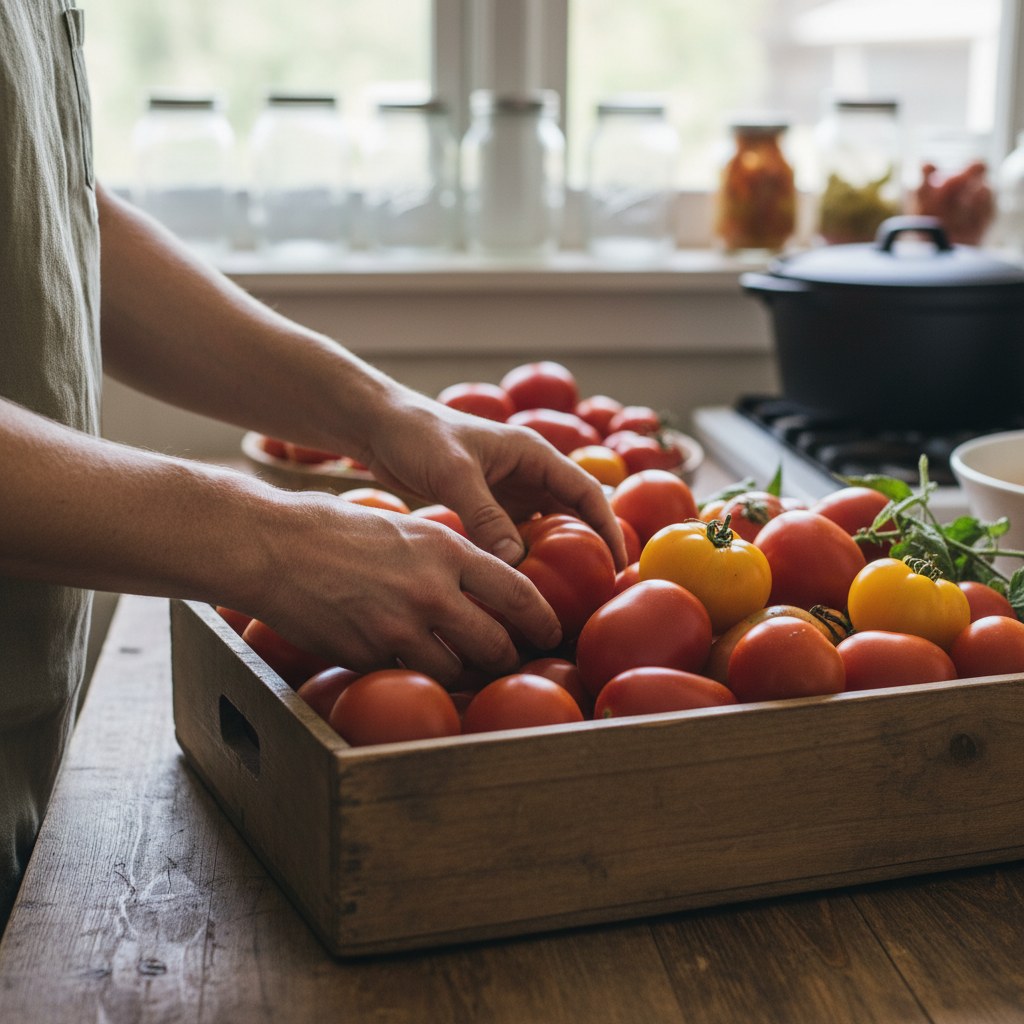
- Roma (Plum): The workhorse. Widely available, meaty, and consistent. Produces a thick product with minimal cooking down.
- San Marzano: The gold standard for sauce. Fewer seeds than Roma, sweeter flesh, and a reputation that’s well earned.
- Amish Paste. An heirloom paste variety with rich, complex flavor. Larger than Roma, excellent for sauce.
- Big Mama: A hybrid paste tomato that produces enormous fruits. Great yield per plant.
Can you use slicing tomatoes like Beefsteak or Brandywine? Yes, but you’ll get a thinner, more watery product. You’ll need more tomatoes per jar, and sauce will require longer cooking to reach the right consistency.
Quality Matters
Use ripe, unblemished tomatoes. Overripe is fine, great, even, for sauce. But avoid tomatoes with mold, soft spots, or signs of blight. Cut away any damaged areas completely. Never can tomatoes that have been frost-damaged, as frost can reduce acidity to unsafe levels.
How many do you need? Plan on roughly 3 pounds of tomatoes per quart jar for whole or halved tomatoes, and about 3.5 pounds per quart for crushed.
Essential Equipment
- Water bath canner or large stockpot with a rack. The pot needs to be deep enough for jars to be covered by 1 to 2 inches of water.
- Mason jars, lids, and bands. Use jars specifically designed for canning. Regular glass jars can crack during processing. Jars and bands are reusable; lids (the flat discs) should be new for each use.
- Jar lifter: Essential for safely moving hot jars in and out of boiling water.
- Wide-mouth funnel. Makes filling jars much cleaner.
- Bubble remover/headspace tool. A thin plastic tool (or a butter knife) for removing air bubbles.
- Bottled lemon juice. Not fresh. Bottled lemon juice has a standardized acidity level; fresh lemons vary.
Blanching and Peeling
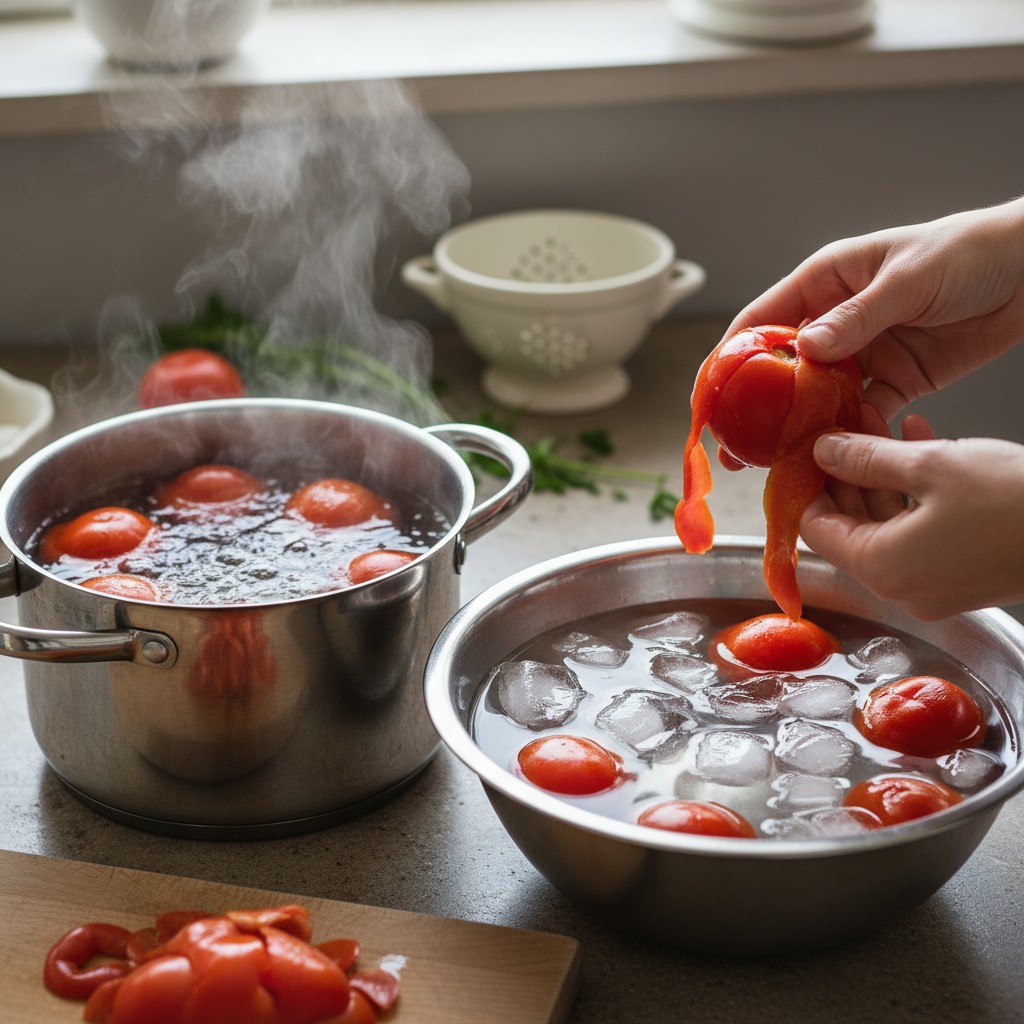
Tomato skins toughen during canning and become unpleasant to eat. Peeling them first takes a bit of time but makes a dramatically better product.
- Score the bottom. Cut a small X through the skin on the bottom of each tomato. Don’t cut deep: just through the skin.
- Boil briefly. Drop tomatoes into boiling water for 30 to 60 seconds, until you see the skin starting to curl back from the X.
- Ice bath. Transfer immediately to a bowl of ice water. This stops the cooking and makes handling easier.
- Peel. The skins should slip off easily. If they don’t, the tomato needed a few more seconds in the boiling water.
After peeling, core the tomatoes by cutting out the stem end with a paring knife.
I process tomatoes in batches of 6 to 8 at a time through the blanch-and-peel process. Set up the boiling pot and ice bath side by side and you’ll develop a rhythm quickly. With practice, you can peel 20 pounds of tomatoes in about 30 minutes.
The Acidification Rule
This is the single most important safety step in canning tomatoes, and it’s not optional.
While tomatoes are generally acidic, their pH can vary depending on variety, growing conditions, and ripeness. Some modern tomato varieties have been bred for lower acidity (sweeter taste), which means they can fall into the danger zone for botulism if water bath canned without added acid.
The USDA and National Center for Home Food Preservation require added acid for water bath canning of tomatoes:
- Bottled lemon juice: 2 tablespoons per quart, 1 tablespoon per pint
- Citric acid: ½ teaspoon per quart, ¼ teaspoon per pint
- Vinegar (5% acidity): 4 tablespoons per quart, but this can affect flavor more than lemon juice
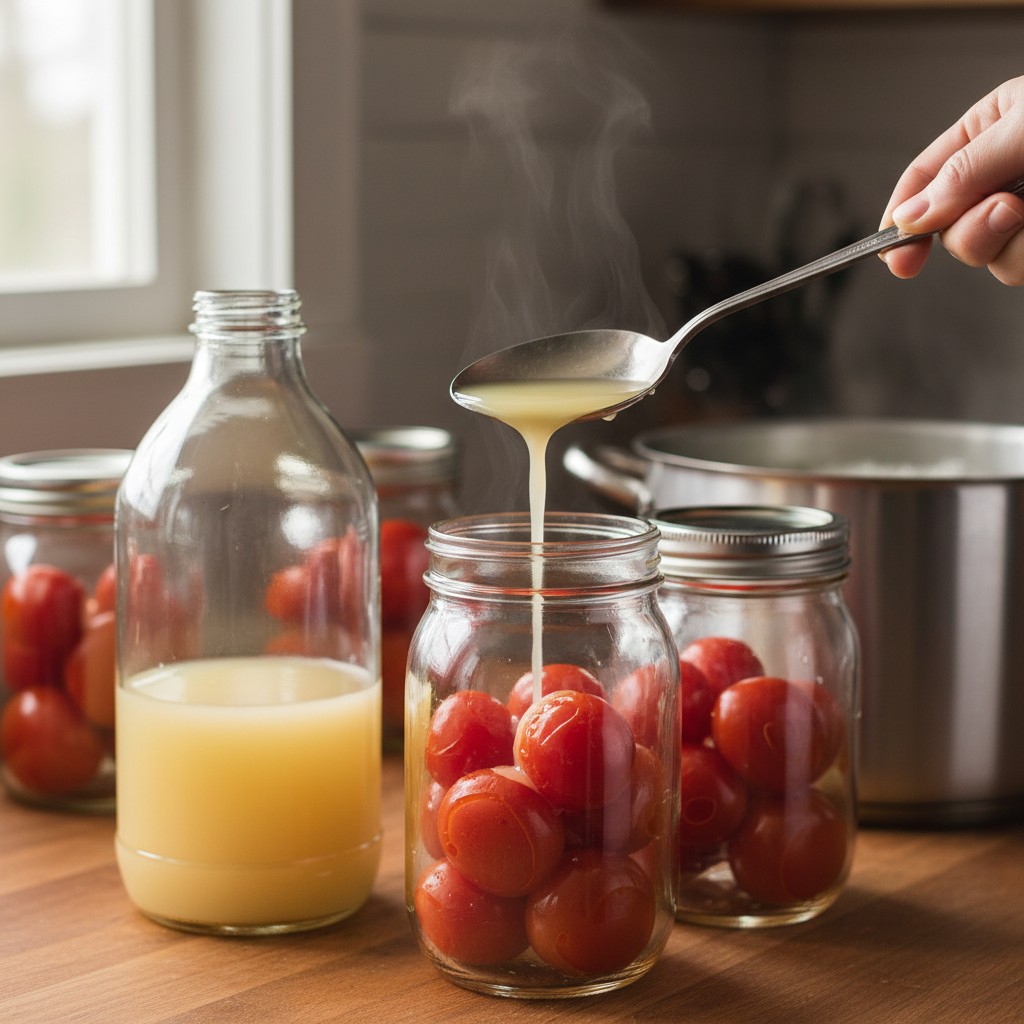
Add the acid directly to the jar before filling with tomatoes. If the lemon flavor bothers you (most people can’t taste it once the jar is opened and used in cooking), use citric acid instead. You can also add ½ teaspoon of sugar per jar to offset any perceived tartness.
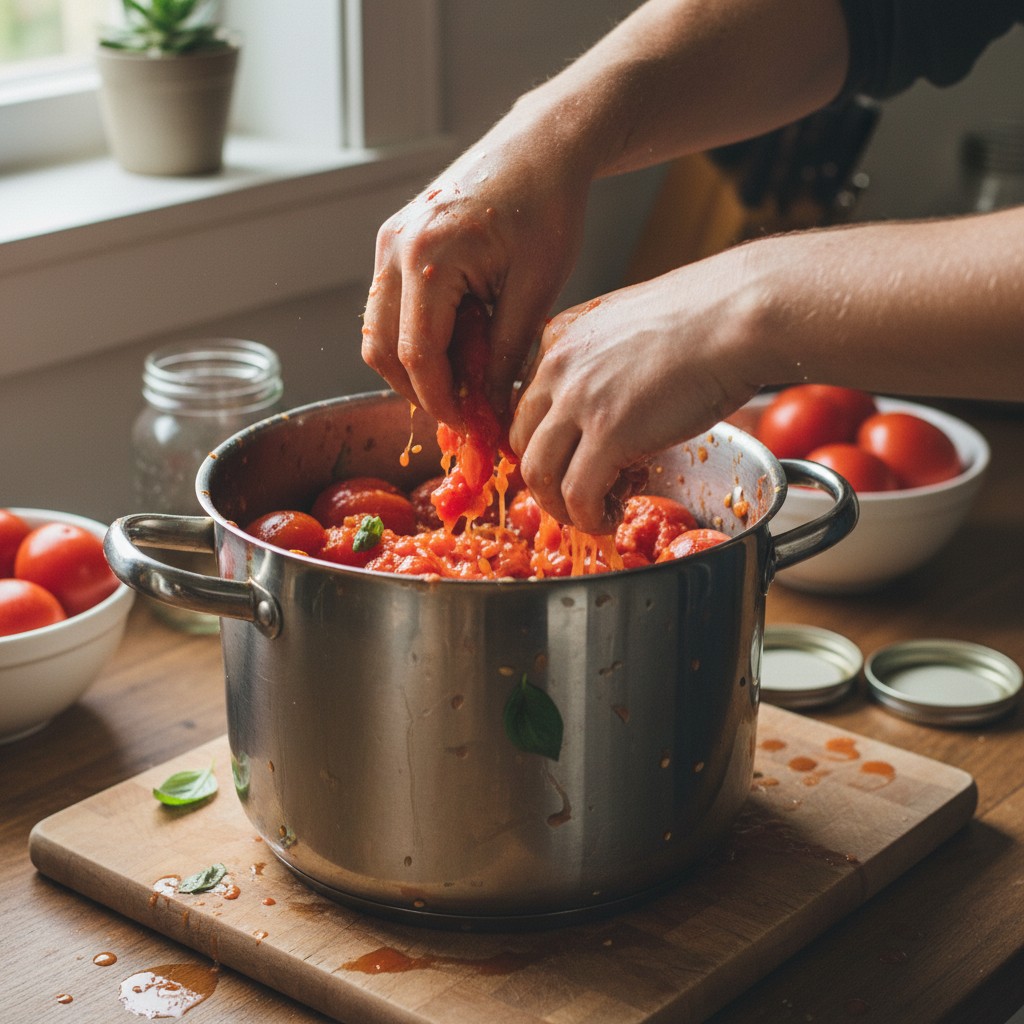
Three Methods: Whole, Crushed, and Sauce
Whole or Halved Tomatoes (Hot Pack)
Hot pack is recommended over raw pack for whole tomatoes. The pre-heating removes air from the tomato flesh, which means fewer floating tomatoes in the finished jar, better color retention, and a more appealing product.
Important: packing method changes processing times: The NCHFP-tested times differ depending on exactly how you pack whole tomatoes, and these methods are not interchangeable:
- Hot pack in tomato juice: 85 minutes for quarts, 85 minutes for pints (water bath)
- Raw pack in tomato juice: 85 minutes for quarts, 85 minutes for pints, same time, but the result has more floating and poorer color
- Raw or hot pack in water: 45 minutes for quarts, 40 minutes for pints, water dilutes acidity slightly more; lemon juice addition remains mandatory
- Whole or halved, packed raw with no added liquid: 85 minutes for both quarts and pints, the jars heat through slowly because the tomatoes are packed solid
- Crushed tomatoes (a different recipe): 45 minutes for quarts, 35 minutes for pints. These are the times for crushed tomatoes only, never for whole or halved ones, even when neither has added liquid
Always follow the specific tested recipe for whichever pack style you choose. Source: NCHFP. Whole or Halved Tomatoes.
- Add lemon juice to each clean, hot jar.
- Place peeled, cored whole tomatoes (or halved) in a large pot. Add enough tomato juice or water to cover. Bring to a boil and simmer for 5 minutes.
- Pack hot tomatoes into hot jars using a slotted spoon. Add hot cooking liquid, leaving ½ inch headspace.
- Optional: add 1 teaspoon of canning salt per quart for flavor (not required for safety).
- Remove air bubbles by running a bubble remover along the inside edges of the jar.
- Wipe jar rims with a clean, damp cloth. Apply lids and screw bands to fingertip-tight (snug, but not cranked down).
- Process in a boiling water bath: 45 minutes for quarts, 40 minutes for pints. Adjust for altitude (add 5 minutes for 1,001–3,000 feet; 10 minutes for 3,001–6,000 feet).
Crushed Tomatoes
Crushed tomatoes are the most versatile product in your pantry. They work in soups, stews, chili, pasta sauce, everything.
- Add lemon juice to each jar.
- Peel and core tomatoes. Quarter them.
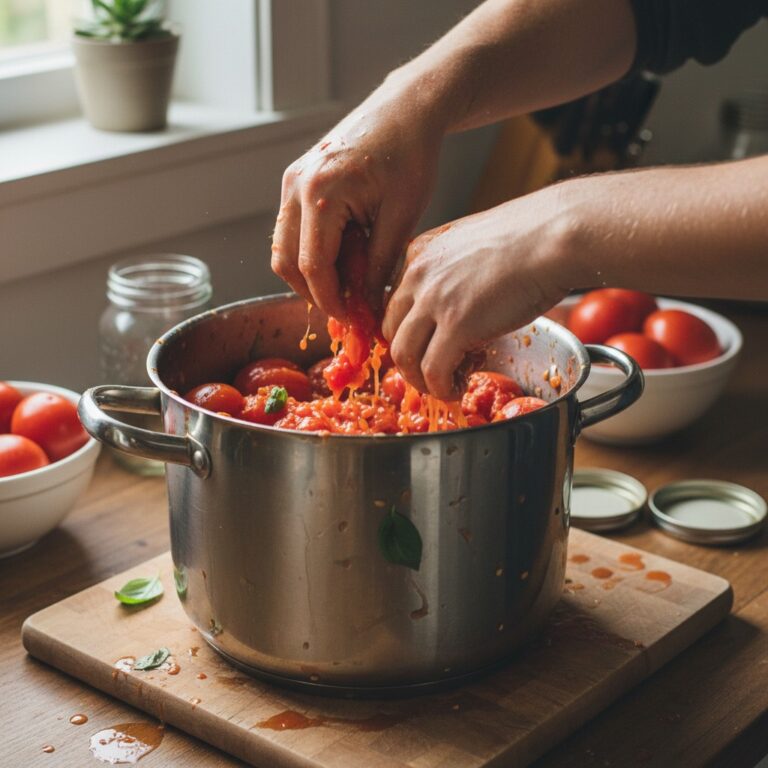
- Place about one-sixth of the quartered tomatoes in a large pot and crush them with a potato masher or the back of a spoon. Heat until boiling, stirring to prevent scorching.
- Add remaining quartered tomatoes a handful at a time, stirring constantly. Keep the mixture at a boil the entire time. Do not crush these, they’ll break down somewhat on their own, giving you a nice chunky texture.
- Boil gently for 5 minutes.
- Pack into hot jars with ½ inch headspace. No additional liquid needed, the crushed tomatoes create their own.
- Remove bubbles, wipe rims, apply lids.
- Process in boiling water bath: 45 minutes for quarts, 35 minutes for pints.
Tomato Sauce
Homemade canned tomato sauce requires more tomatoes per jar (since you’re cooking down the liquid) but produces a smooth, versatile base for cooking.
- Peel and core tomatoes. Quarter them and simmer in a large pot until soft, about 20 minutes.
- Run through a food mill or blend with an immersion blender until smooth.
- Return to the pot and simmer uncovered, stirring frequently, until reduced to your desired thickness. This can take 30 minutes to 2 hours depending on how watery your tomatoes are and how thick you want the sauce.
- Add lemon juice to each jar. Ladle hot sauce into hot jars with ½ inch headspace.
- Process in a boiling water bath at 0–1,000 ft: 40 minutes for quarts, 35 minutes for pints (hot pack). Add processing time at altitude: +5 min (1,001–3,000 ft), +10 min (3,001–6,000 ft), +15 min (6,001–8,000 ft), +20 min (8,001–10,000 ft). Source: NCHFP Standard Tomato Sauce.
Important: do not add any other vegetables, meat, oil, or thickeners to sauce you plan to water bath can. These additions lower the acidity and require pressure canning. Herbs and garlic in small amounts are fine for flavor, but onions, peppers, and other vegetables in significant quantities change the safety equation. If you want a full-flavored pasta sauce with added vegetables, use a tested pressure canning recipe or freeze it instead.
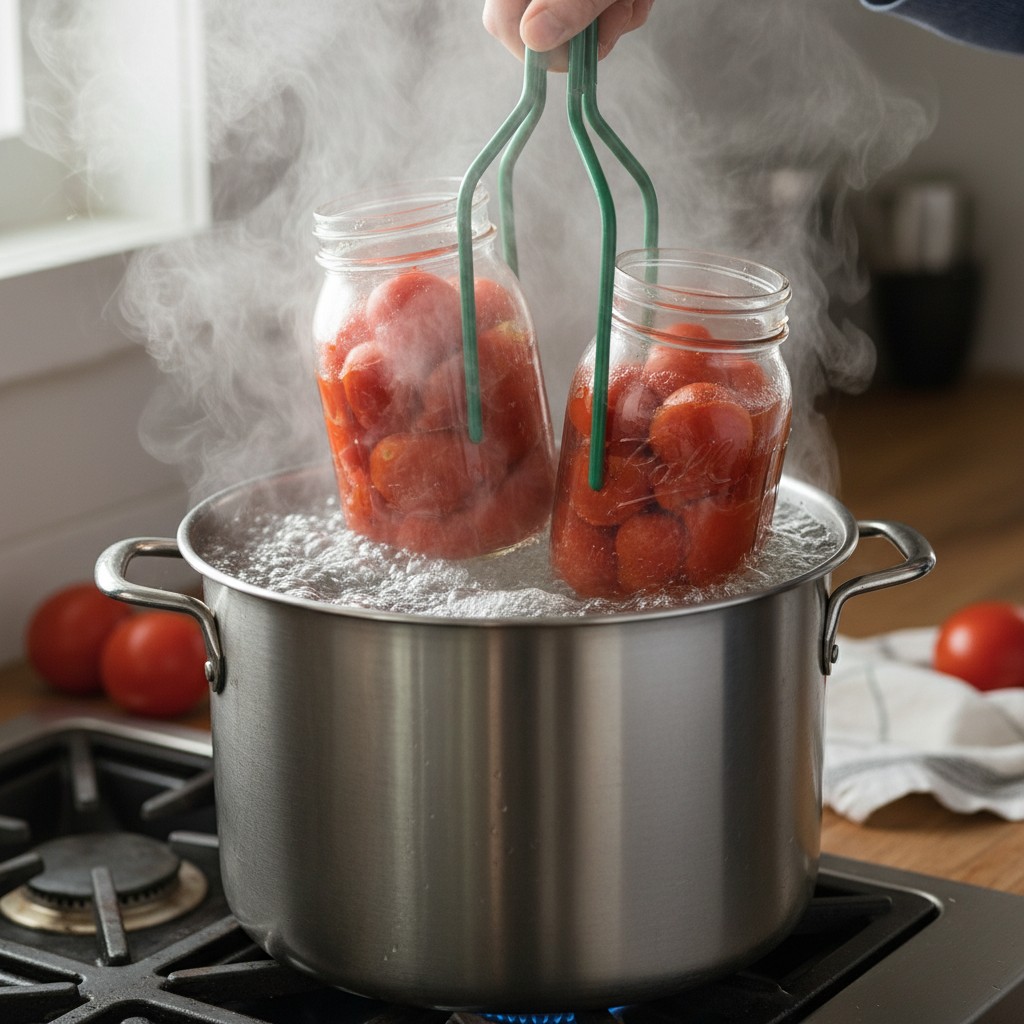
Common Mistakes and How to Avoid Them
Skipping the Acid
This is the most dangerous mistake. Botulism is rare but deadly, and tomatoes sit right on the edge of the pH safety threshold. Always add the lemon juice or citric acid. No exceptions.
Using Random Jars
Mayonnaise jars, pasta sauce jars, and other commercial glass jars are not designed for home canning. They can crack during processing or fail to seal properly. Use mason jars from Ball, Kerr, or another canning-specific brand.
Not Adjusting for Altitude
Water boils at a lower temperature at higher elevations, which means less effective processing. If you live above 1,000 feet, you must increase processing time. Check the USDA Complete Guide to Home Canning for specific adjustments.
Overfilling or Underfilling Jars
Headspace matters. Too little headspace and the contents can boil out during processing, preventing a proper seal. Too much headspace and there may not be enough heat penetration to sterilize the contents. Follow the ½ inch headspace guideline for tomatoes.
Tightening Bands Too Much
Fingertip-tight means snug but not forced. Over-tightened bands prevent air from escaping during processing, which can cause jar breakage or false seals.
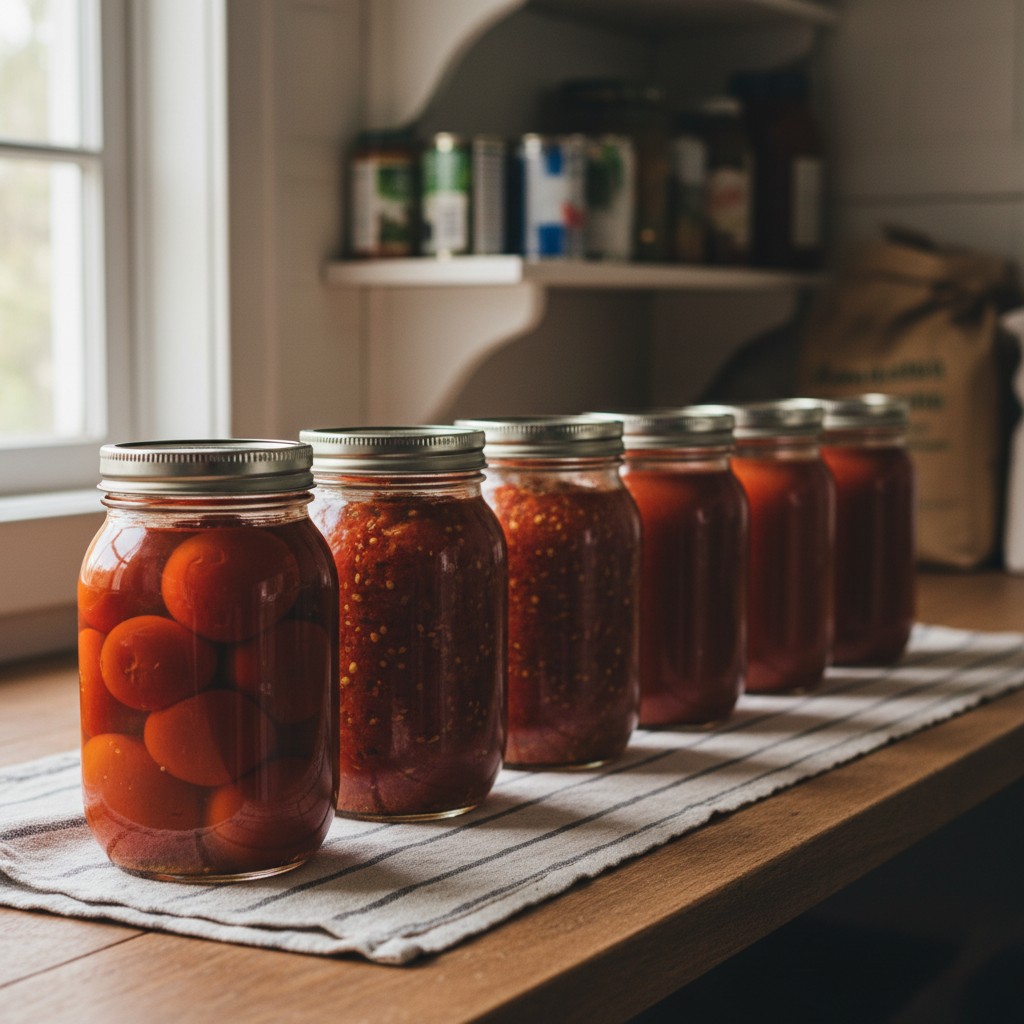
After Processing: Checking Seals
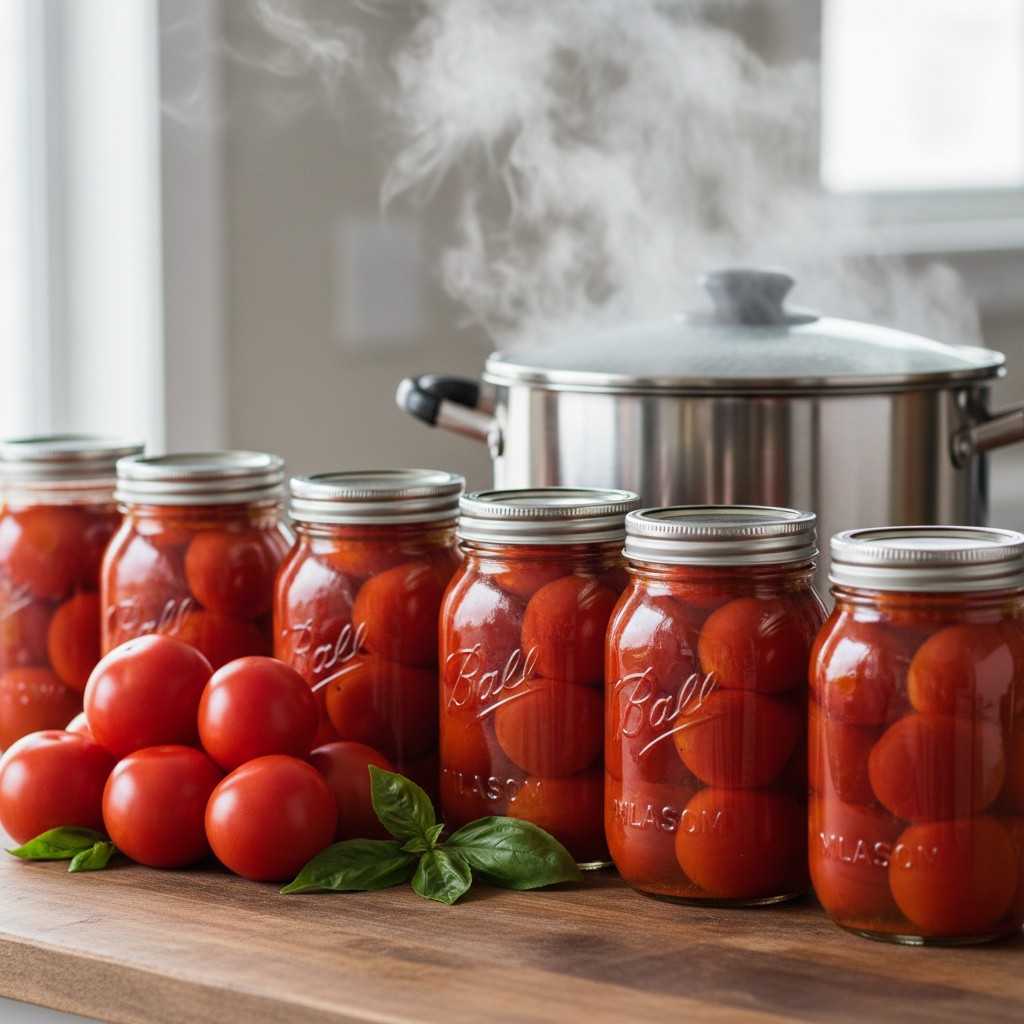
Remove jars from the water bath and place them on a towel-lined counter. Don’t touch them for 12 to 24 hours. You’ll hear the satisfying “pop” or “ping” as lids seal, music to a canner’s ears.
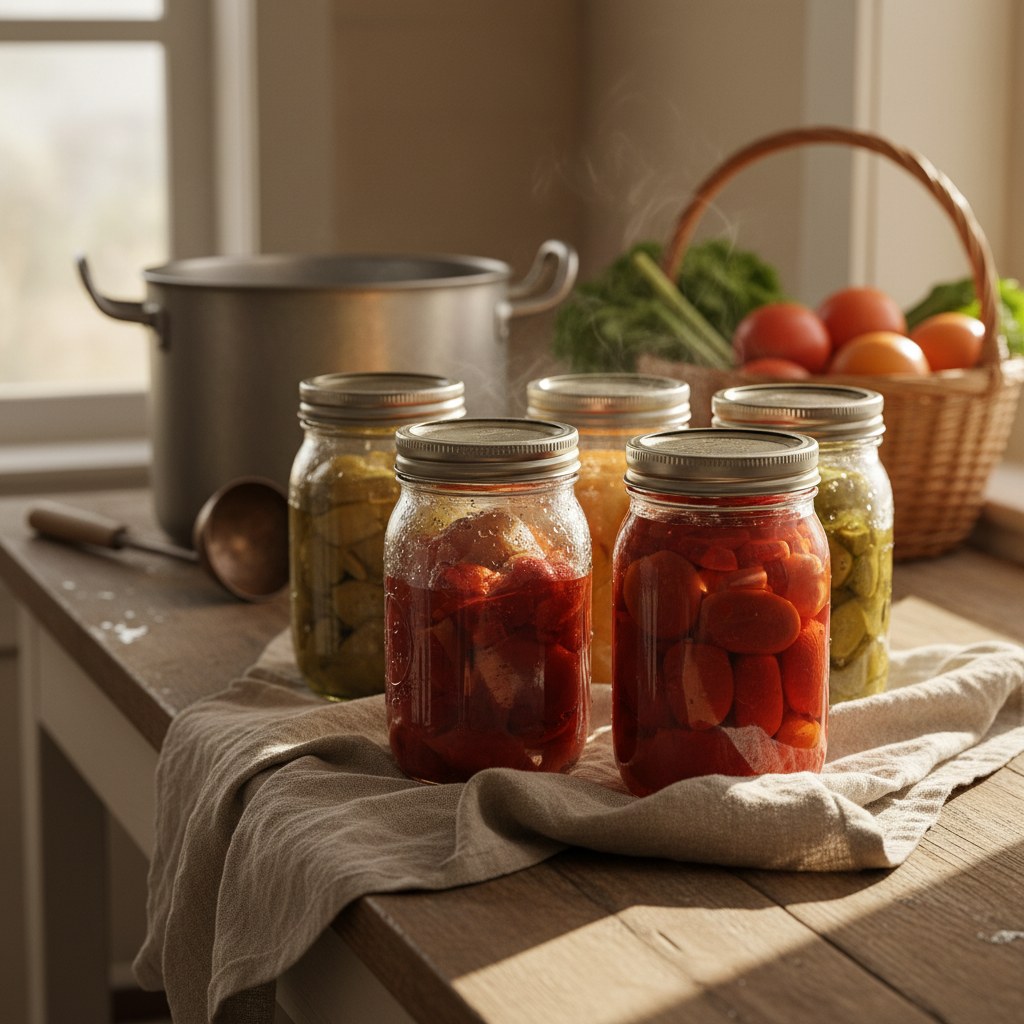
After 24 hours, check each seal by pressing the center of the lid. It should be concave (dipped down) and should not flex when pressed. If a lid flexes or pops up and down, it didn’t seal. Refrigerate that jar and use it within a week, or reprocess with a new lid within 24 hours.
Remove the screw bands for storage (they can rust and make jars hard to open later). Label each jar with the contents and date. Store in a cool, dark place. Properly canned tomatoes maintain best quality for 12 to 18 months.
🌱 From Our Homestead
We canned 80 quarts of tomatoes last August, our biggest batch ever. By mid-winter, opening a jar of home-canned tomatoes for pasta sauce is like getting a little taste of summer, and it is the single most-used item in our entire pantry.
Frequently Asked Questions
Can I can tomatoes without a water bath canner?
You can use any pot deep enough for the jars to be covered by 1 to 2 inches of water with room for a rolling boil. You’ll need a rack on the bottom to prevent jars from sitting directly on the pot’s base, a folded kitchen towel works in a pinch, or you can wire together a set of canning bands to create a makeshift rack. The pot needs to be at least 3 inches taller than your jars.
Why are my canned tomatoes separating in the jar?
Separation: a layer of watery liquid at the bottom with thicker tomato floating on top, is caused by an enzyme in tomatoes that’s activated when the fruit is cut. The enzyme breaks down pectin, releasing water. To minimize this, heat your first batch of cut tomatoes quickly to a boil (which deactivates the enzyme) before adding more. The crushed tomato method described above helps prevent this.
Can I add garlic, basil, or other seasonings to my canned tomatoes?
Small amounts of dried herbs, garlic, and salt are fine and won’t affect the acidity enough to cause safety issues. What you should not add to water bath canned tomatoes: significant quantities of onions, peppers, celery, or other low-acid vegetables; any meat or seafood; oil or butter; or thickeners like flour or cornstarch. These additions lower the acidity and require pressure canning at higher temperatures to be safe.
My tomatoes floated to the top of the jar after processing. Are they safe?
Floating is a cosmetic issue, not a safety issue. It happens most often with raw-pack tomatoes because air trapped in the fruit causes them to float above the liquid. The tomatoes above the liquid line may darken over time but are still safe to eat if the jar sealed properly. To prevent floating in future batches, use the hot pack method and remove air bubbles thoroughly before processing.