How to Keep Chickens Cool in Summer Heat
Key Takeaways
- Chickens don’t sweat, they cool down by panting and holding their wings away from their bodies, and they start showing heat stress at around 85°F.
- Adequate shade and ventilation are your two most important defenses against summer heat loss, outperforming any other single intervention.
- Electrolyte water with a small amount of apple cider vinegar helps chickens maintain hydration and mineral balance during heat waves.
- Frozen treats, shallow wading pools, and misting systems can reduce ambient temperatures in the coop area by 10-20°F.
- Some breeds handle heat far better than others. Mediterranean breeds like Leghorns and Andalusians thrive in hot climates where heavy breeds like Orpingtons struggle.
Understanding Heat Stress in Chickens
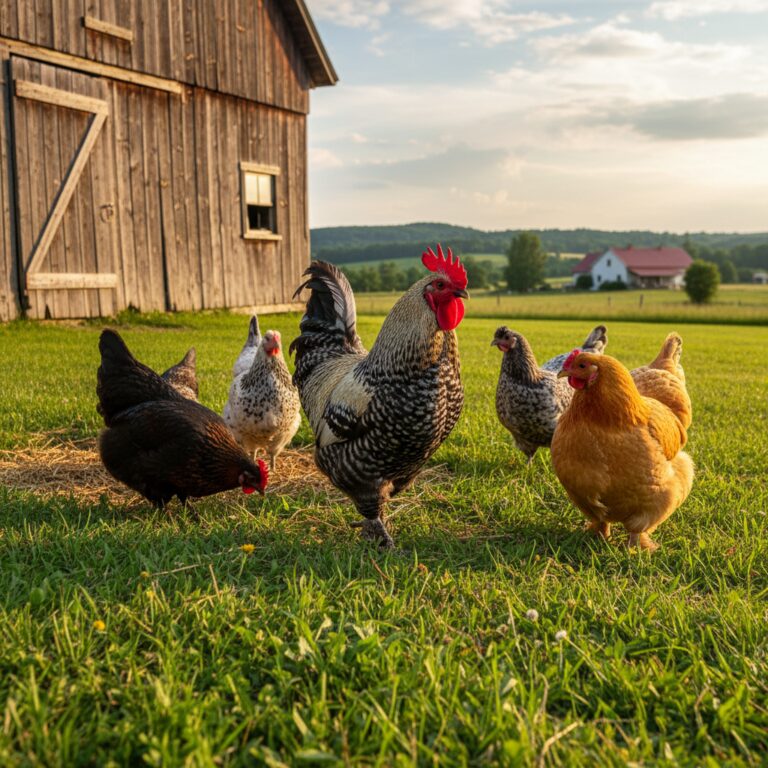
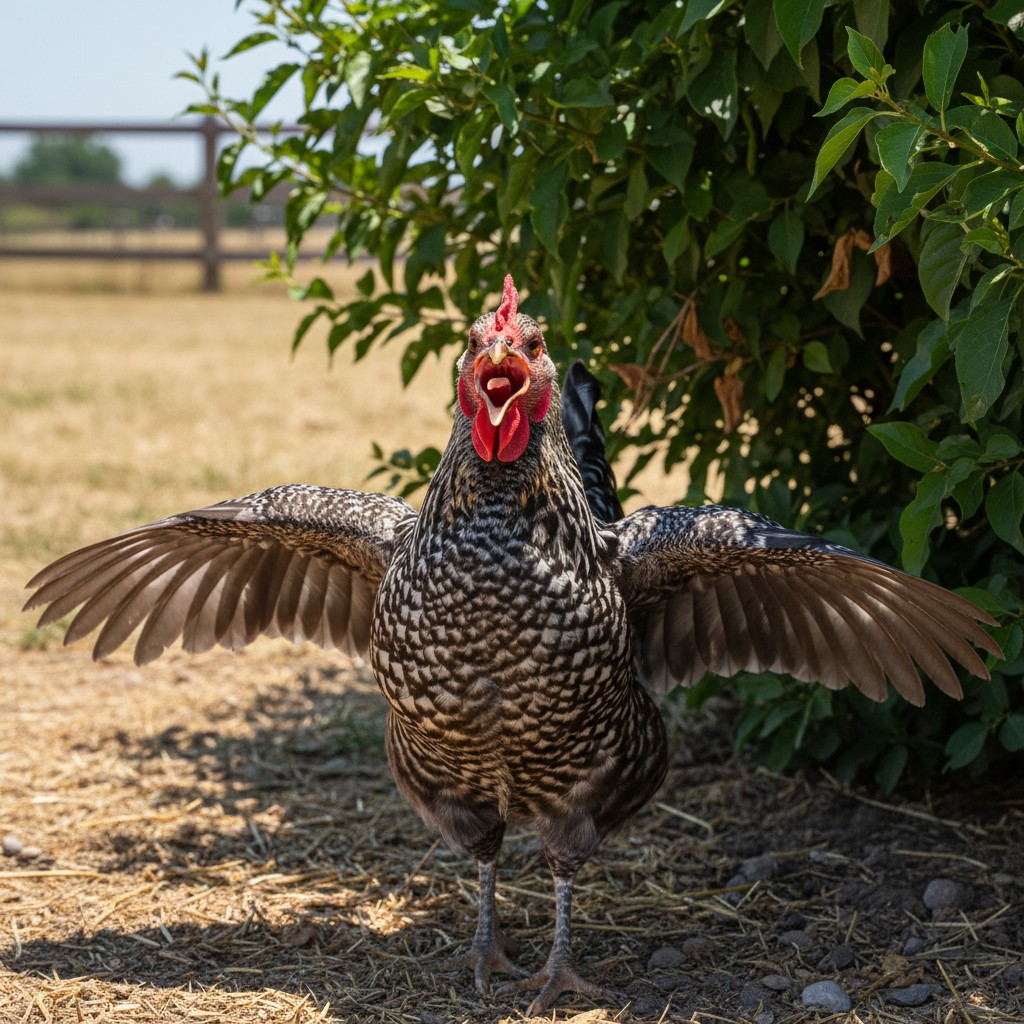
Chickens and heat don’t mix well. Unlike humans, chickens can’t sweat. Their primary cooling mechanism is panting, rapidly moving air over the moist surfaces of their respiratory tract to release heat through evaporation. They also radiate heat through their combs, wattles, and exposed skin, and hold their wings away from their bodies to increase airflow.
These systems work reasonably well up to about 85°F. Above that, especially when humidity is high, chickens start struggling. By the time temperatures hit 95°F and above, you’re in dangerous territory. Heat-related deaths in backyard flocks spike every summer, and most of them are preventable with some basic preparation.
The tricky part? A healthy-looking flock at 8 AM can have dead birds by 3 PM when the heat peaks. Knowing the warning signs and having systems in place before the heat arrives makes all the difference.
Recognizing the Signs of Heat Stress
Know what to watch for so you can intervene early:
Early Signs (Act Now)
- Panting with an open beak: This is normal cooling behavior, but if every bird in your flock is panting, the temperature is pushing their limits.
- Wings held away from the body: They’re trying to expose more skin to air. Again, normal in warm weather, but a signal to monitor closely.
- Increased water consumption: Chickens can drink 2-3 times their normal amount in extreme heat.
- Reduced feed intake: Digesting food generates body heat. Smart birds eat less during the hottest hours.
- Pale combs and wattles: Blood is being redirected to cooling rather than maintaining the vibrant red color you’re used to seeing.
Serious Signs (Emergency)
- Lethargy and unresponsiveness: A hen that’s sitting still with her beak open and barely reacting to you is in trouble.
- Staggering or loss of coordination: Heat is affecting the brain. This bird needs immediate cooling.
- Convulsions or seizures: This is heat stroke. Survival rates drop sharply at this stage.
- Drop in egg production: Not an emergency, but a clear sign your flock is stressed. Hens often stop laying entirely during heat waves, and it can take weeks for production to recover.
Shade Solutions That Actually Work
Shade is your single most effective tool. A shaded area can be 10-15°F cooler than direct sun, and it costs little or nothing to create.
Natural Shade
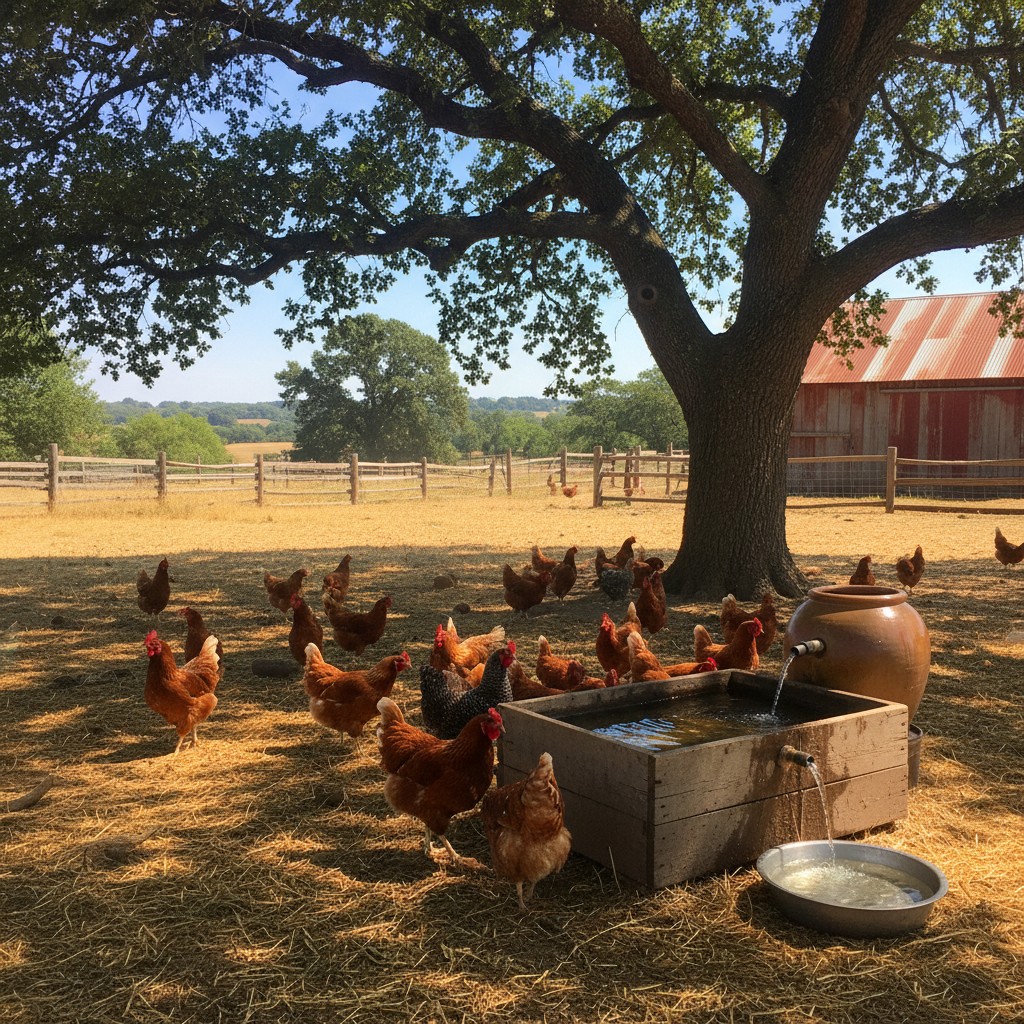
Trees are the best shade source because they provide cooling through transpiration, the air under a tree canopy is genuinely cooler than air under a solid roof. If you’re planning a chicken run or pasture area, position it where existing trees provide afternoon shade (the west side of a tree line is ideal).
Planting fast-growing trees or shrubs near your coop is a long-term investment. Sunflowers, planted on the south and west sides of the run in spring, can provide 6-8 foot tall shade walls by midsummer. They’re cheap, the chickens love the seeds in fall, and you replant them every year.
Constructed Shade
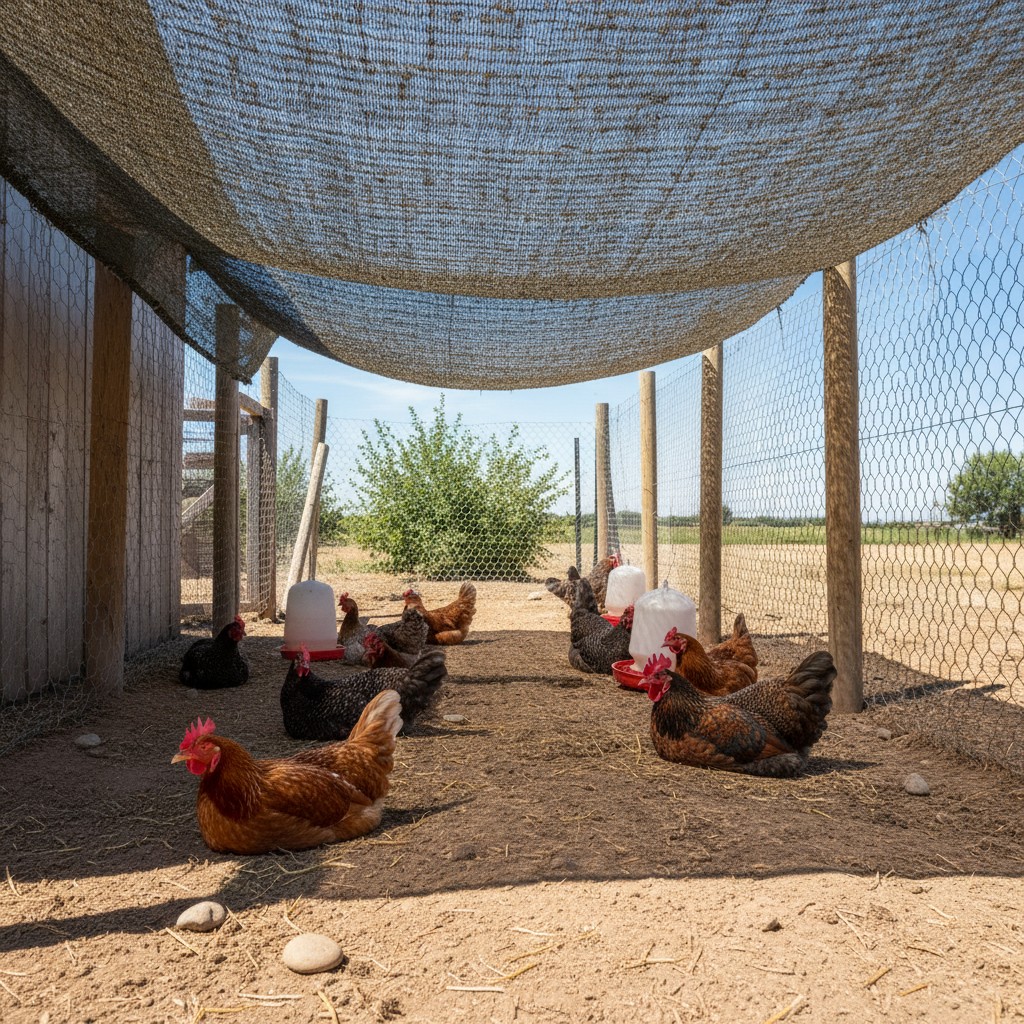
Shade cloth is the homesteader’s best friend in summer. A 70-80% shade cloth panel stretched over part of the run blocks most direct sunlight while still allowing airflow. You can attach it to T-posts, the run frame, or a simple PVC structure. A 10×20 foot shade cloth panel costs about $25-40 and lasts several seasons.
Tarps work in a pinch but are less ideal, they block airflow and can create a greenhouse effect underneath if positioned too low. If you use a tarp, keep it high (at least 6-7 feet overhead) so air can circulate beneath it.
Plywood lean-tos, old pallets propped at an angle, even a patio umbrella anchored in the run, anything that creates shade where your chickens spend their afternoons is worth doing.
Water: Your Second Line of Defense
A chicken can drink over a pint of water per day in extreme heat. Multiply that by your flock size and then double it for a safety margin, that’s how much clean, cool water you need available at all times.
Keep Water Cool
Water sitting in direct sun in a black rubber bowl can reach 100°F+ by afternoon. Nobody wants to drink hot water on a scorching day, and hot water doesn’t cool a chicken down.
- Place waterers in the shade, always.
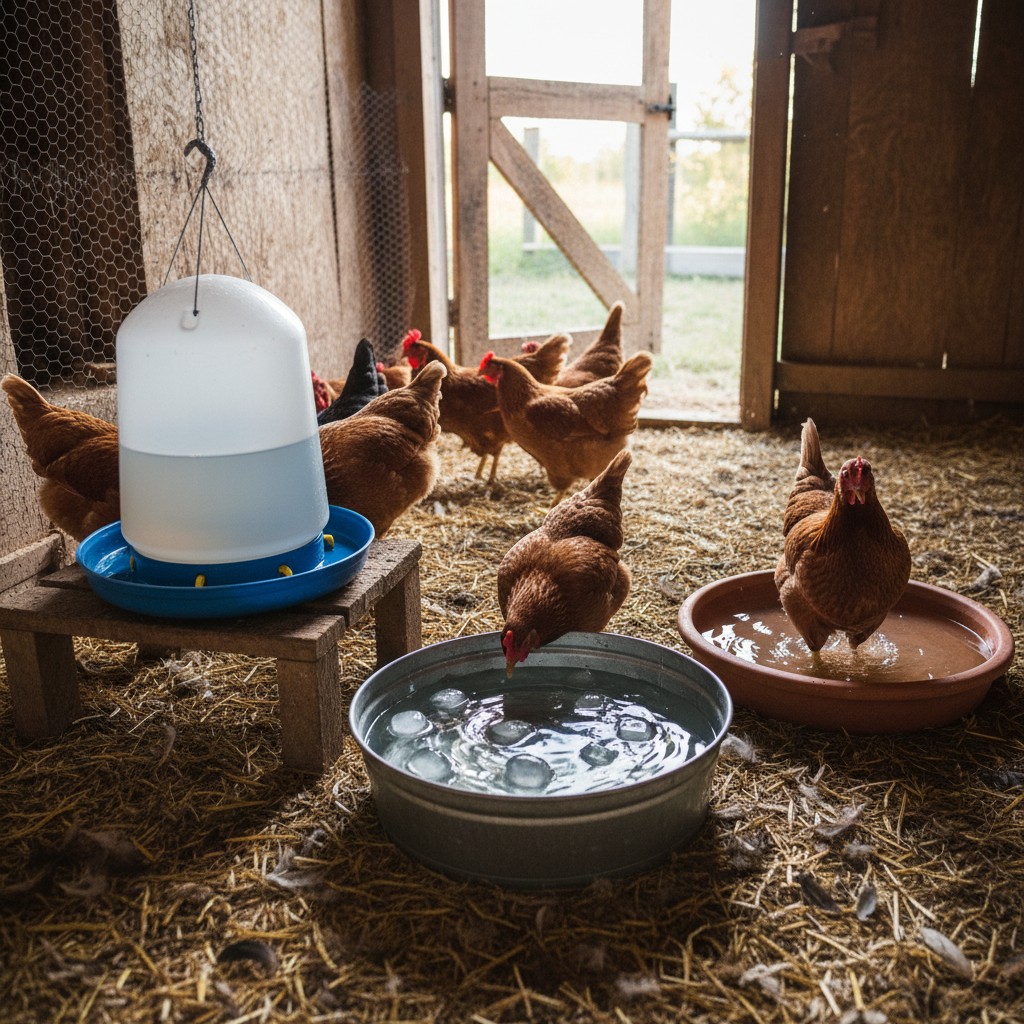
- Add ice blocks to waterers in the morning. Freeze water in empty milk jugs or plastic containers overnight and float them in your waterers.
- Use light-colored waterers. White or galvanized metal reflects heat better than dark plastic.
- Refresh water at least twice daily during heat waves. Warm, stagnant water breeds bacteria fast.
Electrolyte Water
When chickens pant heavily, they lose electrolytes, particularly potassium and sodium. Adding electrolytes to their water helps maintain the mineral balance they need to cope with heat.
You can buy commercial poultry electrolyte packets (like Sav-A-Chick) or make your own: mix 1 teaspoon of baking soda, 1 teaspoon of potassium chloride (salt substitute), and 1 tablespoon of sugar per gallon of water. A splash of apple cider vinegar (1 tablespoon per gallon) can help as well.
Important: always provide a plain water option alongside electrolyte water. Some birds don’t like the taste and will dehydrate rather than drink flavored water.
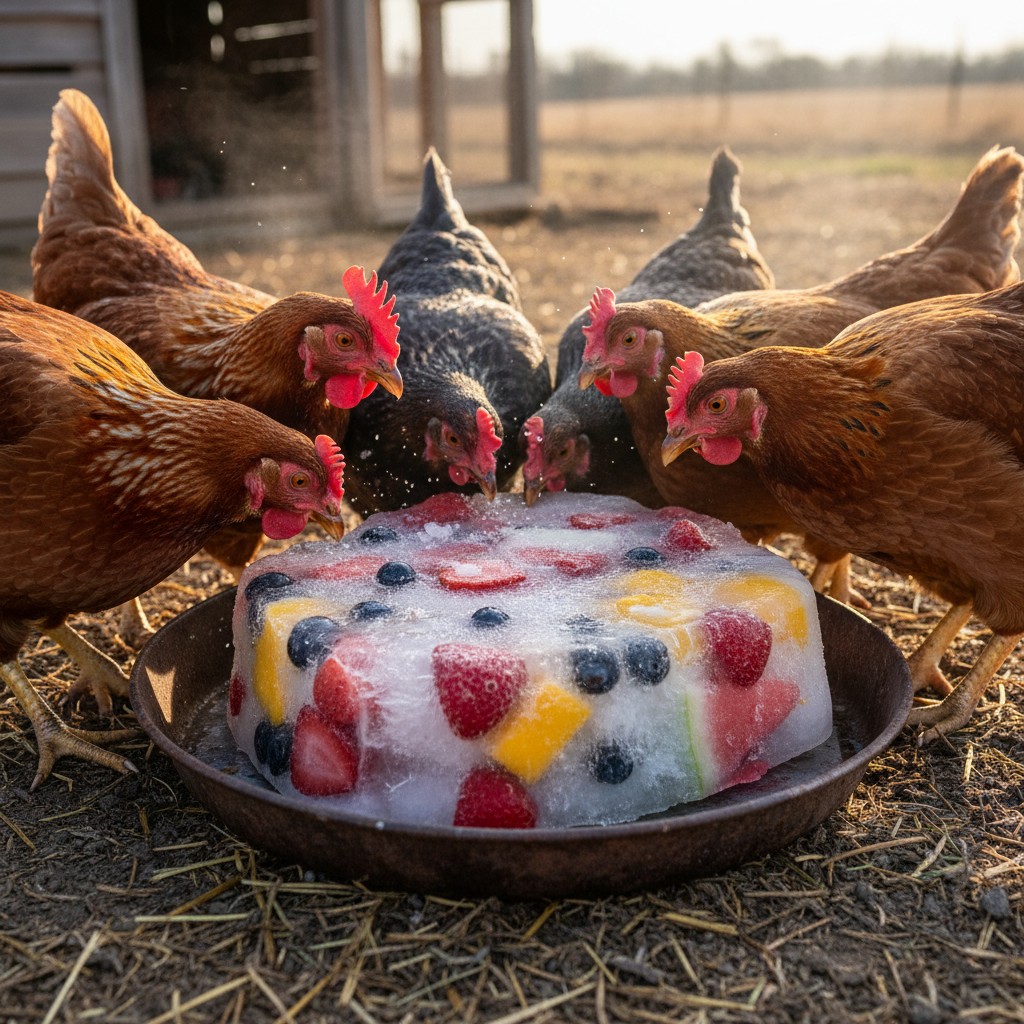
Frozen Treats and Cooling Snacks
Frozen treats serve double duty, they cool chickens down and keep them eating when they’d otherwise skip meals in the heat.
Easy Frozen Treats
- Frozen watermelon: Cut a watermelon in half and freeze it overnight. Set it out in the afternoon. Chickens go absolutely wild for cold watermelon, and the high water content helps with hydration.
- Frozen fruit and vegetable blocks: Fill a bundt pan or bucket with water, add chopped fruits, vegetables, and herbs, and freeze solid. The resulting ice block provides entertainment and cooling for hours as the chickens peck at it.
- Frozen corn on the cob: Simple and effective. Freeze ears of corn and toss them in the run.
- Chilled cucumbers: High water content, easy to grow in your garden, and chickens love them.
Avoid feeding scratch grains or corn in hot weather, digesting high-energy grains generates more body heat. Save those for cold winter days when your birds need the extra warmth.
Ventilation and Airflow
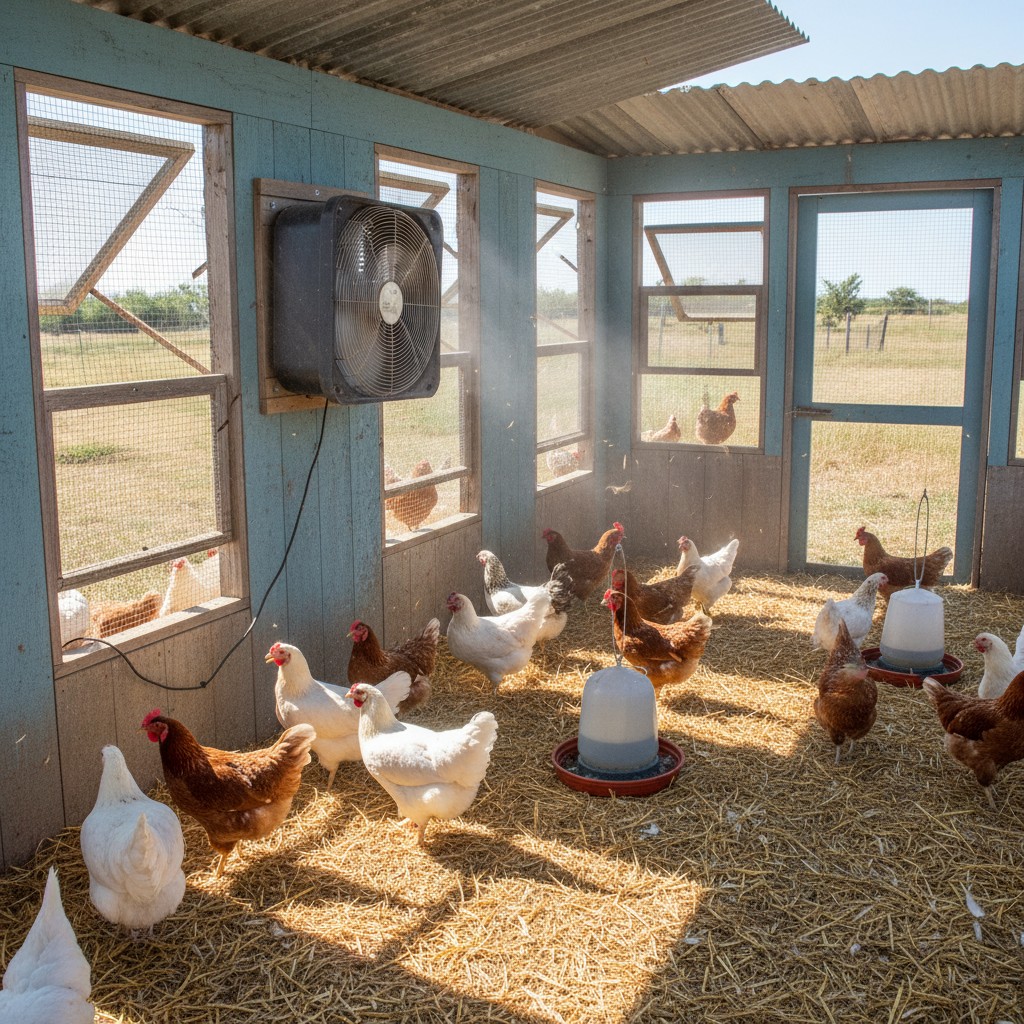
A well-ventilated coop is worth more than every other cooling trick combined. Hot, still air inside a coop can be 10-20°F hotter than the outside temperature. That’s deadly.
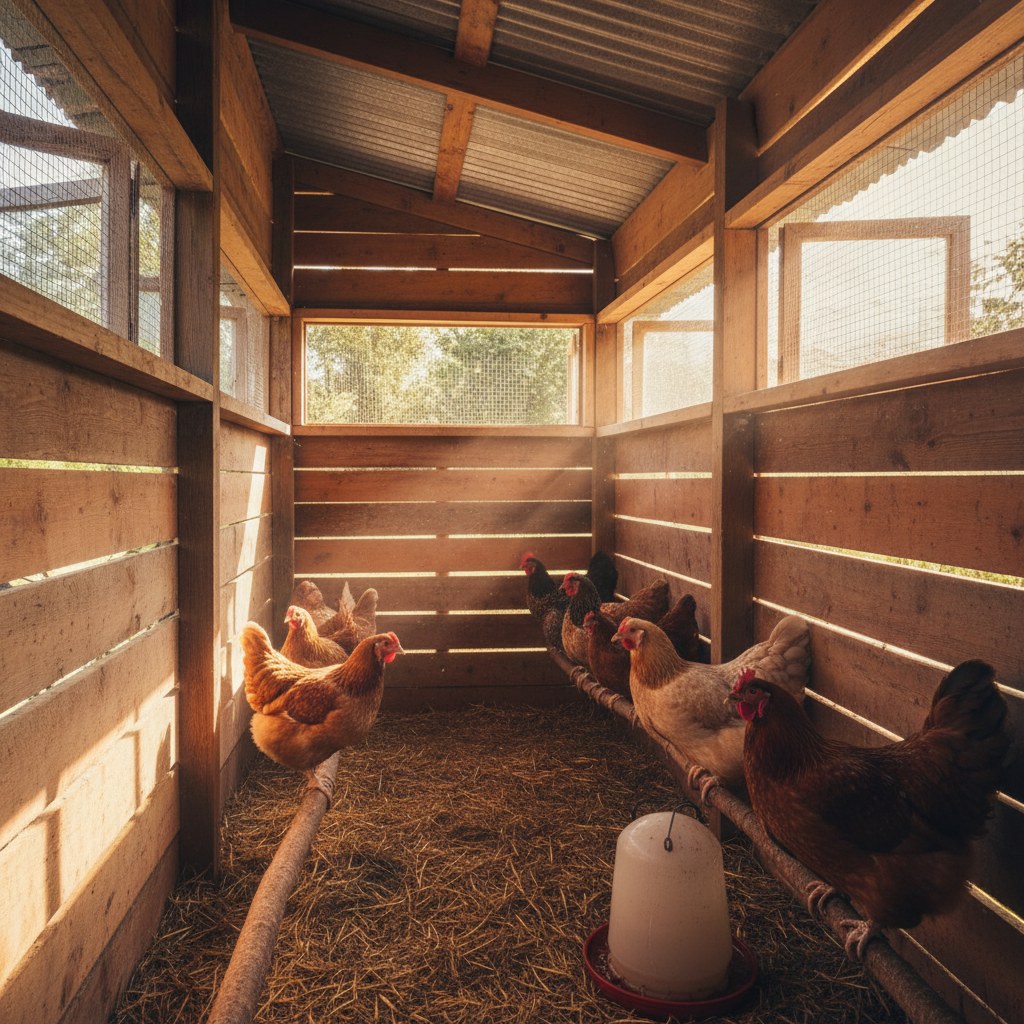
Passive Ventilation
Your coop should have ventilation openings near the roofline on at least two sides, ideally on all four. Hot air rises and exits through the top while cooler air is drawn in from lower openings. Hardware cloth over vents keeps predators out while allowing airflow.
During summer, open every vent, window, and door that can be safely opened. If your coop has a solid door, consider replacing it with a hardware cloth door for the summer months, full security with maximum airflow.
Fans
A box fan or agricultural fan positioned to move air through the coop makes a significant difference. Place it where it creates a cross-breeze, ideally blowing from the cooler side of the coop through the warmer side and out. Even a simple $20 box fan can lower the effective temperature inside a coop by several degrees.
Make sure all electrical connections are protected from moisture and pecking. Use outdoor-rated extension cords and secure fans where birds can’t reach the blades or cords.
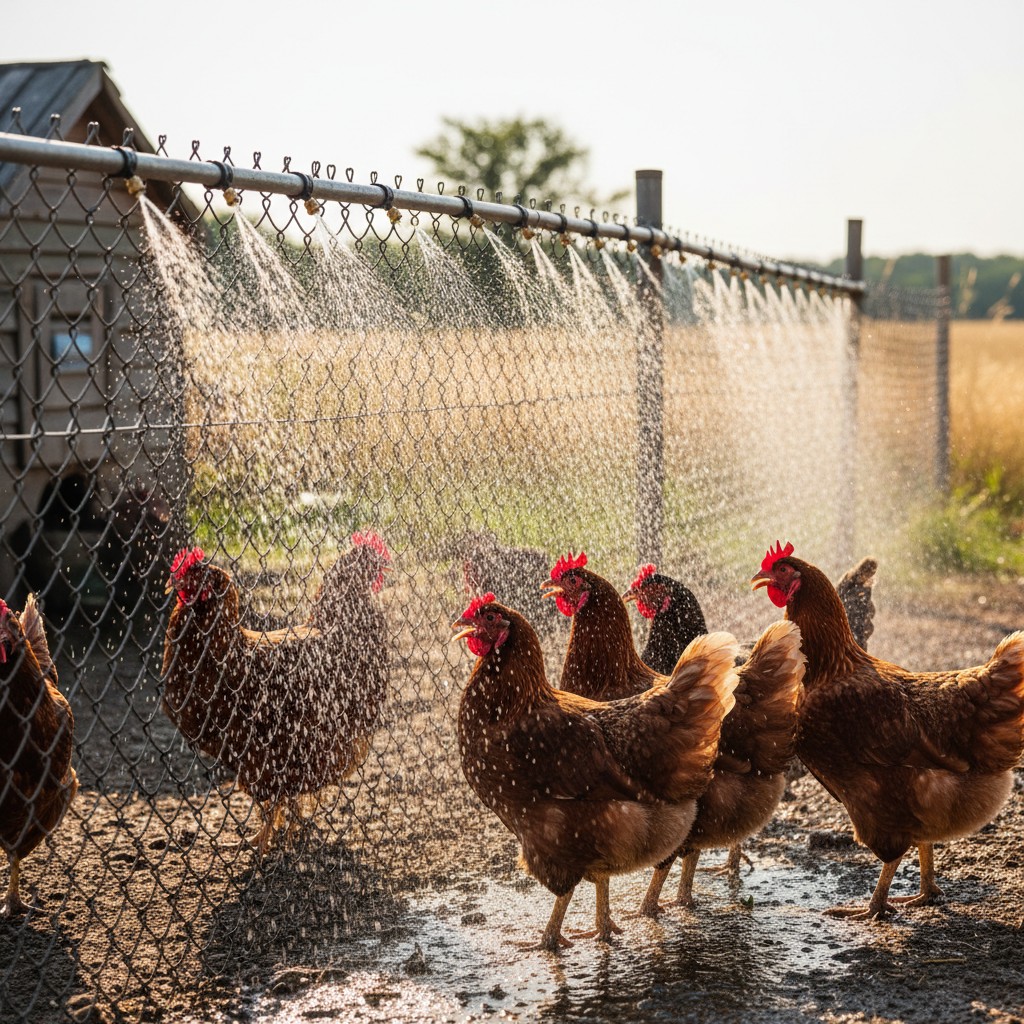
Misting Systems
A misters system along the run fence line or attached to the coop can drop ambient temperatures by 10-20°F through evaporative cooling. Basic misting kits that attach to a garden hose cost $15-30 and take minutes to install.
A word of caution: misting works best in low-humidity environments. In the humid Southeast, misting can actually make things worse by raising the humidity without sufficiently dropping the temperature. If your summers are already 80%+ humidity, focus on shade and airflow instead of misting.
Breeds That Handle Heat Well
If you live in a hot climate, breed selection is your most powerful long-term strategy. Breeds developed in Mediterranean and tropical regions have heat-tolerant traits built in over centuries.
Heat-Tolerant Breeds
- Leghorns: Light bodies, large combs, and active foragers. The classic hot-weather layer.
- Andalusians: Another Mediterranean breed with excellent heat tolerance and good egg production.
- Easter Eggers: Generally lean and hardy across temperature extremes.
- Rhode Island Reds: Surprisingly tough in heat for a dual-purpose breed.
- Minorcas: Large combs (great for heat radiation), lean build, well-adapted to warm climates.
- Naked Necks (Turkens): Their reduced feathering is a genuine advantage in heat. Studies have shown Naked Necks maintain lower body temperatures than fully feathered breeds in the same conditions.
Breeds That Struggle in Heat
- Orpingtons: Beautiful birds, but their dense, fluffy plumage is a down coat in summer.
- Cochins: Heavy, feathered feet, and thick plumage, triple threat for heat stress.
- Brahmas: Large bodies and heavy feathering make them better suited to cold climates.
- Silkies: Their unique feather structure doesn’t insulate efficiently in either direction, but their small size and inability to fly to breezy spots puts them at risk.
Emergency Cooling: What to Do Right Now
If you find a chicken showing serious heat stress symptoms, limp, panting heavily, unresponsive, staggering, act fast.
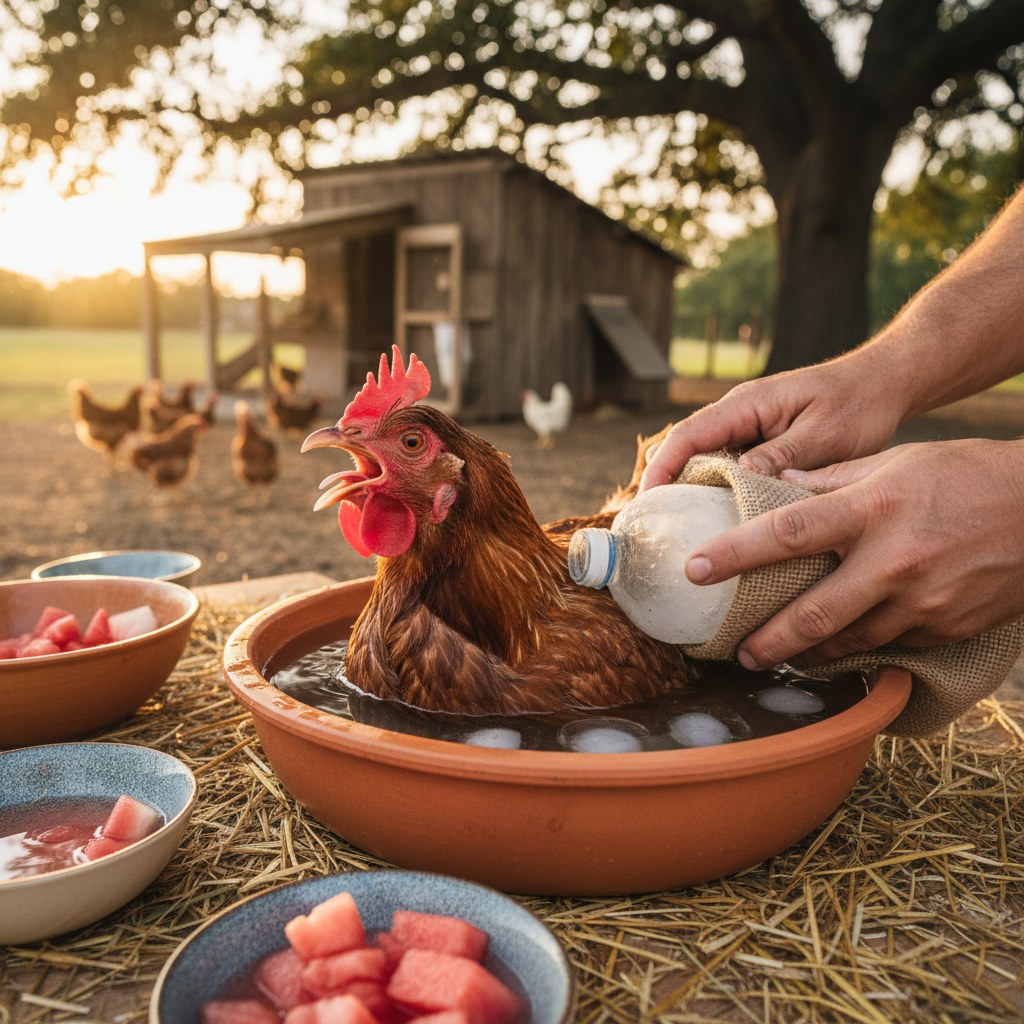
- Move the bird to shade immediately. A cool, dark spot inside a garage or basement is ideal.
- Submerge the bird’s feet and legs in cool (not cold) water. Chickens lose significant heat through their feet and legs. A shallow pan of room-temperature water works. Don’t use ice water, the shock of extreme cold can be as dangerous as the heat itself.
- Wet the comb, wattles, and under the wings. These are the primary heat-exchange areas. A damp cloth works. Again, cool water, not ice.
- Offer water with electrolytes. If the bird won’t drink, use a syringe or dropper to gently place a few drops on the beak. Don’t force water into the mouth, you can cause aspiration.
- Keep the bird quiet and monitor. Recovery can take 30 minutes to several hours. If the bird doesn’t improve within an hour, the prognosis is poor.
Prevention always beats treatment. A bird that’s been severely heat-stressed may survive but often suffers lasting damage, reduced egg production, compromised immune system, and increased susceptibility to future heat events.
Building a Summer-Ready Setup
Here’s a checklist to tackle before the heat arrives:
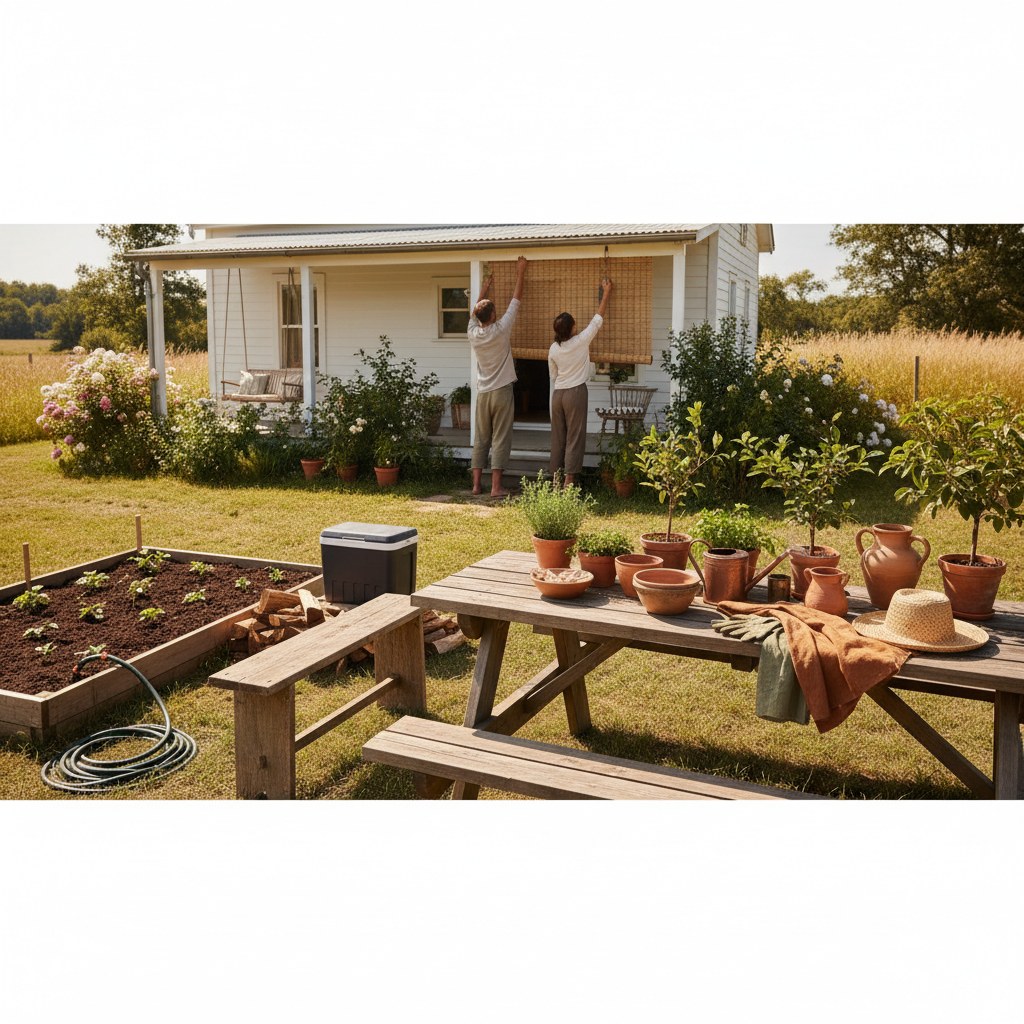
- Install shade cloth over at least half the run area
- Add a second waterer so birds always have a backup water source
- Open or add additional ventilation to the coop
- Set up a fan with a safe electrical connection
- Freeze several jugs of water for daily ice blocks
- Stock electrolyte packets or mix ingredients
- Plant sunflowers along the south and west sides of the run
- Switch to morning and evening feeding (skip midday in extreme heat)
- Install a misting system if you’re in a low-humidity area
Frequently Asked Questions
At what temperature should I start worrying about my chickens?
Most chickens begin showing mild heat stress signs around 85°F, and the danger zone starts at 95°F and above. However, humidity matters enormously, 90°F with 80% humidity is far more dangerous than 100°F with 20% humidity, because evaporative cooling (panting) becomes less effective in humid air. Watch your birds’ behavior rather than relying solely on the thermometer.
Should I bring my chickens inside during a heat wave?
Generally, no. Moving chickens creates additional stress, and indoor environments may lack the ventilation they need. You’re better off improving conditions where they are, adding shade, fans, and cool water. The exception is a single bird showing heat stroke symptoms, which should be moved to a cool, quiet area for emergency treatment.
Will my chickens stop laying eggs in the heat?
Yes, most likely. Egg production typically drops when temperatures exceed 90°F and may stop completely during extended heat waves. This is a survival response, the hen’s body redirects energy from egg production to temperature regulation. Production usually resumes 2-4 weeks after temperatures moderate, though older hens may take longer to recover.
Can I hose down my chickens to cool them off?
It’s not recommended to spray chickens directly with water. Wet feathers can actually trap heat against the body and prevent the natural cooling processes from working effectively. Instead, wet the ground in shaded areas to create cool spots for them to stand on, mist the air above them, or provide shallow pans of cool water for them to wade in voluntarily. Direct cooling should target feet, combs, and wattles with a damp cloth, not a hose.
🌱 From Our Homestead
Last July we had a week of hundred-degree days and I was out there every few hours refreshing frozen water bottles and misting the run. The chickens panted like little dogs until we rigged up a shade cloth, after that they were noticeably calmer and kept laying right through the heat wave.
Related: Worried a chicken is overheating? Here are the signs and an emergency cooling protocol.