Backyard Maple Syrup: How to Tap Trees and Make Your Own Syrup
- You only need 1–2 maple trees in your yard to make syrup — each tree produces 10–20 gallons of sap per season
- It takes 40 gallons of sap to make 1 gallon of syrup — so 2 trees can yield about 1/2 gallon of pure maple syrup
- Tapping season is late January–March (when nights freeze and days thaw above 40°F)
- Startup equipment costs $30–$75 for a basic backyard setup
- You can also tap birch, walnut, and sycamore trees — not just maples
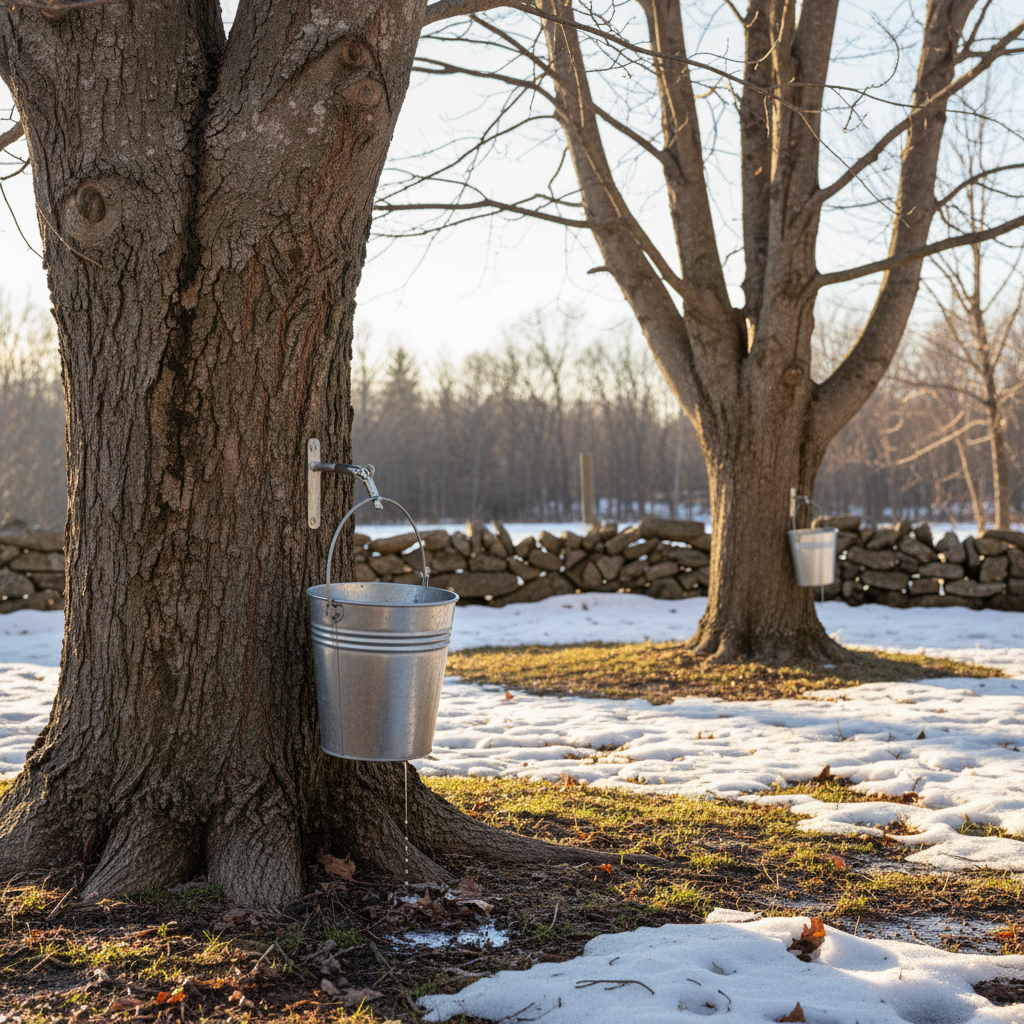
There’s something almost magical about making your own maple syrup. You drill a small hole in a tree in your backyard, hang a bucket, and nature fills it with sweet sap that you boil down into the most expensive condiment at the grocery store — for free.
A gallon of pure maple syrup costs $40–$60 at the store. Two backyard maple trees and a weekend of boiling can produce a half gallon every year, indefinitely. The trees don’t mind — tapping is less stressful to a maple than pruning.
Which Trees Can You Tap?
Maple gets all the attention, but several trees produce sap worth collecting:
| Tree | Sugar Content | Sap-to-Syrup Ratio | Flavor | Zones |
|---|---|---|---|---|
| Sugar Maple | 2–3% | 40:1 | Classic maple | 3–8 |
| Red Maple | 1.5–2% | 50–60:1 | Lighter maple | 3–9 |
| Silver Maple | 1–1.5% | 60–80:1 | Mild | 3–9 |
| Black Walnut | 1.5–2% | 40–60:1 | Butterscotch, nutty | 4–9 |
| Paper Birch | 0.5–1% | 80–110:1 | Wintergreen, mild | 2–6 |
| Sycamore | 1–1.5% | 60–80:1 | Butterscotch | 4–9 |
Sugar maple is king — it has the highest sugar content, meaning less boiling time. But if you don’t have sugar maples, red maples, walnuts, and even birches all work. The syrup will have a different (and often interesting) flavor profile.
From our homestead: Last year I tapped two sugar maples and one black walnut. The walnut syrup was a revelation — darker than maple with this incredible butterscotch-caramel flavor. We use it on pancakes, in coffee, and drizzled on vanilla ice cream. If you have walnut trees, try them.
When to Tap: Reading the Weather
Sap flows when the temperature follows a specific pattern: freezing at night (below 32°F) and thawing during the day (above 40°F). This freeze-thaw cycle creates pressure inside the tree that pushes sap out.
| Region | Typical Tapping Season |
|---|---|
| Northern US / Canada (Zones 3–4) | Mid-March to mid-April |
| Northeast / Upper Midwest (Zones 5–6) | Late February to late March |
| Mid-Atlantic / Lower Midwest (Zones 6–7) | Late January to early March |
| Southern range (Zone 7–8) | January to February (shorter window) |
The season usually lasts 4–6 weeks. It ends when buds swell on the trees — sap collected after budding has an unpleasant “buddy” flavor.
Equipment: The Basic Backyard Setup
| Item | Qty (2 Trees) | Cost |
|---|---|---|
| Spiles (taps) | 2–3 | $6–$10 |
| Collection buckets with lids (or food-grade bags) | 2–3 | $10–$20 |
| Drill + 5/16″ or 7/16″ drill bit | 1 | Already have / $5 |
| Large pot for boiling (stockpot or turkey fryer) | 1 | Already have / $15–$30 |
| Cheesecloth or fine mesh strainer | 1 | $3–$5 |
| Candy/syrup thermometer | 1 | $5–$10 |
| Storage jars (mason jars) | 2–4 | $5–$8 |
| Total | $30–$75 |
Maple tapping kits are available online for $15–$25 and include spiles, tubing, and collection bags — a great way to start.
Step-by-Step: From Tap to Syrup
Step 1: Identify and Tap Your Trees
- Select healthy trees at least 10 inches in diameter (about 31 inches around)
- Trees 10–20″ diameter: 1 tap. Over 20″: up to 2 taps. Over 25″: up to 3 taps
- Drill a hole 5/16″ or 7/16″ (matching your spile size), angled slightly upward, 2–2.5 inches deep
- Drill on the south-facing side of the trunk (warmest, flows first)
- Insert the spile firmly with a gentle tap from a hammer
- Hang your bucket on the spile hook or attach tubing to a collection container
Step 2: Collect Sap
- Check buckets daily — a good flow day can produce 1–3 gallons per tap
- Total yield per tap for the whole season: 10–20 gallons
- Store collected sap in a cold, shaded spot (below 40°F) or process within 2–3 days
- Sap should look clear like water — cloudy sap has started to ferment (discard it)
Step 3: Boil It Down
This is the main event. You’re evaporating water to concentrate the sugar.
- Boil outdoors if possible. Evaporating 39 gallons of water indoors creates incredible amounts of steam — it can peel wallpaper. A turkey fryer or outdoor propane burner is ideal.
- Use a wide, shallow pan for faster evaporation (a steam table pan or large roasting pan works)
- Keep the sap at a rolling boil — add more sap as it evaporates down
- Skim off foam as it forms
- 5 gallons of sap takes approximately 4–6 hours to boil down over a strong flame
Step 4: Finish and Bottle
- Syrup is done when it reaches 219°F (7°F above the boiling point of water at your elevation)
- Or use the “sheeting test” — dip a spoon, and syrup should sheet off in a wide drip rather than individual drops
- Filter through cheesecloth or fine mesh while hot to remove “sugar sand” (harmless mineral sediment)
- Pour into clean mason jars while hot (180°F+) and seal — it’ll keep for a year unopened, or refrigerate after opening
From our homestead: My favorite part of sugaring season is the boil. There’s something primal about standing by a fire, watching sap steam into the cold February air, waiting for that moment when the liquid darkens and the whole yard starts smelling like warm maple. It’s the first productive act of the new growing season — a promise that spring is on its way.
Expected Yield: Realistic Numbers
| Setup | Sap Collected | Syrup Produced | Retail Value |
|---|---|---|---|
| 1 tap (1 tree) | 10–20 gal | 1–2 pints | $10–$20 |
| 2–3 taps (2 trees) | 20–50 gal | 1/2–1+ gallon | $20–$60 |
| 5 taps (3–4 trees) | 50–100 gal | 1–2.5 gallons | $40–$150 |
Even with just 2 trees, you’ll have enough syrup for your family’s pancakes, baking, and gifts for months. Plus maple syrup makes incredible gifts — a half-pint jar with a ribbon is worth more than most store-bought presents.
Beyond Syrup: Other Things to Make with Sap
- Maple sugar — continue boiling past the syrup stage until it crystallizes. Crush into granulated sugar.
- Maple cream (butter) — boil syrup to 235°F, cool to 100°F, stir vigorously until creamy. Spread on toast.
- Maple candy — pour hot syrup (255°F) into molds. Classic New England treat.
- Sap water — drink fresh sap straight. It’s lightly sweet, mineral-rich, and trendy. Birch water is especially popular.
- Sap-fermented beverages — use sap as a base for fermented drinks or homemade mead.
Frequently Asked Questions
Does tapping hurt the tree?
No. A properly placed tap creates a small wound (about the size of a pencil) that the tree seals naturally within 1–2 years. Healthy trees easily sustain one tap per year. Professional sugar makers have tapped the same trees for over 100 years without harming them. Just follow the sizing guidelines: minimum 10″ diameter for one tap.
How many maple trees do I need?
Even one tree is worth tapping — you’ll get 1–2 pints of syrup. Two trees is the sweet spot for a backyard operation, yielding enough syrup (about 1/2–1 gallon) to last a family all year. If you have 5+ tappable trees, you’ll have plenty to give away.
Can I boil sap on my kitchen stove?
You can, but proceed with caution. Boiling 5 gallons of sap generates an enormous amount of steam — enough to cause moisture damage or peel wallpaper. If you must boil indoors, do the bulk evaporation outdoors (getting 5 gallons down to about 1 quart) and finish the last bit on the stove. A vent hood helps.
Can I tap trees that aren’t maples?
Yes! Black walnut makes a rich, butterscotch-flavored syrup. Birch trees produce a lighter, wintergreen-tinged syrup (popular in Scandinavia and Alaska). Sycamore, hickory, and box elder can also be tapped. The sugar content is lower than sugar maple, so you’ll need more sap per gallon of syrup.
When is sap season over?
The season ends when nighttime temperatures stop dropping below freezing or when tree buds begin to swell. Sap collected after the buds open has an unpleasant, bitter “buddy” flavor. Most backyard tappers get 4–6 weeks of good flow. Remove taps at season’s end — the tree heals the hole naturally.