Building a Wood-Fired Pizza Oven in Your Backyard
Key Takeaways
- A functional DIY wood-fired pizza oven can be built for $150-500 in materials, depending on the design — cob ovens are cheapest, firebrick domes are most durable.
- The curing process takes 5-7 days of progressively larger fires and cannot be rushed — skipping this step will crack the oven.
- Pizza cooks in 60-90 seconds at 700-900°F, but a wood-fired oven also excels at bread (450°F), roasts (350-400°F), and slow-cooked dishes as the oven cools.
- A solid foundation is non-negotiable — the oven and base together can weigh 1,000-3,000 pounds.
- Plan for a 3-4 weekend build timeline from foundation to first pizza, plus a week for curing.
Why Build a Wood-Fired Pizza Oven?
The first time you slide a pizza into a screaming-hot wood-fired oven and pull it back out 90 seconds later with a blistered, leopard-spotted crust and bubbling cheese, you’ll wonder why you didn’t build one years ago. There is no kitchen appliance — indoor or outdoor — that replicates what a wood-fired oven does to pizza dough. The combination of radiant heat from the dome, conductive heat from the floor, and the subtle smoke flavor creates something your kitchen oven simply cannot match.
But pizza is just the beginning. A wood-fired oven is a multi-temperature cooking tool. Fire it hot for pizza at 800°F, then let it drop to 450°F for bread, then 350°F for a roast, then use the residual heat the next morning to dry herbs or make yogurt. One firing can fuel an entire day of cooking.
Building one is more approachable than you’d think. People have been building earthen ovens for thousands of years with nothing more than clay, sand, straw, and stone. You can build a functional wood-fired pizza oven in your backyard over a few weekends with readily available materials and zero masonry experience.
Choosing Your Oven Type
The Cob Oven (Earth Oven)
The simplest and cheapest option. A cob oven is built from a mixture of clay, sand, and straw formed over a sand dome that’s removed once the cob dries. It’s the technique humans have used for millennia, and it works beautifully.
Pros: Extremely cheap ($50-150 in materials if you source your own clay), no specialized skills required, forgiving of mistakes, can be built in a single weekend (plus drying time).
Cons: Less durable than brick — cob ovens need annual patching and can deteriorate in wet climates without a roof overhead. Thermal mass is lower, so they don’t hold heat as long. Typically lasts 5-10 years with maintenance.
The Firebrick Dome Oven
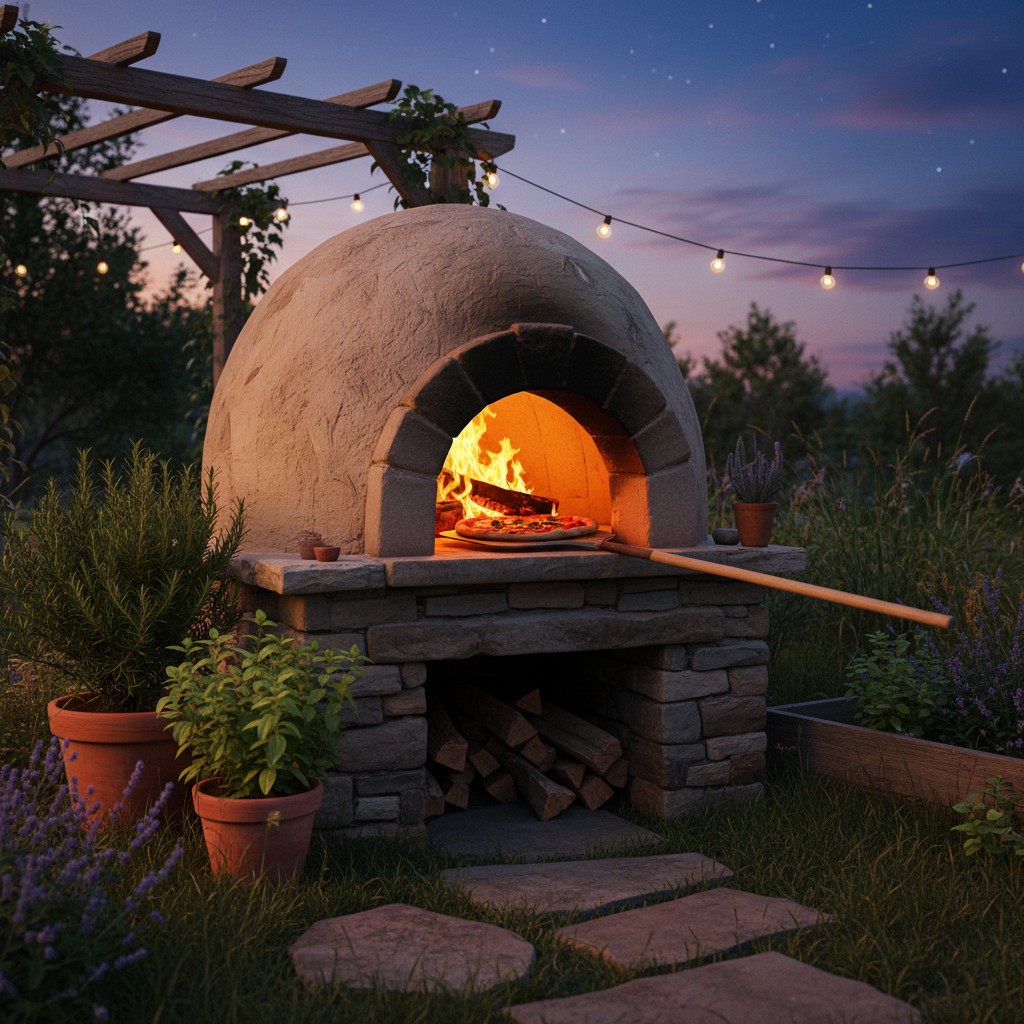
The gold standard for backyard pizza ovens. A dome built from firebricks (refractory bricks rated for high temperatures) on a firebrick floor. This is what you see in Italian restaurants and upscale outdoor kitchens.
Pros: Excellent heat retention, extremely durable (decades of use), holds temperature for hours, professional-quality results.
Cons: More expensive ($300-800 in materials), requires more skill and patience, heavier (needs a stronger foundation), and takes longer to build.
The Barrel Vault Oven
A rectangular oven with an arched roof, like a tunnel. Easier to build than a dome because you’re working with straight walls and a single curve rather than a full hemisphere. Uses firebricks or a combination of firebrick and standard brick.
Pros: Simpler construction than a dome, good heat retention, can be larger than dome ovens at a similar cost.
Cons: Less efficient heat distribution than a dome (the round shape of a dome reflects heat more evenly), and the rectangular shape means some cold spots near the corners.
My Recommendation for Beginners
If this is your first oven, build a cob oven. The investment is minimal, the process teaches you how wood-fired ovens work, and you’ll be cooking on it within two weeks. If you love it (and you will), build a firebrick dome next — your cob oven becomes the practice run.
Building the Foundation
Every pizza oven, regardless of type, needs a solid foundation. The finished oven will weigh anywhere from 500 pounds (small cob oven) to 3,000+ pounds (large firebrick dome). This isn’t something you set on a wooden deck.
The Base
The most common DIY base is a cinder block stand filled with rubble and capped with a reinforced concrete slab. Here’s a basic approach:
- Level the ground. Clear and compact a 5×5 foot area. Lay a 4-inch gravel pad for drainage.
- Build the cinder block stand. Stack concrete masonry blocks 3-4 courses high in a square or rectangular footprint. A 42×42 inch exterior footprint works well for most backyard ovens. Mortar the joints or dry-stack and fill the cores with concrete.
- Fill the interior. Pack the inside of the block stand with rubble, gravel, or sand to within 4 inches of the top.
- Pour the slab. Cap the whole thing with a 4-inch reinforced concrete slab. Use rebar or wire mesh for reinforcement. This slab needs to be level — it’s the surface your oven floor sits on.
Alternative bases: a steel frame welded from angle iron, a solid stone or brick plinth, or heavy-duty concrete pavers stacked and mortared. Whatever you use, it needs to be level, stable, and strong enough to support the oven’s weight without settling.
Working Height
The top of your base (where the oven floor will be) should put the oven opening at a comfortable working height — roughly 38-42 inches from the ground, like a kitchen counter. Too low and you’re bending over to tend the fire; too high and you can’t see into the oven.
Building a Cob Oven: Step by Step
Materials
- Firebricks for the oven floor (about 20-25 bricks for a 27-inch interior diameter)
- Clay subsoil (approximately 200-300 pounds — dig it from your property or buy bagged pottery clay)
- Coarse sharp sand (roughly 400-500 pounds)
- Straw for the insulation layer
- Sand for the form (about 200 pounds)
- Newspaper
- A door-sized piece of hardwood or metal
Step 1: Lay the Oven Floor
On top of your insulation layer (a 4-inch bed of vermiculite or perlite mixed with cement on the concrete slab), lay firebricks tightly together in a flat, level surface. These bricks are your cooking floor — pizza dough goes directly on them. Use a level to ensure they’re perfectly flat. No mortar between the floor bricks — they expand when heated and need room to move.
Step 2: Build the Sand Form
Pile damp sand on the firebrick floor in a dome shape. For a 27-inch interior diameter oven (a good size for two pizzas), build the sand dome 16 inches tall at the center. Shape it carefully into a smooth hemisphere. Cover the finished sand dome with wet newspaper — this creates a barrier between the sand and the cob so you can distinguish them when hollowing out later.
Step 3: Mix and Apply the Thermal Layer
Mix clay and sand at roughly a 1:3 ratio (one part clay to three parts sand) by volume. The exact ratio depends on your clay — test by making a small ball and dropping it from waist height. If it shatters, add more clay. If it flattens like a pancake, add more sand. It should crack slightly but hold its shape.
Apply this cob mixture over the sand form in a 3-4 inch thick layer, building up from the base. Work it firmly onto the surface and smooth as you go. Leave an opening at the front for the door — the opening should be about 63% of the dome’s interior height for proper airflow (so about 10 inches tall for a 16-inch dome).
Let this thermal layer dry for 2-3 days. Then carefully scoop out the sand form through the door opening. You now have a hollow dome.
Step 4: Apply the Insulation Layer
Mix clay with chopped straw (about 1:4 clay to straw ratio) and apply a 2-3 inch insulating layer over the dried thermal layer. This straw-clay mixture traps air and dramatically improves heat retention. Without it, your oven loses heat too quickly for bread and longer cooks.
Step 5: The Door
A door holds heat in when you’re baking bread or roasting but gets removed for pizza cooking (you want the opening for airflow and access). Cut a door from a thick hardwood plank or weld one from steel plate. It should fit the opening snugly. A handle on the front makes life easier.
Building a Firebrick Dome Oven
The firebrick dome follows the same foundational principles but uses cut firebricks instead of cob for the dome structure.
Key Differences
- Bricks are cut to shape using an angle grinder with a diamond blade. Each course of bricks leans inward slightly more than the last to form the dome curve.
- High-temperature mortar (refractory mortar or a clay-sand mix) joins the bricks. Regular Portland cement mortar will crack at oven temperatures.
- An arch form (plywood template) supports the door arch during construction.
- Insulation goes over the completed brick dome — either ceramic fiber blanket or a vermiculite-cement mixture.
- A final stucco or render layer protects the insulation from weather.
A firebrick dome is a more involved project that benefits from detailed plans. Several excellent free plans are available online from communities like Forno Bravo and the Pizza Oven Forum. Follow a tested design rather than improvising — the geometry of the dome matters for proper heat distribution.
Curing Your Oven
This is the step where impatient builders ruin their ovens. A new oven — whether cob or brick — contains moisture that must be driven out slowly. Firing the oven too hot too fast creates steam inside the walls that can crack the dome.
The Curing Schedule
- Day 1: Build a very small fire (newspaper and kindling only) and keep it burning gently for 2-3 hours. The oven should be barely warm to the touch on the outside.
- Day 2: Slightly larger fire. Add a few small pieces of hardwood. Burn for 3-4 hours.
- Day 3-4: Progressively larger fires, increasing the temperature gradually. The exterior should become noticeably warm.
- Day 5-7: Build a full-sized fire and bring the oven up to cooking temperature. If you see steam venting from the walls, you’re still driving out moisture — keep the fire moderate and extend the curing process.
Expect small hairline cracks during curing, especially in cob ovens. These are normal and can be patched with a thin layer of the same clay-sand mix. Large structural cracks indicate the curing went too fast.
Firing and Cooking
Building the Fire
Use hardwood — oak, hickory, maple, ash, or fruit woods. Avoid softwoods like pine (too much creosote and smoke) and never use treated wood, plywood, or painted wood.
Build a fire in the center of the oven floor. As it burns, push the coals to the back and sides. A pizza-ready oven takes about 60-90 minutes of firing to reach temperature. You’ll know it’s ready when the black soot on the interior dome turns white — that means the dome has reached roughly 700-800°F.
Cooking Temperatures
- Pizza: 700-900°F. Cook time: 60-90 seconds.
- Flatbreads and naan: 600-700°F. Cook time: 2-3 minutes.
- Bread loaves: 400-500°F. Cook time: 30-45 minutes. Seal the door for retained heat baking.
- Roasts and casseroles: 325-400°F. Cook time: varies. Place in a Dutch oven or cast iron pan.
- Slow cooking: 200-300°F. Load a stew or beans in the evening and retrieve in the morning.
Beyond Pizza
The magic of a wood-fired oven is the cascade of cooking temperatures from a single firing. Here’s a sample cooking day:
- Morning: Light the fire and let it burn for 90 minutes.
- 11:00 AM: Push coals aside, make pizza for lunch.
- 1:00 PM: Temperature drops to 500°F. Slide in a few loaves of bread, close the door.
- 2:30 PM: Remove bread. Temperature now around 375°F. Put in a roast chicken with root vegetables.
- 5:00 PM: Remove roast. Temperature around 250°F. Load a pot of baked beans, close the door.
- Next morning: Pull out perfectly cooked beans from the still-warm oven.
One load of wood. Five different foods. That’s the efficiency and joy of wood-fired cooking.
Protecting Your Oven
A roof or shelter over your pizza oven is highly recommended, especially for cob ovens. Rain is the enemy — water soaking into the cob or the mortar joints of a brick oven causes deterioration over time. A simple corrugated metal roof on posts, a dedicated shed, or even a heavy-duty cover when not in use will extend your oven’s life significantly.
Cob ovens in wet climates benefit from an exterior lime render or a coat of exterior stucco that sheds water while allowing the oven to breathe.
Frequently Asked Questions
How long does a wood-fired pizza oven take to build?
A cob oven can be built in one to two weekends of active work, plus drying time between layers (about a week total). A firebrick dome oven typically takes 3-4 weekends. Add another week for curing before you cook your first pizza. The foundation is usually a day’s work regardless of oven type. Plan for a month from start to first pizza if you’re working weekends only.
How much wood does a pizza oven use?
A typical firing uses 15-25 pounds of hardwood to bring the oven to pizza temperature. That’s a small armload of split wood — far less than most people expect. Smaller ovens heat up faster and use less wood. Fruit wood trimmings from your orchard, scrap hardwood from woodworking projects, and split firewood all work. Over a season of regular use, a cord of hardwood goes a long way.
Do I need a chimney on my pizza oven?
A chimney improves draft and directs smoke away from the cook, but it’s not strictly necessary for a functional oven. Many traditional ovens rely on the door opening alone for ventilation — smoke exits through the top of the opening while air enters at the bottom. If you add a chimney, place it at the front of the oven, just inside the door opening — not at the top of the dome. A chimney at the top would pull heat out of the oven instead of retaining it.
Can I use a pizza oven in winter?
Absolutely. In fact, pizza ovens work fine in cold weather — the thermal mass of the oven absorbs and retains heat regardless of outside temperature. It may take slightly longer to bring the oven up to temperature on a frigid day, and you’ll use a bit more wood. The main concern in winter is freeze-thaw damage: make sure your oven is fully dried out before a hard freeze, and cover it when not in use. A properly sheltered oven can be used year-round in any climate.