Growing Blueberries at Home: The Complete Beginner Guide
Growing Blueberries at Home: The Complete Beginner’s Guide
- Blueberries require acidic soil with a pH of 4.5-5.5 — this is the single most important factor for success
- Choose between highbush varieties (best for northern climates, Zones 3-7) and rabbiteye varieties (best for southern climates, Zones 7-9)
- Blueberries take 3-5 years to reach full production, but a mature bush can yield 5-15 pounds of berries per year for decades
- Planting at least two different varieties ensures better cross-pollination and higher yields
- Blueberries grow exceptionally well in containers, making them accessible even for gardeners with alkaline soil
Blueberries are one of the best investments you can make in your home garden. A single blueberry bush, once established, will produce fruit for 20 years or more with relatively little maintenance. They’re beautiful ornamental plants — gorgeous white flowers in spring, lush green foliage in summer, brilliant red leaves in fall — and oh yes, they also happen to produce one of the most delicious and nutritious fruits on earth.
But I won’t sugarcoat it: blueberries have one non-negotiable requirement that trips up a lot of beginners. They need acidic soil. Get the pH right, and blueberries are remarkably easy to grow. Get it wrong, and you’ll have struggling, yellow-leafed plants that barely produce a handful of berries. This guide will help you get it right from the start.
Understanding Blueberry Types
Not all blueberries are the same, and choosing the right type for your climate is crucial. Here are the three main categories:
Northern Highbush (Vaccinium corymbosum)
These are the most widely planted blueberries and the standard for most home gardens in Zones 4-7. They produce large, sweet berries on bushes that grow 4-6 feet tall. Northern highbush varieties need 800-1,000 chill hours (hours below 45°F during winter dormancy) to fruit properly, which makes them ideal for cold climates but unsuitable for the deep South.
Top varieties: Bluecrop (reliable mid-season workhorse), Duke (early, consistent), Jersey (late, heirloom flavor), Patriot (cold-hardy, great for Zone 3-4), Elliott (very late, extends your harvest).
Southern Highbush (V. corymbosum hybrids)
Bred for mild-winter climates, southern highbush varieties need only 150-400 chill hours. They produce berries as large as their northern cousins but thrive in Zones 7-10 where true highbush would fail.
Top varieties: O’Neal (excellent flavor, low chill), Sunshine Blue (compact, self-fertile, good for containers), Jubilee (productive, heat-tolerant), Star (very early, large berries).
Rabbiteye (V. virgatum)
Native to the southeastern United States, rabbiteye blueberries are tough, heat-tolerant, and drought-resistant once established. They grow larger than highbush (6-10 feet) and produce slightly smaller berries with a somewhat thicker skin. They need only 300-700 chill hours and thrive in Zones 7-9.
Top varieties: Tifblue (the gold standard for rabbiteye), Climax (early), Powder Blue (consistent producer), Premier (large berries, early).
| Type | Zones | Bush Size | Chill Hours | Yield at Maturity |
|---|---|---|---|---|
| Northern Highbush | 3-7 | 4-6 ft | 800-1,000 | 5-10 lbs/bush |
| Southern Highbush | 7-10 | 4-6 ft | 150-400 | 5-10 lbs/bush |
| Rabbiteye | 7-9 | 6-10 ft | 300-700 | 10-15 lbs/bush |
| Half-High (Hybrid) | 3-7 | 2-4 ft | 800-1,000 | 3-5 lbs/bush |
Half-high hybrids are worth mentioning — they’re crosses between highbush and lowbush blueberries, producing compact plants (2-4 feet) that are extremely cold-hardy. Varieties like Northsky and Northblue survive Zone 3 winters buried under snow. They yield less than full-sized bushes but work wonderfully in small gardens and containers.
The Soil pH Factor
This is the part you cannot skip. Blueberries need a soil pH between 4.5 and 5.5. Most garden soils fall between 6.0 and 7.0, which is far too alkaline for blueberries. At the wrong pH, blueberries can’t absorb iron and other micronutrients, leading to yellowing leaves (chlorosis), stunted growth, and little to no fruit production.
Step one: Test your soil. Buy a simple pH test kit from any garden center or send a sample to your local extension office. Knowing your starting pH tells you exactly how much work lies ahead.
Acidifying soil: If your soil pH is above 5.5, you’ll need to lower it. The most effective amendment is eleite sulfur (also called flowers of sulfur). Soil bacteria convert sulfur into sulfuric acid over time, gradually lowering pH. How much you need depends on your starting pH and soil type:
| Starting pH | Sulfur Needed (Sandy Soil) | Sulfur Needed (Clay Soil) |
|---|---|---|
| 6.0 → 4.5 | 1.2 lbs per 100 sq ft | 3.5 lbs per 100 sq ft |
| 6.5 → 4.5 | 1.5 lbs per 100 sq ft | 4.6 lbs per 100 sq ft |
| 7.0 → 4.5 | 2.0 lbs per 100 sq ft | 5.8 lbs per 100 sq ft |
| 7.5 → 4.5 | 2.5 lbs per 100 sq ft | 7.0 lbs per 100 sq ft |
Important: Sulfur takes 3-6 months to fully lower pH. Ideally, amend your soil the fall before spring planting. Don’t try to rush the process by adding too much sulfur at once — it can burn roots and harm soil biology.
For planting holes, you can create a more immediately acidic environment by mixing native soil 50/50 with peat moss (which is naturally acidic, pH 3.5-4.5) and adding sulfur according to the table above. This gives you a good starting pH while the sulfur continues to work.
I spent my first two years wondering why my blueberry bushes looked so sad — pale yellow leaves, no berries, practically no growth. I kept adding fertilizer thinking they were hungry. Turns out my soil pH was 6.8, and no amount of fertilizer was going to help at that pH. Once I tested and acidified the soil properly, those same bushes transformed within one season. The moral: always test your soil before planting blueberries. Always.
Planting Blueberries
When to plant: Early spring (as soon as the ground can be worked) or fall (at least 6 weeks before your first hard freeze). Spring planting gives roots time to establish before summer heat; fall planting takes advantage of cool, moist conditions.
Spacing: Plant highbush varieties 4-6 feet apart, rabbiteye 6-8 feet apart, and half-high types 3-4 feet apart. If planting multiple rows, space rows 8-10 feet apart for easy access.
Planting depth: Set the plant at the same depth it was in the nursery container, or slightly higher. Blueberries have shallow root systems — planting too deep is a common mistake that leads to root rot.
Soil preparation: Dig a hole twice as wide as the root ball and just as deep. Mix the backfill soil with peat moss (or acidic compost if available) at a 50/50 ratio. Add sulfur according to your soil test. Water deeply after planting.
Mulch: This is essential for blueberries. Apply a 3-4 inch layer of acidic mulch — pine bark, pine needles, or wood chips from acidic trees. Mulch conserves moisture, regulates soil temperature, suppresses weeds, and slowly acidifies the soil as it decomposes. Keep mulch a few inches away from the stem to prevent rot.
Cross-pollination: While most blueberry varieties are technically self-fertile, you’ll get significantly better yields and larger berries by planting at least two different varieties that bloom at the same time. For the best harvest over a long season, plant an early, mid, and late variety.
Growing Blueberries in Containers
If your native soil is alkaline, heavy clay, or limestone-based, container growing may actually be easier than fighting to acidify in-ground soil. Blueberries are well-suited to containers because of their shallow, compact root systems.
Container size: Start with at least a 5-gallon pot for young plants and plan to size up to 15-20 gallons for mature bushes. Half-high and compact varieties like Sunshine Blue, Top Hat, and Northsky are especially well-suited to containers.
Potting mix: Use a blend of peat moss and perlite (or pine bark fines) — roughly 50/50. Standard potting soil is often too alkaline for blueberries. You can also find acid-loving plant mixes specifically formulated for blueberries, azaleas, and rhododendrons.
Watering: Container blueberries need consistent moisture. The peat-based mix should stay evenly moist but never waterlogged. In summer heat, you may need to water daily. Using a saucer under the pot helps retain moisture, but empty it if water sits for more than a few hours.
Winter protection: In cold climates, container blueberries are more vulnerable to root freeze than in-ground plants. Move pots to an unheated garage or sink them into the ground in fall and mulch heavily. Alternatively, wrap pots with burlap and insulation.
Watering and Fertilizing
Blueberries have shallow, fibrous root systems that need consistent moisture. They don’t tolerate drought well, but they also can’t stand waterlogged soil. Think evenly moist — like a wrung-out sponge.
Watering: Provide 1-2 inches of water per week during the growing season, more during fruit development and hot weather. Drip irrigation or soaker hoses are ideal — they keep foliage dry (reducing disease) and deliver water directly to the root zone. Rainwater is slightly acidic and preferred over tap water, which in many areas is alkaline.
Fertilizing: Use a fertilizer formulated for acid-loving plants (azalea/rhododendron fertilizer works perfectly). Apply in early spring when new growth begins, and again lightly after harvest. Avoid fertilizers containing nitrates (calcium nitrate, potassium nitrate) — blueberries prefer ammonium-based nitrogen. Cottonseed meal and blood meal are excellent organic options.
Don’t over-fertilize. Blueberries are not heavy feeders compared to most fruit crops. Too much fertilizer (especially nitrogen) causes excessive leafy growth at the expense of fruit, and can burn the sensitive root system.
Pruning for Long-Term Production
Pruning keeps bushes productive, allows light and air into the center, and encourages new fruit-bearing wood. Blueberries produce the best fruit on 2-4 year old wood, so the goal is a constant cycle of new growth replacing old.
Years 1-3: Remove all flower buds. Yes, this is painful — you want berries. But allowing young plants to fruit diverts energy from root and branch development. Removing flowers for the first 2-3 years results in a larger, more productive bush that will produce far more fruit over its lifetime.
Year 4 and beyond: Begin annual dormant pruning in late winter (February-March). Remove:
- Dead, damaged, or diseased wood (always remove first)
- Branches that cross or rub against each other
- Low-growing branches that touch the ground
- The oldest, thickest canes (older than 6 years) — cut these to the ground to stimulate new basal growth
- Thin out crowded interior branches to allow light and air circulation
A well-pruned mature bush should have 6-10 main canes of varying ages. You’re removing about 1/5 of the oldest wood each year and allowing new shoots to replace them. This keeps the bush in a constant state of renewal.
Removing flowers from my new blueberry bushes was one of the hardest things I’ve done in the garden. After waiting a full year to see those first blooms, pinching them off felt wrong. But I trusted the advice, and by year four, those bushes were loaded with more berries than I knew what to do with. If I’d let them fruit in year one, they’d still be spindly little things producing a handful of berries. The patience pays off enormously.
Yield Expectations: A Realistic Timeline
Blueberries are a long-term investment. Here’s what to realistically expect:
| Year | What to Expect | Approximate Yield (Highbush) |
|---|---|---|
| Year 1 | Establishment — remove all flowers | None (by design) |
| Year 2 | Good root development — remove most flowers | A few handfuls |
| Year 3 | First light harvest allowed | 1-2 lbs/bush |
| Year 4 | Significant production begins | 3-5 lbs/bush |
| Year 5-6 | Approaching full production | 5-8 lbs/bush |
| Year 7+ | Full maturity | 8-15 lbs/bush |
A mature, well-maintained highbush blueberry can produce 10-15 pounds of fruit per year. Rabbiteye varieties can produce even more. For a family of four that loves blueberries, plan on 4-6 bushes. At full production, that’s 40-90 pounds of blueberries per year — enough for fresh eating, freezing, baking, and preserving.
If you’re just beginning to think about perennial food plants for your homestead, blueberries are a fantastic starting point alongside fruit trees. They’re less work than most tree fruits, easier to net against birds, and they start producing sooner.
Protecting Your Harvest
The biggest challenge once your blueberries are producing is keeping the birds from eating them all. Birds love blueberries as much as you do, and they’re early risers with no concept of property rights.
Bird netting is the most reliable solution. Drape fine-mesh netting over bushes or build a simple frame (PVC pipe or wooden stakes) to hold netting above the plants. Secure the bottom edges with stakes or rocks — birds are persistent and will find any gap. Put netting in place as berries begin to color (turn from green to pink).
Scare tactics — reflective tape, fake owls, pinwheels — provide temporary deterrence but birds quickly adapt. They’re best used in combination with netting.
Common Problems
Yellow leaves (chlorosis): Almost always a pH problem. Test soil pH and acidify as needed. Iron chlorosis in blueberries is not solved by adding iron — it’s solved by lowering pH so the plant can access the iron already in the soil.
No fruit: Could be lack of cross-pollination (plant a second variety), too-young plants, insufficient chill hours for your variety, or late frost damage to flowers.
Mummy berry: A fungal disease that shrivels berries. Remove and destroy affected fruit, clean up fallen berries, and apply fresh mulch each spring to bury overwintering spores.
Root rot: Usually caused by poorly drained soil. Blueberries need moisture but not standing water. If drainage is poor, plant in raised beds or mounds to improve it.
Blueberries in a Permaculture System
Blueberries fit beautifully into a permaculture landscape. They can serve as a productive understory beneath taller fruit or nut trees, or as a hedge along property lines. Interplant with other acid-loving species like lingonberries, cranberries, or ferns for a low-maintenance food forest layer.
Their shallow root systems pair well with deep-rooted trees, since they occupy different soil layers without competing. Mulching with chipped branches from pruning (also called ramial wood chips) feeds the fungal networks that blueberries depend on for nutrient uptake.
Frequently Asked Questions
Can I grow blueberries if my soil pH is above 7.0?
It’s possible but challenging in the ground — you’ll be fighting your native soil chemistry constantly. For highly alkaline soil (pH 7.0+), container growing is much more practical. You control the entire growing environment, and maintaining acidic conditions in a pot is straightforward with a peat-based mix and acidic fertilizer. Alternatively, build a raised bed lined with landscape fabric and fill with an acidic soil mix.
How many blueberry bushes do I need for a family?
For fresh eating during the season, 2-3 bushes per person is a good starting point. For serious preservation (freezing, jam, baking), plan on 4-6 bushes per person. Remember that production ramps up over 3-5 years, so plant now even if it feels like too many — you’ll appreciate the abundance later.
Do blueberries need full sun?
Full sun (6-8 hours) produces the most fruit and the sweetest berries. Blueberries will tolerate partial shade (4-6 hours of sun) but will produce fewer berries. In very hot climates (Zone 8-9), afternoon shade can actually be beneficial, protecting plants from heat stress during the hottest part of the day.
When are blueberries ripe and ready to pick?
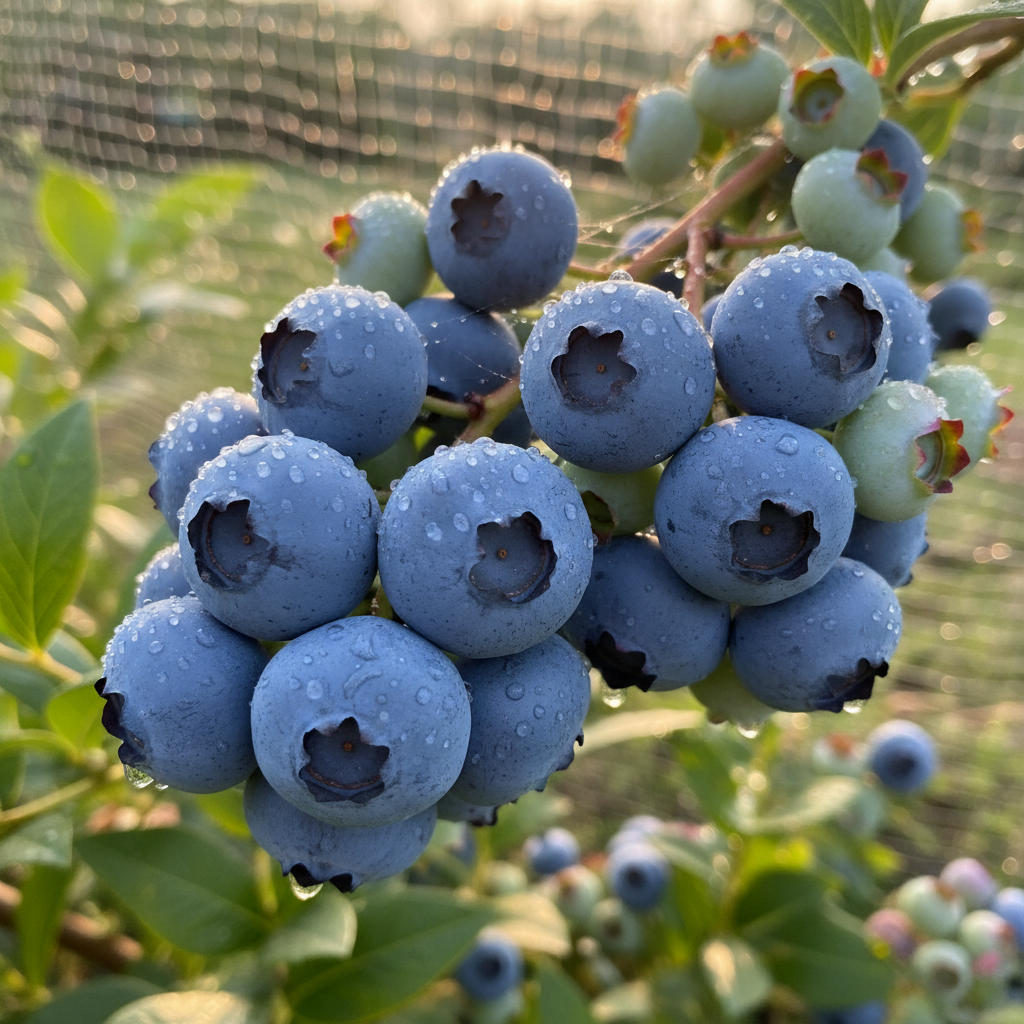
Berries are ripe when they’re fully blue with no pink or red, and they detach easily when gently rolled between your fingers. Here’s the trick most people miss: berries that have just turned blue are not at peak sweetness. Wait 3-5 days after they turn fully blue for the best flavor. Taste-test your berries regularly — your palate is the best ripeness gauge.
Can I use coffee grounds to acidify soil for blueberries?
Coffee grounds are only slightly acidic (pH 6.0-6.8 for used grounds) and won’t significantly lower soil pH on their own. They’re better as a mulch or compost addition than a soil acidifier. For meaningful pH reduction, use elemental sulfur, peat moss, or acidic fertilizers. Coffee grounds are a nice supplement but shouldn’t be your primary acidification strategy.