How to Create a Moon Garden: Night-Blooming Plants That Glow After Dark
How to Create a Moon Garden: Night-Blooming Plants That Glow After Dark
There’s something almost magical about stepping into a garden at dusk and watching it come alive. While most gardens wind down as the sun sets, a moon garden is just getting started — white flowers unfurling their petals, silver foliage catching the moonlight, and intoxicating fragrances drifting through the warm night air. If you’ve ever sat on your porch after dark wishing your garden had more to offer, a moon garden is exactly what you need.
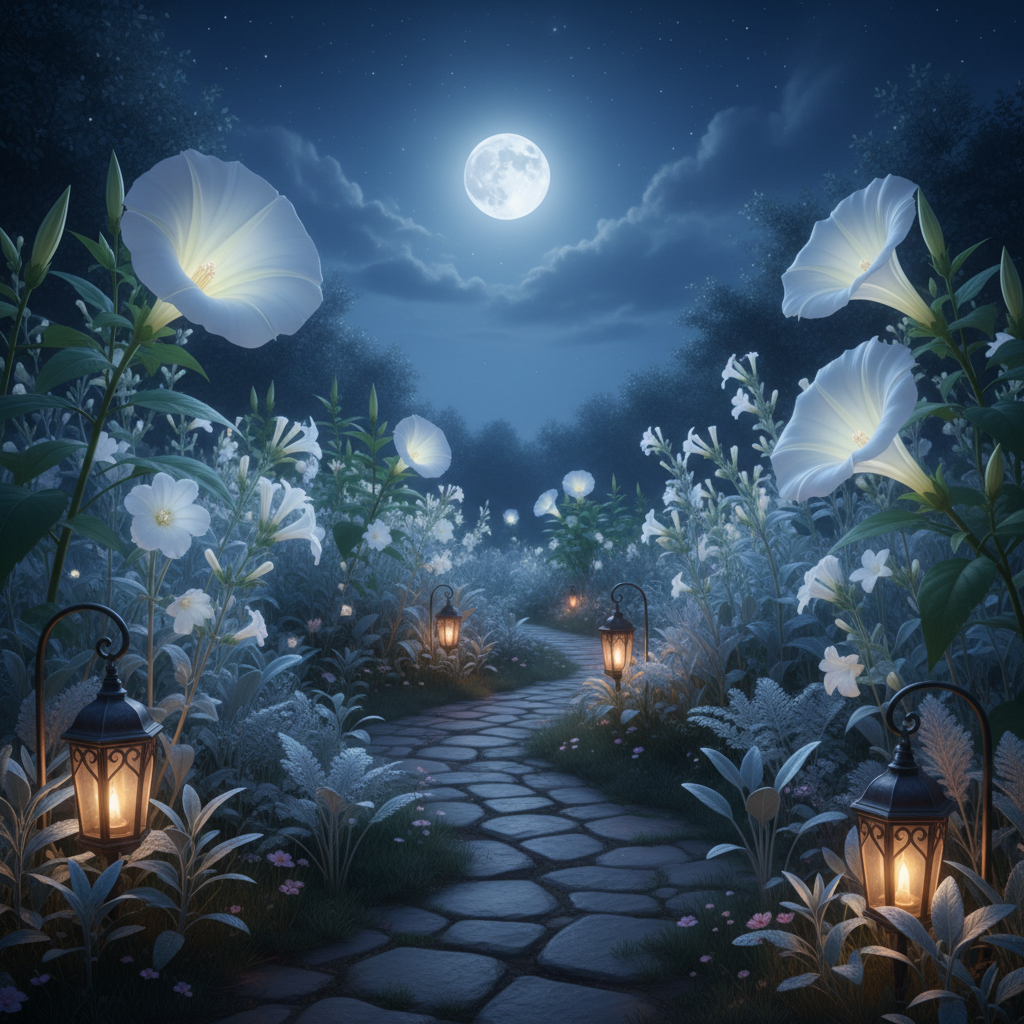
A moon garden is designed specifically to be enjoyed after sunset. It relies on white and pale-colored flowers, silvery foliage, and intensely fragrant night-blooming plants to create a luminous, sensory experience under the stars. Whether you have a sprawling backyard or a small patio, you can create a moon garden that transforms your evenings into something truly special.
- Moon gardens rely on white flowers, silver foliage, and fragrant night-bloomers to create a glowing evening landscape
- Moonflower, nicotiana, night-blooming jasmine, and white garden phlox are top choices for after-dark beauty
- Strategic placement near patios, walkways, and windows maximizes evening enjoyment
- Night-blooming flowers attract important nocturnal pollinators like moths and bats
- Reflective hardscaping elements like pale stone and white gravel amplify moonlight in the garden
What Exactly Is a Moon Garden?
A moon garden isn’t a new concept — the tradition dates back centuries to India and Japan, where gardens were designed for evening meditation and enjoyment. The idea is simple: choose plants that either bloom at night, have white or pale flowers that reflect moonlight, or produce strong fragrances that intensify after dark.
The result is a garden that appears to glow in the evening hours, creating a peaceful retreat when the day’s work is done. For homesteaders who spend long days working the land, having a beautiful space to enjoy during those precious cool evening hours is a real gift.
I planted my first moon garden along the path between our house and the chicken coop. Those late-night coop checks went from a chore to a genuine pleasure once I was walking past blooming moonflowers and fragrant nicotiana. My husband thought I was crazy for volunteering to do the evening lockup, but honestly, those ten minutes became my favorite part of the day.
Best Night-Blooming Flowers for Your Moon Garden
The stars of any moon garden are the flowers that actually open their petals after sunset. These plants have evolved to attract nocturnal pollinators, which means they put on their best show exactly when you want to enjoy them.
Moonflower (Ipomoea alba)
The queen of the moon garden, moonflower is a vigorous climbing vine that produces large, pure white trumpet-shaped flowers that open at dusk. Each bloom is about 6 inches across and releases a sweet, almost tropical fragrance. The flowers unfurl in a matter of minutes as the light fades — it’s genuinely mesmerizing to watch. Give moonflowers a trellis, fence, or arbor to climb, and they’ll reward you with blooms from midsummer until frost. They’re annual in most zones but reseed readily.
Nicotiana (Nicotiana alata)
Flowering tobacco is one of the most underrated garden plants around. The white varieties are stunning in a moon garden, with star-shaped flowers that open in the evening and release a jasmine-like fragrance that carries on the breeze. Plants grow 3 to 5 feet tall and bloom continuously from early summer through fall. They’re technically perennial in zones 10-11 but grown as annuals elsewhere. If you’re building a cottage garden, nicotiana is a wonderful addition to both day and night displays.
Night-Blooming Jasmine (Cestrum nocturnum)
If fragrance is your top priority, night-blooming jasmine delivers like nothing else. The small, greenish-white flowers are unremarkable by day, but after dark they release one of the most powerful sweet fragrances in the plant kingdom — you can smell it from 20 feet away. This tropical shrub is hardy in zones 8-11 and makes an excellent container plant in colder climates, where you can bring it indoors for winter. A single plant near your patio or bedroom window will perfume the entire area.
White Garden Phlox (Phlox paniculata ‘David’)
For a reliable perennial backbone to your moon garden, white garden phlox is hard to beat. The variety ‘David’ produces large clusters of pure white flowers from midsummer through early fall and has excellent mildew resistance. Growing 3 to 4 feet tall, it provides substantial presence in the garden and attracts both daytime butterflies and nighttime moths. It’s hardy in zones 4-8 and pairs beautifully with other moon garden plants. This is also a wonderful choice for a pollinator garden that works around the clock.
Evening Primrose (Oenothera biennis)
Evening primrose opens its soft yellow flowers at dusk with an audible pop — children especially love watching this happen. While not white, the pale yellow blooms glow beautifully in moonlight. Plants self-sow freely, so give them a spot where spreading is welcome. As a bonus, the seeds are edible and the oil has medicinal uses that homesteaders have valued for generations.
Angel’s Trumpet (Brugmansia)
These dramatic tropical plants produce enormous pendant flowers — sometimes a foot long — that release an intoxicating fragrance at night. White and pale cream varieties are ideal for moon gardens. They’re tender tropicals that need to come inside in most climates, but grown in large containers they make spectacular focal points. A word of caution: all parts of the plant are toxic, so keep them away from children and livestock.
Silver and White Foliage Plants
Flowers are seasonal, but foliage provides structure and moonlight-catching ability all season long. These silver and white-leaved plants form the bones of a great moon garden.
| Plant | Height | Zones | Notes |
|---|---|---|---|
| Lamb’s Ear (Stachys byzantina) | 12-18″ | 4-8 | Soft, fuzzy silver leaves that glow in moonlight |
| Dusty Miller (Senecio cineraria) | 12-24″ | 8-11 (annual elsewhere) | Deeply lobed silver-white foliage |
| Artemisia ‘Silver Mound’ | 12-18″ | 3-7 | Feathery silver mound, excellent border plant |
| White Sage (Salvia apiana) | 3-5′ | 8-11 | Nearly white leaves, aromatic and useful |
| Japanese Painted Fern | 12-18″ | 4-8 | Silver fronds perfect for shaded moon gardens |
These foliage plants are especially important because they provide that luminous quality even on nights when flowers aren’t at peak bloom. Edge your moon garden beds with lamb’s ear or dusty miller, and the borders will seem to draw themselves in the moonlight.
Designing Your Moon Garden Layout
The most important principle in moon garden design is placement. You want your garden where you’ll actually see and enjoy it after dark. The best locations include areas near your patio or outdoor seating, along walkways you use in the evening, visible from bedroom or kitchen windows, and near gathering spots like fire pits or outdoor dining areas.
Layering for Maximum Impact
Like any good garden design, a moon garden works best in layers. Place taller plants like nicotiana and garden phlox in the back, mid-height plants like white coneflower and shasta daisies in the middle, and low-growing silver foliage plants along the edges. If you’re familiar with permaculture design principles, you’ll recognize this as creating a functional polyculture that also happens to be beautiful.
Adding Hardscaping Elements
Non-plant elements can amplify your moon garden’s glow significantly. Consider adding white or pale-colored gravel pathways, a light-colored stone bench or birdbath, solar-powered string lights for cloudy nights, a small water feature to reflect moonlight, and white or cream-colored containers. The combination of reflective surfaces and luminous plants creates a garden that practically glows, even on nights with just a sliver of moon.
White Flowers for Daytime-to-Evening Beauty
While the night-bloomers are the stars of the show, you’ll want plenty of white flowers that look beautiful during the day and continue glowing into the evening hours.
White roses, especially climbing varieties trained along a fence or arbor, provide both beauty and fragrance that intensifies in cool evening air. White delphiniums add dramatic vertical spikes of bloom. White bleeding heart brings grace to shady corners. Shasta daisies are reliable and cheerful with their bright white petals. And white sweet alyssum makes the perfect fragrant groundcover that spills along borders and between stepping stones.
Don’t forget about white-flowering shrubs like gardenias, white hydrangeas, and mock orange. These larger plants provide structure and seasonal anchors for your moon garden that go well beyond what annual flowers alone can achieve. If you enjoy growing flowers for arrangements, many of these also make excellent additions to a flower cutting garden.
Attracting Nocturnal Pollinators
One of the most rewarding aspects of a moon garden is the nighttime wildlife it attracts. Moths — the night shift of the pollination world — are drawn to white, fragrant flowers like magnets. Sphinx moths, also called hawk moths, are especially fun to watch as they hover like hummingbirds while feeding from trumpet-shaped flowers.
Many night-blooming plants have co-evolved with specific moth species. Moonflower, for example, is primarily pollinated by sphinx moths whose long proboscises can reach the nectar deep inside the trumpet-shaped blooms. By planting a moon garden, you’re supporting these important but often overlooked pollinators.
If you’ve already created a daytime pollinator garden, a moon garden extends your pollinator habitat around the clock. You’ll be amazed at how much nighttime activity there is once you start paying attention.
Fragrance Planning
Fragrance is arguably the most important element of a moon garden — after dark, your sense of smell becomes heightened as visual cues diminish. Plan for fragrance that carries and layers throughout the evening.
For strong projection fragrance that fills the entire garden, plant night-blooming jasmine, moonflower, and nicotiana. For mid-range fragrance that you’ll notice as you walk by, choose garden phlox, white roses, and gardenias. For close-up fragrance that rewards those who lean in, plant sweet alyssum, white lavender, and white dianthus. Many of these fragrant plants do double duty as herbs and medicinal plants in the homestead garden.
The fragrance layering in my moon garden didn’t happen by accident, but it took a couple of seasons to get right. The first year I went heavy on night-blooming jasmine, and while it smelled amazing, it overpowered everything else. Now I’ve learned to space the heavy hitters apart and fill in with subtler scents. On a still summer evening, you can walk through the garden and experience completely different fragrance zones — it’s like rooms in a house, each with its own character.
Moon Garden Care and Maintenance
The good news is that moon gardens don’t require much more maintenance than any other flower garden. Here are the key care tips to keep your evening garden glowing its brightest.
Deadhead white flowers regularly, because fading brown blooms stand out starkly against all that white. Keep foliage plants trimmed and tidy since silver-leaved plants can get leggy by midsummer. Water in the morning to reduce disease pressure on densely planted beds. Mulch with light-colored materials like straw or pale wood chips to extend that luminous quality to the ground level. And watch for pests in the evening when you can actually see what’s feeding on your plants after dark.
Seasonal Planning for Year-Round Moonlight
With careful planning, you can have moonlight interest in your garden across multiple seasons. In spring, focus on white tulips, narcissus, and bleeding heart. Summer is peak time with moonflower, nicotiana, jasmine, and garden phlox in full bloom. Fall brings white asters, Japanese anemones, and ornamental grasses with pale plumes. Winter offers white bark from birch trees, dried seed heads catching frost, and evergreen silver plants like santolina.
Even in the depth of winter, a well-planned moon garden catches snowfall and frost in ways that can be breathtaking under a full moon.
Container Moon Gardens
No yard? No problem. A moon garden works beautifully in containers on a balcony, deck, or small patio. Choose white or light-colored pots, and group together white petunias, trailing white sweet potato vine, silver helichrysum, a dwarf nicotiana variety, and a compact gardenia for fragrance. Place your container grouping near where you sit in the evening, and you’ll have a moon garden experience in just a few square feet.
Frequently Asked Questions
Do moon gardens only look good during a full moon?
Not at all. While a full moon creates the most dramatic effect, white flowers and silver foliage reflect even minimal ambient light — from stars, street lights, porch lights, or a crescent moon. The fragrant night-bloomers don’t care about moon phase at all and will perfume your garden every evening. On very dark nights, solar-powered garden lights can supplement the natural glow beautifully.
Can I create a moon garden in shade?
Yes, though your plant selection will be different. White hostas, Japanese painted ferns, white astilbe, white bleeding heart, and white impatiens all thrive in shade and glow beautifully in low light. Night-blooming jasmine tolerates partial shade. You won’t have as many options as in full sun, but a shaded moon garden can be equally enchanting, especially if you add a reflective water feature.
Are moonflowers the same as morning glories?
They’re close relatives — both are in the Ipomoea genus — but they’re different species. Morning glories (Ipomoea purpurea) open during the day and come in various colors. Moonflowers (Ipomoea alba) open at dusk and are always white. They can actually be planted together on the same trellis for around-the-clock bloom coverage. Just note that both can be vigorous self-sowers.
Will a moon garden attract mosquitoes?
A moon garden doesn’t inherently attract mosquitoes any more than any other garden. In fact, you can include mosquito-repelling plants in your moon garden design — white-flowering varieties of citronella-scented geraniums, white lavender, and catnip all help. The bats attracted to your moon garden’s moth population are actually excellent mosquito predators, eating thousands of mosquitoes per night.
How much does it cost to start a moon garden?
A moon garden can be started very affordably. Many moon garden plants — moonflower, nicotiana, evening primrose, sweet alyssum — grow easily and quickly from seed, which costs just a few dollars per packet. Perennials like garden phlox and lamb’s ear can often be divided from friends’ gardens. Start small with a focal area near your seating and expand over time. A beautiful starter moon garden can be created for under $30 in seeds.