How to Grow Potatoes: 5 Methods from Grow Bags to In-Ground
- One seed potato produces 5–10 lbs of potatoes — a $2 investment returns $10–$20 worth of food
- You can grow potatoes in the ground, raised beds, grow bags, straw bales, or even buckets
- Plant 2–4 weeks before your last frost date — potatoes tolerate light frost
- Harvest “new potatoes” at 10 weeks or full-size potatoes at 15–20 weeks
- The key technique is hilling — mounding soil around stems as they grow to increase yield
Potatoes are the ultimate homestead crop. They’re easy to grow, produce massive yields in small spaces, store for months without canning or freezing, and they’re the foundation of more meals than any other vegetable. If you only grow one crop this year, make it potatoes.
A 10-foot row of potatoes can produce 50–100 lbs of food from just 10 seed potatoes. That’s enough to feed a family through winter with proper root cellar storage.
Choosing Seed Potatoes
Don’t plant grocery store potatoes — they’re often treated with sprout inhibitors. Buy certified seed potatoes from a garden center or online supplier.
| Type | Best Varieties | Days to Harvest | Best For |
|---|---|---|---|
| Early | Yukon Gold, Red Norland, Irish Cobbler | 70–90 | Quick harvest, new potatoes |
| Mid-season | Kennebec, Gold Rush, French Fingerling | 90–110 | All-purpose, good storage |
| Late | Russet Burbank, German Butterball, Purple Majesty | 110–135 | Highest yield, best storage |
From our homestead: Yukon Gold is my desert-island potato. It produces early, tastes incredible roasted or mashed, and stores well into winter. I plant 20 seed potatoes every spring and we eat homegrown potatoes from July through February.
5 Ways to Grow Potatoes
1. Traditional In-Ground (Best Yield)
Dig a trench 6 inches deep and 3 feet apart. Place seed potatoes 12 inches apart, eyes facing up. Cover with 4 inches of soil. As plants grow, hill soil around the stems every 2–3 weeks until mounds are 12 inches high. This is the highest-yield method — expect 8–10 lbs per seed potato.
2. Raised Bed
Plant in a raised bed filled halfway with soil. Add more soil as plants grow. A 4×4 bed fits 8–12 seed potatoes and produces 40–60 lbs. Works great with the no-till approach using deep straw mulch.
3. Grow Bags ($5–$10 each)
The easiest method for beginners and small spaces. Use 10-gallon fabric grow bags. Add 6 inches of soil, place 3–4 seed potatoes, cover with 4 inches. Keep adding soil as plants emerge. Roll down the sides of the bag as you fill. Expect 5–8 lbs per bag.
4. Straw Bale Method
Place seed potatoes on the ground and cover with 12 inches of straw. Add more straw as plants grow. Harvest is effortless — just pull back the straw. Lower yield than in-ground but zero digging required.
5. Container/Bucket
Any 5-gallon or larger container works. Drill drainage holes, fill partly with soil, plant 2–3 seed potatoes, keep adding soil. Good for patios and balconies.
Growing Guide: Step by Step
| Step | When | What to Do |
|---|---|---|
| Chit (sprout) | 2–4 weeks before planting | Place seed potatoes in a bright, cool spot to develop short sprouts |
| Plant | 2–4 weeks before last frost | Plant 4–6″ deep, eyes up, 12″ apart. Soil temp should be 45°F+ |
| Hill | When plants are 6–8″ tall | Mound soil/mulch around stems, leaving top 4″ exposed. Repeat 2–3 times |
| Water | Throughout growing | 1–2 inches per week. Critical during flowering (tuber formation) |
| Harvest new | ~10 weeks (when flowering) | Gently dig around plants for small, tender new potatoes |
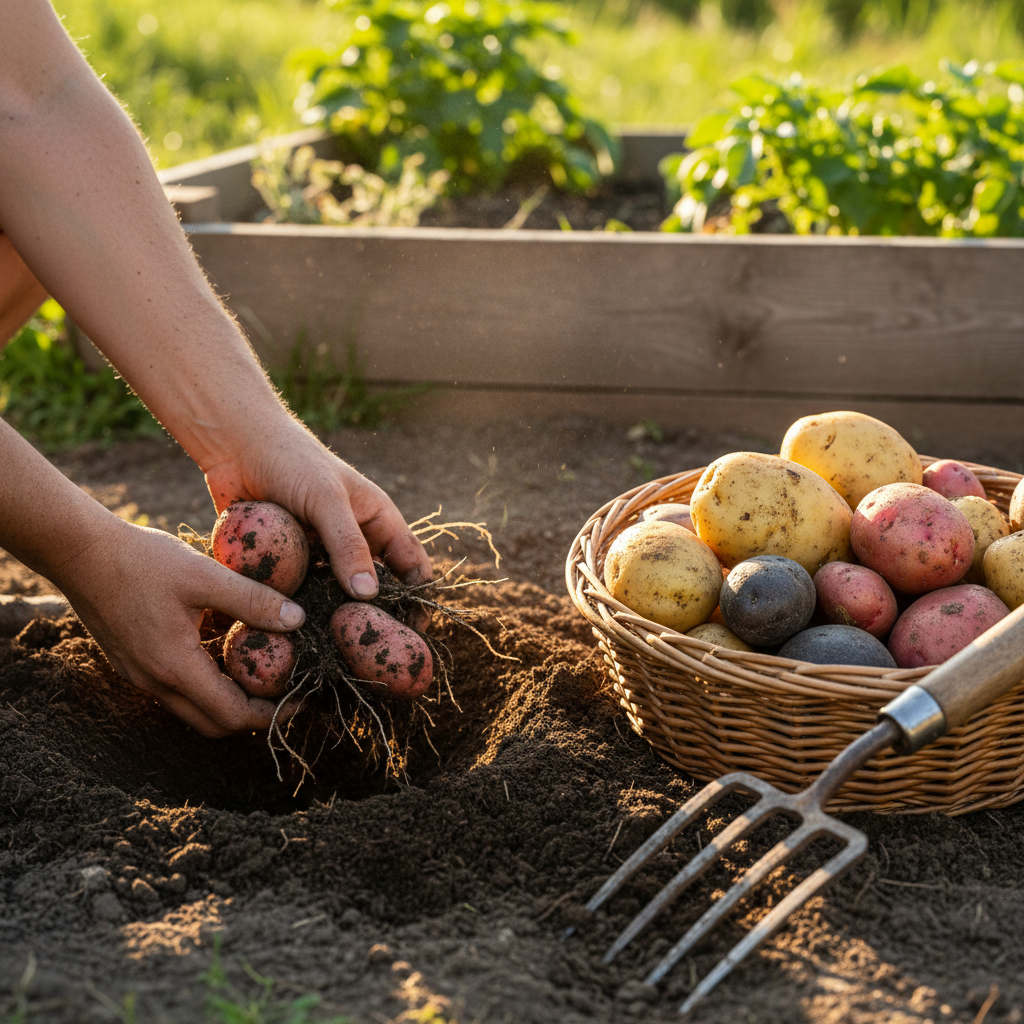
| Harvest full | 15–20 weeks (tops die back) | Wait 2 weeks after tops die, then dig carefully with a fork |
Hilling: The Secret to Big Harvests
Hilling is what separates a mediocre potato harvest from an incredible one. Potatoes form along the buried stem — the more stem you bury, the more potatoes you get.
- When plants reach 6–8 inches tall, mound soil, straw, or compost around the stems, leaving only the top 4 inches of foliage exposed
- Repeat every 2–3 weeks until mounds are 12 inches high
- Use straw or leaves instead of soil for easier harvesting
- Never let tubers see sunlight — exposed potatoes turn green (toxic solanine)
Harvesting and Storing
New potatoes: Harvest when plants flower (~10 weeks). Dig gently around the base and pull small potatoes. Eat within a week — they don’t store well.
Storage potatoes: Wait until the plant tops completely die back and turn brown. Wait 2 more weeks (this toughens the skin for storage). Dig carefully with a garden fork on a dry day. Brush off soil but don’t wash. Cure in a dark, 50–60°F spot for 2 weeks, then move to root cellar conditions (35–40°F, dark, humid). Properly stored potatoes last 4–6 months.
Common Problems
- Green potatoes: Exposed to light. Hill more aggressively. Don’t eat green parts.
- Scab: Rough patches on skin. Caused by alkaline soil. Lower pH with sulfur. Still edible — just peel.
- Colorado potato beetle: Hand-pick adults and orange egg clusters. Rotate where you plant potatoes each year.
- Late blight: Brown spots on leaves, mushy tubers. Remove affected plants immediately. Don’t compost. Choose resistant varieties.
Frequently Asked Questions
How many potatoes can I grow in a small space?
A single 10-gallon grow bag produces 5–8 lbs of potatoes from 3–4 seed potatoes. A 4×8 raised bed can yield 60–100 lbs. Even a 5-gallon bucket on a balcony produces a few pounds. Potatoes are one of the most productive crops per square foot.
Can I plant potatoes from the grocery store?
It’s not recommended. Grocery store potatoes are often treated with sprout inhibitors and may carry diseases. Buy certified seed potatoes from a garden center ($3–$5 per lb, each lb produces 8–12 seed pieces). Organic grocery store potatoes can work in a pinch but results are less reliable.
When should I plant potatoes?
Plant 2–4 weeks before your last frost date. Potatoes tolerate light frost. Soil temperature should be at least 45°F. In most zones, this means March-April for spring planting. You can also do a fall planting in Zones 7+ by planting in August for a late harvest.
How do I know when potatoes are ready to harvest?
For new potatoes: harvest when plants flower (about 10 weeks). For full-size storage potatoes: wait until the plant tops die back completely and turn brown (15–20 weeks). Then wait 2 more weeks before digging to let the skins toughen for storage.
What’s the best way to store potatoes long-term?
Cure freshly dug potatoes in a dark spot at 50–60°F for 2 weeks to toughen the skin. Then store in a cool (35–40°F), dark, humid location — a basement, root cellar, or unheated garage works. Don’t store near apples (ethylene gas causes sprouting). Properly cured and stored potatoes last 4–6 months.