Natural Cleaning Products You Can Make at Home (5 Ingredients, Endless Uses)
- 5 ingredients, white vinegar, baking soda, castile soap, hydrogen peroxide, and essential oils clean your whole home.
- All-purpose spray: 1:1 water and vinegar + 10 drops essential oil.
- Saves $200+/year compared to buying commercial cleaners.
- No harsh chemicals, safer for kids, pets, and your lungs.
- Skip vinegar on marble/granite, the acid can etch natural stone.
Some “natural” ingredients become dangerous the instant they meet household chemicals already under your sink. In 2021 alone, U.S. Poison control centers logged roughly 4,800 chlorine-gas exposure calls from people mixing bleach with vinegar or other acids (American Association of Poison Control Centers).
- Vinegar + bleach → chlorine gas (Cl2). Burns eyes, throat, and lungs; can cause pulmonary edema at high exposures. See CDC / NIOSH: Chlorine and Washington State DOH: Bleach Mixing Dangers.
- Bleach + ammonia → chloramine gas. Many commercial glass and floor cleaners contain ammonia, never spray bleach (or a bleach-based product) onto a surface that still has ammonia-based cleaner on it. See CDC / NIOSH: Chloramine.
- Vinegar + hydrogen peroxide in the same bottle → peracetic acid. Corrosive to skin, eyes, and airways. Using vinegar and peroxide sequentially on a surface (spray one, wipe, then spray the other) is considered safe by food-safety researchers; combining them in a single container is not.
- Castile soap + vinegar → curdled, ineffective goop. Not dangerous, but Dr. Bronner’s explicitly warns against combining them, the acid breaks the soap back into its fatty-acid components.
If you ever smell a sharp, chlorine-like or ammonia-like odor while cleaning: leave the area immediately, ventilate, and call Poison Control at 1-800-222-1222 (U.S.) or visit poison.org.
You can clean every surface in your home safely and effectively with just five simple pantry ingredients. Most commercial cleaning products are full of chemicals you cannot pronounce, and you do not need any of them. I made the switch to homemade cleaners about four years ago and haven’t looked back. The savings add up fast, and my home actually smells cleaner, not like a chemical factory. According to the Environmental Working Group, many popular cleaning products contain ingredients linked to respiratory irritation and other health concerns.
What Are the Essential Ingredients for Natural Cleaning?
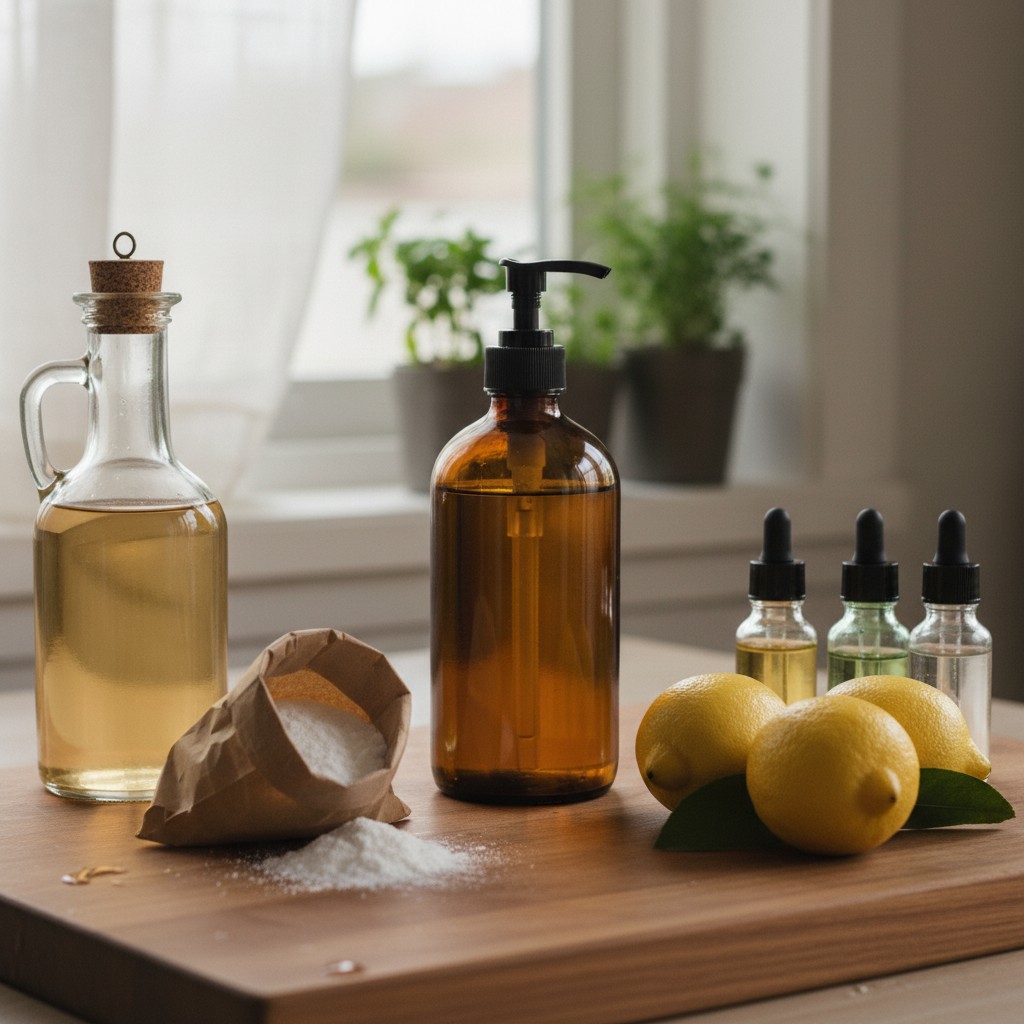
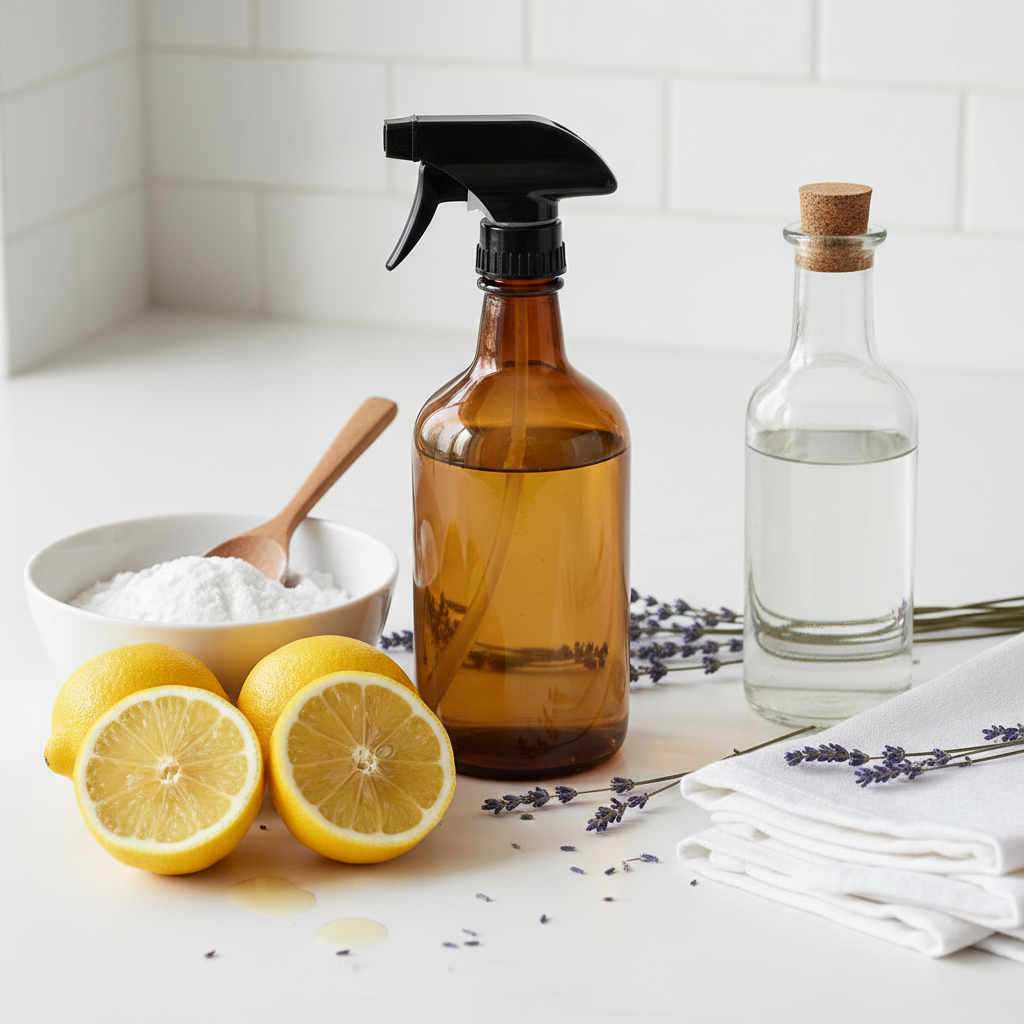
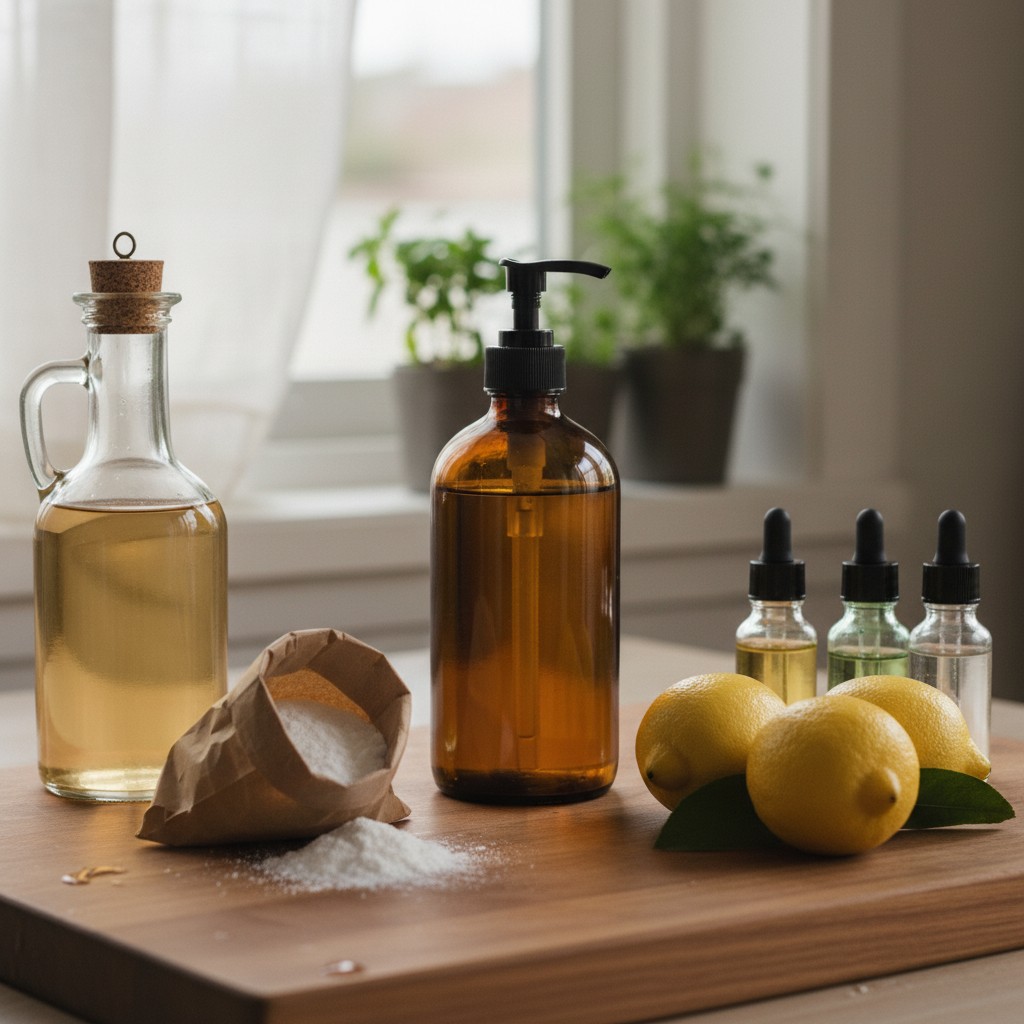
Five basic ingredients handle every cleaning task in your home, most of which you probably already have in your pantry.
- White vinegar: Disinfects, cuts grease, dissolves mineral deposits, and deodorizes. Dilute 1:1 with water for an all-purpose spray.
- Baking soda: A gentle abrasive that scrubs without scratching. Deodorizes fridges, carpets, and drains.
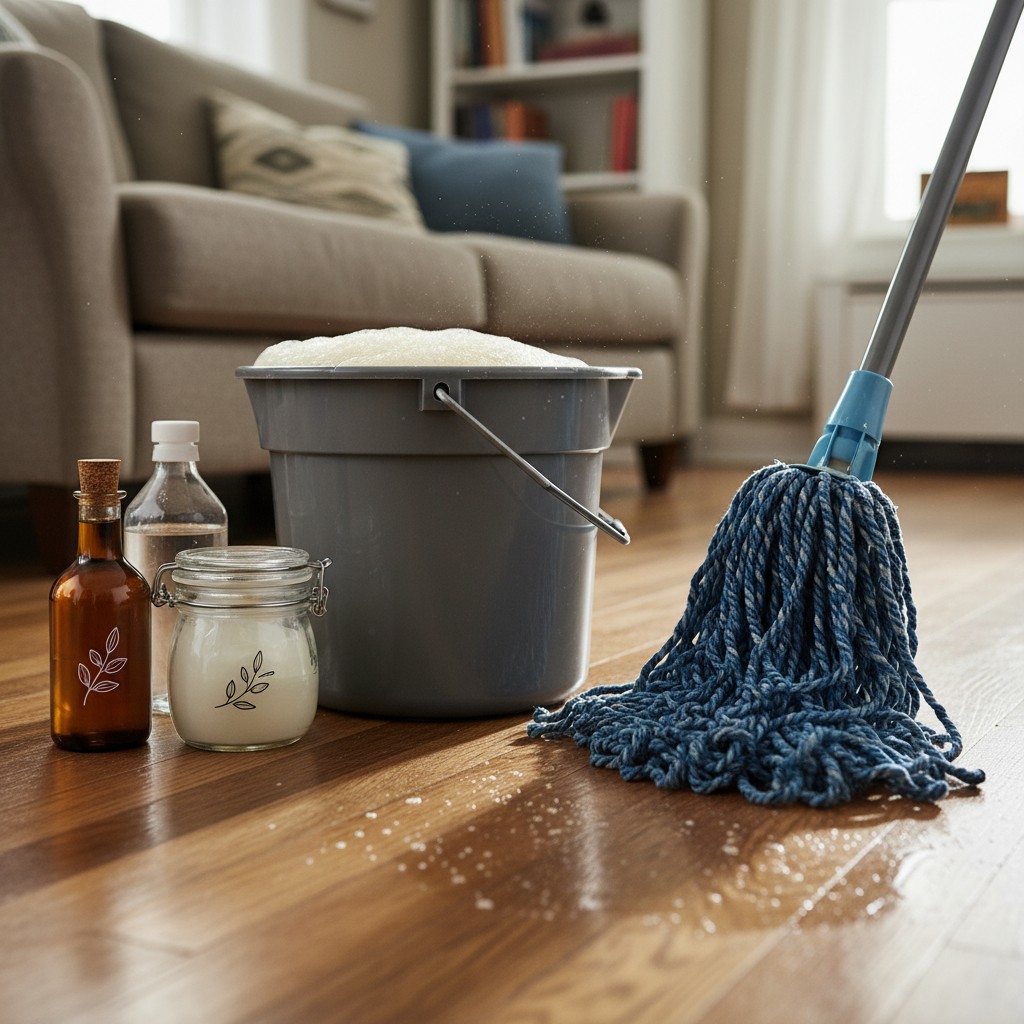
- Castile soap: A plant-based soap that works on everything, dishes, floors, counters, even laundry.
- Hydrogen peroxide (3%): A safe disinfectant for cutting boards, bathroom surfaces, and kitchen counters.
- Essential oils (optional): Tea tree is naturally antibacterial. Lavender smells lovely and is calming. Lemon cuts grease and leaves a fresh scent.
What Are the Best Homemade Cleaning Recipes?
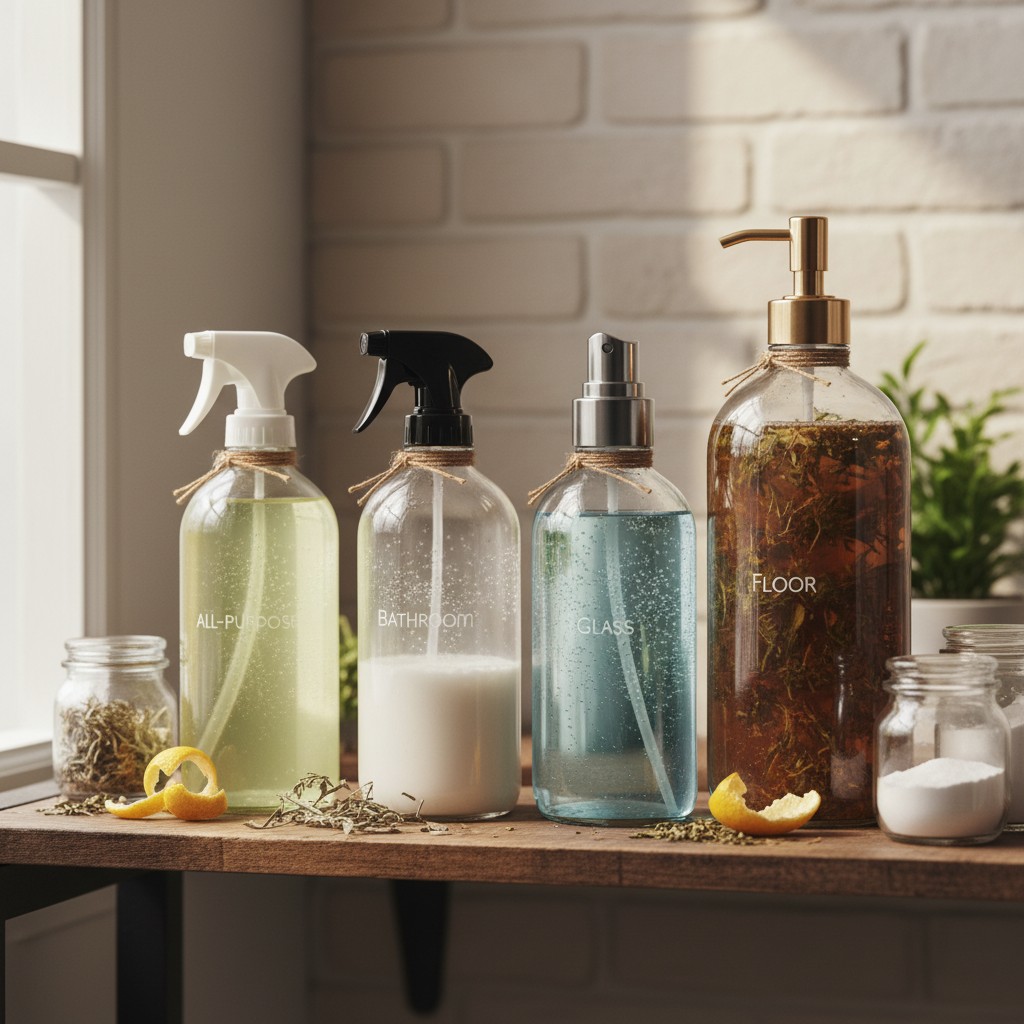
These four recipes cover 90% of household cleaning. I use them every single day and they work just as well as commercial products.
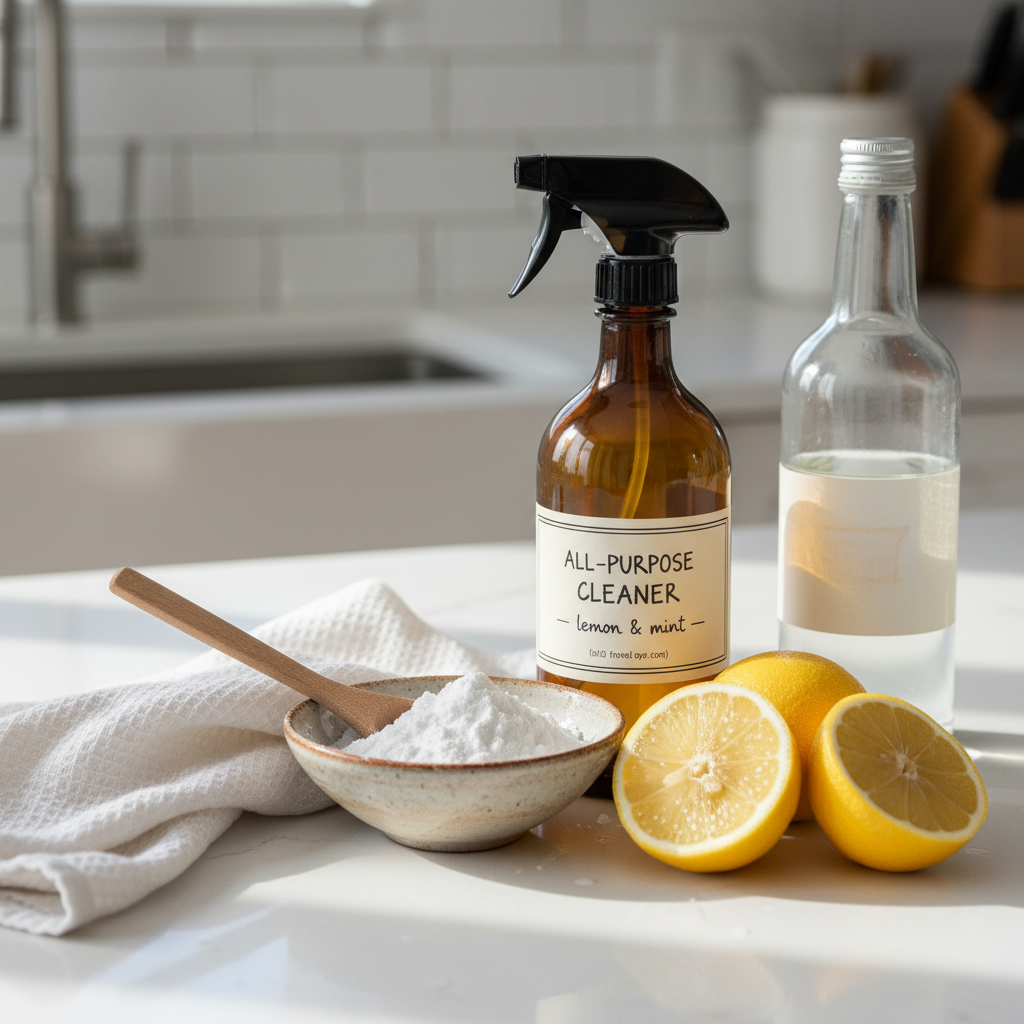
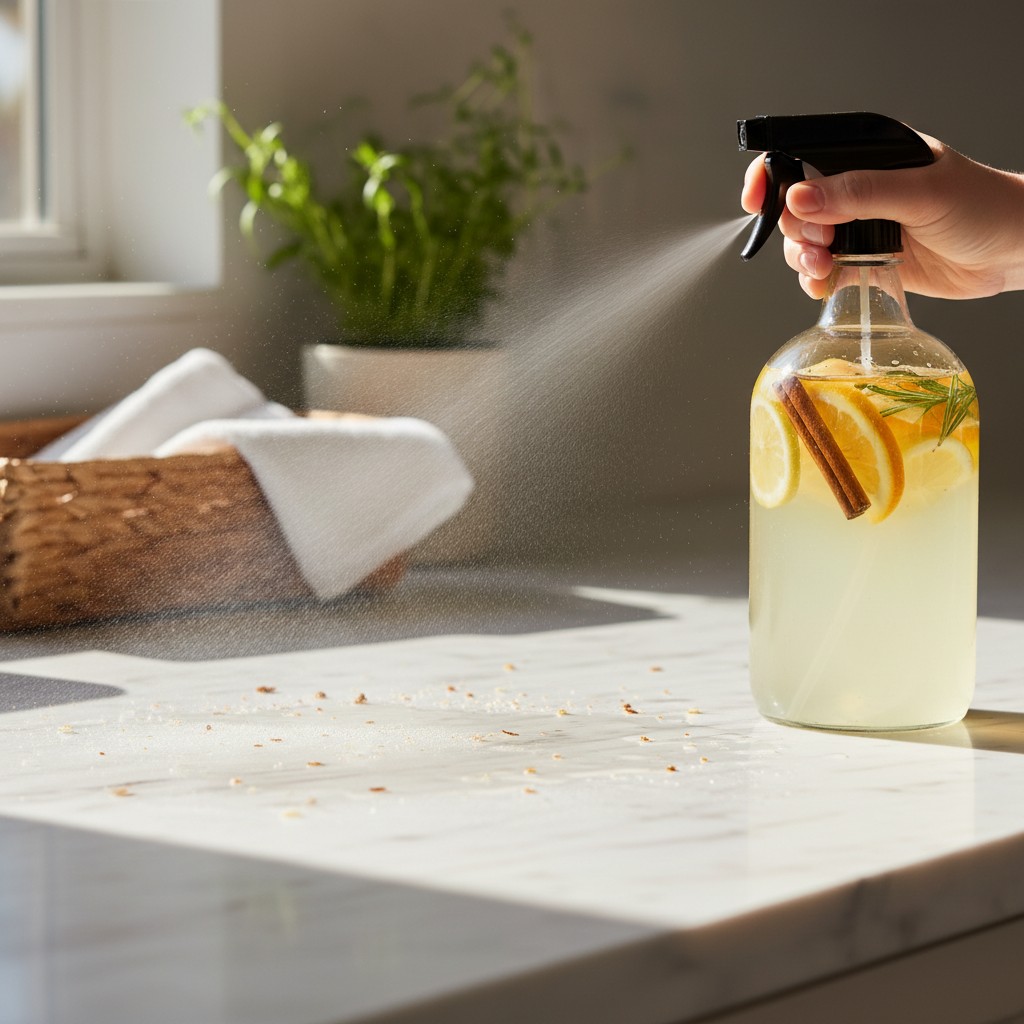
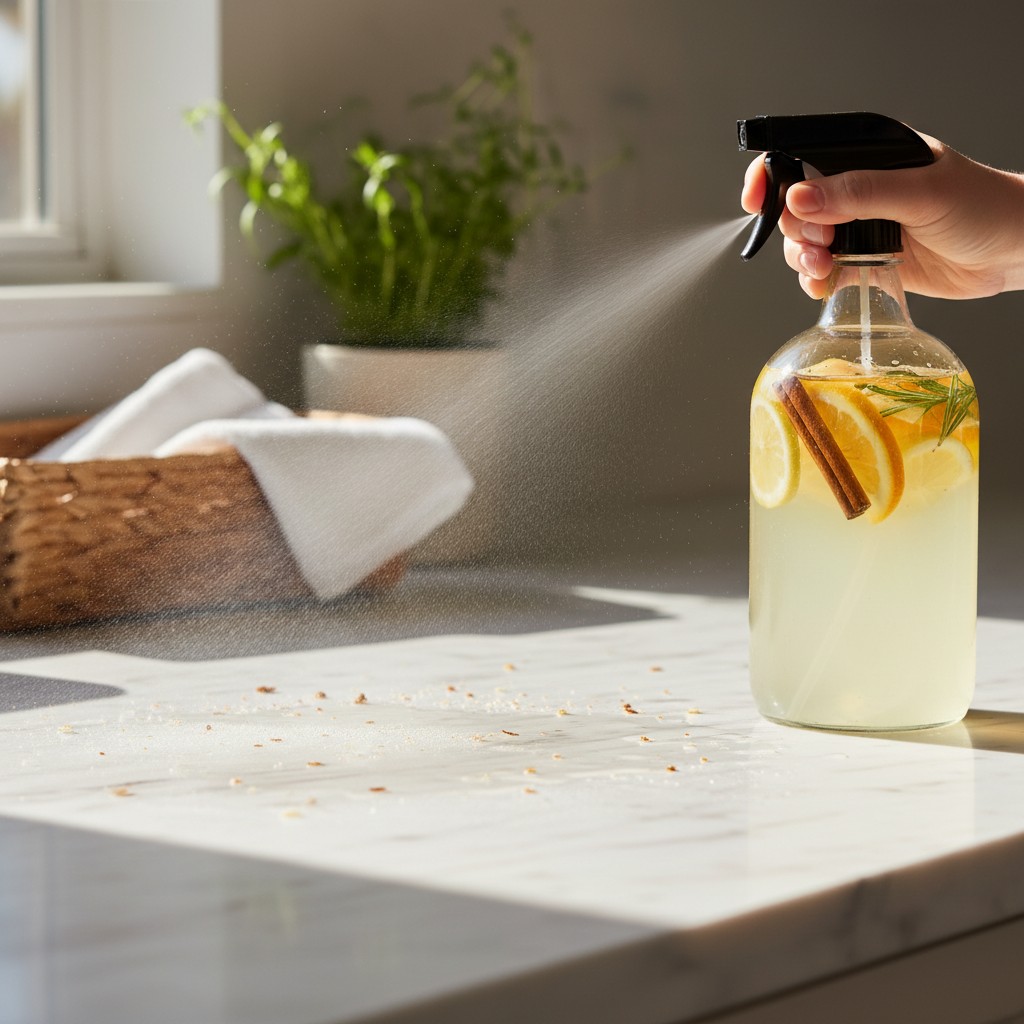
All-purpose spray: 1 cup water, 1 cup white vinegar, 10 drops essential oil. Shake and spray. Works on counters, sinks, appliances, and most hard surfaces. (Do not use on marble or granite, the acid can etch natural stone.)
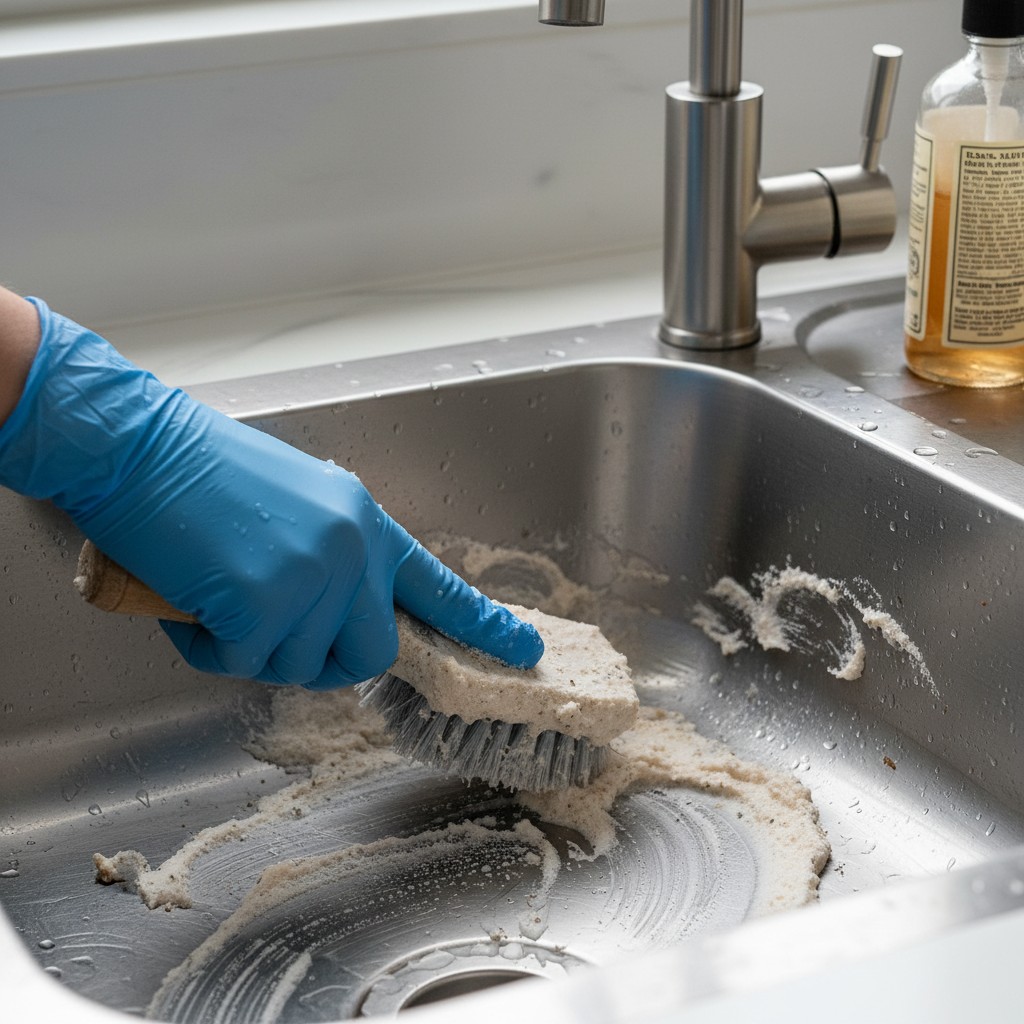
Soft scrub: 1/2 cup baking soda, enough liquid castile soap to form a paste, 5 drops tea tree oil. Use for sinks, tubs, tile, and stubborn spots.
Tea tree oil is toxic to cats, not just “irritating.” Cats lack the liver enzyme (glucuronyl transferase) needed to metabolize the phenols and terpenes in tea tree, peppermint, eucalyptus, wintergreen, pine, and citrus oils. The Pet Poison Helpline documents severe poisoning in cats from as little as 7 drops of 100% tea tree oil, and deaths from 10–20 mL exposures. A soft-scrub residue on a bathtub your cat later walks in and grooms off its paws is a realistic poisoning route.
If you live with cats: make the soft scrub with baking soda and castile soap only, leave the tea tree oil out entirely, and do not substitute peppermint, eucalyptus, pine, wintergreen, or citrus essential oils. The ASPCA Animal Poison Control Center lists tea tree oil as toxic to cats and dogs. If your cat is exposed, call the ASPCA APCC at 1-888-426-4435 or Pet Poison Helpline at 1-855-764-7661.
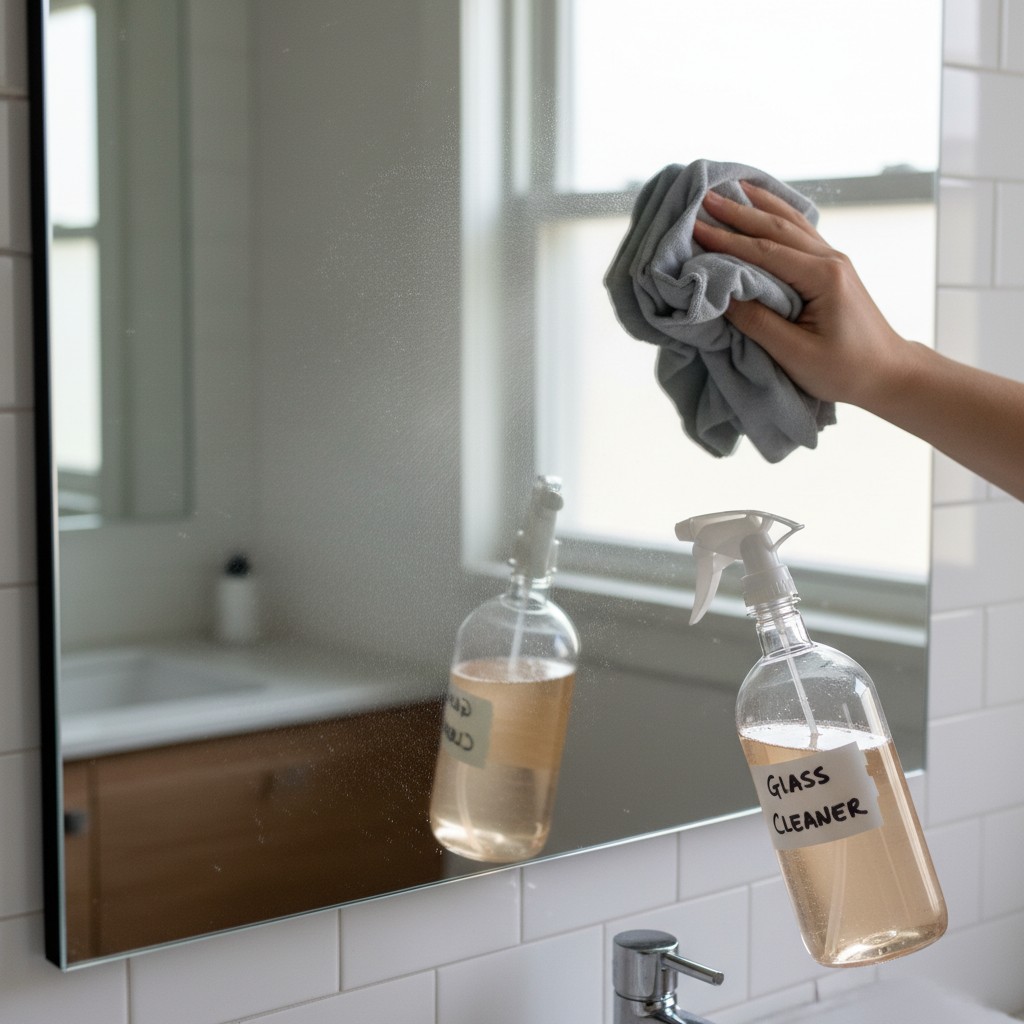
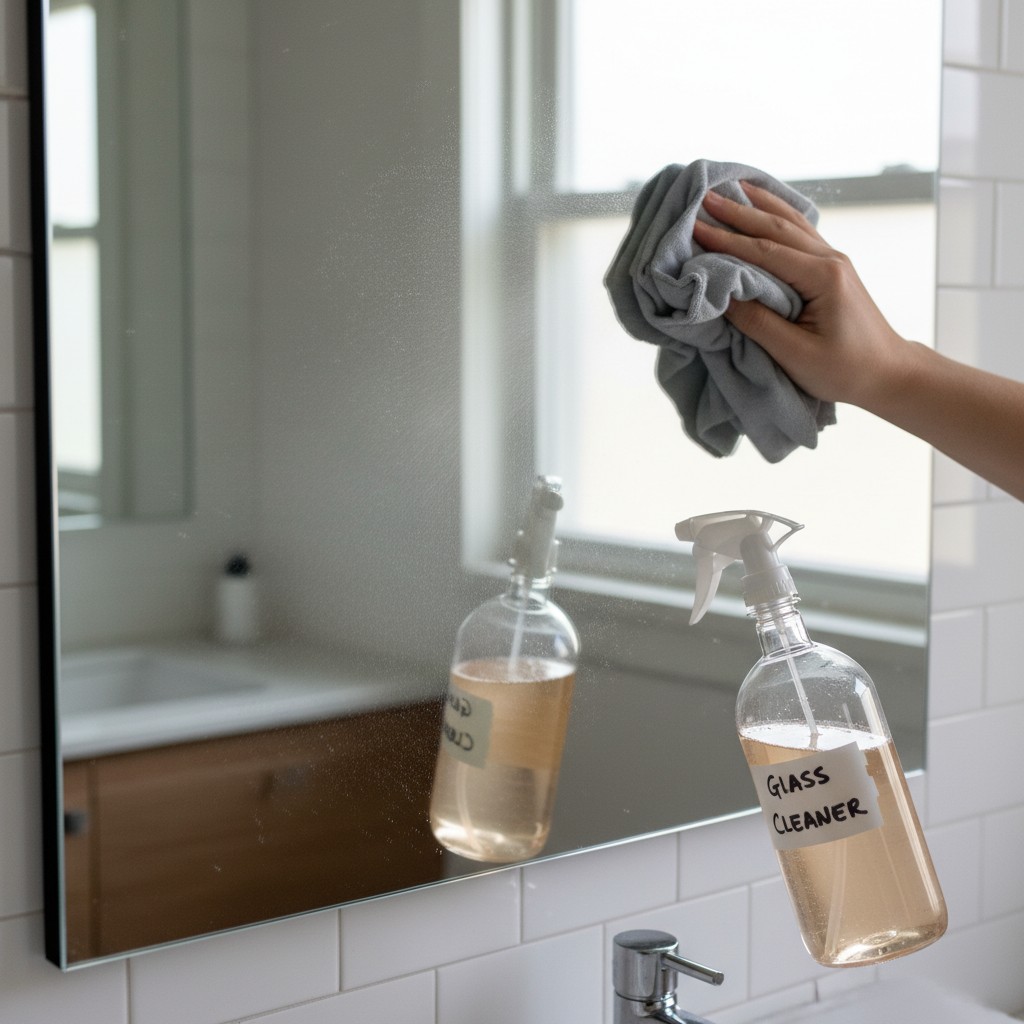
Glass cleaner: 1 cup water, 1 cup white vinegar, 1 tablespoon cornstarch. Shake well before each use. Spray and wipe with newspaper or a lint-free cloth for streak-free windows and mirrors.
Drain cleaner: Pour 1/2 cup baking soda down the drain, followed by 1 cup vinegar. Let it fizz for 15 minutes, then flush with boiling water. Do this monthly to keep drains clear.
| Recipe | Ingredients | Best For | Cost/Batch |
|---|---|---|---|
| All-Purpose Spray | Water + vinegar + essential oil | Counters, sinks, appliances | ~$0.50 |
| Soft Scrub | Baking soda + castile soap + tea tree | Tubs, tile, tough stains | ~$0.75 |
| Glass Cleaner | Water + vinegar + cornstarch | Windows, mirrors | ~$0.30 |
| Drain Cleaner | Baking soda + vinegar + boiling water | Monthly drain maintenance | ~$0.25 |
Switching to natural cleaning products saves money, reduces your exposure to harsh chemicals, and keeps your home smelling like actual clean. Start with the all-purpose spray and go from there, you’ll be surprised how well simple ingredients work. For more natural living ideas, check out our guides to making homemade soap, DIY beeswax wraps, and seasonal homemaking. The Harvard Health team also recommends natural cleaning for reducing indoor air pollution.
🌱 From Our Homestead
Switching to homemade cleaning products started as a cost-saving experiment and turned into a full lifestyle shift. Our cleaning supply shelf is now just vinegar, castile soap, baking soda, and a few essential oils, and somehow the house is cleaner than it ever was.
Frequently Asked Questions
White vinegar (5% acidity) is effective against many common household bacteria, including E. Coli and Salmonella. However, for hospital-grade disinfection or areas contaminated with viruses, hydrogen peroxide (3%) is a better choice. For everyday kitchen and bathroom cleaning, vinegar works well.
When mixed, they neutralize each other, the fizzing action is fun but leaves mostly salt water. Use them separately for best results: baking soda for scrubbing, vinegar for spraying. The fizzing combination is useful mainly for unclogging drains.
Avoid vinegar on marble, granite, natural stone, and unsealed grout, the acid can etch and damage these surfaces. Also skip it on cast iron, aluminum, and waxed wood. Use castile soap on these surfaces instead.
The vinegar all-purpose spray lasts indefinitely. Baking soda paste should be made fresh each use. Essential oil sprays keep for 1-2 months. Hydrogen peroxide breaks down in light, so store it in a dark bottle and use within a month of mixing.
Vinegar, baking soda, and castile soap are generally pet-safe once surfaces dry. Essential oils are a different story, especially for cats. Tea tree, peppermint, eucalyptus, wintergreen, pine, and citrus oils are toxic to cats because cats cannot metabolize phenols and terpenes (Pet Poison Helpline; ASPCA Animal Poison Control). If you have cats, leave essential oils out of any cleaning recipe that touches floors, tubs, counters, or anywhere a cat walks or grooms. Rinse surfaces with plain water after cleaning, and call the ASPCA APCC at 1-888-426-4435 if you suspect exposure.