Simple Drip Irrigation for Raised Beds: DIY Setup Guide
Key Takeaways
- Hand-watering is a primary cause of blossom-end rot, fruit cracking, and bolting, inconsistent moisture stresses plants far more than most gardeners realize.
- A basic drip system for one 4×8 raised bed costs under $50 in parts and takes about an hour to install, no plumber required.
- Drip irrigation uses 30–50% less water than overhead watering by delivering moisture directly to the root zone and eliminating evaporation from foliage.
- Space emitters 12 inches apart for most vegetables. For dense plantings (lettuce, carrots, brassicas), 6-inch spacing applies to drip tape or soaker line, if using individual point emitters, place one emitter at each plant.
- Mulching over your drip lines reduces watering needs by another 25–50%, the two systems work together to almost eliminate evaporation losses.
I hand-watered our raised beds for two seasons before I finally stopped pretending I was consistent about it. Some mornings I got out there right on schedule. Most mornings I didn’t. And every time I missed a day or two during a hot stretch, I paid for it: blossom-end rot on the tomatoes, cracked peppers, lettuce that bolted before I ever got a full salad. The plants weren’t failing because I didn’t care. They were failing because inconsistent watering causes more plant stress than almost anything else in the garden.
Installing drip irrigation was one of the ten best decisions I’ve made on this homestead. Not because it’s complicated, it isn’t, but because it removed human inconsistency from the equation entirely. The water shows up every morning whether I’m paying attention or not. If you have raised beds and you’re still standing over them with a hose every other day, this is the upgrade that will pay for itself the first summer in water savings, plant health, and your own sanity.
From Our Homestead
The year I finally set up drip irrigation, I’d just lost most of my tomato crop to blossom-end rot after a dry stretch in July. I was away for a week visiting family, came home to find the beds hadn’t been watered in five days, and the damage was already done. BER doesn’t reverse itself. You pick the rotted fruits, adjust, and try not to think about all those wasted weeks of growing.
I put in a basic drip system that fall, before the season ended, so it would be ready the following spring. Spent about $40 on parts, laid it in one afternoon, and ran it on a $15 mechanical timer from the hardware store. The next summer I went on the same trip. Came home to beds that looked better than when I’d left. The drip timer doesn’t forget. That was enough for me.
Why Is Hand-Watering Costing You More Than Time?
The obvious cost of hand-watering is the time it takes. But the real cost is what happens between watering sessions, especially when life gets in the way and those sessions stretch from every day to every other day to “sometime this week.”
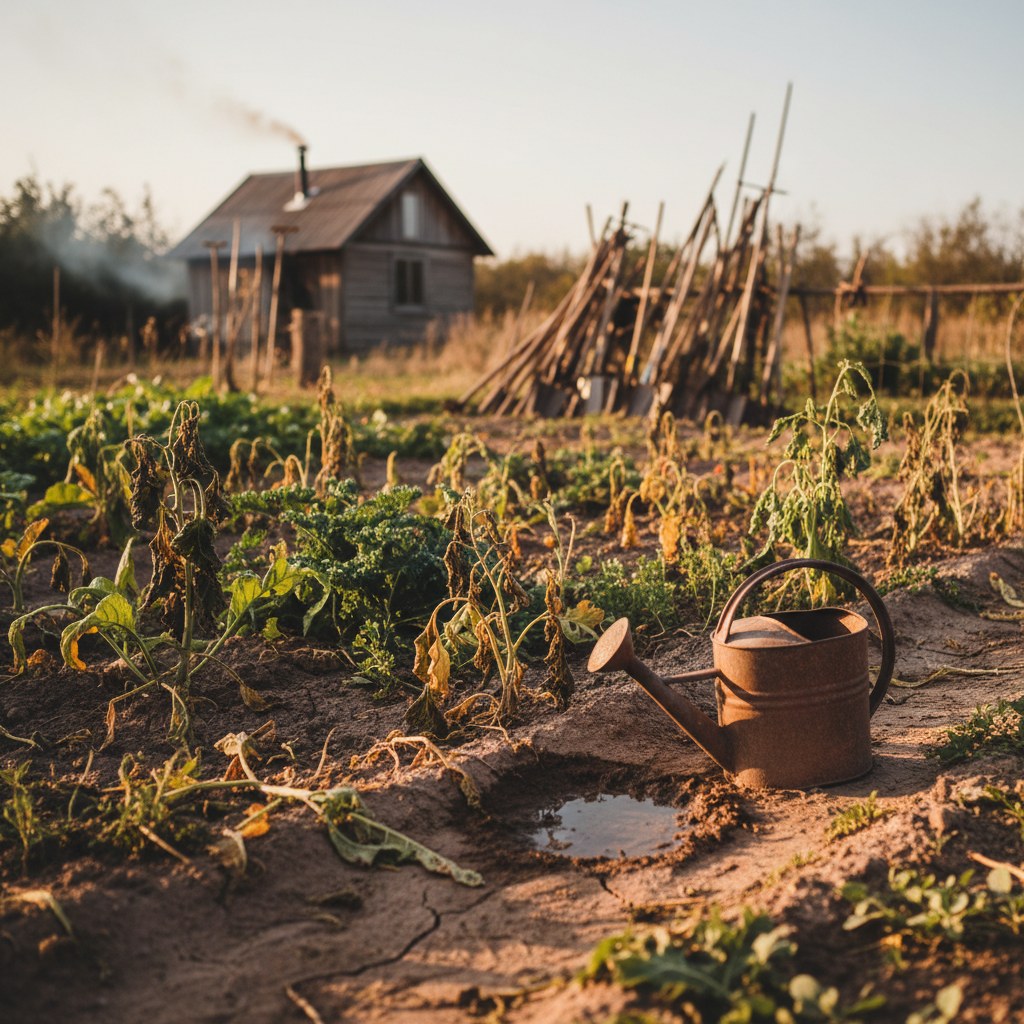
Plants don’t process drought stress and then recover cleanly when water returns. They carry it. Tomatoes and peppers in particular are acutely sensitive to irregular soil moisture. When the soil dries out significantly and then gets saturated again, the rapid flush of water causes the plant to take up calcium too quickly (or not quickly enough, depending on the mechanics of your specific situation), the result is blossom-end rot, the flat brown leathery patch that spreads across the bottom of your tomatoes and peppers and renders them inedible. It’s among the most common problems in home vegetable gardens, and in the vast majority of cases it’s caused not by a calcium deficiency in the soil, but by inconsistent watering disrupting calcium uptake.
Fruit cracking is the same story in reverse. Tomatoes that have gone a bit dry and then receive a sudden large drink of water expand faster than the skin can stretch. Bolting, when lettuce, spinach, or herbs suddenly shoot up and go to seed, is triggered by heat stress combined with water stress. Once it happens, the crop is done.
Overhead watering with a hose or sprinkler adds additional problems. Wet foliage is an invitation for fungal disease: early blight, septoria leaf spot, powdery mildew. Sprinklers also lose a significant portion of their water to evaporation before it ever reaches the root zone. University extension research consistently puts that figure at 30–50% compared to drip, which deposits water directly into the soil where roots can reach it immediately.
Drip irrigation solves all of this at once. Water arrives at the same rate, at the same time, every day. The soil moisture curve stays gentle and consistent. Plants spend their energy growing fruit instead of managing stress responses. And you get that time back.
What Equipment Do You Actually Need?
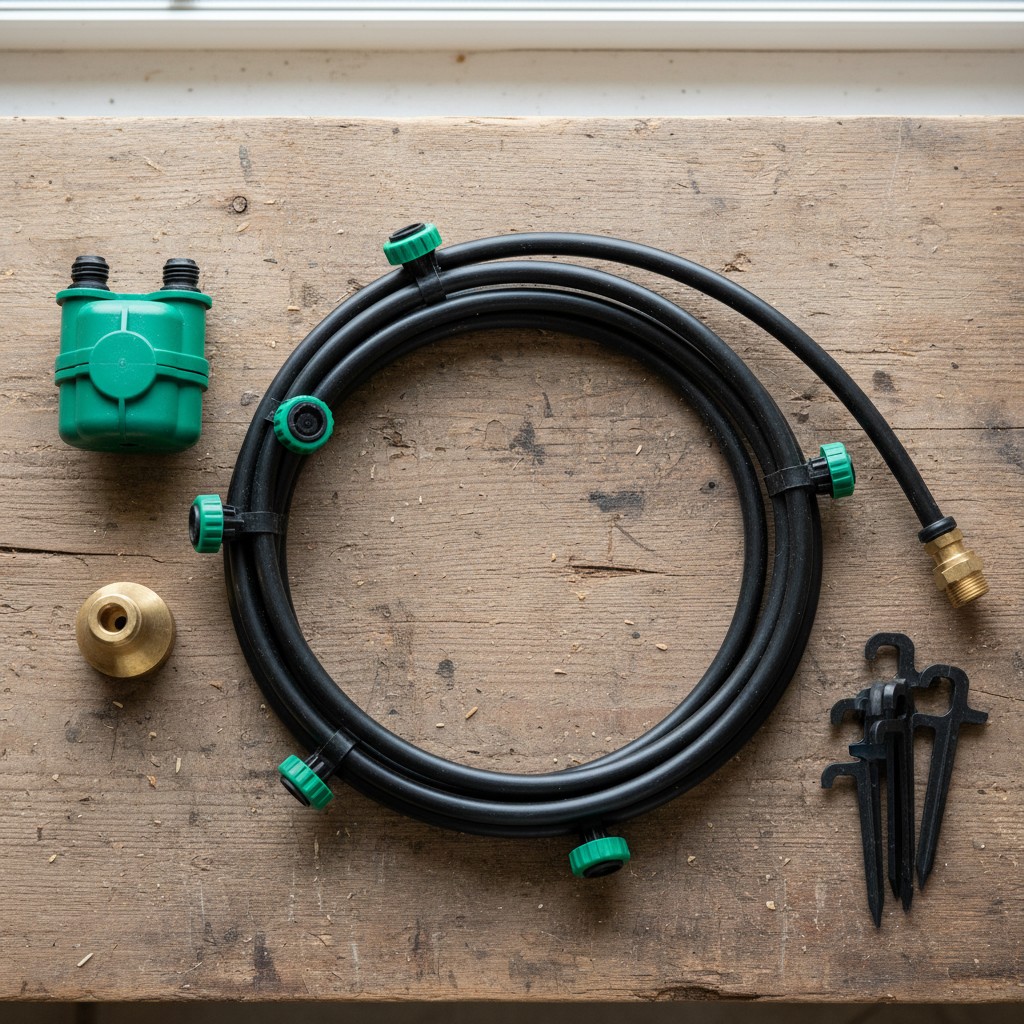
The parts list for a basic drip system is shorter than most people expect. For a single 4×8 raised bed, here’s what you need and roughly what to budget:
| Part | What It Does | Approx. Cost |
|---|---|---|
| 1/2″ mainline tubing (25 ft) | The spine of the system, runs from the hose bib to the bed | $8–12 |
| Drip emitters or drip tape (1/4″ supply) | Delivers water at the plant level | $8–15 |
| Pressure regulator (25 PSI) | Household water pressure is too high for drip, this reduces it | $8–12 |
| Backflow preventer | Keeps garden water from siphoning back into your drinking water line | $5–8 |
| Garden hose adapter / Y-splitter | Connects the system to your existing hose bib | $5–8 |
| Stakes / hold-down clips | Keeps tubing in place along the bed | $3–5 |
| End caps | Seals the far end of the mainline | $2–4 |
| Timer (optional but recommended) | Automates daily watering | $15–25 |
| Total (without timer) | $39–64 | |
You can buy all of these parts separately from any hardware store or garden center, or purchase a starter drip kit that bundles most of them. Kits tend to be slightly more expensive but save you from making multiple trips because you forgot the punch tool. Speaking of which: add a 1/4″ hole punch tool to your list if you’re running individual emitters, it’s usually $4–6 and you’ll need it to insert the emitter barbs into the mainline tubing.
One item worth not skimping on is the pressure regulator. Household water pressure typically runs 40–80 PSI. Drip emitters and tubing are designed for 15–30 PSI. Without a regulator, you’ll blow fittings, pop emitters loose, and wonder why your “drip” system is gushing. A $10 pressure regulator prevents all of this.
How Do You Install Drip Irrigation Step by Step?
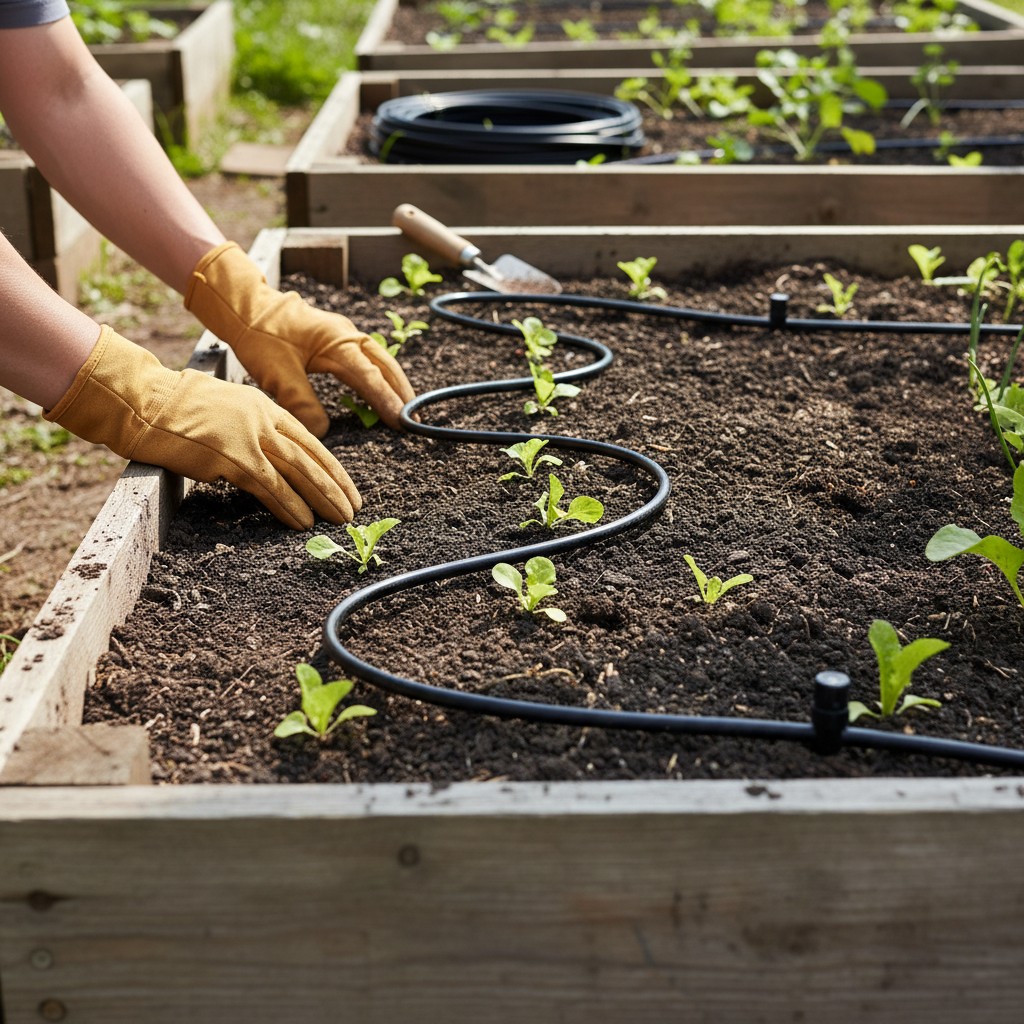
Installation for a single raised bed takes about an hour, plus another 15 minutes to run a test and adjust. Here’s the sequence from hose bib to first watering:
Step 1: Attach the backflow preventer to the hose bib. Thread it on by hand and tighten a quarter turn with pliers. This goes on first, before anything else.
Step 2: Attach the pressure regulator. Thread it onto the backflow preventer. Most pressure regulators for drip are set to 25 PSI at the factory, you don’t need to adjust anything.
Step 3: Attach your timer (if using one). If you’re automating with a hose-bib timer, it goes between the hose bib and the backflow preventer. Check your timer’s instructions, some go before the regulator, some after. Most battery-operated timers go before.
Step 4: Connect a short garden hose or tubing run from the regulator to the edge of your raised bed. If the bed is close to the spigot, you can run mainline tubing directly. If it’s more than 10 feet away, a short section of standard garden hose makes the connection easier.
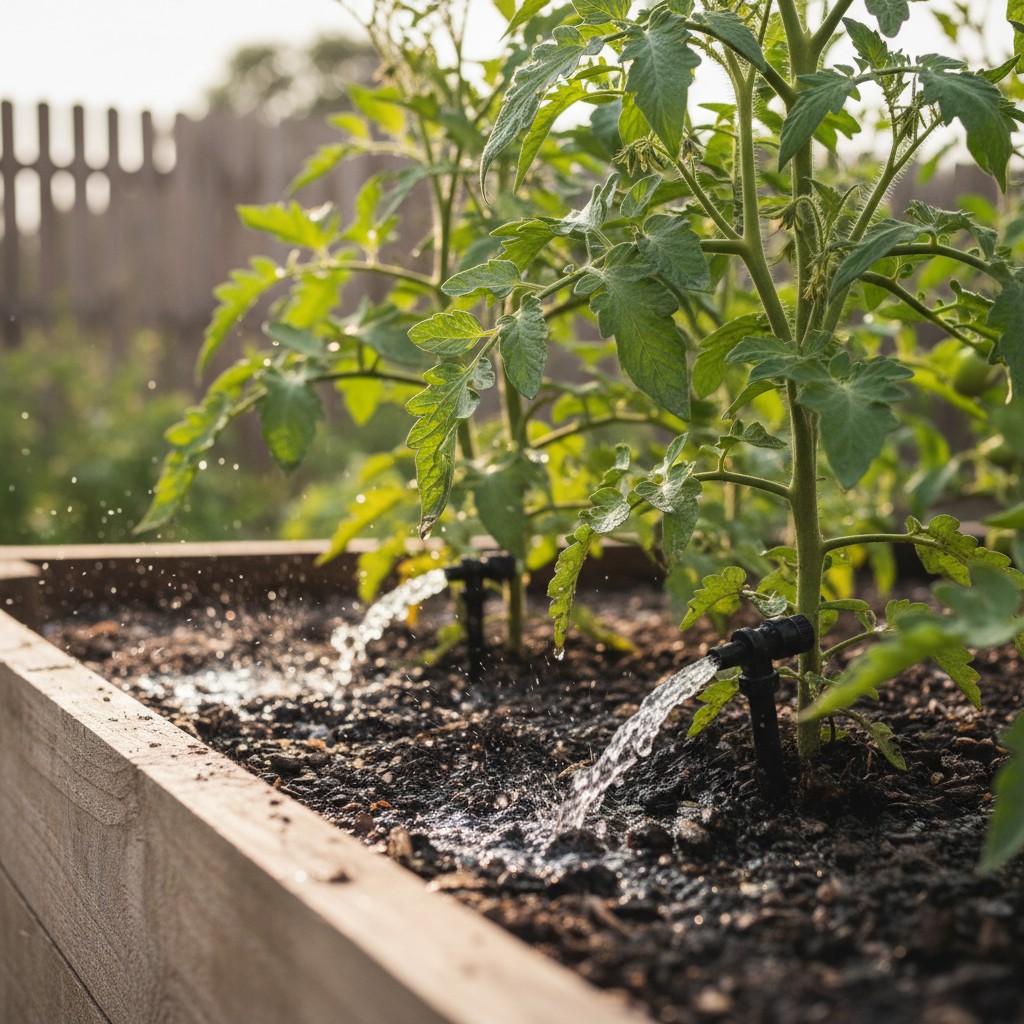
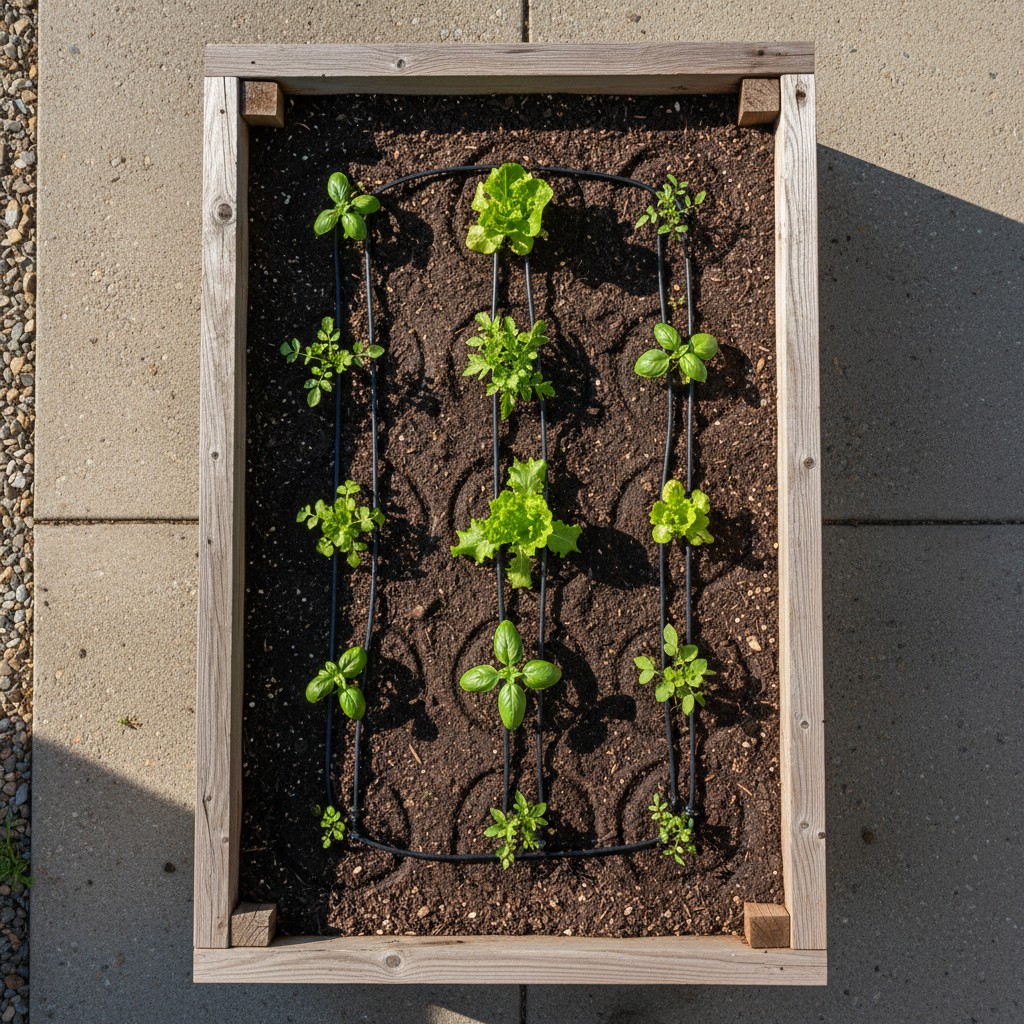
Step 5: Lay the 1/2″ mainline tubing along the length of the bed. For a 4×8 bed, you’ll run two parallel lines about 18 inches apart, or one line down the center for a single-row planting. Cut the tubing 2–3 inches past the far end of the bed.
Step 6: Stake the mainline down with hold-down clips or U-stakes every 18–24 inches. Tubing that isn’t staked will move around, shift your emitters off-target, and generally misbehave.
Step 7: Install end caps on all open ends of the mainline. Fold-and-stake end caps work fine and cost less than threaded fittings.
Step 8: Punch holes for your emitters. Use the 1/4″ hole punch tool to make holes in the mainline tubing wherever you want a drip point. For most vegetables, tomatoes, peppers, squash, cucumbers, space emitters 12 inches apart. For dense plantings like lettuce, carrots, and brassicas, 6-inch spacing applies to drip tape or soaker line; if using individual point emitters, place one emitter at each plant rather than spacing them 6 inches apart. Place each hole where it will sit near the base of a plant, not between plants.
Step 9: Insert the emitter barbs. Push the barbed end of each emitter firmly into the punched hole until the base is flush with the tubing. They should click or seat tightly. Loose emitters drip at the connection point instead of at the emitter head.
Step 10: Turn on the water at low pressure first. Walk the system and watch for leaks at connections, emitters that blew out, and end caps that aren’t holding. Fix anything that’s dripping where it shouldn’t.
Step 11: Time the watering. With the system running, note how long it takes for the soil around each emitter to be visibly moist 4–6 inches deep (probe with your finger or a bamboo skewer). That run time: typically 20–45 minutes depending on your emitter flow rate, becomes your baseline timer setting. Run it once in the morning, ideally in the early hours before heat evaporates moisture from the surface.
If you’re connecting multiple beds, use a Y-splitter at the hose bib or T-fittings to branch off the mainline. Each branch should have its own shutoff so you can adjust zones independently. For beds with very different water needs, say, a tomato bed next to a bed of drought-tolerant herbs, this zone control becomes important.
Drip Tape vs. Drip Emitters vs. Soaker Hose: Which Is Best?
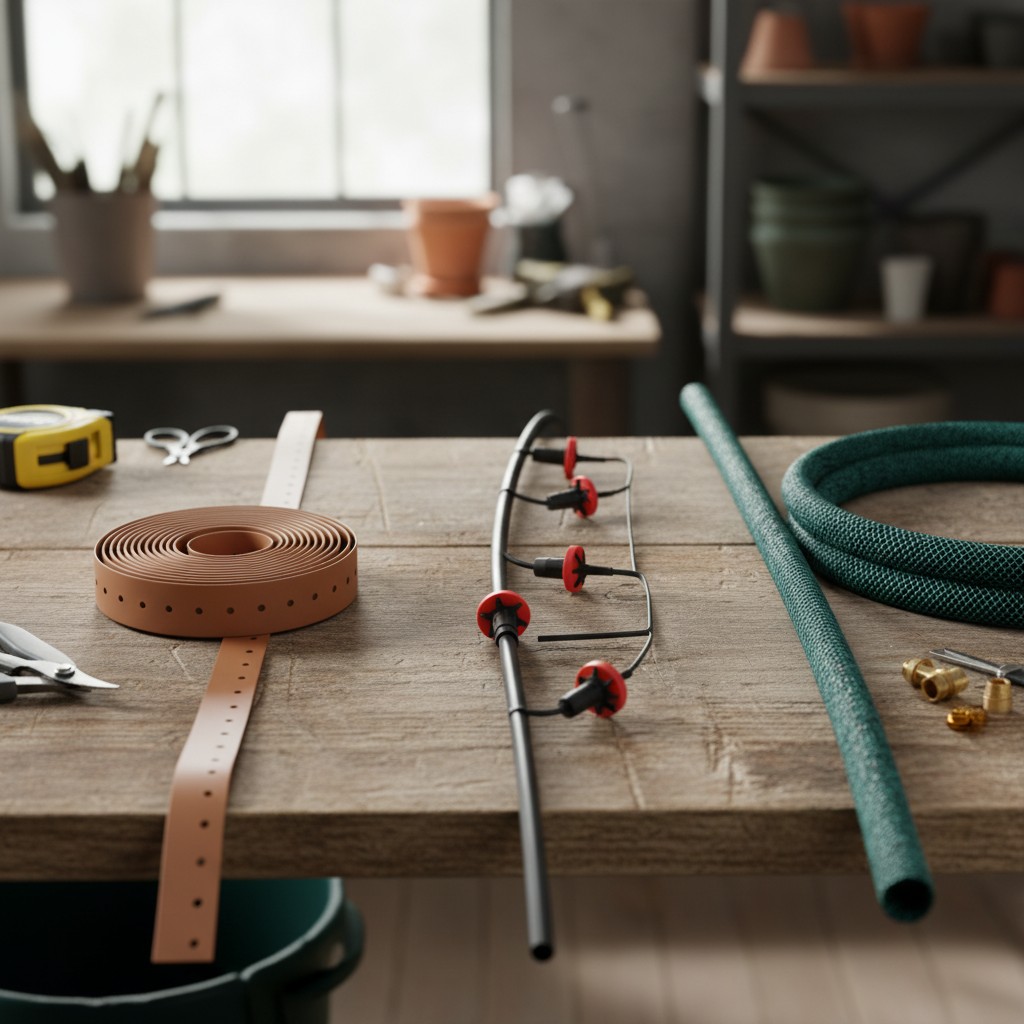
These three options are often confused with each other, and they behave quite differently in practice. Here’s how they compare for raised bed use:
| Type | How It Works | Best For | Drawbacks | Cost |
|---|---|---|---|---|
| Drip tape | Thin-walled flat tubing with pre-molded emitters every 8″ or 12″ | Row crops, seasonal use, large areas | Thin walls puncture easily; must be removed and replaced seasonally or annually | Very low ($0.05–0.15/ft) |
| Drip emitters | Individual emitter heads punched into mainline tubing at custom spacing | Permanent or semi-permanent beds, mixed plantings, precise placement | Takes longer to install; requires a hole punch tool; emitters can clog | Moderate ($0.20–0.50/emitter) |
| Soaker hose | Porous rubber hose that weeps water along its entire length | Beginners, simple layouts, casual use | Uneven output along length; clogs over time; less control than emitters | Low ($0.10–0.25/ft) |
For most homestead raised beds, drip emitters on 1/2″ mainline tubing is the best long-term choice. The system is modular, repairable, and lasts for years. When a single emitter clogs or breaks, you replace that emitter for pennies rather than pulling up the whole line. You can also reconfigure spacing when you change what you’re planting in a bed.
Drip tape makes the most sense if you’re working at larger scale, multiple long rows in an in-ground garden or market garden plot. It’s the fastest system to lay out and the cheapest to buy, but the thin walls mean you’ll be replacing it every one to three seasons. It’s not designed to be left in the ground over winter.
Soaker hose is the easiest entry point if you want to try drip irrigation with almost no setup. The results are decent, the cost is low, and you don’t need any special tools. The tradeoff is consistency: soaker hoses deliver more water near the spigot end and less at the far end, which matters in a bed longer than 25 feet. For a short raised bed they work fine, just understand the limitations going in.
How Do You Maintain Your Drip System?
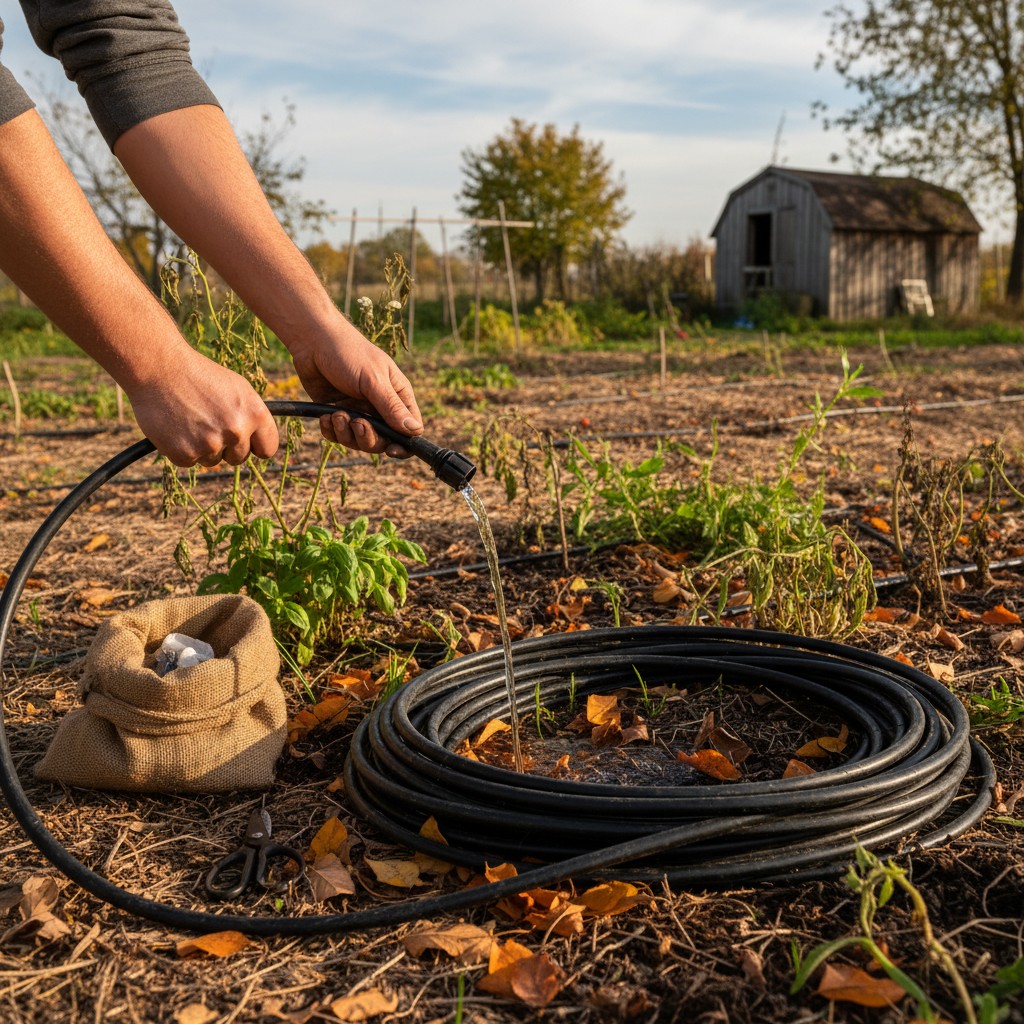
A drip system that doesn’t get any maintenance will eventually fail quietly, one clogged emitter here, one cracked fitting there, and you won’t notice until you’ve got a dry pocket in your bed where nothing is thriving. Maintenance is simple if you do it consistently.
Flush the system monthly during the growing season. Remove the end caps from the mainline and turn the water on for 30–60 seconds. The flush pushes sediment, algae, and debris out the open ends before they have a chance to clog emitters. Cap and resume normal operation. This is especially important if your water is hard or you’re pulling from a well with sediment.
Check emitters when you flush. Walk the system while it’s running and watch each emitter. A healthy 1 GPH (gallon per hour) emitter produces a slow, steady drip. An emitter that’s gushing has a cracked diaphragm, pull it out and push in a new one. An emitter that’s not dripping is clogged, unscrew the cap, clear the opening with a pin or toothpick, flush, and reinstall. Carry a handful of spare emitters in your tool bag; they cost pennies and the repair takes thirty seconds.
Inspect connections every two weeks. Walk the mainline and look for wet spots in the soil that don’t correspond to an emitter location, a common sign of a barbed fitting that’s pulled loose or a punch hole that didn’t get an emitter seated properly. Press loose fittings back into place. If a tubing joint keeps failing, cut out the bad section and splice in a new piece with a barbed coupler.
Winterize before the first hard freeze. This step is non-negotiable if you’re in a climate with freezing winters. Disconnect the system from the hose bib, open all end caps, and let the water drain out completely. A line full of water that freezes will split the tubing and crack emitters. If your system runs through multiple beds or has any low spots where water can pool, use a hand pump or a can of compressed air to blow out any remaining water. Drain and store your filter and backflow preventer separately, both are crack-prone in freezing temperatures. Never use compressed air above 50 PSI to blow out drip lines; higher pressure can split tubing and damage emitters. Store the timer indoors, cold kills the batteries and can crack the housing.
Each spring, run a full inspection before planting. Turn on the system and walk it slowly. Check every emitter, every connection, every stake. It’s much easier to fix problems before the bed is full of plants than after. Replace any emitters that clog immediately on first flush, mineral deposits from winter sitting can seal them.
How Much Water Do Your Vegetables Actually Need?
The starting point for most vegetable gardens is 1 to 1.5 inches of water per week. That number comes from the average evapotranspiration rate of a well-established vegetable crop in moderate summer conditions. It’s a reasonable baseline, but it’s only a baseline, because several factors push it significantly in either direction.
Soil type matters. Sandy soils drain quickly and need more frequent watering, even if the total weekly amount is similar. Heavy clay holds water longer, which sounds like an advantage but can lead to saturation and root problems if you water on the same schedule as a sandy bed. The ideal raised bed soil, loamy, well-amended with compost, holds moisture well while draining freely. If you haven’t worked on your raised bed soil mix, that investment pays off in reduced watering needs as much as it does in yields.
Temperature and humidity push the number up. A week of 95°F afternoons with low humidity can double the water demand of your plants. Tomatoes, peppers, and cucumbers in peak summer heat may need closer to 2 inches per week. Leafy greens and root vegetables are more forgiving. Watch your plants: wilting in the morning (before the heat of the day) is a reliable sign of water stress. Wilting in the afternoon can be normal, plants temporarily droop in peak heat and recover by evening.
Mulch changes everything. A 2–3 inch layer of straw, wood chips, or shredded leaves over your drip lines reduces soil evaporation by 25–50%. It keeps the root zone cooler, suppresses weeds that compete for water, and lets you run your drip timer less frequently while maintaining the same moisture level. If you’re using drip irrigation without mulch, you’re getting half the benefit. If you’re pulling water from a catchment system rather than municipal supply, pairing drip with mulch is how you make a small tank last, check out how we set up our rainwater harvesting system for the specifics on that.
Growth stage matters. Seedlings need more frequent, lighter watering. Established plants with deep root systems can handle longer intervals between deeper watering cycles. Fruiting crops: tomatoes especially, have peak water demand when fruits are sizing up. If you have a timer and you’re paying attention, adjust run times upward by 25–30% during peak fruiting.
A simple way to calibrate your system: place a small tuna can in the bed when your drip is running. When the can has 1 inch of water in it, you’ve delivered a week’s baseline supply. Divide that by your run time and you’ll know exactly how long to run the system each day. For most home drip setups with 1 GPH emitters, that works out to somewhere between 20 and 45 minutes per day, depending on emitter density.
Drip irrigation pairs particularly well with intensive growing methods. Whether you’re growing tomatoes in a dedicated bed, running a mixed raised bed, or experimenting with container gardening on a patio, consistent root-zone moisture is the foundation that everything else, fertilizing, pruning, training, is built on.
Download Our Free Drip Irrigation Parts Checklist
Get the complete printable parts list for a single-bed drip setup, including part names, measurements, and what to look for at the hardware store. We’ve also included a seasonal maintenance schedule and a quick-reference emitter spacing guide by crop type.
Sign up for the Wild Hearth Life newsletter and we’ll send it straight to your inbox, along with weekly guides on growing, preserving, and building a more self-sufficient homestead.
FAQ
Can I connect a drip system to a rain barrel or rainwater tank instead of a hose bib?
Yes, with a few adjustments. Gravity-fed rain barrels typically deliver water at very low pressure, often 3–5 PSI, well below what most drip emitters need to function properly. To make this work, skip the pressure regulator (you’ll lose what little pressure you have) and use low-flow emitters rated for gravity-fed or low-pressure systems, typically 0.5 GPH or less. Elevating the barrel higher increases pressure, every foot of elevation adds roughly 0.43 PSI. A barrel elevated 10 feet gives you about 4 PSI, which can work for gravity drip systems designed for that range. Alternatively, a small 12V diaphragm pump can pressurize a rain tank to normal drip operating range.
Will drip irrigation work for all vegetables, or are some better hand-watered?
Drip works for every vegetable you’d grow in a raised bed. The only cases where you might supplement with overhead watering are getting seeds to germinate (drip emitters are too slow and localized for the shallow seed zone) and transplanting new seedlings (they benefit from a thorough hand-watering at planting to settle roots). Once seedlings are established after about a week, drip takes over completely. Corn and other crops that benefit from pollination sometimes get a light overhead shower to help pollen distribute, but that’s optional and unrelated to irrigation needs.
How do I know if my emitters are clogging over time?
The clearest sign is uneven plant growth, one plant thriving while its neighbor struggles, with no other obvious explanation. Walk your system while it’s running and watch each emitter. A healthy emitter produces a steady, slow drip or a small bubble of water. If you see nothing coming out, push a pin through the emitter opening to clear it, then flush the line. Hard water mineral deposits are the most common cause of gradual clogging. If you’re in a hard water area, flush the system weekly rather than monthly and consider inline filters at the hose bib connection, which add about $10 to the setup cost and catch sediment before it reaches emitters.
Do I need a timer, or can I just turn the system on manually?
Technically you can run it manually, and plenty of people do for the first season to get a feel for how long the system needs to run. But the point of drip irrigation is consistency, removing the human variable from the equation. A mechanical hose-bib timer costs $12–18 and requires no wiring, no Wi-Fi, and no app. You twist a dial and it runs for whatever duration you set, every day at the same time. That’s the cheapest and most reliable form of automation in the garden. If you want to step up, digital timers with multiple programs cost $25–40 and let you set different run times on different days, which is useful when you’re adjusting for rain or seasonal changes.
Can I run drip irrigation under mulch?
Yes, and this is actually the recommended approach. Laying drip lines on the soil surface and covering with 2–3 inches of straw or wood chips gives you all the evaporation-reduction benefits of mulch on top of the water efficiency of drip, with the added bonus that the system becomes nearly invisible. The tubing stays cooler under mulch, which helps extend its life. The only downside is that checking for clogs and leaks requires pulling back the mulch to inspect. Do your initial emitter placement with the system uncovered, run it for a week to confirm everything is working, then add the mulch layer. After that, monthly flush sessions are your main maintenance window.
Drip irrigation isn’t a garden luxury. It’s the most direct path from “gardener who worries about the plants when she’s away” to “grower who comes home to a thriving garden.” The parts are cheap, the installation is a single afternoon, and the system pays for itself in the first season in water savings alone, before you even count the harvests you’ll stop losing to stress-related plant problems. Set it up once, dial in the timer, mulch over the lines, and let it run.
If you’re still setting up your beds and haven’t gotten to irrigation yet, start with the basics of building your first raised bed, the irrigation system works best when the bed itself is set up for success from the ground up.