The Complete Guide to Mulching: Types, When to Apply, and How Much You Need
The Complete Guide to Mulching: Types, When to Apply, and How Much You Need
Bare soil loses water fast. Really fast. On a hot July afternoon, an uncovered garden bed can shed more than a quarter inch of moisture in a single day, while a bed under three inches of straw stays cool, damp, and largely weed-free. That gap is the case for mulch in one sentence.
This guide covers what mulch actually does for your soil and plants, which organic and inorganic types fit which jobs, how deep to apply each material, when in the season to put it down, and how to calculate exactly how many cubic yards you need. It also walks through the common mulching mistakes (volcano mounds around trees, fresh wood chips dug into the topsoil, plastic sheeting under flower beds) that quietly damage plants for years before anyone notices. After three seasons of running deep wood chip paths and shredded leaf beds on our property in zone 6b, I’ll share which combinations held up and which ones I quit.
What Mulch Does for Your Garden, and Why It Matters
Mulch protects the soil surface with a layer of organic or inorganic material that slows evaporation, blocks light from weed seeds, and buffers root-zone temperature. According to University of Minnesota Extension, “mulch reduces evaporation from the soil surface and helps soil hold water,” which translates into less irrigation during the warm-and-dry stretches of the growing season. Water savings alone pay for the labor most years.
Weed suppression is the second big job. The University of California’s WeedCUT program notes that mulch “fundamentally changes the ground that it is applied to by reducing light penetration to the soil surface,” which intercepts the light cues most annual weed seeds need to germinate. Temperature regulation rounds out the trio. Colorado State University Extension notes that wood chip mulch insulates the soil against temperature swings, though sun-exposed wood surfaces can run hotter than gravel during peak summer.
Add erosion control, slow soil-structure improvement as organic mulches break down, and habitat for ground beetles and other beneficial insects, and a thin layer of dead plant matter starts looking like one of the highest-leverage tools you have in the garden. The USDA Natural Resources Conservation Service even codifies mulching as Conservation Practice Standard 484, treating it as a recognized soil and water conservation technique. Mulch also pairs well with no-till gardening, since both approaches protect soil structure rather than disturbing it.
Which Types of Organic Mulch Should You Choose?
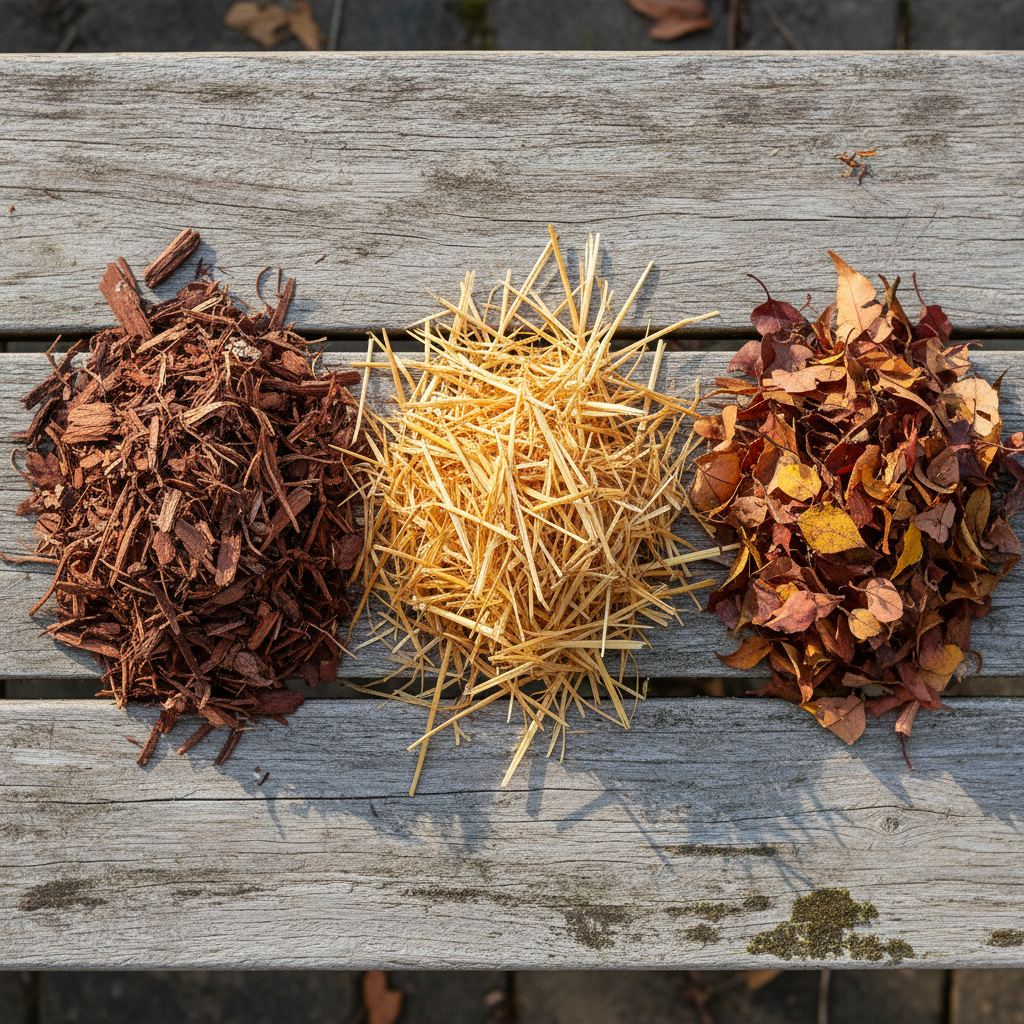
Match the mulch to the job. Organic mulches include wood chips, shredded bark, straw, pine needles, shredded leaves, grass clippings, compost, and seed hulls, and the right one depends on what you’re growing and how long you want the cover to last. University of Illinois Extension recommends matching mulch material to plant and bed type rather than picking one mulch for everything on the property.
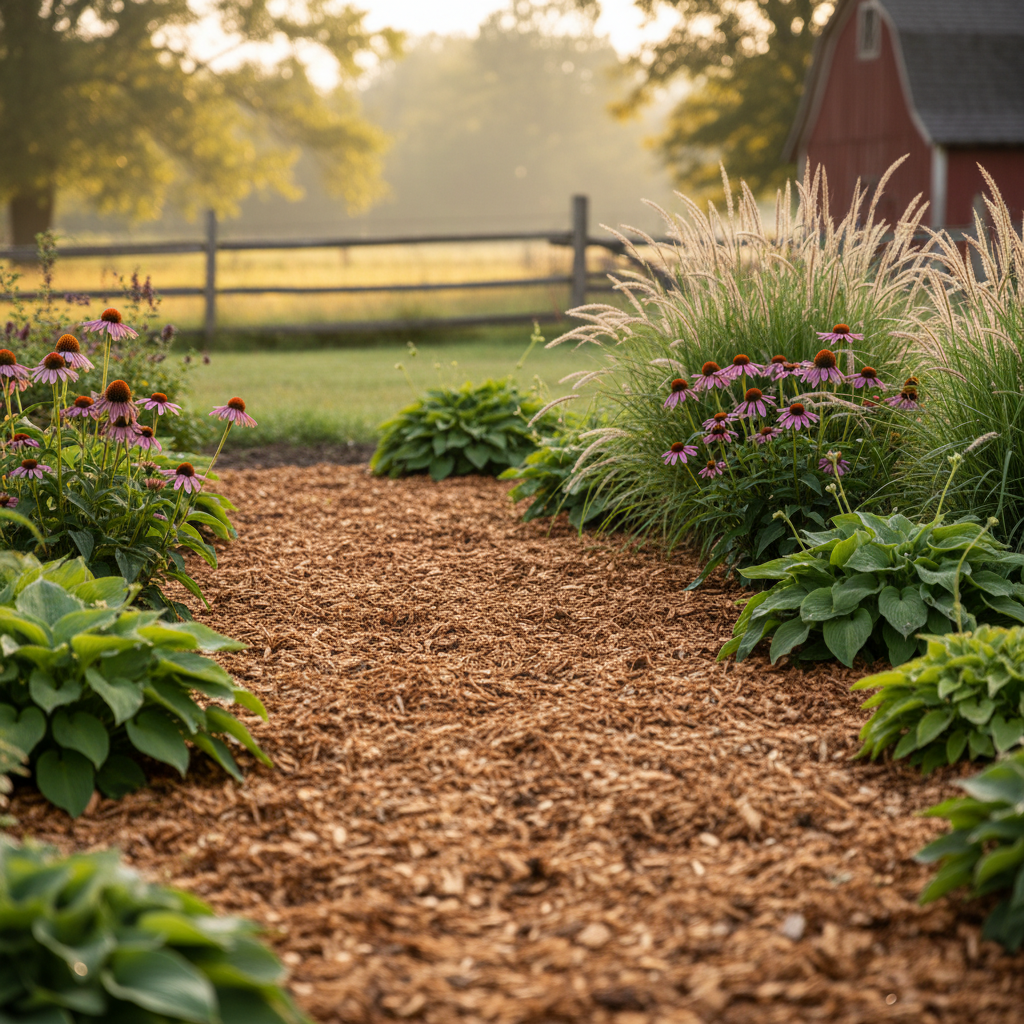
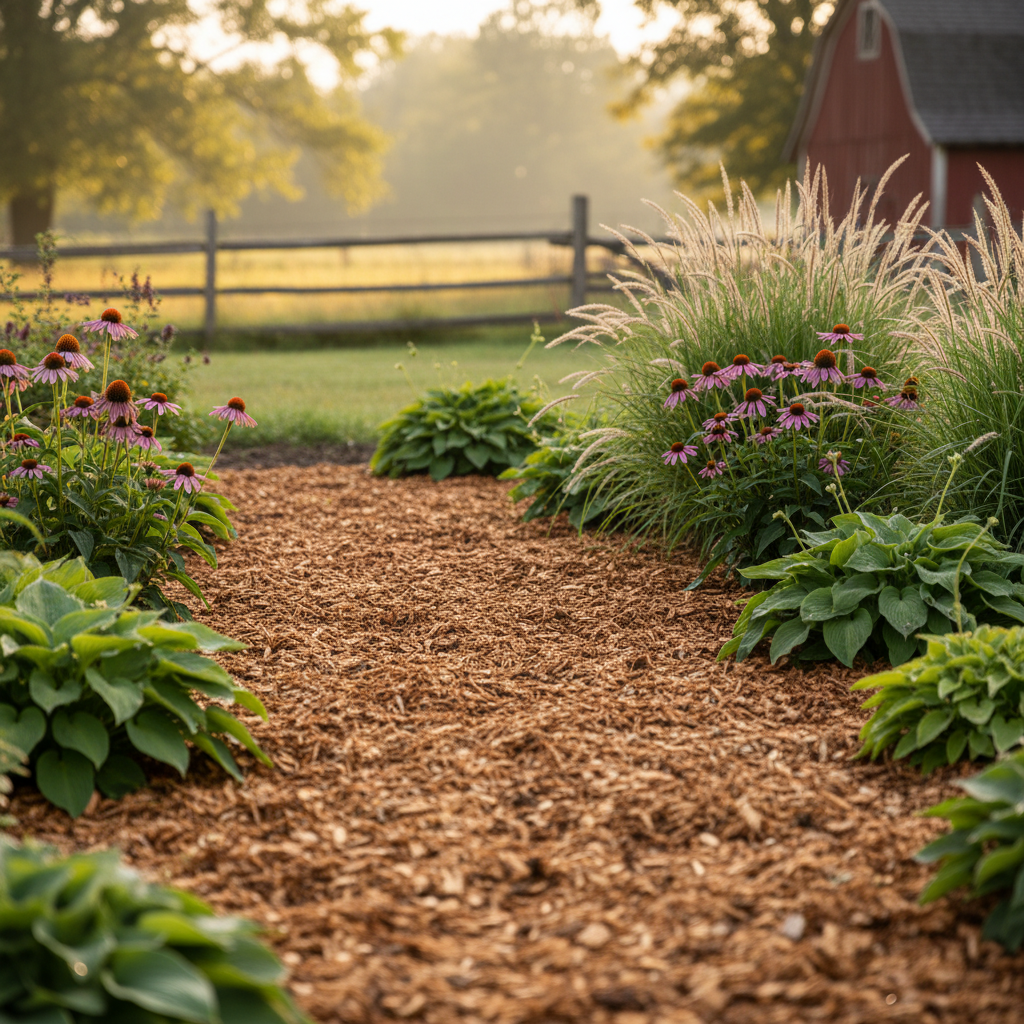
Wood chips and shredded hardwood bark last two to three years, hold their shape on slopes, and look tidy in ornamental beds. They are the workhorse mulch. Straw and dried leaves break down faster, feed soil microbes generously, and shine in vegetable rows where you want next year’s bed enriched. Pine needles are slightly acidic and pair well with blueberries, hydrangeas, and acid-loving azaleas. Grass clippings can work as a thin top dressing, but only from a lawn that has not been treated with broadleaf herbicide, which can carry over and damage tomatoes and beans.
Compost doubles as mulch and slow-release fertilizer. In dry climates it works best as a thin layer underneath a heavier mulch like straw to retain moisture. If you make your own, our composting 101 guide covers the basic carbon-to-nitrogen balance, and worm composting produces an especially fine, gentle mulch for seedlings. A useful rule that runs across extension guidance: pick the coarsest material you can stand looking at. Penn State Extension’s tree-mulch guidance notes that finely textured or double-shredded mulches allow less oxygen through to the root zone, which is why coarser chips can go to 4 inches while fine mulches should stay at 1-2.
Are Inorganic Mulches Ever the Right Call?
Mostly no. Inorganic mulches like gravel, river rock, landscape fabric, and rubber chips solve a few narrow problems, but most of them cause more long-term damage than they prevent in living garden beds. University of Illinois Extension is blunt about plastic and woven fabric weed barriers. Black plastic is impermeable. It prevents oxygen exchange with the soil, blocks water penetration, and significantly reduces plant growth.
Woven plastic weed barriers fail within a few seasons as new weed seeds blow in and root on top of them. Once organic mulch sits over the fabric, the decomposed matter cannot mix back into the native soil, and pulling the fabric out years later usually means tearing up the roots that grew through it. Rubber mulch is worse around food. Illinois Extension warns that rubber mulch made from recycled tires contains heavy metals including cadmium, chromium, and zinc, which release into the soil as the chips slowly break down. Illinois Extension also notes that once ignited, rubber mulch is exceptionally difficult to extinguish, which makes it a poor choice in fire-prone landscapes.
Inorganic mulches do earn a place in specific spots: a thin gravel topping for cactus and succulent beds where you want a fast-drying surface, fire-defensible zones around the house in dry climates, and pathway surfaces between raised beds where soil biology is not the point. Anywhere you’re trying to grow plants well, organic wins.
How Deep Should You Apply Mulch?
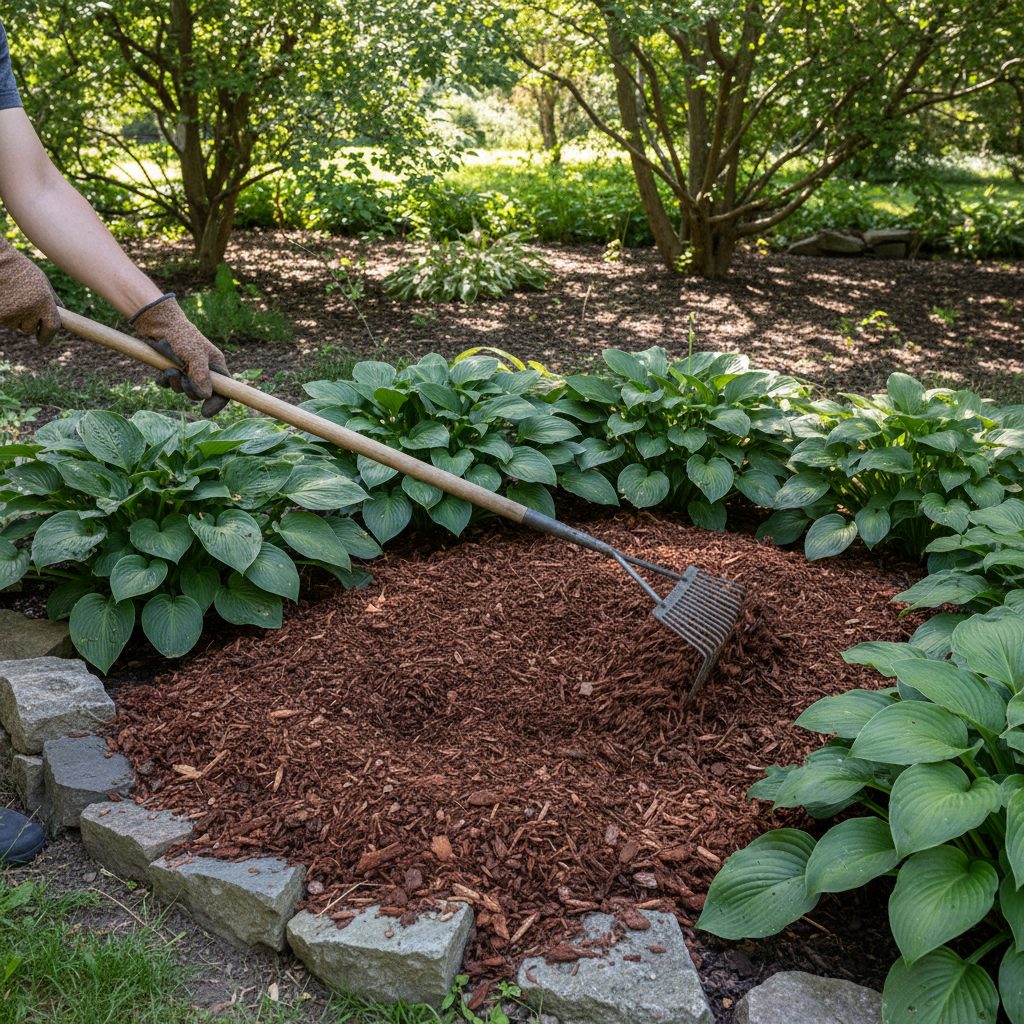
Two to four inches. That’s the working range for most mulch in most beds, with finer materials at the lower end and coarser materials at the upper end. Iowa State University Extension recommends applying mulch at a depth of 2 to 4 inches to balance weed suppression with adequate soil aeration. Going deeper does not improve weed control proportionally, and University of Maryland Extension cautions that excessive mulch can deprive roots of oxygen and greatly reduce the soil’s ability to dry out, which fosters root and crown rot.
The exact depth depends on material density. Iowa State suggests applying wood chips and pea gravel at 3 to 4 inches because their chunky particle size needs more bulk to block light. Straw and dried leaves go 4 to 6 inches deep, since they compact quickly into a much thinner mat. Compost used as a top dressing usually stays around 1 to 2 inches, just enough to feed the soil without smothering crowns. Around trees, Penn State Extension calls for 2 to 3 inches kept away from direct trunk contact, with a small air gap between the trunk and the start of the mulch ring.
| Mulch type | Recommended depth | Best use |
|---|---|---|
| Wood chips, shredded bark | 3 to 4 in | Ornamental beds, paths, perennials |
| Straw, dried leaves | 4 to 6 in | Vegetable rows, garlic, strawberries |
| Grass clippings | 1 to 2 in | Thin top dressing on veg beds |
| Compost | 1 to 2 in | Soil feeding under coarser mulch |
| Pine needles | 2 to 4 in | Blueberries, acid-loving shrubs |
| Mulch around trees | 2 to 3 in (no trunk contact) | Young and established trees |
When Is the Best Time to Mulch Your Garden?
Spring and fall. Apply mulch in spring after the soil warms and perennials emerge, or in fall after plants go dormant, with the exact timing tuned to each plant’s growth cycle. Oregon State University Extension recommends applying winter mulch after the ground has frozen lightly, so the mulch keeps the ground frozen rather than insulating warm soil that delays plants entering full dormancy. Mulching too early can also drive rodent activity and keep tender growth from hardening off.
The fall layer protects soil from freeze-thaw cycling, prevents winter weed seeds from establishing, and insulates perennial crowns through the coldest months. Spring is the other prime window. Standard extension practice (echoed by University of Minnesota Extension in its spring soil-warming guidance) is to pull existing mulch back from emerging plants in spring so the root zone warms faster, then reapply once perennials are several inches tall and soil temperature has stabilized. For heat-loving transplants, wait until soil hits roughly 60°F before re-mulching.
For vegetable beds, timing inverts depending on the crop. Cool-season plantings like peas, lettuce, and spinach go in early, before mulch is needed. Heat-loving tomatoes, peppers, and squash benefit from waiting until soil hits roughly 60 degrees Fahrenheit before mulching, because a thick mulch layer slows soil warming and can stall growth. Around fruit trees and shrubs, mid-spring is usually the sweet spot, once the worst frosts have passed but before summer drought kicks in.
How Much Mulch Do You Actually Need?
Less than you’d guess. Multiply the bed’s square footage by the inches of depth you want, then divide by 324 to get cubic yards. The shortcut works because one cubic yard of mulch covers 324 square feet at one inch deep, so dividing (square feet × inches) by 324 always returns cubic yards. Iowa State Extension teaches the same calculation through cubic feet (multiply area by depth in feet, then divide by 27), which is mathematically identical. A 200-square-foot bed at 3 inches deep works out to 200 × 3 ÷ 324, or about 1.85 cubic yards.
If you’re buying bagged mulch, one standard 2-cubic-foot bag covers roughly 8 square feet at 3 inches deep, so that same 200-square-foot bed would take about 25 bags. Bulk mulch from a landscape supplier or a local arborist runs much cheaper per cubic yard than bagged, but you’ll need a truck, trailer, or a willing driveway for a drop pile. On our property, I called the local tree service one March and asked to be put on their wood chip drop list. A free 10-cubic-yard load arrived in early May and covered every perennial bed, the chicken-run path, and the orchard understory with chips left over for next year.
| Bed area | Depth | Cubic yards | 2 cu ft bags |
|---|---|---|---|
| 100 sq ft | 3 in | 0.93 | 13 |
| 200 sq ft | 3 in | 1.85 | 25 |
| 500 sq ft | 3 in | 4.63 | 63 |
| 1000 sq ft | 3 in | 9.26 | 125 |
Common Mulching Mistakes That Hurt Plants
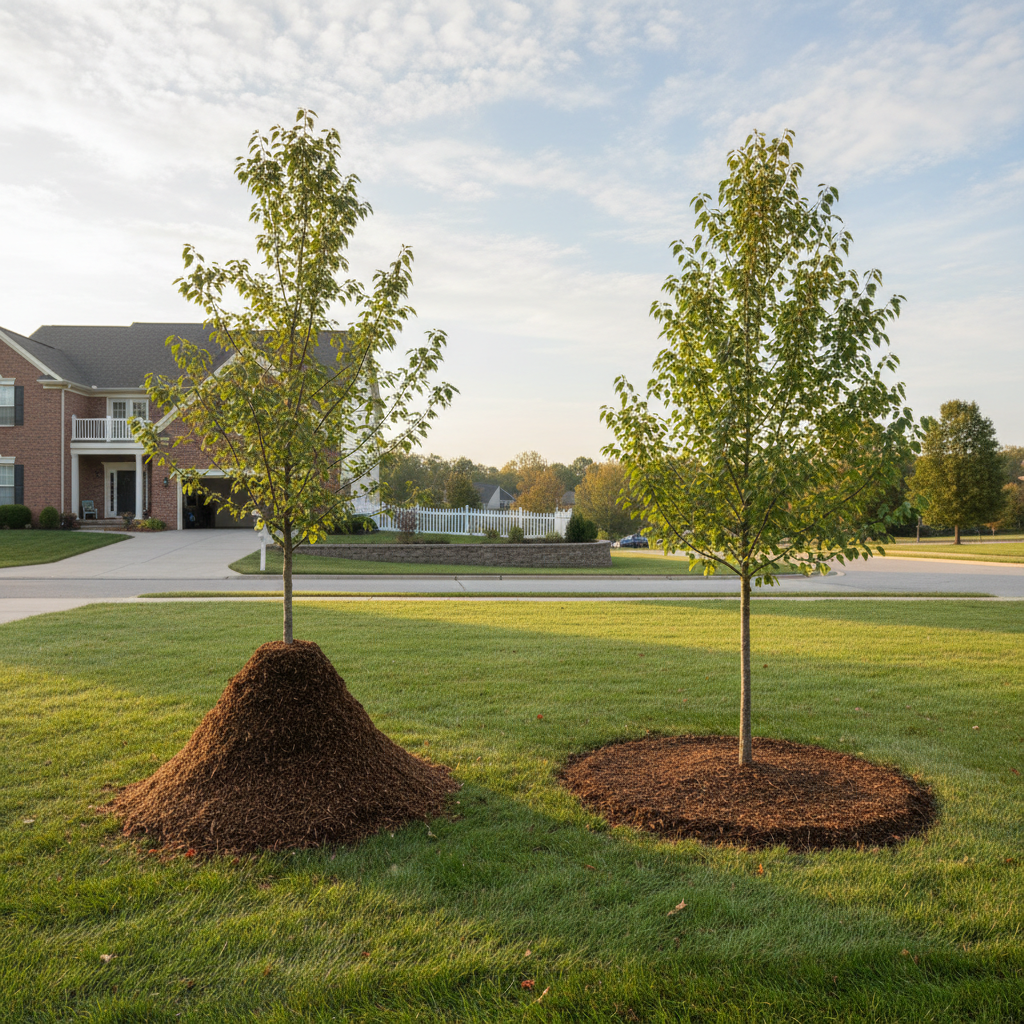
The four most damaging mistakes are mulch volcanoes around trees, mulch piled deeper than 4 inches, fresh wood chips tilled into the soil, and plastic sheeting under flower beds. Each one looks tidy or labor-saving in the short term, then quietly costs plants for years. Knowing what they look like is half the battle. The other half is fixing them before bark rot or root suffocation sets in.
Mulch volcanoes around tree trunks
Piling mulch high against a tree trunk is the single most common mistake in residential landscaping. According to University of Illinois Extension, piling mulch onto bark exposes it to dark and moisture, which causes the bark to rot, and rotted bark cannot protect the tree from insects and diseases. University of Illinois Extension reports that mulch piled around the trunk “promotes the growth of secondary roots, which can encircle the trunk and choke off the tree’s main roots,” sometimes years before anyone connects the slow decline to the mulch ring. Pull mulch back so a few inches of bare soil show at the base.
Going deeper than four inches
More mulch is not better mulch. University of Maryland Extension explains that excessive depth deprives roots of oxygen and greatly reduces the soil’s ability to dry out, which fosters root and crown rot. Two to four inches is the maximum for most species. If a bed already has mulch from last year, rake the old layer to loosen it, then top up only enough to bring the total back to about three inches rather than piling another full layer on top.
Tilling fresh wood chips into garden soil
WSU horticulturist Linda Chalker-Scott’s published work on wood chip mulch is clear on this: nitrogen tie-up is only a problem when chips are incorporated into the soil. As surface mulch, wood chips create a thin nitrogen-deficient layer right at the mulch-soil boundary (which actually helps suppress weed seeds) but do not pull nitrogen from the root zone below. Tilled in, fresh chips ignite a microbial bloom that ties up plant-available nitrogen for weeks. Wood chips and sawdust have a carbon-to-nitrogen ratio in the range of 300:1 to 400:1 (Cornell Composting), well above the roughly 30:1 threshold where decomposers start scavenging extra nitrogen from the surrounding soil. That is why fresh chips tilled into a bed can stall growth in nearby seedlings for weeks — and why the same chips spread on the surface as mulch don’t, since the high-carbon material only contacts soil microbes at the thin boundary layer. Leave wood chips on the surface as mulch. If you want chips broken down into the bed, compost them first.
Plastic sheeting under ornamental beds
Black plastic and woven landscape fabric seal off the gas and water exchange that healthy soil depends on. The Illinois Extension guidance applies here too: plastic prevents oxygen and water from reaching the root zone, and barrier fabric eventually clogs with debris or gets colonized by weeds rooted in the mulch above it. For paths between raised beds or around a sitting area, use overlapping cardboard topped with 3 to 4 inches of wood chips. The cardboard suppresses weeds for a season, then breaks down into worm food without sealing the soil.
How Does Living Mulch Fit Into a Working Homestead?
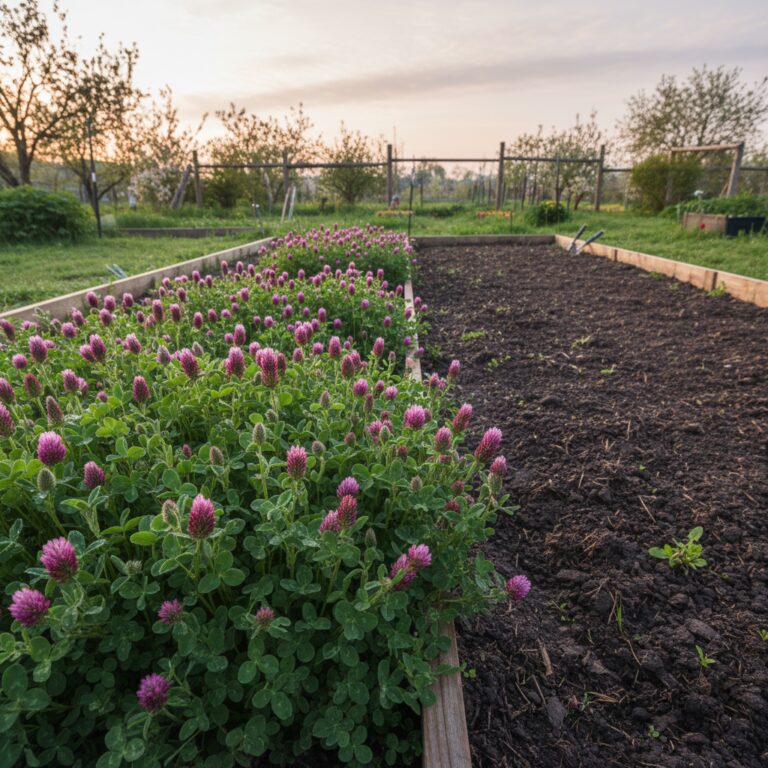
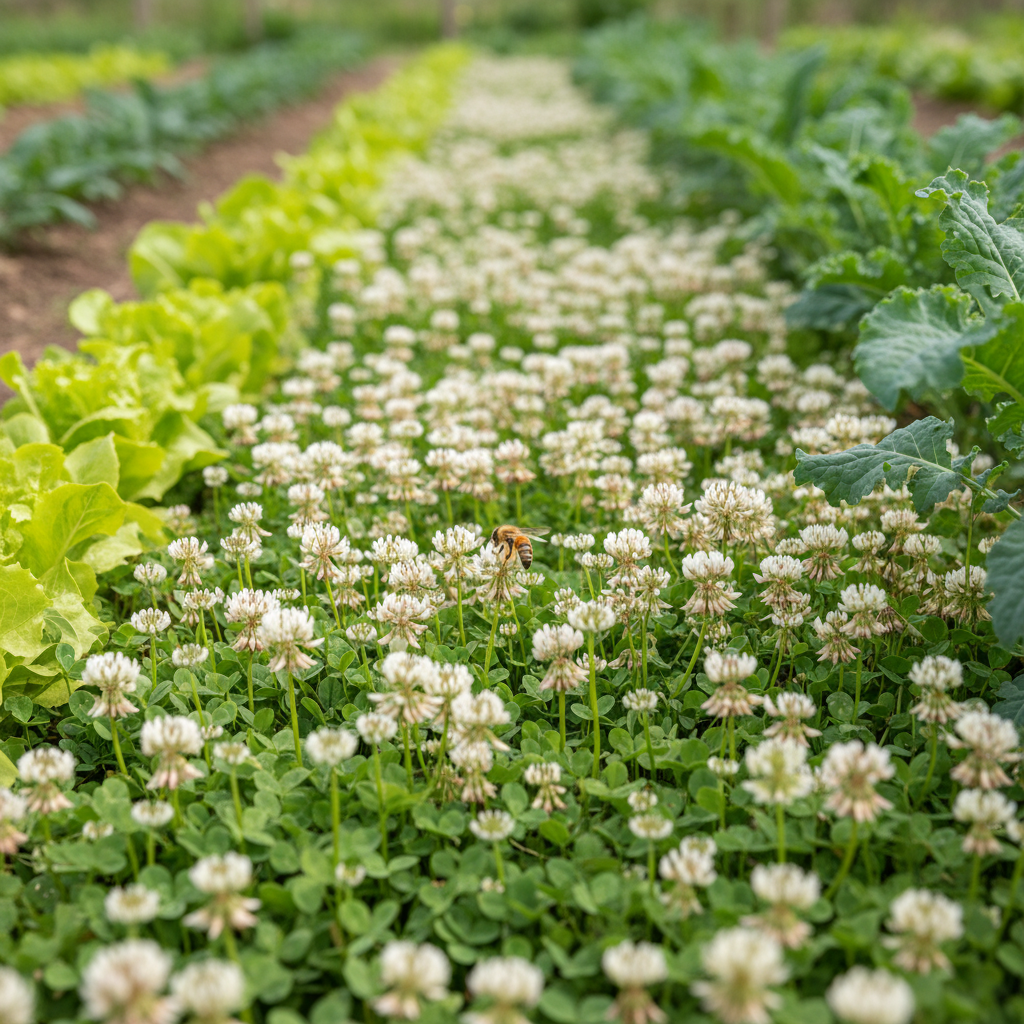
Beautifully, in the right spots. Living mulch is a low-growing cover crop, like white clover or creeping thyme, planted between rows of larger crops to suppress weeds and hold soil while the main crop grows. SARE’s white clover profile calls clovers a top choice for living mulch systems planted between rows of irrigated vegetables, fruit bushes, or trees, since the dense shallow root mass protects soil from erosion and crowds out annual weeds.
University of Minnesota Extension treats cover crops and green manures as a parallel strategy to dead mulch: instead of layering shredded leaves over bare ground, you grow a living layer that gets mowed, rolled, or terminated when the cash crop needs the space. Clover specifically also fixes atmospheric nitrogen, slowly fertilizing the bed it covers.
On our property in zone 6b, I overseeded Dutch white clover between blueberry bushes three springs ago. The clover knit into a low mat within six weeks, shaded out crabgrass that had been the bane of that row, and pulled in honeybees during late-spring bloom. The trade-off is that living mulch competes with shallow-rooted crops for water in drought years, so it pairs best with deeper-rooted perennials, fruit trees, and established shrubs rather than annual lettuce.
Frequently Asked Questions
Does wood chip mulch attract termites?
Wood chip mulch does not attract termites at problematic levels in most home landscapes, though university research recommends keeping mulch back from the foundation as a precaution. Penn State Extension suggests a 6 to 12 inch strip of bare soil or gravel between mulch and any structure to break the path from soil-dwelling termites to wood framing.
Can you mulch right after planting?
Yes for transplants, with a small delay for direct-seeded crops. Mulch immediately after transplanting trees, shrubs, and perennials to lock in moisture during the establishment window. For direct-seeded vegetables, wait until seedlings are 3 to 4 inches tall and clearly established, then tuck mulch around them so the cover does not bury small leaves.
Is dyed mulch safe for vegetable gardens?
Most dyed wood mulch uses iron oxide or carbon-based colorants, which are considered safe around ornamental plants. For edible beds, university extension services generally recommend natural, undyed wood chips or organic mulches like straw, since the original feedstock of dyed mulch can include reclaimed wood from unknown sources. When in doubt, use natural mulch around anything you plan to eat.
How long does mulch last before it needs replacing?
Wood chips and shredded bark typically hold up 2 to 3 years before needing a top-up, while straw, dried leaves, and grass clippings break down inside a single growing season. Compost used as mulch incorporates into the soil within a few months. Check depth each spring, rake what remains to loosen matting, then add enough fresh material to bring the total back to 2 to 4 inches.
Can I use pine needles around vegetables?
Pine needles work well for acid-loving plants like blueberries, strawberries, and rhododendrons, but in general vegetable gardens they break down slowly and offer less soil benefit than shredded leaves or straw. They also do not stay put as well on flat ground. Save pine needles for ornamental beds and acid-loving fruit.
Should I remove old mulch before adding new?
Usually no. Rake the existing layer to break up any matted crust, then top up with fresh mulch to bring the total depth back to 2 to 4 inches. Removing the old layer wastes the partially decomposed material that’s already feeding worms and soil microbes underneath, and it doubles your workload for no real gain.
What’s the cheapest way to get mulch?
Free or very cheap mulch is easier to source than most gardeners think. Local tree services often deliver chip loads for free or for the cost of a tip, since dumping near the job site saves them a trip to the landfill. Municipal yard-waste programs sometimes offer free wood chips or composted leaves to residents. Bagged leaves set out for fall pickup are another reliable source, especially if shredded with a mower before use.
Putting It All Together
Mulch is one of the few garden inputs that pays off across soil health, plant resilience, and time saved on weeding. The right material, applied at the right depth, at the right time of year, beats nearly any other single amendment for return on effort. Start with a load of arborist wood chips for perennial beds and pathways, switch to shredded leaves or straw in vegetable rows, and pull everything back into a tidy 2 to 4 inch layer each spring after the soil warms.
Then watch the soil under that cover get darker, looser, and more alive, season after season. According to USDA NRCS guidance under Conservation Practice Standard 484, mulched soil holds more water, loses less to runoff, and resists compaction better than bare ground. That’s the long arc. The short arc is fewer hours hand-weeding, healthier plants through the August dry stretch, and a homestead that quietly builds topsoil instead of losing it. Pick one bed this season, get the depth right, set a reminder for fall top-up, and let the mulch do its slow, steady work.