
Mosquito-Repelling Plants for Your Patio: What Actually Works (and What’s Folk Tales)

Garden centers sell millions of “mosquito plants” every summer. Shoppers drop them into their carts expecting a bug-free patio by sundown. The reality is less convenient. According to Iowa State University Extension, a plant just sitting on the patio has no effect on mosquitoes in the area, because the repellent oils stay locked inside leaf cells until something breaks them open.
That does not mean these plants are useless. Several species contain volatile compounds backed by peer-reviewed research. The EPA and CDC recognize plant-derived versions as legitimate repellent ingredients. The catch: you have to interact with the plant. Crush the leaves. Rub them between your palms. Toss a handful onto a fire pit.
After three seasons of testing different herbs around our zone 7 patio, I learned which plants earn their keep and which ones just look pretty while mosquitoes feast. This guide separates science-backed performers from folk tales and shows you how to actually put these plants to work.
Why Don’t Most Mosquito-Repelling Plants Work as Advertised?

Plants store their defensive chemicals, mostly terpenoids and other volatile organic compounds, inside specialized structures called trichomes on leaf surfaces. These compounds evolved to protect the plant from herbivores, not to create an invisible mosquito shield around your deck furniture. The oils only become airborne in meaningful concentrations when the leaf tissue ruptures through crushing, bruising, or heat.
Research published in Parasites and Vectors confirms that burning plant leaves dramatically increases the release rate of repellent volatiles compared to intact foliage. According to the University of Washington’s Elisabeth C. Miller Library, rosemary oil applied to skin protected test subjects for about 15 minutes, while lemongrass oil lasted roughly 40 minutes. A whole plant releases far less than those concentrated extracts.
Mosquitoes navigate using carbon dioxide plumes, body heat, and moisture. A few terpenoid molecules drifting from an undisturbed leaf cannot compete with those signals. Once you understand this mechanism, you can stop wasting money on “mosquito plant” marketing and start using proven species the right way: hands-on, leaves crushed, oils released on purpose.
Does Catnip Really Repel Mosquitoes Better Than DEET?
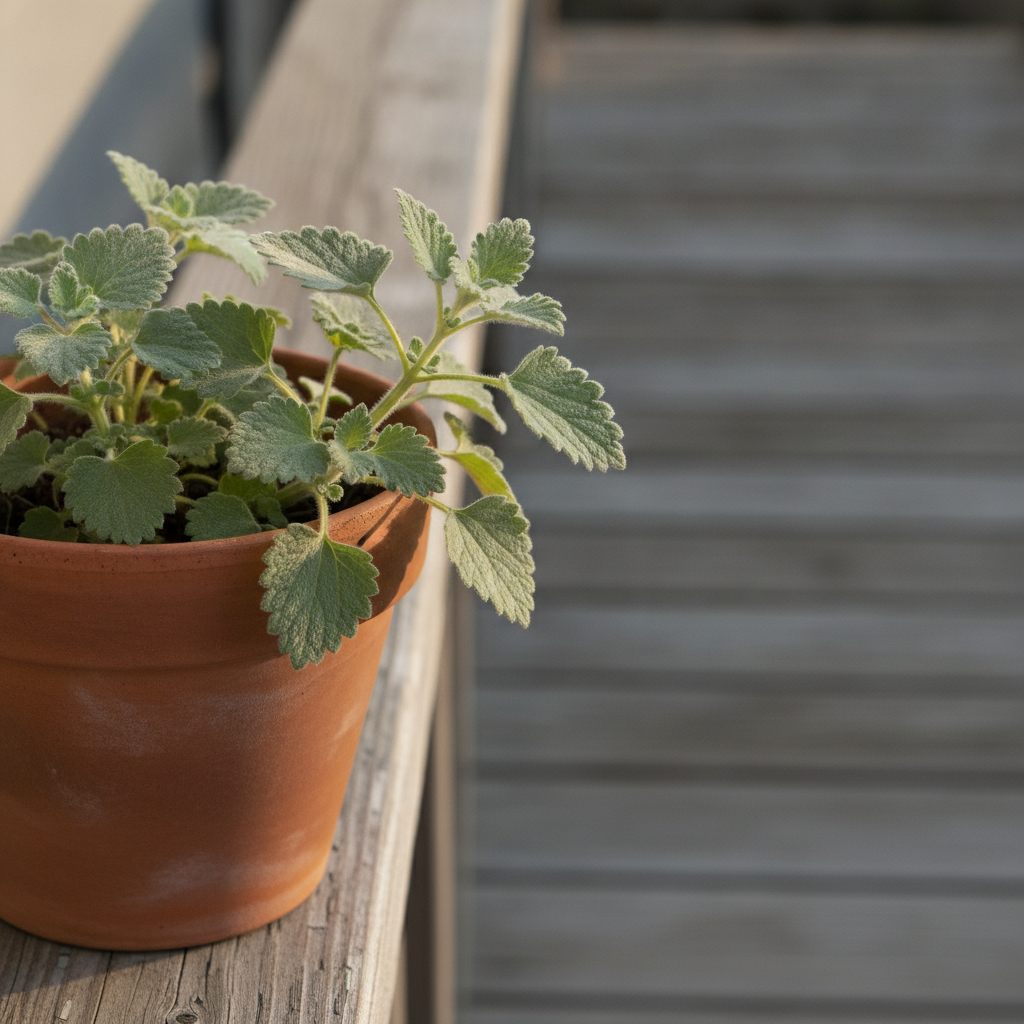
Catnip (Nepeta cataria) is the most research-backed mosquito repellent plant you can grow. Iowa State University researchers found that nepetalactone, the essential oil in catnip, is about ten times more effective at repelling mosquitoes than DEET in laboratory olfactometer tests. That finding, presented at the American Chemical Society’s national meeting, put this humble cat-attracting herb on the map for pest control.
A 2019 study in the journal Scientific Reports confirmed that catnip essential oil achieves greater than 95% repellency against Aedes aegypti, the species that carries dengue and Zika. Even at concentrations as low as 2%, the oil repelled more than 70% of mosquitoes for one to four hours. The active compound, nepetalactone, is highly volatile, which means it evaporates fast; protection fades quicker than DEET unless you reapply frequently.
For your patio, grow catnip in containers to prevent it from spreading. It is a hardy perennial through zone 3, thrives in full sun to partial shade, and tolerates poor soil. Before you sit outside, strip a handful of leaves and rub them between your palms. The scent is strong and grassy. If you have cats, expect company.
How Well Does Lemon Balm Keep Mosquitoes Away?
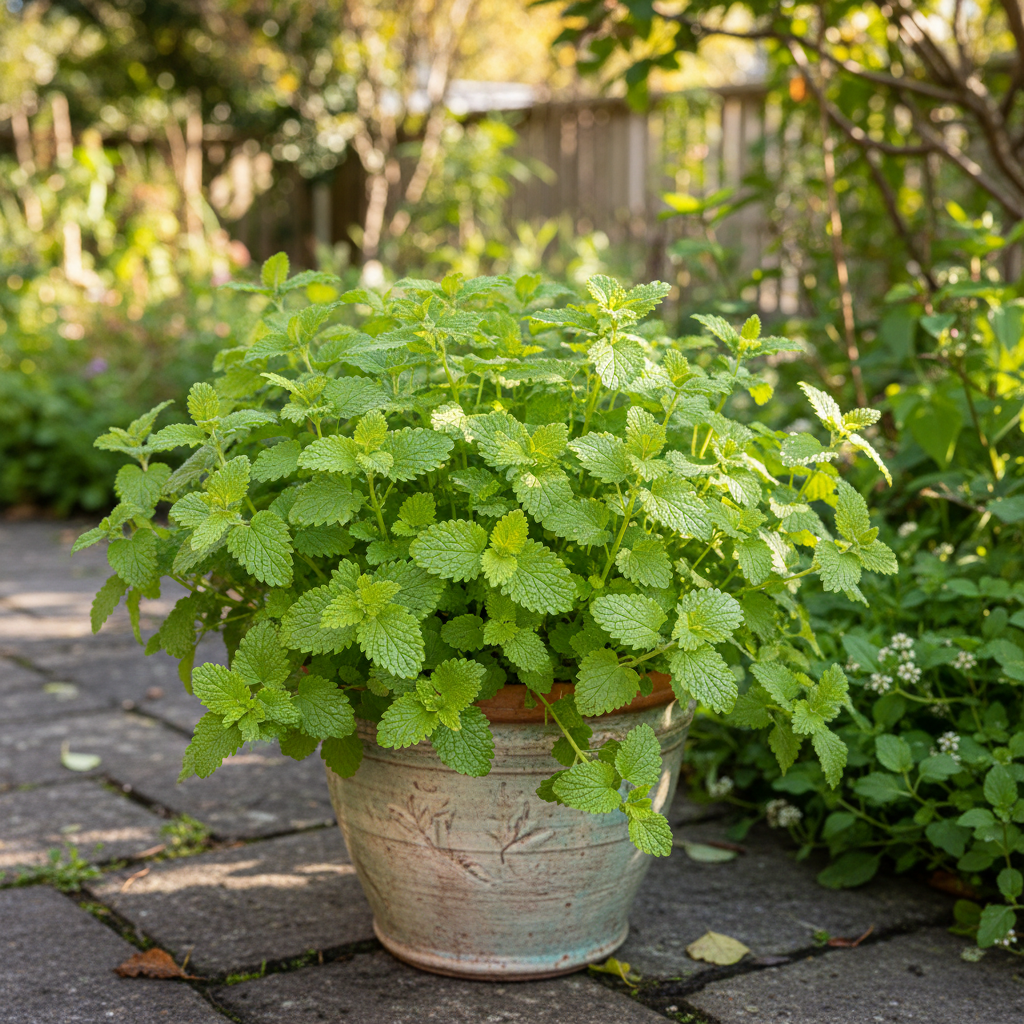
Lemon balm (Melissa officinalis) contains citronellal, the same compound found in commercial citronella products, at concentrations of up to 38% of its essential oil. According to research from the National Institutes of Health, the combination of lemon balm and sweet basil extracts demonstrated effective mosquito repellent activity when applied together, thanks to shared compounds including geraniol.
This mint-family perennial grows aggressively in zones 4 through 9, which makes it a reliable pick for zone 6 and 7 gardeners. It tolerates partial shade better than most repellent herbs and self-seeds freely, so planting it in pots is smart containment strategy. The leaves have a clean lemon scent that doubles as a culinary herb for herbal tea blends and summer drinks.
To use lemon balm as a repellent, tear several leaves and rub them directly on exposed skin. The oil leaves a light citrus scent without the sticky feel of commercial sprays. Reapply every 30 to 45 minutes. You can also toss a handful onto fire pit coals; the smoke carries citronellal into the air around your seating area.
Is Basil an Effective Mosquito Repellent?
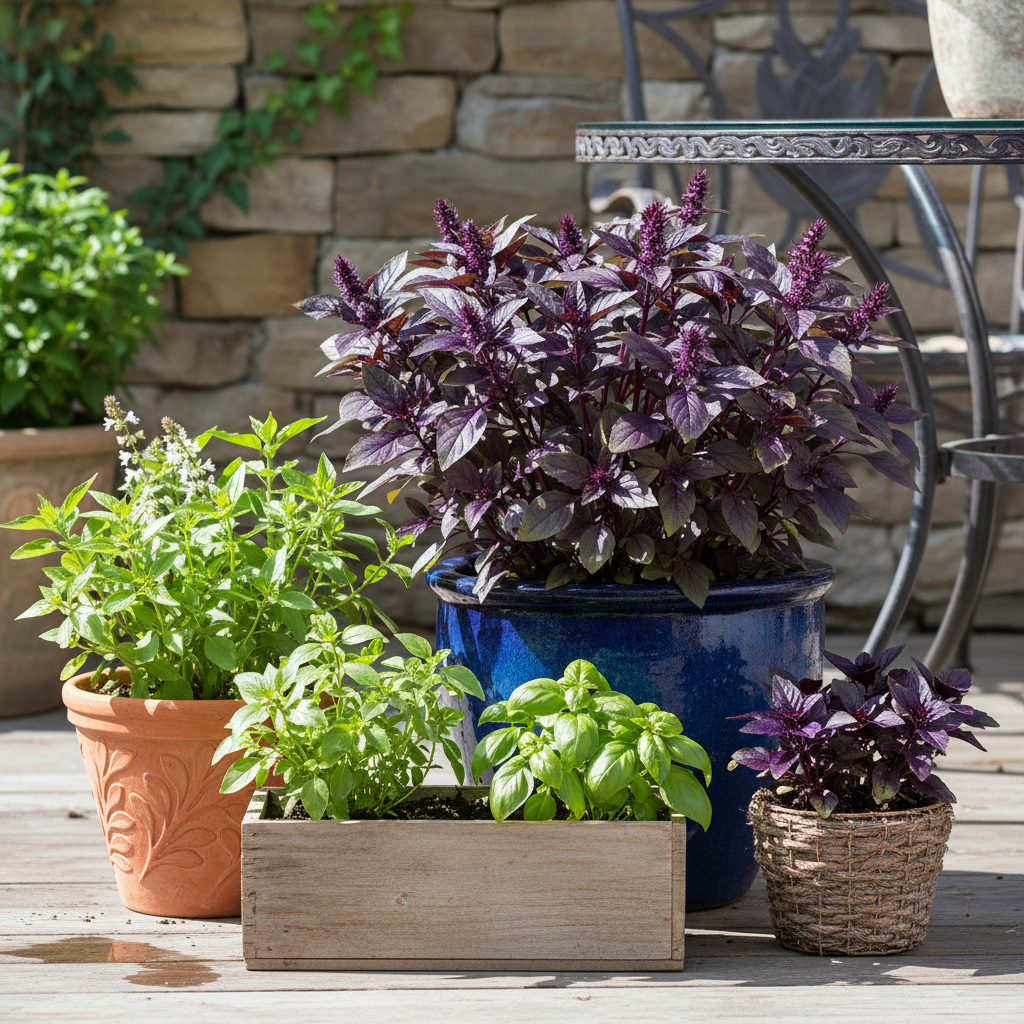
Basil (Ocimum basilicum) does release small amounts of volatile compounds even when the leaves are intact, though meaningful repellency still comes from crushing the leaves or using the essential oil. Research published in the Egyptian Journal of Biological Pest Control found that sweet basil essential oil showed about 85% repellency against Culex pipiens mosquitoes at the highest laboratory dose tested (cinnamon oil, the strongest performer in that study, reached roughly 98%). With the addition of vanillin, basil oil repelled three mosquito species for up to eight hours under cage conditions.
Different basil varieties contain different ratios of active compounds. Thai basil concentrates methyl cinnamate, while sweet basil is higher in linalool. For mosquito purposes, lemon basil (Ocimum x citriodorum) offers strong citral content that overlaps with lemongrass.
Basil is an annual in all but the warmest zones, so zone 6 and 7 gardeners replant each spring. It needs full sun, consistent moisture, and well-drained soil. Pinch flowers to keep the plant bushy and productive. Place containers right next to seating areas and crush a few leaves before guests arrive. You get a mosquito deterrent and a cooking herb in the same pot.
Can Lemongrass Protect Your Porch From Mosquitoes?
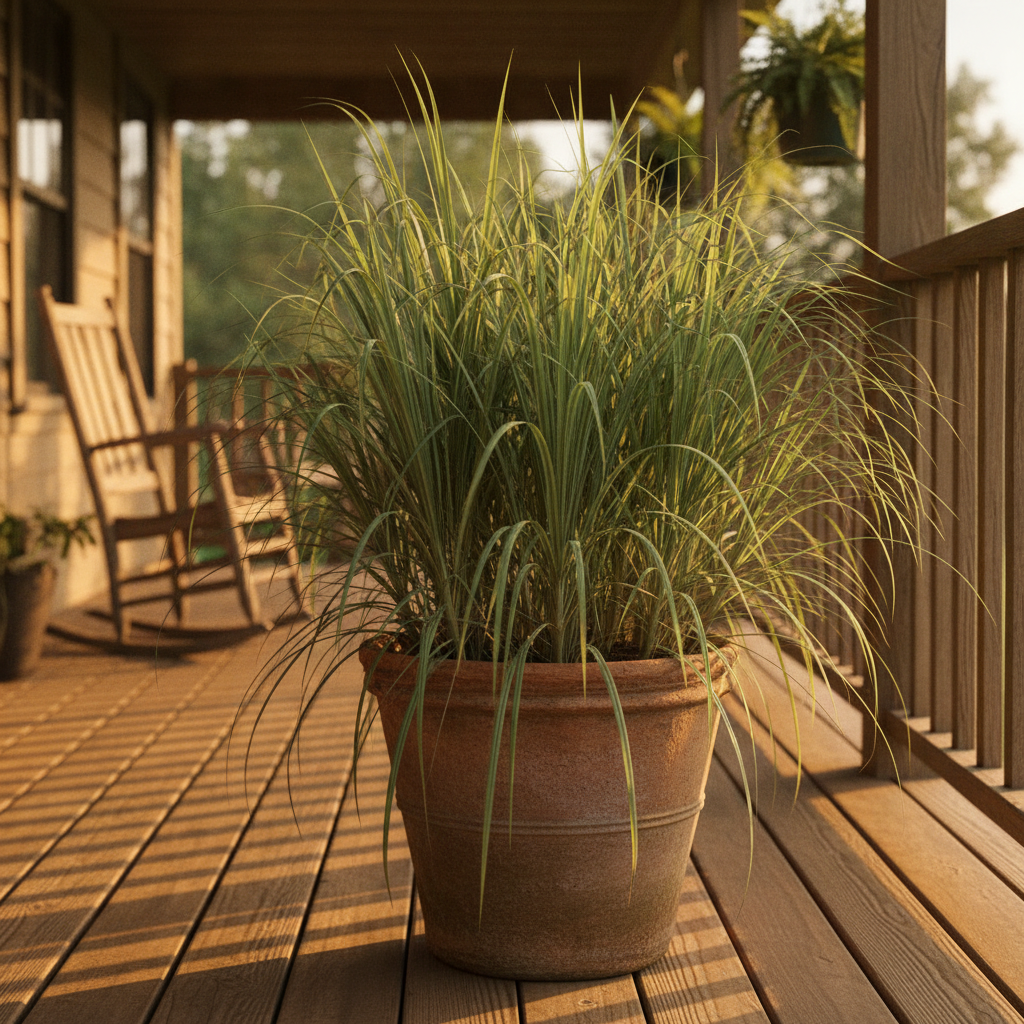
Lemongrass (Cymbopogon citratus) is the source plant for commercial citronella oil, and its repellent credentials are solid. According to researchers at the University of Wisconsin Extension, geranial and neral are the two main active components of lemongrass oil, and the plant has demonstrated repellent effects against multiple disease-transmitting mosquito species. The EPA classifies citronella oil as a biopesticide with a non-toxic mode of action.
The practical limitation is climate. Lemongrass is a tropical perennial hardy only to zone 9. In zones 6 and 7, grow it as a warm-season annual or overwinter it indoors. The clumps can reach 3 to 5 feet tall in a single season, making them an effective privacy screen that doubles as pest management. Use large containers (at least 5 gallons) with rich, moist soil and full sun.
For active repellent use, peel the outer leaves and crush the tender inner stalks. The fresh lemongrass releases a concentrated burst of citral that lasts about 40 minutes on skin, according to testing cited by the University of Washington’s horticultural library. You can also slice stalks lengthwise and scatter them on outdoor tables. Before frost, bring pots indoors to a sunny window; the plants slow down but survive until spring replanting.
Lavender: Mild Repellent, Better Pollinator Magnet
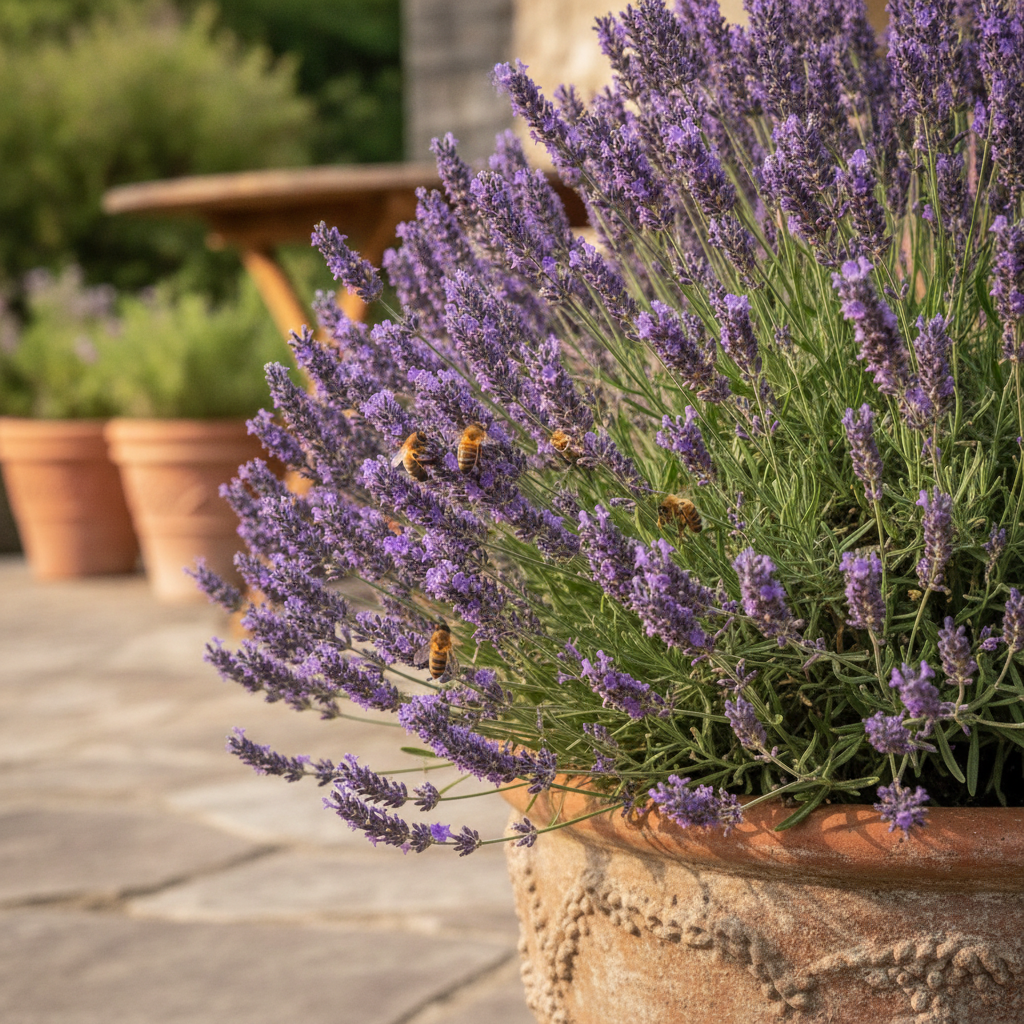
Lavender (Lavandula angustifolia) shows up on every “mosquito-repelling plants” list online, but the research tells a more modest story. According to an EPA-referenced field study, lavender oil provided short-term repellency of up to two hours when applied to skin, placing it in the lower tier of plant-based options. The active compound, linalool, is the same one found in basil, though at different concentrations.
Where lavender genuinely shines is as a pollinator garden anchor. Bees, butterflies, and beneficial wasps swarm the flower spikes from June through August. Planting lavender on your patio attracts the insects you want while providing a mild, pleasant-smelling deterrent you can rub on your wrists. English lavender (L. angustifolia) is hardy through zone 5 and handles the heat and humidity of zone 7 better than French varieties.
Grow lavender in full sun with excellent drainage. It despises wet feet, so terracotta pots with sandy, alkaline soil mix work well. For mosquito use, strip the flowers and rub them on skin, or hang dried bundles near seating areas. The honest assessment: lavender alone will not keep mosquitoes off your patio. Pair it with catnip or basil for actual protection, and enjoy the lavender for its pollinator value, cooking uses, and fragrance.
Are Citronella Geraniums a Mosquito-Repelling Scam?
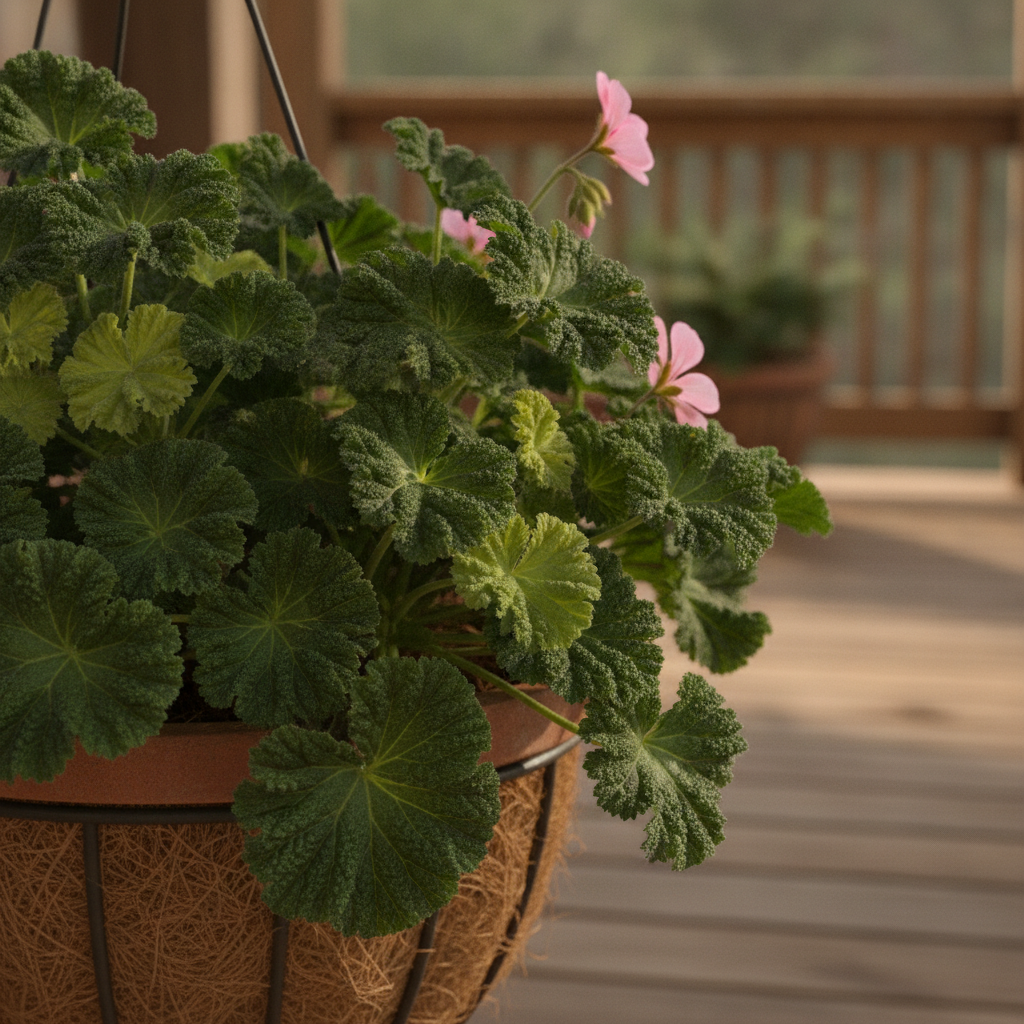
Citronella geraniums (Pelargonium citrosum) are the biggest myth in the mosquito plant market. Testing as far back as 1996 showed that the plant has no discernable mosquito-repelling qualities, and researchers observed that mosquitoes seemed comfortable landing directly on the leaves. The plant is not even related to true citronella grass (Cymbopogon nardus). It is a scented geranium with a lemon-like aroma that garden marketers relabeled as a “mosquito plant.”
The backstory makes the deception clearer. Dirk Van Leenen, the plant’s developer, claimed it was a genetically engineered hybrid of an African geranium and Chinese citronella grass. That claim was later debunked. The plant contains some citronellal, but at concentrations too low to affect mosquitoes even when crushed.
According to University of Florida/IFAS Extension, these plants are ineffective as mosquito repellents. The lemon scent does nothing to mask the carbon dioxide and body heat cues that mosquitoes track. If you already own one, enjoy it as an ornamental with attractive foliage. Just stop expecting it to protect you from bites. One caution if you have pets: scented (citronella) geraniums, lavender, and lemongrass are all listed by the ASPCA as toxic to dogs and cats if eaten, so place them where animals are not likely to nibble them.
Do Marigolds Actually Repel Mosquitoes?

Marigolds (Tagetes spp.) occupy a gray area between myth and marginal usefulness. The plants do contain pyrethrin, the compound used in many commercial insecticides, but in concentrations far below what kills or repels mosquitoes at a distance. According to research published by the USDA Agricultural Research Service, marigold leaf extracts showed insecticidal activity against certain pests, though mosquitoes were not the primary target of those studies.
Laboratory testing of concentrated marigold extracts applied directly to surfaces has reported high repellency, but that required processed extracts, not a living plant. The compounds responsible, primarily alpha-terthienyl and thiophenes, break down rapidly in sunlight.
The honest recommendation: grow marigolds for companion-planting benefits in vegetable gardens, where they deter root-knot nematodes. For mosquito control on the patio, spend that container space on catnip or basil instead. Marigolds are not a scam the way citronella geraniums are; they simply do not deliver meaningful mosquito protection outdoors.
Can Mosquito Fern Stop Larvae in Standing Water?
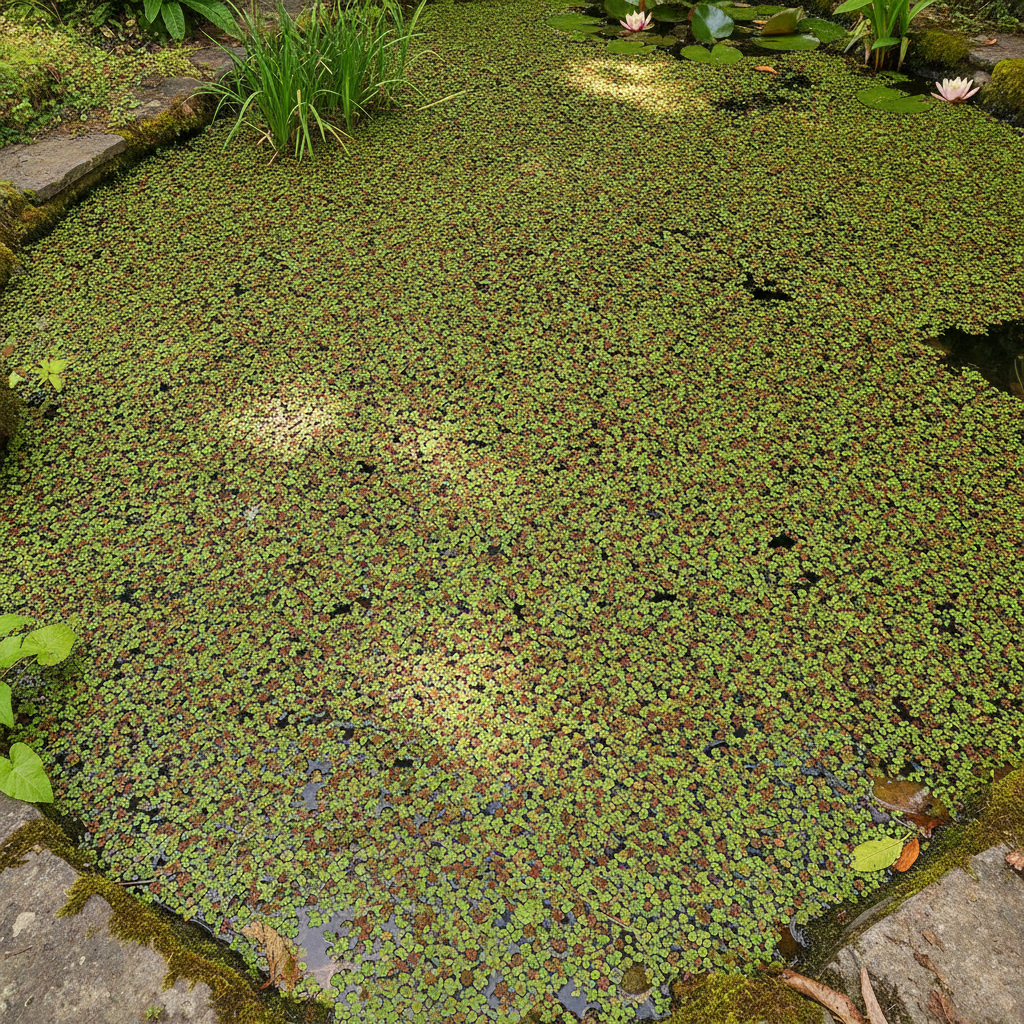
Mosquito fern (Azolla caroliniana) takes a completely different approach to mosquito control. Instead of repelling adult mosquitoes with volatile oils, this tiny floating fern blankets standing water surfaces, making it physically difficult for mosquito larvae to breathe. According to North Carolina State University Extension, the common name “mosquito fern” originates from the historical use of Azolla to prevent mosquito reproduction by covering water surfaces.
The USDA Forest Service notes that Azolla spreads through rapid vegetative reproduction, forming dense mats within weeks. For homesteaders with rain barrels, stock tanks, or small ponds, a starter portion can cover the surface and reduce larval survival without chemicals. The fern also fixes atmospheric nitrogen through a symbiotic relationship with cyanobacteria, making it useful compost material when you thin it out.
A few cautions apply. Several Azolla species are classified as invasive in certain states, so check local regulations before introduction. The fern can double its biomass in two to three days under ideal conditions. Never release it into natural waterways. Birdbaths, rain barrels, and lined garden ponds are the appropriate setting.
How to Get Real Mosquito Protection From Your Patio Plants
The CDC recommends EPA-registered insect repellents containing DEET, picaridin, IR3535, or oil of lemon eucalyptus (OLE) for reliable mosquito protection. Plants alone cannot match that standard. What they can do is supplement your strategy with a hands-on approach that reduces your reliance on commercial sprays.
Start with three to four containers of proven species: one large pot of lemongrass for height, one catnip for the strongest repellent compound, and one or two basil plants for kitchen use plus mosquito duty. Position them within arm’s reach of seating. Before you sit down, spend 30 seconds crushing leaves and rubbing the oils on exposed skin. Toss a handful onto fire pit coals if you have one going.
Combine plant-based tactics with habitat management. Empty standing water from saucers, gutters, and forgotten buckets weekly. Add mosquito fern to water features you cannot drain. Run a fan on your porch; mosquitoes are weak fliers and a steady breeze grounds them. These layers deliver better results than any single “mosquito plant” purchased on impulse at the garden center.
| Plant | Repellent Compound | Evidence Level | Zones | Must Crush? |
|---|---|---|---|---|
| Catnip | Nepetalactone | Strong (10x DEET in lab) | 3-9 | Yes |
| Lemon Balm | Citronellal, Geraniol | Moderate | 4-9 | Yes |
| Basil | Linalool, Eucalyptol | Moderate (85% in lab) | Annual | Partial (some passive release) |
| Lemongrass | Geranial, Neral (Citral) | Strong (EPA-registered oil) | 9+ (annual in 6-7) | Yes |
| Lavender | Linalool | Weak (up to 2 hrs on skin) | 5-9 | Yes |
| Citronella Geranium | Trace Citronellal | None (debunked since 1996) | 9+ (annual in 6-7) | N/A |
| Marigold | Pyrethrin (trace), Thiophenes | Minimal for mosquitoes | Annual | N/A |
| Mosquito Fern | Physical barrier (not chemical) | Moderate (blocks larvae) | 6-11 | N/A (floating plant) |
Frequently Asked Questions
Do Mosquito-Repelling Plants Work Without Crushing the Leaves?
Almost none of them do. According to Iowa State University Extension, a plant just sitting on the patio has no effect on mosquitoes in the area. The repellent volatile oils remain trapped inside leaf cells until physical damage releases them. Basil is a partial exception; it emits small amounts of linalool and other volatiles from intact leaves in warm conditions. For any meaningful protection, you need to crush, rub, or burn the foliage to release concentrated oils onto your skin or into the surrounding air.
What Is the Best Mosquito-Repelling Plant for Zones 6 and 7?
Catnip (Nepeta cataria) is the strongest option that also overwinters reliably in zones 6 and 7. It is a hardy perennial that returns each spring without replanting. Lemon balm is the runner-up, also perennial in those zones and extremely low maintenance. Both spread aggressively, so container growing is recommended unless you want them colonizing your garden beds.
Is Citronella Grass the Same as Citronella Geranium?
No, they are completely different plants. Citronella grass (Cymbopogon nardus) is the tropical grass that produces genuine citronella oil used in candles and EPA-registered products. The citronella geranium (Pelargonium citrosum) is a scented geranium with a similar fragrance but no proven mosquito-repelling ability. University testing has repeatedly shown it does not repel mosquitoes.
Can I Make a Homemade Mosquito Repellent From These Plants?
You can create a simple skin rub by crushing fresh catnip, lemon balm, or basil leaves and rubbing them on exposed skin. For a longer-lasting option, steep a handful of mixed leaves in witch hazel for two weeks, strain, and use as a spray. Homemade preparations do not match EPA-registered products for protection time. The CDC recommends DEET, picaridin, or oil of lemon eucalyptus for areas with mosquito-borne disease risk. Herbal rubs work best for casual backyard evenings. For more plant-based remedies, check out our DIY natural first aid kit guide.
How Many Plants Do I Need to Cover My Patio?
A single plant will not protect an entire patio. For a 10-by-12-foot seating area, plan on three to four large containers (5-gallon minimum) positioned within arm’s reach of chairs. The goal is easy access for leaf crushing, not ambient coverage. One lemongrass clump, one catnip, and two basil plants is a practical combination that also gives you cooking herbs. Space them evenly around the seating perimeter rather than clustering in one corner.