How to Build and Use a Garden Trellis: 5 Easy DIY Designs
Key Takeaways
- Trellising increases yields, improves air circulation (reducing disease), saves space, and makes harvesting dramatically easier.
- The five most practical trellis designs for home gardens are: A-frame, lean-to, arch, cattle panel, and teepee, each suited to different spaces and crops.
- Cattle panels (16-foot welded wire livestock panels) are the most versatile and durable trellis material, lasting 10+ years with zero maintenance.
- Best crops for trellising include pole beans, cucumbers, peas, small melons, indeterminate tomatoes, and squash, anything that climbs or can be trained vertically.
- A strong trellis pays for itself in the first season through better yields, less disease, and efficient use of garden space.
If you’re gardening on the ground and not growing up, you’re leaving a lot of production on the table. Trellising isn’t just about saving space, though it absolutely does that. It’s about growing healthier plants, harvesting cleaner produce, and making your time in the garden more enjoyable.
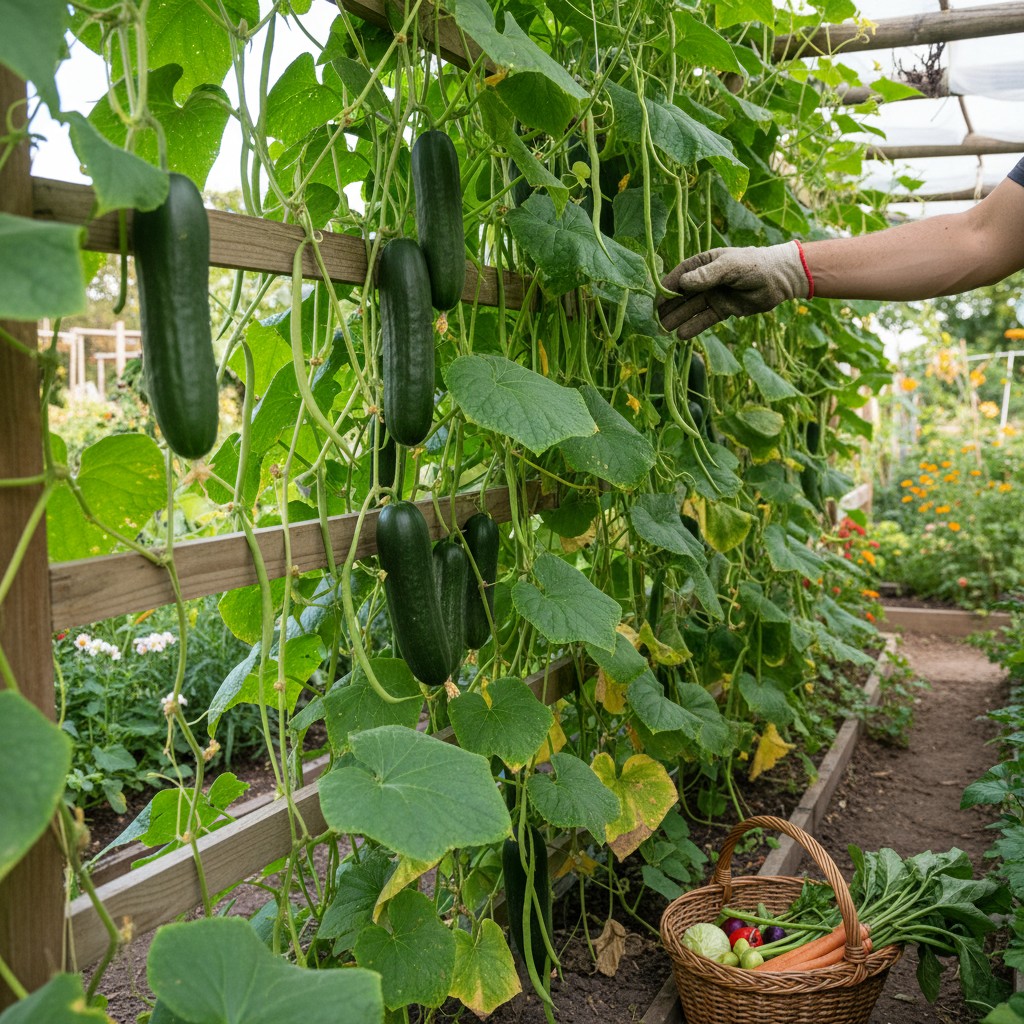
Think about picking cucumbers off the ground: you’re bending over, searching through a tangle of leaves, missing fruit that hides and grows into oversized monsters, and dealing with ground rot on every other cuke. Now picture those same cucumbers hanging at eye level from a trellis, perfectly visible, clean, and easy to pick. That’s the difference trellising makes.
🌱 From Our Homestead
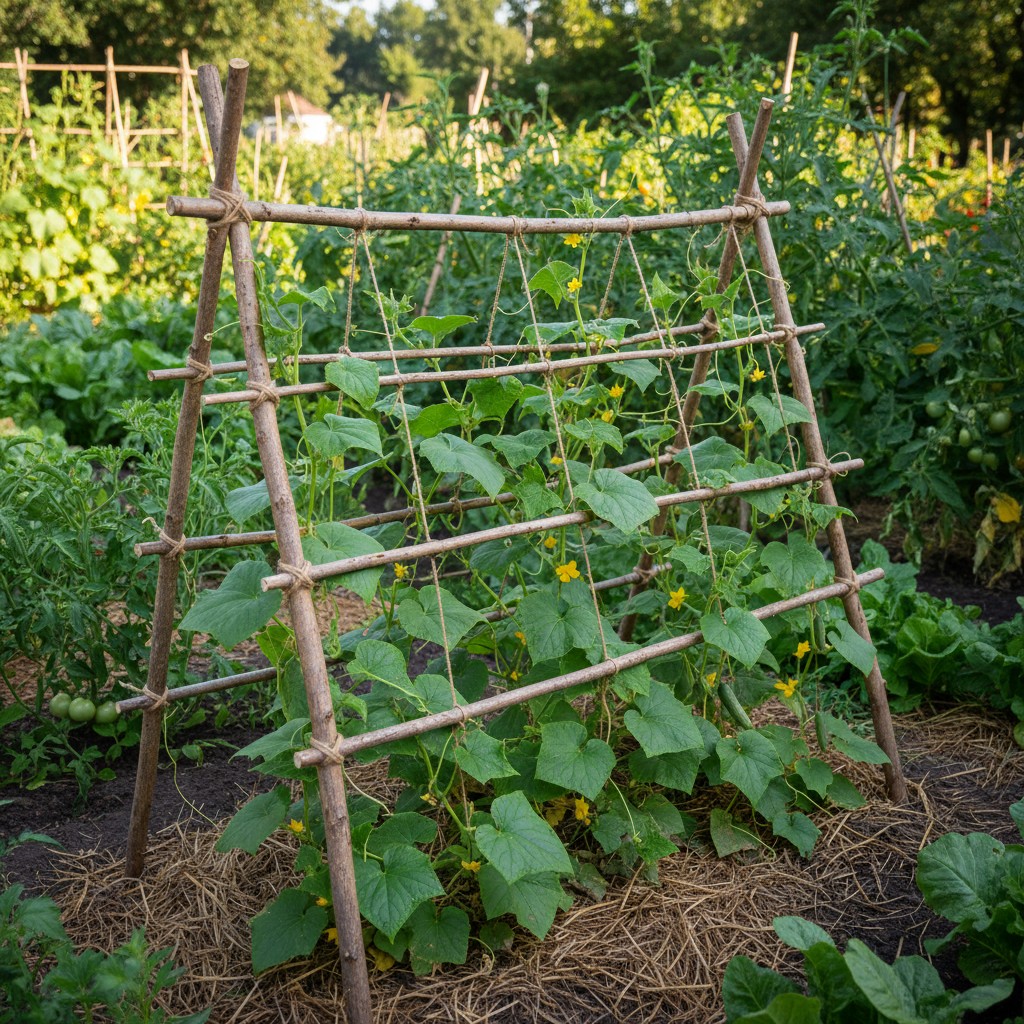
I built our first A-frame trellis from a bundle of cheap furring strips and some garden twine, total cost was under ten dollars. It held up an entire row of pole beans all season and folded flat for winter storage in the shed.
Why Trellising Matters
Better Air Circulation
Plants grown vertically get far better airflow around their foliage. This means leaves dry faster after rain or morning dew, which directly reduces fungal diseases like powdery mildew, downy mildew, and early blight. In humid climates, this single benefit can be the difference between a healthy harvest and a diseased mess.
Higher Yields
Trellised plants receive more even sunlight exposure across all their leaves, which drives more photosynthesis and more fruit production. Studies from university extension programs have shown that trellised cucumbers can yield up to 2–3 times more than ground-grown plants in the same area.
Space Efficiency
A trellis converts horizontal sprawl into vertical growing area. A single 8-foot cattle panel arch can replace 40–50 square feet of ground space for vine crops. In a small garden, that’s transformative.
Cleaner Harvest
Fruit grown off the ground stays clean, develops even color (no yellow “ground spots”), and is far less susceptible to rot and slug damage.
Choosing Your Materials
The right material depends on your budget, what you’re growing, and how permanent you want the structure to be.
Cattle Panels
In my experience, cattle panels are the single best trellis material for home gardens. These are 16-foot by 50-inch welded wire panels with heavy-gauge galvanized wire in a roughly 6-inch grid (openings vary from 4×4 at the bottom to 6×8 toward the top on standard cattle panels). They’re incredibly strong, rust-resistant, and last a decade or more with no maintenance.
They cost about $25–35 per panel at farm supply stores. You can bend them into arches, stand them upright as flat trellises, or lean them against structures. They support even heavy crops like watermelons and winter squash. One investment, years of use.
Bamboo
Bamboo poles are lightweight, inexpensive, and attractive in the garden. They work best for teepee-style structures and light-duty trellising (beans, peas, lightweight cucumbers). They’ll last 2–3 seasons before starting to crack and split. Join bamboo with jute twine or zip ties.
Lumber
Dimensional lumber (2x2s, 2x4s) provides a solid frame for permanent trellis structures. Cedar and redwood are naturally rot-resistant and are the best choices for permanent food-garden structures.
⚠️ Do not use old CCA-treated lumber near edibles. Pressure-treated lumber made before 2004 used chromated copper arsenate (CCA), which contains arsenic and chromium, both of which can leach into soil and be taken up by vegetables. If you have old pressure-treated lumber (greenish tint, pre-2004), do not use it in or near vegetable beds or food-crop trellises. Modern pressure-treated lumber uses copper-based preservatives (ACQ, CA-B, or MCA), which the EPA considers safer, but many organic gardeners and certification standards still exclude all pressure-treated lumber from direct food-crop contact. The simplest rule: use cedar, redwood, or naturally rot-resistant hardwood for any structure that will be in or touching vegetable garden soil. Source: EPA. CCA Pressure-Treated Wood.
String and Twine
Jute or sisal twine is cheap and biodegradable, you can compost it along with spent vines at season’s end. Nylon string lasts longer but needs to be removed and disposed of. String trellises work best attached to a solid overhead support like a beam, pipe, or wire.
Livestock/Hog Panels and Welded Wire
Similar to cattle panels but with smaller grid sizes (4×4 or 2×4 inches). Good for peas and other small-tendriled climbers that need closer grip points. Available in rolls at hardware stores.
Five Practical Trellis Designs
1. The A-Frame Trellis
Two panels or framed screens hinged at the top, opening at the bottom like an inverted V. This is a fantastic multi-use design.
Materials: Two cattle panel sections (cut to 8 feet each) or two wooden frames with wire mesh, connected at the top with hinges, zip ties, or wire.
How to build it:
- Cut a 16-foot cattle panel in half to create two 8-foot sections.
- Stand them up and lean the tops together, overlapping by about 6 inches.
- Wire the overlapping tops together securely.
- Spread the bottoms to create a stable A-shape, roughly 3–4 feet apart at the base.
- Stake or anchor the bottom edges so wind doesn’t topple the structure.
Best for: Cucumbers, peas, beans, small melons. The shaded interior is an ideal spot for growing lettuce or spinach in hot weather.
2. The Lean-To Trellis
A single panel leaned against a fence, wall, or raised bed at an angle. Dead simple and effective.
Materials: One cattle panel or a framed screen of welded wire. Two stakes or wall brackets.
How to build it:
- Lean the panel against a solid structure at a 60–70 degree angle.
- Secure the top with screws, hooks, or wire tied to the fence or wall.
- Anchor the bottom with stakes driven through the panel grid and into the ground.
Best for: Tomatoes trained up the angled panel, cucumbers, beans. Good for maximizing growing space along a fence line.
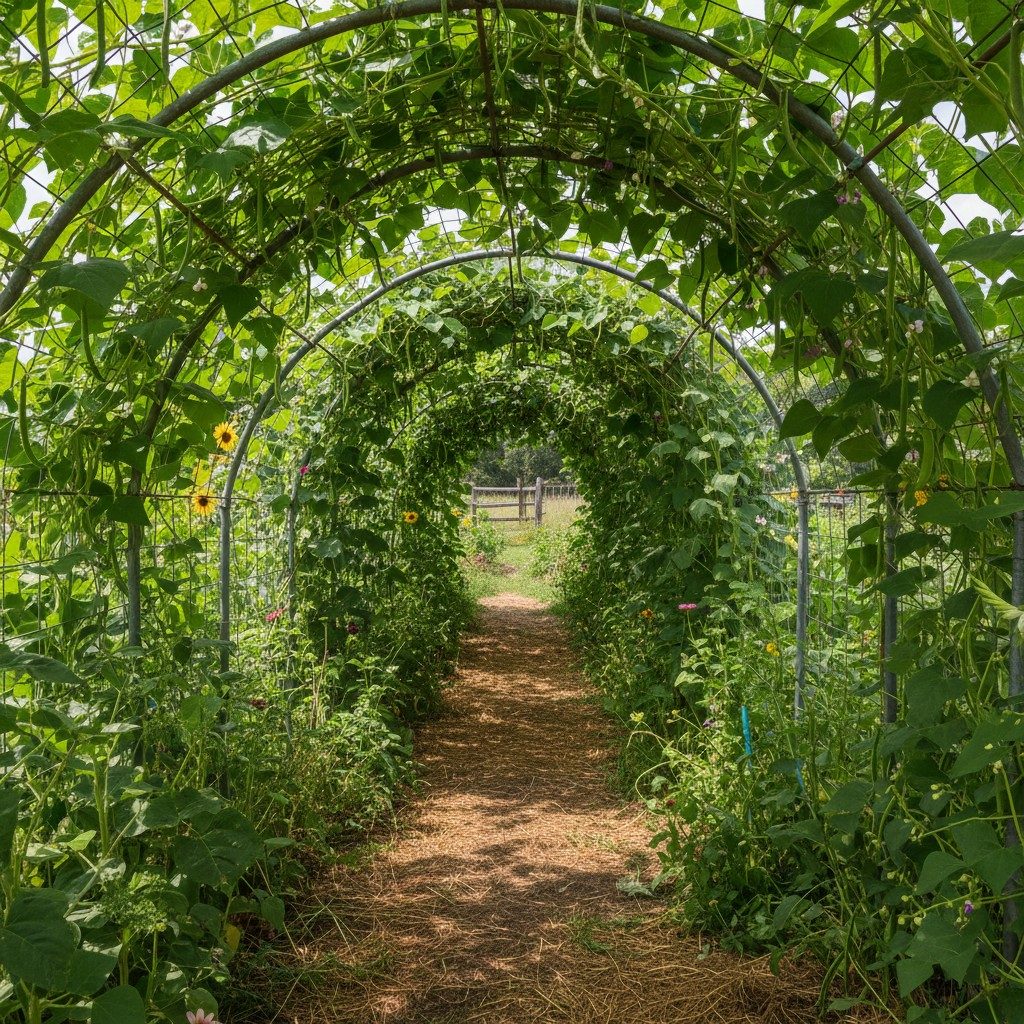
3. The Cattle Panel Arch
This is the showpiece of many kitchen gardens, and for good reason. A cattle panel bent into an arch over a path creates a functional and beautiful garden structure.
Materials: One full 16-foot cattle panel, four T-posts or wooden stakes, wire or zip ties.
How to build it:
- Drive two T-posts on each side of your garden path, about 4 feet apart (matching the width of the panel).
- The posts on opposite sides of the path should be 4–5 feet apart (this determines the arch height and walkthrough width).
- Bend the cattle panel into an arch by having one person on each end, walking toward each other. Cattle panels bend smoothly and hold their shape.
- Wire or zip-tie the panel edges to the T-posts.
You’ll end up with a beautiful arch about 6–7 feet tall at the peak, wide enough to walk through comfortably. Plant climbers at the base on both sides. By midsummer, you’ll have a living green tunnel dripping with cucumbers or beans.
Best for: Beans, cucumbers, small winter squash, gourds, lightweight melons. This is my personal favorite trellis design, it looks professional and costs under $50 total.
4. The Flat Panel Trellis
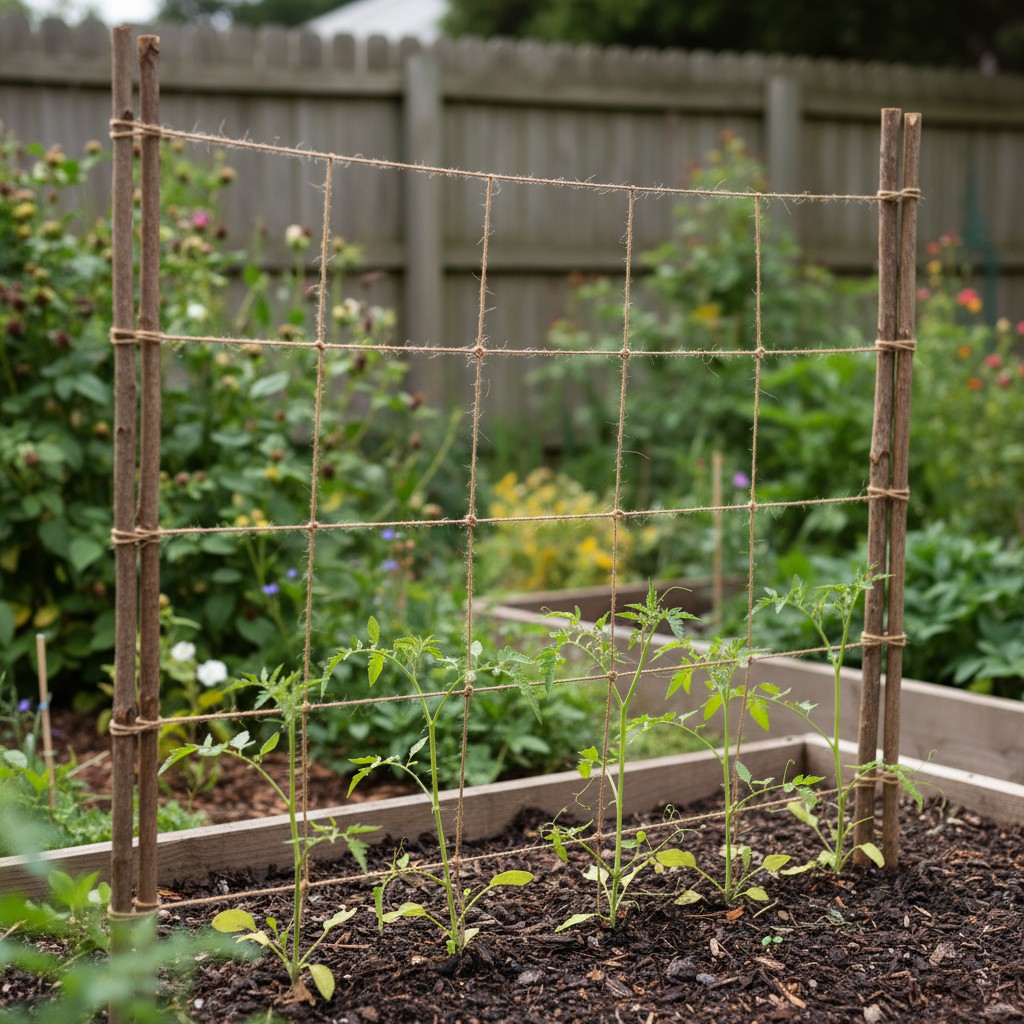
A panel or framed screen set vertically in the garden, secured with posts. The workhorse design.
Materials: One cattle panel or a section of welded wire fencing, two or three T-posts or 4×4 wooden posts.
How to build it:
- Drive posts solidly into the ground (at least 12 inches deep) at each end of where you want the trellis, plus a center post for panels longer than 8 feet.
- Wire the panel to the posts. For T-posts, use wire clips designed for the purpose (sold at farm supply stores).
- Ensure the bottom of the panel sits a few inches above the soil for easy weeding underneath.
Best for: Indeterminate tomatoes, peas, pole beans, any vine crop. Orient the trellis north-to-south so both sides get sun, or along the north edge of a bed if you don’t want it shading shorter crops.
5. The Teepee Trellis
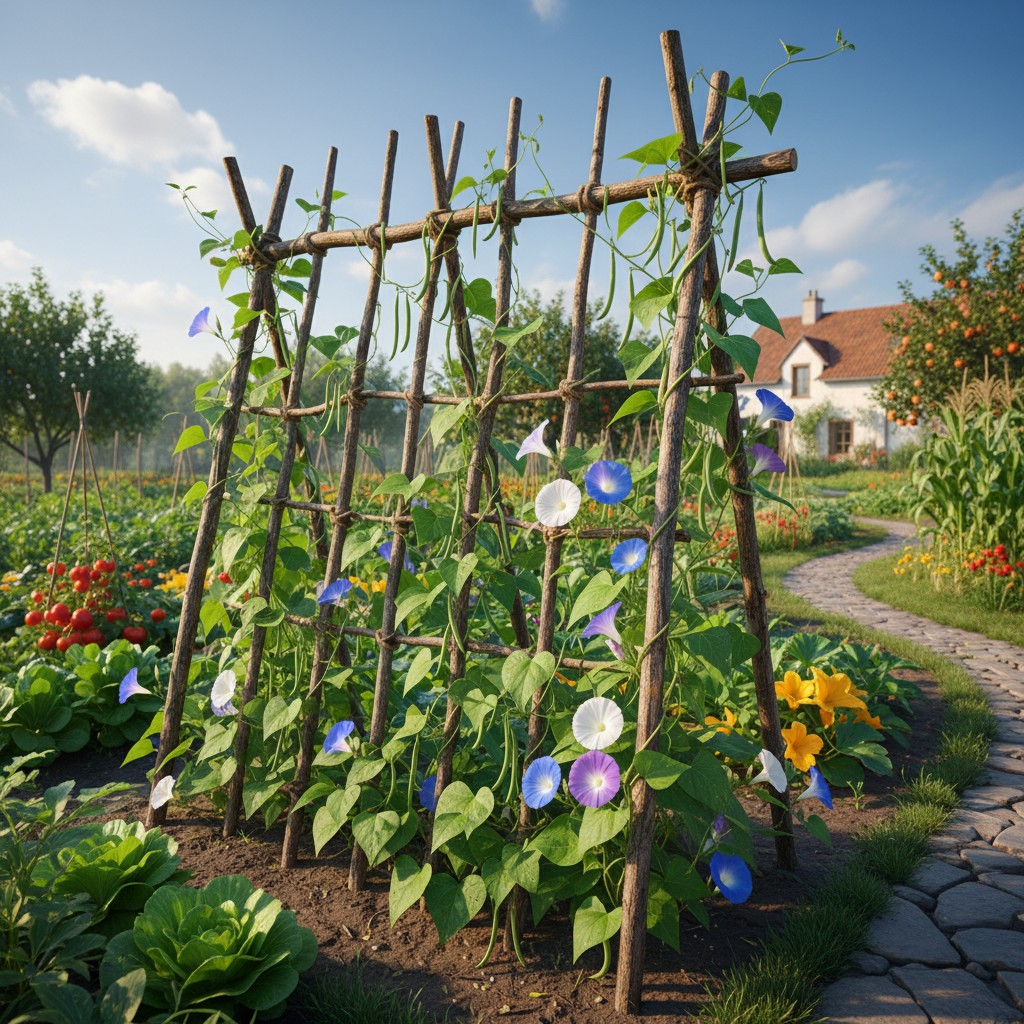
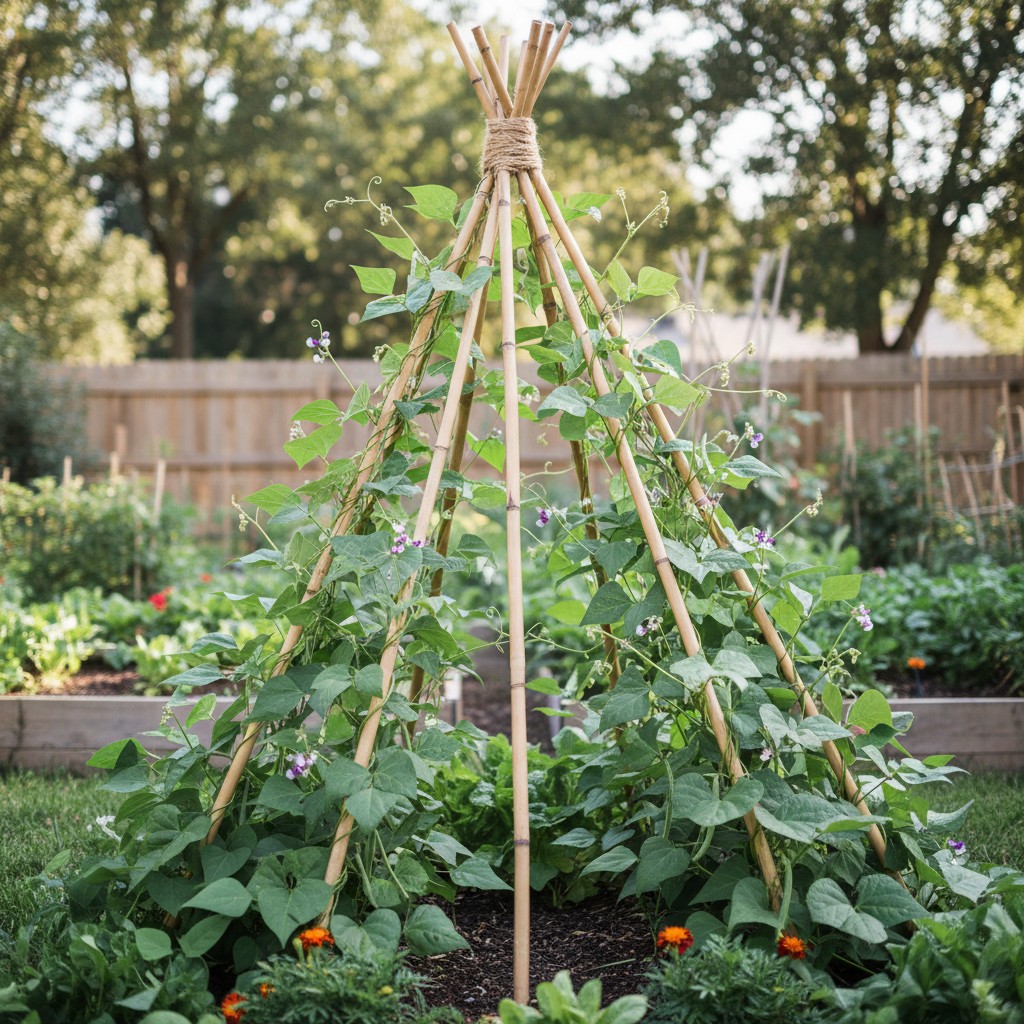
Three or more poles gathered at the top and spread at the base. Classic, easy, and charming.
Materials: 3–5 bamboo poles (8 feet long), jute twine, optional horizontal twine wraps.
How to build it:
- Push the bottom of each pole 6–8 inches into the ground, spacing them evenly in a circle about 3–4 feet in diameter.
- Gather the tops together and lash them securely with twine.
- Optionally, wrap horizontal lines of twine around the outside at 12-inch intervals to give climbing plants extra grip points.
Best for: Pole beans (the traditional use), peas, lightweight flowering vines. A teepee covered in scarlet runner beans is among the most beautiful things in any garden. Kids love these too, plant a circle with an opening for a “bean house” doorway.
Best Crops for Trellising
Natural Climbers
- Pole beans: Born to climb. They twine aggressively and need only a simple structure.
- Peas: Use tendrils to grip. Prefer netting or panels with smaller grid openings.
- Cucumbers: Climb readily with tendrils. Fruit hangs cleanly and grows straighter on a trellis.
- Small gourds and luffas. Vigorous climbers that cover a trellis quickly.
Crops That Benefit from Training
- Indeterminate tomatoes. Can be trained up a trellis with clips or ties instead of traditional caging. Provides better air circulation and easier access for pruning.
- Small melons (under 5 lbs). Will climb a trellis with guidance. Support developing fruit with fabric slings.
- Winter squash (small varieties). Butternut, acorn, and delicata squash can be trellised with fruit slings. Saves enormous ground space.
- Malabar spinach: A heat-loving climbing green that produces all summer on a trellis.
Tips for Trellis Success
- Build stronger than you think you need. A trellis loaded with mature vine plants, rain-soaked foliage, and heavy fruit bears an enormous amount of weight. Wind adds even more force. Over-engineer your structure.
- Orient for sun. A trellis casts shade on its north side. Use this to your advantage, grow shade-tolerant crops like lettuce on the shaded side.
- Don’t forget to rotate. Even though the trellis structure stays put, plant different crop families on it each year to break disease and pest cycles.
- Start training early. Guide young vines toward the trellis while stems are still flexible. Older, woody stems resist direction.
- Use soft ties. When tying plants to a trellis, use soft materials like cloth strips, pantyhose, or velcro plant ties. Wire and zip ties can cut into stems as they grow.
Frequently Asked Questions
How tall should a garden trellis be?
For most vegetable crops, 5–6 feet is ideal, tall enough for good vertical growing space, short enough that you can reach the top for harvesting and training without a ladder. Pole beans and indeterminate tomatoes can exceed 8 feet, so plan for that if you’re growing these crops. Cattle panels are 50 inches (about 4 feet) tall, fine for most crops, but you may want to raise them on posts for taller-growing plants.
Will trellising damage my plants in wind?
Actually, trellised plants are generally more wind-resistant than sprawling plants, because the vine is distributed across a rigid structure rather than flopping around. However, the trellis itself needs to be well-anchored. A windblown trellis can snap stems and destroy plants. In windy areas, use T-posts driven at least 18 inches deep, and consider guy wires for tall structures.
Can I grow heavy squash and melons on a trellis?
Small varieties (under 5 pounds at maturity) work well with fruit support slings. Larger squash and watermelons over 10 pounds put too much strain on the vine attachment point and risk breaking off. For large melons and squash, stick to ground growing. Butternut, acorn, delicata, and small pie pumpkins are good candidates for trellising. Full-size jack-o’-lantern pumpkins and large watermelons are not.
What’s the cheapest effective trellis I can build?
A teepee made from free branches or saplings lashed with jute twine costs nothing and works beautifully for beans and peas. If you want something more substantial, a section of concrete reinforcing wire (remesh) supported by two T-posts is sturdy, easy, and costs under $20. String or twine run vertically from a horizontal overhead wire is another extremely cheap option for beans and tomatoes, you just need a solid support at the top.