Natural Garden Pest Control: 10 Ways to Protect Your Plants Without Chemicals
- Chemical pesticides can kill 70%+ of beneficial insects, including pollinators and predators that naturally control pests.
- Companion planting, beneficial insects, physical barriers, and homemade sprays offer effective, non-toxic alternatives.
- Prevention (healthy soil, diversity, proper spacing) is the most effective pest management strategy.
- Integrated Pest Management (IPM) combines multiple strategies for the best long-term results.
Several botanical and mineral pest controls discussed below carry real risks if misused. Key rules from the US EPA, IARC, the Xerces Society, and the Pet Poison Helpline:
- Neem oil is highly toxic to fish and aquatic invertebrates, never spray near ponds, streams, rain gardens, or storm drains.
- Use food-grade diatomaceous earth only. Pool/filter-grade DE is crystalline silica, an IARC Group 1 human carcinogen.
- Apply any spray at dusk and never on open blossoms to protect foraging bees (Xerces Society guidance).
- Essential-oil–based sprays (including neem) can be toxic to cats; keep pets out of freshly treated areas until dry.
- Soap-based sprays can burn leaves in direct sun or above ~90°F, apply early morning or evening.
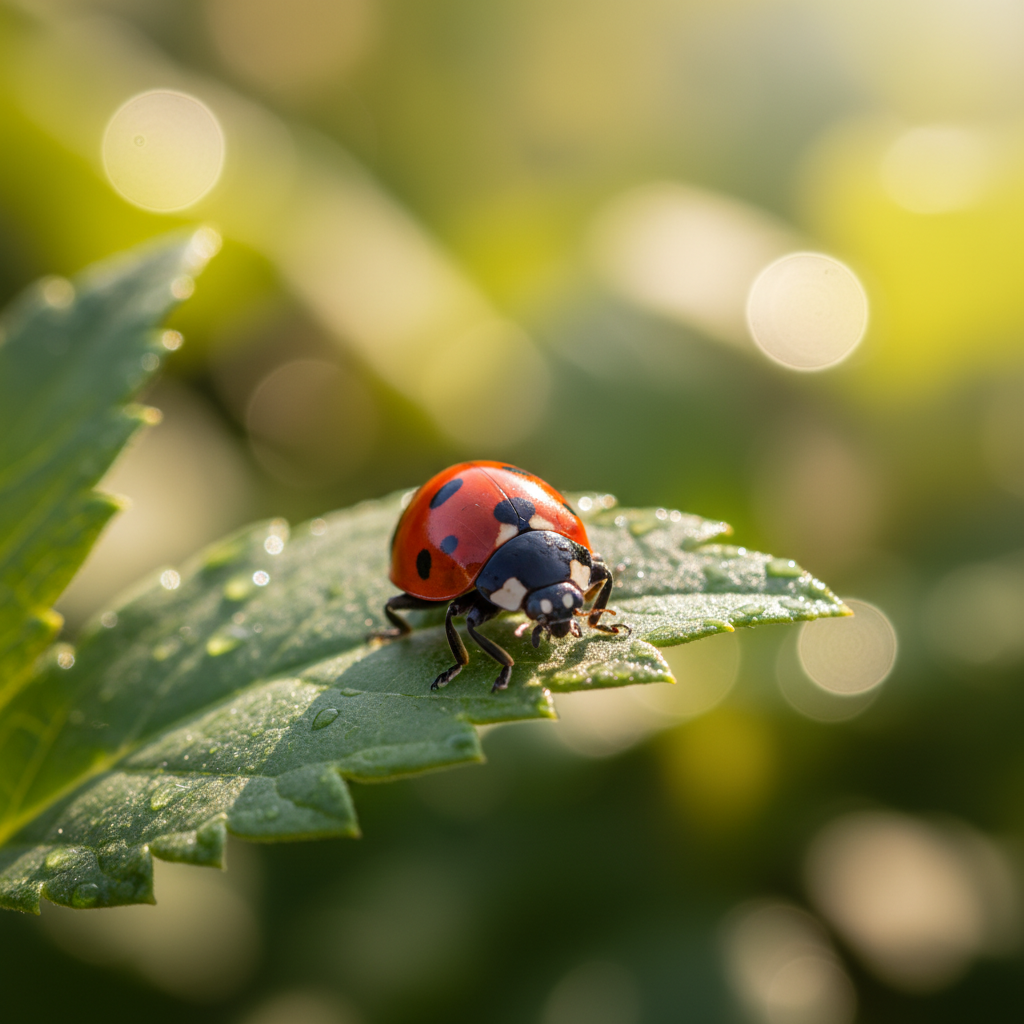
The kids noticed the ladybugs disappearing from our tomato plants before I did. I'd sprayed an organic insecticide mid-morning on a hot day, and within a week the aphid pressure was twice what it had been because the beneficials were gone. That was the last time I reached for a spray bottle before checking what was already doing the work.
I learned the hard way that reaching for pesticide at the first sign of trouble can create more problems than it solves. A few years ago, I sprayed an organic insecticide on my tomatoes to deal with aphids, and promptly wiped out the ladybug population that had been keeping the aphids in check. Within two weeks, the aphids were back worse than ever, but the ladybugs were gone. That experience sent me down the path of truly natural pest control, and I’ve never looked back. Here are ten strategies that actually work.
🌱 From Our Homestead
The summer I stopped reaching for sprays and started planting dill and fennel to attract beneficial insects was a turning point. Within a season, ladybugs and parasitic wasps moved in and our aphid problems practically solved themselves.
1. How Does Companion Planting Repel Pests?
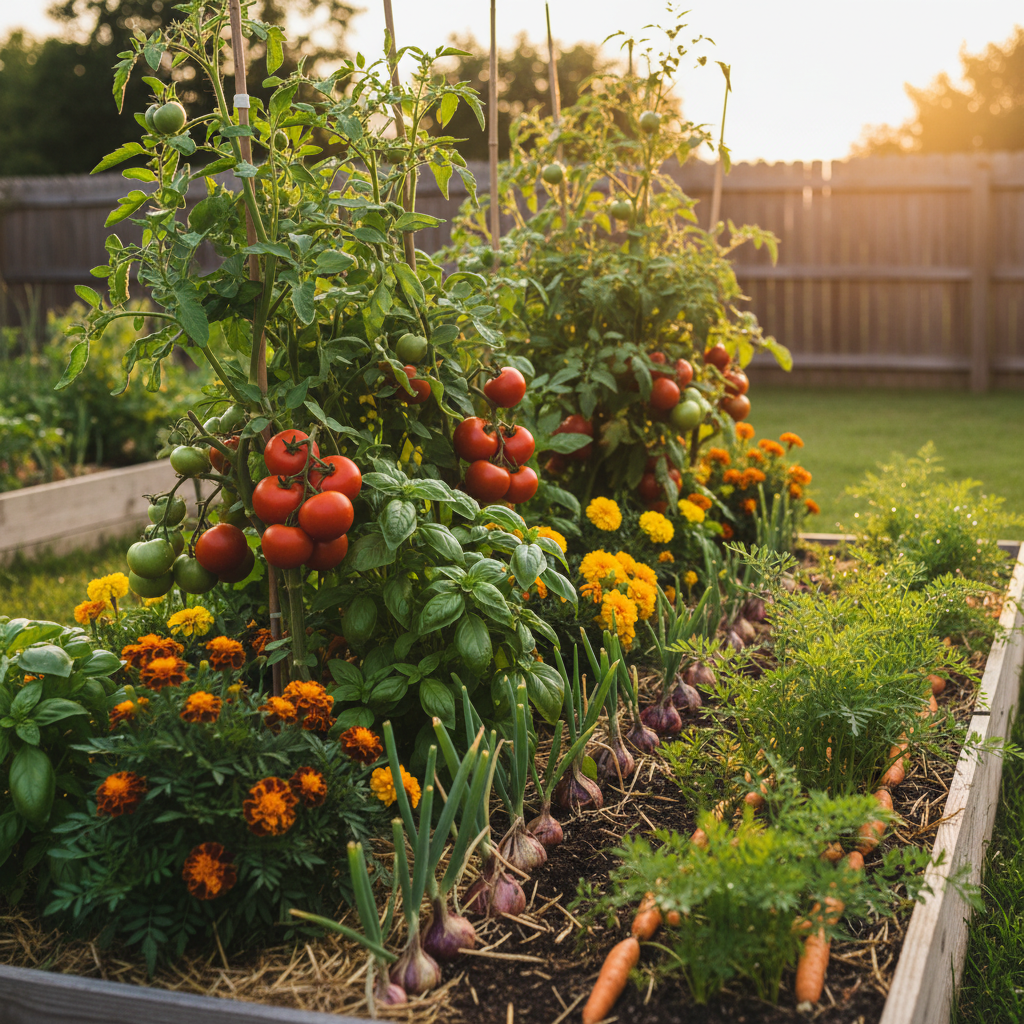
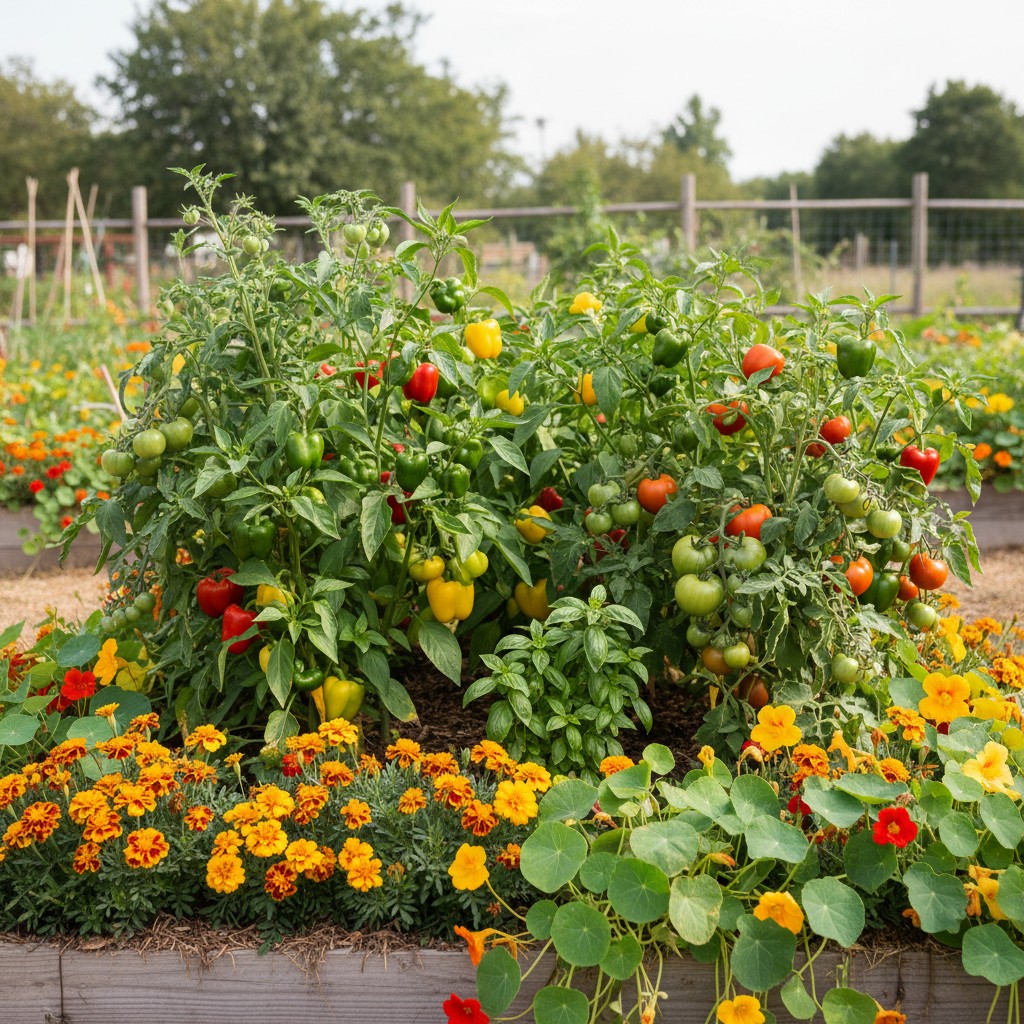
Companion planting uses strategic plant pairings to naturally repel pests. French marigolds (Tagetes patula) release alpha-terthienyl, which is well-documented to suppress root-knot nematodes in the soil. The University of Minnesota Extension notes that evidence for other pairings varies: nasturtiums as an aphid trap crop is well supported, while benefits like basil repelling tomato hornworms are more anecdotal and not strongly supported by controlled studies. Whitefly suppression from marigolds is weak at best.
Our companion planting guide dives deep into specific combinations, but my top performers are marigolds throughout the garden, basil near every tomato plant, and a border of strong-scented herbs like rosemary and sage.
2. How Do You Attract Beneficial Insects?
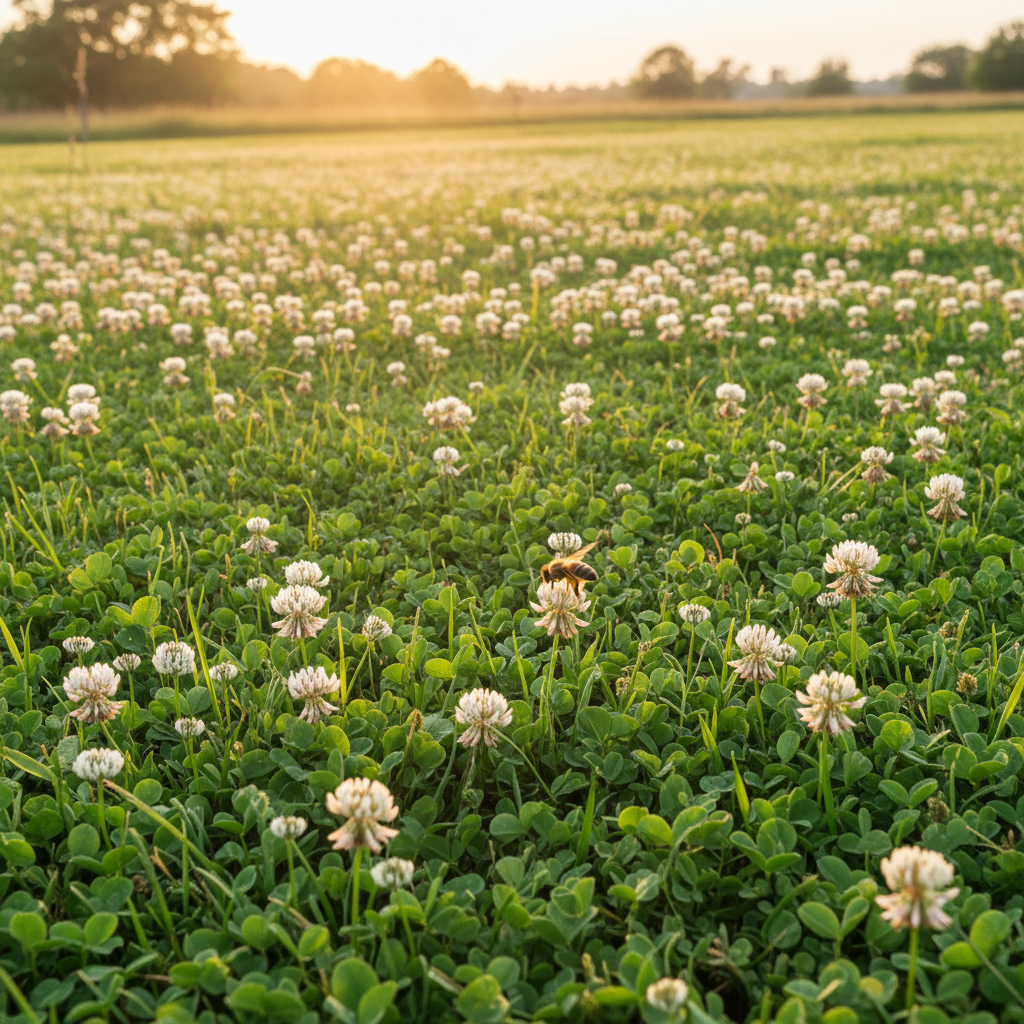
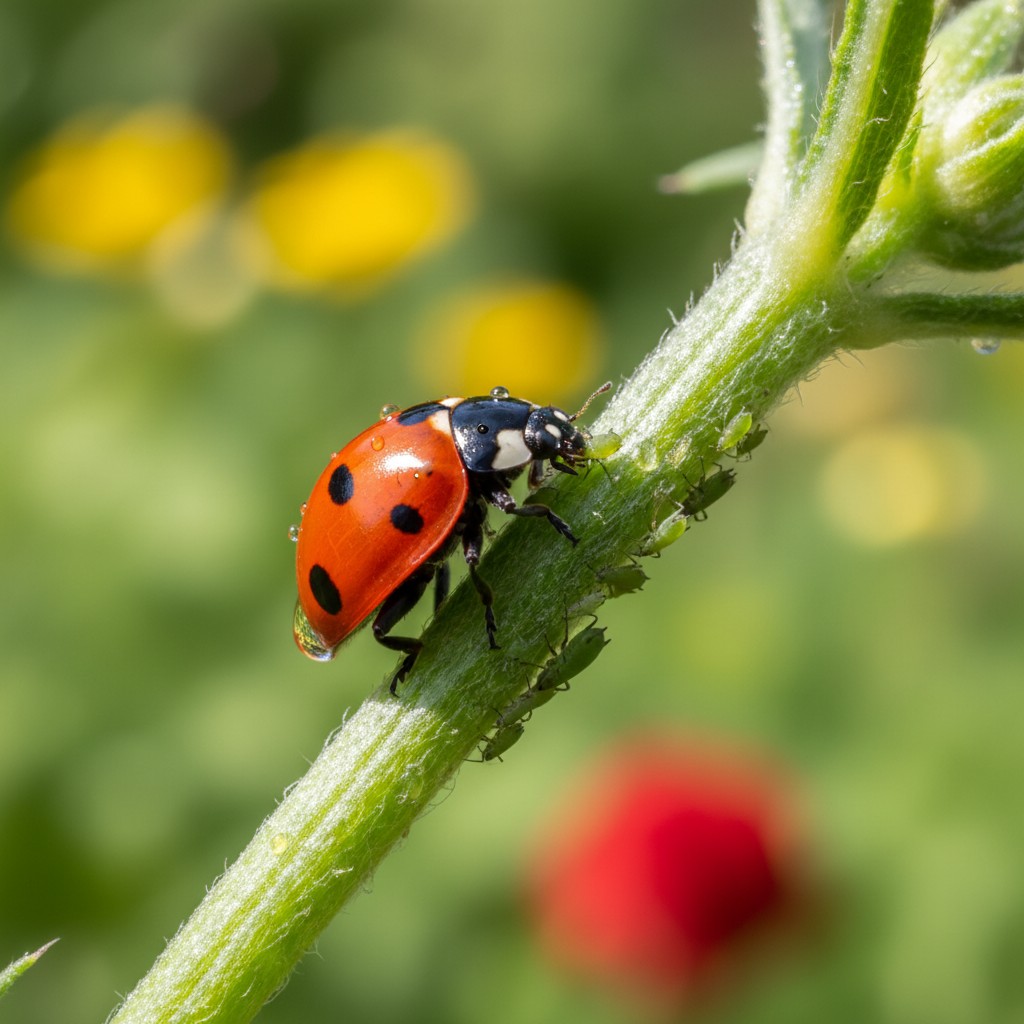
Planting pollen-rich flowers like yarrow, dill, fennel, and sweet alyssum attracts predatory insects like ladybugs, lacewings, and parasitic wasps that devour garden pests. According to the UC Integrated Pest Management Program, a single ladybug can eat up to 5,000 aphids in its lifetime.
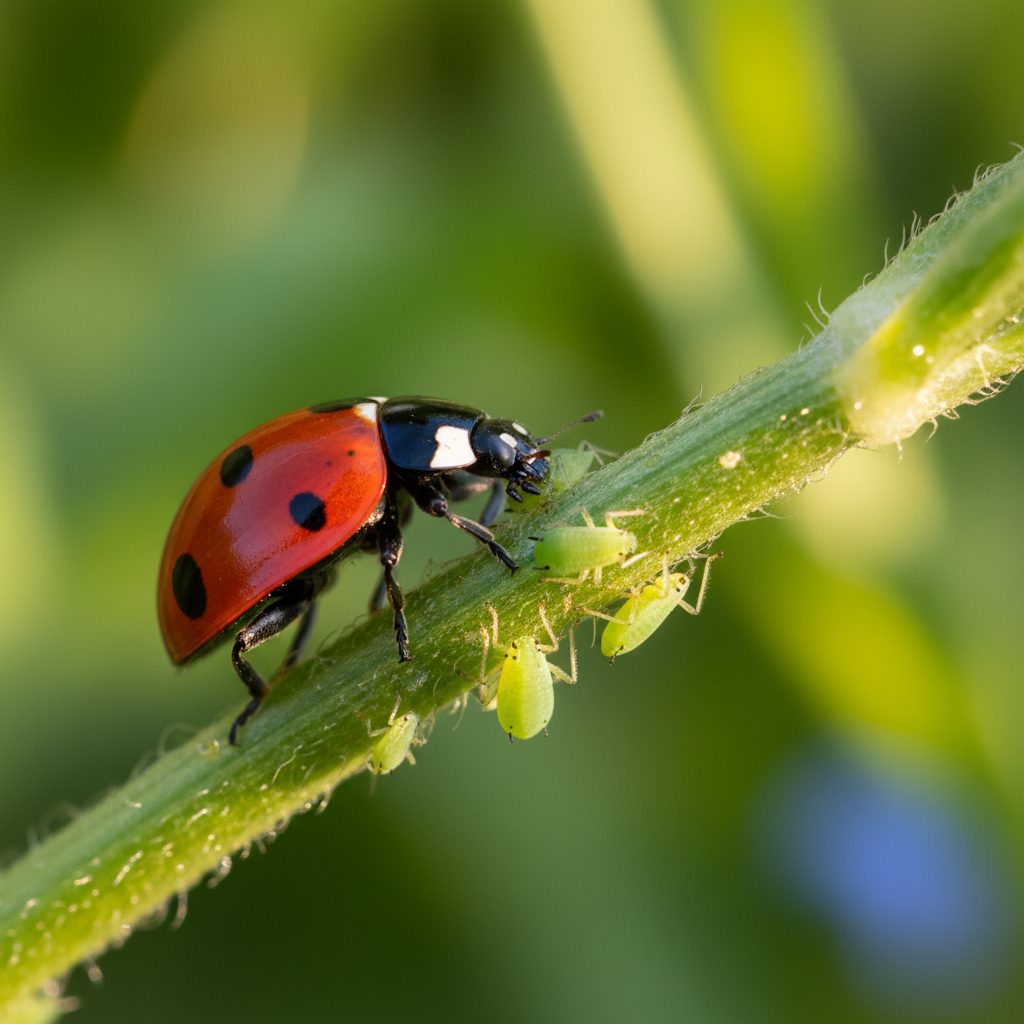
I always plant a “beneficial insect border” around my vegetable beds using a mix of flowers that bloom at different times. Sweet alyssum is my MVP, it’s low-growing, blooms all season, and attracts tiny parasitic wasps that control caterpillar populations. If you’re already keeping bees, you’ll find that many of the same flowers that attract pollinators also bring in pest predators.
3. What Physical Barriers Work Best?
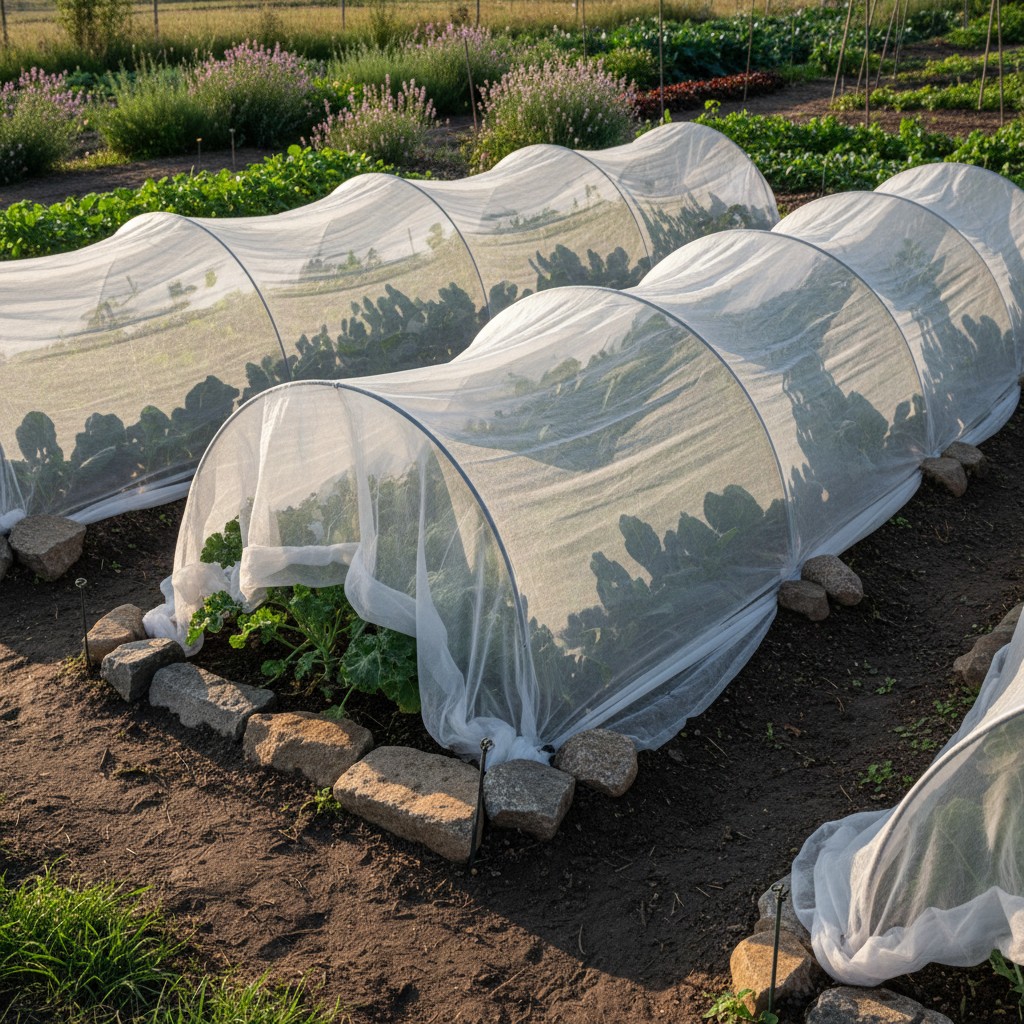
Floating row covers, copper tape, and insect netting provide physical pest barriers without any chemicals, row covers alone can reduce pest damage by 80-90%. I use lightweight row covers on my brassicas (cabbage, broccoli, kale) from transplant day through harvest to prevent cabbage moths from laying eggs. It’s nearly 100% effective.
Copper tape around raised bed edges deters slugs and snails. Cutworm collars (a simple cardboard tube around seedling stems) prevent cutworm damage. These physical solutions are low-tech, affordable, and incredibly effective.
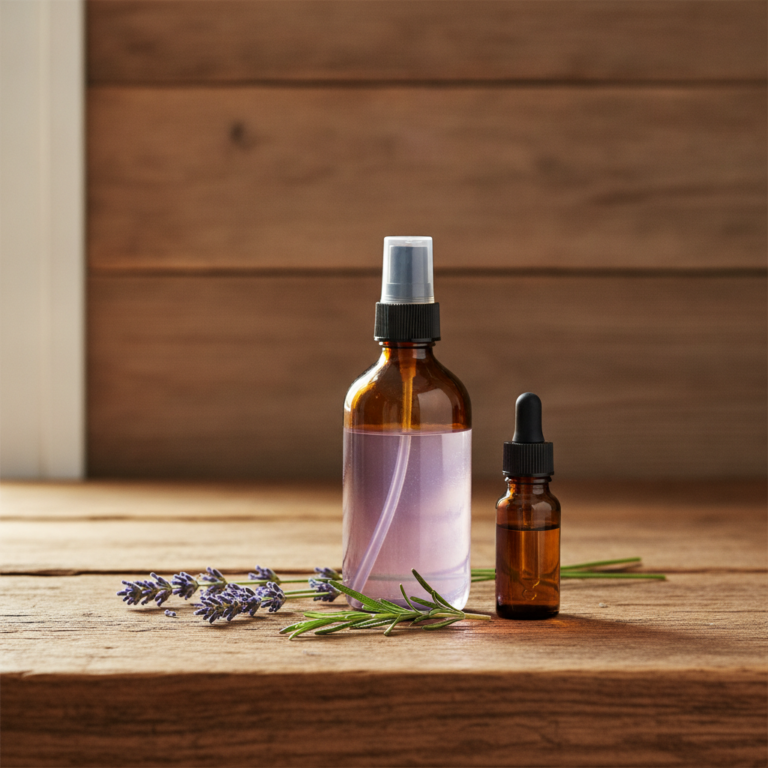
4. How Do You Use Neem Oil Safely?
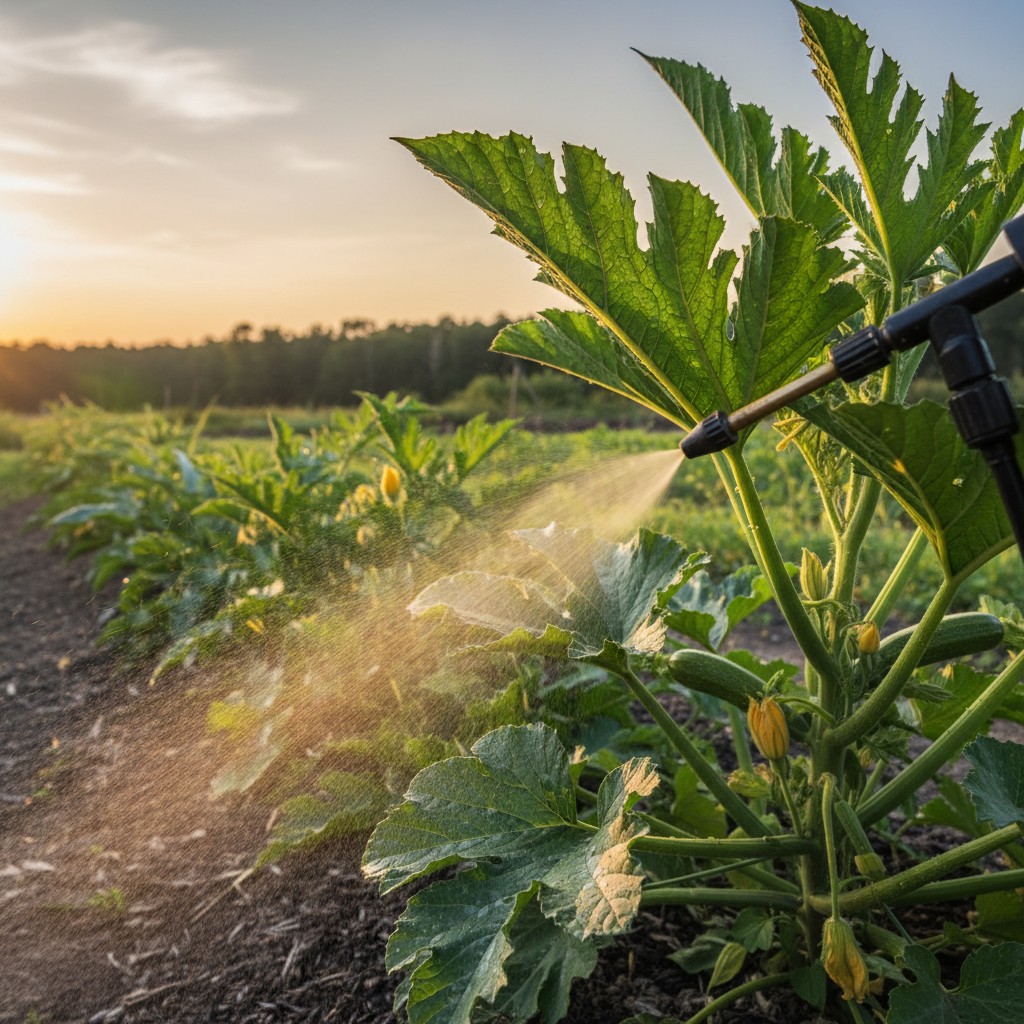
Neem oil is a natural pest deterrent that disrupts insect feeding and reproduction, apply it diluted (2 tablespoons per gallon of water) at dusk, and never near water or on open blossoms. The National Pesticide Information Center notes neem is low-toxicity to mammals and birds, but EPA registration labels also carry a mandatory aquatic-toxicity warning. I use it primarily for soft-bodied pests like aphids, mealybugs, and spider mites.
The evening timing is critical, neem breaks down in UV light within a few hours, so spraying at dusk gives it time to work before pollinators are active in the morning. Neem is directly harmful to bees on contact (not only via residue), so dusk timing plus skipping open flowers is what keeps pollinators safe.
- Highly toxic to fish and aquatic invertebrates. Per EPA pesticide labels, do not apply directly to water, to areas where surface water is present, or where runoff can reach ponds, streams, livestock ponds, rain gardens, or storm drains.
- Never spray open blossoms, and avoid spraying when bees are actively foraging (Xerces Society).
- Cats metabolize essential oils poorly. Keep cats out of freshly sprayed areas until fully dry; do not apply to surfaces cats groom (Pet Poison Helpline).
- Follow the product label exactly, it is a federal offense under FIFRA to use a pesticide in a manner inconsistent with its labeling.
5. What Is Diatomaceous Earth and How Does It Work?
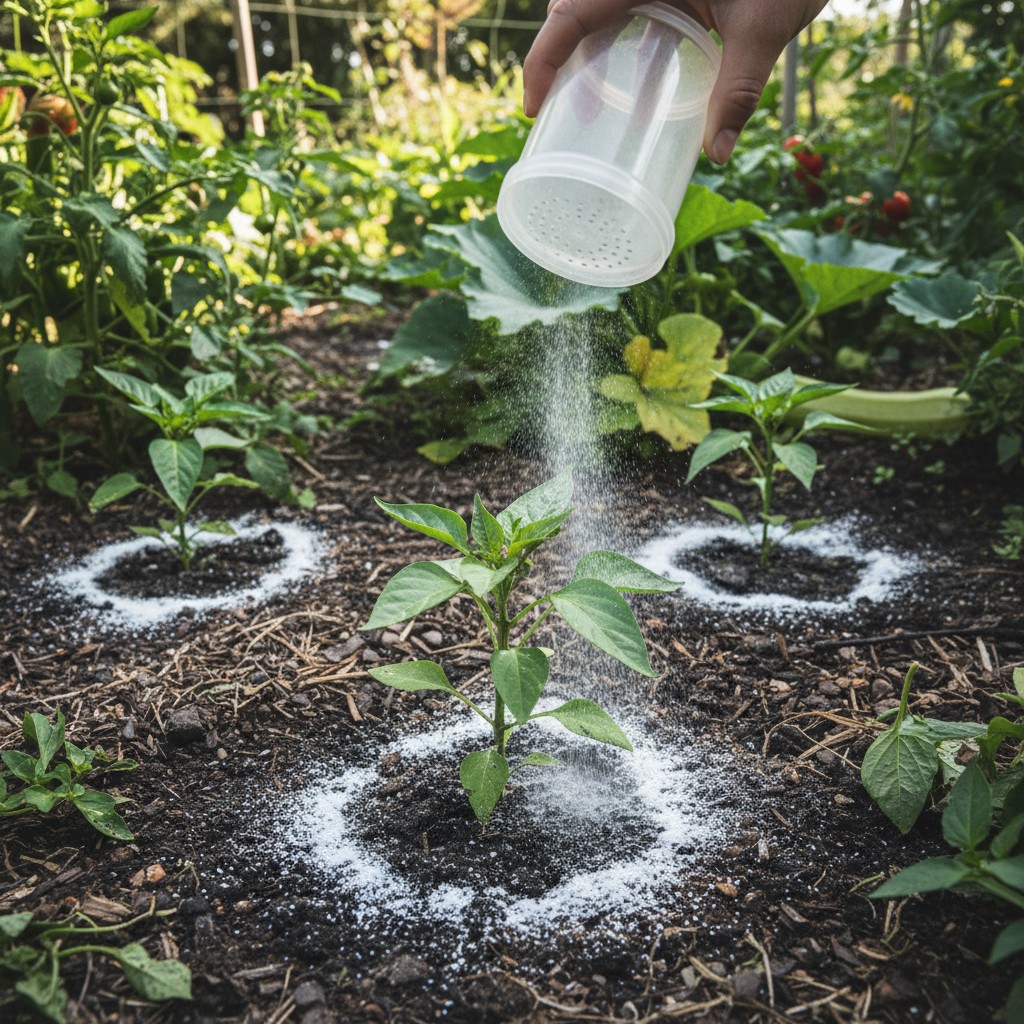
Only use FOOD-GRADE diatomaceous earth (DE) in the garden. Food-grade DE is amorphous silica from fossilized algae; it physically damages the exoskeletons of crawling insects and causes them to dehydrate. I sprinkle it around the base of plants to control slugs, earwigs, and crawling beetles.
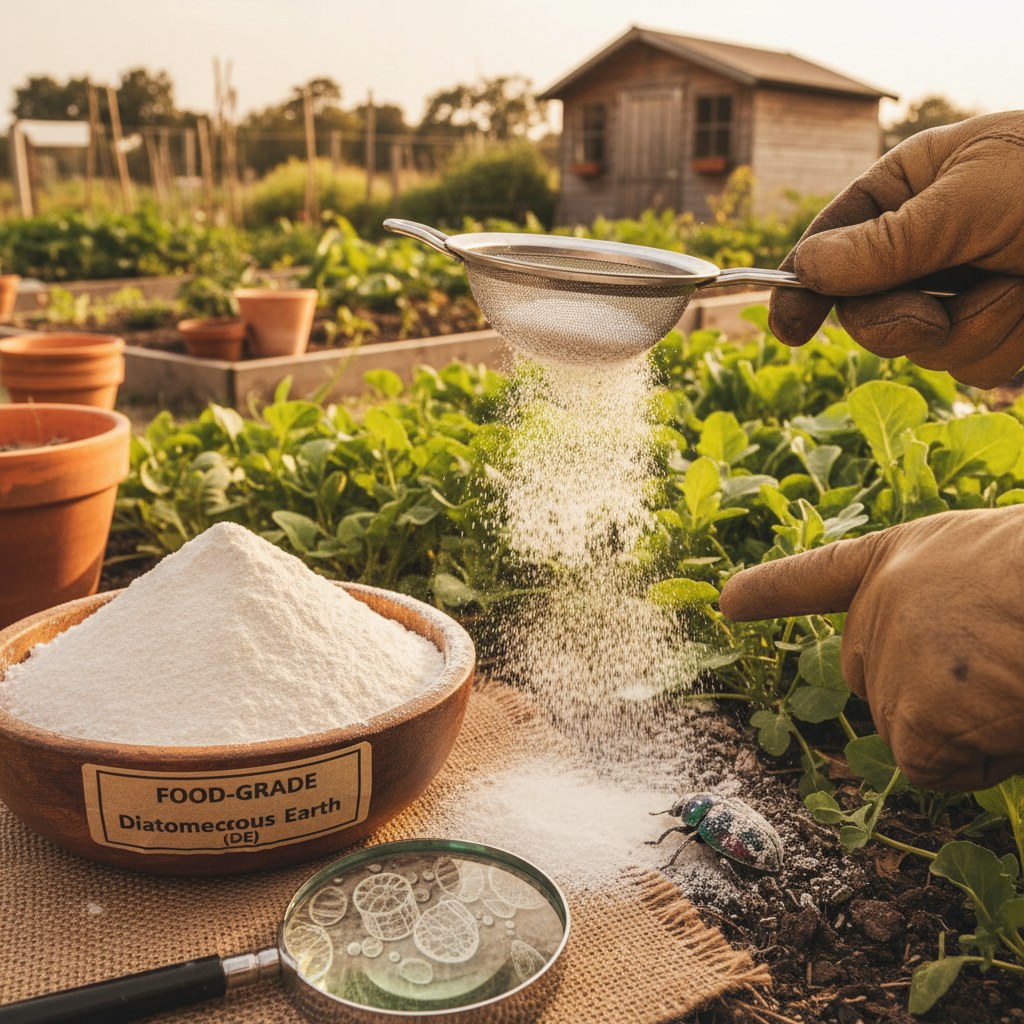
- Food-grade DE is amorphous (non-crystalline) silica and is the only type safe for garden, coop, or home use.
- Pool-grade / filter-grade DE is different. It has been heat-treated (calcined), which converts the silica to crystalline silica, classified as a Group 1 human carcinogen by IARC and a known cause of silicosis. Never substitute pool DE for food-grade DE, and never apply it to plants, soil, or animals.
- Even with food-grade DE, wear an N95 respirator and eye protection when applying. Any fine dust irritates the lungs.
- DE kills bees and other beneficial insects on contact. Do not apply to blooms or to areas where pollinators walk or forage. Apply in the evening, target the soil surface around plant bases, and reapply only after rain.
5b. Bacillus thuringiensis (BT): A Targeted Biological Spray
BT is a naturally occurring soil bacterium whose protein crystals kill specific insect larvae when ingested, among the most effective and selective organic pest controls available. the trick is matching the correct strain to your target pest:
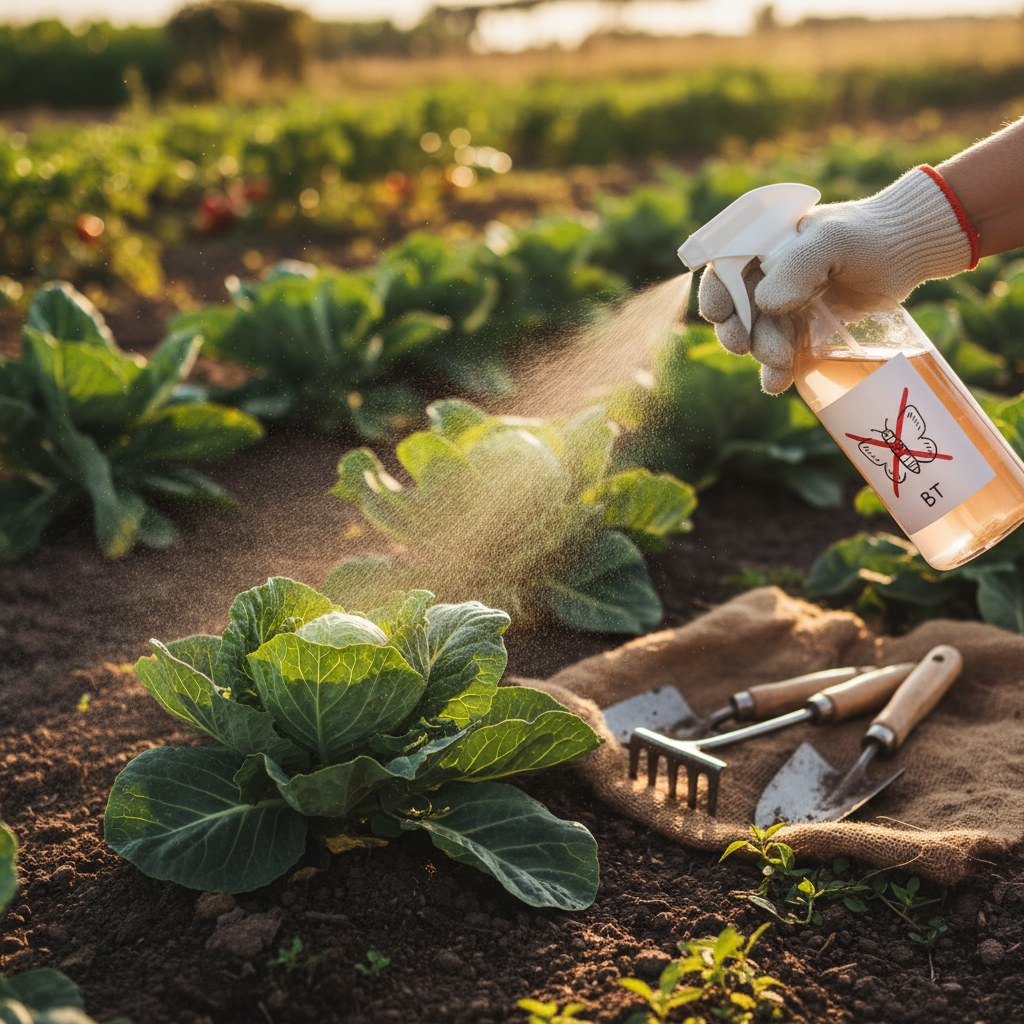
- Bt kurstaki (Btk), targets caterpillars (lepidoptera larvae): cabbage loopers, tomato hornworms, corn borers, and imported cabbageworm. The most commonly sold strain (Thuricide, Dipel).
- Bt israelensis (Bti), targets mosquito larvae and fungus gnat larvae in water or wet soil. Has no effect on caterpillars. Used in dunks for standing water.
- Bt aizawai (Bta), effective against diamondback moth and some Btk-resistant caterpillar strains. A good rotation choice when Btk resistance is suspected.
BT must be ingested by larvae to work, it does not kill adults or eggs. Apply at dusk, reapply after rain, and use only on actively feeding larvae. BT is harmless to bees, birds, and mammals, but will kill butterfly and moth caterpillars indiscriminately, so avoid spraying on milkweed or host plants for beneficial lepidoptera.
6. How Can Handpicking Be an Effective Strategy?
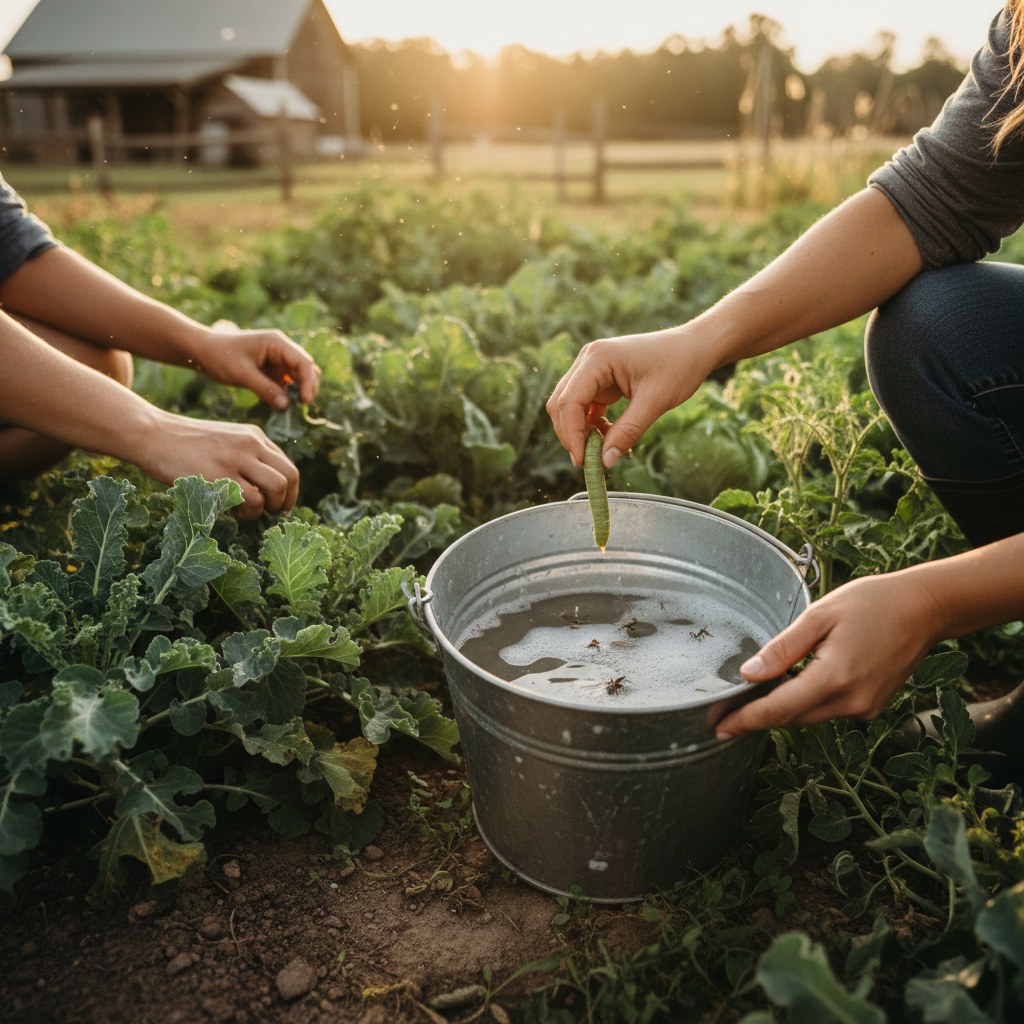
Daily garden walks with a bucket of soapy water for handpicking pests is surprisingly effective, especially for large insects like hornworms, Japanese beetles, and squash bugs.</strong> I do my "pest patrol" every morning with coffee in one hand and a soapy water cup in the other. It's meditative, it keeps populations in check before they explode, and it helps me notice other garden issues early.
7. How Do Homemade Garlic and Pepper Sprays Work?
A spray made from blended garlic, hot peppers, and a drop of dish soap creates a pungent deterrent that repels many soft-bodied insects and some larger pests like rabbits and deer. My recipe: blend 4 cloves garlic and 2 hot peppers in a quart of water, steep overnight, strain, add a drop of castile soap, and spray. It works well alongside the garlic I grow each season.
Soap-based sprays (including this garlic/pepper spray and any insecticidal soap) can burn leaves when applied in direct sun or when temperatures exceed about 90°F (32°C). Apply in early morning or evening when leaves are cool and will dry before the hottest part of the day. Spot-test one leaf and wait 24 hours before spraying a whole plant, especially on tender seedlings or heat-stressed crops. Wear eye protection, capsaicin spray can burn eyes and skin.
8. Why Is Healthy Soil Your Best Defense?
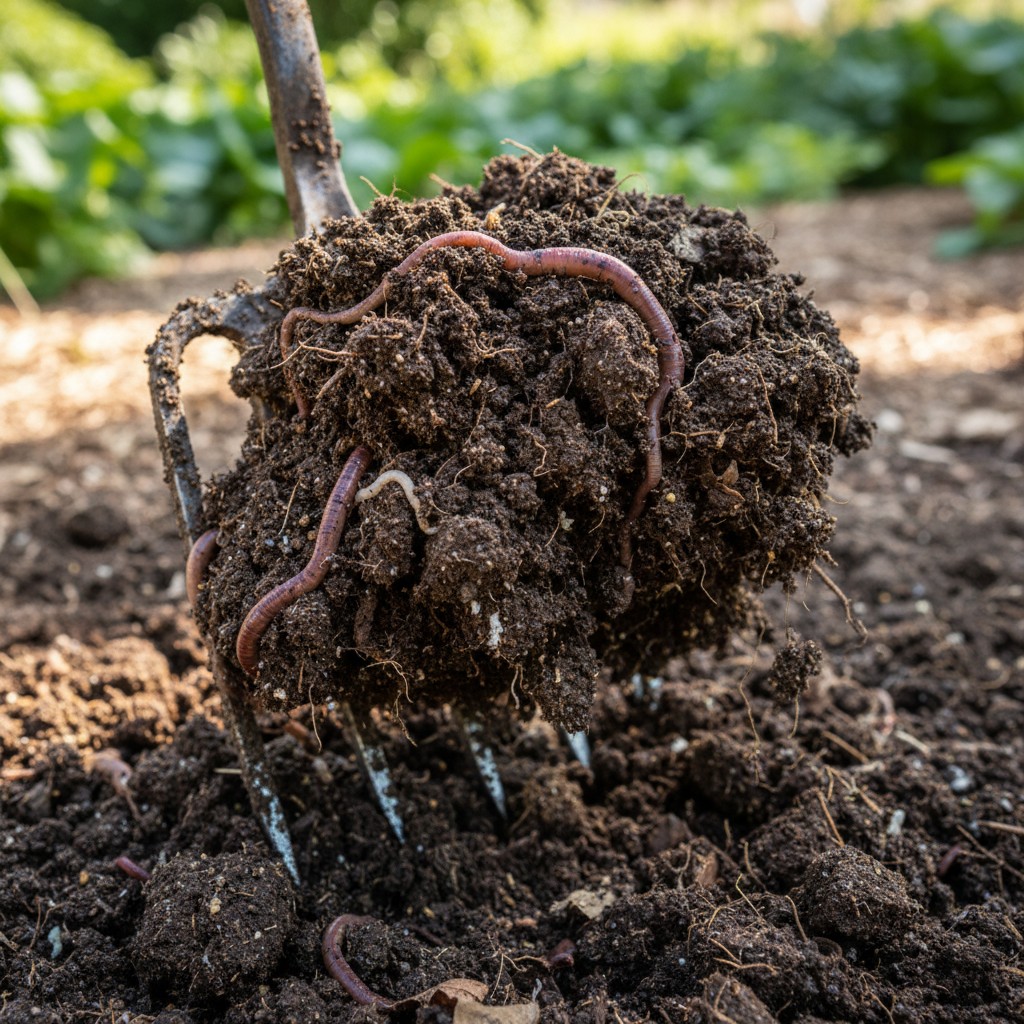
Plants grown in nutrient-rich, biologically active soil have stronger natural defenses against pests and disease. The USDA Natural Resources Conservation Service emphasizes that healthy soil biology promotes plant vigor, which is the foundation of pest resistance. Composting and worm composting are the best investments you can make for long-term pest management.

9. How Does Crop Rotation Prevent Pest Buildup?
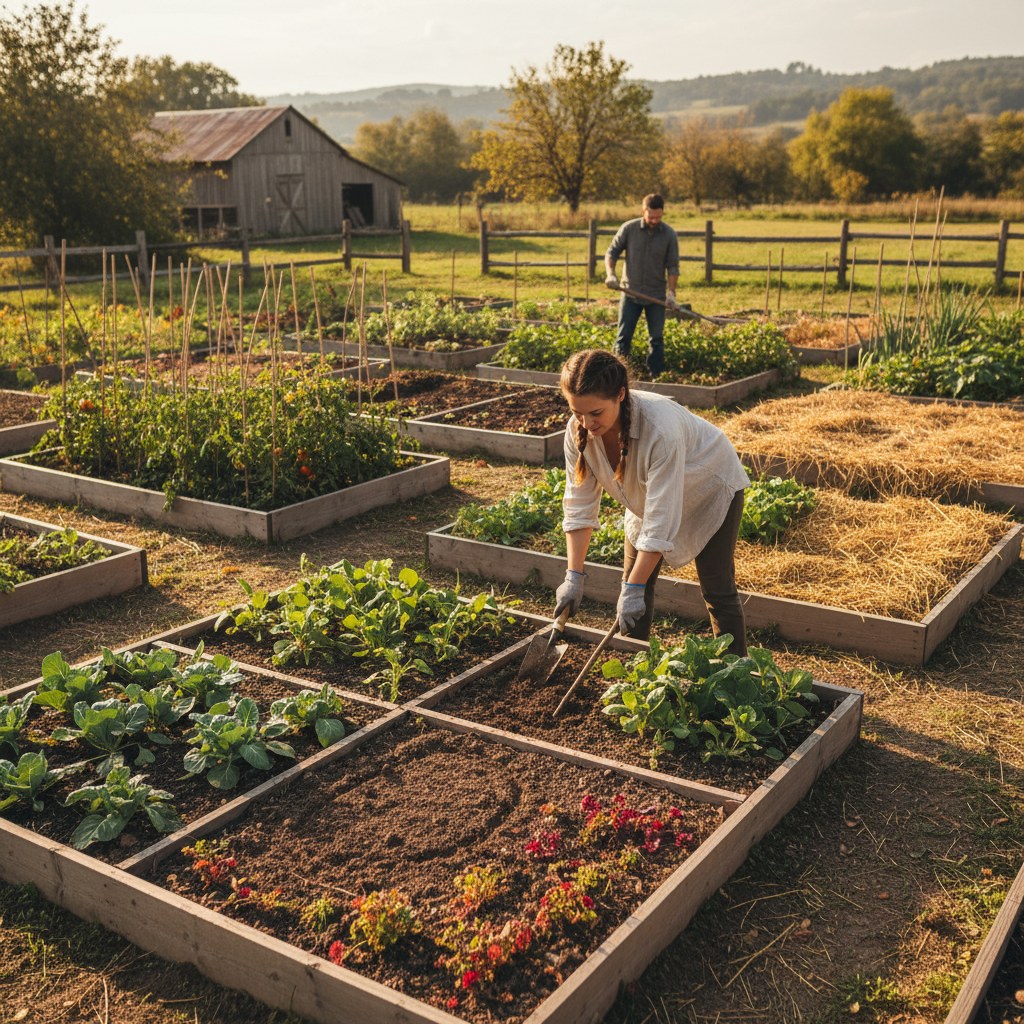
Rotating crop families to different beds each year breaks pest and disease cycles, since many pests overwinter in the soil near their host plants. I follow a simple 4-year rotation: nightshades (tomatoes, peppers), legumes (beans, peas), brassicas (broccoli, cabbage), and root crops (carrots, beets). It’s one of the oldest and most reliable pest management techniques in agriculture.
10. What Role Do Trap Crops Play?
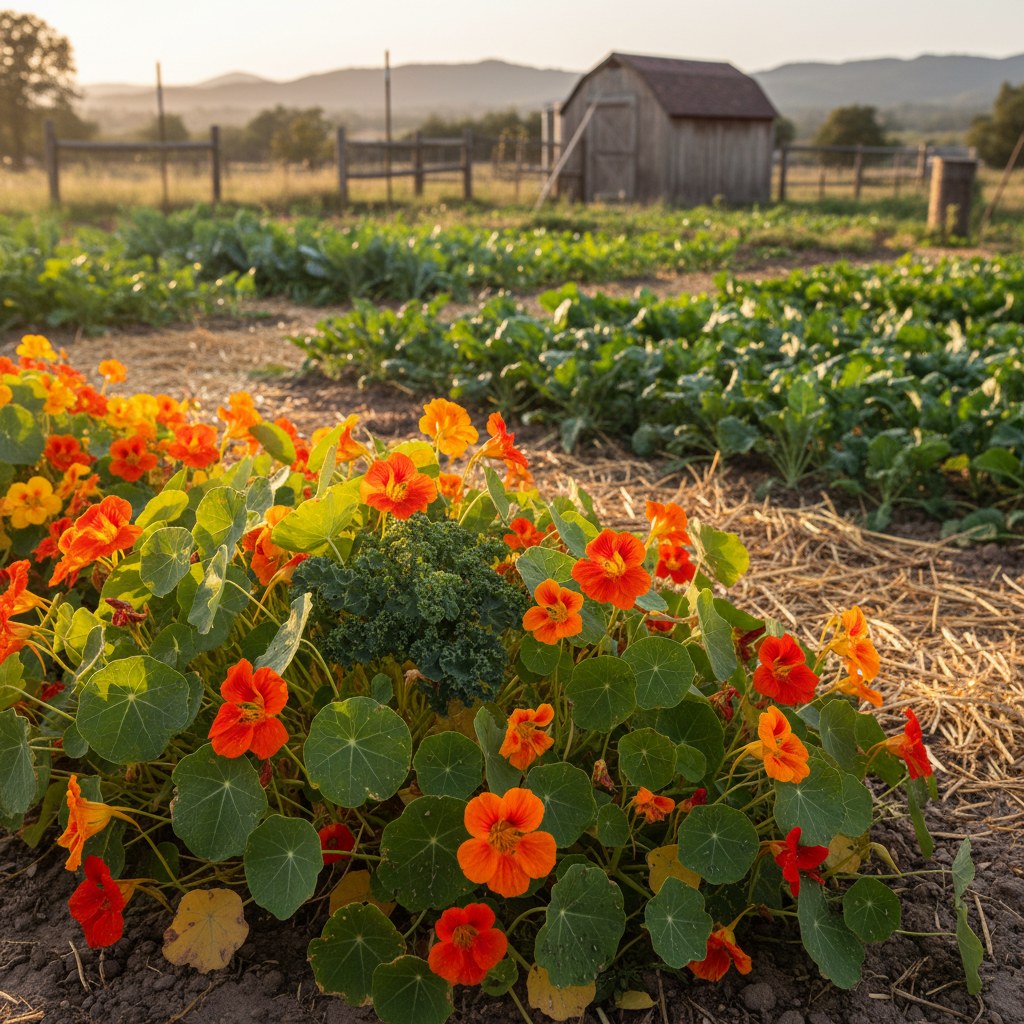
Trap crops are plants intentionally grown to lure pests away from your valued crops, nasturtiums attract aphids away from vegetables, and blue hubbard squash draws squash bugs away from zucchini. Once the trap crop is infested, you can remove and destroy it. I always plant a few extra nasturtiums and radishes specifically as sacrificial trap crops.
| Method | Best For | Effort Level | Effectiveness |
|---|---|---|---|
| Companion Planting | Prevention, broad spectrum | Low (plan at planting) | Medium-High |
| Beneficial Insects | Aphids, caterpillars, mites | Low (plant flowers) | High |
| Row Covers | Flying insects, moths | Medium (install/remove) | Very High |
| Neem Oil | Soft-bodied insects | Medium (spray weekly) | Medium-High |
| Handpicking | Large visible pests | High (daily walks) | High |
Frequently Asked Questions
Yes, when used as directed. Apply in the evening, and wash produce before eating. The EPA classifies neem oil as safe for food crops when label instructions are followed.
In my experience, natural methods work better long-term because they support the ecosystem rather than disrupting it. There may be a transition period while beneficial insect populations establish, but the results are more sustainable and less harmful.
Start with the most targeted approach possible. Handpick what you can, use insecticidal soap or neem for immediate knockdown, and then build long-term prevention strategies. Sometimes losing one crop while you establish a balanced ecosystem is worth the investment.
Yes, but specifics matter. French marigolds (Tagetes patula) are most effective against nematodes and some above-ground pests. They need to be planted densely and left in the soil to decompose for the best nematode suppression. I plant them everywhere, they’re beautiful and functional.