Best Cover Crops for Home Gardens: Build Soil While You Sleep
Best Cover Crops for Home Gardens: Build Soil While You Sleep
- Cover crops protect bare soil, suppress weeds, prevent erosion, and add organic matter — all while you’re not actively gardening
- Legume cover crops (crimson clover, hairy vetch) fix atmospheric nitrogen into the soil, reducing your need for fertilizer
- Grass cover crops (winter rye, oats) produce massive amounts of biomass that feeds soil biology and improves structure
- Quick-growing buckwheat is the best summer cover crop — it matures in just 30-40 days and attracts pollinators
- Daikon radish breaks up compacted soil with its deep taproot and decomposes over winter, leaving channels for water and roots
Here’s a truth that took me years of gardening to fully appreciate: the most important thing you can grow in your garden isn’t food. It’s soil. And one of the best ways to build incredible soil is to grow cover crops — plants that you never intend to eat, but that do more work for your garden than almost anything else you could do.
Cover cropping is a practice borrowed from farming that translates beautifully to home gardens. The concept is simple: instead of leaving soil bare (which invites weeds, erosion, and nutrient loss), you plant a crop specifically to protect and improve the soil. When it’s time to plant your vegetables, you cut down the cover crop and either turn it in or leave it on the surface as mulch.
If you’re practicing no-till gardening or building a permaculture-inspired system, cover crops are practically essential. Even in conventional gardens, they’re one of the highest-return investments of time and money you can make.
Why Cover Crops Matter
Bare soil is damaged soil. When garden beds sit empty over winter or between crops, here’s what happens:
- Erosion: Rain and wind carry away your topsoil — the most fertile layer
- Nutrient leaching: Water-soluble nutrients (especially nitrogen) wash down below the root zone
- Compaction: Raindrops compact bare soil, reducing pore space and making it harder for roots to penetrate
- Weed invasion: Nature hates bare ground and will fill it with whatever grows fastest — usually weeds
- Loss of soil biology: Without living roots to feed them, the bacteria, fungi, and earthworms that make soil healthy decline
Cover crops address every single one of these problems. Their roots hold soil in place, capture nutrients, break up compaction, and feed the soil food web. Their foliage shades out weeds and protects the surface from rain impact. When they decompose, they add organic matter that improves soil structure, water retention, and fertility.
Types of Cover Crops
Cover crops generally fall into three categories, each with different strengths. The best cover crop strategy often uses a mix from different categories.
| Category | Examples | Primary Benefit | Best Season |
|---|---|---|---|
| Legumes | Crimson clover, hairy vetch, field peas, fava beans | Nitrogen fixation | Fall or spring |
| Grasses | Winter rye, annual ryegrass, oats, wheat | Biomass and weed suppression | Fall |
| Brassicas / Others | Daikon radish, mustard, buckwheat, phacelia | Compaction relief, pollinator support | Summer or fall |
The Best Cover Crops for Home Gardens
Crimson Clover
Crimson clover is probably the most popular cover crop for home gardeners, and for good reason. It’s a legume, meaning it partners with soil bacteria to pull nitrogen from the air and convert it into a form plants can use. A good stand of crimson clover can fix 70-150 pounds of nitrogen per acre — that’s significant free fertilizer.
When to plant: Late summer to early fall (6-8 weeks before your first frost). It establishes in fall, goes dormant in winter, and regrows vigorously in spring, producing beautiful red flowers that pollinators adore.
When to cut: Mow or cut at peak bloom in spring, 2-3 weeks before you plan to plant vegetables. The nitrogen is most available when you cut it while flowering. You can turn it into the soil or leave it as a surface mulch in a no-till system.
Seeding rate: About 1-2 pounds per 1,000 square feet. Broadcast seed evenly and rake lightly to cover.
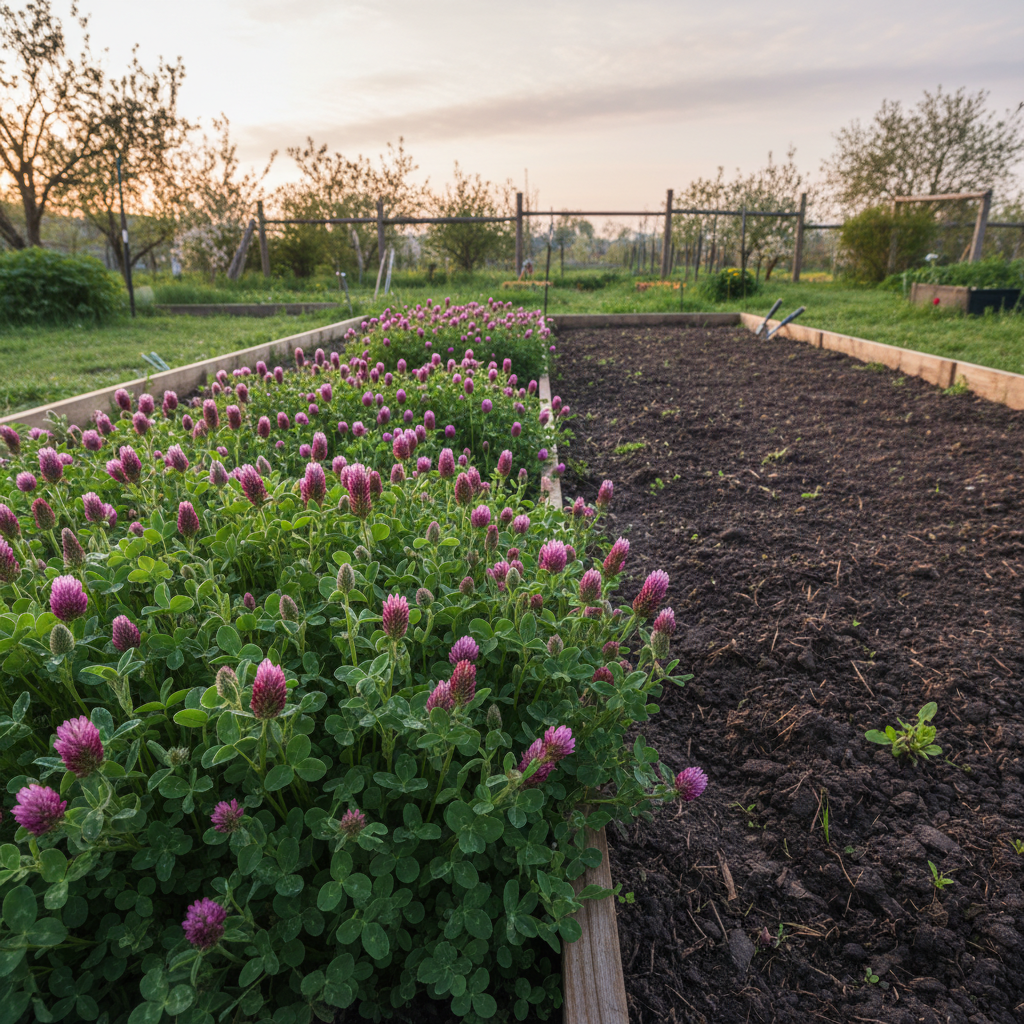
The first time I grew crimson clover, I almost couldn’t bring myself to cut it down. In mid-April, the garden was a sea of deep red flowers buzzing with bees. It was the most beautiful my garden had ever looked, and it wasn’t even growing food yet. But when I cut it and planted tomatoes in that bed, the difference was undeniable — the soil was looser, darker, and those tomatoes were the healthiest I’d ever grown.
Winter Rye (Cereal Rye)
Winter rye is the toughest, most reliable winter cover crop you can grow. It germinates in cold soil, survives brutal winters (hardy to Zone 3), and produces massive amounts of biomass — the organic matter that builds soil structure over time.
When to plant: Late summer through late fall — rye can be planted later than almost any other cover crop. Even if planted just 4-6 weeks before your first frost, it will establish enough to survive winter and take off in spring.
When to cut: Spring, before it heads out (forms seed). Once rye goes to seed, it becomes very fibrous and difficult to manage. Cut it at 12-18 inches tall. Rye can be challenging to kill without tillage — mow it very low or crimp it flat with a roller. In a no-till garden, mow and lay the residue as thick mulch, then plant through it.
Seeding rate: 2-3 pounds per 1,000 square feet.
Important note: Winter rye has an allelopathic effect — it releases chemicals that inhibit seed germination. This is great for suppressing weeds, but wait 2-3 weeks after incorporating rye before direct-seeding small-seeded crops like carrots or lettuce. Transplants are generally unaffected.
Buckwheat
Buckwheat is the summer cover crop champion. It grows incredibly fast — from seed to flower in as little as 30 days — making it perfect for filling gaps between spring and fall crops. It’s also one of the best pollinator plants you can grow, attracting beneficial insects in droves.
When to plant: Anytime soil is warm (60°F+), typically late spring through late summer. Buckwheat is frost-tender and will die with the first freeze, which can be an advantage — no kill step needed for fall-planted buckwheat.
When to cut: Mow or cut at flowering, before seeds mature (about 35-40 days after planting). If seeds mature and drop, you’ll have volunteer buckwheat everywhere — not the worst problem, but worth avoiding.
Seeding rate: 2-3 pounds per 1,000 square feet.
Buckwheat excels at smothering weeds and making phosphorus more available in the soil. It’s also an excellent choice for new garden plots — plant a round or two of buckwheat before your first vegetable season to suppress weeds and jumpstart soil biology.
Hairy Vetch
Hairy vetch is the nitrogen-fixing heavyweight of the cover crop world. It can fix 100-200 pounds of nitrogen per acre — more than most other legume cover crops. It’s a vining plant that creates a dense, weed-smothering mat and is particularly well-suited to no-till systems.
When to plant: Late summer to early fall, at least 4-6 weeks before first frost. It establishes in fall, overwinters (hardy to Zone 4), and produces heavy growth in spring.
When to cut: Late spring, when it’s in full bloom. The dense mat can be mowed or rolled flat, creating an excellent no-till mulch that slowly releases nitrogen as it decomposes. Many no-till gardeners transplant directly through crimped hairy vetch.
Seeding rate: 1-2 pounds per 1,000 square feet. Often planted in a mix with winter rye — the rye provides structure for the vetch to climb, and together they deliver both nitrogen and biomass.
Daikon Radish (Tillage Radish)
Daikon radish — often marketed as “tillage radish” — is a remarkable tool for breaking up compacted soil. The thick taproot grows 12-24 inches deep, creating channels that improve drainage and aeration. When the radish winterkills (it’s not cold-hardy below about 20°F), it decomposes in place, leaving behind open holes that water and roots follow in spring.
When to plant: Late summer to early fall, about 4-8 weeks before first frost. The radish needs time to develop its taproot before winter.
When to cut: You don’t have to — in most climates, daikon radish winterkills and decomposes on its own. In mild winter areas (Zone 7+), you may need to mow it before it goes to seed in spring.
Seeding rate: About 1 pound per 1,000 square feet. Broadcast and rake in, or plant in rows 6 inches apart.
Daikon radish is especially valuable for new gardens being established on compacted ground, heavy clay soils, or areas that have been walked on. It does the work of a broadfork, but without the effort.
Nitrogen Fixation vs. Biomass: Choosing the Right Strategy
Understanding the difference between these two functions helps you choose the right cover crop for your situation.
Nitrogen-fixing cover crops (legumes) are best when your soil needs a fertility boost. If your gardens have been underperforming, if you’re growing heavy feeders like corn or squash, or if you want to reduce the amount of compost and fertilizer you buy, legumes are the answer. The nitrogen they fix becomes available to the next crop as the cover crop residue decomposes.
Biomass-producing cover crops (grasses) are best when your soil needs structure. If your soil is sandy and doesn’t hold moisture, or if it’s heavy clay that needs organic matter to loosen up, grasses are ideal. The carbon-rich residue feeds earthworms, fungi, and bacteria that create stable soil aggregates.
The best approach for most gardens is a mix of both. The classic combination is winter rye and crimson clover (or hairy vetch), planted together in fall. The rye provides structure for the clover to climb and contributes carbon, while the clover fixes nitrogen. When cut in spring, you get a balanced mulch that feeds the soil beautifully.
| Cover Crop | N-Fixing? | Biomass | Winter Hardiness | Best Mix Partner |
|---|---|---|---|---|
| Crimson Clover | Yes (70-150 lbs N/acre) | Moderate | Zone 6+ | Winter rye or oats |
| Hairy Vetch | Yes (100-200 lbs N/acre) | High | Zone 4+ | Winter rye |
| Winter Rye | No | Very High | Zone 3+ | Crimson clover or vetch |
| Buckwheat | No | Moderate | Frost-tender | Stand alone (summer) |
| Daikon Radish | No | Low-Moderate | Winterkills ~20°F | Oats or winter rye |
How to Plant Cover Crops in a Home Garden
Planting cover crops is low-tech and forgiving. Here’s the basic process:
- Clear the bed. Remove spent vegetable plants and any large weeds. A quick rake to smooth the surface is all you need — don’t worry about tilling.
- Broadcast the seed. Scatter seed evenly by hand, trying for uniform coverage. Mix small seeds with sand if it helps distribute them more evenly.
- Rake lightly. Cover seeds with about 1/4 to 1/2 inch of soil by raking gently. Good seed-to-soil contact is important for germination.
- Water if it’s dry. If rain isn’t expected within a day or two, give the bed a gentle watering. Most cover crops germinate quickly with adequate moisture.
- Wait. That’s it. The cover crop does the rest. No weeding, no feeding, no fussing.
In raised beds, you can plant cover crops in exactly the same way. Some gardeners feel cover crops aren’t worth the space in a small raised bed, but I disagree — even a small bed benefits enormously from living roots over winter. The improvement in soil biology and structure more than compensates for the bed being “unavailable” for a few months.
Terminating Cover Crops: When and How
The trickiest part of cover cropping for beginners is killing the cover crop in spring to make way for vegetables. Here are your options:
Mow and till: The simplest method. Mow the cover crop close to the ground, wait a few days, then till the residue into the soil. Allow 2-3 weeks for decomposition before planting. This works well but sacrifices the soil biology benefits of no-till.
Mow and mulch (no-till): Cut the cover crop and lay it flat as a mulch layer. Transplant vegetables directly through the mulch. This preserves soil structure, retains moisture, and feeds soil life as it decomposes. It works best for transplants — direct-seeding through a thick mulch layer can be challenging.
Crimp: Use a lawn roller or walk on the cover crop to flatten and crimp the stems. This kills the plant by breaking the stems while leaving roots intact. Combined with mowing, it’s one of the most effective no-till termination methods.
Winterkill: Some cover crops (buckwheat, oats, daikon radish) die naturally in cold weather. You don’t have to do anything — the residue decomposes over winter, and the bed is ready for spring planting with minimal cleanup.
When I first started using cover crops, I was terrified of not being able to kill the winter rye in spring. And honestly, my first attempt was messy — I cut it too late, it was knee-high and tough, and it took forever to decompose. Now I know: timing is everything. Cut winter rye when it’s 12-18 inches tall, before it heads out. At that stage, it wilts down in days and turns into beautiful mulch. Waiting two extra weeks turns it into a wrestling match.
Cover Crop Timing for Your Garden Calendar
Here’s a practical timeline for working cover crops into your garden calendar:
Late spring/summer (after spring crops): Plant buckwheat in any bed that’s between crops. It’ll fill in fast, attract pollinators, and be ready to cut in 5-6 weeks — then replant with fall crops.
Late summer/early fall (after summer crops): As tomatoes, peppers, and squash finish, plant a winter mix of rye and clover (or vetch). The earlier you plant, the more growth you’ll get before winter dormancy.
Early spring (before warm-season crops): Cut or terminate your winter cover crop 2-4 weeks before transplanting warm-season vegetables. The decomposing cover crop will feed the soil as your vegetables grow.
Where to Buy Cover Crop Seed
Cover crop seed is widely available from garden centers, farm supply stores, and online seed companies. For small gardens, look for cover crop seed mixes sold in small quantities (1-5 pounds). Many seed companies now offer mixes specifically designed for home gardens, with the right blend of legumes and grasses pre-mixed.
You can also buy from farm supply stores in larger quantities at lower per-pound prices. A 50-pound bag of winter rye seed is inexpensive and will cover a large garden for several years. Store unused seed in a cool, dry place and it stays viable for 2-3 years.
Building Soil Over Time
Cover cropping is a long game. You won’t see dramatic results after one season (though you will see some improvement). After 2-3 years of consistent cover cropping, combined with regular composting, you’ll notice significantly darker soil, better water retention, more earthworm activity, and healthier plants. After 5+ years, the transformation can be remarkable.
Think of cover crops as a deposit in your soil’s bank account. Every season you grow one, you’re adding organic matter, biology, and structure. The compound interest on that investment shows up as better yields, fewer pest problems, and less work maintaining your garden over time.
Frequently Asked Questions
Is it worth growing cover crops in a small garden?
Absolutely. Even a single raised bed benefits from cover cropping. The soil biology improvements — more earthworms, more beneficial fungi, better water retention — are just as real in a small bed as in a large field. If you have limited space, focus on fast-growing options like buckwheat in summer gaps and a simple rye/clover mix over winter.
Can I plant cover crops between rows of vegetables during the growing season?
Yes — this is called living mulch or inter-seeding. Low-growing clovers work well between widely spaced crops like tomatoes or corn. White Dutch clover is especially popular for this since it stays short and fixes nitrogen while your vegetables grow. Just be aware that the cover crop will compete for water and nutrients, so ensure adequate irrigation.
Will cover crops attract pests to my garden?
Cover crops are far more likely to attract beneficial insects than pests. Buckwheat and clover are exceptional pollinator plants. Brassica cover crops like mustard can actually help suppress soil-borne diseases and nematodes through biofumigation. The increased biodiversity from cover crops generally improves pest balance rather than worsening it.
How do cover crops compare to just adding compost?
They’re complementary, not interchangeable. Compost adds organic matter and nutrients from an external source. Cover crops generate organic matter in place, support living soil biology with their root exudates, and (in the case of legumes) add nitrogen from the atmosphere. The best soil-building strategy uses both — cover crops during the off-season and compost amendments at planting time.
What if I plant a cover crop and it doesn’t germinate well?
Don’t worry — even a thin stand of cover crop is better than bare soil. Poor germination is usually caused by planting too deep, soil that’s too dry at seeding time, or planting too late in fall. If germination is sparse, you can overseed with additional seed. For the best results, plant when rain is expected, keep seed shallow (1/4 to 1/2 inch), and ensure good seed-to-soil contact by tamping or raking after broadcasting.