Building a DIY Greenhouse on a Budget: 3 Plans from $50 to $500
- You can build a functional greenhouse for under $100 using PVC pipe and plastic sheeting
- A greenhouse extends your growing season by 4–8 weeks on each end — that’s 2 extra months of food
- Three main types: PVC hoop house ($50–$100), cattle panel greenhouse ($150–$300), and polycarbonate kit ($500+)
- Even a small 6×8 greenhouse can hold 200+ seedling starts in spring
- A cold frame is a great first step if a full greenhouse feels like too much
A greenhouse used to be a luxury item — something only serious gardeners with deep pockets could justify. Not anymore. With $50–$100 in materials from the hardware store, you can build a fully functional greenhouse in a single weekend that extends your growing season by months.
Whether you want to start seeds earlier, grow tomatoes later into fall, or overwinter tender herbs, a budget greenhouse is one of the highest-ROI projects on a homestead. Here are three proven builds at every budget level.
Why Build a Greenhouse?
A greenhouse isn’t just about growing tomatoes in January (though that’s nice). The real value is:
- Start seeds 4–8 weeks earlier — get a huge head start on the season
- Extend fall harvests — keep producing well past your first frost
- Protect tender plants — overwinter herbs, figs, and citrus in cold zones
- Save money on transplants — a packet of tomato seeds ($3) replaces $30+ in nursery starts
- Control growing conditions — no late frost kills, no hail damage, fewer pests
If you’re starting seeds indoors on windowsills and running out of space, a greenhouse is your natural next step.
From our homestead: I built my first PVC hoop house for $67 on a Saturday afternoon. That spring, I started 300 seedlings in it — enough to fill our garden and give away flats to every neighbor on the street. It paid for itself before the first tomato was even planted outside.
Option 1: PVC Hoop House ($50–$100)
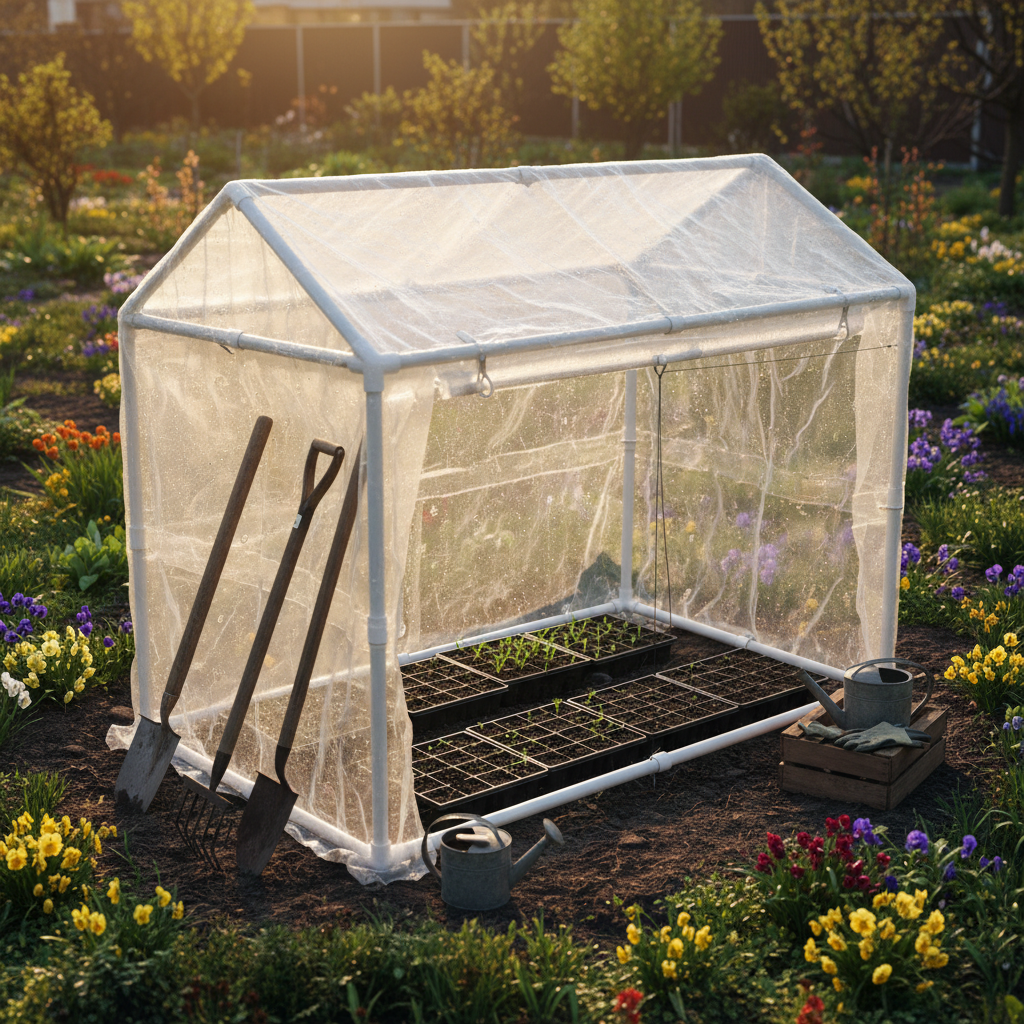
This is the classic budget greenhouse. It’s simple, effective, and can be built by one person in 3–4 hours.
Materials List
| Material | Quantity | Cost |
|---|---|---|
| 3/4″ PVC pipe (10 ft lengths) | 6 | $18–$24 |
| 6-mil greenhouse plastic (10×25 ft) | 1 roll | $15–$25 |
| 2×4 lumber (8 ft lengths) for base | 4 | $12–$20 |
| Rebar stakes (2 ft) | 12 | $8–$12 |
| PVC snap clamps | 12 | $6–$10 |
| Screws, zip ties | Assorted | $5 |
| Total | $64–$96 |
Build Steps
- Build the base frame. Screw four 2×4s into a rectangle (8×6 ft is ideal). Level the ground first.
- Pound in rebar stakes. Drive 2-ft rebar pieces 12 inches into the ground along both long sides, spaced 2 ft apart, just outside the base frame.
- Bend PVC hoops. Slide each 10-ft PVC pipe over opposing rebar stakes — the pipe naturally forms an arch about 5 ft high at center.
- Add a ridge pole. Run one PVC pipe along the top of the hoops and zip-tie at each junction for stability.
- Cover with plastic. Drape the 6-mil greenhouse plastic over the frame. Secure with snap clamps along the base. Leave one end open or install a makeshift door with extra plastic and spring clamps.
- Anchor the plastic. Bury the bottom edges under soil or weigh down with sandbags to prevent wind from lifting it.
Lifespan: The PVC frame lasts 5–10 years. Plastic sheeting needs replacing every 1–2 seasons ($15–$25).
Option 2: Cattle Panel Greenhouse ($150–$300)
Stronger, more wind-resistant, and has a beautiful arched shape. This is the favorite of serious homesteaders.
Materials List
| Material | Quantity | Cost |
|---|---|---|
| 16-ft cattle panels (52″ tall) | 3–4 | $75–$100 |
| 2×6 lumber (8 ft) for base | 4 | $20–$30 |
| 6-mil greenhouse plastic (12×25 ft) | 1 | $20–$30 |
| T-posts or rebar for anchoring | 8 | $16–$24 |
| Fence staples, zip ties, screws | Assorted | $10 |
| Total | $141–$194 |
Build Steps
- Build a rectangular base from 2×6 lumber (8×8 ft or 8×12 ft).
- Bend cattle panels into arches. Attach the bottom of each panel to opposite sides of the base frame using fence staples or U-bolts. The 16-ft panels bent to an 8-ft span create a ~6 ft tall arch.
- Overlap panels. Wire adjacent panels together with zip ties or hog rings for stability.
- Cover with plastic and secure with snap clamps or lath strips screwed over the plastic along the base.
- Build end walls. Frame with 2×4s, add a door on one end and a vent on the other.
Lifespan: The cattle panel frame is nearly indestructible — it lasts 15–20 years. They handle snow loads and high winds far better than PVC.
Option 3: Polycarbonate Kit Greenhouse ($500+)
If you want something more permanent and polished, prefab polycarbonate kits are the way to go.
- Pros: Better insulation (twin-wall polycarbonate), longer lifespan (10–20 years), looks professional, better heat retention
- Cons: Higher cost ($500–$2,000+), requires a level foundation, more complex assembly
- Best for: Year-round growing, cold climates (Zone 3–5), overwintering plants
Popular budget kits include the Palram Mythos (6×8, ~$500) and Palram Harmony (6×10, ~$700). Assembly takes a full weekend with two people.
Greenhouse Comparison: Which Build is Right for You?
| Feature | PVC Hoop House | Cattle Panel | Polycarbonate Kit |
|---|---|---|---|
| Cost | $50–$100 | $150–$300 | $500–$2,000 |
| Build time | 3–4 hours | 4–6 hours | 1–2 days |
| Wind resistance | Fair | Good | Excellent |
| Snow load | Poor | Good | Excellent |
| Insulation | Minimal | Minimal | Good |
| Lifespan | 5–10 years | 15–20 years | 10–20 years |
| Best for | Season extension | All-purpose | Year-round growing |
From our homestead: If I had to choose one: the cattle panel greenhouse. It’s the sweet spot between budget and durability. Ours survived a 60 mph windstorm that flattened the neighbor’s pop-up canopy. Five years later, I’ve only replaced the plastic once. Best $180 I’ve ever spent.
Greenhouse Tips for Beginners
Ventilation Is Critical
A greenhouse can hit 120°F on a sunny spring day. You must have ventilation. At minimum, prop open the door and roll up the sides on warm days. Ideally, install a vent at the top of one end wall — hot air rises and exits naturally.
Use Thermal Mass
Fill black 5-gallon buckets or milk jugs with water and line the north wall. They absorb heat during the day and radiate it at night, moderating temperature swings by 5–10°F. This is free insulation.
Don’t Overwater
Greenhouses trap humidity. Plants need less water than in the open garden. Overwatering in a greenhouse leads to damping off (a fungal disease that kills seedlings). Water in the morning and let the surface dry by afternoon.
Orient It Right
Run the long axis east-to-west to maximize south-facing sun exposure. Place the door on the east or south end. Avoid spots shaded by trees or buildings, especially in winter when the sun is low.
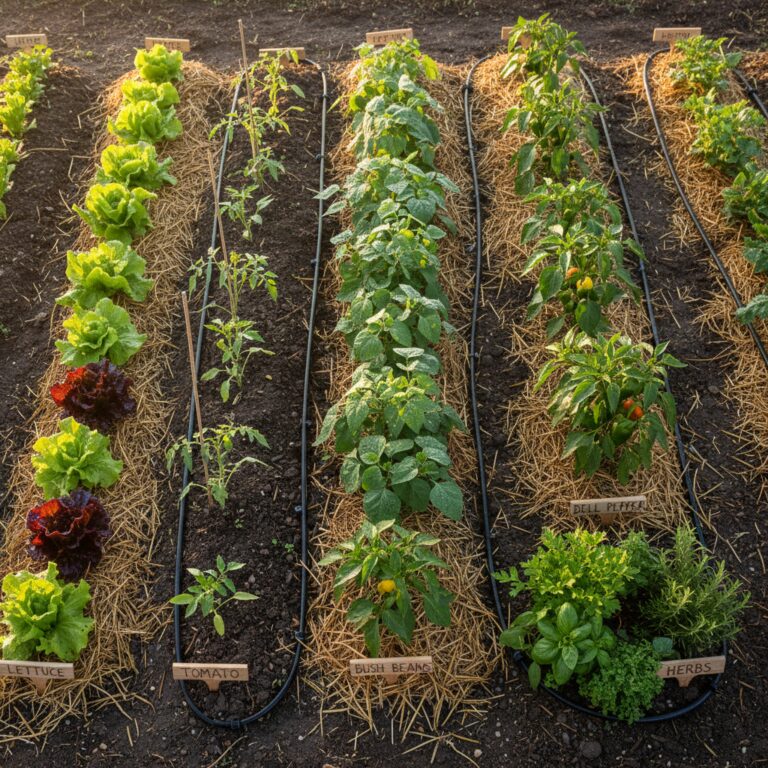
What to Grow in Your Greenhouse (Month by Month)
| Month | What to Grow |
|---|---|
| January–February | Start cool-season seeds (lettuce, broccoli, cabbage). Grow microgreens and sprouts. |
| March | Start tomatoes, peppers, herbs from seed. Direct-sow lettuce in greenhouse beds. |
| April–May | Harden off seedlings for transplant. Start warm-season succession plantings. |
| June–August | Grow heat-loving crops (tomatoes, peppers, cucumbers) if you have ventilation. Start fall seedlings in August. |
| September–October | Extend harvest of tomatoes and peppers. Plant cool-season greens for fall/winter. |
| November–December | Harvest cold-hardy greens (spinach, kale, mâche). Overwinter herbs and tender perennials. |
Frequently Asked Questions
Can you really build a greenhouse for under $100?
Yes. A PVC hoop house using 3/4″ PVC pipe, 6-mil greenhouse plastic, and a lumber base frame can be built for $50–$100 depending on size (6×8 or 8×12). It won’t have insulation like a polycarbonate kit, but it effectively extends your growing season by 4–8 weeks on each end.
What’s the cheapest greenhouse option?
A PVC hoop house is the most affordable at $50–$100. If even that’s too much, a cold frame can be built for $20–$40 from an old window and some lumber — it’s essentially a mini greenhouse for seed starting and greens.
Do I need a permit to build a greenhouse?
It depends on your local codes. Most jurisdictions don’t require permits for temporary structures (hoop houses) or small structures under 100–120 sq ft. Permanent greenhouses with foundations may need a permit. Check with your local building department before starting a larger build.
How warm does a greenhouse stay in winter?
An unheated single-layer plastic greenhouse stays about 10–20°F warmer than outside air on sunny days, but drops close to outdoor temps at night. Thermal mass (water jugs), double-layer plastic, or a small heater can improve this. Cold-hardy greens (spinach, kale, lettuce) survive freezing temps inside an unheated greenhouse.
PVC or cattle panel — which is better?
Cattle panel is stronger, handles wind and snow better, and lasts 15–20 years vs. 5–10 for PVC. But PVC costs half as much and goes up faster. If you’re in a windy area or get heavy snow, cattle panels are worth the extra cost. For mild climates, PVC works great.