Growing a Natural Dye Garden: Plants, Techniques, and Color Guide
- You can grow a complete dye garden in a 4×4 ft raised bed — marigolds, indigo, coreopsis, and weld produce a full color palette
- Kitchen scraps you’re already throwing away — onion skins, avocado pits, and black walnut hulls — make beautiful dyes
- Natural dyes work best on natural fibers: cotton, linen, wool, and silk
- Most plant dyes need a mordant (alum is safest) to bind color permanently to fabric
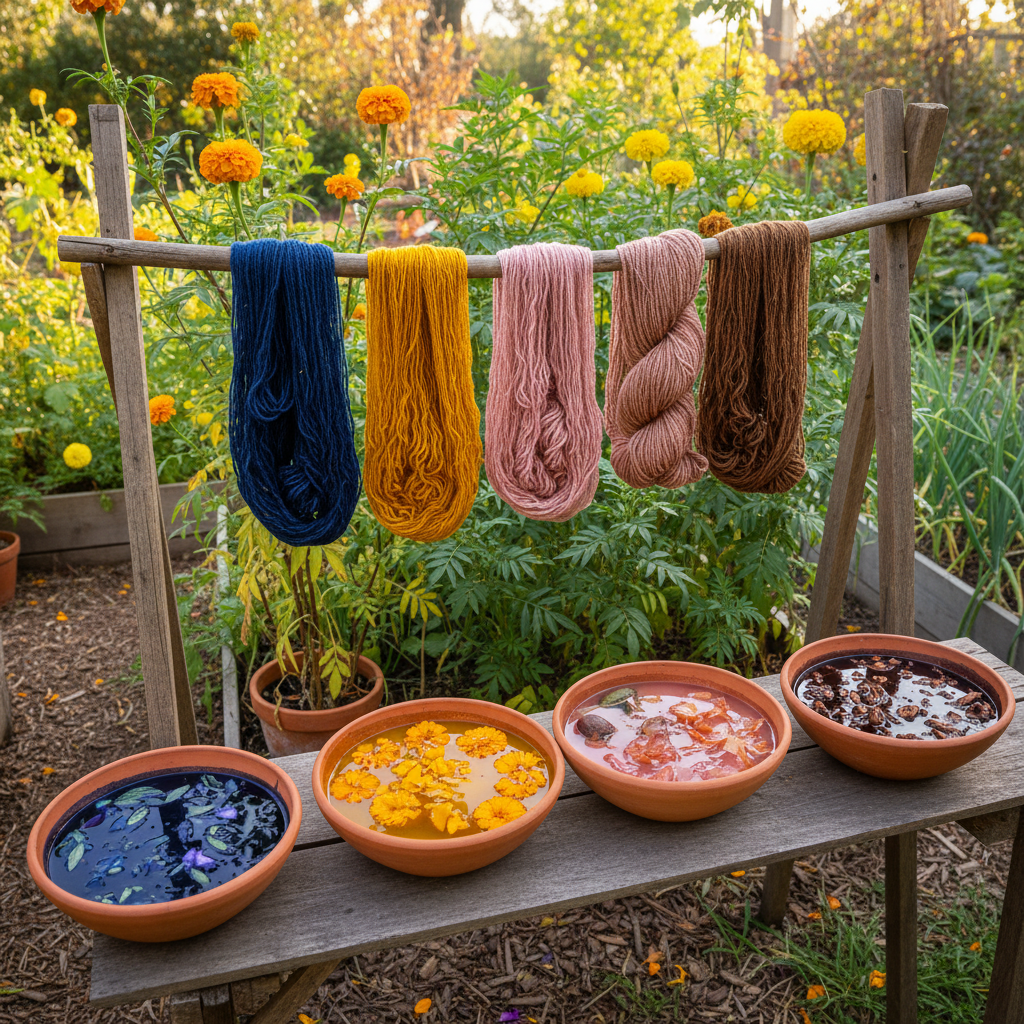
- One harvest of marigold flowers dyes enough fabric for several projects — and the plants keep blooming all summer
Long before synthetic dyes existed, every color in every piece of clothing came from a plant, mineral, or insect. Marigolds for gold. Indigo for blue. Walnut hulls for brown. These same plants grow easily in a backyard garden — and the colors they produce are richer, more nuanced, and more beautiful than anything from a bottle.
Natural dyeing is where gardening meets fiber arts, and it’s one of the most satisfying homestead skills you can learn. You grow the plants, harvest the dye material, and transform plain white fabric or yarn into something with real character. This guide covers everything from which plants to grow to how to get lasting, vibrant color.
The Best Dye Plants for Beginners
| Plant | Color | Part Used | Difficulty | Zones |
|---|---|---|---|---|
| Marigold (Tagetes) | Golden yellow | Flower heads | Very Easy | Annual, all zones |
| Japanese Indigo | Blue | Leaves | Easy | Annual, all zones |
| Coreopsis | Orange to rust | Flower heads | Very Easy | 4–9 (perennial) |
| Weld (Reseda luteola) | Bright yellow | Whole plant | Easy | Biennial, 4–8 |
| Madder (Rubia tinctorum) | Red to coral | Roots | Moderate | 5–9 (perennial) |
| Black Hollyhock | Purple to gray | Flower petals | Easy | 3–8 |
| Chamomile | Soft yellow | Flower heads | Very Easy | 3–9 |
| St. John’s Wort | Gold to olive | Flowers + stems | Easy | 3–8 |
From our homestead: Start with marigolds. I planted a single row in my cottage garden, deadheaded into a bucket all summer, and by fall had enough dried flowers to dye six cotton tea towels and a wool scarf in the most gorgeous marigold gold. The whole process felt like alchemy.
Free Dyes from Kitchen Scraps
Before you plant a single seed, look in your kitchen. These common scraps produce beautiful dyes:
| Material | Color on Cotton | Color on Wool | Notes |
|---|---|---|---|
| Yellow onion skins | Deep orange | Rich gold | Save skins in a bag for a month, then dye |
| Red onion skins | Olive green | Rust brown | Surprisingly green on cotton |
| Avocado pits + skins | Dusty pink | Soft rose | Save 6–8 pits; the pink is gorgeous |
| Black walnut hulls | Deep brown | Rich brown | No mordant needed — very lightfast |
| Turmeric powder | Bright yellow | Vivid gold | Instant color but fades in sun |
| Black tea / coffee | Tan to brown | Warm beige | Great for vintage/aged look |
The Dyeing Process: Step by Step
Step 1: Prepare Your Fabric (Scouring)
Wash your fabric or yarn in hot water with a drop of dish soap. This removes oils and sizing so the dye can penetrate evenly. Rinse well. Use only natural fibers — cotton, linen, wool, silk, or hemp. Polyester won’t take natural dyes.
Step 2: Mordant (Fix the Color)
A mordant is a mineral salt that helps dye bond permanently to fiber. Without it, most plant dyes wash out quickly.
- Alum (potassium aluminum sulfate) — safest and most common. Use 10–15% of fabric weight dissolved in hot water. Soak fabric for 1 hour.
- Iron (ferrous sulfate) — darkens and “saddens” colors (gold becomes olive, pink becomes gray). Use sparingly (2–5%).
- Some dyes don’t need mordant: black walnut hulls, turmeric, and tea bind on their own.
Step 3: Prepare the Dye Bath
- Place plant material in a large stainless steel or enamel pot (not aluminum or cast iron — they change colors)
- Cover with water. Use roughly equal volume of plant material to water
- Simmer (not boil) for 1–2 hours until the color is rich
- Strain out the plant material. You now have a dye bath
Step 4: Dye Your Fabric
- Add wet, mordanted fabric to the warm dye bath
- Simmer gently for 1–2 hours, stirring occasionally for even color
- For deeper color, leave fabric in the cooling dye bath overnight
- Remove, rinse in cool water until water runs mostly clear
- Hang to dry out of direct sunlight
Step 5: Care for Dyed Items
Wash naturally dyed items in cold water with gentle soap. Avoid bleach and direct prolonged sunlight (which fades all dyes, natural and synthetic). Properly mordanted natural dyes can last years with gentle care.
Planning a Dye Garden
You can grow a complete dye palette in a small space. Here’s a 4×4 ft raised bed plan:
| Position | Plant | Color |
|---|---|---|
| Back row (tallest) | Black hollyhock (2 plants) | Purple/gray |
| Middle row | Japanese indigo (3–4 plants) | Blue |
| Middle row | Coreopsis (3 plants) | Orange/rust |
| Front row | Marigolds (6–8 plants) | Gold/yellow |
| Front row | Chamomile (3–4 plants) | Soft yellow |
This gives you blue, gold, orange, purple, and soft yellow — plus you can mix dye baths for greens (blue + yellow) and earth tones. Combine with kitchen scrap dyes (avocado pink, onion orange, walnut brown) for a complete rainbow.
Project Ideas for Your First Natural Dyes
- Tea towels — dye a set of white cotton towels in different colors for the kitchen
- Napkins — naturally dyed linen napkins are beautiful and make great gifts
- Yarn for knitting — dye undyed wool yarn for scarves, hats, or blankets
- Tote bags — dip-dye canvas tote bags in indigo for an ombré effect
- Baby clothes — natural dyes are gentle and chemical-free, perfect for infant garments
- Table runner — a naturally dyed linen table runner is a stunning homestead accent
Frequently Asked Questions
Do natural dyes fade?
Some do, some don’t. Properly mordanted dyes from marigold, indigo, madder, and walnut are quite lightfast — they last years with gentle care. Turmeric and berry-based dyes fade faster. Using alum mordant and washing in cold water significantly extends the life of natural dyes.
What’s the easiest natural dye to start with?
Yellow onion skins are the easiest — you’re already throwing them away, they require no special preparation, and they produce a rich, reliable gold/orange color on both cotton and wool. For a garden-grown dye, marigolds are the easiest: plant them, deadhead all summer, and you’ll have buckets of dye material by fall.
Can I dye synthetic fabrics naturally?
No — polyester, nylon, and acrylic don’t bond with plant dyes. Natural dyes work on natural fibers only: cotton, linen, hemp, wool, silk, bamboo, and rayon (which is plant-derived). Always check your fabric content before starting a dye project.
Is natural dyeing safe?
Yes, when using safe mordants like alum (potassium aluminum sulfate). Alum is the same compound used in pickling and is food-safe in small amounts. Avoid chrome and tin mordants, which are toxic. Always use dedicated dye pots (not your cooking pots) and work in a ventilated area.
How much plant material do I need?
A general rule: use equal weight of plant material to fabric. So to dye 100 grams of fabric, use 100 grams of fresh marigold flowers (or about 50 grams dried). Some plants are stronger dyers — black walnut hulls and indigo need less material, while chamomile needs more. Start with a 1:1 ratio and adjust.