Raising Pigs on a Small Homestead: Breeds, Budget, and Butchering Timeline
- Kunekune and American Guinea Hog are the best pig breeds for small homesteads — they thrive on pasture with minimal grain
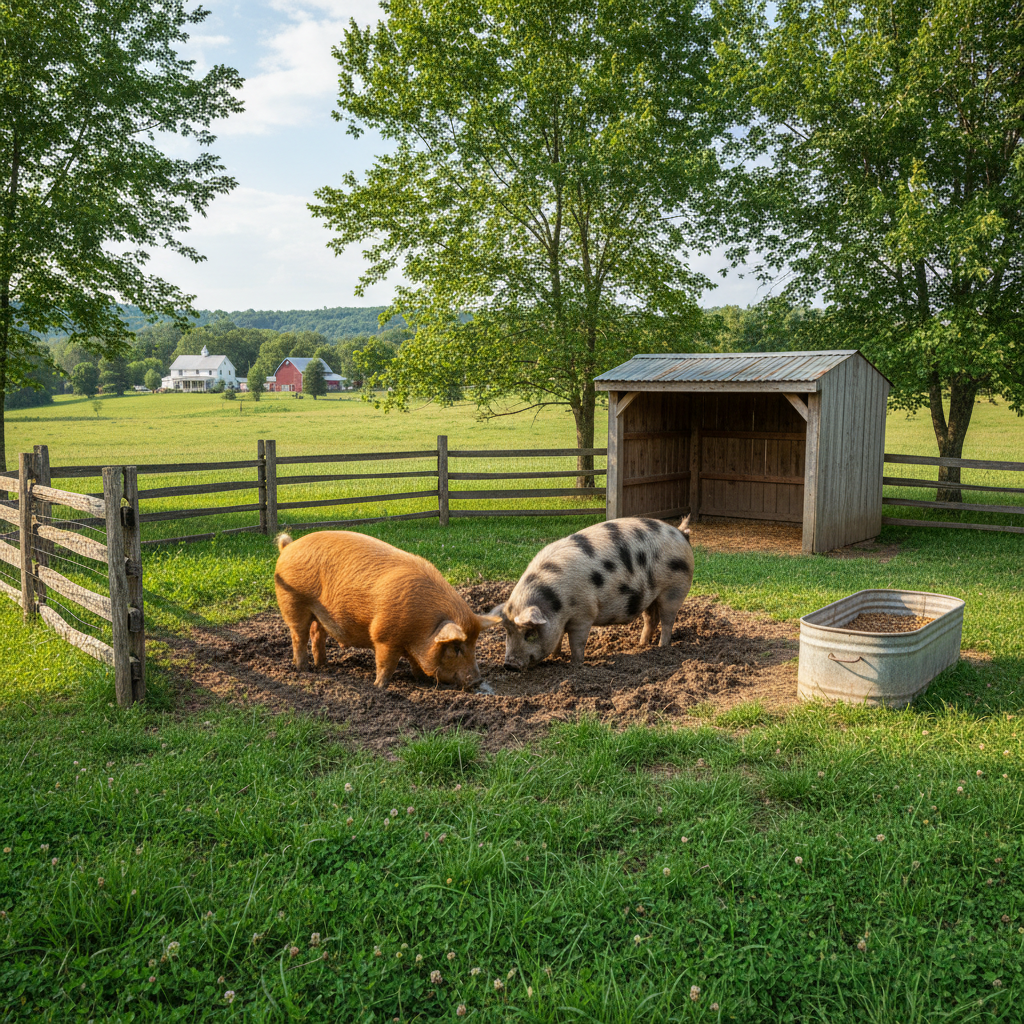
- Two pigs need about 1/4 acre of pasture and a simple three-sided shelter
- Realistic budget: $600–$1,200 for two feeder pigs, fencing, shelter, and 6 months of feed
- A pig raised on your homestead yields 100–200 lbs of pork — enough to fill a chest freezer
- Pigs are the ultimate homestead recyclers — they eat garden waste, whey from cheese making, and kitchen scraps
Pigs are the fastest path from “I have a homestead” to “my freezer is full.” A pair of feeder pigs raised spring through fall produces 200–400 lbs of pork — enough to feed a family of four for a year. And unlike cattle, pigs thrive on small acreage.
But raising pigs is different from chickens or goats. They’re strong, they root, and they need sturdy fencing. This guide gives you the honest numbers so you know exactly what you’re getting into.
Best Pig Breeds for Small Homesteads
| Breed | Adult Weight | Temperament | Foraging | Best For |
|---|---|---|---|---|
| Kunekune | 100–250 lbs | Very friendly | Excellent grazer | Small lots, families |
| American Guinea Hog | 150–300 lbs | Docile | Excellent forager | Small farms, lard |
| Idaho Pasture Pig | 250–350 lbs | Calm | Good grazer | Pasture-raised pork |
| Berkshire | 400–600 lbs | Gentle | Good | Premium meat quality |
| Large Black | 400–700 lbs | Very docile | Excellent | Heritage breed, bacon |
For small acreage: Kunekune and American Guinea Hog are the clear winners. They’re smaller (easier to handle), they graze like sheep (less rooting damage), and they’re calm enough for first-timers. A pair of Kunekunes does well on 1/4 acre.
From our homestead: We raised two Berkshire feeder pigs our second year on the homestead. They ate our garden waste, whey from cheese making, and surplus zucchini by the wheelbarrow load. In 6 months, we had a freezer full of the best pork we’d ever tasted. The bacon alone was worth it.
The Honest Year-1 Budget
| Expense | Budget | Mid-Range |
|---|---|---|
| 2 feeder pigs (8 weeks old) | $75–$150 each | $150–$300 each |
| Fencing (electric or hog panel, 1/4 acre) | $150–$300 | $300–$500 |
| Shelter (3-sided, DIY) | $50–$150 | $150–$300 |
| Feed (6 months, 2 pigs) | $300–$500 | $400–$600 |
| Waterer + feeder | $30–$60 | $50–$100 |
| Processing (butcher) | $200–$350 | $250–$400 |
| Total | $600–$1,200 | $1,100–$2,200 |
Cost per pound of pork: At 200 lbs of pork from a $600–$1,200 investment, you’re paying $3–$6/lb for heritage pastured pork that retails for $8–$15/lb. That’s a significant savings, and the quality is incomparable.
Housing and Fencing
Fencing (The Critical Part)
Pigs are strong and smart. Your fencing options:
- Electric fence (recommended): Two strands of electric wire — one at nose height (8″), one at 18″. Pigs learn fast. A solar-powered fence charger ($80–$150) works great. Total: $150–$300 for 1/4 acre.
- Hog panels: 34″ tall welded wire panels. More expensive but bombproof. T-post every 4 feet. Total: $300–$600.
- Never use: Chicken wire, field fence without electric, or anything a pig can push through.
Shelter
Pigs need shade in summer and wind protection in winter. A three-sided shed (8×6 ft for 2 pigs) with a sloped roof is plenty. Deep straw bedding in cold months. Pigs are actually clean animals — they designate one corner of their pen as a bathroom and keep their sleeping area tidy.
Feeding
Pigs are omnivores and the ultimate homestead recyclers:
- Base diet: 16% protein hog feed or grower ration (2–3% of body weight daily)
- Garden surplus: Zucchini, pumpkins, windfall apples, bolted lettuce, overripe tomatoes
- Kitchen scraps: Fruit and vegetable peels, stale bread, leftover grains
- Dairy: Whey from cheese making, expired milk, excess eggs
- Pasture: Kunekune and Guinea Hogs get 50–80% of their diet from grazing
Never feed: Raw meat, spoiled food, or anything with mold. Avoid raw potatoes (solanine) and raw kidney beans (toxic).
The Timeline: From Piglet to Pork
| Month | What’s Happening |
|---|---|
| April | Buy 8-week-old feeder pigs (40–50 lbs). Set up pen, shelter, electric fence. |
| May–Aug | Feed daily, provide water and shade. Supplement with garden scraps. Enjoy their antics. |
| Sept–Oct | Pigs reach 200–300 lbs (standard breeds). Schedule butcher date. |
| Oct–Nov | Processing day. Receive 100–200 lbs of pork: chops, roasts, sausage, bacon, ham. |
Frequently Asked Questions
How much land do I need for pigs?
Two pigs need about 1/4 acre of pasture if rotationally grazed, or a pen of at least 400 sq ft (20×20). Small heritage breeds like Kunekune need less space than standard breeds. Always provide shade, a wallow (mud or water for cooling), and fresh water.
How much pork do you get from one pig?
A 250 lb live-weight pig yields approximately 140–180 lbs of hanging weight after slaughter, which translates to about 100–140 lbs of packaged meat (chops, roasts, ground pork, sausage, bacon, and ham). Two pigs can fill a chest freezer and feed a family of four for most of a year.
Do pigs smell bad?
Pigs themselves are clean animals. The smell comes from manure management. On pasture with enough space, smell is minimal. In a small pen, clean regularly and use deep straw bedding. Pigs designate a bathroom area away from where they sleep and eat — they’re easier to manage than you’d think.
Can I raise just one pig?
Pigs are social and do better in pairs — a lone pig can become stressed, noisy, and destructive. Always raise at least two. They keep each other company, compete at the feeder (which encourages eating), and are generally happier and easier to manage as a pair.
What’s the best pig breed for a beginner with small acreage?
Kunekune pigs are ideal for beginners on small lots. They’re smaller (100–250 lbs), calm and friendly, excellent grazers (less rooting than other breeds), and do well on pasture with minimal supplemental grain. American Guinea Hogs are another great small-acreage option with excellent foraging ability.