How to Start a Cut Flower Garden (Beginner’s Guide)
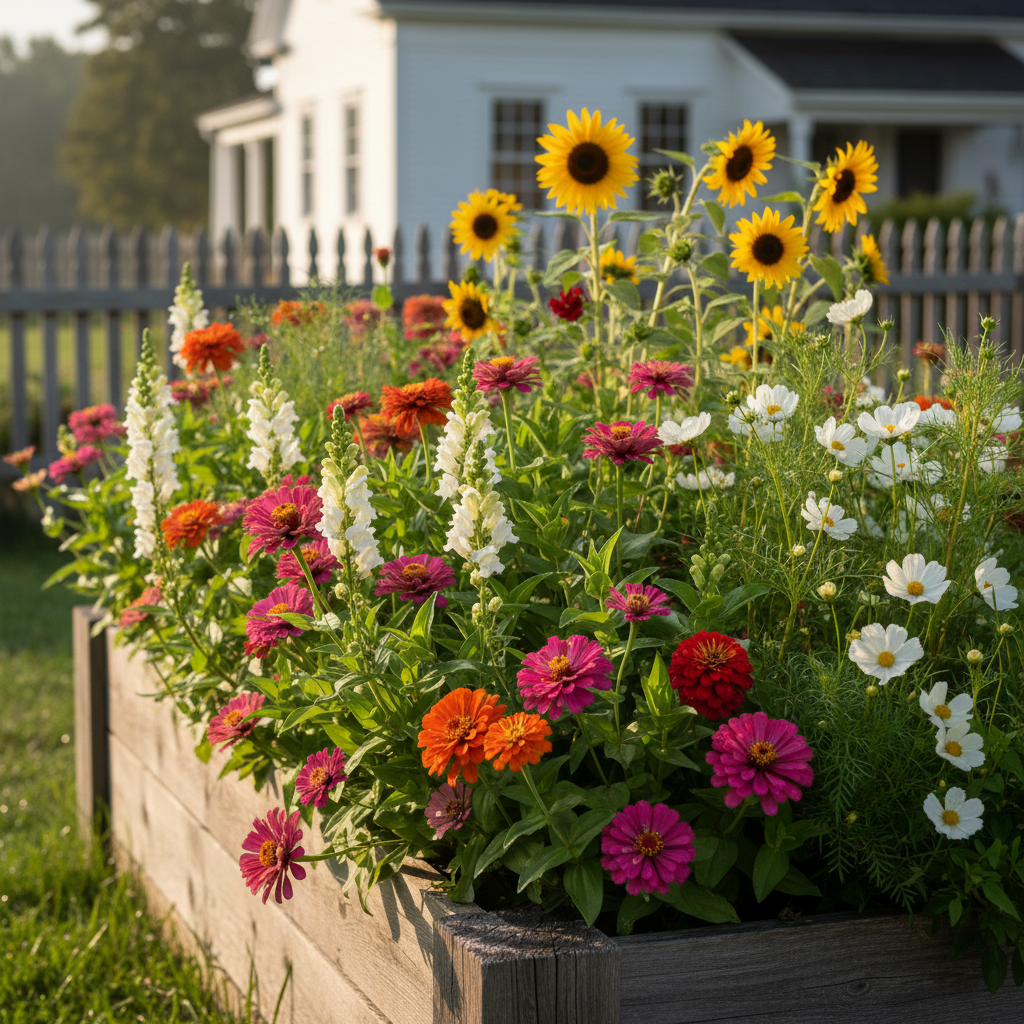
A small cut flower garden, even a single 4-by-8-foot bed, can produce a fresh bouquet every week from June through hard frost. The trick isn’t square footage or fancy varieties. It’s choosing flowers that bloom hard when you cut them, harvesting at the right stage, and keeping the bed productive instead of pretty.
I’ve been growing cut flowers in our Exeter, Rhode Island yard for six summers. We started with one bed of zinnias and cosmos because the kids wanted to take bouquets to their grandmother. We’re now up to three beds and a row of dahlias, and I still pull more flowers off the original 4-by-8 patch than I do off anything else. This guide is the playbook I wish someone had handed me in year one.
- Pick varieties marked "cut flower" on the seed packet, long stems and repeat-blooming habit are baked in (Penn State Extension).
- Zinnias are the highest-yield beginner crop: 7–10 day vase life and they bloom harder the more you cut (Mississippi State Extension).
- Harvest in the morning when stems are rehydrated, not during midday heat — Mississippi State Extension’s farmer-florist guide recommends harvesting “when temperatures are cool (early morning after dew has evaporated or evening).”
- You need 6–8 hours of direct sun, well-drained soil, and a habit of cutting flowers before you want to display them, not after.
How big should a beginner cut flower garden be?
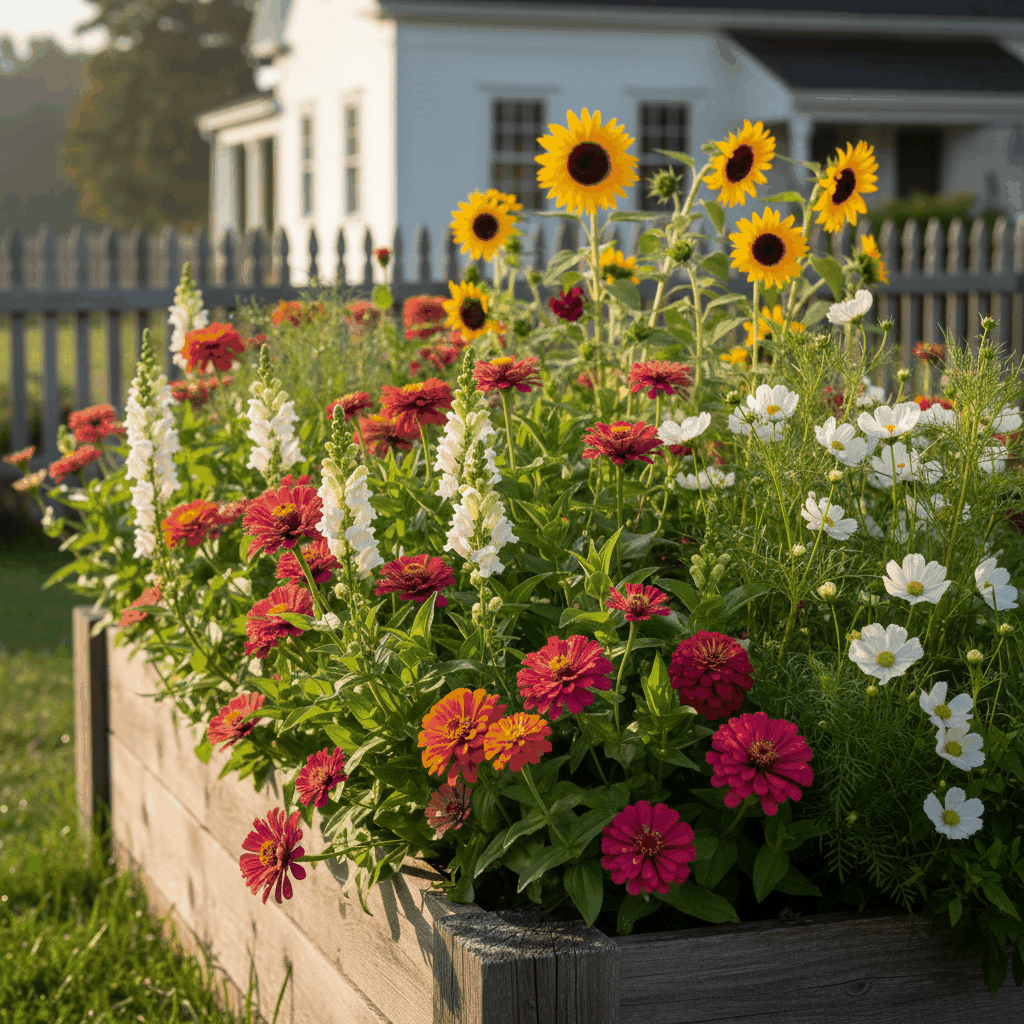
A 4-by-8-foot bed (32 square feet) gives you enough space to plant 30–40 zinnias, 8–10 sunflowers, and a row of cosmos, that’s a fresh bouquet every 3–5 days through summer. Penn State Extension recommends starting small and expanding only after one full season, because overcrowded plants invite powdery mildew and reduce yield ([Penn State Extension](https://extension.psu.edu/growing-cut-flowers-for-joy)). Most homesteaders overestimate how much bed they need and underestimate how much they’ll cut.
The bed needs to live somewhere with at least 6–8 hours of unfiltered sun, east-facing morning sun and afternoon shade isn’t enough. Cut flower production is a sun-driven energy game; partial shade cuts your stem count in half and produces shorter stems that flop in a vase. Pick your sunniest spot, even if it isn’t the prettiest spot.
Soil matters more than people think. Most cut flowers want well-drained loam with a pH between 6.0 and 7.0. If you’ve got clay (we do, in southern Rhode Island), build up rather than dig down, a 6–8 inch raised bed filled with compost-amended garden soil drains better than the surrounding ground and warms up two weeks earlier in spring.
For broader bed-design ideas that mix cut flowers with cottage-garden perennials, see our cottage garden design guide.
What flowers should you plant for the most cuts?
Five annuals carry a beginner cut flower garden: zinnias, cosmos, sunflowers, snapdragons, and celosia. The Association of Specialty Cut Flower Growers, the trade body for U.S. flower farmers, with more than 1,500 members across the U.S., Canada, and Europe, consistently lists these as foundation crops because they’re forgiving, high-yield, and produce stems long enough to use ([ASCFG](https://www.ascfg.org/)). Zinnias are the workhorse: cut one, get three.
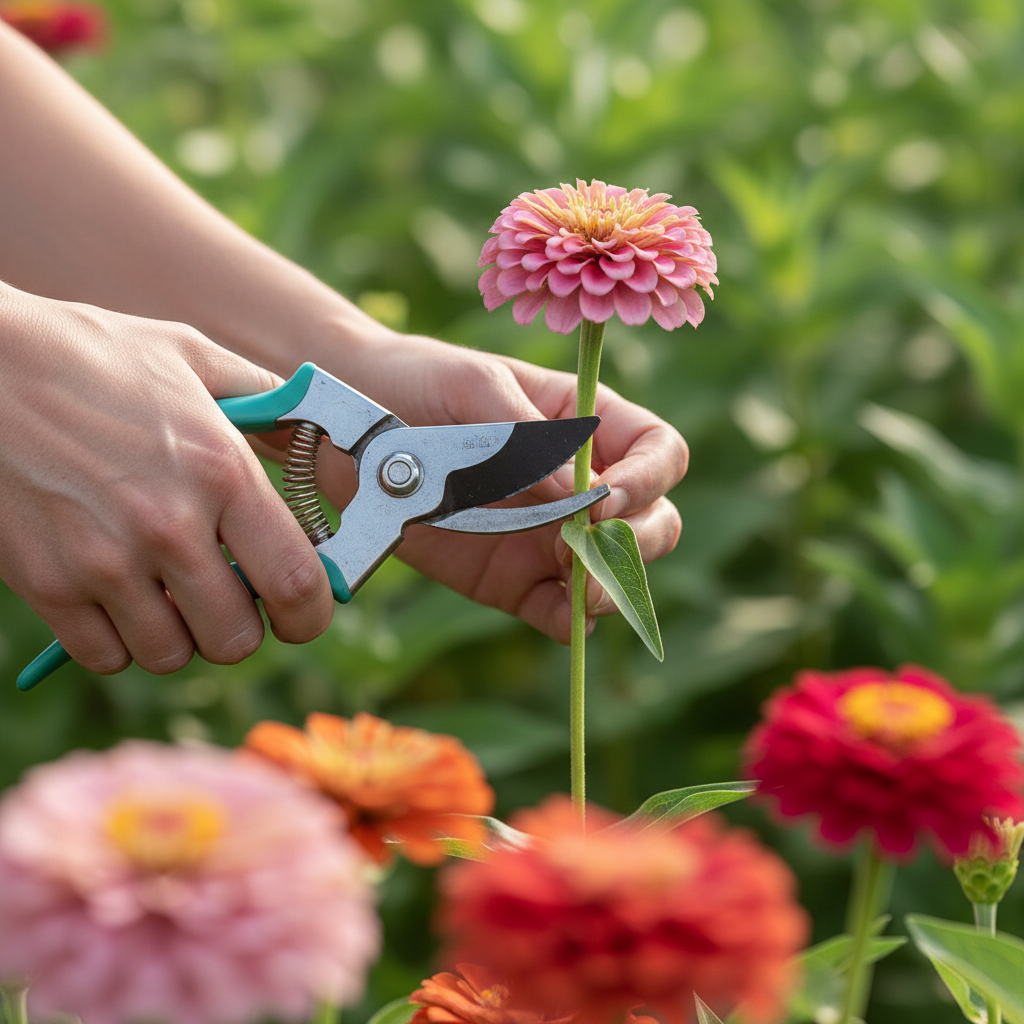
Zinnias, the foundation
Zinnias bloom 60–70 days from seed and keep producing until frost as long as you keep cutting. The “Benary’s Giant” series produces 4-inch blooms on 36-inch stems, exactly what you want for a vase. Plant after your last frost date (mid-May here in zone 6b/7a) and pinch the central stem when plants are 8–12 inches tall to force branching. That single pinch can double your stem count.
Cosmos, fast and forgiving
Cosmos germinate in days and bloom in about 65 days. They self-sow once established, which means year two requires zero work in that part of the bed. The “Sensation” mix gives you 4–5 foot tall plants with airy white, pink, and crimson blooms that work as filler in any arrangement.
Sunflowers, succession plant these
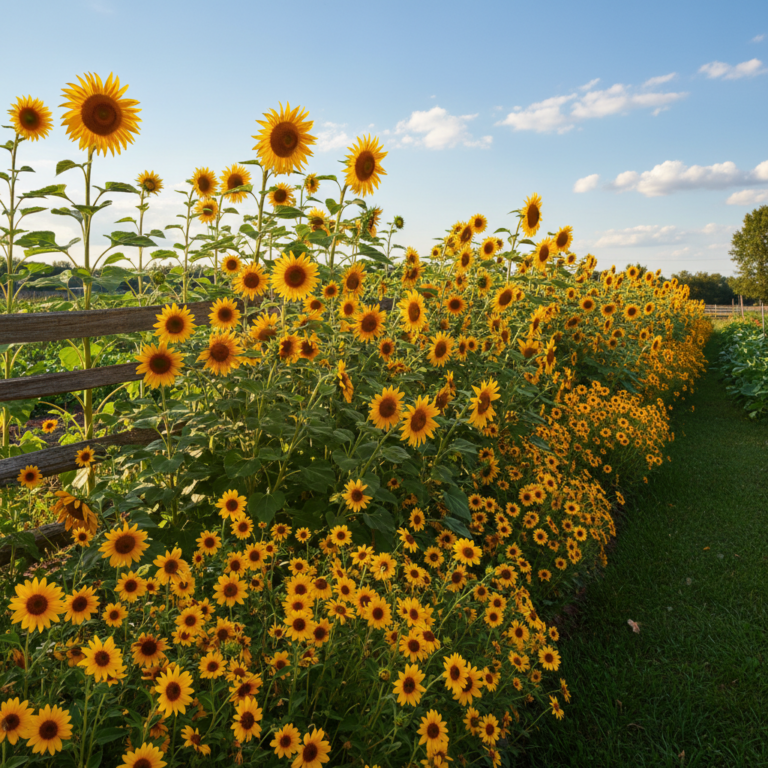
Single-stem branching varieties like “ProCut” and “Sunrich” are bred specifically for cut flower production, one bloom per stem, harvested all at once. Plant a new row every 7–10 days through July for continuous summer harvests. The double-row approach (two rows 6 inches apart, then a 24-inch path) is the highest-density planting that still lets you walk in to harvest. Most home gardeners plant one big batch and get one giant haul; succession planting trades that for steady weekly bouquets.
Snapdragons, the cool-weather workhorse
Snapdragons are technically tender perennials grown as annuals. They tolerate frost down to 28°F, which means in zones 6–7 you can plant transplants in mid-April and harvest from late May through July. The “Rocket” and “Madame Butterfly” series produce 30–36 inch spikes that look formal in arrangements and last 7–10 days in a vase.
Celosia, the season-extender
Celosia (both crested and plumosa types) blooms hardest in August heat when zinnias start to slow down. The “Sylphid” green plumosa is unusual enough that florists pay a premium for it, and it dries beautifully if you hang the stems upside down for two weeks, giving you arrangements through winter.
If you want some of these flowers to do double duty, several common cut flower varieties, calendula, nasturtium, bachelor’s buttons, are also edible flowers you can use in salads and garnishes.
When and how do you harvest cut flowers?
Cut in the morning between sunrise and 9 a.m., when stems are fully turgid from overnight rehydration. Mississippi State Extension’s farmer-florist guide for zinnias recommends harvesting “when temperatures are cool (early morning after dew has evaporated or evening)” — at midday, the stem is already losing water through transpiration faster than it can be replaced, which shortens vase life ([Mississippi State Extension](https://extension.msstate.edu/publications/zinnias-zinnia-elegans-for-the-farmer-florist)). Plunge stems into a clean bucket of cool water immediately, within 60 seconds is the goal, and bring the bucket inside before doing any stem trimming.
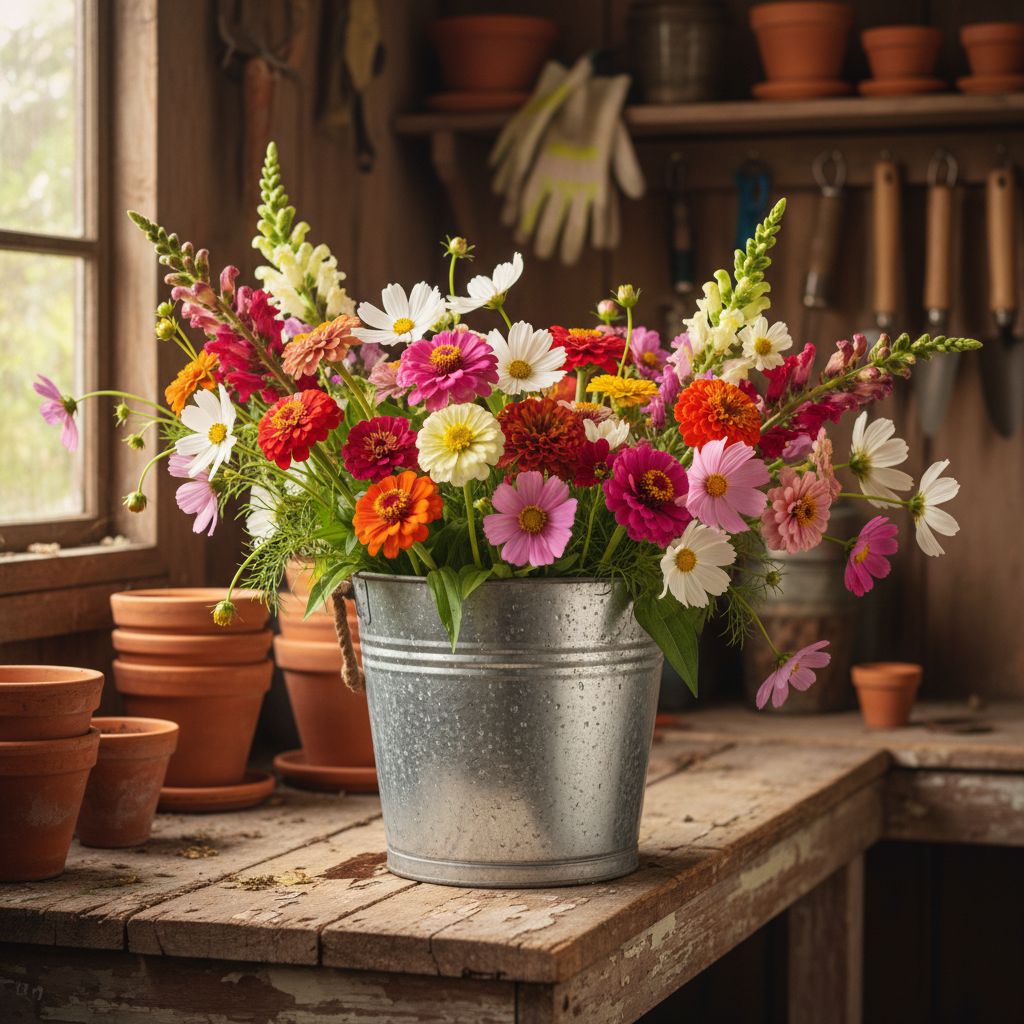
The wiggle test
Zinnias are notorious for going limp in the vase if cut too soon. Flower farmers use what’s commonly called the “wiggle test” (popularized by Floret Flowers and widely adopted in the cut-flower community): grab the stem 8 inches below the bloom and shake gently. If the stem stays stiff, the bloom is mature enough to hold up in a vase. If it flops, the bloom hasn’t fully developed and will go limp within hours of cutting. This one check is the difference between zinnias that drink in the vase and zinnias that wilt the day you cut them.
Cut deep
For repeat-blooming varieties (zinnias, cosmos, snapdragons), cut down to a leaf node where you can see two side shoots. Those shoots become your next two flowers. Cutting just below the bloom, what most people instinctively do, leaves a stub that won’t reflower and shortens the productive life of the plant. Our deadheading guide covers the cutting technique in more detail; the same principle applies to harvesting cut flowers.
How do you make cut flowers last in a vase?
A clean vase, fresh cool water, and a stem trim every two days will give zinnias and cosmos 7–10 days of vase life, the upper bound for those varieties per Mississippi State Extension’s postharvest research. Snapdragons last 7–10 days, sunflowers last 6–8, and celosia can last 14+ if you change the water regularly. Bacteria in the water is the single biggest killer of cut flowers; everything else is secondary.
What works
- Recut stems on a 45-degree angle right before placing in water. The angle exposes more vascular tissue and prevents the cut from sealing against the bottom of the vase.
- Strip leaves below the waterline. Submerged leaves rot within 48 hours and turn the water cloudy.
- Change the water every 2–3 days and rinse the vase. Skip the floral preservative if you do this, the powder is mostly sugar and bleach, both of which a clean vase replicates.
- Keep arrangements out of direct sun and away from ripening fruit (ethylene gas accelerates flower senescence).
What doesn’t
- Pennies, aspirin, vodka, sugar water. The folk remedies aren’t backed by peer-reviewed research and most underperform plain cool water with a stem trim.
- Adding hot water. The exception is for woody-stemmed flowers like lilacs, but zinnias and cosmos prefer cool to lukewarm.
Annual vs. perennial cut flowers, which should you start with?
Beginners almost always do better starting with annuals. Annuals bloom the first year, produce more stems per square foot, and let you reset the bed every season as you learn what works in your climate.
| Trait | Annuals (zinnias, cosmos, sunflowers) | Perennials (peonies, rudbeckia, echinacea) |
|---|---|---|
| Year-1 yield | High, full season bloom | Low, most don’t bloom year 1 |
| Stems per plant | 10–30+ over a season | 3–10 (single bloom window) |
| Vase life | 7–10 days typical | 5–14 days (variety-dependent) |
| Year-1 cost (seeds) | $15–30 for full bed | $60–150 for plants |
| Annual maintenance | Replant each spring | Divide every 3–4 years |
| Best use | Bouquet production | Garden structure + accent stems |
The smart move for years 2–3 is a hybrid: keep annuals as the workhorse for bouquets, then add perennials around the edges for foundation interest. A peony in year 4 is worth its weight in gold (literally, peony stems sell at $4–6 each at farmers’ markets), but you don’t want it to be your only source of flowers in year one.
Pros and cons of starting a cut flower garden
Pros
- Cost-per-bouquet collapses. A grocery-store bouquet runs $10–18 around here. Once your bed is producing, you’re cutting weekly bouquets at roughly the cost of seeds and water, under $1 each by midsummer.
- Pollinators show up. Zinnias, cosmos, and sunflowers are bee and butterfly magnets. Adding a cut flower bed measurably increased the bee traffic in our vegetable garden the first year. See our pollinator garden guide for the full overlap.
- Low skill ceiling, high skill floor. A beginner can produce real bouquets in year one. The depth (succession planting, color stories, varieties for designers) keeps it interesting for decades.
Cons
- It’s not low-maintenance. Zinnias and snapdragons need pinching, deadheading, and weekly cutting to stay productive. If you’re not actually going to cut the flowers, the bed will get leggy and disease-prone fast.
- Powdery mildew is a real risk. Crowded zinnias in a humid August will get hammered. Plant on 12-inch centers (not 6-inch) and pick mildew-resistant varieties — the “Profusion” and “Zahara” series (both Zinnia marylandica hybrids) are the strongest performers in humid climates per University of Illinois Extension. Queen Lime and other Z. elegans heirlooms have unique colors but offer no special mildew resistance.
- Vase rotation eats time. A productive bed produces more flowers than you can use. We give bouquets to neighbors and our kids’ teachers, but if you don’t have outlets for the surplus, you’ll either compost flowers or feel guilty about it.
Step-by-step plan: your first cut flower garden
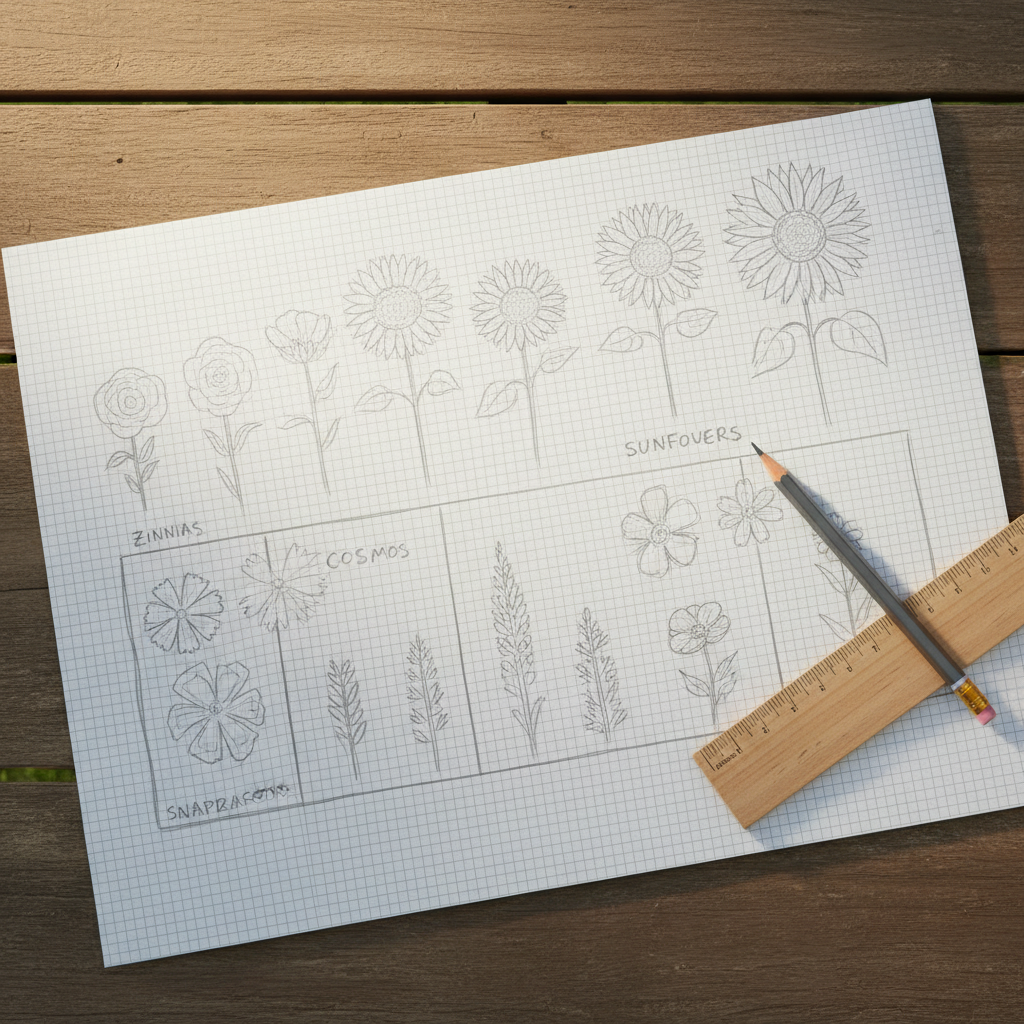
- Pick the spot, minimum 6–8 hours direct sun, decent drainage. Mark it now even if you’re planting in spring.
- Prep the bed, 4 to 6 weeks before last frost, top-dress with 2 inches of compost and either till in or sheet-mulch. Don’t bother with fertilizer until after you see germination.
- Order seeds in January, zinnias, cosmos, sunflowers, snapdragons, and celosia. Total cost should land around $20–30 for the full bed. Johnny’s Selected Seeds, Floret, and Eden Brothers all stock cut-flower-grade varieties.
- Start snapdragons indoors 8–10 weeks before last frost, they need a head start. Direct-sow everything else two weeks after last frost.
- Pinch zinnias and snapdragons when plants reach 8–12 inches tall. Cut the central stem just above a leaf node. This single step doubles your stem count.
- Succession-plant sunflowers every 7–10 days through July for continuous July–September harvests.
- Cut hard, cut weekly, even if you don’t have a use for the flowers. Letting blooms go to seed shuts down further production. Compost or give away the surplus.
- Save seeds in October, zinnias and cosmos seeds are easy to save and viable for 3–5 years. Year two costs you nothing in seeds.
If you’re growing herbs as filler for bouquets, basil, mint, dill, oregano, our windowsill herb guide covers the same plants for indoor winter use. Several work as cut flower foliage too.
Frequently asked questions
How long does it take a cut flower garden to start producing?
Most beginner annuals, zinnias, cosmos, snapdragons, bloom 60–70 days from seed, so a bed direct-sown in late May produces the first cuts by late July. Snapdragons started indoors 8 weeks earlier produce cuts by mid-June. Sunflowers bloom in 55–75 days depending on variety.
Can you grow a cut flower garden in containers?
Yes, single-stem cut flowers like sunflowers and snapdragons grow fine in 5-gallon containers, but you’ll get half the stem yield of in-ground plants. Zinnias and cosmos work in containers as long as you water daily in summer. The trade-off is fewer flowers and more daily upkeep.
Do cut flower gardens attract pests?
Cut flower beds attract aphids, spider mites, and Japanese beetles. The benefit: they also attract predator insects (ladybugs, parasitic wasps) that control vegetable garden pests. Most home cut flower gardens don’t need spraying, companion planting marigolds and dill provides enough natural pest control for backyard scale.
What’s the cheapest way to start a cut flower garden?
Direct-sown annual seeds. A full 4-by-8 bed of zinnias, cosmos, and sunflowers costs $15–25 in seeds and can be done with no special tools, a shovel, a hose, and a pair of bypass pruners. Skip transplants and skip perennials your first year.
How do you keep a cut flower bed productive late into fall?
Plant frost-tolerant varieties, celosia, snapdragons, calendula, and rudbeckia, and keep cutting through the first light frosts. Cover the bed with frost cloth (10°F protection) when temperatures dip into the upper 20s. In zone 6–7, this can extend the cutting season into mid-November.
Are cut flower gardens worth it for the time investment?
If you’ll actually cut and use the flowers, yes, the cost-per-bouquet drops below $1 by midsummer and you get pollinator support as a bonus. If you want a low-maintenance “set it and forget it” flower bed, plant a perennial border instead. Cut flower gardens reward weekly attention; that’s the whole productivity model.
Sources
- Penn State Extension. Great Cut Flowers from Your Home Garden
- Penn State Extension. Growing Cut Flowers for Joy
- Mississippi State University Extension. Zinnias for the Farmer Florist
- Association of Specialty Cut Flower Growers (ASCFG)
- Virginia Tech Extension. Field-Grown Specialty Cut Flowers
- ATTRA / NCAT. Specialty Cut Flower Production and Marketing