
Tomato Hornworm: How to Spot, Remove, and Stop the Worst Pest in Your Tomato Patch
Tomato Hornworm: How to Spot, Remove, and Stop the Worst Pest in Your Tomato Patch
A single tomato hornworm can defoliate an entire tomato plant in two or three days, usually before you ever notice the caterpillar doing it. These fat green caterpillars are the larvae of the fivespotted hawk moth, and pound for pound they cause more damage in the tomato patch than any other pest a home gardener will meet. The encouraging part is that you can beat them without a single synthetic chemical.
On our property in zone 7, hornworm pressure builds from late June through August, the same stretch when tomatoes are setting fruit fastest. After several seasons of losing leaves to them, I settled on a routine that mixes nighttime scouting, hand removal, a well-timed organic spray, and a little help from the chickens. It keeps the plants productive without harming the bees working the blossoms.
This guide walks through every step: identifying hornworms correctly, finding them when they hide, removing them, knowing which ones to leave alone, spraying Bt at the right moment, and tilling in fall so fewer moths return next year. If you want the full picture on healthy plants first, our guide on growing tomatoes like a pro pairs well with the pest control below, and the broader garden pest ID guide covers the other bugs you may run into.
What Does a Tomato Hornworm Look Like?
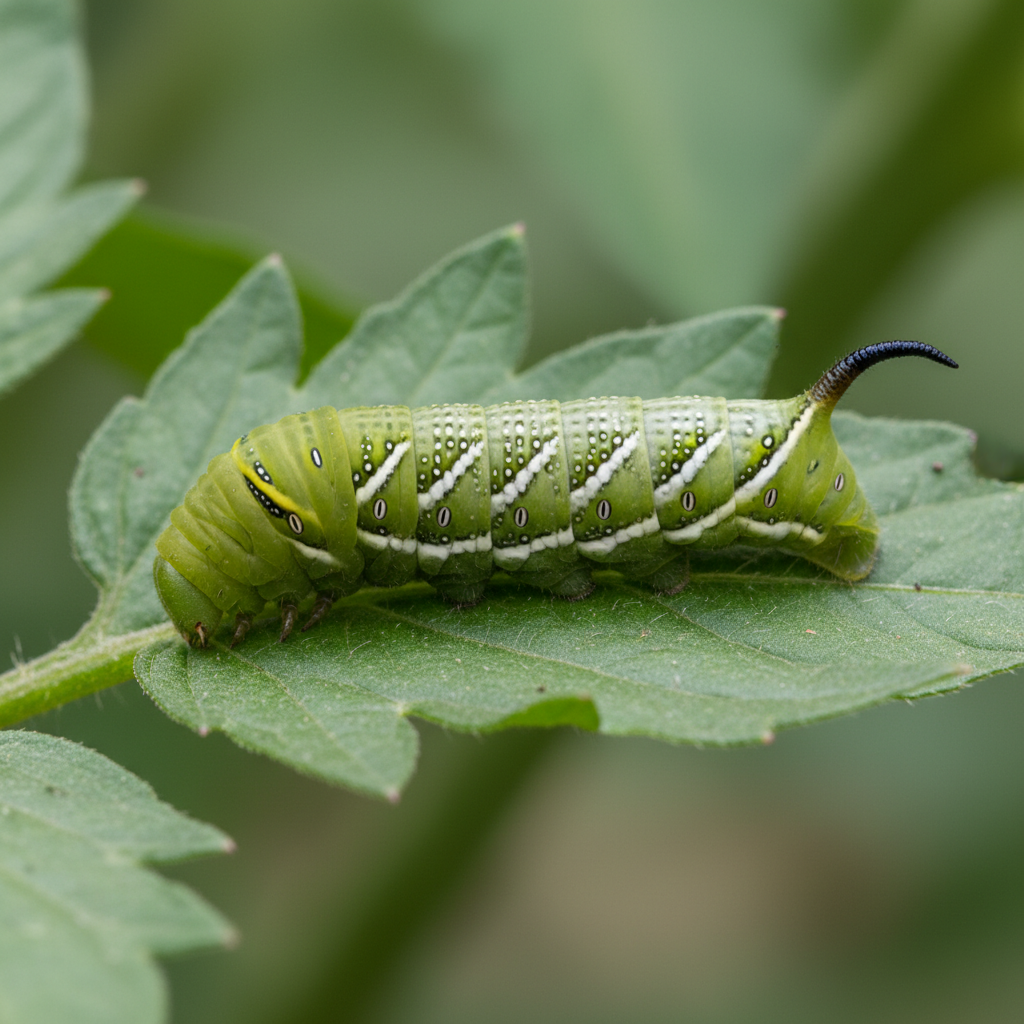
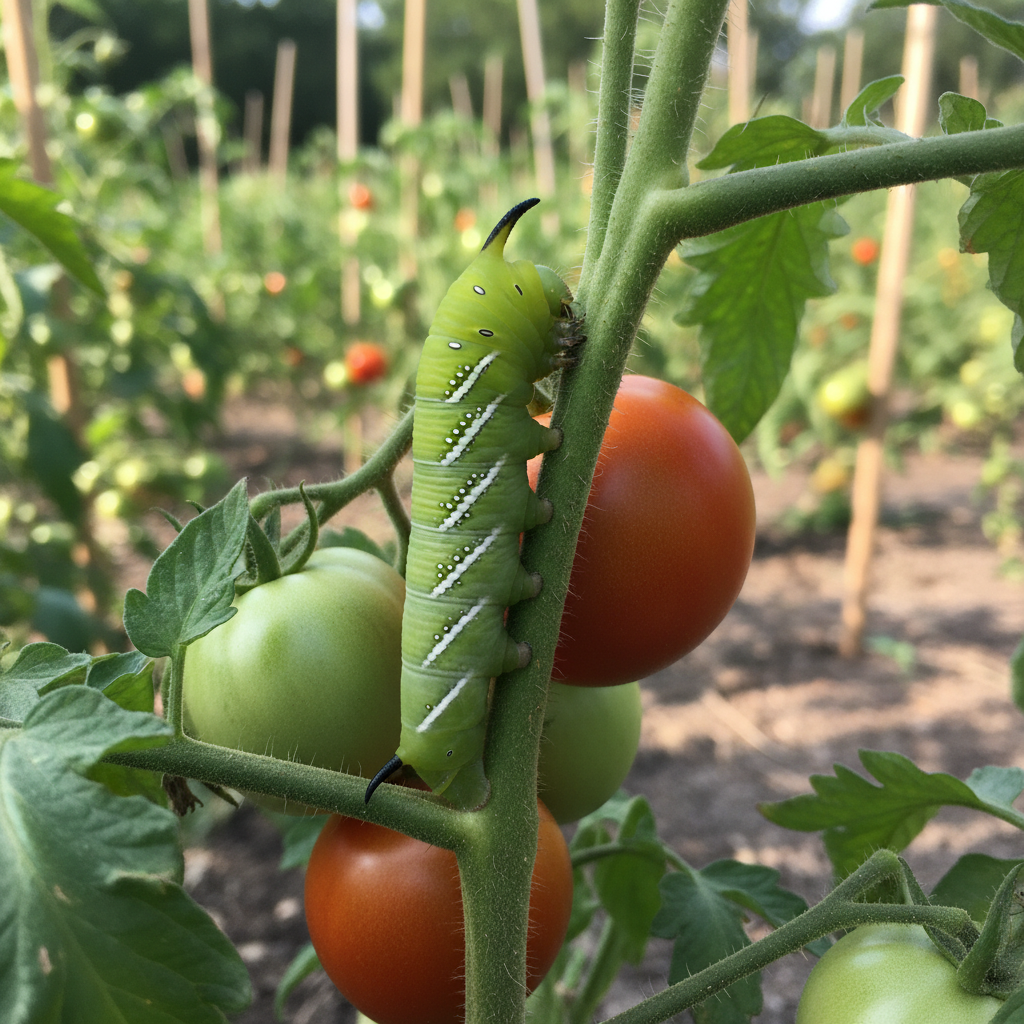
A tomato hornworm is a bright green caterpillar up to four inches long with eight white V-shaped marks along each side and a single black horn at the tail end. According to Utah State University Extension, the larvae are “about 90 mm in length with green bodies with eight white ‘v’-shaped marks along each side,” and “a black, pointed structure or ‘horn’, is located on the terminal abdominal segment.” That horn is harmless to you; it cannot sting or bite.
People often confuse the tomato hornworm with its close cousin, the tobacco hornworm (Manduca sexta). The quick tell is the side markings and the horn color. The tomato hornworm carries V-shaped or chevron marks and a dark, blue-black horn, while the tobacco hornworm shows straight white diagonal stripes and a red horn. Both feed on the same plants and both respond to the same controls, so getting the ID exactly right matters less for treatment than for satisfying your curiosity. The green camouflage is so effective that the caterpillar can sit inches from your hand and stay invisible against the foliage.
What Damage Do Tomato Hornworms Cause?
Hornworms chew leaves, stems, and fruit, and a heavy infestation can completely defoliate a tomato plant. They feed only on plants in the nightshade family, most often tomato but also eggplant, pepper, and potato. The first sign is usually not the caterpillar itself but its evidence: bare upper stems where lush foliage stood the day before, plus dark green or black pellets of frass (droppings) scattered on lower leaves and on the soil.
Because the damage moves from the top of the plant down, hornworms expose developing tomatoes to sunscald and leave chew marks on the fruit that invite rot. According to University of Wisconsin Extension horticulture, “there are two generations a year in most areas; larvae are usually most common in midsummer, but there may be a small population peak in late summer.” That midsummer peak is why a plant that looked perfect on Friday can be skeletonized by Monday. Daily inspection during July and August is the single habit that catches the problem while it is still small. Look for frass first, then trace the trail of droppings upward to the feeding caterpillar.
When Is Tomato Hornworm Season in Zones 6 and 7?
In zones 6 and 7, hornworm season runs from late June through August, with a second smaller wave possible in late summer. The pest overwinters as a pupa buried in the soil, and the adult moths emerge in late spring to early summer to lay pale green eggs on the undersides of tomato leaves. According to Utah State University Extension, “larvae feed for 3 to 4 weeks and then burrow 3-4 inches (8-10 cm) deep into the soil to pupate,” and “in the summer, adult moths will emerge after about 3 weeks and begin the cycle again.”
Understanding this timeline tells you exactly when to scout. The first generation hits while plants are flowering and setting fruit, and the second generation arrives just as the main harvest ramps up. Knowing that the pupae sit only a few inches down in the soil also sets up the most effective long-term tactic, which is fall tillage, covered later in this guide. Mark your calendar for nightly checks starting the third week of June, and keep them going until the first hard frost ends the season.
What You’ll Need to Scout and Remove Hornworms
You need very little gear to manage hornworms organically, and most of it is already in the shed. Gathering these few items before peak season means you can act the moment you spot frass instead of scrambling for supplies while the caterpillars keep eating.
- A UV (black light) flashlight in the 365 to 395 nanometer range. This is the single best tool for finding hornworms fast.
- Garden gloves and a bucket of soapy water for dropping picked caterpillars. The soap keeps them from climbing out.
- Bacillus thuringiensis (Bt) concentrate, the kurstaki strain, plus a clean pump or trigger sprayer.
- A garden hose with a spray nozzle to agitate hidden caterpillars into moving.
- Pruners for trimming any badly chewed stems after you clear the pest.
- A spading fork or tiller for fall soil work that destroys overwintering pupae.
If you keep a flock, add a small container for carrying hornworms to the run, because chickens turn this chore into a treat. Everything else is optional. You do not need pesticides beyond Bt for a home-scale tomato planting.
How Do You Find Hornworms Fast at Night?
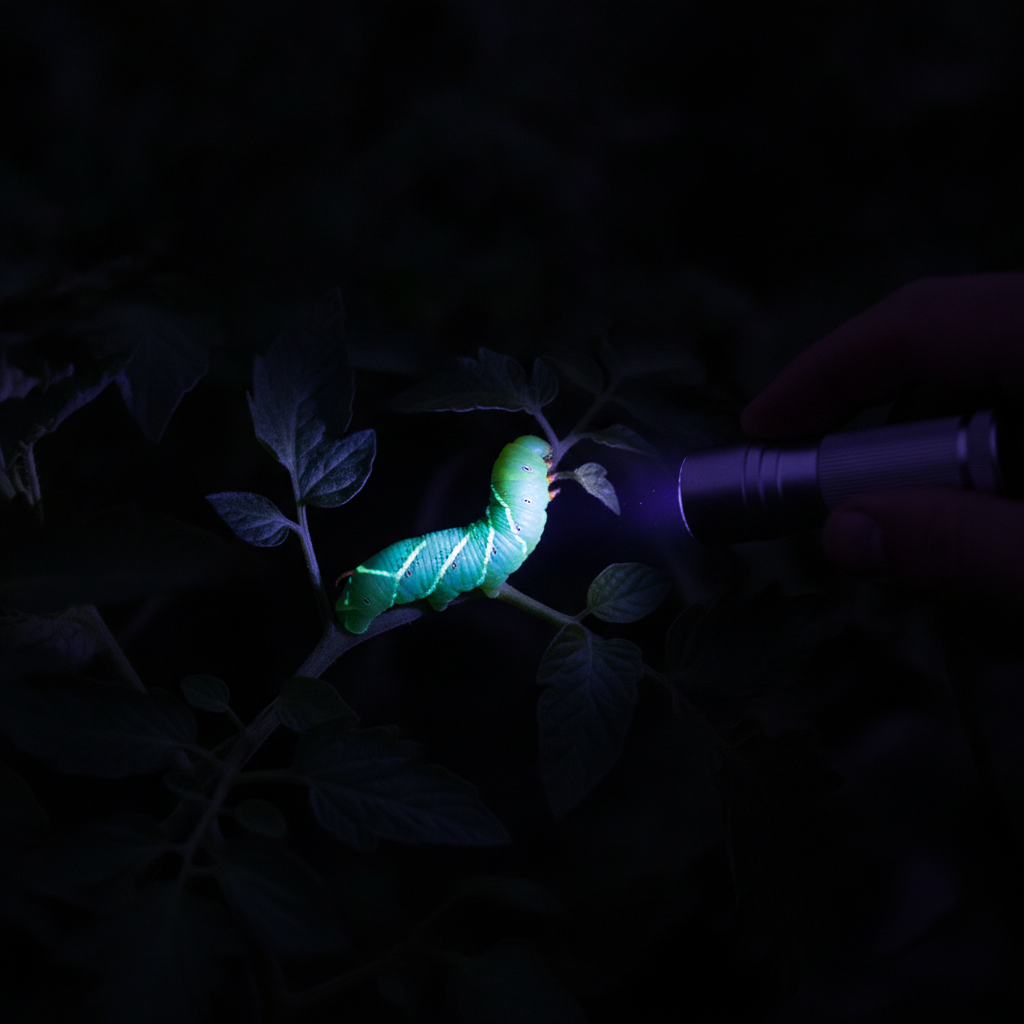
Shine a UV flashlight on your tomato plants after dark and hornworms light up like glow sticks against the foliage. The caterpillars fluoresce under ultraviolet light, which solves the camouflage problem that makes daytime hand-picking so slow. Entomologists have documented this blue-green fluorescence for years, and it has become a popular shortcut among gardeners. A cheap 395 nanometer flashlight from the hardware store is all the equipment you need.
Wait until full dark, then walk the rows slowly with the UV beam sweeping the leaves and stems. The hornworms appear as bright blue-green shapes that stand out instantly, even the small ones you would miss in daylight. This trick routinely finds caterpillars several times faster than searching by sun. The Missouri Department of Conservation notes how well these larvae hide, observing that many moth caterpillars “blend in so perfectly, that it’s almost impossible to see them all.” A UV light cancels that advantage. The first night I tried it, I pulled nine hornworms off four plants I thought were clean. Pick them as you find them and drop them straight into your soapy bucket.
How Do You Remove Hornworms by Hand?
Hand-picking is the most effective control for tomato hornworms in a home garden, full stop. According to University of Minnesota Extension, “physical removal is usually the only necessary management for tomato hornworms.” Grip the caterpillar firmly near the middle and pull; it holds the stem with surprising strength, so expect a slight tug. The horn is for show, so there is nothing to fear from handling them, though gloves keep the green smear off your fingers.
Drop each hornworm into a bucket of soapy water rather than the ground, since a dropped caterpillar will simply climb back up the nearest plant. If you raise poultry, the bucket can be a feeding trip instead. Check the undersides of leaves and the interior of the plant where caterpillars shelter from the heat, and follow any trail of dark frass upward to its source. Doing a careful pass every morning during peak season, ideally paired with the nighttime UV sweep, keeps a planting essentially hornworm-free. For more chemical-free strategies across the whole garden, see our guide to natural garden pest control.
Should You Leave Hornworms Covered in White Cocoons?
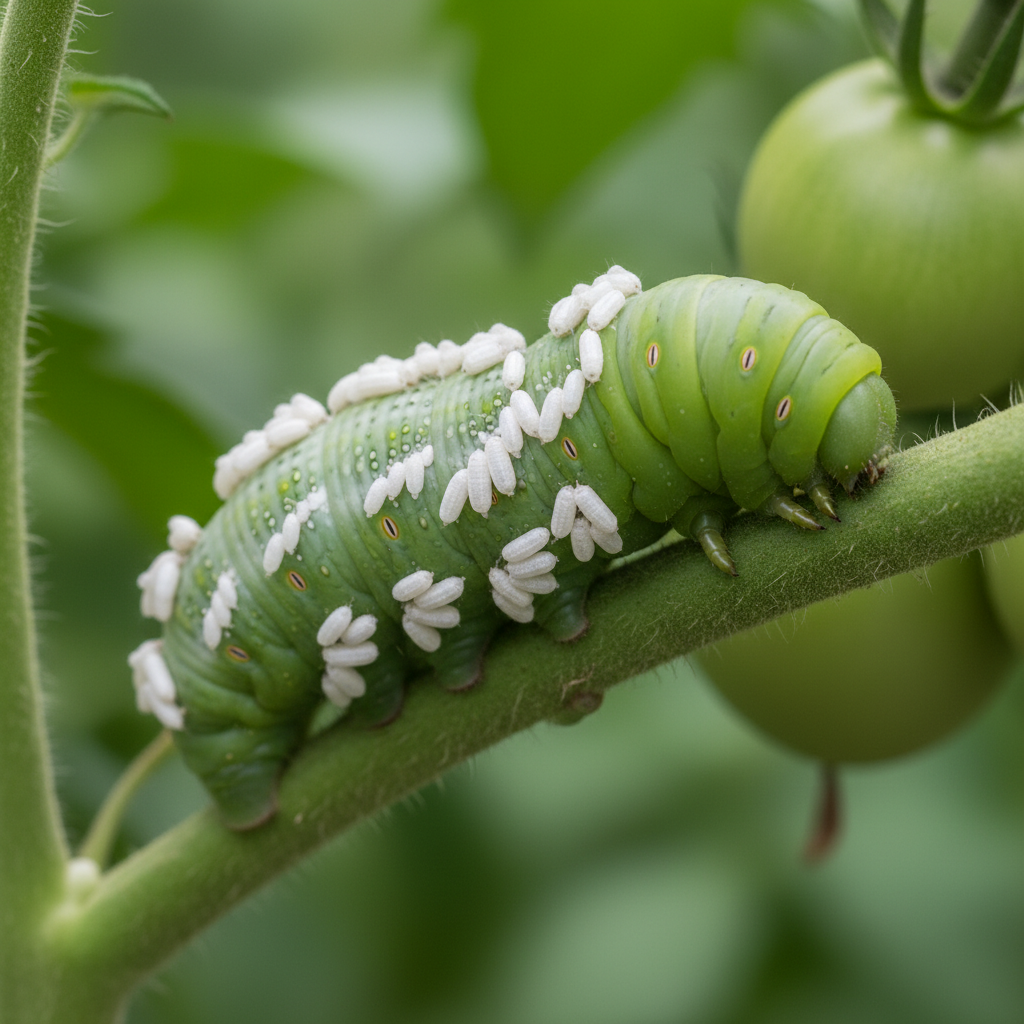
Yes, always leave any hornworm studded with white, rice-like cocoons exactly where it is. Those cocoons are braconid wasps (Cotesia congregata) that have already parasitized the caterpillar from the inside, and that hornworm is now a nursery raising the very predators that will hunt down its relatives. According to Clemson Cooperative Extension, “a parasitized hornworm stops eating and eventually dies, so leaving it on the plant will not result in more damage. A single caterpillar can be the host for up to 300 wasps.”
The biology is grimly efficient. According to North Carolina State Extension, the wasp’s “eggs hatch into larvae that feed on and develop inside the caterpillar,” and “the wasp larvae chew through the caterpillar’s skin, where they spin cocoons, pupate inside the cocoons, then emerge as adults.” University of Minnesota Extension gives the homeowner the plain rule: “leave the hornworms in the garden to allow the adult wasps to emerge, and these wasps kill the hornworms when they emerge from the cocoons.” Killing a cocooned hornworm destroys dozens of free pest-control allies, so it is the one caterpillar you protect. Once you learn to recognize the white cocoons, you will spot them every season.
When Should You Spray Bt for Tomato Hornworms?
Spray Bt while the hornworms are still small, because it works best on young caterpillars and barely touches large ones. Bacillus thuringiensis var. kurstaki is a naturally occurring soil bacterium that the caterpillar must eat to be affected. According to University of Minnesota Extension, “it works best on very young caterpillars” and “caterpillars must eat the product for it to be effective.” It is specific to caterpillars and does not harm bees, which makes it a safe fit for a pollinator-friendly tomato patch.
Timing is everything. Apply Bt in the late afternoon or early evening, since sunlight breaks the product down, and coat both the tops and undersides of the leaves where caterpillars feed. Reapply after rain and every five to seven days during an active infestation. For certified-organic growers, University of California IPM confirms that “Bacillus thuringiensis (Bt) or the Entrust formulation of spinosad are acceptable for use on organically certified crops,” and both target smaller larvae. Choose Bt over spinosad when bees and beneficial wasps are active, because UC IPM warns that spinosad can harm natural enemies and bees for one to four days after spraying. Hand-picking handles the big caterpillars that Bt misses.
Can Chickens Clear Hornworms From Your Garden?
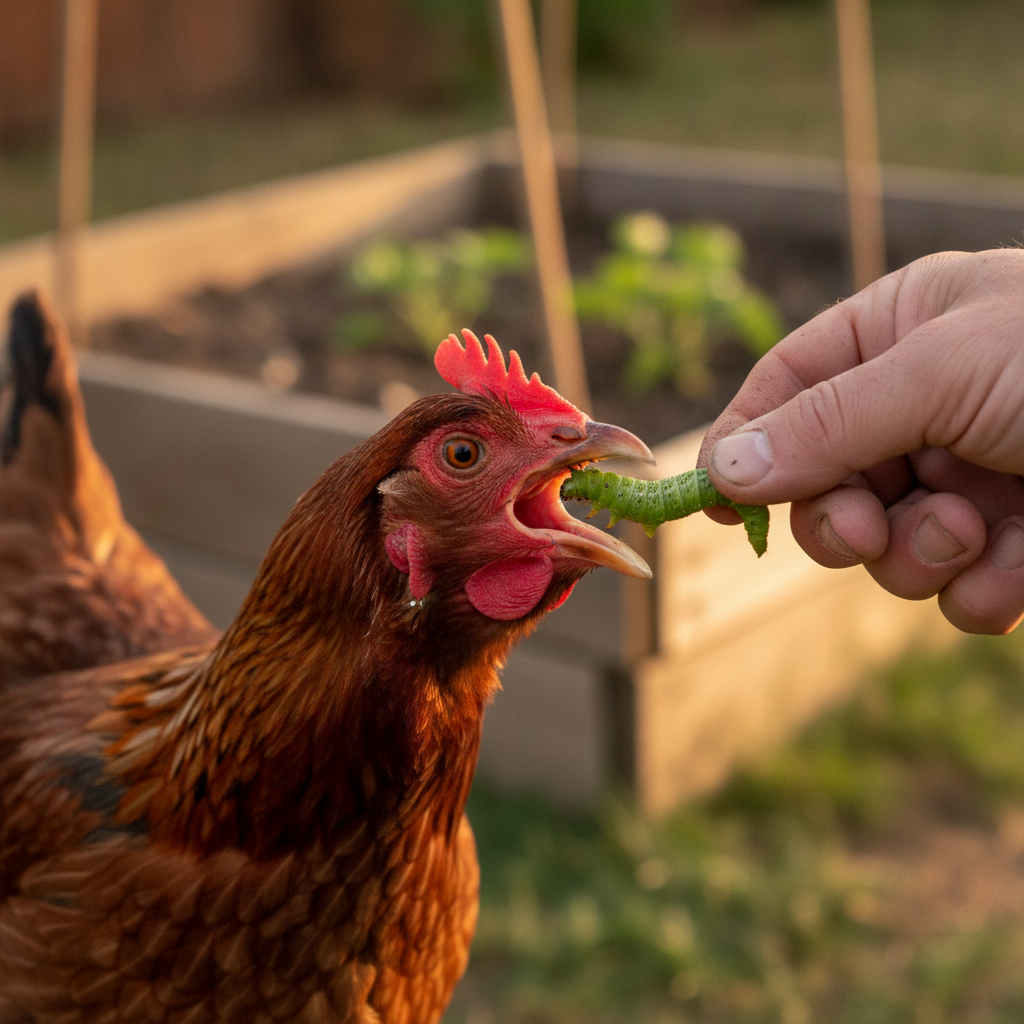
A few hens will clear hornworms from a garden bed faster than you can pick them, and they treat the chore as a feast. Hornworms are a rich protein snack, and chickens are natural foragers. According to eXtension’s poultry resources, “insects are high-quality sources of protein, fat, minerals, essential amino acids, fatty acids, micronutrients, and vitamins, making them one of the most promising potential poultry feed resources.” Toss a caterpillar into the run and watch the flock sprint.
My protocol is simple. During the morning hand-pick, I drop each hornworm into a coffee can, then tip the can into the run. One hen will work a 4 by 8 bed’s worth of caterpillars in about twenty minutes if you supervise and hand them over. Some birds balk at swallowing a four-inch worm whole, so pinch or snip the largest ones in half first. Source hornworms only from your own pesticide-free garden, never from plants that have been sprayed with anything other than Bt. For more ways to put your flock to work, see our guide on feeding your chickens from the garden.
How Do You Stop Hornworms From Coming Back Next Year?
Till your tomato bed in fall and you can destroy most of the hornworm pupae before they ever become next year’s moths. Because the caterpillars pupate only three to six inches deep, turning the soil exposes and crushes them. According to Michigan State University Extension, “roto-tilling the soil after fruit harvest is very effective, and tillage has been shown to destroy up to 90 percent of the caterpillars pupating in the soil.” This one fall task does more to lower next season’s pressure than anything you spray in summer.
Pair tillage with two more long-game habits. Rotate your nightshade crops so tomatoes, peppers, and eggplants do not return to the same bed each year, which forces emerging moths to search harder for hosts. Then conserve the beneficial insects that police hornworms for free; University of California IPM advises gardeners to “conserve natural enemies by not treating with disruptive pesticides, especially early in the season.” Planting flowering herbs nearby supports those wasps and other allies. Our companion planting guide shows which pairings draw beneficial insects into the vegetable garden.
How Organic Hornworm Controls Compare
Each method below pulls its weight at a different point in the season. The most reliable results come from layering several rather than relying on any single one.
| Method | What It Does | Best Timing | Harms Beneficials? |
|---|---|---|---|
| UV flashlight scouting | Makes hidden hornworms glow for fast removal | After dark, nightly in peak season | No |
| Hand-picking | Removes caterpillars of any size | Daily, morning and night | No |
| Bt (kurstaki) | Kills young larvae that eat treated leaves | Late afternoon, on small larvae | No (caterpillar-specific) |
| Spinosad (Entrust) | Kills small larvae; organic-approved | Evening, when bees inactive | Yes, for 1 to 4 days |
| Leave parasitized worms | Lets braconid wasps multiply | Whenever you see white cocoons | No (boosts them) |
| Chickens | Eat picked hornworms as protein | During daily hand-pick | No |
| Fall tillage | Destroys up to 90% of overwintering pupae | After harvest, before frost sets in | Minimal |
Common Tomato Hornworm Control Mistakes to Avoid
Most hornworm losses trace back to a handful of avoidable errors. Steering clear of these keeps your tomatoes ahead of the pest all season.
- Scouting only in daylight. Hornworms are masters of camouflage by day. Skipping the UV flashlight means missing most of them until the damage is obvious.
- Killing parasitized hornworms. Destroying a caterpillar covered in white cocoons wipes out up to 300 beneficial wasps. Always leave those worms in place.
- Spraying Bt too late. Bt only works well on small caterpillars. Once a hornworm is large, hand removal is the answer, not more spray.
- Spraying Bt at midday. Sunlight degrades the bacterium. Apply in late afternoon or evening for the best result.
- Dropping picked worms on the ground. They climb right back up. Use a soapy bucket or feed them to the flock.
- Reaching for broad-spectrum insecticides. These kill the braconid and Trichogramma wasps that control hornworms for free, often making next year worse.
- Skipping fall cleanup. Leaving the bed undisturbed lets pupae overwinter safely and emerge as next summer’s moths.
Tips for Staying Ahead of Hornworms
- Watch for frass first. Dark green or black pellets on lower leaves are your earliest warning. Trace them upward to find the caterpillar.
- Pair night and morning passes. A UV sweep after dark plus a quick morning check catches nearly every hornworm before it does real damage.
- Plant a few sacrificial dill or borage plants. They draw beneficial wasps and give you a place to spot egg-laying activity early.
- Hose down suspect plants. A blast of water agitates hidden caterpillars into moving, making them easier to see.
- Keep tomatoes vigorous. A healthy, well-fed plant shrugs off light feeding far better than a stressed one. Strong growth also fills back in quickly after you clear the pest.
- Rotate and till every year. The two long-game habits compound, lowering pressure season after season.
Frequently Asked Questions
Are Tomato Hornworms Poisonous or Dangerous to Touch?
No, tomato hornworms are completely harmless to humans. The black horn at the tail looks menacing but cannot sting, bite, or inject venom. You can pick them with bare hands, though gloves keep the green stain off your skin. They are not toxic to touch and pose no danger to children or pets that handle them. The only thing they harm is your tomato, eggplant, pepper, and potato plants, all members of the nightshade family.
What Is the Fastest Way to Find Tomato Hornworms?
A UV flashlight after dark is by far the fastest way. Hornworms fluoresce under ultraviolet light, so they glow brightly against the dark foliage when you sweep the plants with a 365 to 395 nanometer black light. This blue-green fluorescence under UV is well documented, which is why the black-light method has caught on. This method finds far more caterpillars in a few minutes than careful daytime searching does in an hour, because their daytime camouflage is nearly perfect.
Should I Kill a Hornworm Covered in White Cocoons?
No, leave it alone. The white rice-like cocoons are braconid wasps that have parasitized the caterpillar from the inside. According to Clemson Cooperative Extension, a parasitized hornworm stops eating and eventually dies, so it will cause no further damage, and a single caterpillar can host up to 300 wasps. Those emerging wasps go on to attack other hornworms in your garden, so protecting that one caterpillar gives you a free, self-renewing supply of natural pest control.
Does Bt Spray Hurt Bees or Other Insects?
No, Bt (Bacillus thuringiensis var. kurstaki) is specific to caterpillars and does not harm bees, ladybugs, or other beneficial insects. According to University of Minnesota Extension, the caterpillar must eat the treated foliage for Bt to work, and it does not affect other insects including bees. That selectivity is what makes Bt the preferred organic spray for a pollinator-friendly tomato patch. Spinosad, by contrast, can harm natural enemies and bees for one to four days after application, so reserve it for evening use when pollinators are inactive.
How Do I Prevent Tomato Hornworms Next Year?
Till the soil after harvest, rotate your crops, and protect beneficial insects. According to Michigan State University Extension, fall tillage can destroy up to 90 percent of the pupae overwintering in the soil, since they sit only three to six inches deep. Rotating tomatoes and other nightshades to a different bed each year makes emerging moths work harder to find hosts. Avoiding broad-spectrum insecticides preserves the braconid and Trichogramma wasps that keep hornworm numbers down for free.
Can I Feed Tomato Hornworms to My Chickens?
Yes, hornworms are a safe, high-protein treat for chickens as long as they come from a pesticide-free garden. Insects are a nutrient-dense food source for poultry, and most flocks attack hornworms eagerly. Cut or pinch the largest caterpillars in half, because some birds hesitate to swallow a four-inch worm whole. Never feed hornworms collected from plants treated with anything other than Bt, and stick to caterpillars from your own untreated beds. If you also like to preserve your crop, our guide on canning tomatoes helps you put the rescued harvest to good use.
Tomato hornworms look terrifying and do real damage, but they are one of the easiest serious garden pests to defeat without chemicals. Scout with a UV light, pick by hand, spray Bt on the small ones, spare the wasp-cocooned caterpillars, recruit the chickens, and till in fall. Layer those habits and you will keep your tomato patch producing right through the worst of hornworm season.