How to Grow Chamomile for Tea and Medicine (Seed to Cup Guide)
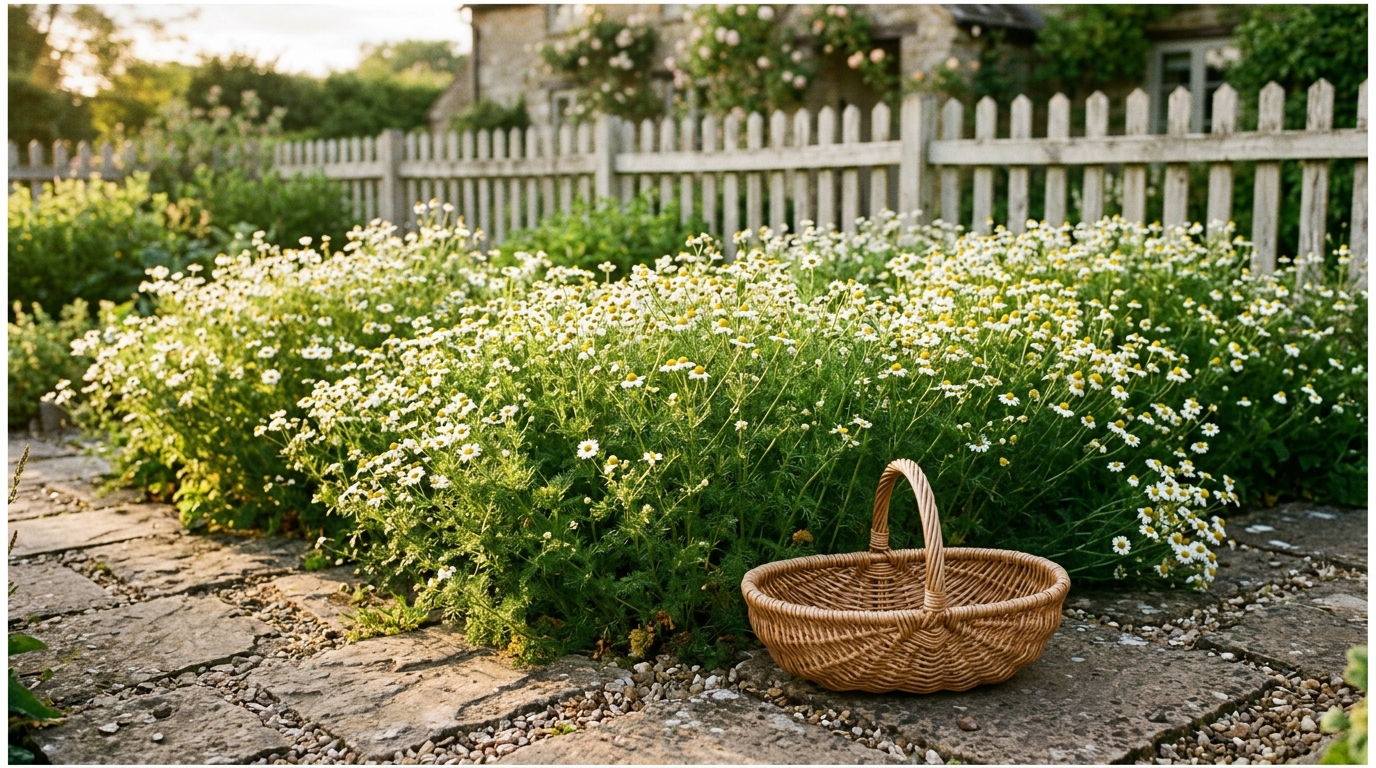
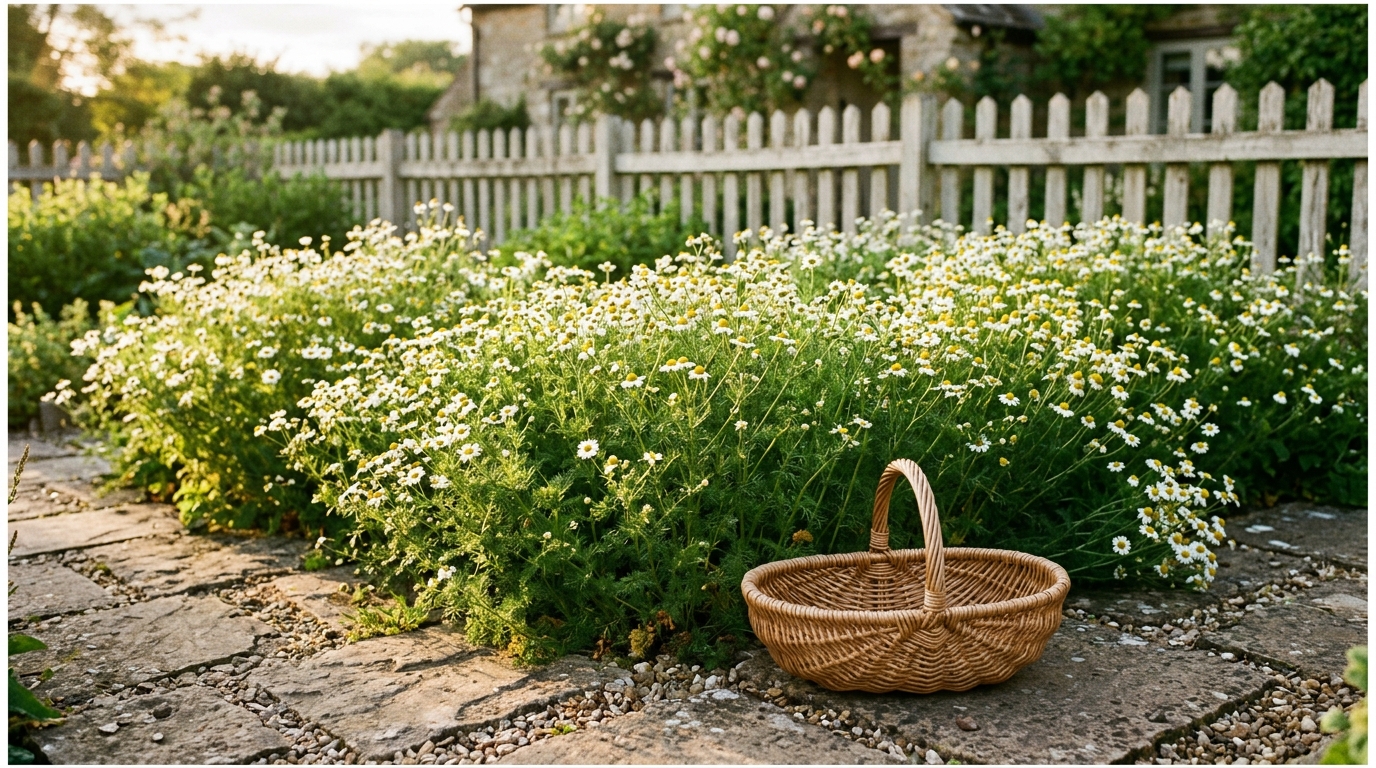
Chamomile is one of the few medicinal herbs that pays for itself in a single 8 by 3 foot bed. According to the National Center for Complementary and Integrative Health, chamomile is promoted for indigestion, anxiety, insomnia, colic, and skin conditions, which covers most of the reasons a homestead keeps a medicine drawer at all. Seeds want light to germinate, plants tolerate poor soil, and a well-timed stand keeps producing for six to ten weeks with almost no intervention.
On our property in central Pennsylvania, I direct-sowed a 4 foot row of German chamomile in mid-April three seasons back, and the same patch has been self-seeding into the walking paths ever since. This guide covers variety selection, seed starting, harvest timing, drying, and the tea and medicinal preparations that make the effort worth it.
Which Chamomile Should You Plant, German or Roman?
Plant German chamomile (Matricaria recutita) if you want a fast, upright annual grown for tea flowers, and plant Roman chamomile (Chamaemelum nobile) if you want a low, perennial groundcover. According to the Old Farmer’s Almanac, “German chamomile is an annual plant that maxes out at around 2 feet high and is often grown in flower beds or used in companion planting, while Roman or English chamomile is a perennial plant that grows low to the ground and is often used as a fragrant groundcover, border plant, or grass alternative in low-traffic lawns.”
For home tea and medicine, German chamomile is almost always the right choice. Its flowers are the ones sold in commercial tea, its yield per square foot is higher, and its lighter flavor holds up better to drying. Roman chamomile smells stronger but reads bitter in a hot cup. If you plan to walk on it (a chamomile lawn or step-on path), pick Roman; if you plan to drink it, plant German.
| Trait | German (M. recutita) | Roman (C. nobile) |
|---|---|---|
| Life cycle | Annual, self-seeds readily | Perennial in zones 4 to 9 |
| Mature height | 18 to 24 inches | 3 to 6 inches |
| Best use | Tea, tincture, dried flowers | Ground cover, path lawn |
| Flavor when brewed | Light, apple-sweet | Stronger, slightly bitter |
What Tools and Supplies Do You Need?
A basic chamomile run needs seed, a well-drained sunny bed, a drying rack or dehydrator, and a fine-mesh strainer for the finished tea. Because chamomile seed is dust-fine and needs light to germinate, the sowing tools matter more than the harvest tools.
Core supplies:
- 1 packet German chamomile seed (roughly 1,000 seeds covers 20 row feet)
- Seed-starting flats or a raked seedbed with fine-textured surface
- Fine spray bottle or misting attachment for gentle watering
- Row markers if you direct-sow, since seedlings look almost identical to Galinsoga and other weedy composites for the first two weeks
- Aged compost, 2 or more inches worked into the bed. Our companion guide to turning kitchen scraps into garden gold covers the basic pile setup
- Drying rack, mesh screens, or a food dehydrator set to 95 to 100 degrees F
- Airtight glass jars for storage, ideally amber or stored in a dark cupboard
According to the growing notes at Harvest to Table, “German chamomile prefers well-drained sandy soils; if your soil is moist, plant German chamomile in a raised bed. Add 2 or more inches of aged compost to the planting bed and turn it under before planting.” If your ground is heavy clay, a shallow first raised bed solves the drainage problem for chamomile and most other Mediterranean-origin herbs at the same time.
How Do You Start Chamomile from Seed?
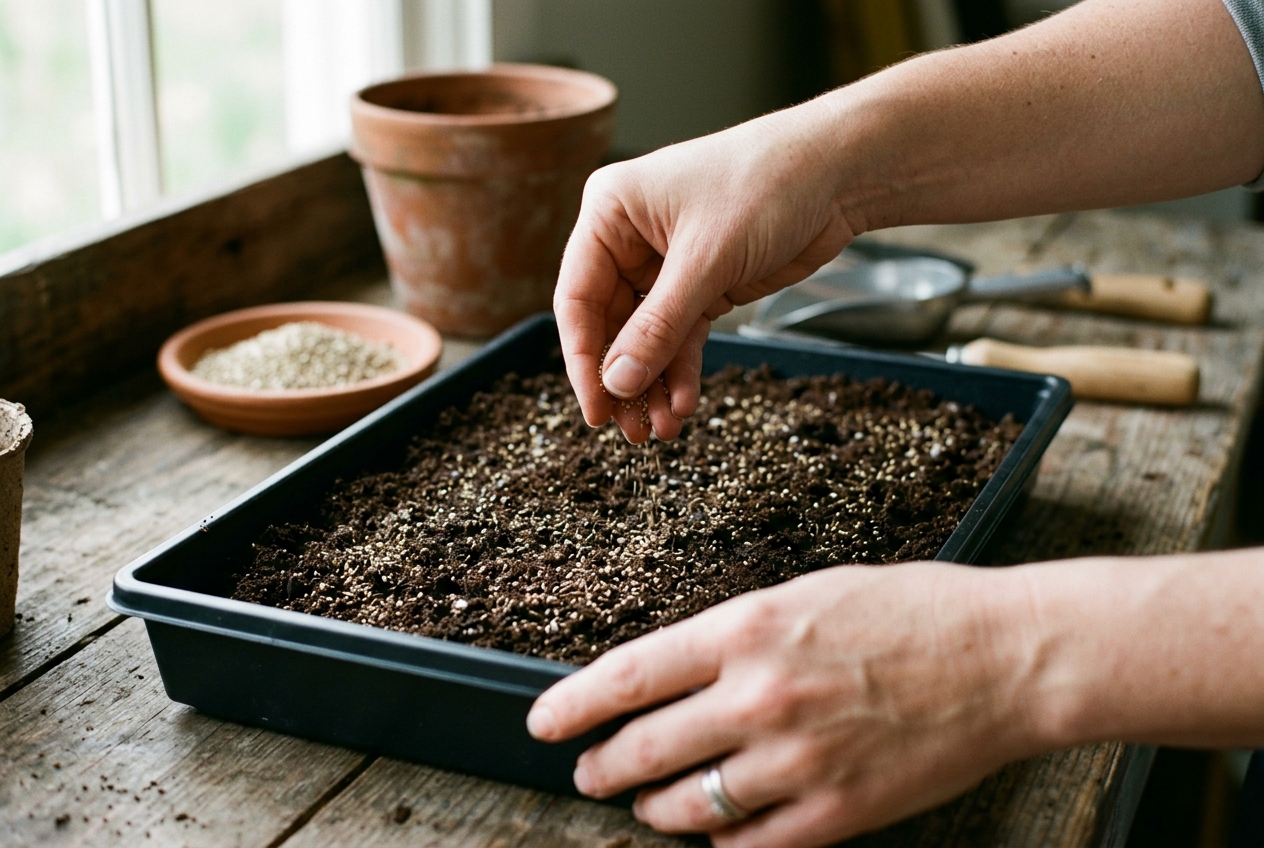
Start chamomile seeds indoors 6 to 8 weeks before your last frost, or direct-sow on the soil surface two weeks before that frost date. According to Harvest to Table, “Chamomile seeds should be started indoors 6-8 weeks before the last frost date in springtime. You need to be patient with chamomile because it takes 14-21 days to germinate. The seeds require light to germinate so don’t cover the seeds with soil upon planting.” The light requirement is the single biggest reason first-time growers fail with chamomile.
Indoor start:
- Fill a shallow tray with a moistened seed-starting mix, level the surface, and firm it lightly.
- Scatter seeds thinly across the surface. Do not cover with soil; a fine dusting of vermiculite is optional and still lets light through.
- Mist the surface with water. Cover with a clear humidity dome or plastic wrap to hold moisture without disturbing the seeds.
- Place under a grow light or in a bright south window at 65 to 70 degrees F. Expect germination in 7 to 21 days.
- Once true leaves appear, remove the cover and thin to one seedling per inch. Keep the mix damp, never soggy.
Direct sowing works just as well once your last frost has passed and soil stays above 55 degrees F. Rake the bed smooth, sprinkle seed at roughly 20 seeds per row foot, press lightly with a board, and mist so you do not float the seed away. Our kitchen herb garden guide covers the same technique for basil, dill, and other seed-on-surface herbs.
How Do You Transplant and Space Chamomile?
Transplant chamomile seedlings when they are 2 to 3 inches tall with four to six true leaves, spacing them 6 to 8 inches apart in rows 12 to 18 inches apart. This spacing gives plants room to bush out without shading each other into weak stems. Crowded chamomile grows tall and floppy; well-spaced chamomile stands upright and produces two to three times more flower heads per plant.
Harden off indoor seedlings for 5 to 7 days before transplanting: two hours of dappled shade the first day, adding an hour and more direct sun each following day. Transplant on an overcast afternoon to reduce shock, and water each seedling in at the base. According to Bonnie Plants, “Give plants 1 inch of water per week until well-established. Once your chamomile is established, it needs very little care. Like most herbs, chamomile grows best when it is not fussed over.” Chamomile resents rich, over-fertilized soil, which pushes leafy growth at the expense of flowers.
How Do You Water and Care for Chamomile Through the Season?
Water established chamomile deeply once a week during dry stretches, aim for full sun (at least 6 hours), and skip supplemental fertilizer entirely. According to Harvest to Table, “German chamomile is an annual plant that grows best in USDA hardiness zones 4-9. Both chamomiles Roman and German prefer to grow in full sun but will tolerate partial shade.” Chamomile is drought-tolerant once its taproot is down, and overwatering causes root rot faster than underwatering ever does.
Weeding matters most in the first three weeks. Chamomile seedlings share their finely dissected leaf shape with several weedy composites, so mark your row and hand-pull anything you cannot identify. After the plants reach 6 inches, they shade out most competition on their own. If your bed is genuinely poor, a single light drench of diluted compost tea at the four-leaf stage is enough. Chamomile also thrives in no-till beds where its taproot benefits from undisturbed structure.
When and How Should You Harvest the Flowers?
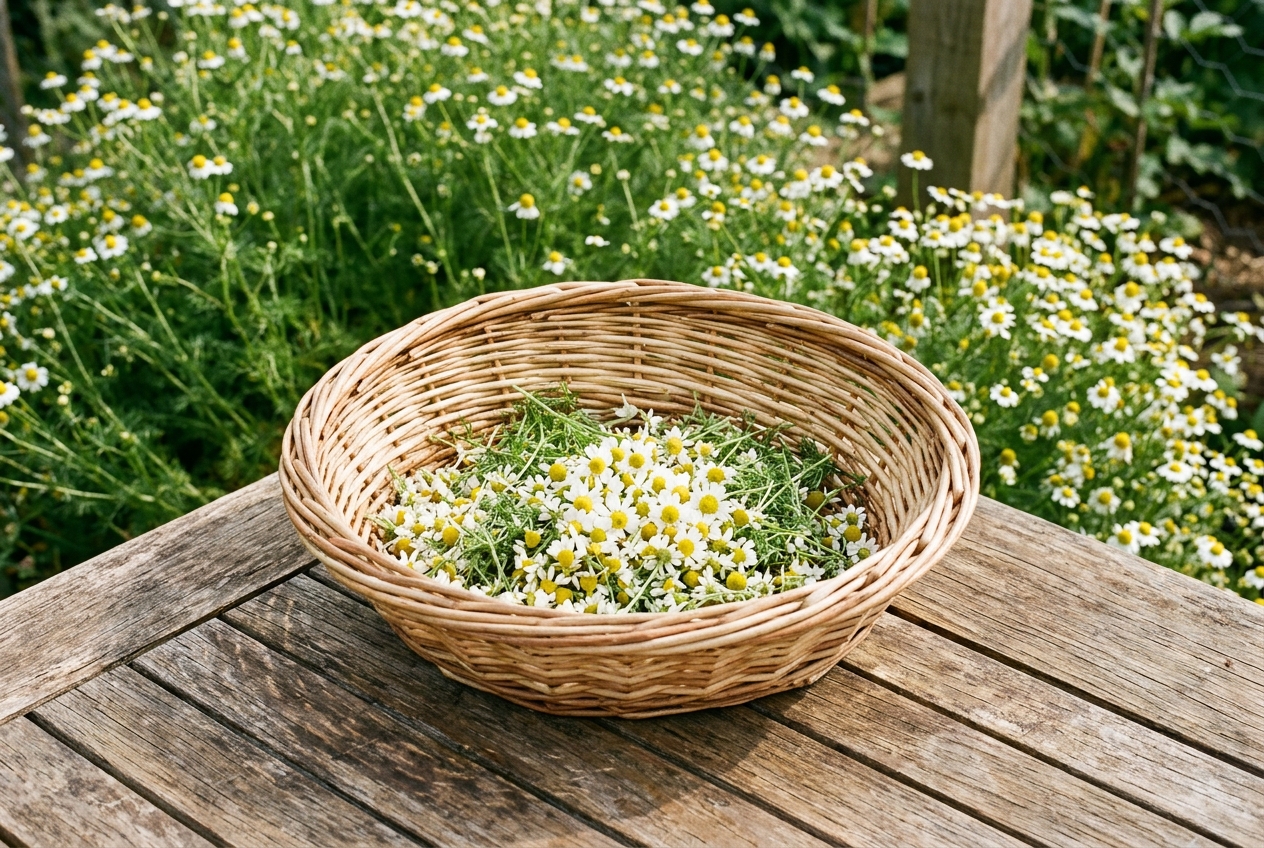
Harvest chamomile flower heads in the morning after the dew dries but before midday heat, choosing blossoms whose white petals have reflexed back and whose yellow cones are fully raised. According to MyGardenLife’s cultivation notes, “Gather the flowers when fully open, dry them, and store them in an airtight container.” Harvest timing matters because the essential oil concentration peaks when the disc florets have opened all the way to the center and the ray florets have started to arc backward. Picked too early, flowers taste grassy; picked too late, they shatter and lose oil.
Two methods work well at home. For a small patch, pinch each flower head off just below the base with your thumb and index finger, dropping heads into a basket. For a larger stand, use a chamomile rake (a wooden comb with 1/8 inch tine spacing) to strip flowers in a single pass. A well-tended 8 foot row yields 1 to 2 cups of fresh flowers per week for six to ten weeks. Harvest every three to five days; removing mature flowers signals the plant to produce more, while letting seed set slows or stops new flowers.
How Do You Dry and Store Chamomile?
Dry chamomile flowers on mesh screens in a warm, dark, well-ventilated space for 1 to 2 weeks, or dehydrate at 95 to 100 degrees F for 12 to 18 hours until the disc centers crumble between your fingers. According to MyGardenLife, “Spread them out to dry for about 2 weeks in a very dry, warm place out of direct sunlight.” Sunlight bleaches out both color and the fragile essential oils that carry chamomile’s aroma. A closet with a small fan running, a spare bedroom with the blinds drawn, or the top shelf of a pantry all work.
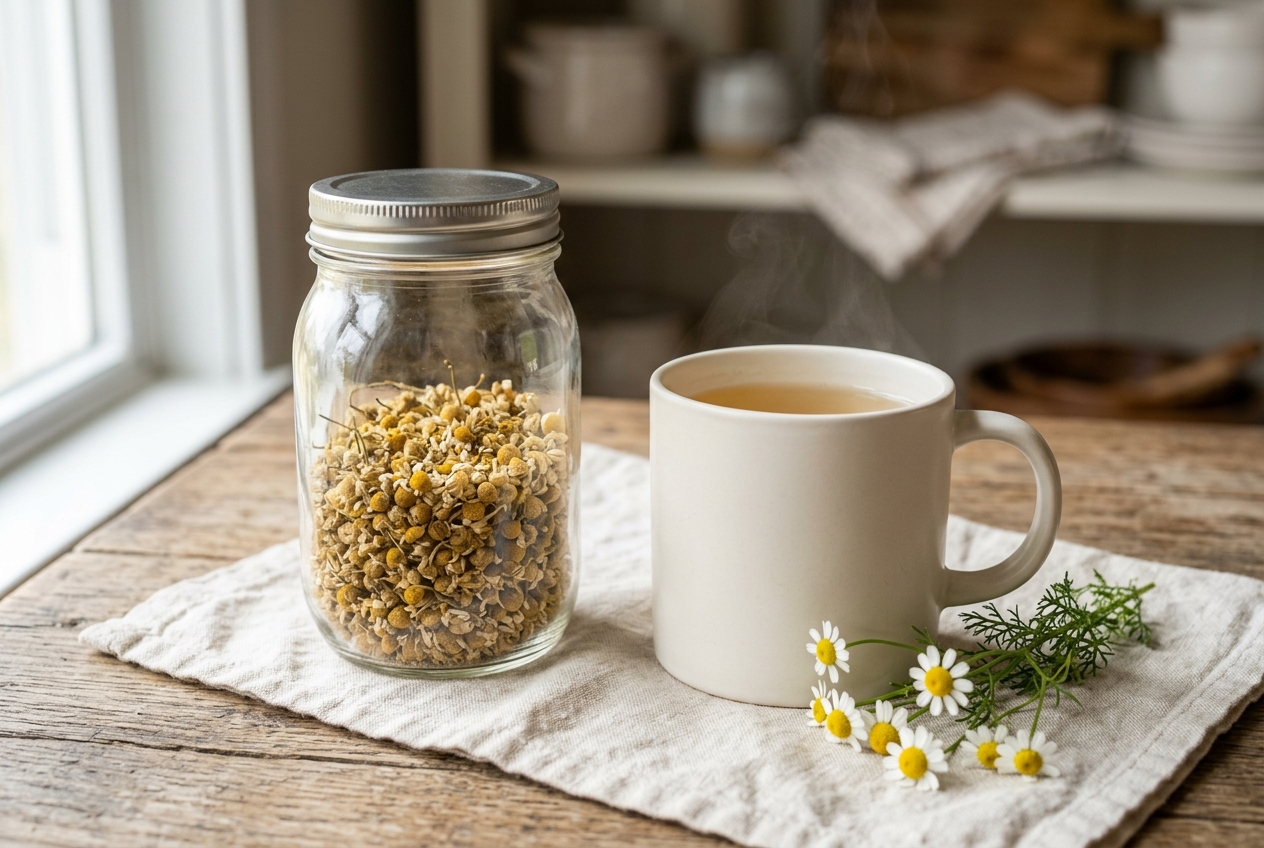
Test for full dryness by pressing a flower head with a fingernail. A properly dried head crumbles cleanly; soft or spongy centers mean more time is needed. Store finished flowers whole (not powdered) in airtight glass jars in a dark cabinet. Whole flowers hold flavor and potency for 12 to 18 months, while ground chamomile vents its oils within two to three months, so grind only what you will use in a week. Store your labeled jars near the kettle alongside your other homegrown tea herbs.
How Do You Brew Tea and Use Chamomile Medicinally?
Steep 1 tablespoon of dried flowers (or 2 tablespoons fresh) in 8 ounces of just-off-boil water for 5 to 10 minutes, covered, then strain and drink 30 to 60 minutes before bed for the sleep and relaxation effects most people are after. A 2024 systematic review in Complementary Therapies in Medicine reported that “a meta-analysis of 12 randomized, controlled trials found that chamomile improved sleep quality… especially improvement in sleep onset latency and the number of awakenings after sleep or staying asleep.” Covering the cup while steeping traps the volatile aromatic oils that would otherwise escape with the steam.
Beyond a nightly cup, chamomile shows up in three home preparations: an infused oil for skin, a strong decoction for cool compresses on minor irritation, and an alcohol tincture for measured dosing. NIH research is cautious: “Some preliminary studies suggest that a chamomile dietary supplement might be helpful for generalized anxiety disorder and associated depression.” Treat homegrown chamomile as a gentle daily herb, not a substitute for medical care. Anyone on blood thinners, sedatives, or with a ragweed allergy should talk to a clinician first, since chamomile can potentiate anticoagulants and cross-react with related composites.
Common Mistakes That Sabotage a Chamomile Patch
The most common chamomile failure is burying the seed, which blocks germination entirely because the seeds need light to sprout. Every extension source on chamomile germination says the same thing: surface sow, press to firm, do not cover with soil. That single mistake accounts for most of the “my seeds never came up” stories new growers tell.
Six mistakes that trip up first-year chamomile growers:
- Covering the seed with soil. Chamomile needs light to germinate. Press seed into the surface and mist; do not bury.
- Overwatering the seedbed. Dust-fine seed floats away with a hose. Use a spray bottle or fine mist head until true leaves appear.
- Fertilizing heavily. Nitrogen pushes green growth at the expense of flowers, and rich soil produces floppy plants that fall over in wind.
- Waiting too long to harvest. Once petals start dropping, the essential oil concentration has already peaked. Cut flowers at full bloom, not past.
- Drying in sunlight. Sun bleaches color and oxidizes the volatile oils that carry chamomile’s apple-sweet aroma. Dry in the dark.
- Grinding flowers for storage. Whole flowers hold their oils for a year or more; ground chamomile fades in weeks. Grind at brew time only.
A less common but expensive mistake is confusing chamomile with pineapple weed (Matricaria discoidea) or scentless mayweed. If in doubt, crush a flower between your fingers: German chamomile smells distinctly of green apples and honey. Anything grassy or sharp is a look-alike.
Tips for a Bigger, Longer-Lasting Harvest
Small adjustments to your workflow can double the total flower yield from a season and extend the harvest window from six weeks to closer to twelve. According to companion planting notes at MasterClass, “Chamomile attracts pollinators and beneficial insects such as hoverflies, ladybugs, and wasps. Hoverflies eat aphids and scale insects, ladybugs control aphid populations, tachinid flies target caterpillars, and bees pollinate surrounding fruiting crops.” Interplanting chamomile gives you medicine and pest control at the same time.
- Succession sow every three weeks from your last frost through midsummer. Fresh plants keep flowering while older ones fade, stretching the harvest into fall.
- Interplant with brassicas and tomatoes. Chamomile’s shallow root profile pairs well with tomato beds and cabbage-family crops without competing for the same soil depth.
- Deadhead ruthlessly. Any flower left to set seed tells the plant to slow down. Weekly harvests double as deadheading.
- Save seed from your best plants. Let two or three of your most vigorous plants finish flowering, then collect the dried seed heads in a paper bag.
- Combine with a pollinator strip. Chamomile pulls in the same beneficials as a broader pollinator garden, multiplying pest-control benefits across the homestead.
- Freeze fresh flowers for winter tea. A gallon bag of fresh heads frozen flat holds flavor better than drying if you have freezer space and use them within six months.
Frequently Asked Questions
How long does it take chamomile to grow from seed to first harvest?
Expect roughly 10 to 12 weeks from sowing to first pickable flowers when you start indoors, and 8 to 10 weeks when you direct-sow after your last frost. Germination takes 7 to 21 days, and plants need another 6 to 8 weeks of vegetative growth before setting buds. Once bloom starts, harvest every three to five days for six to ten weeks. Cooler summers stretch the window; a hot dry July shortens it.
Can I grow chamomile in a container or indoors?
Yes, German chamomile grows fine in a 10 to 12 inch deep container with well-drained mix and at least 6 hours of direct sun, though yields drop 30 to 50 percent versus in-ground plants. Roman chamomile is more forgiving in pots because of its shallower root system. Indoor grows work only with a strong full-spectrum grow light on 12 to 14 hours a day. A sunny window is rarely enough to trigger flowering, and non-flowering chamomile is not much use for tea.
Is chamomile actually safe to drink daily?
For most healthy adults, one to three cups of chamomile tea per day is well within the range clinical trials have used without adverse effects. NCCIH notes chamomile has been used safely in trials for anxiety and sleep, though it can potentiate anticoagulant medications and may cause allergic reactions in people sensitive to ragweed, daisies, or marigolds. Pregnant and nursing parents should ask a clinician before regular use, and infants under six months should not receive chamomile without medical guidance.
Why did my chamomile flowers taste bitter?
Bitter chamomile usually comes from one of three sources: harvesting past peak bloom, drying in sunlight or high heat, or brewing at too high a temperature for too long. Water at a full rolling boil extracts more tannin than water rested for 30 seconds off the boil. Cover the cup while steeping and cap the time at 10 minutes. If the dried flowers themselves taste harsh, next year harvest earlier and dry in a darker space.
Will chamomile come back on its own next year?
German chamomile is an annual, so parent plants die at the first hard frost, but the plant self-seeds prolifically if you leave a few flowers to mature. A first-year patch reliably reseeds into the second year and often expands. Rake the seedbed lightly in early spring to expose fallen seed to light, and thin volunteer seedlings to 6 inch spacing. Roman chamomile is perennial and comes back from the root crown in zones 4 through 9.
Can I use fresh chamomile flowers instead of dried?
Yes, use roughly twice as many fresh flowers as dried, about 2 tablespoons per 8 ounce cup versus 1 tablespoon dried. Fresh flowers taste greener and lighter, with less of the honey-apple note that develops during proper drying. For medicinal use aimed at sleep or anxiety, dried flowers are more predictable because oil concentration is more consistent. Fresh flowers are ideal for iced infusions and same-day uses like syrups.
Once your first chamomile patch is in the ground, the whole herb garden gets easier because the same skills carry across every Mediterranean-origin herb. Pair the tea harvest with a broader homegrown tea blend project and you will have year-round tins of your own tea by the end of the second summer.