

How to Build a Garden Fence That Actually Keeps Deer Out
Key Takeaways
- White-tailed deer can clear 8 feet with a running start (standing vertical leap is typically 6–7 feet; Penn State Extension), any effective deer fence needs to be at least 7.5-8 feet tall, or use design tricks to compensate for shorter heights.
- A double-fence system with two 4-5 foot fences spaced 4 feet apart exploits deer’s poor depth perception and is highly effective at a lower height.
- Polypropylene mesh deer netting is the most affordable option ($50-150 for a full garden perimeter) but lasts only 3-5 years.
- Electric fence with baited wire (peanut butter on foil strips) can train deer to avoid your garden with just 2-3 strands at a fraction of the cost of tall fencing.
- The gate is the weakest point of any deer fence, plan it before you build, and make it as tall and secure as the fence itself.
The Deer Problem
If you garden in deer country, you already know the frustration. You plant, you water, you weed, you watch your tomatoes ripen, and then one morning you walk out to find your entire row stripped to stubs overnight. A single white-tailed deer can eat 6-10 pounds of vegetation per day. A small group visiting your garden regularly can devastate a season’s worth of work in a week.
According to the USDA Wildlife Services, deer cause over $2 billion in agricultural damage annually in the United States. For home gardeners, the losses are smaller in dollar terms but no less frustrating. Repellent sprays wear off in rain. Motion-activated sprinklers work until the deer get used to them. Dogs help but can’t patrol 24/7.
A physical fence remains the most reliable long-term deer deterrent. But not just any fence. The internet is full of people who built a lovely 4-foot garden fence only to watch deer hop over it like a speed bump. Understanding deer behavior is what makes building a fence that actually works.

Understanding How Deer Jump
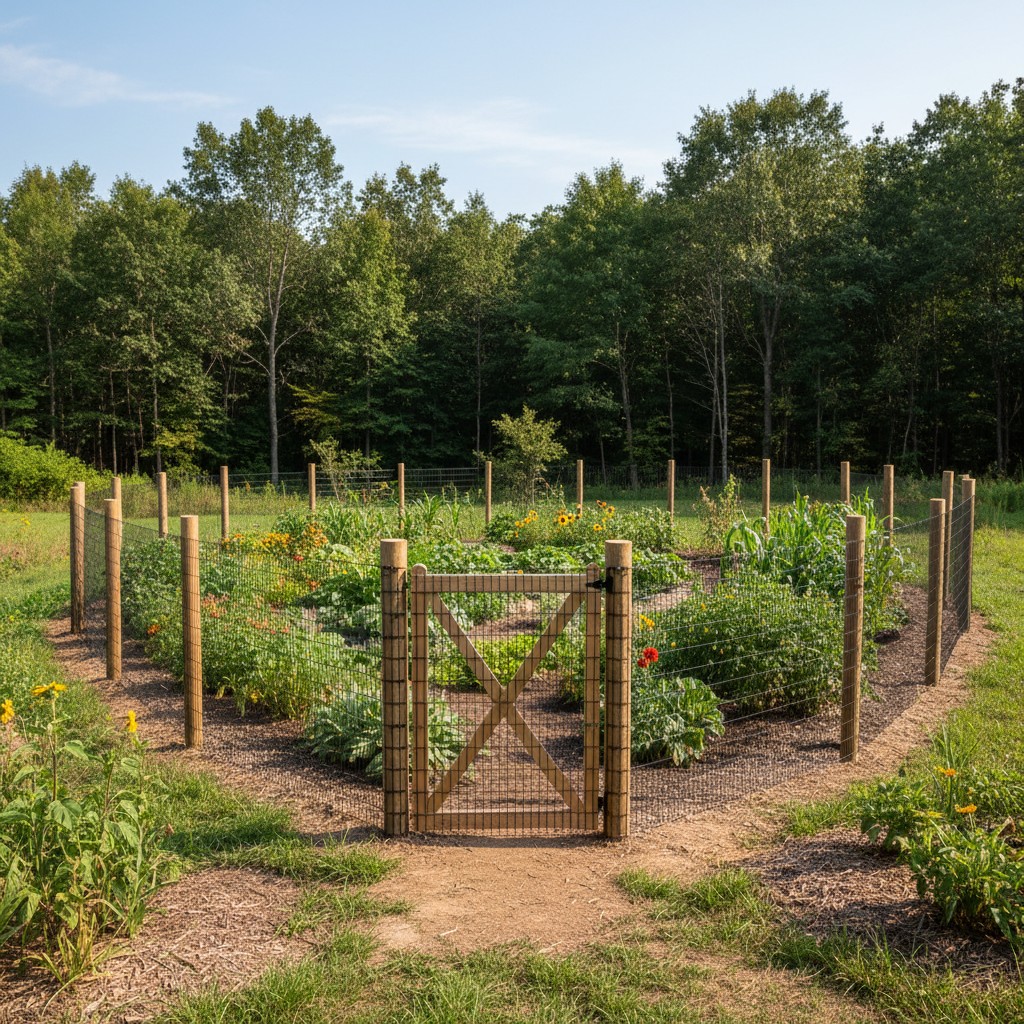
White-tailed deer are remarkable athletes. They can clear an 8-foot fence from a standing start and have been documented jumping even higher when panicked. However, they prefer not to. Deer are cautious animals, and they’ll choose to go around or under a fence before they’ll jump over one, if the fence looks intimidating enough.
Key facts about deer and fences:
- Deer are excellent high jumpers but poor broad jumpers. They can go up but struggle with width. This is why angled and double-fence designs work.
- Deer won’t jump into a space they can’t see clearly. A solid fence or one with visual barriers is more effective than a fence they can see through.
- Deer can crawl under fences. A gap of 12 inches at the bottom is an invitation. Secure the bottom of any deer fence to the ground.
- Deer pressure varies by season. They’re most desperate for garden crops in early spring (when wild food is scarce) and late summer (when does are feeding fawns).
Fence Option 1: The Tall Fence (7.5-8 Feet)
The simplest and most reliable approach. If the fence is tall enough, deer won’t jump it. Period.
Materials
The most common tall deer fence uses metal T-posts or wooden posts with welded wire, woven wire, or polypropylene deer netting. For an 8-foot fence, you’ll need posts that are at least 10 feet long (2 feet in the ground).
- Wooden posts (4×4 or 6×6): Strong and long-lasting. Set in concrete for stability. Best for corners and gate posts. Cost: $15-40 per post.
- Metal T-posts: Cheaper and faster to install. Drive them with a post driver. Good for straight runs between corner posts. Cost: $8-15 per 10-foot post.
- Welded wire fencing: Galvanized, rigid, and durable. Available in 6-foot rolls (add a 2-foot extension on top with separate mesh). Cost: $1-2 per linear foot for 6-foot rolls.
- Polypropylene deer netting: Lightweight, inexpensive, and nearly invisible from a distance. Less durable than wire but much easier to install. Cost: $0.15-0.40 per linear foot.
Installation Tips
Space posts every 8-10 feet for wire fencing, closer (6-8 feet) for lightweight netting that needs more support. Corner posts take the most stress, set them in concrete and brace them. Run a tensioned wire along the top and bottom to keep the fence taut.
Secure the bottom edge. Bury the bottom 6 inches of fence or pin it to the ground with landscape staples every 2 feet. Deer will probe the bottom edge before they’ll attempt to jump.
Fawn note: In late spring and early summer, young fawns can slip through gaps that adult deer cannot. If you garden in an area with an active deer population and do not bury the fence, keep the bottom wire no more than 6 inches off the ground along its entire length, and fill any low spots caused by uneven terrain. Adding a strip of smaller-mesh rabbit wire along the bottom 12 inches of the fence solves both the fawn problem and any rabbit pressure at the same time.
Cost Estimate
For a 100×100 foot garden (400 linear feet of fence), expect to spend:
- Polypropylene netting on T-posts: $400-700
- Welded wire on T-posts with wooden corners: $800-1,500
- Full wooden post-and-wire: $1,500-3,000
Fence Option 2: The Double Fence
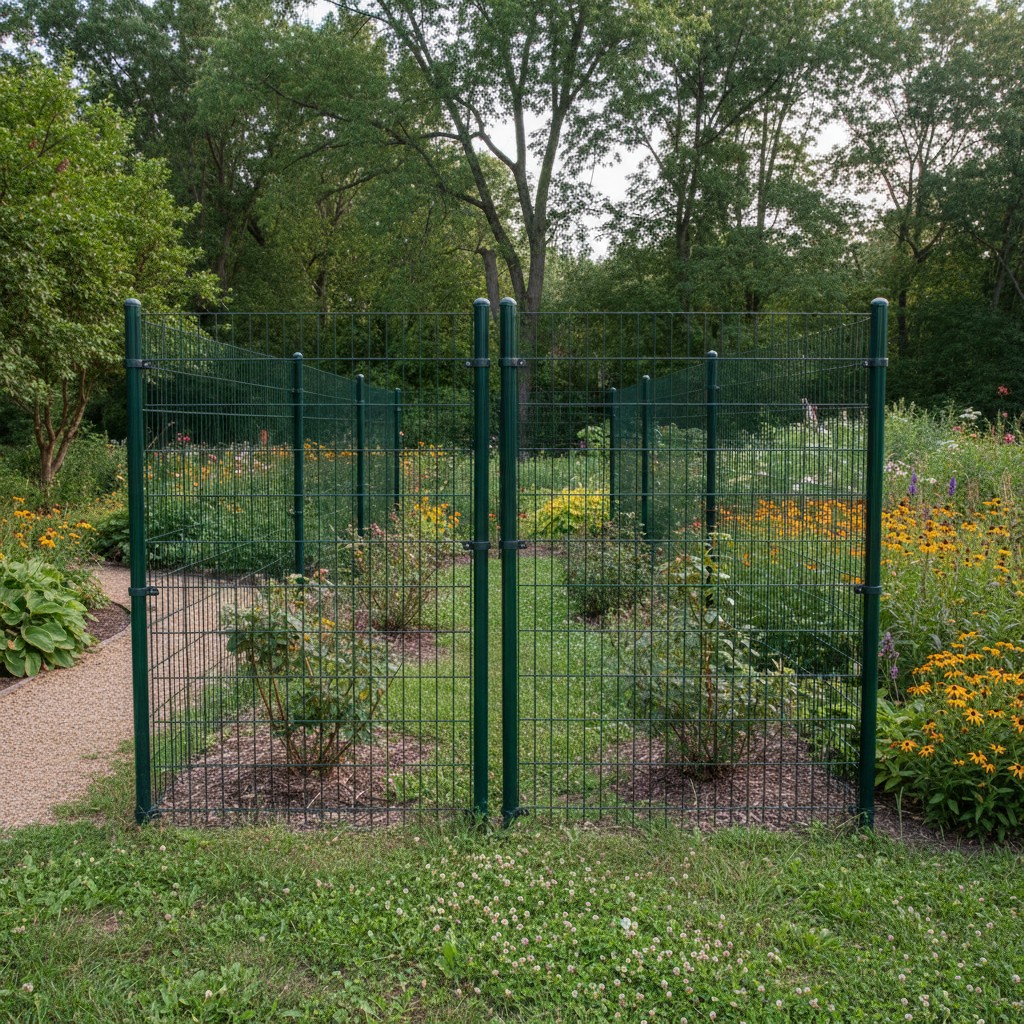
This is one of the cleverest deer fence designs, and it doesn’t require 8-foot posts. The concept exploits deer’s inability to judge depth and their reluctance to jump into confined spaces.
Build two parallel fences, each 4-5 feet tall, spaced 4-5 feet apart. Deer can easily jump one 4-foot fence, but they won’t jump into the narrow gap between two fences because they can’t see a clear landing zone beyond the second fence. From the deer’s perspective, it looks like a trap.
How to Build It
- Build your inner fence at 4-5 feet tall around the garden perimeter using whatever material you prefer.
- Build a second fence of the same height, parallel to the first, 4-5 feet outside it.
- The space between can remain open (mow it) or be planted with deterrent herbs like lavender or rosemary.
The total material cost is obviously roughly double a single fence, but since both fences are only 4-5 feet tall, your post costs are lower and installation is much easier. No climbing ladders to install 8-foot wire panels.
Cost Estimate
For the same 100×100 foot garden: $600-1,200 using basic materials for both fences.
Fence Option 3: The Angled Fence
Another design that uses deer psychology rather than pure height. An angled fence leans outward at roughly 45 degrees from the garden. It only needs to be 5-6 feet on the vertical, but the angle creates an overhang that deer won’t attempt to jump over because they can’t clear both the height and the horizontal distance.
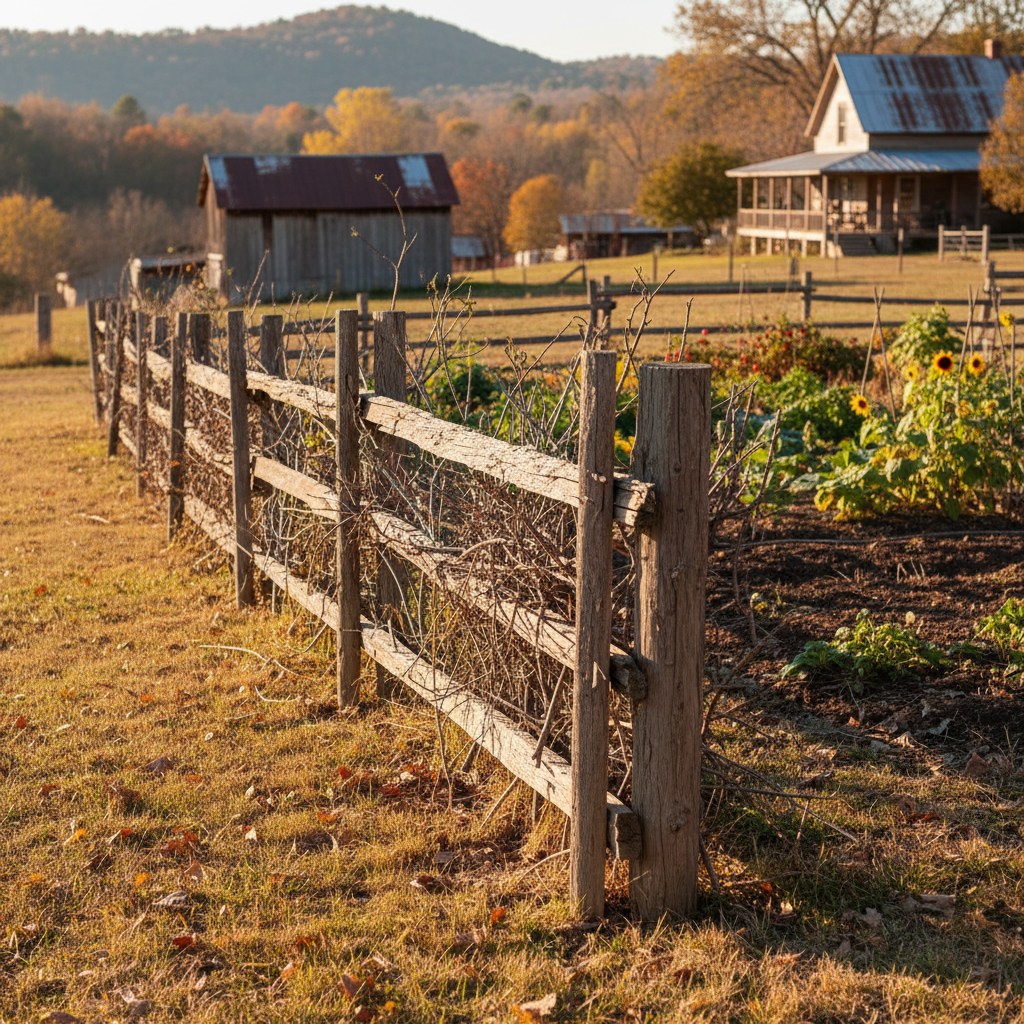
Build a standard 5-foot vertical fence, then extend the top outward at a 45-degree angle using wire or netting on angled supports. The total horizontal overhang should be 3-4 feet.
This design works well but can be awkward to build and maintain, and it takes up more space than a vertical fence. It’s most useful when you can’t install posts tall enough for an 8-foot vertical fence.
Fence Option 4: Electric Fence
Electric fence is the most cost-effective deer deterrent per linear foot, but it requires a different approach than fencing for livestock.
The Peanut Butter Trick
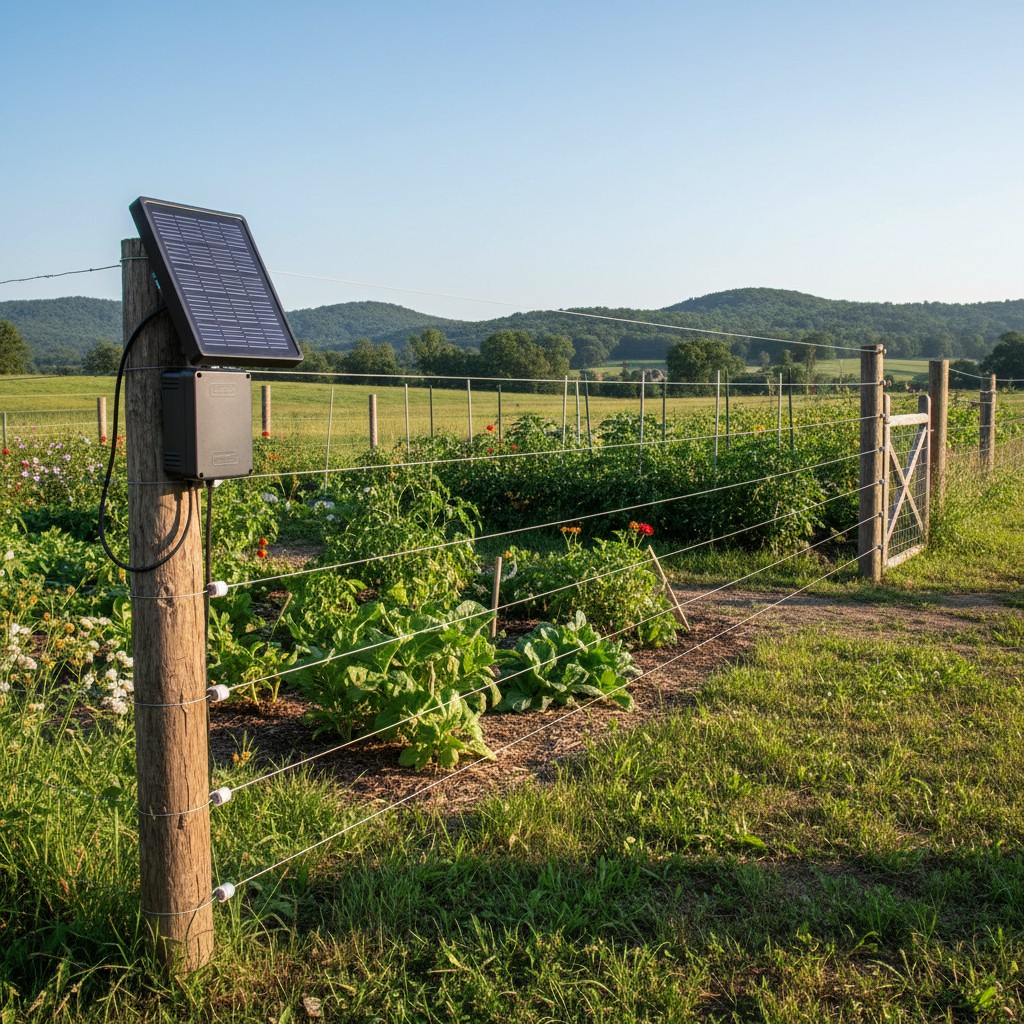
This is the method that actually works. String 2-3 strands of electric polytape or wire at 18, 36, and 54 inches high. Then hang strips of aluminum foil smeared with peanut butter from the top wire every 3-4 feet.
Deer investigate with their noses. They smell the peanut butter, touch the foil with their wet nose, and receive a sharp shock. After one or two encounters, most deer permanently avoid the area. The shock doesn’t injure them, it’s the same mild jolt that keeps cattle in line, but it’s memorable enough to change their behavior.
Electric Fence Equipment
- Energizer: A solar-powered fence charger rated for at least 1-2 miles of fence. $80-200.
- Polytape or wire: Use high-visibility white polytape so deer can see it. $30-60 for 1,000 feet.
- Posts: Fiberglass step-in posts are cheapest and easiest. $2-4 each.
- Insulators and connectors: $20-30 total.
Cost Estimate
A complete 3-strand electric deer fence for a 100×100 foot garden: $200-400 total, including the energizer. That’s a fraction of the cost of a tall physical fence.
Limitations
Electric fence works through training, not as a physical barrier. A desperate, starving deer will push through it. It also requires maintenance, vegetation touching the wire drains the charge, and you need to check the peanut butter lures periodically. Snow can short out lower strands in winter. But for moderate deer pressure, it’s remarkably effective for the price.
Safety around children and pets: Electric deer fences must be clearly marked in any area where children or pets have access. Use high-visibility warning flags or signs every 30–50 feet along the perimeter. Young children and dogs do not understand the fence and will contact it. The shock from a low-power deer fence energizer is startling and unpleasant but not dangerous for a healthy person or animal, however, it can be more serious for small children, elderly individuals, or animals with heart conditions. Always de-energize the fence when children are playing in or near the garden.
Choosing the Right Gate
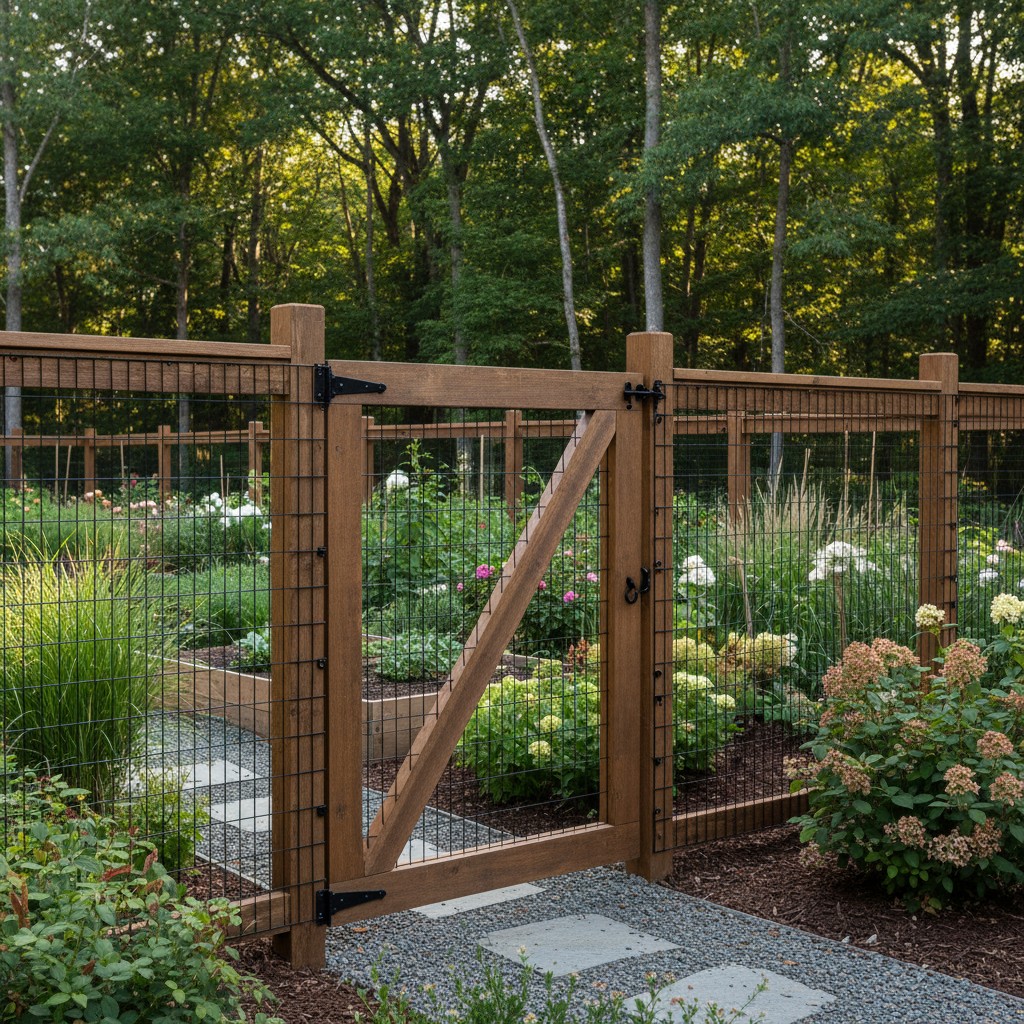
The most common mistake in deer fencing is spending all your attention on the fence and neglecting the gate. Deer are smart enough to find the weak point, and a 4-foot garden gate in an 8-foot fence is basically a welcome mat.
Gate Design Rules
- Match the fence height. If your fence is 8 feet, your gate needs to be 8 feet.
- Avoid gaps. The bottom of the gate should sit within 4 inches of the ground. Deer can squeeze under surprisingly small gaps.
- Use a self-closing mechanism. A gate left open for “just a minute” is how your garden gets raided. Spring hinges or a weighted cable keep the gate shut.
- Build sturdy gate posts. A heavy gate on flimsy posts will sag and create gaps within a season. Set gate posts in concrete with cross-bracing.
For tall fence gates, consider building a double gate (two 4-foot panels that swing open) rather than a single 8-foot wide gate. Narrower gates are easier to manage and less prone to sagging.

Cost Comparison Summary
For a typical 100×100 foot garden perimeter (400 linear feet):

- 8-foot polypropylene netting on T-posts: $400-700 (lifespan: 3-5 years)
- 8-foot welded wire on mixed posts: $800-1,500 (lifespan: 15-20+ years)
- Double fence (two 4-5 foot fences): $600-1,200 (lifespan varies by material)
- 3-strand electric with solar charger: $200-400 (ongoing maintenance required)
- Full wooden post-and-rail with wire: $1,500-3,000 (lifespan: 20+ years)
Other Deterrents to Pair With Fencing
Fencing works best when combined with secondary deterrents:

- Deer-resistant plantings around the perimeter: Lavender, sage, garlic, and ornamental grasses planted outside the fence create a buffer zone that deer prefer to avoid.
- Motion-activated lights or sprinklers: Not effective alone long-term, but as a supplement to fencing they add another layer of discouragement.
- Scent deterrents: Hanging bars of strongly scented soap (Irish Spring is a common choice) from the fence line or placing human hair clippings in mesh bags around the perimeter can help. These need refreshing after rain.
- Clear sightlines: Deer prefer to approach under cover. Keeping the area around your fence mowed and clear of brush removes their comfort zone.
🌱 From Our Homestead
After deer ate our entire row of green beans overnight, for the third year in a row. I finally built a proper eight-foot fence. It took a full weekend and a lot of post-hole digging, but we have not lost a single plant to deer since.
Frequently Asked Questions
Will a 6-foot fence keep deer out?
Not reliably. While some deer won’t bother jumping a 6-foot fence if there’s easier food elsewhere, a motivated deer can clear 6 feet without much effort. If you’re limited to 6-foot height, pair the fence with an electric wire on top, use the double-fence design, or add an angled extension. A 6-foot fence works better if it’s solid (deer are less likely to jump when they can’t see the landing zone) but a solid 6-foot fence is expensive and may block light from your garden.
How long does polypropylene deer netting last?
Expect 3-5 years with UV-stabilized netting. Sun exposure, wind, snow load, and animal contact all degrade it. The netting will become brittle over time and tear more easily. Some gardeners treat it as a disposable option, cheap enough to replace every few years. For a more permanent solution, spend more upfront on welded wire, which can last decades.
Do I need a permit to build a deer fence?
This depends entirely on your local zoning laws and HOA rules. Many municipalities restrict fence height to 6 feet in residential areas, which creates an obvious conflict with effective deer fencing. Before building, check your local zoning ordinances and apply for a variance if needed. Some areas exempt agricultural fencing from residential height limits, if your garden qualifies as agricultural use, you may have more flexibility.
What about underground barriers? Do deer dig?
Deer don’t dig under fences the way rabbits or dogs do. However, they will squeeze under gaps where the ground is uneven. Your main concern at the bottom of the fence is ensuring the mesh or wire sits flush against the ground along its entire length. Use landscape staples every 2-3 feet to pin the fence down, or bury the bottom 6 inches in a shallow trench. If you also have rabbit problems, burying the fence 6-12 inches solves both issues at once.
Related: Comparing deer fence types before you build? See our side-by-side breakdown.