American Beekeeping Federation: Complete Guide to Membership, Programs, and Advocacy
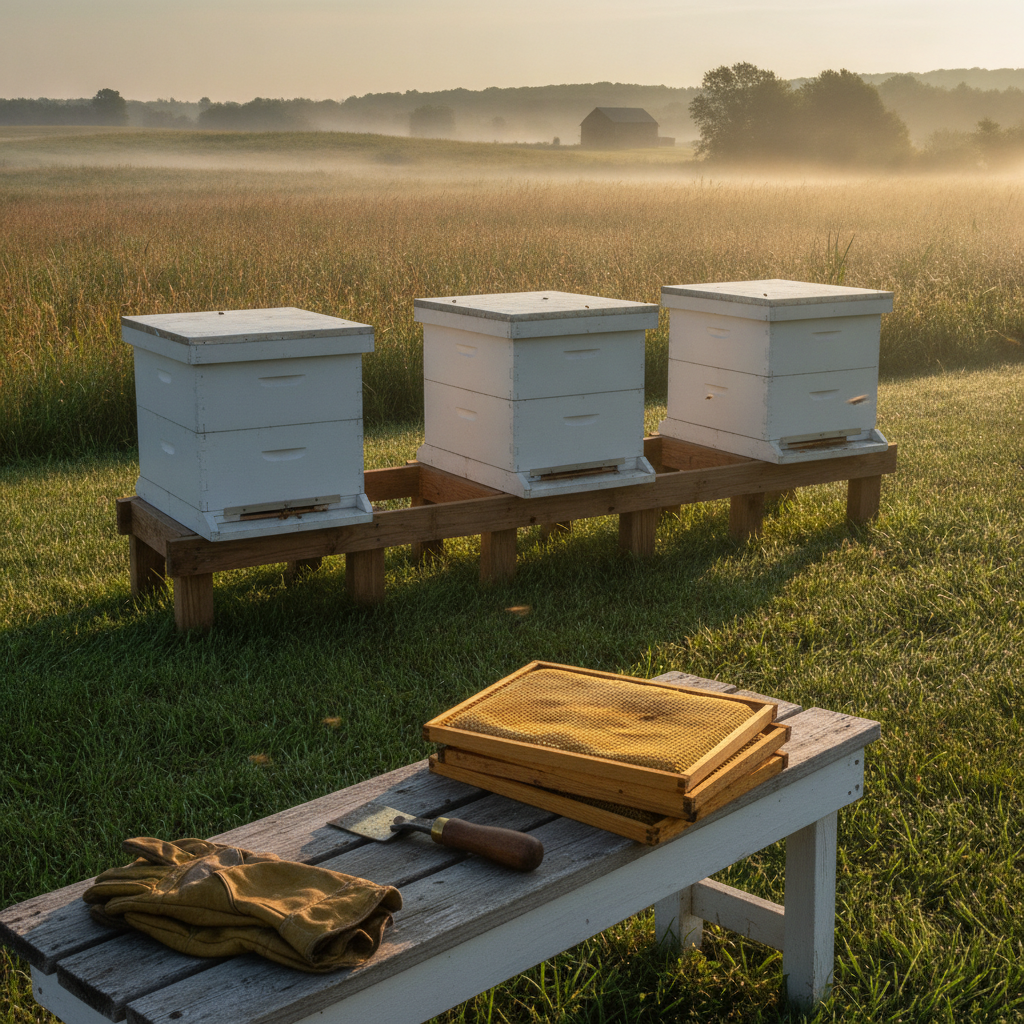
The American Beekeeping Federation has represented U.S. beekeepers for more than 80 years, and its work matters more today than at any point since its 1943 founding. According to a USDA-ARS-supported U.S. Beekeeping Survey posted to bioRxiv in August 2025, American commercial beekeepers reported average colony losses of roughly 62% between June 2024 and March 2025, with about 1.6 million hives lost in a single season, one of the most severe pollinator die-offs on record. That collapse landed on an industry with no traditional commodity supports and no federal crop-insurance safety net. What beekeepers have instead is a lattice of state clubs, regional groups, and one national organization built specifically to speak for the whole industry in Washington. The ABF is that national organization, and understanding what it does (and what it does not do) helps every beekeeper decide where to spend the annual $50 to several hundred dollars that membership costs. This guide walks through the ABF’s history, the six membership levels, the annual conference, the American Honey Queen program, the research and scholarship funds it seeded, its federal-policy priorities, and the practical question of whether a backyard beekeeper with three hives should join.
What Is the American Beekeeping Federation, and Why Was It Founded?
The ABF is a nonprofit trade association that speaks for every segment of the American beekeeping industry, from backyard hobbyists to migratory pollination operators running tens of thousands of colonies. According to the American Beekeeping Federation, the group has been “working in the interest of all beekeepers, large and small, and those associated with the beekeeping industry to ensure the future of the honey bee” for more than 80 years. Its stated mission, per ABF’s own governance page, is to “act on behalf of the beekeeping industry on issues affecting the interests and the economic viability of the various sectors of the industry.” That charter shapes almost everything the organization does. Rather than promoting one style of beekeeping or one commercial interest, ABF frames itself as the industry-wide table where queen breeders, honey packers, importers, researchers, and hobbyists share one lobbying voice. That structure is deliberate. According to the New Hampshire Beekeepers Association, ABF is the “oldest industry-wide beekeeping organization, representing all aspects of the industry, queen producers, researchers, honey producers, honey packers, honey importers, bee breeders, and even hobbyists.” On our own homestead, joining after a third season of keeping bees made policy alerts and the E-Buzz newsletter our clearest window into what was happening beyond the county apiary inspector’s monthly report. For readers still building their first apiary, our beginner’s guide to backyard beekeeping covers the practical setup that ABF membership complements rather than replaces.
The ABF’s Roots: From 1871 to Today
The ABF’s institutional roots go back much further than the 1943 founding. According to archival records at UC Berkeley’s Bancroft Library, held in the National Federation of State Beekeepers papers, the modern federation stands at the end of a long lineage: “North American Beekeepers’ Society (1871-88), North American Beekeepers’ Association (1890-96), National Beekeepers’ Association (1900-1920), American Honey Producers’ League (1920-21), National Federation of State Beekeepers’ Association (1943-48), and American Beekeeping Federation (1949 to present).” Each rename reflected a shift in the industry itself. The 1943 group, formed as the National Federation of State Beekeepers’ Association, was built to coordinate the state associations that had grown up around localized nectar flows, disease-inspection rules, and honey-marketing needs. In 1949 the organization adopted its current name to reflect a broader mandate that included commercial producers, packers, and, eventually, hobbyists. The through-line across every rename is coordination: giving beekeepers scattered across dozens of states and multiple economic tiers one legal identity to speak for the industry as a whole. That is why the group publishes a state-delegate structure to this day and why its board seats are apportioned by industry segment rather than by geography alone. Readers building a first-year rhythm can pair ABF membership with our month-by-month first-year beekeeping guide.
What Does ABF Membership Include?
An ABF membership bundles four practical benefits: information, community, discounts, and access. According to the American Beekeeping Federation, “more than 80% of your membership dues support education, research and legislative action on your behalf,” which is the honest fiscal picture of what a check pays for. Members receive the ABF E-Buzz Newsletter, which ABF describes as “published monthly via email to all ABF members and contains up-to-the-minute ABF updates, legislative news, event information, member features and useful beekeeping tips and tricks.” They also receive the ABF Quarterly Magazine, a print-and-digital publication that covers industry trends, research summaries, and member interviews. Third, the ABF Advantage Program bundles supplier discounts. ABF states that “through the ABF Advantage Program, ABF members enjoy exclusive access to perks, discounts and preferred pricing from the beekeeping industry’s leading product suppliers and service providers.” For most backyard members, the Advantage discounts on woodenware, extractors, and treatment products can offset the annual dues within a single order. Access is the fourth benefit and the hardest to price: members get reduced registration for the annual conference, voting rights on organizational direction, and a formal channel into the federal policy work described later in this guide. New keepers also learn faster with those channels open, in the same way that structured resources on flock health speed up a new poultry keeper’s first year.
ABF’s Six Membership Levels, Explained
The ABF offers six membership levels, and, unusually for a trade group, members are allowed to self-select the level that matches how much they want to contribute rather than the size of their operation. According to the American Beekeeping Federation, “the ABF offers six different levels of membership to match your operation. Criteria noted in the Membership Level recommendations are suggestions and individuals can join at whatever level they choose to do so, i.e., a Hobbyist could join as Gold Member, or a Bee Supply Dealer may choose to join at the President’s Club level.” The six tiers move from an entry-level Hobbyist rate up through Sideliner and Commercial rates keyed to operation size, then to Gold, Platinum, and President’s Club levels for members who want to contribute more than the recommended dues for their operation size. The practical takeaway is that the Hobbyist rate is the correct starting point for anyone with fewer than 25 to 50 hives, and that upgrading later (or supporting the organization at a higher level as a matter of principle) is straightforward. For anyone planning to attend the January conference, the discounted member registration typically recoups the annual Hobbyist dues on that single line item. Small-livestock operators tracking membership costs for other trade groups will recognize the model: cost recovery through discounts, not just the intangible value of representation. Readers running mixed operations may also want to see our guide to raising quail as micro-livestock.

What Happens at the Annual ABF Conference and Tradeshow?
The ABF Conference and Tradeshow is a five-day January event that combines continuing education, industry business, and the American Honey Show. According to the ABF, “the American Beekeeping Federation Conference & Tradeshow features an informative program and dozens of commercial exhibits, including the American Honey Show and the selection of the American Honey Queen and Princess.” Programming typically runs Tuesday through Saturday and covers a beginner-to-commercial spectrum, with parallel tracks on hobbyist husbandry, queen production, disease management, honey marketing, and federal-policy briefings. Recent conferences have been substantial. According to ABF, “the American Beekeeping Federation hosted its first North America Honey Bar, as well as its annual Honey Show, at its Conference Jan 6-10, 2026 in Mobile, AL.” The next event, the 84th ABF Conference and Tradeshow, will be held at “the Moody Gardens Convention Center in Galveston, Texas on January 12 – 16,” per the ABF conference page. Behind the tradeshow floor, member votes at the annual business meeting shape ABF’s policy priorities for the coming year. For a hobbyist, the conference is often the single event that justifies annual membership on its own: a Tuesday-morning session on queen rearing or a Friday panel on overwintering can save an entire spring’s worth of colony losses.
What Is the American Honey Queen Program?
The American Honey Queen Program is a year-long ambassadorship, sponsored by ABF, in which a young woman travels the country promoting honey and honey-bee awareness. According to the American Beekeeping Federation, “the American Honey Queen Program is a national competition program sponsored by the American Beekeeping Federation (ABF), with its main priorities being the promotion of the world of beekeeping, to increase the national honey consumption, and educate the public about the value of honey bees.” The Queen and a Princess are selected at each January conference and serve one-year terms. The program has run since 1959, and its long-term impact is measured in classroom visits, county-fair booths, and press appearances. According to a 2024 profile in Ambrook’s Off Range publication, “over seven decades, American Honey Queens and Princesses have travelled the country to serve as spokespeople, role models, and advocates, raising public awareness of the honeybee’s outsized role in the vitality of our food systems, communities, and land.” The scale of that outreach is easy to underestimate. In a typical year the Queen logs several dozen public appearances, most of them in front of school-age children and grocery-store consumers who have never met a beekeeper. For a hobbyist trying to convince a skeptical zoning board or a school science teacher, that visibility is exactly the kind of national infrastructure a single-state association cannot easily replicate.
How Does ABF Fund Bee Research and Scholarships?
ABF funds bee research primarily through its sister nonprofit, the Foundation for the Preservation of Honey Bees, which channels member and sponsor donations into targeted apiculture grants and student scholarships. According to the Foundation’s own 2025 scholarship information sheet, “the purpose of this scholarship program, now in its sixteenth year, is to foster professional development of emerging apicultural scientists by allowing award recipients to attend the 2025 American Beekeeping Federation (ABF) Conference & Tradeshow.” That framing matters. Rather than issuing open-ended grants, the Foundation is pipelining early-career researchers into the same room as commercial queen breeders, extension entomologists, and USDA lab directors. Award winners typically present their work at the conference, which builds the professional network that later drives collaborative research proposals. The Foundation also underwrites research memoriams, project support for state extension offices, and educational materials distributed through 4-H and FFA channels. For members, the practical value of the Foundation is twofold. First, it puts a portion of dues into science that keeps small-scale keepers ahead of new pests and pathogens. Second, it makes ABF more than a lobbying group. A member paying Hobbyist dues is helping seed the next generation of Varroa, Nosema, and viral-disease researchers whose findings eventually reach the hive on their back deck.
What Policy Work Does ABF Do in Washington?
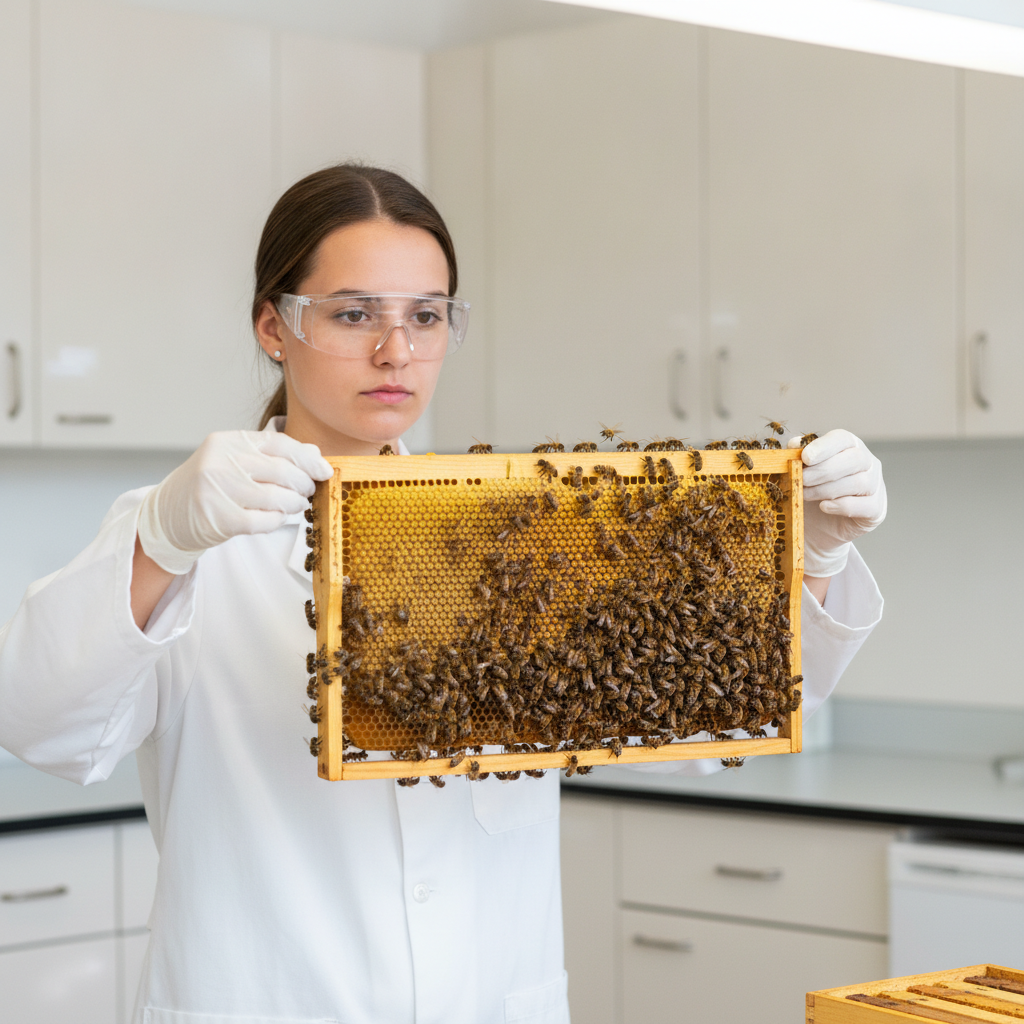
ABF’s federal-policy program focuses on three areas: disaster assistance, pollinator research funding, and habitat protection through the Farm Bill. According to ABF’s 2024 congressional leave-behind document, “the ELAP program administered by USDA is the sole disaster program available to U.S. beekeepers, as the industry does not have traditional commodity support programs or crop insurance programs.” That single sentence explains why every ABF Fly-In and every conference resolution keeps returning to the Emergency Livestock Assistance Program. Without ELAP reauthorization, catastrophic winter losses have no federal backstop. ABF also lobbies for continued funding of USDA’s honey-bee research infrastructure. According to the group’s legislation-and-advocacy page, “ABF supports the extension in the farm bill of the 2018 authorization of the USDA Honey Bee and Pollinator Research Coordinator established in the 2018 farm bill and the funding necessary to support the functions of this office.” The third pillar is pollinator-habitat acreage: pushing FSA and NRCS conservation programs to prioritize pollinator-friendly cover crops, hedgerows, and CRP set-asides. Members who want to see this work in action can attend the annual Washington Fly-In, contribute to policy comment periods, or forward the E-Buzz legislative alerts to their state’s congressional office. For a broader look at how national breed- and industry-level groups shape smallholder practice, see our complete guide to heritage-breed chickens.
How Does ABF Fit Alongside State Clubs and Other National Groups?
ABF operates as one node in a wider U.S. beekeeping-organization network that includes state associations, county clubs, regional groups like the Eastern Apicultural Society, and a commercial-focused counterpart, the American Honey Producers Association. ABF formalizes its state-level connections through a delegate system. According to the American Beekeeping Federation, “states that have ABF members may appoint a State Delegate to serve as a liaison between ABF, its state association and local clubs, communicating ABF’s legislative initiatives and acting as a membership coordinator.” That delegate is often the fastest route for a backyard keeper who wants ABF policy news translated into local action. The relationship with the American Honey Producers Association (AHPA) is more complicated. According to a Saint Louis Public Library beekeeping research guide, “the AHPA was founded in 1969 as a number of honey producers split off from the ABF over the issue of mandatory assessments to underwrite a Honey Industry Council.” AHPA still exists today as a commercial-focused sister organization, and many large operators hold membership in both. For hobbyists, the two do not compete: ABF is the broader tent, and its state-delegate structure gives local clubs a channel that AHPA does not maintain. Readers who also raise a mixed backyard flock can consult the complete 2026 beginners guide to backyard chickens for how similar national-plus-state organization structures work in poultry.
Why ABF Matters Right Now: 2024-2025 Colony Losses in Context
The 2024 to 2025 collapse of U.S. honey-bee colonies is the clearest evidence in a generation that the industry needs coordinated national representation. According to a peer-reviewed U.S. Beekeeping Survey preprint posted to bioRxiv in August 2025, “colony loss rates were estimated and compared among three loss periods, summer, winter, and annual, and three beekeeping operation types based on their number of colonies managed, backyard (≤50 colonies), sideline (51-500 colonies), and commercial (>500 colonies).” The headline numbers are severe. According to the Apiary Inspectors of America, the 2024-25 survey documented “1.6 million colonies lost with commercial beekeepers sustaining an average loss of 62% between June 2024 and March 2025,” and, per the same bioRxiv preprint, “in January 2025, U.S. commercial beekeepers notified the USDA-ARS Bee Research Laboratory of unusually high honey bee colony losses as they were preparing colonies to be moved for almond pollination.” At the same time, national honey production has been shrinking. According to USDA NASS, “United States honey production in 2024 totaled 134 million pounds, down 4 percent from 2023. There were 2.60 million colonies producing honey in 2024, up 3 percent from 2023.” That combination, more managed colonies producing less honey per hive, is exactly the kind of trend that requires unified industry data collection, USDA-lab coordination, and Farm Bill advocacy. ABF is the organization structurally set up to do that work.
Should You Join ABF as a Backyard Beekeeper?
For most backyard beekeepers with two or more hives, ABF Hobbyist membership tends to pay for itself in three ways: supplier discounts, conference savings, and access to research-summarizing content that is not otherwise available in one place. According to the American Beekeeping Federation, membership dues are directed toward “education, research and legislative action” at the “more than 80%” ratio noted earlier, which is unusually high for a trade group. The practical case is straightforward. A single order of woodenware, protective gear, or medications through the ABF Advantage program often clears the annual dues. The E-Buzz newsletter and Quarterly Magazine catch legislative and disease news months before it reaches most local newsletters. And for a hobbyist who travels to the January conference, the member registration discount saves several times the Hobbyist tier’s annual cost. On the other side of the ledger, a first-year backyard beekeeper still learning the basics may get more day-to-day value from a state or county association whose meetings happen monthly and whose apiary tours address local pest, forage, and weather realities. Our own approach was to join both: state association from the start, ABF membership added in year three when policy news and national research started to matter more than the “how do I install a package?” content. For anyone still choosing between local, national, or both, revisiting the beginner’s guide to backyard beekeeping alongside the ABF membership page is a useful side-by-side comparison.
Frequently Asked Questions
When was the American Beekeeping Federation founded?
The federation traces its modern roots to 1943, when it was organized as the National Federation of State Beekeepers’ Association, and it adopted the American Beekeeping Federation name in 1949. According to archival records at UC Berkeley’s Bancroft Library, the group is the current version of a lineage of national beekeeping organizations that stretches back to the North American Beekeepers’ Society founded in 1871. That continuous institutional history is what allows ABF to describe itself as the country’s oldest industry-wide beekeeping organization.
How much does ABF membership cost?
ABF offers six membership tiers, ranging from a Hobbyist level for backyard keepers to a President’s Club level for supporters and large commercial operators. The exact dollar amount for each level is set annually and published on the ABF’s join-or-renew page. According to the ABF, members “can join at whatever level they choose to do so,” so a small-scale hobbyist is not required to enroll at a commercial rate. Most first-year members choose the Hobbyist tier and upgrade later if they want to contribute more to the organization’s work.
Who can attend the ABF Conference and Tradeshow?
The ABF Conference and Tradeshow is open to members and non-members, with discounted registration for members. Programming targets every experience level, from a hobbyist installing a first package to a commercial operator running 5,000 hives. According to ABF, the January event features “an informative program and dozens of commercial exhibits, including the American Honey Show and the selection of the American Honey Queen and Princess.” Registration typically opens in the fall for the following January event, and hotel blocks fill quickly.
Is the American Honey Queen a competition?
Yes. The American Honey Queen Program is a national competition, and the Queen and Princess are selected at each ABF Conference. Contestants are typically young women involved in state beekeeping associations, and finalists give speeches, participate in interviews, and demonstrate honey and beekeeping knowledge. According to ABF, the program’s priorities are “the promotion of the world of beekeeping, to increase the national honey consumption, and educate the public about the value of honey bees.” The Queen serves a one-year public-speaking term following selection at the January conference.
How does ABF differ from the American Honey Producers Association?
ABF represents the whole U.S. beekeeping industry, from backyard hobbyists to migratory pollinators. The American Honey Producers Association (AHPA) is a smaller, commercial-focused organization that split off from ABF in 1969. According to a Saint Louis Public Library beekeeping research guide, “the AHPA was founded in 1969 as a number of honey producers split off from the ABF over the issue of mandatory assessments to underwrite a Honey Industry Council.” Many large commercial beekeepers now hold membership in both organizations to make sure they are represented on both fronts.
What is the Foundation for the Preservation of Honey Bees?
The Foundation for the Preservation of Honey Bees is ABF’s affiliated research and education nonprofit. It funds honey-bee research grants and student scholarships. According to the Foundation’s 2025 scholarship materials, its purpose is to “foster professional development of emerging apicultural scientists by allowing award recipients to attend the 2025 American Beekeeping Federation (ABF) Conference & Tradeshow.” Awards are typically given to graduate students studying pollinator biology, disease control, or apicultural extension, and recipients present their research at the January conference.
Does ABF membership include any legal or emergency assistance?
ABF membership does not provide direct legal or emergency assistance, but it does give members a voice in federal-policy advocacy for programs that do. According to ABF’s 2024 congressional leave-behind, “the ELAP program administered by USDA is the sole disaster program available to U.S. beekeepers.” ABF lobbies to keep ELAP funded and expanded, and members receive policy alerts through the E-Buzz newsletter that show when Congress is voting on reauthorization and how to contact a member’s own delegation.