Permaculture Design for Small Yards: A Practical Guide to Productive Landscapes
- Permaculture works on any size lot — even a 1/4-acre suburban yard can be designed as a productive ecosystem
- The core principle: work with nature, not against it — less mowing, less watering, less work over time
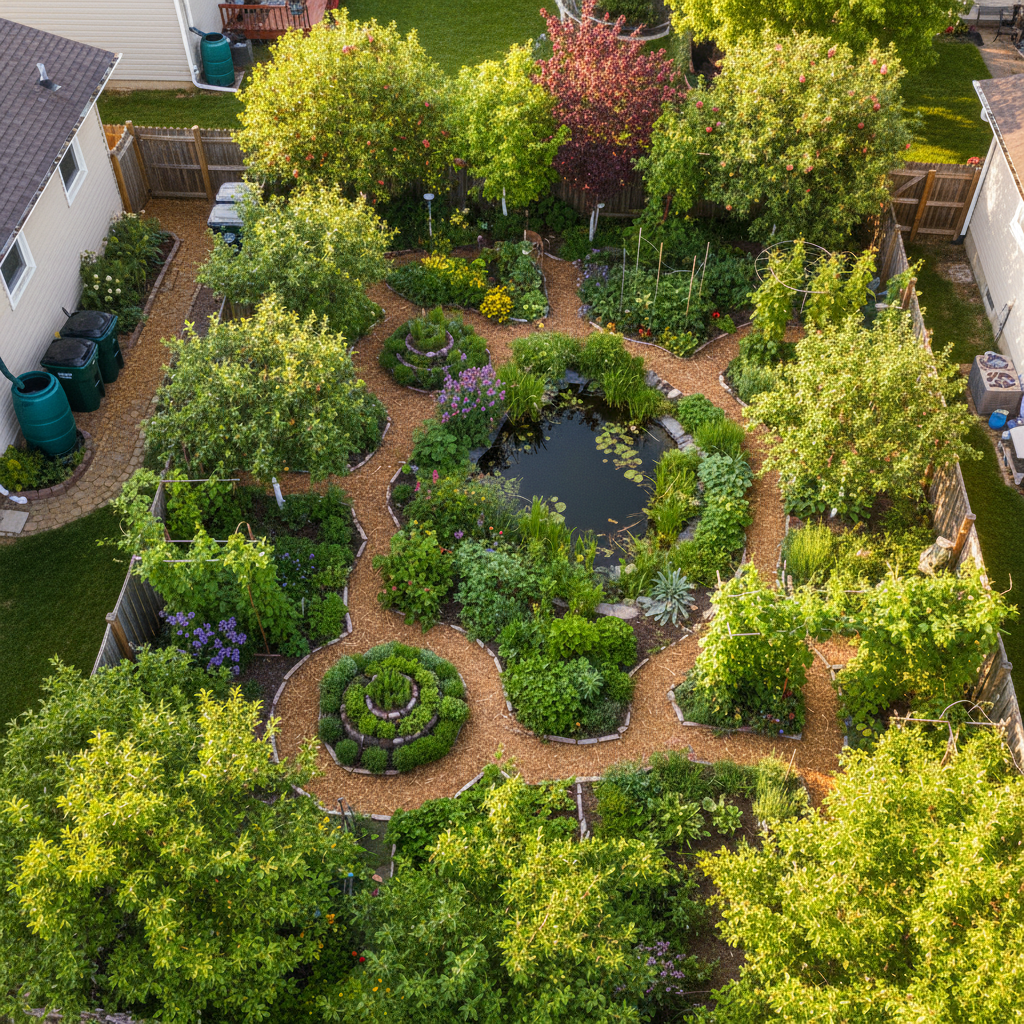
- Design in 5 zones based on how often you visit each area (herbs by the door, orchard in the back)
- A permaculture yard can produce food, improve soil, reduce water use by 50%+, and support pollinators
- Start by observing your yard for one full season before making big changes
Permaculture isn’t hippie gardening or letting your yard go wild. It’s a design system — a way of arranging plants, water, and structures so they work together like a natural ecosystem. The result? A yard that produces food, builds soil, requires less work each year, and looks beautiful.
The best part: permaculture works on any scale. You don’t need acreage. A suburban quarter-acre lot has more than enough space to create a diverse, productive food landscape that outperforms a traditional garden with half the effort.
What Is Permaculture Design?
Permaculture (permanent + agriculture) was developed in the 1970s by Bill Mollison and David Holmgren. The core idea: design human habitats that mimic natural ecosystems.
In practice, this means:
- Stacking functions. Every element serves multiple purposes. A fruit tree provides food, shade, bird habitat, and leaf mulch.
- Creating relationships. Plants support each other. Nitrogen-fixing clover feeds the apple tree. The apple tree shades the lettuce. The lettuce covers the soil.
- Working with natural patterns. Water flows downhill — capture it there. Sun hits the south side — plant heat-lovers there.
- Building soil, not depleting it. No-till methods, heavy mulching, and composting improve your soil every year.
From our homestead: The first year of our permaculture conversion was ugly — sheet mulch everywhere, tiny newly planted trees, and bare spots. By year three, it was the most beautiful yard on the street. The neighbors who side-eyed us started asking for design advice. Permaculture is an investment that compounds.
The 5 Permaculture Zones (Adapted for Suburbs)
Permaculture uses zones numbered 0–5 based on how frequently you interact with each area. For a suburban lot:
| Zone | Location | What Goes Here |
|---|---|---|
| Zone 0 | Your house | Kitchen, pantry, indoor seed starting, fermentation corner |
| Zone 1 | Within 20 ft of door | Herb garden, salad greens, compost bin, rainwater barrel |
| Zone 2 | Main backyard | Raised beds, berry bushes, small greenhouse, chicken coop |
| Zone 3 | Far backyard / sides | Fruit trees, nut trees, perennial food crops |
| Zone 4 | Edges / fences | Wild berry hedges, native plants, pollinator habitat |
The key insight: put what you use daily closest to your door. You’ll harvest herbs every day — they go in Zone 1. You check fruit trees weekly — Zone 3 is fine.
7 Permaculture Techniques for Small Yards
1. Sheet Mulching (Lasagna Gardening)
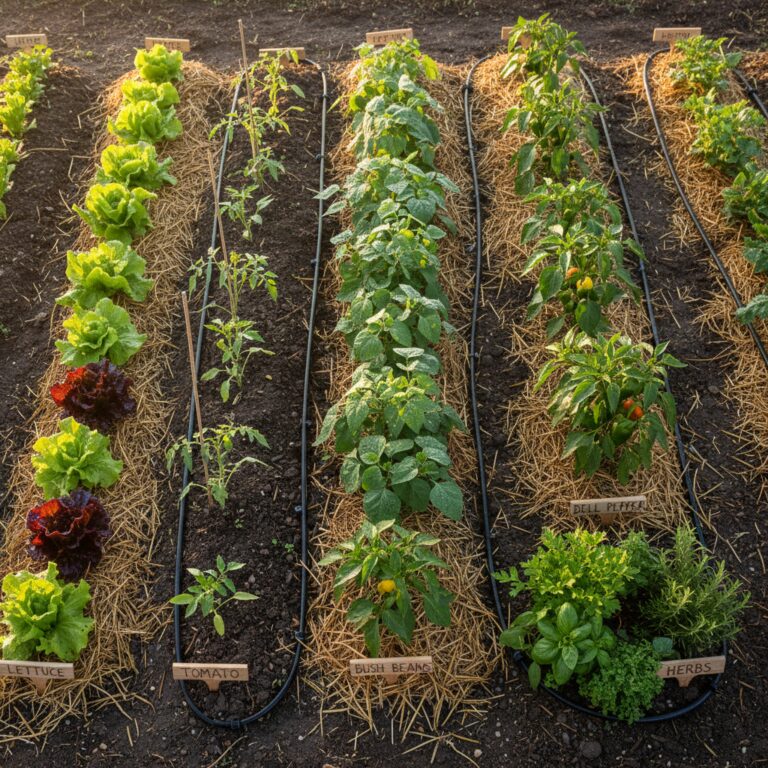
Convert lawn to garden bed without digging. Layer cardboard over grass, then 4–6 inches of compost and mulch. The grass dies underneath, earthworms thrive, and you have a ready-to-plant bed in 2–3 months. This is the foundation of no-till gardening.
2. Food Forest Layering
A food forest stacks 7 layers of plants in the same space:
- Canopy: Full-size fruit/nut trees (apple, pear)
- Understory: Dwarf fruit trees (fig, plum)
- Shrub: Berry bushes (blueberry, currant, gooseberry)
- Herbaceous: Comfrey, rhubarb, artichoke
- Ground cover: Strawberries, clover, creeping thyme
- Vine: Grapes, kiwi, passionfruit
- Root: Garlic, potatoes, Jerusalem artichoke
Even on a small lot, you can fit a mini food forest in a 15×15 ft corner with 2 fruit trees, 3 berry bushes, herbs below, and strawberry ground cover.
3. Herb Spirals
A spiral-shaped raised bed (about 5 ft diameter) creates multiple microclimates in one small space. Mediterranean herbs (rosemary, thyme, lavender) go at the dry top. Moisture-loving herbs (mint, parsley, cilantro) go at the base. One herb spiral replaces 6+ separate pots and looks stunning.
4. Rainwater Harvesting
Capture water where it falls. A rain barrel on each downspout collects 500+ gallons per inch of rain on a typical roof. Direct overflow to swales (shallow trenches) that guide water to fruit trees and garden beds. This reduces your water bill and keeps your plants healthier.
5. Companion Planting Guilds
A “guild” groups plants that help each other. The classic apple tree guild:
- Apple tree (producer)
- Comfrey at the base (deep-rooted nutrient accumulator, chop-and-drop mulch)
- Clover ground cover (fixes nitrogen, living mulch)
- Dill/fennel (attracts beneficial insects)
- Chives around the drip line (deters apple borers)
See our companion planting guide for more combinations.
6. Chicken Integration
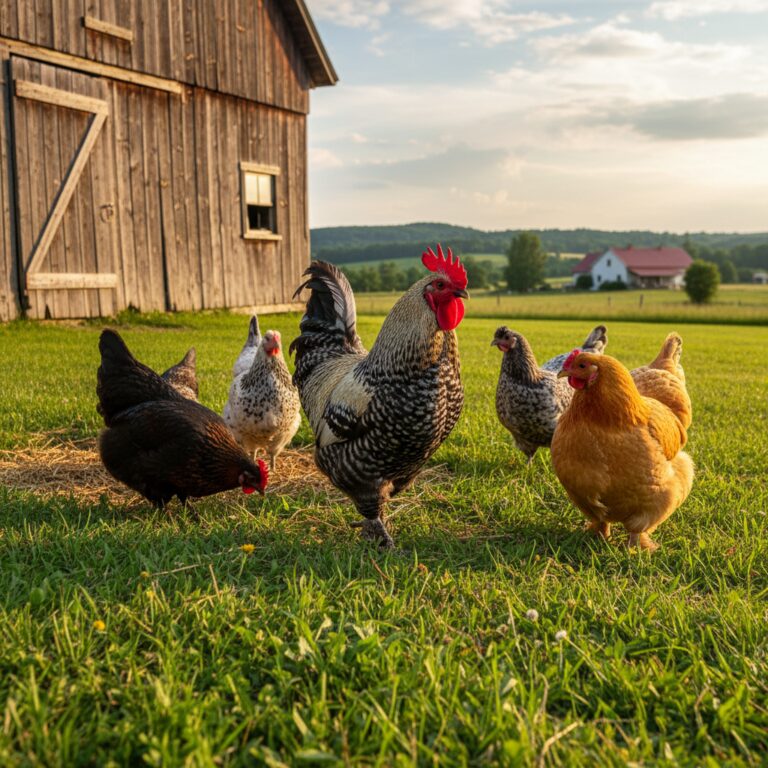
Chickens are permaculture powerhouses. They turn kitchen scraps into eggs and fertilizer, scratch up garden beds in fall (pest control), and produce compost-ready bedding. Rotate them through garden areas in a “chicken tractor” (movable coop) for maximum benefit.
7. Perennial Vegetables
Most gardens rely on annual vegetables that need replanting every year. Permaculture emphasizes perennials that come back on their own:
- Asparagus — produces for 20+ years once established
- Rhubarb — nearly indestructible, great for pies and preserves
- Jerusalem artichoke — produces prolifically with zero care
- Walking onions — self-propagating, never need replanting
- Sorrel — lemony green, comes back every spring
A Sample Permaculture Plan for a 1/4-Acre Lot
| Area | Features | Approx. Space |
|---|---|---|
| South-facing front yard | Edible landscape: herb border, dwarf fruit trees, cottage garden flowers | 1,500 sq ft |
| Back patio area (Zone 1) | Herb spiral, salad table, compost tumbler, rain barrel | 200 sq ft |
| Central backyard (Zone 2) | 3 raised beds, berry row, small greenhouse, vertical trellises | 600 sq ft |
| Back corners (Zone 3) | Mini food forest: 3 fruit trees with understory guilds | 400 sq ft |
| Fence lines (Zone 4) | Berry hedgerow, native pollinator plants, bird habitat | 300 sq ft |
| Side yard | Chicken run, compost bays, tool storage | 200 sq ft |
Getting Started: The First-Year Plan
Don’t try to convert your entire yard at once. Permaculture is designed to be implemented gradually:
Season 1 (Spring–Summer): Observe and Start Small
- Map your yard: sun patterns, water drainage, existing plants, wind direction
- Sheet mulch one area for a future garden bed
- Build an herb spiral near your kitchen door
- Install one rain barrel
- Plant 1–2 fruit trees in their permanent locations
Season 2: Expand the Food System
- Add raised beds or more sheet-mulched growing areas
- Plant berry bushes along fence lines
- Add companion planting guilds around fruit trees
- Start composting seriously — you’ll need lots of mulch material
Season 3+: Connect and Refine
- Add chickens or a bee hive
- Connect water systems (rain barrels → swales → trees)
- Plant perennial vegetables in permanent spots
- Replace remaining lawn with productive ground cover (clover, creeping thyme)
From our homestead: The biggest mindset shift in permaculture is patience. A conventional garden gives you tomatoes in three months. A permaculture system takes 3–5 years to hit its stride — but then it produces food with dramatically less work than a traditional garden. Year five, I spend more time harvesting than maintaining.
Frequently Asked Questions
Can I practice permaculture in a small suburban yard?
Absolutely. Permaculture is a design system, not a size requirement. Even a quarter-acre suburban lot can incorporate food forests, herb spirals, rainwater harvesting, companion planting guilds, and edible landscaping. Many of the most productive permaculture gardens are under 5,000 sq ft.
How is permaculture different from regular gardening?
Traditional gardening focuses on annual crops that need replanting, tilling, and constant inputs each year. Permaculture designs a self-sustaining system where plants support each other, soil improves over time, and the garden requires less work as it matures. It emphasizes perennial food plants, stacked layers, water management, and mimicking natural ecosystems.
What should I plant first in a permaculture garden?
Start with fruit trees — they take the longest to produce, so plant them first. Next, add berry bushes, then ground cover plants like clover or strawberries. Build an herb spiral for your daily-use herbs. Annual vegetables in raised beds can fill the gaps while your perennial system establishes.
Does permaculture really produce less work over time?
Yes, once the system matures (typically 3–5 years). In the early years, you’re building soil, planting perennials, and establishing systems — that takes effort. But as the food forest fills in, ground cover suppresses weeds, mulch builds soil, and perennial plants come back without replanting. Many established permaculture gardens require just a few hours of maintenance per week.
Will a permaculture yard look messy?
Not if you design it well. Permaculture doesn’t mean “wild and unkempt.” Use defined borders, mulched paths, attractive edible plants (blueberry bushes are gorgeous), and cottage garden aesthetics. Many permaculture yards are more visually appealing than a plain lawn — they just happen to also produce hundreds of pounds of food.